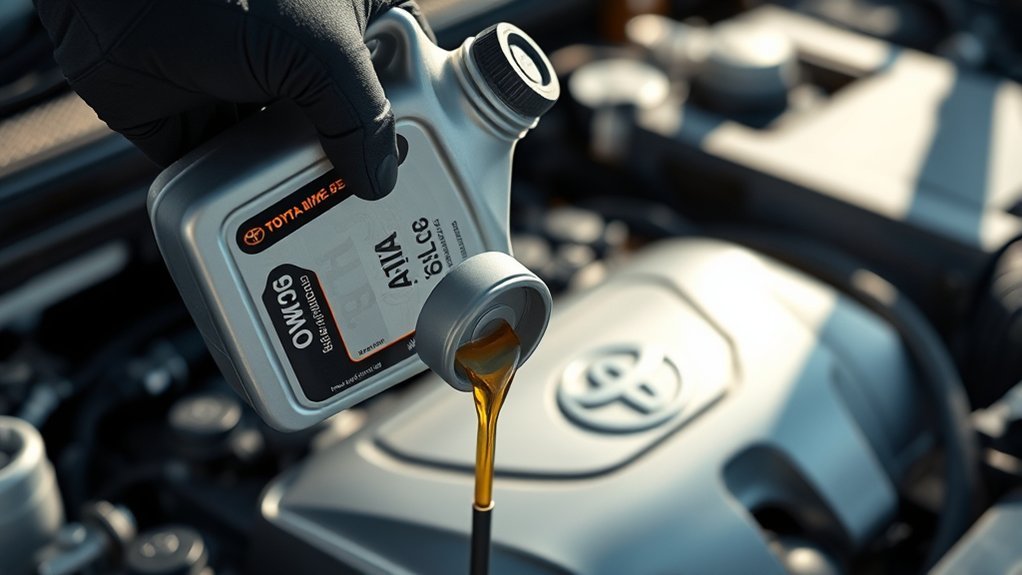
Use 0W-20 oil in a Toyota Camry only when your owner’s manual or oil-fill cap calls for it. Many Camry engines do, especially several 2012–2017 models and many V6 applications, but newer Camrys may specify thinner oil such as 0W-16 or 0W-8. The safest rule is simple: match the exact viscosity and oil standard Toyota lists for your model year and engine.
Quick Answer
Yes, use 0W-20 in your Toyota Camry if Toyota specifies it for your exact model year and engine. It flows quickly during cold starts, supports fuel economy, and protects tight engine clearances. Do not assume every Camry takes 0W-20—some newer models specify 0W-16 or 0W-8 instead.
Key Takeaways
- 0W-20 is correct only when Toyota specifies it for your Camry’s year, engine, and market.
- The “0W” helps oil move faster in cold starts; the “20” describes high-temperature operating viscosity.
- Using the wrong viscosity can affect fuel economy, cold-start protection, VVT operation, and warranty discussions if engine damage is linked to oil choice.
- Choose oil that meets the correct API and ILSAC standard listed in your manual, not just the number on the bottle.
Should Your Camry Use 0W-20?
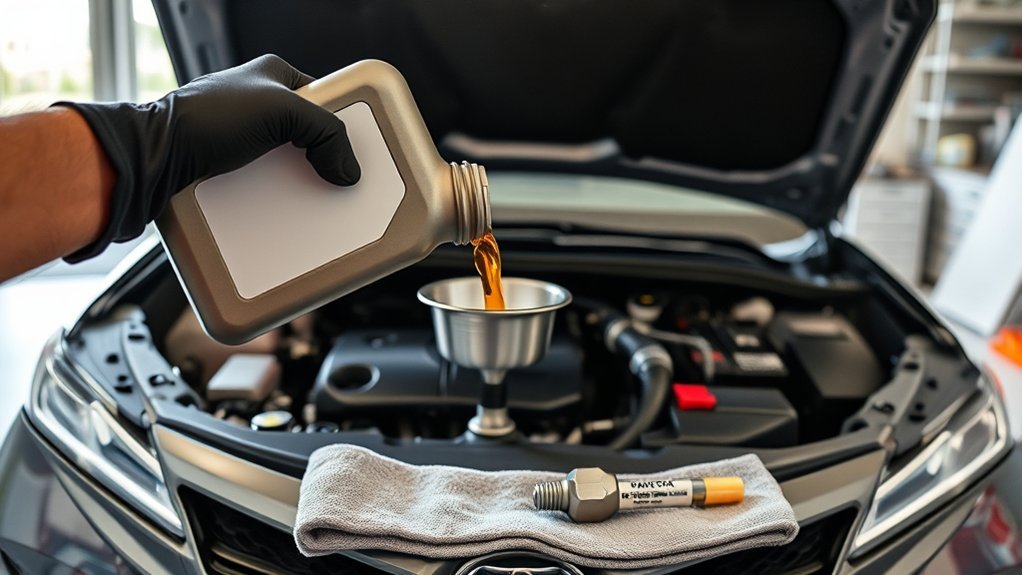
Your Camry should use 0W-20 if that is the viscosity printed in your owner’s manual, maintenance guide, or on the engine oil cap. Toyota does not use one single oil grade across every Camry generation, so checking the exact specification matters more than following a generic chart.
As a general pattern, many older and mid-generation Camry engines commonly use 0W-20, while some newer four-cylinder and hybrid models call for 0W-16 or 0W-8. For example, Toyota’s 2025 Camry Hybrid manual explains 0W-8 viscosity because that newer hybrid generation is designed around very low-viscosity oil. That means a blanket “all Camrys use 0W-20” claim is not accurate.
Warning: Do not switch to 0W-20 just because it is common for Camrys. If your manual specifies 0W-16 or 0W-8, use that grade unless Toyota lists 0W-20 as a temporary substitute.
What “0W-20” Actually Means for Engines
The oil grade 0W-20 describes how the oil behaves in cold conditions and at normal engine operating temperature. It does not mean the oil is always “thin” in the same way at every temperature. It means the oil meets a specific cold-start performance range and a specific hot-viscosity range under the SAE engine-oil grading system.
Cold-Start Flow
The 0W part refers to winter-grade cold-start behavior. Compared with 5W-20, a 0W-20 oil is designed to flow better in very cold conditions, helping oil reach bearings, cam lobes, timing components, and valve-train surfaces more quickly after startup.
This matters because startup is one of the moments when an engine needs fast lubrication. The quicker the oil moves through narrow passages, the sooner it can build a protective film between moving metal surfaces.
Operating Viscosity
The 20 part refers to the oil’s high-temperature viscosity grade. Once the engine is warm, 0W-20 and 5W-20 fall into the same SAE 20 operating-viscosity class, but the total formulation can still differ by brand, oil standard, and additive package.
In a Camry engine designed for 0W-20, that viscosity helps reduce internal drag while still maintaining the protective oil film Toyota engineered the engine around.
Why Toyota Specifies 0W-20 for Some Camry Engines
Toyota specifies 0W-20 on many Camry engines because the oil grade matches the engine’s bearing clearances, oil passages, oil pump behavior, variable valve timing system, emissions goals, and fuel-economy calibration. In other words, it is not just a fuel-saving choice; it is part of the engine design.
Cold Start Protection
When a cold engine starts, oil needs to move quickly from the oil pan to critical parts. A 0W-20 oil helps reduce the delay before full lubrication reaches the upper engine, timing chain area, and valve train.
- Check the manual: Confirm the correct grade for your exact Camry before buying oil.
- Use the right standard: Choose the API or ILSAC rating Toyota lists for your model year.
- Drive gently after startup: Let oil temperature rise before hard acceleration, especially in cold weather.
Engine Efficiency Design
Lower-viscosity oil can reduce pumping losses and internal friction in engines designed for it. That helps the Camry meet fuel-economy and emissions targets while keeping oil flow predictable through narrow passages and hydraulic systems.
This is especially important for systems that rely on oil pressure and oil cleanliness, including variable valve timing actuators and oil control valves.
Warranty and Compliance
Using the correct oil is part of basic maintenance. Toyota warranty materials state that owners are responsible for required maintenance, and Toyota recommends keeping receipts and service records. A warranty cannot normally be denied just because you lack receipts, but coverage can become harder to defend if an oil-related failure is linked to incorrect maintenance.
Pro Tip: Keep a photo or receipt showing the oil brand, viscosity, API/ILSAC rating, mileage, and date. That simple record can help if you ever need to prove maintenance history.
Cold Starts and Fuel-Economy Benefits of 0W-20
In a Camry designed for 0W-20, the main benefits are faster cold-start circulation, lower internal friction, and proper operation of oil-pressure-controlled components. The difference is most noticeable in cold climates, short-trip driving, and engines with tight modern clearances.
Fuel-economy gains from lower-viscosity oil are usually modest in daily driving, but manufacturers use these oils because small reductions in friction add up across many operating conditions. The more important point for owners is that the engine was calibrated around a specific oil behavior.
The right oil is not just the right viscosity number. It must also meet the performance standard Toyota lists for your Camry, such as API SP or the required ILSAC category.
0W-20 vs 5W-20 and Thicker Oils
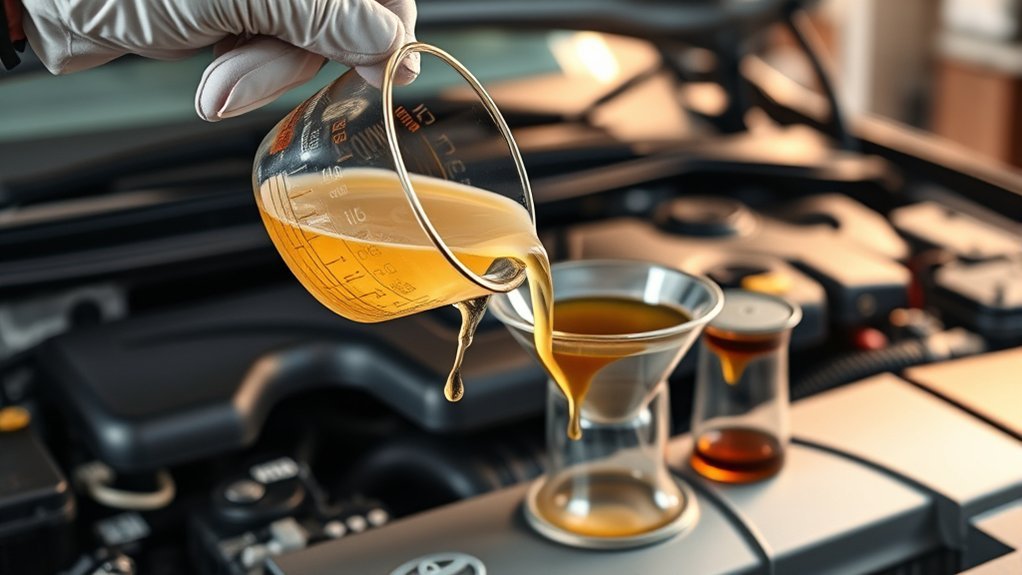
Both 0W-20 and 5W-20 are SAE 20 oils at operating temperature, but 0W-20 has better low-temperature flow requirements. That is why 0W-20 is preferred when Toyota specifies it, especially for cold-start protection.
Thicker oils such as 5W-30 or 10W-30 may be correct for some older engines or certain severe operating conditions when the manual allows them, but they should not be used as an upgrade in a modern Camry that specifies 0W-20, 0W-16, or 0W-8 unless Toyota permits it.
| Oil Grade | Best Use | Camry Guidance |
|---|---|---|
| 0W-20 | Fast cold flow with SAE 20 hot viscosity | Use when your manual specifies 0W-20. |
| 5W-20 | Similar warm viscosity, weaker cold-flow rating than 0W | Use only if Toyota allows it, often as a temporary substitute in some manuals. |
| 0W-16 or 0W-8 | Very low-viscosity oils for newer high-efficiency engines | Use when specified for newer Camry engines; do not replace with 0W-20 unless Toyota permits it. |
| 5W-30 | Older designs or specific high-temperature/load use when approved | Do not use in a modern Camry unless your manual lists it. |
[Products Worth Considering]

Castrol GTX Full Synthetic 5W-30 motor oil is designed to deliver maximum engine protection in severe driving conditions. It helps fight wear, control sludge, and resist viscosity breakdown while supporting longer intervals between oil changes. Formulated to meet or exceed key industry and vehicle manufacturer specifications, it offers dependable performance for modern engines.

Castrol EDGE 0W-20 advanced full synthetic motor oil is engineered for drivers seeking strong wear protection, excellent viscosity control, and thermal stability. It delivers superior performance in critical engine areas, including fuel economy, high-temperature protection, sludge control, and wear defense. Designed for extended oil-change intervals, it helps keep modern engines running smoothly under demanding conditions.

This 2-piece oil control variable valve timing solenoid set is designed to help restore proper VVT operation and engine performance across a wide range of Toyota, Lexus, Scion, and Pontiac applications. Built to meet or exceed OE performance, it uses quality seals for reliable oil control and helps reduce issues caused by improper oil flow. It is a practical replacement choice for maintaining smooth engine timing and dependable drivability.
What Parts 0W-20 Helps Protect
When 0W-20 is the correct grade, it helps protect parts that depend on quick oil flow and stable pressure. That includes timing components, camshaft surfaces, bearings, piston rings, and variable valve timing hardware.
- Timing chain and tensioner: Fast oil flow helps the tensioner work quickly after startup and reduces chain noise and wear.
- VVT actuators: Variable valve timing depends on clean oil at the right pressure and viscosity.
- Cam lobes and valve train: Correct oil film strength helps reduce metal-to-metal contact.
- Emissions systems: Modern API and ILSAC oils are designed to support emission-control durability and deposit control.
Warranty and Maintenance: Stick to the Spec
The best maintenance strategy is to follow Toyota’s published schedule for your model year. Some Camry maintenance schedules allow longer oil-change intervals under normal driving when the correct synthetic oil is used, while severe service may require more frequent changes. Short trips, frequent idling, dusty roads, extreme temperatures, and stop-and-go use can all justify shorter intervals.
- Confirm the grade: Check the owner’s manual, oil cap, or Toyota’s online manual page for your year.
- Confirm the standard: Look for the required API and ILSAC markings on the bottle.
- Record the service: Save receipts and write down the mileage.
- Check the level: A correct oil grade cannot protect the engine if the oil level is low.
Note: Oil-change intervals are not the same for every Camry, every market, or every driving pattern. Use the maintenance guide for your VIN or model year as the final authority.
Cost, Brands, and Reliable 0W-20 Alternatives
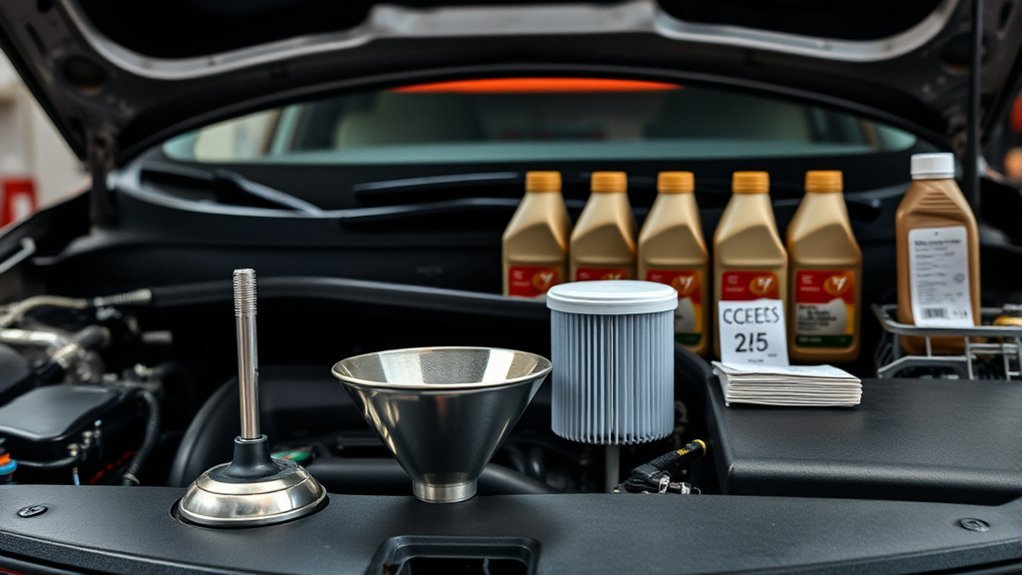
You do not have to buy oil only from a Toyota dealership, but you do need oil that matches Toyota’s requirements. A good 0W-20 for a Camry should show the correct viscosity and the required API/ILSAC certification on the label.
Brands such as Toyota Genuine Motor Oil, Mobil 1, Pennzoil, Valvoline, Castrol, Quaker State, and Super Tech commonly sell 0W-20 oils that may meet modern API and ILSAC standards. Do not choose by brand alone. Read the back label and make sure it matches your manual.
[Products Worth Considering]

The WIX 57060XP XP Oil Filter is engineered for synthetic oil users who need dependable protection in demanding driving conditions. Its advanced synthetic-blended media delivers high filtration efficiency and supports extended service intervals, while the precise fit makes installation quick and straightforward. Built for severe-duty performance, it helps maintain cleaner oil flow and reliable engine protection during towing, stop-and-go traffic, and long highway trips.

This 6-pack engine oil filter set is designed for Toyota applications and compatible cross-reference part numbers, helping support clean oil flow and dependable engine protection. Built from quality materials and featuring 99% multi-pass efficiency, it is made to help extend engine life and maintain performance between service intervals. The included six filters make it a practical choice for routine maintenance and multiple oil changes.
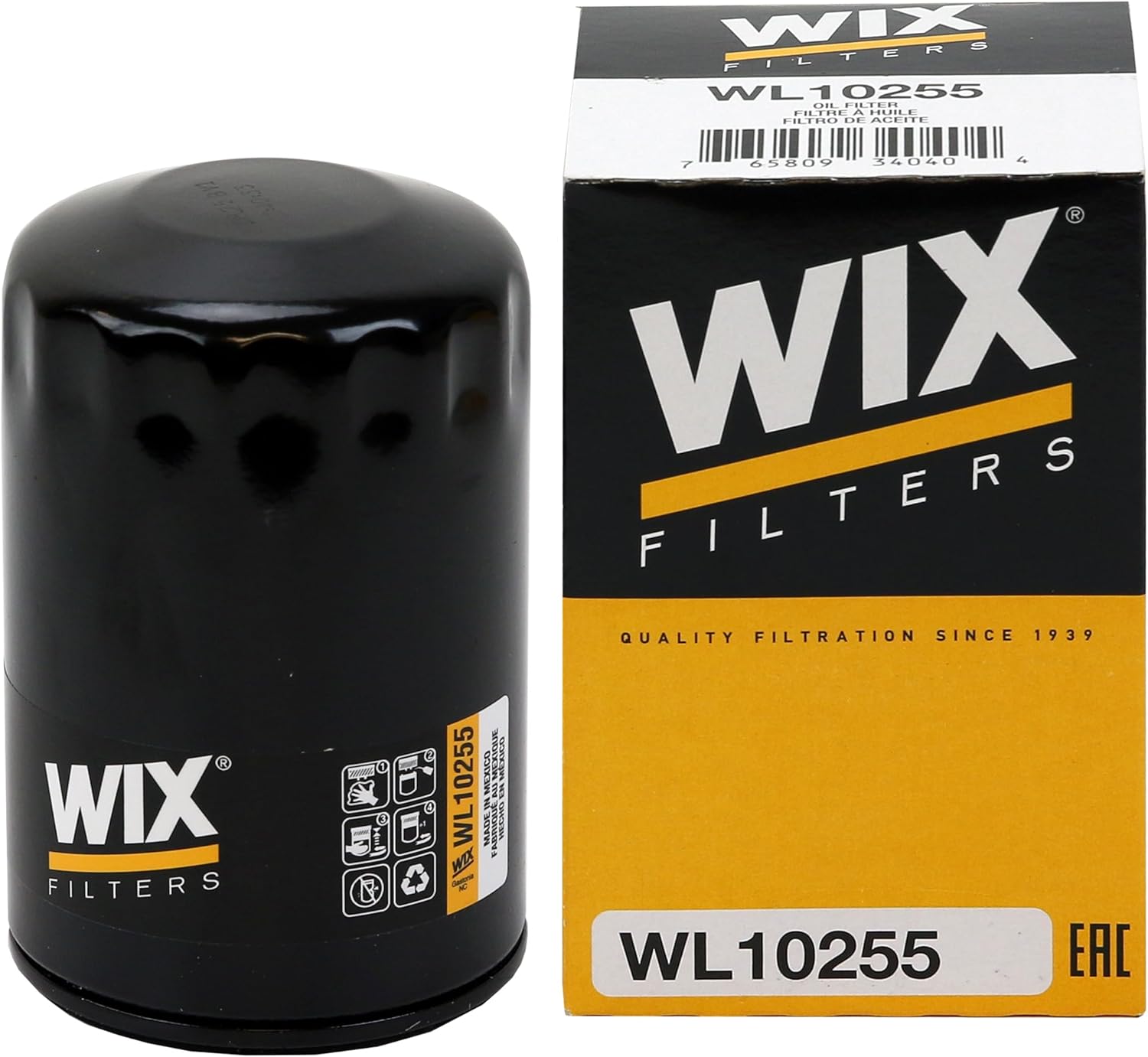
WIX WL10255 is a premium oil filter designed for synthetic and high-mileage oils, delivering reliable protection in everyday driving, towing, stop-and-go traffic, and long highway trips. Its advanced blended media captures fine contaminants with high efficiency, while the silicone anti-drainback valve helps prevent dry starts and supports dependable engine performance over extended service intervals.
How to Choose the Right 0W-20 Oil
- Match viscosity: The front label should say SAE 0W-20.
- Check certification: Look for the correct API category, such as API SP, and the correct ILSAC category if your manual requires it.
- Use the right amount: Refill capacity varies by engine and whether the filter is changed.
- Use a quality filter: The oil filter matters because clean oil is critical for VVT and timing components.
- Verify level after refill: Start the engine, shut it off, wait a few minutes, then check the dipstick on level ground.
Decision Checklist: Pick Oil for Climate and Warranty
Use this checklist before your next Camry oil change:
- Model year: Confirm your Camry’s exact year and engine.
- Oil cap: Check the grade printed on the cap, but still verify with the manual if the cap was replaced.
- Owner’s manual: Use Toyota’s manual as the final authority.
- Driving conditions: Short trips, heavy traffic, dusty roads, and extreme cold or heat may require shorter service intervals.
- Oil label: Match both the SAE viscosity and the API/ILSAC standard.
- Receipts: Keep proof of oil grade, date, mileage, and filter used.
[Products Worth Considering]

This upgraded aluminum oil filter housing cap is designed as a direct replacement for compatible Toyota and Lexus models, helping restore a secure, reliable seal for the oil filter housing. Built from durable aluminum, it offers improved strength and heat resistance over factory plastic covers, while the included gasket and plug support straightforward installation and dependable leak-free performance.
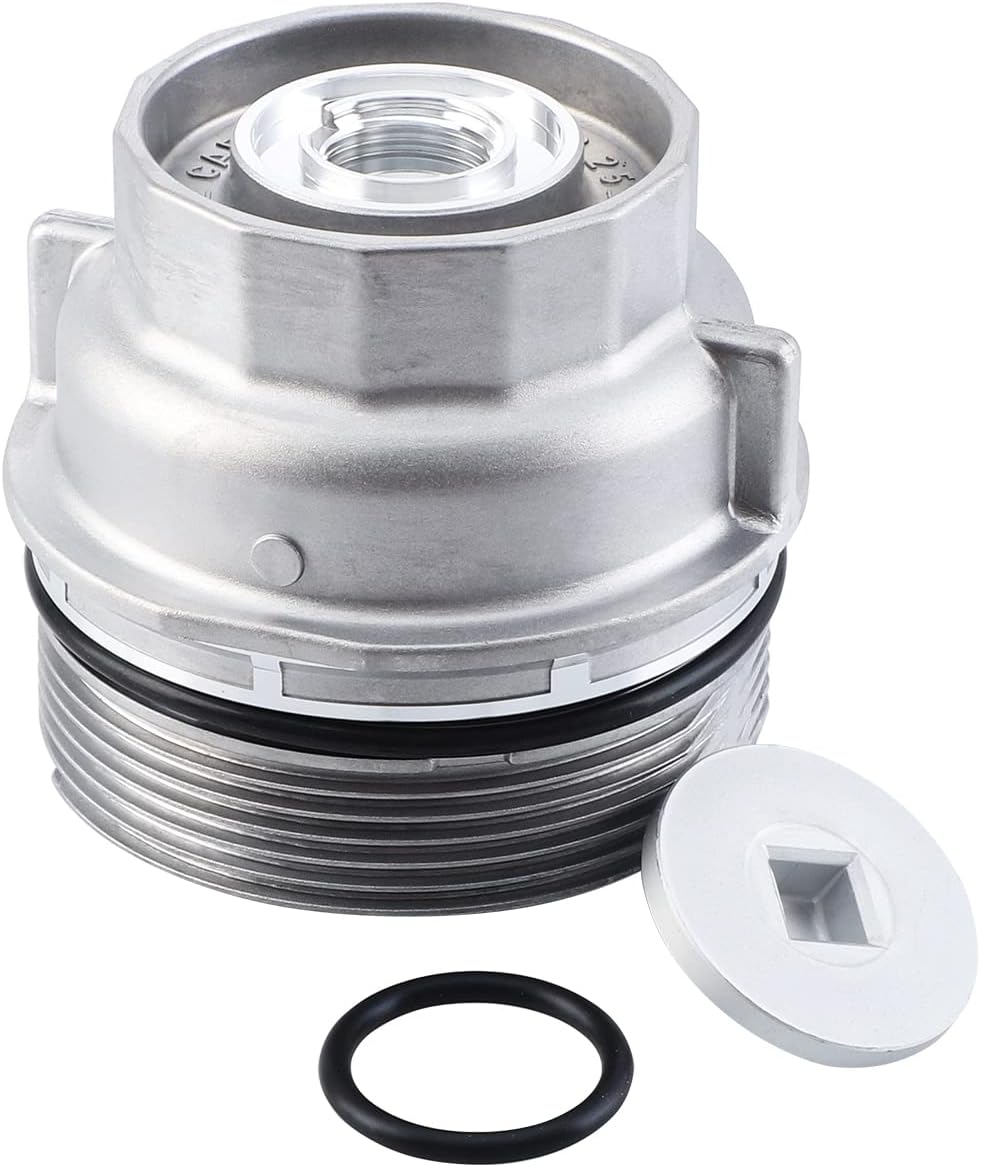
This oil filter housing cap assembly is designed as a replacement for select Toyota and Lexus vehicles, helping restore proper sealing and reliable oil filter function during routine maintenance. Built to meet OEM standards, it supports leak-free performance and long-lasting durability while fitting a wide range of popular models across multiple years.

Designed for select Toyota Camry models, this custom floor mat and cargo liner set provides full-coverage protection without trimming. The all-weather TPE construction helps block water, mud, snow, and debris while staying flexible, odorless, and easy to clean. Raised edges, precision fitment, and secure retention help keep the mats in place and your vehicle’s interior looking neat.
Frequently Asked Questions
Can I use 0W-20 in a Toyota Camry?
Yes, you can use 0W-20 in a Toyota Camry if Toyota specifies 0W-20 for your exact model year and engine. Do not use it as a universal Camry oil because some newer Camrys specify 0W-16 or 0W-8.
What happens if I use 5W-20 instead of 0W-20?
In some engines, Toyota may allow 5W-20 temporarily if 0W-20 is unavailable, but it is not always approved. 5W-20 has the same SAE 20 hot-viscosity grade but does not match 0W-20’s cold-temperature performance.
Is 0W-20 better than 5W-30 for a Camry?
It is better only if your Camry was designed for 0W-20. A thicker 5W-30 oil is not an upgrade unless Toyota lists it for your engine or driving conditions. Using thicker oil without approval can reduce cold-start flow and fuel economy.
Do all Toyota Camrys take 0W-20?
No. Camry oil requirements vary by year, engine, and market. Some newer Camry engines specify 0W-16 or 0W-8, while many older models used 0W-20 or 5W-30. Always confirm with the owner’s manual.
How often should I change 0W-20 oil in a Camry?
Follow the maintenance guide for your exact Camry. Normal-service intervals may be longer on some models, while severe-service driving usually requires shorter intervals. If you drive mostly short trips, in extreme weather, or in heavy traffic, check the severe-service schedule.
Conclusion
Use 0W-20 in your Toyota Camry when Toyota specifies it for your exact engine. It helps with cold-start flow, friction reduction, variable valve timing response, and overall engine protection. But do not treat 0W-20 as universal for every Camry. Check your manual, match the required API/ILSAC standard, keep service records, and change the oil on the schedule that fits your driving conditions.
Sources
- Toyota Owners Manuals and Warranties — official Toyota manual lookup by vehicle year and model.
- Toyota 2025 Camry Hybrid maintenance data — official Toyota oil-viscosity explanation for the newer Camry Hybrid.
- Toyota 2024 Camry Warranty and Maintenance Guide — warranty and maintenance responsibility guidance.
- American Petroleum Institute: Latest Oil Categories — API SP, ILSAC GF-6, timing-chain wear, LSPI, and oil-standard information.
- API Motor Oil Guide — official guide to API and ILSAC gasoline-engine oil categories.