
When both oils meet your engine’s required viscosity and performance specification, full synthetic oil generally provides more performance margin than conventional oil in cold starts, high heat, oxidation, short-trip driving, towing, and other severe conditions. But the specification in your owner’s manual comes first: the wrong viscosity or approval does not become correct just because the bottle says “synthetic.” Conventional oil can still be a sensible choice for some older or lightly driven engines when the manufacturer allows it.
Last updated: September 16, 2026 — reviewed against current API SQ/ILSAC GF-7 guidance, AAA synthetic-versus-conventional testing, manufacturer maintenance guidance, oil-mixing guidance, and EPA used-oil disposal guidance.
Quick Answer
Choose full synthetic oil when your owner’s manual requires it or when you want more protection margin for temperature extremes, turbocharged/high-output operation, towing, repeated short trips, or other severe driving. Conventional oil can still work in engines that permit it, especially older vehicles used gently in mild conditions. In every case, match the required viscosity and performance specification and follow the manufacturer’s oil-change schedule.
Key Takeaways
- Synthetic oil generally offers more margin against heat, oxidation, cold-start flow problems, deposits, and high-stress driving.
- Conventional oil costs less upfront and can still be appropriate when the vehicle manufacturer permits it and the oil is changed on schedule.
- Oil type never overrides the required SAE viscosity, API/ILSAC category, or manufacturer-specific approval.
- Long-drain synthetic products may advertise very high mileage limits, but your owner’s manual, warranty requirements, severe-service schedule, and oil-life monitor still control.
What Is Conventional Motor Oil and How Is It Made?
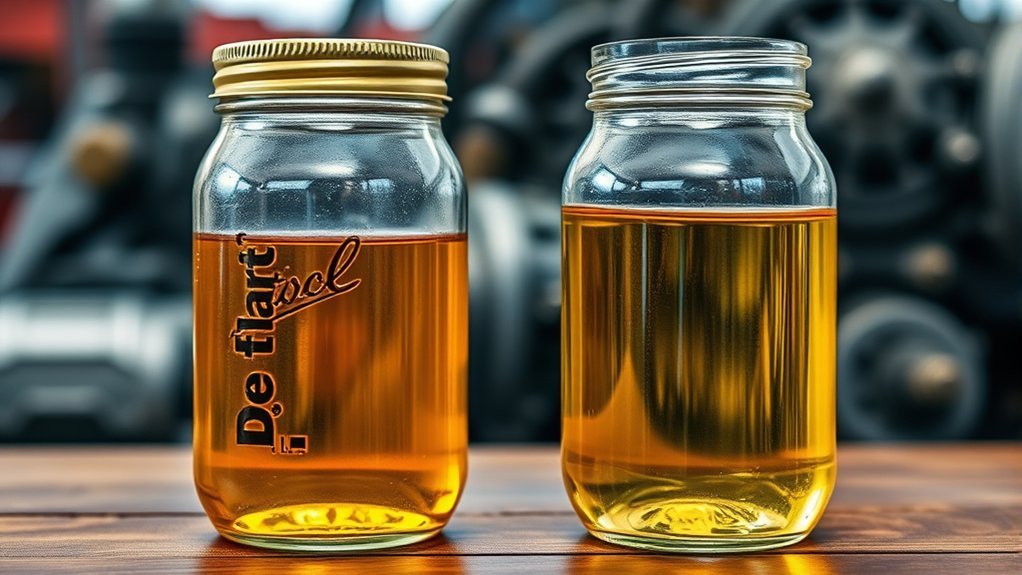
Conventional motor oil is made from refined crude oil. During refining, the base oil is processed and blended with additives that help control wear, corrosion, foaming, oxidation, and deposits. It has protected engines for decades and can still be a practical choice when your vehicle allows it.
The main advantage is cost. Conventional oil is usually cheaper per quart than full synthetic oil. For an older vehicle that is driven gently, does not tow, does not idle excessively, and does not require synthetic oil, a quality conventional oil can be enough as long as it meets the required viscosity and service category.
The tradeoff is performance margin. Conventional base oils generally have a less uniform molecular mix than highly refined or engineered synthetic base oils, so conventional formulations typically have less resistance to very low temperatures, sustained high heat, oxidation, and long service intervals.
Note: Do not choose oil by price alone. The American Petroleum Institute advises vehicle owners to refer to the owner’s manual when choosing an oil category. The oil must match the engine’s required viscosity and performance specification.
Understanding Synthetic Motor Oil: Composition and Benefits
Synthetic motor oil uses more highly refined or chemically engineered base oils plus a carefully balanced additive package. Compared with basic conventional oil, a quality synthetic formulation is designed to behave more consistently across large temperature swings and demanding engine conditions.
That matters most during cold starts, hot operation, stop-and-go traffic, towing, turbocharged driving, and repeated short trips where the engine may spend more time warming up. In these conditions, an appropriate synthetic oil can provide stronger low-temperature pumpability, oxidation resistance, and deposit control while maintaining the viscosity performance required by the engine.
In a widely cited AAA engine oil study, the synthetic oils tested outperformed their conventional counterparts by an average of 47% across selected laboratory tests. Those tests covered areas including shear stability, deposit formation, volatility, cold-temperature pumpability, and oxidation behavior. The result does not mean every engine requires synthetic oil or that synthetic automatically extends engine life by 47%; it shows why synthetic formulations can provide more performance margin under demanding conditions.
Direct Comparison: Synthetic vs. Conventional Oil
| Factor | Synthetic Oil | Conventional Oil |
|---|---|---|
| Base oil | Highly refined or chemically engineered for more consistent performance | Refined petroleum base oil with a less uniform molecular mix |
| Cold starts | Typically provides stronger low-temperature performance when the correct winter grade is used | Generally offers less low-temperature margin than an equivalent quality synthetic |
| Heat resistance | Generally stronger resistance to oxidation and thermal stress | Typically has less margin under prolonged high heat or severe service |
| Oil-change interval | May support longer manufacturer-approved intervals, depending on the vehicle and oil | Often associated with shorter intervals on vehicles that permit conventional oil |
| Upfront cost | Higher | Lower |
| Best fit when both are permitted | Temperature extremes, turbo/high-output operation, towing, repeated short trips, severe service, or drivers wanting more performance margin | Older engines, light-duty driving, mild conditions, short manufacturer-approved intervals, and budget-focused maintenance |
[Products Worth Considering]

Castrol GTX Full Synthetic 5W-30 motor oil is designed to deliver maximum engine protection in severe driving conditions. It helps fight wear, control sludge, and resist viscosity breakdown while supporting longer intervals between oil changes. Formulated to meet or exceed key industry and vehicle manufacturer specifications, it offers dependable performance for modern engines.

Castrol EDGE 0W-20 advanced full synthetic motor oil is engineered for drivers seeking strong wear protection, excellent viscosity control, and thermal stability. It delivers superior performance in critical engine areas, including fuel economy, high-temperature protection, sludge control, and wear defense. Designed for extended oil-change intervals, it helps keep modern engines running smoothly under demanding conditions.

These adjustable oil filter pliers are designed to help remove engine filters, conduit, and fittings with better reach and control in tight spaces. The bent head design improves access, while soft nonslip grips add leverage and comfort during use. Built with high carbon steel and a Permalock fastener, they offer dependable strength and long-lasting performance.
Which Oil Should You Choose? A 5-Step Decision Rule
- Check what the engine requires. If the owner’s manual requires a particular synthetic oil or manufacturer approval, use it. Do not downgrade to conventional oil.
- Match the viscosity and performance specification. SAE grade and required API, ILSAC, ACEA, or manufacturer approval matter more than the marketing label on the front of the bottle.
- Check the severe-service schedule. Towing, repeated short trips, long idling, dust, or temperature extremes can shorten the interval on some vehicles. Use your own maintenance guide’s definition of severe service.
- Consider operating stress. When both oil types are allowed, full synthetic usually provides more margin for high heat, cold starts, turbocharged/high-output operation, and demanding use.
- Compare total maintenance cost, not one bottle. Conventional oil may cost less per change, but the useful comparison is the cost across the manufacturer-approved service interval.
Decision shortcut: If your manual requires synthetic, the decision is finished. If both types are permitted, synthetic buys more performance margin while conventional buys a lower upfront price.
[Products Worth Considering]

The Funnel King 32950 Oil Drain Pan is a compact fluid catch basin designed for clean, easy draining during routine maintenance. Its open shape and pour edge help transfer used oil, coolant, and other shop fluids with less mess, while the lightweight polypropylene construction stands up to common automotive chemicals. Sized to fit under many cars and small engines, it is a practical choice for garages, workshops, and DIY oil changes.

The Scepter AM07029 Oil Drain Pan makes oil changes cleaner and easier by helping contain spills and reducing mess in the garage or driveway. Its lidded opening, removable drain screen, and gasketed pour spout support convenient collection, transport, and disposal of fluids. Built from durable high-density polyethylene, it resists rust, dents, and corrosion for reliable use with engine oil, transmission fluid, hydraulic fluid, and antifreeze.

Advanced protection against the four main causes of engine breakdown: wear friction heat and deposits
Benefits of Synthetic Oil
Enhanced Engine Protection
Synthetic oil’s biggest advantage is its performance margin under stress. Quality synthetic formulations resist oxidation, help control deposits, and maintain their required viscosity characteristics across demanding conditions. That can be especially useful in engines that run hot, use turbochargers, spend long periods in traffic, or make frequent short trips.
Synthetic oil also tends to provide stronger low-temperature performance when the correct SAE grade is used. On a cold start, the oil must reach bearings, valvetrain components, timing components, and other lubricated surfaces quickly. The correct winter grade plus a capable synthetic formulation can improve cold-temperature pumpability without changing the hot-viscosity grade specified by the manufacturer.
Longer Oil Change Intervals
Synthetic oil can support longer service intervals in vehicles whose manufacturers approve those intervals, but there is no universal synthetic-oil mileage. Many modern maintenance schedules fall around 7,500 to 10,000 miles, while other vehicles require shorter intervals or use an oil-life monitor that adjusts service timing to operating conditions.
For example, Toyota has published guidance showing 10,000-mile or 12-month intervals for certain vehicles certified for 0W-20 oil, while special operating conditions can require 5,000-mile or six-month oil and filter changes. Ford also uses oil-life monitoring on many vehicles, so the correct interval depends on the specific model and how it is operated.
Warning: Do not extend oil changes just because the bottle says “extended performance.” Your owner’s manual, warranty requirements, oil-life monitor, and severe-service schedule should set the limit.
Drawbacks of Conventional Oil: When It Falls Short
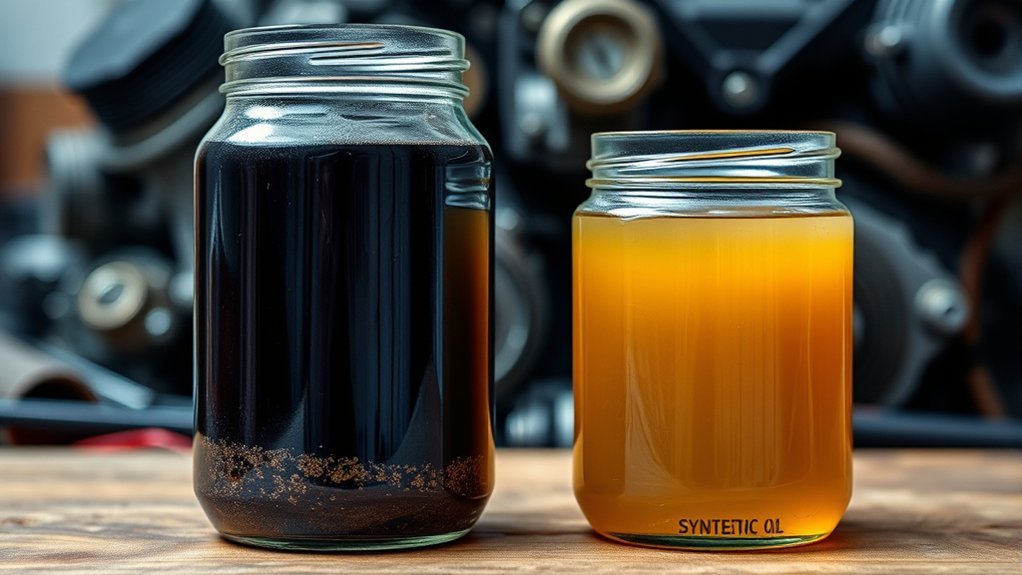
Limitations in Extreme Conditions
Conventional oil can work well when an engine permits it and the vehicle operates under mild conditions, but it generally offers less margin than full synthetic under sustained heat, very cold starts, towing, heavy loads, and other demanding use.
This is one reason synthetic oil is commonly chosen for turbocharged or high-output engines and vehicles that see severe service. Common severe-use examples include repeated short trips, dusty roads, extended idling, towing, mountain driving, extreme heat, and extreme cold. These are only examples; automakers define severe or special operating conditions differently, so use the definition and interval in your own maintenance guide.
Shorter Oil Change Intervals
Vehicles that permit conventional oil often use shorter change intervals than vehicles designed around modern synthetic oils. That means the lower price per quart does not automatically produce the lowest annual maintenance cost.
Still, conventional oil is not automatically a poor choice. If the owner’s manual allows it, the product meets every required specification, your driving conditions are mild, and you change it on schedule, conventional oil can be a sensible budget option.
Greater Sludge Formation Risk
Sludge develops as oil oxidizes, thickens, and mixes with contaminants. Because quality synthetic oils generally resist oxidation and high-temperature breakdown better than basic conventional oils, they provide more margin against deposit formation during demanding service or longer approved intervals.
If an engine already contains heavy sludge from neglected maintenance, changing oil type is not an instant repair. Follow appropriate diagnostic and service guidance, and avoid aggressive chemical flushing unless the engine manufacturer or a qualified technician recommends it for that engine.
Recommended Oil Change Intervals for Each Type
The safest oil-change interval is the interval specified for your exact vehicle or calculated by its oil-life monitor. The figures below are context for comparing oil types, not replacement maintenance schedules.
| Oil / Driving Situation | Common Context | What Actually Controls |
|---|---|---|
| Conventional oil | Older schedules commonly used shorter intervals, often around 3,000–5,000 miles | The vehicle’s normal- or severe-service maintenance schedule |
| Full synthetic oil | 7,500–10,000 miles appears in many modern maintenance contexts, but vehicles vary widely | Owner’s manual, maintenance guide, warranty requirements, and oil-life monitor |
| Extended-performance synthetic oil | Specific products may advertise protection as high as 20,000 miles | Do not assume a product claim overrides the vehicle manufacturer’s service requirements |
| Severe service | Often requires a shorter interval than normal service | Use the severe/special-operating-conditions definition for your exact vehicle |
Some premium synthetic products are specifically engineered for extended intervals. Mobil 1 Extended Performance, for example, currently states protection up to 20,000 miles or one year for that product under its stated conditions. Mobil also tells drivers under warranty and those operating in severe conditions to follow the vehicle manufacturer’s guidance. That 20,000-mile figure is a product-specific claim, not a universal synthetic-oil interval.
Pro Tip: If your vehicle has an oil-life monitor, reset it only after the oil and filter are actually changed. Keep receipts for oil and filters, especially while the vehicle is under warranty.
Choosing the Right Oil for Your Engine: What You Need to Know
Start with the owner’s manual. Look for the SAE viscosity grade, required performance category, and any manufacturer-specific approval. Examples of viscosity grades include 0W-20, 5W-30, and 0W-16. The number before the “W” is the winter-performance grade; lower W grades generally meet colder cranking and pumping requirements. The second number identifies the oil’s high-temperature viscosity grade.
Next, check the oil label. The API Motor Oil Guide explains the API Donut, Starburst, Shield, and current service categories. As of September 2026, API’s current guide lists API SQ, ILSAC GF-7A, and GF-7B as the newest gasoline-engine standards, introduced in March 2025. The Starburst identifies GF-7A oils, while the Shield identifies GF-7B oils and applies to SAE 0W-16. API’s guide lists GF-6A and GF-6B as current through September 30, 2026 and obsolete beginning October 1, 2026. Always use the standard your vehicle manufacturer allows rather than choosing a newer category by name alone.
When Synthetic Oil Is the Better Choice
- Your owner’s manual requires full synthetic oil or a specification met by the synthetic product you are considering.
- Your engine is turbocharged, supercharged, high-output, or operates under other demanding conditions where the manufacturer allows the oil.
- You regularly drive in very hot or very cold weather.
- You tow, haul, idle for long periods, or regularly drive under high load.
- You mostly take short trips and your manufacturer treats that use as severe service.
- Both oil types are permitted and you want more performance margin against oxidation, deposits, and temperature extremes.
When Conventional Oil Can Still Make Sense
- Your owner’s manual explicitly permits an available conventional oil that meets every required specification.
- The vehicle is older and used for light-duty driving.
- You drive in mild conditions and follow the specified maintenance schedule.
- You prioritize lower upfront oil cost and are comfortable with the manufacturer-approved service interval.
What About Synthetic Blend and High-Mileage Oil?
Synthetic blend oil combines conventional and synthetic base oils in a formulated product. It can be a middle-ground option when you want some synthetic performance benefits at a lower price than full synthetic, provided the finished oil carries every specification your engine requires.
High-mileage oil is formulated for aging engines and is commonly marketed for vehicles around 75,000 miles or more. Depending on the product, it may include seal conditioners and a different additive or base-oil strategy aimed at oil consumption, deposits, or older seals. High-mileage oil can be conventional, synthetic blend, or full synthetic, so “high mileage” does not tell you the base-oil type by itself.
Cost Comparison: Synthetic vs. Conventional Motor Oil
Synthetic oil costs more upfront, but the useful comparison is total maintenance cost across the interval your vehicle actually permits. That depends on the oil price, filter, labor, annual mileage, and how frequently the manufacturer requires service under your driving conditions.
AAA’s engine oil research found higher synthetic-oil-change cost alongside stronger synthetic performance in its laboratory testing. Because retail oil and service prices vary by region and change over time, an older survey price should not be treated as a current quote.
For demanding driving, synthetic oil may justify its higher cost through additional performance margin. For a lightly driven older car that permits conventional oil and uses the same required specification, conventional oil may remain the lower-cost maintenance choice.
The best-value oil is not automatically the cheapest bottle or the most expensive synthetic. It is the oil that meets the engine’s specification, fits the vehicle’s operating conditions, and is changed on the required schedule.
[Products Worth Considering]
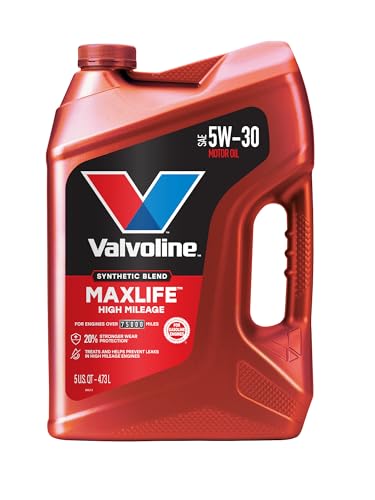
Formulated for engines with 75,000 miles or more, Valvoline MaxLife High Mileage synthetic blend is formulated with seal conditioners to help prevent oil leaks and reduce oil consumption

Up to 3X better durability vs. industry standards in sequence IVA engine tests
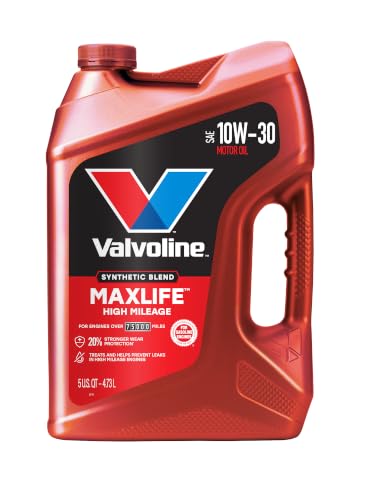
Formulated for engines with 75,000 miles or more, Valvoline MaxLife High Mileage synthetic blend is formulated with seal conditioners to help prevent oil leaks and reduce oil consumption
Can You Switch Between Synthetic and Conventional Oil?
Yes, in most engines you can switch between synthetic and conventional oil when both types meet the correct viscosity and manufacturer-required specification. Pennzoil identifies the idea that you can never switch back after using synthetic oil as a myth and states that synthetic and conventional motor oils are compatible.
The important exception is the vehicle specification. If your engine requires an oil that the available conventional product does not meet, do not downgrade just because conventional oil is cheaper. On an older engine with existing leaks, sludge, or oil consumption, inspect and monitor those conditions rather than assuming a change of oil type will repair them.
Can You Mix Synthetic and Conventional Oil?
Usually, yes. Modern synthetic and conventional motor oils are generally compatible, so adding a compatible oil for an emergency top-off does not normally create a harmful chemical reaction. The priority when the oil level is low is to use an oil that meets the engine’s required viscosity and performance specification as closely as possible.
Mixing does have a practical tradeoff: adding conventional oil to a full-synthetic fill dilutes some of the full synthetic formulation’s performance advantages. Do not assume the mixture still qualifies for the longest interval advertised for a particular full-synthetic product. For routine maintenance, use one correctly specified finished oil and follow the vehicle manufacturer’s interval.
Used Oil Disposal Matters
Whether you use synthetic or conventional oil, used motor oil should never be dumped on the ground or poured into a drain. The U.S. Environmental Protection Agency says used oil from a single oil change can contaminate one million gallons of fresh water. Store drained oil in a secure container and take it to an appropriate recycling location, auto-parts store, garage, or other local facility that accepts used motor oil. Handle the used filter according to local recycling or disposal rules as well.
Frequently Asked Questions
Is it better to get synthetic or conventional oil?
When both meet your engine’s required specification, synthetic oil generally provides more protection margin in heat, cold, oxidation, short trips, towing, and other demanding use. Conventional oil can still be appropriate when your owner’s manual permits it and you change it on the required schedule.
How often should synthetic oil be changed?
There is no universal synthetic-oil interval. Many modern maintenance schedules fall around 7,500 to 10,000 miles, but the correct interval is the one in your owner’s manual, maintenance guide, or oil-life monitor. Severe service can shorten it.
Can I use synthetic oil in an older car?
Usually, yes, if the oil meets the engine’s required viscosity and performance specification. Vehicle age alone does not make modern synthetic oil unsafe. If an older engine already leaks or consumes oil, inspect and monitor that condition and consider an approved high-mileage formulation if appropriate.
Is synthetic oil worth the extra cost?
It often is for engines that require synthetic oil or vehicles exposed to high heat, cold starts, turbocharged/high-output operation, towing, short trips, or other severe use. For an older vehicle that permits conventional oil and sees mild driving, conventional oil may remain the lower-cost option.
Can I switch back to conventional oil after synthetic?
Yes, if conventional oil is permitted for your engine and the product meets every required viscosity and performance specification. If the engine requires a specification that the conventional oil does not meet, do not switch to it.
Can you mix synthetic and conventional oil?
Usually, yes. Compatible synthetic and conventional oils can generally be mixed for a top-off without damaging the engine. Use the correct viscosity and specification, and remember that adding conventional oil can dilute some full-synthetic performance advantages.
Does synthetic oil cause leaks in older engines?
Modern synthetic oil does not inherently cause healthy engine seals to leak. An older engine may already have worn seals, seepage, sludge, or oil consumption that becomes noticeable around the same time as an oil change. Diagnose the existing mechanical condition rather than assuming synthetic oil created it.
Does synthetic oil stop sludge?
Synthetic oil generally resists oxidation and deposit formation better than basic conventional oil, which can reduce sludge risk when the engine is maintained correctly. It will not instantly remove heavy sludge from a neglected engine, and the oil still needs to be changed on schedule.
Conclusion
For most drivers who have a genuine choice between two correctly specified oils, full synthetic provides more performance margin in cold starts, high heat, oxidation, deposits, and demanding driving. It costs more upfront, but the added protection can be worthwhile—especially in engines and operating conditions that place more stress on the oil.
Conventional oil still has a place in engines that explicitly permit it, especially older vehicles driven gently in mild conditions. The deciding rule is simple: start with the owner’s manual, choose the correct viscosity and certification, use a quality filter, check the oil level regularly, and change the oil when the manufacturer requires it. “Synthetic” is an advantage only when the oil is also the correct oil for the engine.
Sources
- AAA Synthetic vs. Conventional Oil Research — supports the 47% average laboratory-test result and explains the scope of AAA’s comparison.
- API Motor Oil Guide — supports API certification marks and current API SQ/ILSAC GF-7A/GF-7B guidance.
- API Oil Categories — supports the recommendation to follow manufacturer oil-performance requirements.
- Toyota Oil Change Guidance — supports manufacturer-specific interval examples and the need to follow Toyota maintenance requirements.
- Ford Oil Change Guidance — supports oil-life-monitor and maintenance-schedule guidance.
- Mobil 1 Extended Performance FAQ — supports the product-specific 20,000-mile/one-year claim and severe-service caveat.
- Pennzoil Synthetic Oil Facts and Myths — supports switching, compatibility, older-engine, and manufacturer-interval guidance.
- U.S. EPA Used Oil Recycling Guidance — supports responsible used-oil disposal and recycling guidance.