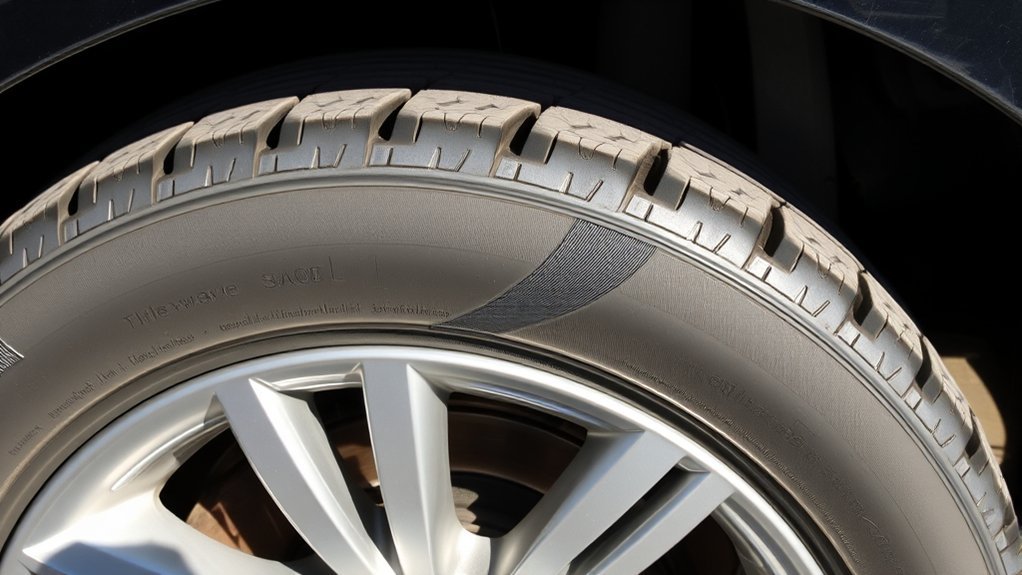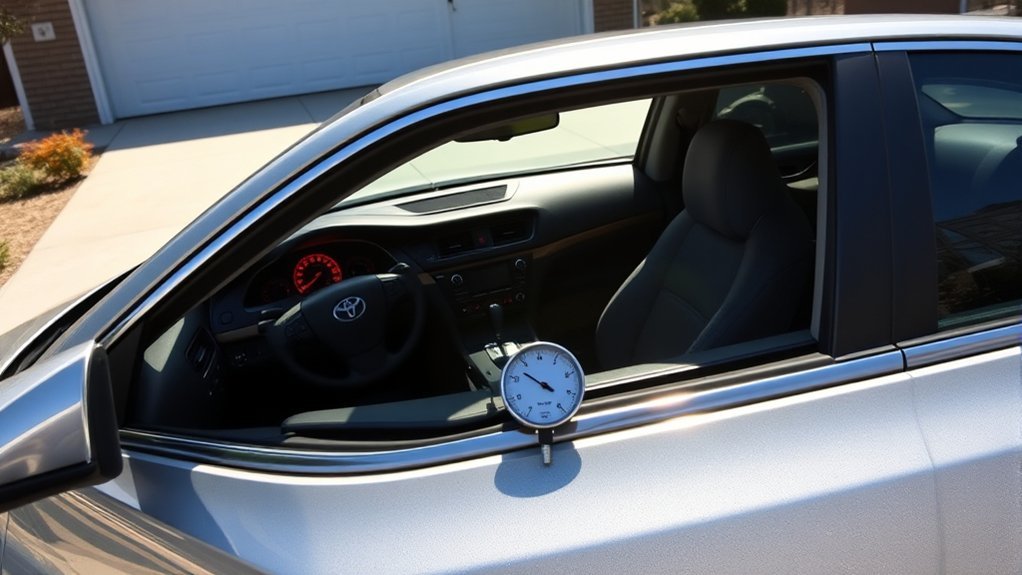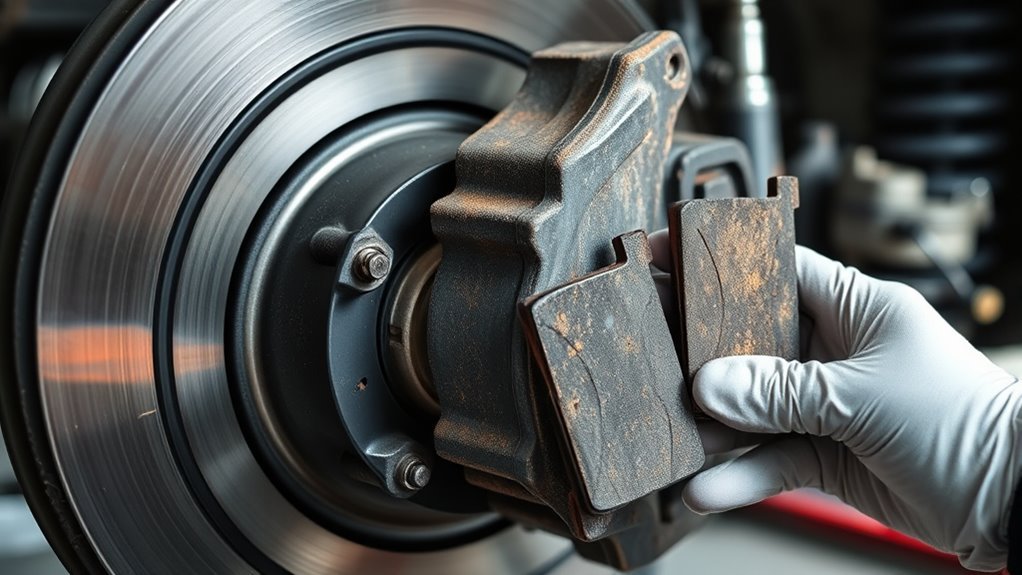
Your Toyota Camry’s brake pads and rotors do not wear out on a fixed calendar date. Many Camry drivers see brake pads last about 30,000–70,000 miles, while rotors may last through one or more pad changes if they remain smooth, thick enough, and within runout limits. The safest answer is to inspect and measure the brakes on schedule, then replace parts based on wear, noise, vibration, corrosion, and Toyota service specifications.
Quick Answer
Toyota Camry brake pads commonly last about 30,000–70,000 miles, but city driving, hills, heavy loading, corrosion, and aggressive braking can shorten that range. Rotors often last longer, but replace or resurface them only when measurements show they are below spec, warped, cracked, deeply scored, or causing vibration.
Key Takeaways
- Toyota does not publish one universal Camry brake replacement mileage; pads and rotors should be inspected and measured.
- Schedule service sooner if you hear grinding, feel vibration, notice pulling, see a brake warning light, or find a fluid leak.
- Pads do not always require new rotors. Reuse rotors only when they are smooth, thick enough, and within Toyota runout limits.
- Newer U.S. Camry Hybrid models still need brake inspections even if regenerative braking reduces friction-brake use in light driving.
At a Glance
| Time Required | 20–45 minutes for a basic visual inspection; longer if wheels are removed |
| Difficulty | Beginner for visual checks; intermediate for wheel removal and measuring rotors |
| Tools Needed | Flashlight, brake pad gauge, jack, jack stands, wheel chocks, lug wrench, torque wrench, micrometer, and dial indicator if measuring rotors |
| Cost | $0–$60 for basic inspection tools; professional brake repair cost varies by parts, axle, model year, and labor rate |
How Long Do Toyota Camry Brake Pads and Rotors Last?
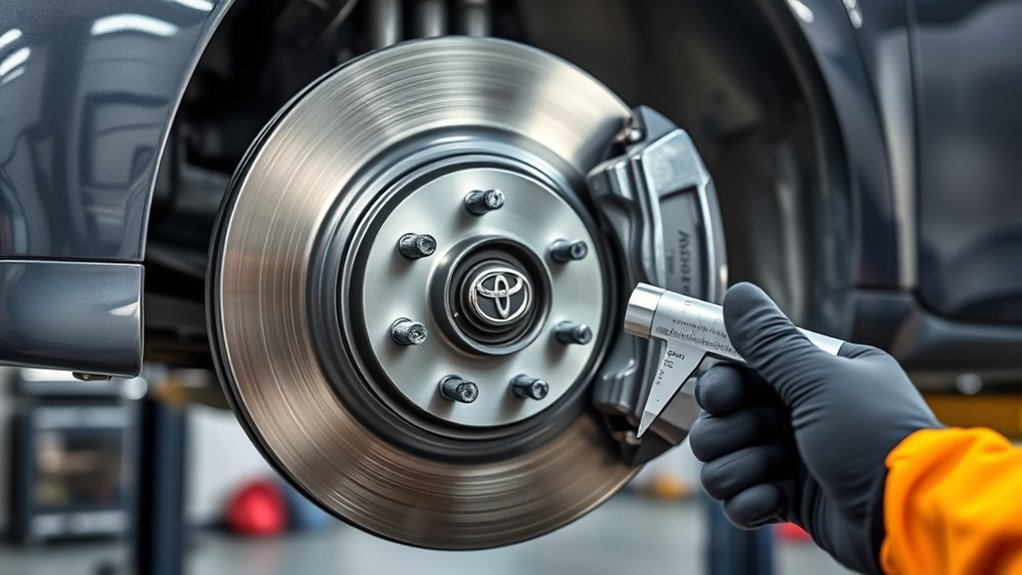
For many Toyota Camry owners, front and rear brake pads last somewhere around 30,000–70,000 miles. Gentle highway driving can push pads toward the upper end, while stop-and-go commuting, steep hills, road salt, sandy roads, and hard braking can wear them much sooner. AAA notes that pads can last roughly 25,000–70,000 miles depending on driving habits, so treat any mileage range as an estimate, not a promise.
Rotors are different. A rotor may last through one pad set, or it may need resurfacing or replacement at the same time as the pads if it is too thin, warped, cracked, heavily grooved, heat-spotted, or rust-damaged. Toyota’s maintenance guidance calls for inspecting brake pads, discs, lining wear, fluid leakage, excessive wear, and disc runout rather than replacing rotors on a fixed mileage interval. You can review the Camry maintenance guidance in Toyota’s Warranty & Maintenance Guide.
| Component | Typical Life | Replace or Service When |
|---|---|---|
| Brake pads | Often about 30,000–70,000 miles | Friction material is near the service limit, wear indicators squeal, pads are cracked/glazed, or inner and outer pads wear unevenly |
| Brake rotors | Often longer than pads, but highly condition-dependent | Below minimum thickness, excessive runout, deep grooves, cracks, heavy rust, vibration, or brake pulsation |
| Brake fluid, hoses, calipers, and hardware | Inspected during scheduled maintenance | Fluid is contaminated or low, hoses leak or crack, slide pins seize, caliper boots tear, or pistons stick |
Note: If a shop says your pads are at “3 mm” or “about 1/8 inch,” you are near the point where replacement should be planned. Exact minimums depend on the pad design, model year, and service information, so use the Toyota repair data or a qualified technician’s measurement.
Driving Habits and Conditions That Shorten Camry Brake Life
Your Camry’s brakes convert motion into heat. The more often and harder you brake, the faster pads and rotors wear. The most common wear accelerators are:
- Stop-and-go traffic: repeated low-speed stops wear pads faster than steady highway driving.
- Hard braking: late braking and rapid deceleration create more heat and can glaze pads or create rotor hot spots.
- Long downhill grades: riding the brake pedal keeps temperatures high and can cause brake fade, odor, vibration, and faster rotor wear.
- Heavy cargo: more vehicle weight means the brakes must absorb more energy at every stop.
- Salt, sand, mud, and moisture: corrosive or abrasive conditions can rust rotors, seize slide pins, and wear pads unevenly.
- Hybrid driving patterns: Camry Hybrid regenerative braking may reduce friction-brake wear in gentle driving, but the pads, rotors, calipers, and fluid still need regular inspection because corrosion and sticking hardware can develop when friction brakes are used lightly.
Warning: Do not assume every Camry is designed for trailer towing. For newer U.S. Camry Hybrid models, Toyota’s owner information says Toyota does not recommend towing a trailer. Check your exact owner’s manual before towing or installing a hitch.
To extend brake life, leave more following distance, coast early when safe, use lower-speed control on long descents, avoid resting your foot on the brake pedal, and keep tires properly inflated and aligned. Those habits reduce heat and help the pads contact the rotors evenly.
Warning Signs Your Camry Brakes Need Service
Do not wait for a mileage target if the brakes are already showing symptoms. Schedule a brake inspection promptly if you notice any of these signs:
- Squealing or chirping: often caused by pad wear indicators, glazed pads, or hardware vibration.
- Grinding: may mean the pad material is gone and metal is contacting the rotor.
- Vibration or pulsing: often points to rotor thickness variation, runout, uneven pad transfer, or worn suspension parts.
- Pulling to one side while braking: may indicate uneven pad wear, a sticking caliper, a hose issue, or tire/suspension problems.
- Soft, spongy, or sinking pedal: can indicate air in the system, old fluid, a hydraulic leak, or master cylinder trouble.
- Brake warning light or ABS light: needs diagnosis; do not ignore dashboard brake warnings.
- Burning smell after braking: can signal overheated pads, a dragging caliper, or riding the brakes on hills.
Warning: Stop driving and get professional help if the brake pedal sinks to the floor, the vehicle will not stop normally, brake fluid is leaking, or you hear severe grinding. These are safety-critical symptoms.
Inspecting Toyota Camry Pads, Rotors, Calipers, and Drums at Home
You can do a basic brake check at home, but treat it as an inspection, not a shortcut around professional service. Toyota recommends scheduled maintenance every 5,000 miles or six months, whichever comes first, and its maintenance guide includes brake lining, pad, disc, and fluid checks. If your measurements are uncertain, let a qualified technician inspect the system.
Warning: Never rely on a jack alone. Park on a level surface, set the parking brake only when appropriate for the wheel being serviced, chock the wheels, use jack stands, wear eye protection, avoid inhaling brake dust, and tighten lug nuts with a torque wrench to the specification in your owner’s manual.
[Products Worth Considering]

TOVASTY rear brake pads are designed for a wide range of Toyota and Lexus models, delivering dependable braking performance with a carbon ceramic formula. They help reduce brake dust, promote quieter operation, and support consistent stopping power with improved heat resistance for everyday driving confidence.
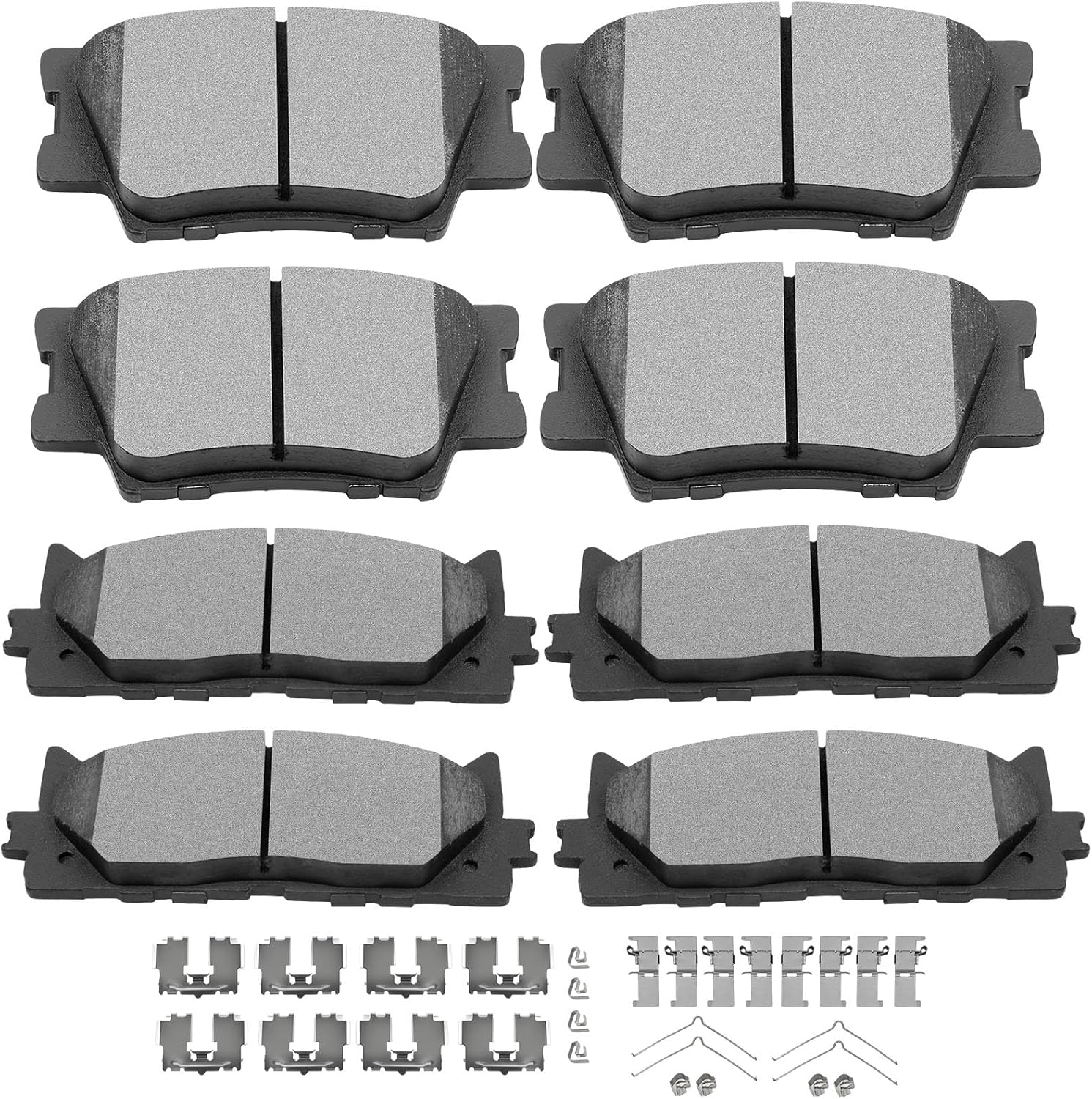
This ceramic front and rear brake pad set is designed as a direct replacement for select Lexus and Toyota models, helping restore reliable stopping performance. The pads feature a scorch-treated friction surface for quicker break-in and consistent wear, while the included gasket design helps reduce vibration and noise for quieter braking. Built for easy installation, this kit comes ready to fit compatible vehicles without modification.

Bosch QuietCast premium ceramic rear brake pads are engineered for quiet, reliable stopping power with low dust performance. Featuring pre-attached multilayer shims, corrosion-resistant backing plates, and OE-style slots and chamfers, this set is designed for smooth fitment and long-lasting durability. It includes pads for one axle, plus hardware and lubricant where available, making installation easier for compatible Lexus, Pontiac, and Toyota vehicles.
Basic Brake Inspection Checklist
- Check brake feel first. Before lifting the car, note any squeal, grind, pull, vibration, soft pedal, warning light, or burning smell.
- Look through the wheel openings. Use a flashlight to estimate outer pad thickness and look for grooves, heavy rust, or cracks on the rotor face.
- Remove the wheel if needed. A wheel-off inspection gives a clearer view of inner and outer pads, which can wear at different rates.
- Measure pad thickness. Check both pads on each caliper. Uneven inner-vs-outer wear often points to sticking slide pins, hardware problems, or caliper issues.
- Inspect rotor condition. Look for deep scoring, heat spots, cracks, heavy rust on the braking surface, and a large outer lip.
- Measure rotor thickness. Use a micrometer and compare the reading with the minimum thickness stamped on the rotor or listed in Toyota service data.
- Check rotor runout if vibration is present. A dial indicator is used to measure lateral runout; SAE J3111 covers measurement methods for rotor thickness variation and lateral runout.
- Inspect calipers and hardware. Check dust boots, slide pins, pad clips, shims, and the caliper piston area for corrosion, tears, sticking, or leakage.
- Check hoses and fluid. Look for cracked hoses, wet fittings, low brake fluid, dark contaminated fluid, or a reservoir level that drops unexpectedly.
- Inspect drums or parking brake shoes if equipped. Some model years or parking-brake designs include shoes or drum-style components; look for scoring, broken springs, rusted hardware, and fluid contamination.
Pro Tip: Record pad thickness by wheel position, such as “front left outer 5 mm, inner 4 mm.” A simple log makes it easier to spot uneven wear before it becomes a rotor or caliper problem.
When to Repair or Replace Brakes (Maintenance Tips to Extend Life)
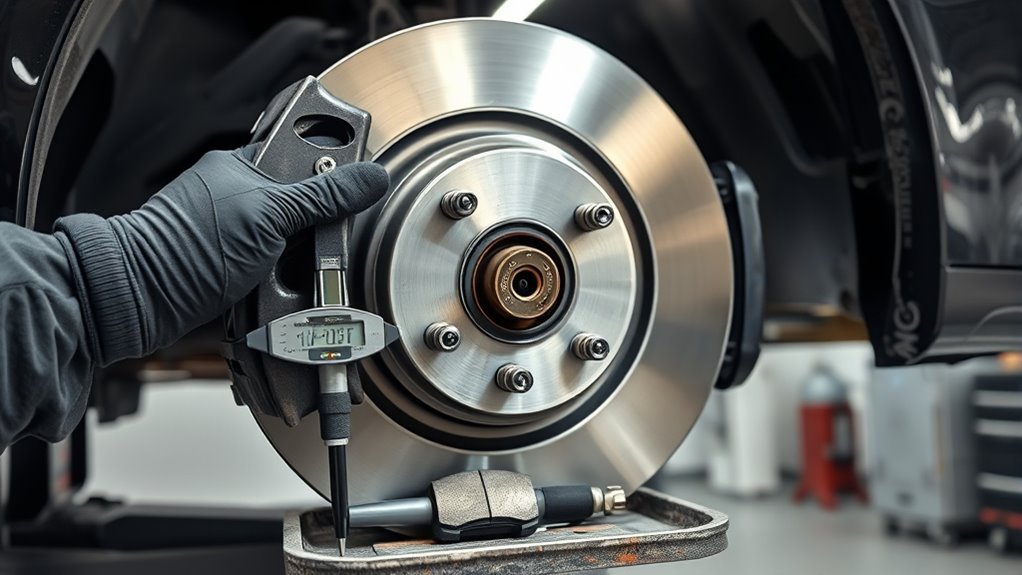
Replace or service brake parts when measurements and symptoms show they are no longer safe or effective. Do not replace rotors automatically, and do not reuse them automatically either. The correct decision depends on condition.
| Situation | Best Action |
|---|---|
| Pads are worn, but rotors are smooth, thick enough, and within runout limits | Pads may be replaced without replacing rotors, using proper cleaning, hardware, and bedding procedures |
| Rotors are grooved, heat-spotted, rusty on the friction surface, or causing vibration | Resurface only if enough material remains; otherwise replace rotors |
| Rotor thickness is below minimum or close to minimum after machining | Replace rotors |
| One pad is much thinner than its mate | Inspect caliper slide pins, piston movement, pad hardware, hoses, and mounting surfaces before installing new pads |
| Pedal feels soft, fluid leaks, or brake warning light is on | Do not treat it as a simple pad job; diagnose the hydraulic or electronic brake system first |
To extend brake life, keep the caliper slide pins clean and lubricated with the correct brake lubricant, replace worn pad hardware, flush brake fluid according to the schedule in your owner’s manual or repair information, and fix dragging calipers before they overheat the pads and rotors. Brake fluid is especially important because moisture contamination can lower boiling point and contribute to internal corrosion.
The best brake job is measurement-based: pad thickness, rotor thickness, rotor runout, hardware movement, fluid condition, and road-test symptoms all matter more than mileage alone.
After any brake pad or caliper work, pump the brake pedal before moving the vehicle so the pads seat against the rotors. Then test the brakes at very low speed in a safe area. Follow the pad manufacturer’s break-in or bedding procedure if one is provided.
[Products Worth Considering]
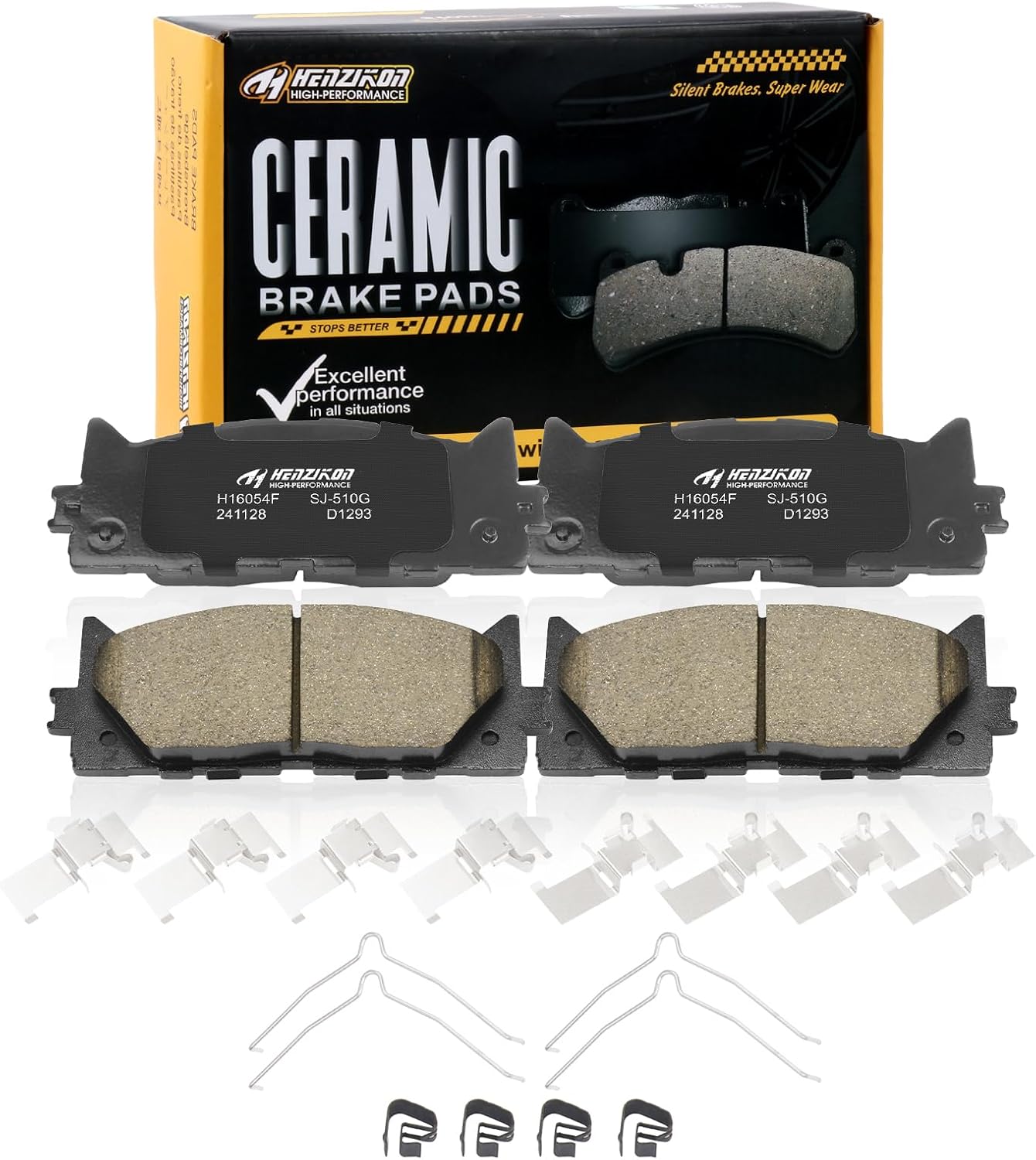
These ceramic front brake pads are designed for compatible Toyota Avalon, Camry, and Lexus ES-series vehicles, offering dependable stopping power and smooth, consistent braking performance. Built with included hardware for easier installation, they help reduce squealing and brake dust while supporting long-term durability for everyday driving.
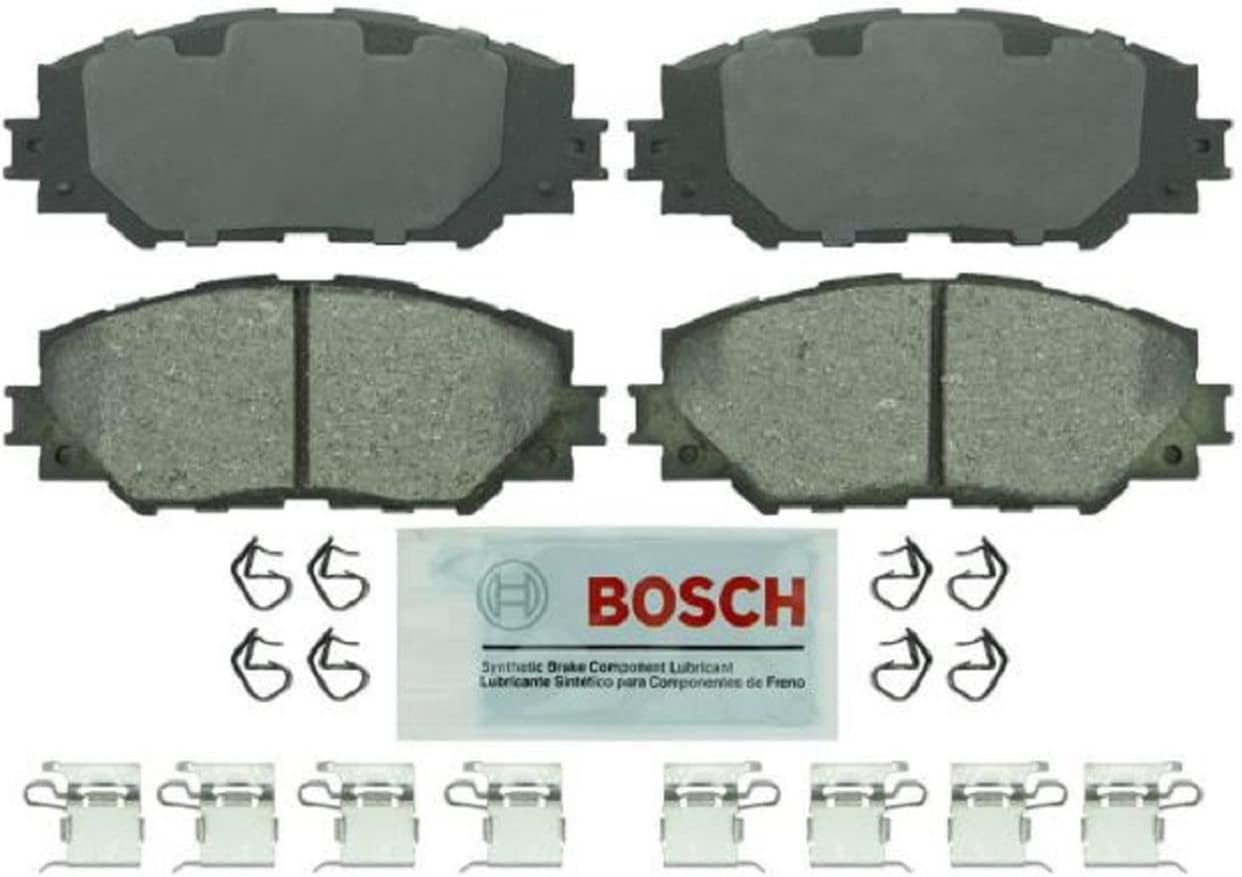
Bosch Blue ceramic front brake pads deliver dependable stopping power with platform-specific friction material designed for select Lexus, Pontiac, Scion, and Toyota vehicles. OE-style shims, slots, and chamfers help promote quiet braking, while the rust-inhibitive coating supports long-lasting performance and cleaner operation. The set includes hardware and synthetic lubricant for easier installation on one axle.

Designed for Toyota Avalon models from 1995 to 1997, this front ceramic brake pads kit delivers dependable stopping power with a quiet, smooth braking feel. The ceramic construction helps reduce brake dust for cleaner wheels while supporting consistent performance and easier maintenance. Built to fit properly with compatible rotors, it offers a practical replacement solution for everyday driving.
OEM vs Aftermarket for Toyota Camry Brakes: Performance, Cost, and Common Pitfalls
Because brakes are safety-critical, choose parts by fit, friction material, heat performance, noise control, warranty, and proven compatibility—not price alone. Toyota Genuine Brake Pads are engineered to work with Toyota braking systems, which makes OEM a predictable choice for pedal feel, fit, and noise control.
That does not mean every aftermarket part is bad. Toyota’s warranty guidance also explains that warranty coverage is not dependent on using one specific brand of replacement part, but replacement parts should be equivalent in quality and design. For aftermarket pads and rotors, choose reputable brands, correct fitment for your exact year/trim/drivetrain, and friction material suited to how you drive.
| Option | Best For | Common Pitfalls |
|---|---|---|
| OEM Toyota | Factory-style feel, quiet operation, known fit, predictable compatibility | Usually higher upfront cost than budget aftermarket parts |
| Premium aftermarket | Drivers who want specific pad materials, price choices, or upgraded rotors | Must verify quality, fitment, friction rating, hardware, and warranty |
| Budget aftermarket | Low initial repair cost | More risk of noise, dust, vibration, poor fit, or shorter service life |
Note: If your Camry has electronic parking brake functions, hybrid brake controls, or brake warning lights, follow Toyota service procedures. Some brake work requires scan-tool steps or professional diagnosis.
[Products Worth Considering]

These ceramic front brake pads are designed for smooth, quiet braking and dependable stopping power across a range of compatible Toyota and Lexus vehicles. The chamfered, multi-layer construction helps reduce noise and brake dust while supporting stable performance in demanding driving conditions. Built for consistent braking response, they offer confident pedal feel and long-lasting reliability.

This brake caliper compression tool helps make disc brake pad replacement and caliper servicing faster, safer, and more controlled. Its universal ratcheting design supports multi-angle operation in tight wheel spaces, while the sturdy steel build and widened contact plate help reduce slipping and uneven force during maintenance. Two caliper hooks are included to simplify solo brake work and keep components organized.

PowerStop Z17 Evolution Ceramic Brake Pad Set is an OE replacement solution built for dependable everyday braking and consistent value. Designed with chamfered, slotted surfaces and rubberized shims, it helps deliver quiet stopping performance with reduced brake dust and cleaner wheels. The kit includes stainless steel installation hardware for an easy bolt-on install and comes backed by a limited warranty.
Frequently Asked Questions
How long do brakes usually last on a Toyota Camry?
Toyota Camry brake pads often last about 30,000–70,000 miles, but the real number depends on traffic, hills, weather, road salt, driving style, and whether the car is a hybrid. Rotors can last longer, but they must be measured for thickness and runout instead of judged by mileage alone.
How long do Toyota factory brakes last?
Factory Toyota brake pads commonly last tens of thousands of miles, with many owners falling in the 30,000–70,000-mile range. Gentle highway driving can extend life, while hard city driving can shorten it. Inspect pad thickness regularly instead of waiting for one mileage number.
Do Camry brake pads and rotors have to be replaced together?
No. Pads can sometimes be replaced without new rotors if the rotors are smooth, above minimum thickness, and within runout limits. Replace or resurface rotors when they are too thin, warped, deeply scored, cracked, rusty on the braking surface, or causing vibration.
What brake pad thickness means replacement is needed?
Many shops recommend planning replacement when friction material is around 3 mm or about 1/8 inch, but the exact limit depends on the pad design and Toyota service information for your model year. Replace sooner if pads are cracked, contaminated, unevenly worn, or making grinding noise.
Why are my Camry brakes wearing unevenly?
Uneven wear can come from sticking caliper slide pins, seized pad hardware, a sticking piston, a restricted brake hose, rotor runout, poor pad fit, corrosion, or alignment and suspension problems. Uneven wear should be diagnosed before installing new pads.
Is it safe to drive with grinding brakes?
No. Grinding can mean the pad friction material is gone and metal is damaging the rotor. It can reduce braking performance and quickly turn a pad job into a rotor, caliper, or hydraulic repair. Stop driving and have the brakes inspected as soon as possible.
How often should Camry brakes be inspected?
Follow Toyota’s maintenance schedule for your exact year and model. Toyota generally recommends scheduled maintenance every 5,000 miles or six months, and brake inspections appear in the maintenance guide. Also inspect the brakes any time you hear noise, feel vibration, see leaks, or notice a warning light.
Conclusion
Toyota Camry brake life is best judged by inspection, not guesswork. Pads often last about 30,000–70,000 miles, but city driving, steep grades, corrosion, heavy loading, hybrid driving patterns, and aggressive stops can change that number dramatically. Rotors should be measured for thickness and runout and checked for scoring, cracks, rust, and vibration before you decide whether to reuse, resurface, or replace them.
Stay ahead of brake problems by following Toyota’s maintenance schedule, measuring pad and rotor wear, addressing uneven wear early, and choosing OEM or high-quality equivalent parts. If the pedal feels wrong, the car pulls, fluid leaks, or grinding starts, treat it as a safety issue and get the brakes inspected before driving farther.
Sources
- Toyota 2025 Camry Warranty & Maintenance Guide — scheduled maintenance intervals, brake lining/pad/disc inspections, fluid checks, thickness measurement, and disc runout guidance
- Toyota 2025 Camry Hybrid Owner’s Manual: Vehicle Load Limits — payload and towing caution for current U.S. Camry Hybrid models
- Toyota Genuine Brake Pads — OEM brake pad fit, braking-system compatibility, and Toyota parts information
- AAA: How to Know if Your Brakes Are Going Bad — brake warning signs, pad-life range, pad thickness cue, and preventive brake maintenance tips
- Car Care Council via AutoInc.: Stop & Check Your Brakes — annual brake inspection items, brake warning signs, and wear-factor overview
- SAE J3111_202412 — rotor thickness variation and lateral runout measurement reference