
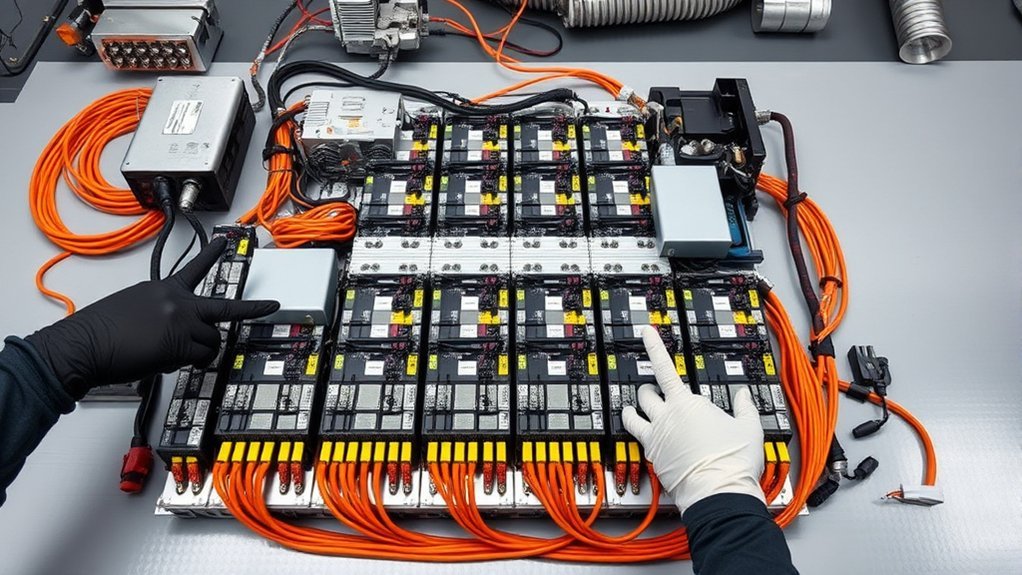
The Camry Hybrid battery is the high-voltage traction battery that stores energy for electric motor assist, regenerative braking, and smooth hybrid operation. It works with the inverter, hybrid control computer, cooling fan, sensors, service disconnect, 12-volt battery, and gasoline engine as one managed system. The exact battery chemistry and layout depend on model year and market, so this guide explains the common components, what changed on newer Camry models, and what owners can safely maintain without opening the high-voltage pack.
Quick Answer
A Camry Hybrid battery is a sealed high-voltage traction pack made from battery modules or cell groups. It stores braking energy, powers the electric motor through the inverter, supports engine starting once the hybrid system is READY, and is cooled by cabin-air vents, sensors, and a dedicated fan.
Key Takeaways
- The Camry Hybrid uses two battery systems: a high-voltage traction battery for hybrid drive power and a 12-volt battery for computers, relays, lights, and accessories.
- Older Camry Hybrids may use NiMH or lithium-ion battery designs, while Toyota’s 2025 U.S. Camry brochure lists a sealed lithium-ion traction battery.
- The cooling air intake must stay clear. A blocked vent can limit battery output, reduce fuel economy, and trigger hybrid-system warnings.
- Do not open, probe, charge, or repair the high-voltage pack unless you are trained and equipped for hybrid high-voltage service.
- Toyota states that every Toyota Hybrid battery is supported by a 10-year/150,000-mile limited warranty, whichever comes first, subject to warranty terms.
What the Camry Hybrid Battery Is and Why It Matters
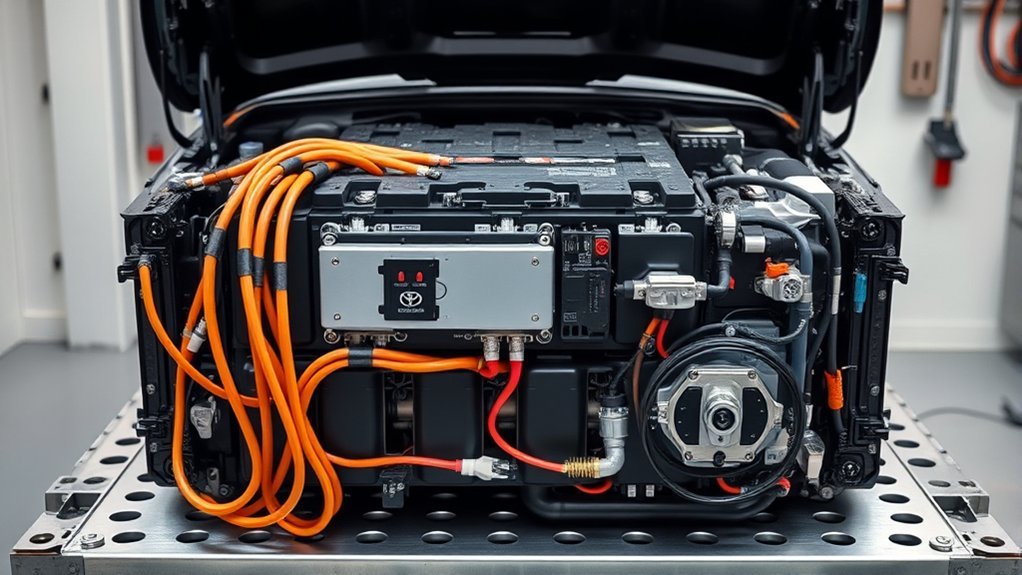
Think of the Camry Hybrid battery as the stored-energy core of the hybrid system. It captures energy during regenerative braking, sends power to the inverter, supports electric motor assist, and helps the gasoline engine operate in a more efficient range. On newer U.S. Camry models, Toyota’s 2025 brochure lists the traction battery as a sealed lithium-ion battery. Earlier Camry Hybrid years and some markets may use NiMH or different lithium-ion layouts, so the owner’s manual, VIN-specific service information, or Toyota dealer records are the best source for your exact car.
The traction battery is not the same as the 12-volt battery. The 12-volt battery wakes up computers, powers low-voltage accessories, and helps the car boot into READY mode. Once READY, the high-voltage traction battery works with the inverter, motor-generators, and hybrid control computer to move the car and start the engine when needed.
Note: Toyota’s 2025 Camry is exclusively hybrid in the U.S. market, but older Camry articles, parts listings, and forum posts may refer to gasoline-only Camrys or earlier hybrid battery chemistries. Always match advice to your model year.
Camry Hybrid Battery Pack Construction: Modules, Wiring and Junction Block
The Camry Hybrid’s high-voltage battery pack is a sealed, series-connected assembly. Inside the pack are battery cells arranged into modules or blocks, temperature sensors, bus bars, wiring harnesses, insulation, and a battery ECU or monitoring circuit. The pack layout lets the hybrid control system watch voltage, current, temperature, and fault conditions while keeping high-voltage parts isolated from the passenger compartment.
A junction block or relay assembly acts as the controlled gateway between the battery and the rest of the hybrid system. It can include system main relays, current sensing, fusing, and a pre-charge circuit that helps reduce electrical stress when the inverter is first energized. The orange high-voltage cables then route power to major components such as the inverter/converter, motor-generators, and electric A/C compressor.
This construction is designed for safety and serviceability by trained technicians. It does not mean the pack is a safe DIY repair item. For owners, the practical takeaway is simple: keep the cooling path clear, watch for warning messages, maintain the 12-volt battery, and let a qualified hybrid technician handle pack-level testing or replacement.
Warning: The Camry Hybrid has high-voltage DC and AC circuits. Toyota warns that high-voltage parts, cables, and connectors can cause severe burns, electric shock, death, or serious injury. Never touch, disassemble, remove, or replace high-voltage battery parts unless you are trained and using the correct Toyota procedures and protective equipment.
Electrical Controls for the Camry Hybrid Battery: Computer, Relays and Safety Circuits
The hybrid control computer manages how the Camry uses battery power. It reads battery block or module voltage data, pack temperature, current flow, insulation status, accelerator demand, braking input, and engine conditions. Based on those inputs, it decides when to charge the battery, when to send power to the motor, when to limit output, and when to log diagnostic trouble codes.
During start-up, the system performs checks before closing the main high-voltage relays. Pre-charge control helps the inverter energize smoothly, and safety circuits can open the relays if the vehicle detects a serious crash, isolation fault, over-temperature condition, or other high-risk event. Toyota’s owner information also notes that the emergency shut-off system can block high-voltage current when a certain impact level is detected.
Owners usually experience this control system through the dashboard. Common signs include a “Check Hybrid System” message, reduced power, rapidly changing battery gauge, poor fuel economy, or the gasoline engine running more often than usual. These symptoms do not prove the traction battery has failed by themselves, because a weak 12-volt battery, cooling issue, inverter problem, wiring fault, or software-related diagnostic code can produce similar warnings.
Thermal Management: Fans, Sensors, Airflow and Cooling Strategy
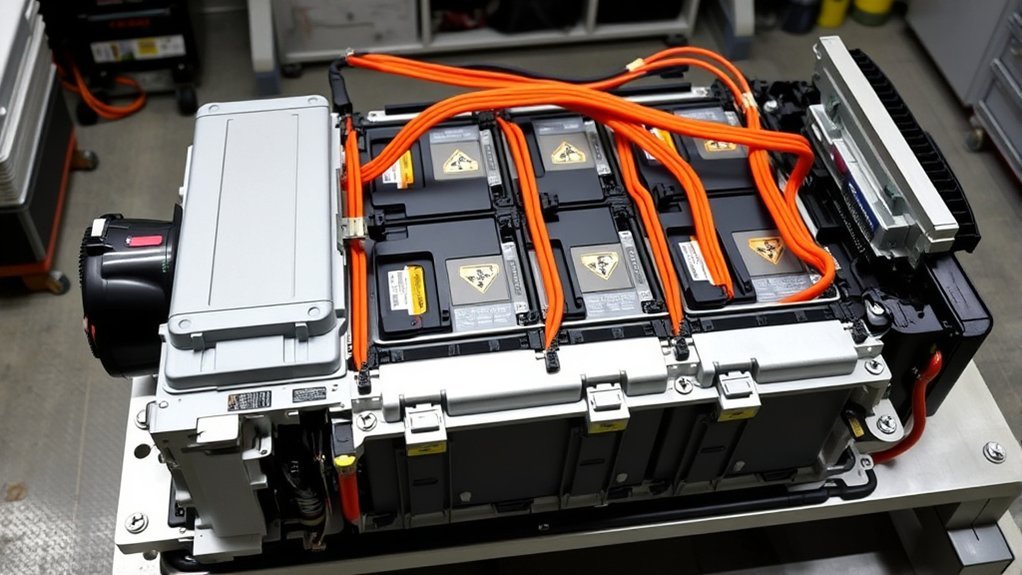
Heat is one of the main enemies of hybrid battery life. The Camry Hybrid uses temperature sensors, cabin-air intake vents, air channels, and a dedicated cooling fan to keep the traction battery within its operating range. When the battery gets warmer, the control system can increase fan speed, reduce battery output, or run the gasoline engine more to protect the pack.
On the 2025 Camry Hybrid owner information page, Toyota states that the traction battery air intake vent is under the left side of the rear seat and is used to cool the hybrid battery. Toyota also warns that blocking the vent with items such as luggage, plastic covers, or seat covers may restrict battery output and can lead to malfunction. You can review Toyota’s owner guidance in the 2025 Camry Hybrid system precautions.
Pro Tip: Check the rear-seat battery air intake area during routine cleaning. Remove pet hair, lint, paper, and cargo that could block airflow. Use gentle vacuum suction around the vent; do not push liquid, tools, or debris into the opening.
Battery Types: Li-Ion vs NiMH – Pros, Trade-Offs and Toyota’s Choice
Toyota has used both nickel-metal hydride (NiMH) and lithium-ion (Li-ion) hybrid battery designs across different vehicles, years, trims, and markets. In general, NiMH batteries are known for long field history and tolerance of varied conditions, while Li-ion batteries allow compact packaging and lower weight. Toyota chooses the chemistry based on vehicle packaging, thermal control, cost, power output, durability targets, and safety margins.
| Battery type | Strengths | Trade-offs | Camry Hybrid context |
|---|---|---|---|
| Li-ion | Lighter, compact, strong power density, efficient packaging | Needs precise temperature and charge management | Toyota lists a sealed Li-ion traction battery for the 2025 U.S. Camry |
| NiMH | Long field history, durable, tolerant in many hybrid applications | Usually heavier and less energy-dense than Li-ion | Used in some earlier Toyota hybrid applications and some older Camry Hybrid configurations |
For current shoppers, the chemistry matters less than condition, warranty status, cooling performance, and correct diagnosis. A healthy older NiMH pack can be more valuable than a neglected newer pack with blocked cooling, stored fault codes, or poor 12-volt support.
Owner Maintenance Tips and Safe Service Practices
At a Glance
| Time Required | 5-15 minutes for owner-safe checks |
| Difficulty | Easy for vent inspection; professional-only for high-voltage testing |
| Tools Needed | Flashlight, soft brush, vacuum, owner’s manual; hybrid-capable scan tool only for trained diagnostics |
| Cost | Usually $0 for basic checks; diagnostic and repair costs vary by shop, model year, and warranty status |
Owner maintenance is mostly about prevention, not opening the battery. Keep the battery cooling intake clear, avoid spilling water near the vent, repair water leaks quickly, keep the cabin filter and interior clean, and do not store heavy cargo where it blocks airflow. If the car will sit for a long time, follow the storage instructions in your owner’s manual and pay special attention to the 12-volt battery, because a weak 12-volt battery can create confusing hybrid-system symptoms.
Do not connect an ordinary charger to the high-voltage traction battery. Owners normally charge only the 12-volt battery with an appropriate 12-volt maintainer when needed. High-voltage battery charging, isolation testing, module testing, or pack replacement should be handled by Toyota or a qualified hybrid repair facility.
Toyota states that every Toyota Hybrid battery is supported by a 10-year/150,000-mile limited warranty, whichever comes first, subject to warranty terms and conditions.
[Products Worth Considering]

This KAX HEPA cabin air filter is designed to help keep your vehicle interior air cleaner by capturing fine particles and reducing airborne contaminants. Its multi-layer structure with activated carbon supports strong filtration performance while helping improve HVAC airflow for more efficient heating and cooling. Built for a wide range of Toyota, Lexus, Subaru, and Mazda models, it offers a practical replacement option for maintaining fresher cabin air.

This dual filter kit helps keep your vehicle running and riding cleaner by replacing both the engine air filter and cabin air filter at the same time. It is designed for a range of Toyota and Lexus hybrid models, helping support engine performance while reducing odors and airborne particles inside the cabin. Built with high-quality filtration materials, it offers a convenient maintenance solution for routine filter replacement.
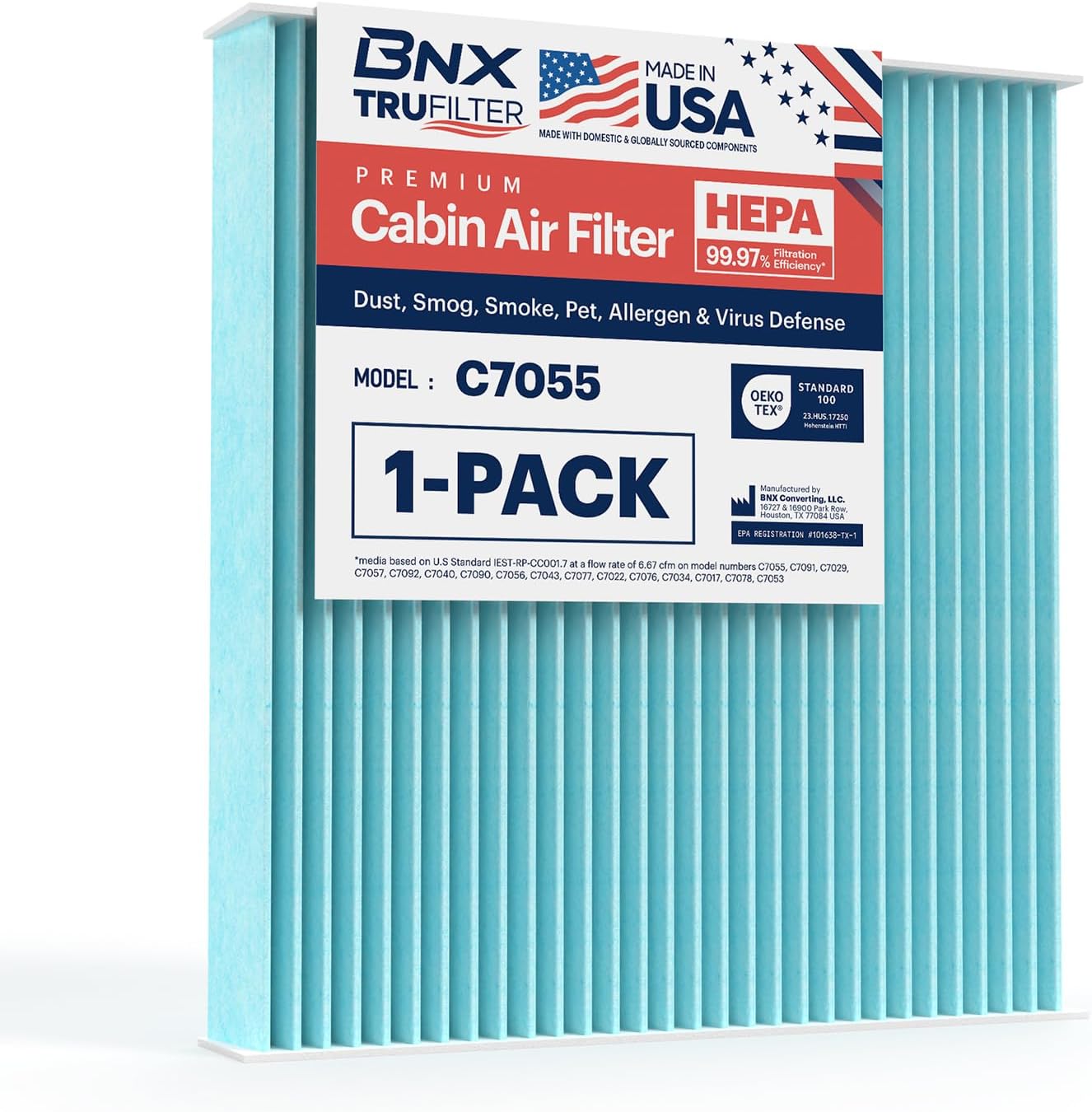
BNX TruFilter C7055 is a HEPA cabin air filter designed to help keep the air inside your vehicle cleaner by capturing microscopic particles like smoke, smog, mold, bacteria, and pet dander. Made in the USA with 99.97% PFE HEPA meltblown filtration media, it offers high-efficiency protection and is intended for annual replacement or every 12,000 miles. It is compatible with a wide range of Toyota, Lexus, Subaru, Land Rover, Jaguar, Pontiac, and Scion models.
Signs of Failure and What to Do Next
Possible Camry Hybrid battery failure signs include a hybrid-system warning message, sudden drops or jumps in the battery gauge, reduced electric assist, the gasoline engine running more than usual, lower fuel economy, cooling fan noise that seems louder than normal, or stored hybrid battery deterioration codes. These signs should be diagnosed, not guessed.
Use this owner-safe sequence before assuming the traction battery is bad:
- Write down the exact warning message. Include when it appeared, outside temperature, driving conditions, and whether the car entered reduced-power mode.
- Check the 12-volt battery condition. A weak 12-volt battery can cause odd startup behavior and warning lights.
- Inspect the battery air intake area. Remove visible lint, pet hair, paper, bags, or cargo blocking the rear-seat vent.
- Do not clear codes before diagnosis. Stored freeze-frame data helps a technician find the root cause.
- Schedule a hybrid-capable diagnostic scan. A qualified shop can check battery block voltages, internal resistance estimates, temperature sensors, fan operation, isolation faults, and related inverter or engine codes.
- Check warranty coverage. Toyota’s hybrid battery warranty information is available on its official electrified vehicle warranty page.
Do not assume every hybrid warning means the battery pack is finished. Cooling restrictions, a failed fan, corroded connectors, a weak 12-volt battery, inverter faults, or engine performance problems can all affect hybrid operation. The safest and cheapest repair is the one based on the correct diagnostic code and Toyota service procedure.
[Products Worth Considering]

OBD2 SCANNER & BATTERY TESTER IN ONE – The INNOVA 5210 OBD2 scanner not only reads and clears check engine light and ABS codes (coverage may vary) but also functions as a car battery tester to check alternator health and prevent unexpected breakdowns.

[Built-in 15+ Powerful Functions]: Compared to entry-level diagnostic tools, the AD200 not only has all of their functions, but it is also more professional and powerful. This vehicle code reader supports: read/clear code, I/M readiness, EVAP/o2 sensor test, freeze frame, real-time data stream curve and more. with those function, you can quickly check the cause of the engine check light (MIL), and reset it, but also can accurately read the dtc code and clear it, let your car back to health
MPG, Battery Health and Real-World Performance
A healthy Camry Hybrid battery helps the car capture braking energy and use electric assist when conditions are right, but fuel economy still depends on trim, drivetrain, tires, weather, speed, terrain, HVAC use, and driving style. For example, the EPA lists 2025 Toyota Camry HEV ratings of 51 combined mpg for the FWD LE and 47 combined mpg for FWD SE/XLE/XSE. Toyota’s 2025 brochure also lists AWD versions with lower combined estimates, including 44 combined mpg for XSE AWD.
If your mileage drops sharply, look beyond the battery first. Check tire pressure, dragging brakes, wheel alignment, engine maintenance, climate-control use, roof racks, and short-trip patterns. If fuel economy falls along with a hybrid-system warning, battery fan noise, or unstable state-of-charge display, then a hybrid diagnostic scan is the right next step.
Replacement, Reconditioning and Warranty Considerations
When a Camry Hybrid battery is confirmed failed, the main paths are Toyota warranty repair, new or remanufactured replacement, used replacement, or third-party reconditioning. The best choice depends on model year, mileage, warranty eligibility, local labor rates, parts availability, and how long you plan to keep the car.
A Toyota dealer or qualified hybrid shop can confirm whether the high-voltage battery is actually the failed part. That matters because replacing a traction battery will not fix a blocked cooling fan, weak 12-volt battery, inverter fault, or engine-side problem. If you are considering a used or rebuilt pack, ask about warranty length, module matching, fan cleaning, installation procedure, and whether the repairer follows Toyota high-voltage safety steps.
Note: For crash, fire, flood, towing, or storage situations involving hybrid vehicles, use first-responder guidance rather than owner maintenance advice. NHTSA provides Emergency Response Guides for battery-electric, hybrid-electric, plug-in hybrid, and fuel-cell vehicles.
Frequently Asked Questions
What are the components of a Camry Hybrid battery system?
The system includes the sealed high-voltage traction battery, battery modules or cell groups, bus bars, battery ECU or monitoring circuits, temperature sensors, current sensing, system main relays, pre-charge components, service disconnect, cooling fan, air intake vent, inverter, motor-generators, and a separate 12-volt battery for low-voltage electronics.
How does the Toyota Camry Hybrid battery work?
It stores energy recovered during braking and releases that energy through the inverter to assist the electric motor. The hybrid computer decides when to charge, discharge, limit output, or run the gasoline engine based on battery charge, temperature, speed, driver demand, and diagnostic data.
Does the Toyota Camry Hybrid have two batteries?
Yes. It has a high-voltage traction battery for hybrid propulsion and regenerative braking, plus a 12-volt battery for control modules, lights, locks, relays, and accessories. A weak 12-volt battery can sometimes cause startup or warning-light symptoms that look like hybrid battery trouble.
How long does a Camry Hybrid battery last?
Battery life varies with driving style, temperature, storage, mileage, cooling system condition, and maintenance. Toyota states that every Toyota Hybrid battery is supported by a 10-year/150,000-mile limited warranty, whichever comes first, but actual service life can be shorter or longer depending on use and condition.
Can I clean the Camry Hybrid battery fan or vent myself?
You can keep the visible air intake area clear with gentle vacuuming and by removing lint, pet hair, and cargo around the vent. Do not pour liquid into the vent, push tools into the duct, or remove high-voltage battery covers. If the fan is noisy, clogged internally, or triggering codes, use a qualified technician.
Is it safe to drive with a “Check Hybrid System” message?
Treat it as a warning that needs prompt diagnosis. If the vehicle drives normally, reduce heavy acceleration and schedule service soon. If the car loses power, shows red warnings, smells hot, has been flooded, or was in a crash, stop in a safe place and contact roadside assistance or a Toyota dealer.
Conclusion
The Camry Hybrid battery is not just a box of cells; it is a managed high-voltage system with cooling, relays, sensors, software, and safety circuits working together. For owners, the best maintenance is simple and safe: keep the cooling vent clear, protect the cabin from spills and debris, maintain the 12-volt battery, watch warning messages, and get a proper hybrid diagnostic scan before approving expensive repairs. For anything inside the high-voltage pack, use Toyota procedures and qualified hybrid service.
Sources
- Toyota Owners: 2025 Camry Hybrid System Precautions — high-voltage safety warnings, battery vent guidance, and emergency shut-off context.
- Toyota 2025 Camry Brochure — sealed lithium-ion traction battery, hybrid powertrain, drivetrain, and mileage estimate details.
- Toyota Electrified Vehicles Warranty — Toyota Hybrid battery warranty coverage.
- FuelEconomy.gov: 2025 Toyota Camry — EPA fuel economy ratings by 2025 Camry HEV configuration.
- NHTSA Emergency Response Guides — emergency response information for hybrid and electric-powered vehicles.


[…] Camry Hybrid’s main hybrid battery is the high-voltage traction battery that supports the electric motor and hybrid drive system. On 2020 and newer Toyota hybrids, this […]