
Toyota Camry generations in the U.S. span nine main redesigns, beginning with the front-wheel-drive 1983 model and continuing through the current 2025-present hybrid-only generation. The most important turning points were the wider midsize redesign for 1992, the first Camry Hybrid for 2007, the TNGA-K platform for 2018, and the switch to standard hybrid power for 2025. This guide compares the years, body styles, engines, safety changes, and shopping relevance of each generation.
Last updated: July 14, 2026
Quick Answer
The Toyota Camry has nine main U.S. generations: 1983-1986, 1987-1991, 1992-1996, 1997-2001, 2002-2006, 2007-2011, 2012-2017, 2018-2024, and 2025-present. The 1992 redesign established its modern midsize identity, hybrid power arrived for 2007, the TNGA-based eighth generation began in 2018, and the ninth generation made every U.S. Camry a hybrid.
Key Takeaways
- Early Camrys came as sedans, liftbacks, wagons, and briefly coupes, while modern U.S. Camrys are four-door sedans.
- The wider 1992 redesign moved the U.S. Camry firmly into the midsize family-car market.
- The first Camry Hybrid arrived for 2007, and hybrid power became standard across the U.S. lineup for 2025.
- The 2018-2024 eighth generation introduced the TNGA-K platform, a 301-hp V6 option, available AWD, and more standard driver-assistance technology.
- The 2026 lineup includes LE, SE, Nightshade, XLE, and XSE grades, with FWD or Electronic On-Demand AWD.
Scope and research method: Generation years can vary by country because Japan, North America, and other markets did not always receive the same Camry body at the same time. This guide focuses on main U.S. model-year generations and cross-checks Toyota newsroom material, EPA fuel-economy data, IIHS safety information, and historical automotive references.
How Has the Toyota Camry Evolved?
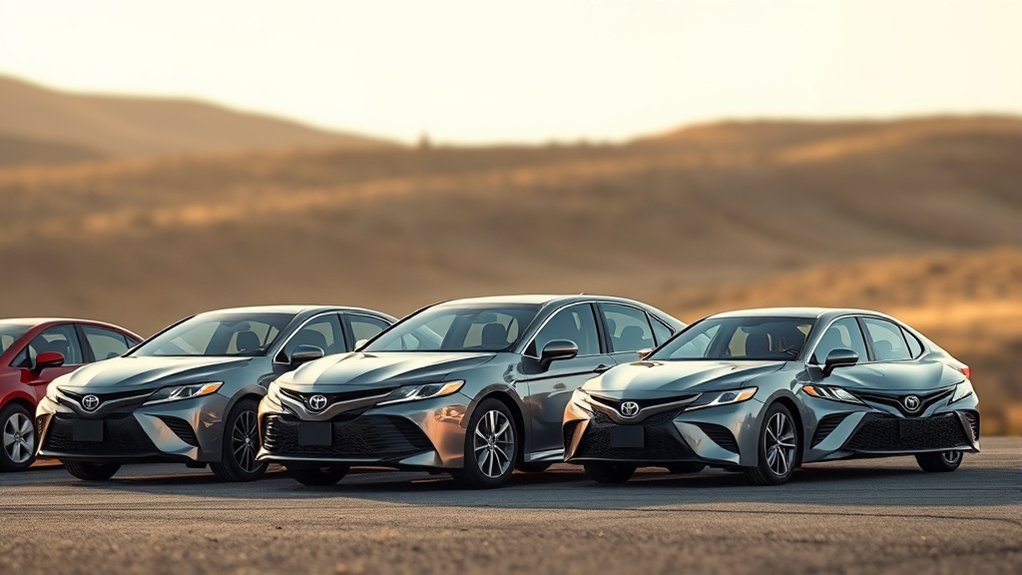
The Toyota Camry’s story is built around steady improvement rather than one isolated reinvention. Early Camrys emphasized fuel economy, front-wheel-drive packaging, and everyday comfort. By the 1990s, the Camry had become wider, quieter, and more clearly positioned as a family-focused midsize sedan.
Later generations added stronger V6 engines, hybrid power, advanced safety systems, larger infotainment displays, available all-wheel drive, and a sportier design language. Toyota described the 2024 Camry as the eighth design generation, available with gas four-cylinder, gas V6, and hybrid powertrains. The 2025 Toyota Camry began the ninth generation with standard hybrid power and a choice of front-wheel drive or Electronic On-Demand All-Wheel Drive.
Why the timeline matters: A new grille, trim package, or major mid-cycle refresh does not automatically start another generation. For example, the heavily restyled 2015 Camry remained part of the 2012-2017 seventh generation. Compare the exact model year as well as the broader generation.
What Are the Toyota Camry Generations by Year?
| Generation | U.S. Model Years | Main Changes |
|---|---|---|
| 1st | 1983-1986 | Front-wheel-drive sedan and liftback; gasoline and diesel four-cylinder engines; efficient packaging. |
| 2nd | 1987-1991 | More refined styling, wagon body style, first V6 option, and All-Trac AWD availability. |
| 3rd | 1992-1996 | Wider midsize body, more upscale cabin, available coupe and wagon, stronger V6, and improved comfort. |
| 4th | 1997-2001 | Lighter, more conservative design; continued four-cylinder and V6 choices; mature family-sedan focus. |
| 5th | 2002-2006 | Larger cabin, more comfort equipment, stronger engines, and broader safety-feature availability. |
| 6th | 2007-2011 | First Camry Hybrid, available 3.5-liter V6, more modern interior, and expanded safety technology. |
| 7th | 2012-2017 | Sharper styling, improved hybrid performance, expanding infotainment, and a major 2015 refresh. |
| 8th | 2018-2024 | TNGA-K platform, 301-hp V6 option, 208-hp hybrid, AWD return, TRD trim, and wider driver-assistance availability. |
| 9th | 2025-present | Hybrid-only U.S. lineup, 225 hp FWD, 232 hp AWD, Toyota Safety Sense 3.0, and 2026 Nightshade Edition. |
Which Toyota Camry Generation Is Best for You?
No generation is automatically the best for every buyer. Your strongest starting point depends on whether you value mechanical simplicity, purchase price, newer safety technology, V6 performance, hybrid efficiency, or available AWD.
| Priority | Generation to Consider | Why It Fits | What to Check |
|---|---|---|---|
| Traditional controls and an older-car feel | 4th or 5th, 1997-2006 | Straightforward cabins, four-cylinder or V6 choices, and fewer modern driver-assistance systems. | Age-related wear, rust, service records, timing-belt requirements on applicable engines, and crash-safety differences. |
| Used-car value with modern basics | 7th, 2012-2017 | Four-cylinder, V6, and hybrid choices with a more modern cabin than earlier generations. | Exact trim, 2015 refresh differences, maintenance history, and which safety features are actually installed. |
| Newer safety and stronger technology | 8th, 2018-2024 | TNGA-K chassis, available AWD, hybrid efficiency, modern infotainment, and broader driver-assistance equipment. | Model-year feature changes, drivetrain choice, crash-test category, software compatibility, and recall status. |
| Newest hybrid system and available hybrid AWD | 9th, 2025-present | Every U.S. model is a hybrid, with 225 hp in FWD form or 232 hp with Electronic On-Demand AWD. | Grade-specific comfort features, wheel size, option packages, insurance costs, and local dealer pricing. |
Use this table as a shortlist, not as a reliability ranking. Condition, maintenance, accident history, climate exposure, and previous ownership can matter more than the generation label on a used Camry.
[Products Worth Considering]

This custom-designed cargo net helps keep the rear trunk of a 2026 Toyota RAV4 neat, secure, and organized. Its stretchable elastic mesh construction helps prevent groceries, tools, and sports gear from sliding around, while the built-in bottom pocket and smart clips add extra storage control. A top pull tab makes installation and removal quick and easy for everyday convenience.

This frameless convex blind spot mirror helps expand your field of view for safer lane changes, passing, and merging. The HD glass design offers a clear, wide-angle rear view, while the swivel mount supports flexible positioning for cars, SUVs, trucks, vans, and RVs. Easy to install and built for all-weather use, it is a practical upgrade for everyday driving confidence.

This coolant electric water pump is designed as a replacement for select Toyota vehicles, helping maintain proper engine cooling performance and reliable temperature control. Built to OE specifications, it offers fitment support for compatible Avalon, Camry, and RAV4 models with 2.5L L4 engines. It also includes cross-reference part numbers for easier matching and comes with after-sales support for covered defects.
What Defined the First-Generation Camry? (1983-1986)
The first U.S.-market Toyota Camry arrived as a practical, front-wheel-drive alternative to larger rear-wheel-drive sedans. Toyota offered it as a four-door sedan and five-door liftback, giving buyers useful cargo flexibility within a compact footprint.
U.S. buyers saw 1.8-liter and 2.0-liter gasoline four-cylinder engines, while a 1.8-liter turbodiesel was briefly offered with a manual transmission. Exact output depended on engine and model year. A historical overview from MotorTrend documents the early body styles, front-wheel-drive layout, gasoline engines, and diesel option.
The first generation did not build its reputation around raw power. Its strengths were efficient packaging, predictable road manners, useful passenger space, and economical daily driving. Those qualities established the formula that later Camrys refined.
[Products Worth Considering]

This dual filter kit helps keep your vehicle running and riding cleaner by replacing both the engine air filter and cabin air filter at the same time. It is designed for a range of Toyota and Lexus hybrid models, helping support engine performance while reducing odors and airborne particles inside the cabin. Built with high-quality filtration materials, it offers a convenient maintenance solution for routine filter replacement.
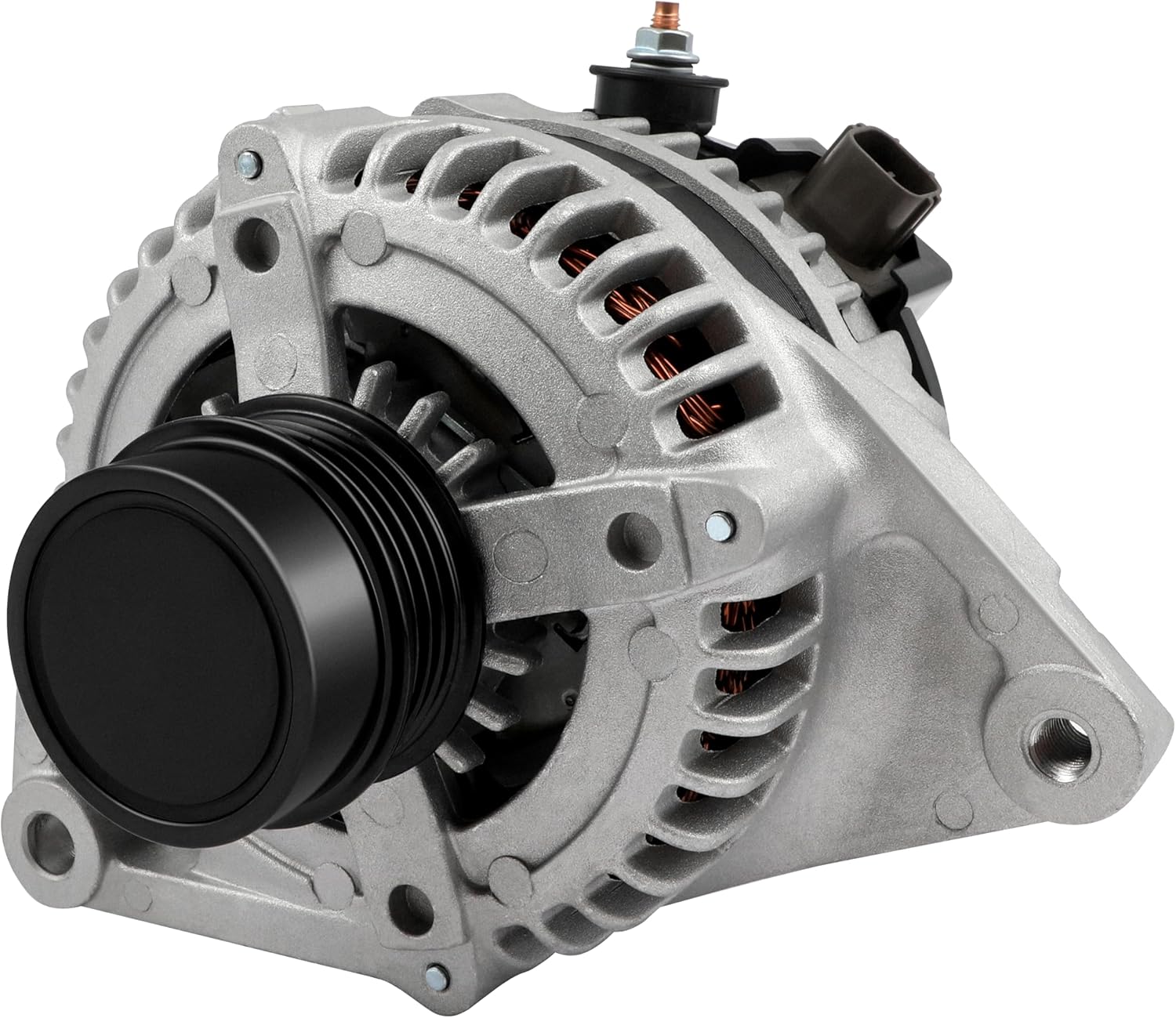
This high output alternator is designed to fit select Toyota, Scion, and RAV4 2.5L applications, delivering reliable charging performance for everyday driving. Built with a 12-volt, 100-amp design and precision-engineered components, it helps support battery recharge, stable electrical output, and consistent operation when your vehicle shows signs of charging issues.

These round blind spot mirrors add a wider viewing angle to help improve lane changes, passing, and everyday driving safety. The frameless convex HD glass design offers a slim, clear rear view while the adjustable swivel mount makes positioning quick and easy. Compatible with cars, SUVs, vans, and trucks, this two-pack is a simple upgrade for reducing blind spots.
What Changed in the Second Generation? (1987-1991)
The second-generation Camry became smoother, roomier, and more mature. Toyota replaced the earlier liftback with a wagon, giving families a more conventional cargo-carrying option. The redesign also moved the Camry closer to the midsize identity it would establish during the 1990s.
- It introduced a V6 option in North America, giving the Camry stronger acceleration and a more premium character.
- It offered All-Trac all-wheel drive, an unusual feature for a mainstream family sedan and wagon of the period.
- It improved cabin refinement and made the Camry more competitive against other high-volume family cars.
The second generation made the Camry feel less like a basic economy-minded model and more like a polished family vehicle. That transition prepared the market for the wider third-generation car.
How Did the Third Generation Change the Camry? (1992-1996)
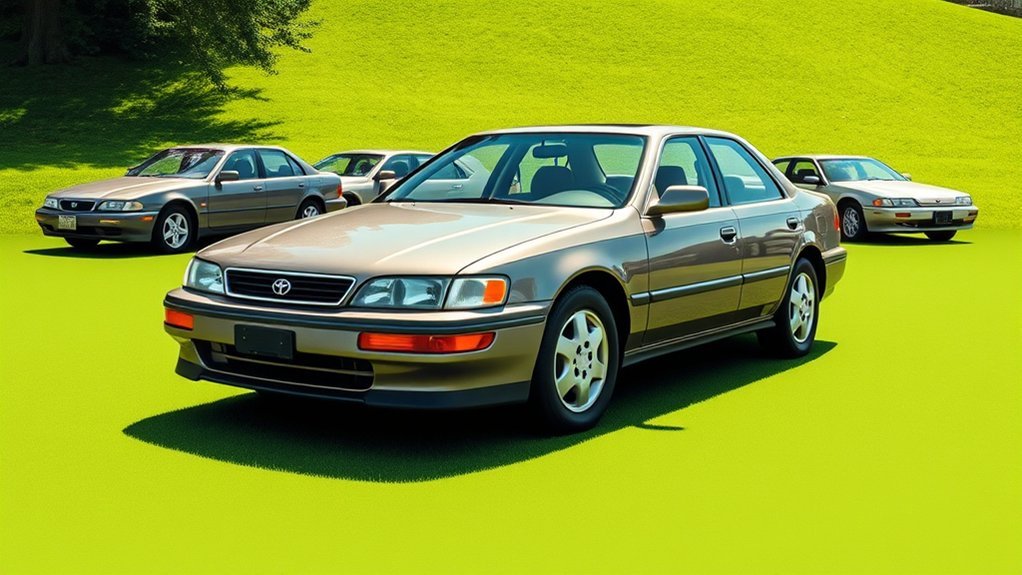
The third-generation Camry was one of the model’s most important turning points. The U.S. version became wider and moved into the midsize-car class, with a quieter cabin and a more substantial road presence.
The sedan remained the core model, but Toyota also sold a wagon and introduced a Camry coupe for the 1993 model year. The coupe was short-lived and ended before the generation was replaced. Four-cylinder and V6 engines served buyers who prioritized either operating costs or smoother highway performance.
How Did Safety Improve?
Safety equipment advanced through the 1990s as airbags, anti-lock brakes, stronger body structures, and side-impact protection became more important to family-car buyers. Exact equipment varied by trim and model year, so shoppers should verify the features installed on a specific car.
How Did Engine Performance Improve?
The third generation paired a standard four-cylinder with an available V6. The V6 gave the Camry smoother passing power and more relaxed highway performance, while the four-cylinder remained the economy-focused choice.
What Cabin Technology Was Available?
Cassette players remained common, but CD players and upgraded speaker systems became desirable features on higher trims. These changes reflected rising expectations that a family sedan should provide convenience and comfort as well as dependable transportation.
How Did Camry Generations Four Through Seven Evolve?
Fourth Generation: 1997-2001
The fourth-generation Camry refined the midsize formula with more conservative styling, a comfortable ride, and continued four-cylinder and V6 availability. Toyota focused on build quality, cabin comfort, and predictable ownership rather than turning the Camry into a dedicated sports sedan.
This era also overlapped with the arrival of the Camry Solara, a separate coupe and later convertible derivative. The regular Camry range continued to center on the sedan and wagon before the U.S. wagon disappeared.
Fifth Generation: 2002-2006
The 2002 redesign increased cabin space and gave the Camry a taller, more substantial appearance. Comfort and ease of use remained central, while stronger four-cylinder and V6 options helped the car keep pace with a more competitive midsize segment.
Safety and convenience equipment expanded across the model run, but availability still depended heavily on trim and options. Used-car shoppers should verify features from the original equipment list rather than assuming every car from the generation has the same equipment.
Sixth Generation: 2007-2011
The sixth generation introduced two major milestones: the first Camry Hybrid and an available 3.5-liter V6. Hybrid power let buyers reduce fuel use without leaving the space and comfort of a midsize sedan, while the V6 delivered performance that was unusually strong for a mainstream family car.
Fuel-economy figures for older vehicles can be confusing because EPA testing and displayed estimates have changed over time. The current FuelEconomy.gov listing for the 2007 Camry Hybrid shows 33 mpg city, 34 mpg highway, and 34 mpg combined.
Seventh Generation: 2012-2017
The seventh generation adopted sharper styling and retained four-cylinder, V6, and hybrid choices. The hybrid system became stronger and more efficient, while infotainment and driver-assistance availability expanded during the model run.
The 2015 model year received a substantial mid-cycle redesign with major exterior and interior changes. It still belongs to the 2012-2017 seventh generation, which is an important distinction when comparing parts, styling, technology, and used-car listings.
For many used-car shoppers, this generation can provide a useful balance of modern features and lower purchase cost. The exact trim, maintenance history, installed safety equipment, and condition remain more important than the generation name alone.
What Changed With the Eighth-Generation Camry? (2018-2024)
The eighth-generation Camry made the model more expressive. Built on Toyota’s TNGA-K platform, it used a lower stance, a more dramatic cabin design, and stronger powertrain choices than the previous generation. Toyota’s 2024 Camry release lists three main powertrain paths: a 2.5-liter four-cylinder, a 3.5-liter V6, and the Toyota Hybrid System.
- The 2.5-liter four-cylinder made 203 horsepower in many front-wheel-drive configurations, with output varying by grade.
- The available 3.5-liter V6 produced 301 horsepower.
- The Camry Hybrid produced 208 net system horsepower.
- All-wheel drive returned during the generation for selected four-cylinder models.
- The TRD model added a sport-tuned suspension, larger brakes, a performance exhaust, and more aggressive styling.
Safety and technology also improved. Toyota listed Toyota Safety Sense 2.5+ as standard for 2024, with features such as Dynamic Radar Cruise Control and Lane Departure Alert. The IIHS 2018 Toyota Camry ratings page states that several crash-test ratings apply across 2018-2024 models, although results vary by test, trim, headlights, and build period.
[Products Worth Considering]

This steering clock spring is designed to restore reliable steering wheel controls across a wide range of Toyota models. It supports audio, cruise control, and other multifunction commands while matching OEM part numbers for confident replacement fitment. Built for dependable signal transfer and straightforward installation, it is an effective solution for repairing steering column control issues.

This Toyota navigation SD card provides updated North America maps and points of interest for compatible factory navigation systems. It is preloaded with recent road and location data to help drivers find destinations, services, and routes more easily across the U.S. and Canada. Designed for select Toyota models, it offers a simple plug-and-play replacement for the original navigation card.

This front bumper license plate bracket is designed for Toyota Camry and Camry Hybrid models from 2018 to 2026, offering a secure and street-legal way to mount your plate. Built from durable, rust-proof plastic with included screw bolts and a wrench, it helps protect your bumper paint while making installation straightforward. The bracket fits US and Canada plates and is made to keep your license plate and registration sticker visible.
What Defines the Current Ninth Generation? (2025-Present)
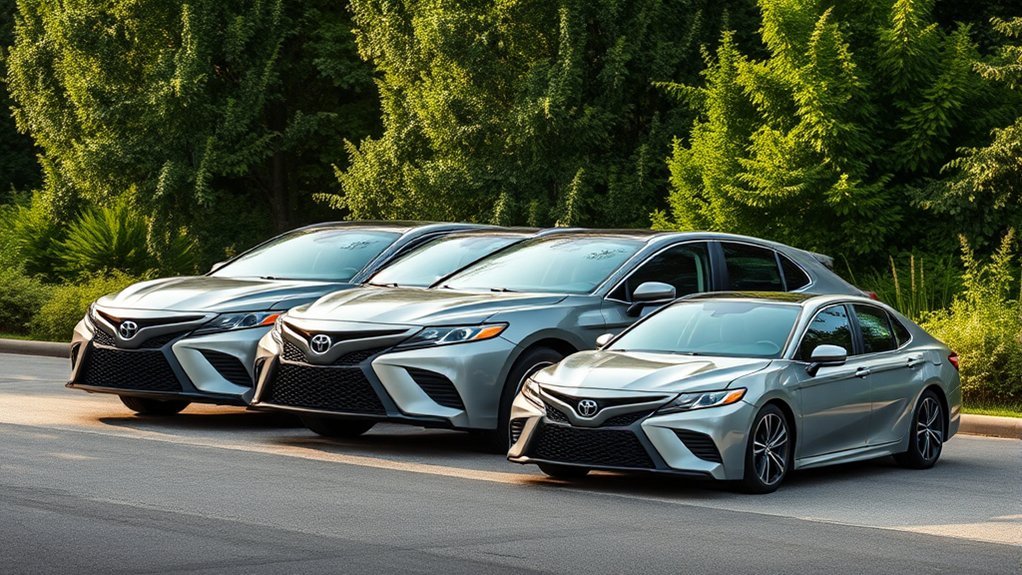
The ninth-generation Toyota Camry represents the largest powertrain-policy shift in the model’s U.S. history. Toyota made every 2025 Camry a hybrid, ending the separate gas-only four-cylinder and V6 choices that had defined earlier lineups.
The generation launched with LE, SE, XLE, and XSE grades. Each uses a 2.5-liter four-cylinder engine with Toyota’s fifth-generation hybrid system. Toyota added the Nightshade Edition for 2026.
What Powertrain Does the Current Camry Use?
Toyota lists 225 net combined horsepower for front-wheel-drive Camrys and 232 net combined horsepower for models with Electronic On-Demand All-Wheel Drive. The AWD system adds a rear electric motor that supplies rear-wheel traction when driving conditions call for it.
- FWD models prioritize efficiency and straightforward everyday driving.
- AWD models add rear electric assistance without a conventional mechanical driveshaft connection to the rear axle.
- Toyota gives the LE FWD a manufacturer-estimated rating of up to 51 mpg combined.
How Did the Exterior Design Change?
The ninth-generation Camry uses sharper headlights, Toyota’s hammerhead-style front design, and a more athletic stance. Comfort-oriented LE and XLE grades use different grille and trim treatments from the sport-oriented SE and XSE models.
For 2026, Toyota added the Nightshade Edition. It includes Midnight Black Metallic exterior accents, unique 19-inch wheels, gloss-black badging, and sport-grade design details. Toyota also added Dark Cosmos exterior paint for SE, XLE, and XSE grades.
What Technology Does the Ninth Generation Add?
Depending on grade, shoppers can find larger digital displays, an available 12.3-inch touchscreen, wireless smartphone compatibility, available premium audio, a head-up display, connected services, and a digital-key option.
Toyota Safety Sense 3.0 is standard. The package includes updated versions of pre-collision assistance, adaptive cruise control, lane-departure assistance, lane tracing, road-sign assistance, automatic high beams, and Proactive Driving Assist. Feature operation still depends on road, weather, sensor, and driver conditions.
How Has the Camry Influenced the Midsize-Sedan Market?
The Camry became a benchmark by consistently focusing on qualities many sedan buyers value: comfort, manageable operating costs, useful interior space, broad dealer support, and a range of efficient powertrains.
Its evolution also reflects wider market changes. V6 engines once represented the premium Camry choice, while hybrid technology moved from a separate efficiency model in 2007 to the only U.S. powertrain beginning in 2025.
| Feature | Impact | Significance |
|---|---|---|
| Long sales success | Kept the Camry prominent as buyers shifted toward SUVs | Demonstrates the durability of the midsize-sedan format |
| Hybrid introduction | Brought electrification to a mainstream family sedan | Expanded hybrid choice beyond dedicated models such as the Prius |
| Safety technology | Moved from passive protection toward active driver assistance | Raised expectations for standard family-car safety equipment |
| All-hybrid ninth generation | Made electrification standard across every U.S. Camry grade | Shows how Toyota is repositioning its mainstream sedan lineup |
How Did Camry Safety Features Change?
Safety changed as much as styling and performance. Early Camrys relied on predictable handling, outward visibility, seat belts, and gradually improving body structures. Later generations added more airbags, anti-lock brakes, stability control, rearview cameras, blind-spot monitoring, and advanced driver-assistance systems.
What Safety Innovations Arrived Over Time?
By the 2000s and 2010s, active safety technology had become a central part of the Camry’s appeal. Depending on model year and equipment, later cars added pre-collision warnings, automatic emergency braking capability, lane-departure alerts, adaptive cruise control, automatic high beams, and road-sign recognition.
Which Safety Features Became Standard?
Toyota’s 2024 Camry information lists 10 standard airbags, the Star Safety System, a backup camera, and Toyota Safety Sense 2.5+ across the lineup. The 2025-present generation uses Toyota Safety Sense 3.0 and also includes standard Blind Spot Monitor, Rear Cross-Traffic Alert, and Safe Exit Alert.
Can Camry Driver-Assistance Systems Drive the Car?
No. Systems such as adaptive cruise control, Lane Tracing Assist, and pre-collision assistance support the driver but do not make a Camry self-driving. Their performance can be affected by road markings, sensor obstruction, weather, lighting, traffic, and driver input.
Warning: Driver-assistance features cannot prevent every crash. Keep your attention on the road and check the owner’s manual for the exact limits and operating conditions of the system installed on your model year.
What Could Come Next for the Toyota Camry?
The Camry’s near-term direction is closely tied to hybrid technology. Toyota has already made the U.S. ninth generation hybrid-only, while the 2026 Nightshade update shows how trim packages, colors, and styling changes can keep the lineup fresh without another full redesign.
A U.S.-market plug-in hybrid Camry has not been officially confirmed in the sources used for this update. Until Toyota announces one, reports about a plug-in version should be treated as speculation rather than a confirmed product plan.
Likely areas for continued development include software, connected services, driver-assistance calibration, cabin technology, and fuel efficiency. The Camry must also remain practical because it competes with other midsize sedans as well as the compact and midsize SUVs many families now cross-shop.
Pro Tip: When shopping used, compare the exact model year, trim, powertrain, maintenance history, installed safety equipment, accident history, and open recalls. A well-maintained later year of an older generation can be a stronger choice than a neglected first-year redesign.
Frequently Asked Questions
What are the different generations of Toyota Camry?
The main U.S. Camry generations are 1983-1986, 1987-1991, 1992-1996, 1997-2001, 2002-2006, 2007-2011, 2012-2017, 2018-2024, and 2025-present. Global histories may group them differently because launch timing and body styles varied by market.
Which Camry generation is considered the best?
No generation is best for every buyer. The 2012-2017 generation can suit shoppers seeking used-car value, the 2018-2024 generation offers newer safety and technology, and the 2025-present generation fits buyers who want standard hybrid power and available hybrid AWD.
When did the Toyota Camry Hybrid first come out?
The Toyota Camry Hybrid first joined the U.S. lineup for the 2007 model year as part of the sixth generation. It combined a gasoline four-cylinder engine with an electric drive system in a conventional midsize-sedan body.
Is the 2025 Toyota Camry only available as a hybrid?
Yes. The ninth-generation U.S. Camry launched for 2025 with hybrid power standard across every grade. It combines a 2.5-liter four-cylinder engine with Toyota’s fifth-generation hybrid system and offers FWD or Electronic On-Demand AWD.
What changed for the 2026 Toyota Camry?
Toyota added the Nightshade Edition for 2026, creating a five-grade lineup with LE, SE, Nightshade, XLE, and XSE. Nightshade adds black exterior accents, unique 19-inch wheels, gloss-black badging, and sport-oriented styling. Dark Cosmos paint also became available on SE, XLE, and XSE grades.
Which Camry generations offered all-wheel drive?
The second-generation Camry offered All-Trac AWD. AWD returned during the eighth generation for selected four-cylinder models beginning with the 2020 model year. The ninth generation offers Electronic On-Demand AWD with hybrid power across all five 2026 grades.
Was the 2015 Toyota Camry a new generation?
No. The 2015 Camry received a major mid-cycle redesign, but it remained part of the seventh generation sold for the 2012-2017 model years. Its styling and cabin changed substantially without starting an eighth generation.
Did the Toyota Camry come as a wagon, coupe, or liftback?
Yes. The first-generation Camry included a liftback, the second generation introduced a wagon, and the third generation offered sedan, wagon, and short-lived coupe body styles. Later U.S. Camrys centered on the four-door sedan, while the Camry Solara continued separately as a coupe and convertible derivative.
Conclusion
The Toyota Camry evolved from an efficient front-wheel-drive sedan and liftback into a refined midsize family car. It added V6 power, multiple body styles, hybrid technology, advanced safety systems, available AWD, and eventually an all-hybrid U.S. lineup.
For shoppers, the generation timeline is only the first filter. After choosing an era, compare the exact model year and trim, review service and accident records, confirm installed safety equipment, check recall status by VIN, and arrange an independent inspection before buying a used Camry.
Sources
- Toyota USA Newsroom: 2025 Camry goes exclusively hybrid: supports ninth-generation status, hybrid-only power, 225/232 hp ratings, AWD, fuel economy, technology, and Toyota Safety Sense 3.0.
- Toyota USA Newsroom: 2026 Camry Nightshade Edition: supports the five-grade 2026 lineup, Nightshade styling, Dark Cosmos availability, and continued hybrid specifications.
- Toyota USA Newsroom: 2024 Camry: supports eighth-generation powertrains, TNGA-K, 301-hp V6, 208-hp hybrid, TRD equipment, and Toyota Safety Sense 2.5+.
- FuelEconomy.gov: 2007 Toyota Camry Hybrid: supports the displayed EPA fuel-economy figures for the first Camry Hybrid.
- IIHS: 2018 Toyota Camry ratings: supports eighth-generation crash-test applicability and safety-rating caveats.
- MotorTrend: Toyota Camry visual history: supports early body styles, first-generation engines, second-generation V6 and AWD, the third-generation size change, and later generation context.

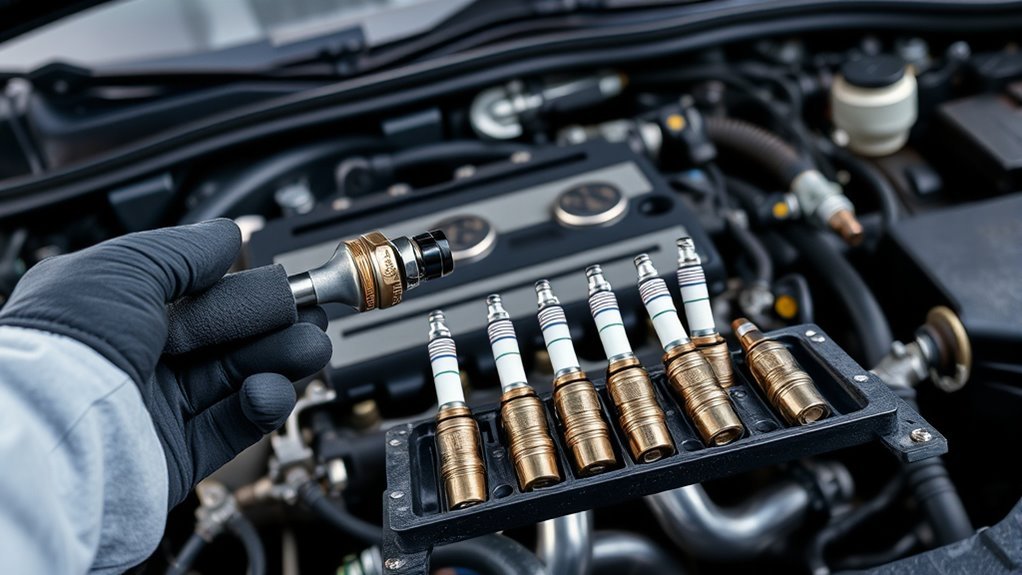

[…] The best used Camry is not automatically the lowest-mileage car or a vehicle from one preferred year. The safer choice combines a proven generation, complete service records, a clean VIN and recall check, and a smooth inspection and test drive. For a broader generation overview, see the Toyota Camry generations guide. […]
[…] Toyota offered the JBL system as a factory option on certain V6 trims of this seventh-generation Camry (XV50) — look for a JBL logo on the head unit startup screen or front door speaker grilles, or an […]
[…] up Apple CarPlay in a Toyota Camry is usually quick, but the smoothest method depends on your Camry model year, your iPhone settings, […]
[…] 2012–2017 (XV50): There’s no Setup-menu clock on these models. The clock display sits above the air vent near the stereo, and you set it with a physical button on the left side of the display — hold it in to adjust the hour. Not sure which generation you have? See our Toyota Camry generations guide. […]