

If your Toyota Camry steering suddenly feels heavy, stiff, or slow to return to center, treat it as a steering safety issue first and a maintenance issue second. On a 2018 Toyota Camry, the most likely checks are not power steering fluid or a belt-driven pump. This generation uses electric power steering, so the right diagnosis starts with tires, alignment, EPS warnings, electrical checks, and a known 2018 Camry steering intermediate shaft condition.
Quick Answer
Heavy steering in a 2018 Toyota Camry is commonly linked to tire pressure, alignment, worn steering or suspension parts, EPS faults, or a known steering intermediate shaft issue. If the steering suddenly becomes very hard or an EPS warning appears, pull over safely and arrange a professional inspection before continuing normal driving.
Key Takeaways
- A 2018 Camry uses electric power steering, so do not start by looking for hydraulic power steering fluid or a belt-driven pump.
- Low tire pressure, uneven tire wear, poor alignment, brake drag, or worn suspension parts can make steering feel heavier than normal.
- Toyota issued T-SB-0028-22 for some 2018 Camry and Camry Hybrid vehicles with increased steering effort or reduced return-to-center.
- Certain 2018 Camry vehicles may qualify for Toyota Customer Support Program 22TE02, so check coverage before paying for steering intermediate shaft repairs.
- If the EPS warning light/message appears, the vehicle needs scan-tool diagnosis rather than guesswork.
At a Glance
| Time Required | 10–30 minutes for basic checks; longer for shop diagnosis |
| Difficulty | Easy for tire checks; professional for EPS, steering shaft, rack, or column work |
| Tools Needed | Tire pressure gauge, flashlight, owner’s manual, OBD/EPS-capable scan tool for advanced diagnosis |
| Cost | Free for tire-pressure checks; variable for alignment, diagnostics, or parts. Check Toyota coverage first if you own a 2018 Camry. |
Warning: If the steering becomes suddenly heavy while driving, the wheel will still turn, but it may take much more force. Slow down carefully, avoid sharp maneuvers, pull over in a safe place, and have the vehicle inspected before continuing normal driving.
Common Symptoms of Heavy Steering in Your Toyota Camry
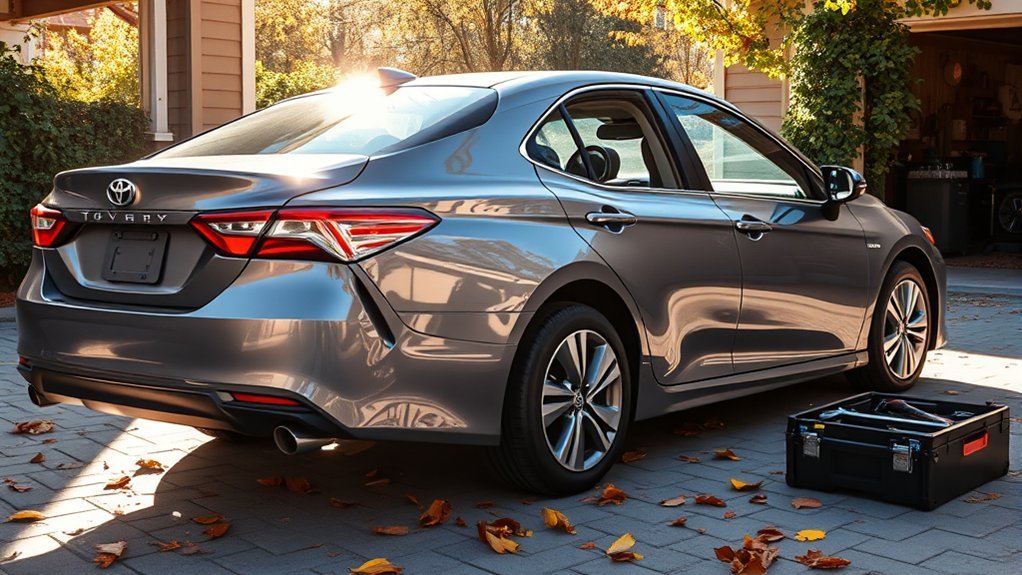
Heavy steering is usually easiest to notice during parking, U-turns, tight turns, or slow driveway maneuvers. You may feel that the wheel takes more arm strength than usual, or that it does not return smoothly toward center after a turn.
Watch for these symptoms:
- Steering feels stiff at low speeds but less noticeable on the highway.
- The steering wheel has a “notchy,” sticky, or uneven feel while turning.
- The wheel is slow to return to center after a turn.
- The car pulls left or right, especially after hitting a pothole or curb.
- Front tires show uneven wear or one tire looks low.
- An electric power steering warning light or “Low Power Steering” message appears.
- You hear clunks, rubbing, grinding, or groaning while turning.
One symptom alone does not prove the cause. For example, low tire pressure can feel like steering stiffness, while a binding steering intermediate shaft can feel like resistance at certain points in the wheel’s rotation.
What Causes Heavy Steering in Your Toyota Camry?
Heavy steering happens when the tires, suspension, steering linkage, or electric assist system cannot move as smoothly as they should. For a 2018 Toyota Camry, start with these likely causes before assuming the steering rack has failed.
Low or Uneven Tire Pressure
Underinflated tires create a larger contact patch on the road, which can make the steering feel heavier at parking-lot speeds. Check tire pressure only when the tires are cold, and use the pressure shown on the tire and loading information label on the driver-side door jamb or in the owner’s manual.
Wheel Alignment or Tire Wear
If the Camry pulls, wanders, or feels heavier after a pothole hit, curb impact, or tire replacement, alignment should be checked. Uneven front tire wear can also increase steering effort and make the wheel feel less smooth.
Binding Steering Intermediate Shaft on Some 2018 Camrys
For some 2018 Camry and Camry Hybrid vehicles, Toyota published Technical Service Bulletin T-SB-0028-22 for steering that requires increased effort or has reduced return-to-center. The bulletin points to possible resistance in the lower universal joint of the steering intermediate shaft assembly.
This condition may feel like slight resistance at certain points during low-speed steering. If your Camry matches those symptoms, ask a Toyota dealer to check whether the bulletin applies and whether your vehicle qualifies for Customer Support Program 22TE02.
Electric Power Steering (EPS) Fault
The 2018 Camry uses electric power steering. That means an electric motor helps reduce steering effort. If the EPS warning light comes on, the system may reduce or stop assist, making the wheel much harder to turn. EPS faults need scan-tool diagnosis because the issue may involve the motor, sensors, wiring, control module, voltage supply, or calibration.
Suspension, Brake, or Wheel Bearing Problems
Worn struts, ball joints, tie rods, control arm bushings, brake caliper drag, or a failing wheel bearing can also make steering feel abnormal. These problems often come with extra clues such as clunks, vibration, pulling, uneven tire wear, heat near one wheel, or grinding noises.
Note: Older Toyota Camry models may use hydraulic power steering, where fluid level, hoses, pumps, and belts matter. This article focuses on the 2018 Camry/EPS context because that is where fluid-and-pump advice can mislead owners.
Understanding Electric Power Steering (EPS) and Its Common Issues
Electric Power Steering uses an electric motor to assist the driver instead of relying on hydraulic pressure from a pump. The benefit is efficiency and fewer hydraulic-fluid maintenance points, but the tradeoff is that diagnosis depends more on sensors, wiring, modules, and scan-tool data.
Common EPS Problems
EPS-related heavy steering can come from low system voltage, wiring issues, blown fuses, a steering torque sensor concern, motor-assist faults, control module faults, or calibration problems. A scan tool that can read EPS codes is often needed because a basic engine-code reader may not show steering-system faults.
Causes of Stiff Steering
For a 2018 Camry, stiff steering should be separated into two groups: assist problems and mechanical resistance. Assist problems involve the EPS system not providing enough help. Mechanical resistance involves something physically binding, dragging, misaligned, or worn, such as tires, suspension, brakes, wheel bearings, the steering intermediate shaft, or the steering gear.
If your 2018 Camry feels stiff mainly during low-speed turns and is slow to return to center, do not skip the steering intermediate shaft bulletin and coverage check.
Key Issues Causing Heavy Steering in Power Steering Systems
“Power steering” simply means the steering system has assist. On a 2018 Camry, that assist is electric, so the most useful first checks are different from older hydraulic systems.
Common Causes Identified
- Tire pressure: Low or uneven front tire pressure can make the steering feel heavy.
- Alignment: Misalignment can cause pulling, uneven steering effort, and poor return-to-center.
- Steering intermediate shaft: Some 2018 Camry vehicles may have binding or resistance in the shaft universal joint.
- EPS warning or fault codes: Reduced electric assist can make the wheel difficult to turn.
- Suspension or brake drag: A worn or dragging component can imitate a steering problem.
- Steering gear/rack issue: Possible, but it should be confirmed after simpler and known causes are ruled out.
Maintenance and Solutions Suggested
Start with the low-risk items: check tire pressure, inspect tire wear, look for obvious damage, and note when the stiffness happens. If the car has an EPS warning, clunking, binding, or poor return-to-center, schedule a professional diagnosis rather than replacing parts at random.
Pro Tip: Before approving an expensive steering rack replacement on a 2018 Camry, ask the shop or dealer whether the steering intermediate shaft bulletin applies and whether the vehicle is eligible for Toyota Customer Support Program 22TE02.
How to Diagnose Heavy Steering Problems Effectively?
Use this order to avoid missing simple causes or paying for the wrong repair.
- Check safety first. If steering assist suddenly drops, an EPS warning appears, or the car is hard to control, stop driving normally and arrange service.
- Check cold tire pressure. Use a tire pressure gauge before driving or after the car has been parked long enough for the tires to cool. Match the door-jamb label, not the maximum pressure printed on the tire sidewall.
- Inspect tire wear and damage. Look for uneven wear, bulges, cuts, mismatched tires, or a tire that repeatedly loses air.
- Note the pattern. Heavy only while parking points toward tire pressure, EPS assist, intermediate shaft binding, or alignment. Pulling while driving points toward alignment, tire, brake, or suspension issues.
- Listen and feel while turning. Clunks, grinding, rubbing, or a notchy feel can point to mechanical binding or worn components.
- Check for EPS warnings and diagnostic codes. A shop should scan the EPS system, not just the engine computer.
- Ask about Toyota T-SB-0028-22. If the vehicle is a 2018 Camry or Camry Hybrid with increased effort or slow return-to-center, this bulletin should be part of the diagnostic conversation.
- Verify Toyota coverage by VIN. Use Toyota service records, a Toyota dealer, and the NHTSA recall lookup to check open recalls, campaigns, and safety information.
Warning: Do not remove or separate steering shaft or column parts as a casual DIY test. Incorrect handling can damage steering-column components, affect airbag-related spiral cable parts, or create an unsafe steering condition.
How to Maintain Your Steering System to Prevent Stiffness
Good steering feel depends on more than the steering rack. Tires, alignment, suspension, brakes, and electrical health all affect how the wheel feels in your hands.
- Check tire pressure monthly. Always use cold pressure and the tire/loading label.
- Rotate tires on schedule. Rotation helps prevent uneven wear that can cause pulling or heavy steering.
- Get alignment checked after impacts. A curb hit or pothole can change steering feel immediately.
- Do not ignore front-end noises. Clunks, rubbing, or grinding can point to worn suspension, brake, or bearing parts.
- Keep the battery and charging system healthy. EPS depends on stable electrical power.
- Respond to EPS warnings quickly. A warning light or message should be scanned and diagnosed before the problem worsens.
- Check Toyota campaigns by VIN. Recalls and support programs can be VIN-specific, so a general article cannot confirm eligibility for your exact car.
How to Fix Heavy Steering Issues: Repair Options
The right fix depends on the confirmed cause. Use the table below as a practical guide.
| Confirmed Cause | Likely Fix | Who Should Handle It? |
|---|---|---|
| Low tire pressure | Inflate tires to the cold pressure on the door-jamb label | Owner or tire shop |
| Poor alignment | Four-wheel alignment and tire inspection | Alignment shop |
| Uneven tires or damaged wheel | Rotate, balance, repair, or replace affected tire/wheel | Tire shop |
| Binding steering intermediate shaft | Inspect under Toyota T-SB-0028-22; replace shaft assembly if confirmed | Toyota dealer or qualified repair shop |
| EPS warning or assist fault | Scan EPS codes, test power/ground, inspect wiring, verify calibration | Shop with EPS-capable scan tools |
| Steering rack/gear fault | Repair or replace only after diagnosis confirms rack/gear failure | Professional repair shop |
Do not approve the most expensive steering part first unless the shop can show why simpler causes, the intermediate shaft condition, tire issues, alignment, and EPS electrical faults have been ruled out.
[Products Worth Considering]
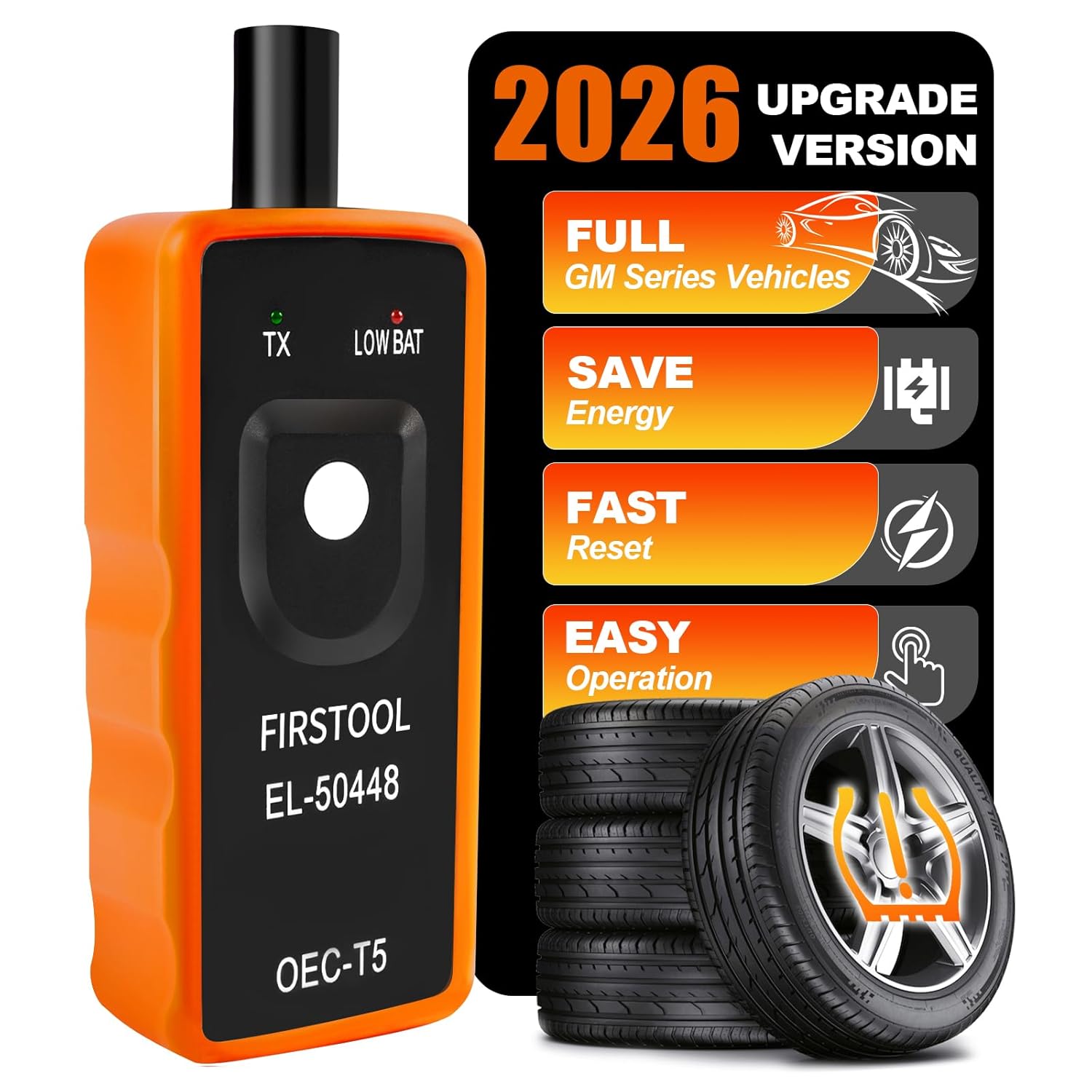
This EL-50448 TPMS relearn tool helps quickly activate and reset tire pressure sensors so your vehicle’s monitoring system stays accurate after tire rotations, sensor replacement, or seasonal tire changes. Designed for many GM-related vehicles and compatible with common 315 and 433 MHz TPMS systems, it offers simple one-button operation and reliable performance for clearing warning lights and relearning sensor positions.
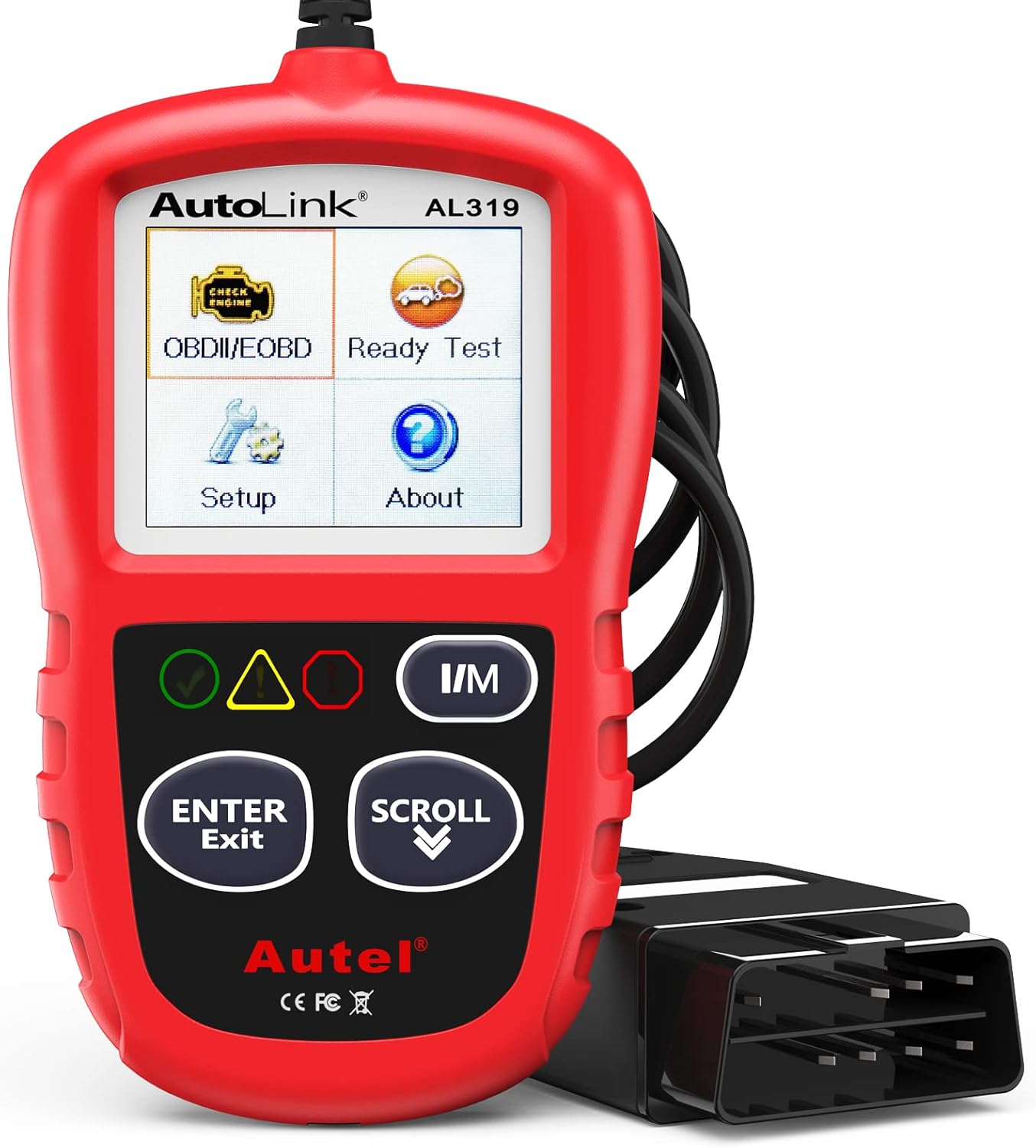
The Autel AL319 is a user-friendly OBD2 scan tool designed to help drivers quickly diagnose check engine light issues and understand vehicle fault codes. It supports reading and clearing DTCs, live data, freeze frame, I/M readiness, and vehicle information, making it a practical choice for DIYers and everyday car owners. With plug-and-play operation, a color display, built-in speaker, and broad vehicle compatibility, it delivers fast, reliable diagnostics without complicated setup.

The FOXWELL NT301 is a plug-and-play OBD2 code reader designed to help drivers and home mechanics diagnose check engine light issues with ease. It reads fault codes, clears emissions-related warnings, displays live sensor data in graph form, and shows I/M readiness so you can quickly check vehicle status before an emissions test. With broad compatibility across many OBD2 vehicles and a clear color screen, it offers a practical, user-friendly way to monitor and troubleshoot engine performance.
Cost of Steering Repairs and Replacements
Steering repair costs vary by location, labor rate, parts availability, and whether the vehicle qualifies for Toyota coverage. For a 2018 Camry, the most important money-saving step is to verify support-program eligibility before paying for steering intermediate shaft work.
Use this cost logic:
- Lowest-cost fixes: Tire inflation, pressure correction, and visual checks.
- Moderate-cost fixes: Tire balancing, alignment, tire replacement, or front-end inspection.
- Coverage-dependent repairs: Steering intermediate shaft replacement may be covered on certain 2018 Camry/Camry Hybrid vehicles if the condition and eligibility requirements are met.
- Higher-cost repairs: EPS steering gear, rack, motor, or module repairs should be approved only after diagnostic confirmation.
Ask for a written estimate that lists the failed part, diagnostic findings, trouble codes if present, labor time, warranty terms, and whether Toyota T-SB-0028-22 or Customer Support Program 22TE02 was checked.
[Products Worth Considering]

The KONNWEI KW208 is a versatile 12V battery tester designed to quickly analyze battery health, cranking performance, and charging system status for cars, trucks, boats, motorcycles, and more. It supports multiple battery types and provides clear guidance on whether a battery should be recharged or replaced, helping you diagnose issues before they become failures. With plug-and-play use, high accuracy, and multilingual support, it offers a convenient way to test batteries in-vehicle or out-of-vehicle.

ROBLOCK low profile car ramps are designed to give low-chassis vehicles safer access for lifting, repairs, and maintenance work. The widened, shortened ramp design helps create room for a jack while the 17-degree slope and curved shape improve vehicle placement and stability. Built from impact-resistant PP with non-slip features and a high load capacity, these ramps are a practical choice for home garages and professional service use.

Good materials: This electric power steering is carefully made of nylon materials, with excellent wear resistance, durability and corrosion resistance, long-term use is still stable performance, long service life, can enhance your driving experience, improve the overall quality
When to Call a Pro for Steering Problems?

Call a professional technician or Toyota dealer if basic tire checks do not solve the problem or if the steering issue affects control of the vehicle.
Get professional help right away if you notice:
- Sudden heavy steering while driving.
- An EPS warning light or “Low Power Steering” message.
- Steering that binds, catches, or feels notchy.
- Reduced return-to-center after turns.
- Clunking, grinding, or rubbing while turning.
- Pulling that remains after correcting tire pressure.
- Uneven tire wear, brake smell, or heat from one wheel.
- A 2018 Camry symptom that matches Toyota’s steering intermediate shaft bulletin.
A qualified shop should inspect tires, alignment, suspension, brakes, steering linkage, EPS codes, electrical supply, and Toyota service bulletin applicability before recommending major steering parts.
[Products Worth Considering]

Replaces Part Number: 45254-28040, 45253-28130

Meet or Exceed OEM Specification.Direct Fitment
Frequently Asked Questions
How do you fix heavy power steering on a Toyota Camry?
Start with safe basics: check cold tire pressure, inspect tire wear, and note whether the car pulls or the steering feels notchy. On a 2018 Camry, also check for EPS warnings and ask about Toyota T-SB-0028-22 for the steering intermediate shaft. The fix may be tire pressure, alignment, front-end repair, EPS diagnosis, or steering shaft replacement.
Why is my Toyota Camry steering wheel hard to turn at low speed?
Low-speed heavy steering can come from low tire pressure, uneven tire wear, poor alignment, EPS assist problems, brake drag, suspension wear, or binding in the steering intermediate shaft. If it happens with an EPS warning light or message, stop guessing and have the EPS system scanned.
Does a 2018 Toyota Camry have power steering fluid?
A 2018 Toyota Camry uses electric power steering, not the older-style hydraulic power steering system that relies on a fluid reservoir, pump, and drive belt. If you have an older Camry, check the owner’s manual because the system may be different.
What is the most common cause of heavy steering?
There is no single cause for every Camry. The easiest causes to check are tire pressure and tire condition. For some 2018 Camry vehicles, Toyota’s steering intermediate shaft bulletin is especially important if the wheel requires more effort and is slow to return to center.
Is there a Toyota bulletin for 2018 Camry heavy steering?
Yes. Toyota T-SB-0028-22 covers some 2018 Camry and Camry Hybrid vehicles that may require increased steering effort or show reduced return-to-center. Toyota also issued Customer Support Program 22TE02 for certain vehicles, so a Toyota dealer can check VIN eligibility.
Can I drive with the EPS warning light on?
Do not treat an EPS warning as a normal maintenance reminder. The steering wheel may become much harder to turn if assist is reduced. Pull over safely if steering effort changes suddenly, then arrange inspection with a shop that can read EPS diagnostic codes.
Conclusion
Heavy steering in a Toyota Camry should not be ignored, especially if it appears suddenly or comes with an EPS warning. For a 2018 Camry, skip the old hydraulic-fluid-first advice and start with the right checks: tire pressure, tire wear, alignment, suspension, brakes, EPS diagnostics, and the known steering intermediate shaft bulletin. Before approving expensive steering repairs, verify Toyota bulletin and support-program eligibility by VIN.
Sources
- Toyota Owners — 2018 Camry Manuals & Warranties — official owner manual and warranty reference hub.
- Toyota T-SB-0028-22 via NHTSA — steering wheel increased effort/reduced return-to-center bulletin for 2018 Camry/Camry Hybrid.
- Toyota Customer Support Program 22TE02 via NHTSA — coverage details for steering intermediate shaft on certain 2018 Camry/Camry Hybrid vehicles.
- NHTSA Recalls Lookup — VIN recall and safety campaign checking.
- NHTSA Report a Safety Problem — reporting vehicle safety concerns.


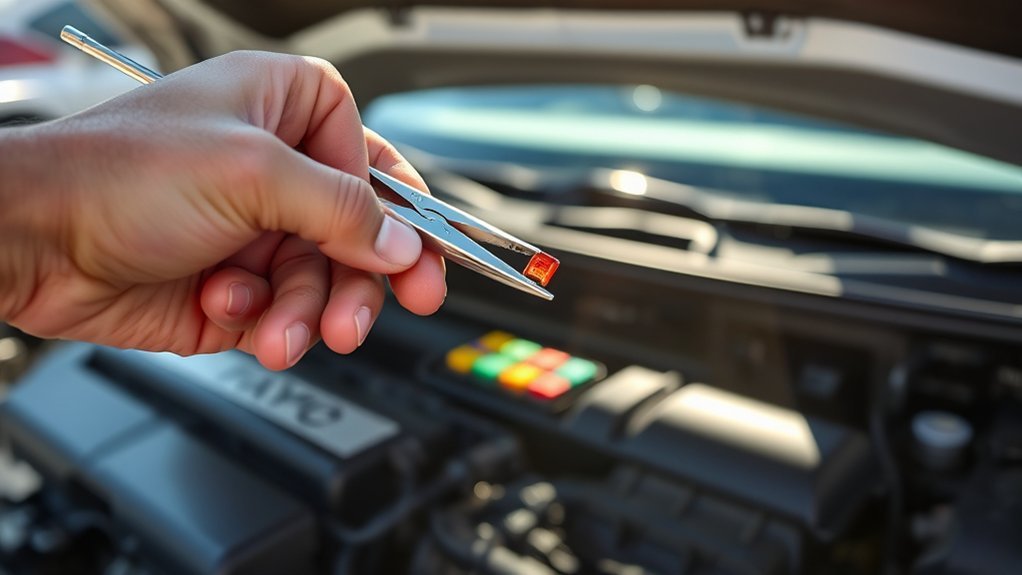

[…] Stop DIY checks and get help if you see an EPS warning light or the Camry steering wheel becomes hard to turn. […]