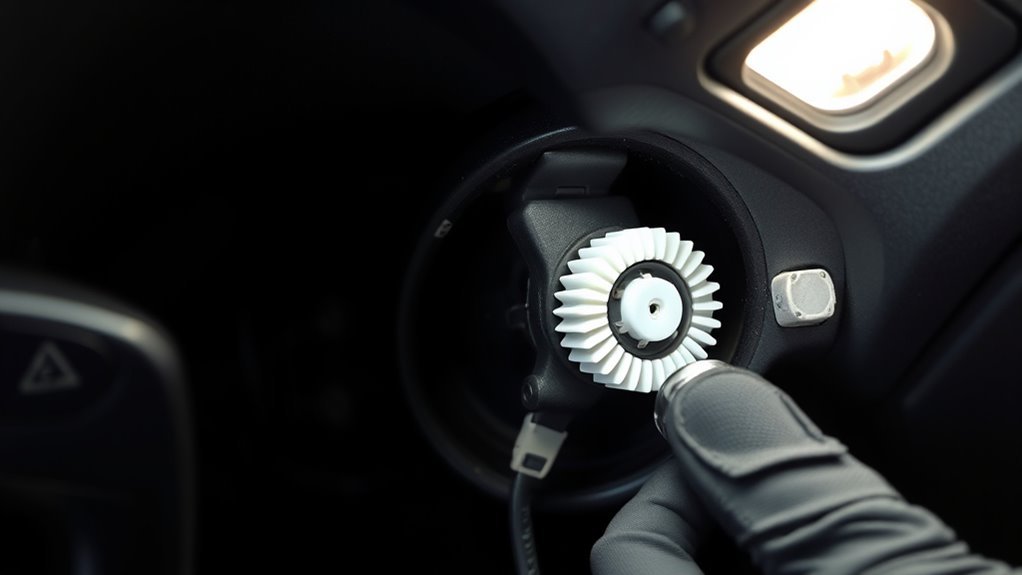
Last updated: July 15, 2026
Affiliate disclosure: As an Amazon Associate, AutoReviewNest earns from qualifying purchases. This does not affect the price you pay or our editorial recommendations.
A Toyota Camry HVAC blend door actuator has no scheduled replacement interval. Toyota owner and maintenance materials reviewed for this guide do not specify a Camry actuator lifespan, so age alone is not a reason to replace it. Repeated rhythmic clicking, no temperature change despite normal airflow, or one side staying hot or cold on a dual-zone system are the strongest clues. Weak airflow, low coolant, heater-core trouble, and poor A/C output can create similar symptoms and need separate checks.
Quick Answer
No reliable Camry-specific 5–10 year lifespan is published. A blend door actuator may work for many years, but you should replace it only when testing confirms that the actuator, its position feedback, or the door it drives is not responding correctly. Clicking behind the dash and little or no temperature change with normal fan airflow are stronger evidence than vehicle age.
Key Takeaways
- Toyota does not publish a routine Camry blend door actuator replacement interval; diagnose the fault before buying a part.
- Wrong temperature with normal airflow points toward the air-mix system. Air from the wrong vents points more toward the mode-door system.
- As checked on July 15, 2026, RepairPal’s general Camry estimate is $827–$1,111, while its 2011 Camry estimate is $1,149–$1,588 before taxes, fees, and location adjustments.
- A generic battery-disconnect “reset” is not a universal Camry repair. Use the procedure for your exact model year and HVAC system.
- Match any replacement by VIN, build configuration, climate-control type, actuator function, and position. A Camry can use several different HVAC actuators.
At a Glance
| Scheduled Interval | None listed; replace only after diagnosis confirms the fault |
| Strongest Clues | Rhythmic clicking, no temperature response, or one-zone temperature failure |
| Check First | Fan airflow, cabin filter, coolant and engine warm-up, A/C output, vent modes, zones, wiring, and actuator movement |
| Current Shop Estimate | $827–$1,111 for a general Camry estimate; some model years can be substantially higher |
| DIY Difficulty | Varies from accessible under-dash work to difficult dashboard disassembly |
How Long Does a Toyota Camry Blend Door Actuator Last?
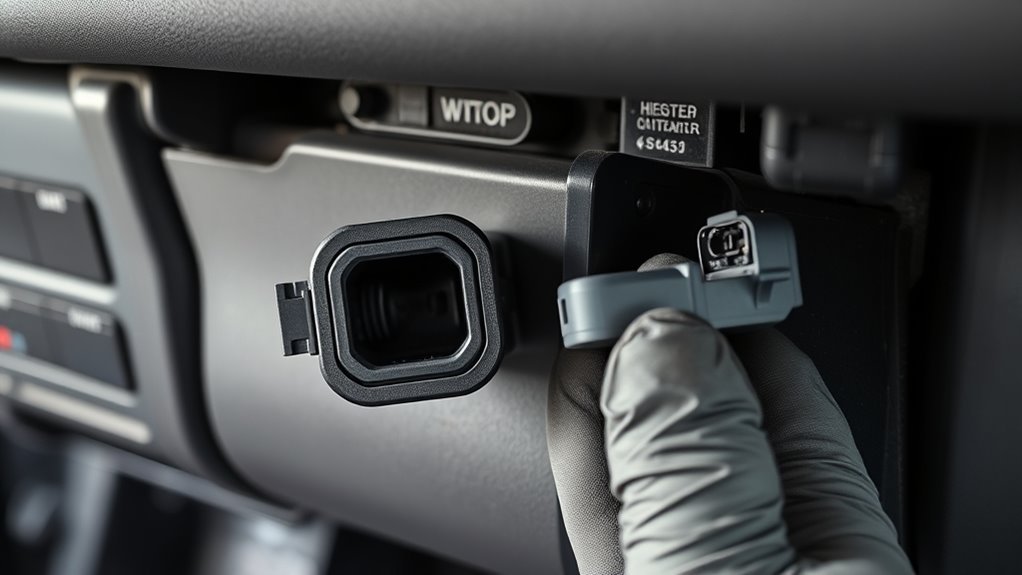
Toyota does not give the Camry blend door actuator a mileage or age-based replacement interval. The Toyota owner resources and maintenance guide reviewed here do not list the actuator among scheduled service items. Toyota parts information describes it as a repair component. The most accurate lifespan answer is therefore condition-based: keep the actuator unless diagnosis shows that it cannot move the door correctly or report its position.
The actuator sits on the HVAC case behind the dashboard and moves an internal air-mix door. The small electric motor, reduction gears, and position-feedback components can fail mechanically or electrically. A binding door or linkage can also overload an otherwise working actuator, while a wiring or control fault can stop movement without the actuator itself being defective.
Note: A dirty cabin filter can reduce airflow and confuse the diagnosis, but it does not prove that the blend door actuator has failed. Low coolant, a thermostat problem, a restricted heater core, weak A/C output, and wiring faults can also produce poor heating or cooling.
What Does a Camry Blend Door Actuator Control?
The blend door actuator, also called an air-mix servo on some Toyota information, changes outlet temperature by moving a door inside the HVAC housing. It is not automatically responsible for every airflow problem. A Camry may also use these actuators:
- Blend or air-mix actuator: changes the hot/cold air mix and outlet temperature.
- Mode door actuator: directs air to the dash, floor, or windshield outlets.
- Recirculation actuator: switches between outside air and cabin recirculation.
This distinction prevents an expensive wrong-part repair. If temperature is wrong but the outlet direction changes normally, focus on the blend or air-mix system. If air remains at the windshield, floor, or dash vents regardless of the selected mode, investigate the mode-door system. If the fan produces weak airflow at every setting, check the cabin filter and blower system before any door actuator.
Why Do Model Year, Trim, and Climate-Control Type Matter?
Camry actuator fit and access are not universal. A Toyota parts listing distinguishes air-mix positions and dual-zone configurations, which shows why a year-only search can return the wrong component. Depending on the Camry, the relevant actuator may be on the driver side, passenger side, or deeper on the HVAC case.
- Single-zone vs dual-zone: Dual-zone systems may use separate air-mix doors and actuators for each side.
- Actuator function: Blend, mode, and recirculation units may look similar but perform different jobs.
- Build configuration: Part listings can vary by build origin, trim, and production date.
- Position: “Main,” “air mix,” “air mix #2,” driver-side, and passenger-side descriptions are not interchangeable.
Before ordering, use the VIN and year-specific diagrams in Toyota TIS or a trusted professional repair database. Confirm the actuator’s function and physical location before removing trim.
Why Do Camry Blend Door Actuators Fail?
A failed actuator usually has a mechanical or electrical cause. The fault may also be outside the actuator, so diagnosis should separate actuator failure from door, wiring, and control problems.
- Worn or stripped internal gears: The actuator may click repeatedly because the motor turns but the gear train cannot move or hold the door.
- Failed motor or position feedback: The unit may stop moving, move intermittently, or lose track of the commanded position.
- Binding blend door or linkage: A sticking door can overload the actuator and cause repeat failure after replacement.
- Connector, wiring, power, ground, or control fault: These can prevent correct movement even when the actuator is mechanically sound.
- Incorrect installation: Forcing the shaft, installing the wrong unit, or misaligning the door and actuator can create immediate or early problems.
Replacement decision rule: prove that the commanded temperature changes, actuator movement, door movement, position feedback, and wiring do not agree before you replace the part.
What Are the Symptoms of a Bad Camry Blend Door Actuator?
If your Camry’s climate control does not deliver the selected temperature, start with the symptom pattern. The table below separates likely blend-door trouble from coolant, A/C, mode-door, and airflow faults.
| Symptom | What it may mean | What to check first |
|---|---|---|
| Rhythmic clicking behind the dash | Worn actuator gears, lost position, or a binding door | Change temperature slowly and identify the exact noise location |
| Air stays cold when heat is selected | Blend door not moving, low coolant, thermostat issue, or heater-core restriction | Coolant level when cold, engine warm-up, airflow strength, and actuator response |
| Air stays warm when A/C is selected | Blend door stuck toward warm or an A/C-system performance fault | Vent temperature, A/C output, and qualified refrigerant diagnosis if needed |
| Airflow will not switch outlets | Mode door, mode actuator, linkage, or control fault rather than the blend actuator | Cycle dash, floor, and windshield modes |
| One side hot and one side cold | Dual-zone air-mix actuator, calibration, door, or A/C-performance issue | Test driver and passenger settings separately, then verify A/C output |
Quick Test 1: Listen While Changing Temperature
Start the engine, set the fan to low or medium, and move the temperature setting from cold to hot. A healthy system should respond without repeated tapping. Rhythmic clicking from behind the glove box, center dash, or lower dash is a strong clue, but you still need to identify which actuator is making the noise.
Quick Test 2: Compare Vent Temperature
Use a vent thermometer and let each reading stabilize. Compare the outlet temperature at the coldest and hottest settings after the engine reaches normal operating temperature. Little or no temperature change with normal airflow supports an air-mix fault. Weak airflow from every vent points first to the cabin filter, blower, or airflow path.
Quick Test 3: Test Each Mode and Zone
Cycle the dash, floor, and windshield outlet modes. Then test fresh air and recirculation. On dual-zone systems, change driver and passenger temperatures separately. Write down which function fails. This simple map helps you distinguish the blend, mode, and recirculation systems.
Quick Test 4: Rule Out Coolant and A/C Problems
If heat is weak, confirm the engine reaches normal temperature and check the coolant level only when the engine is cold. If cooling is weak, do not assume the actuator is bad; use the separate Camry A/C troubleshooting guide. Motor-vehicle refrigerant service is regulated, and the EPA’s MVAC requirements cover refrigerant recovery, approved equipment, and technician certification for paid service.
Warning: Do not open a hot cooling system or touch hot hoses, exhaust parts, or the radiator area with bare hands. Before working near under-dash SRS wiring or airbags, use the year-specific service procedure. For a 2011 Camry, I-CAR lists ignition off, negative battery-cable disconnection, and a waiting period, while also directing technicians to check the service manual.
Should You Reset, Repair, or Replace the Actuator?
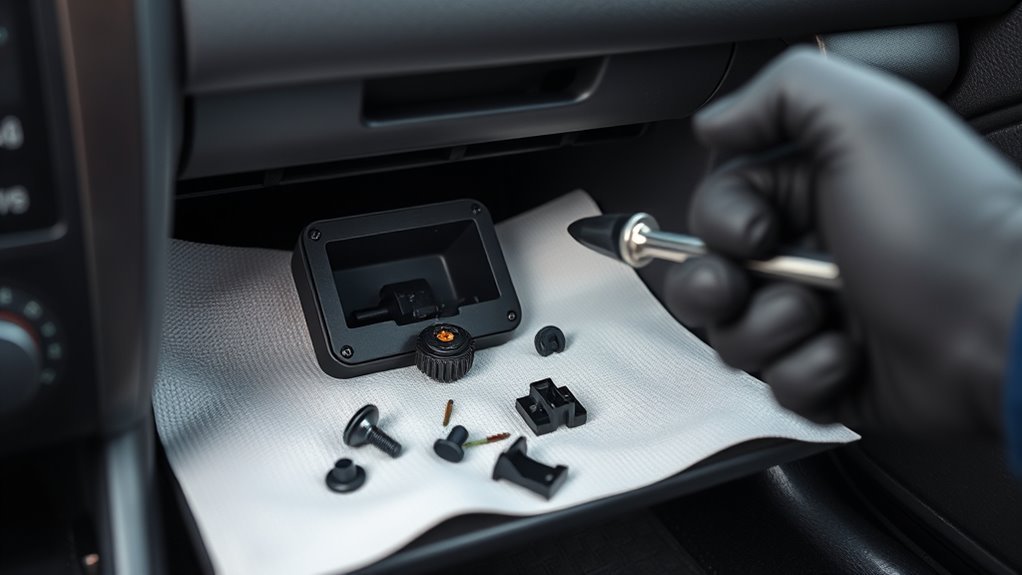
Choose the repair path only after you identify the failed function and actuator position. A calibration procedure may help when the system has lost its learned position and the year-specific service information calls for recalibration. It will not repair stripped gears, a dead motor, damaged feedback components, a broken linkage, or a binding blend door.
Replacement cost depends heavily on model year, actuator location, dashboard access, local labor rates, and related faults. As checked on July 15, 2026, RepairPal’s general Camry estimate is $827–$1,111. It lists labor at $608–$892 and parts at about $219. Its 2011 Camry estimate is $1,149–$1,588, with labor at $939–$1,378 and parts at about $210. These ranges exclude taxes, fees, location adjustments, and related repairs.
| Option | Best for | Main limit or risk |
|---|---|---|
| Year-specific calibration | A mechanically sound actuator that has lost its learned position | A generic internet reset may not apply to your Camry |
| DIY replacement | An accessible actuator, confirmed diagnosis, correct part, and experienced owner | Broken trim, SRS exposure, wrong actuator, shaft misalignment, or a missed binding door |
| Professional diagnosis and replacement | Buried actuators, dual-zone faults, electrical problems, repeat failures, or dashboard removal | Higher labor cost when access requires extensive disassembly |
Pro Tip: Match the replacement by VIN, HVAC system, actuator function, physical position, connector, and shaft orientation. Do not assume that another Camry actuator with a similar housing is interchangeable.
Replace the actuator when a visual test or Toyota-capable bidirectional scan test confirms that it does not move correctly, clicks because of internal failure, or reports an incorrect position despite proper power, ground, and control. Diagnose further when the door itself binds or the symptom changes with coolant temperature, A/C output, or wiring movement.
How Can You Avoid Misdiagnosis and Repeat Failure?
No routine service can renew the sealed gears inside an actuator. The practical goal is to maintain normal airflow, diagnose the correct subsystem, and avoid installing a new actuator against a stuck door.
- Follow the cabin-filter schedule for your model year. The 2011 Camry Warranty & Maintenance Guide lists cabin air-filter replacement at 30,000 miles or 36 months and earlier attention when heavy traffic, dust, or reduced airflow shortens filter life. Other Camry years use different schedules, so check your own guide.
- Treat filter service as an airflow check, not an actuator cure. A clogged filter can weaken airflow but will not repair clicking gears or failed position feedback. See the Camry cabin-filter interval guide for year-specific planning.
- Stop repeated cycling when clicking begins. Record the setting that triggers the noise, then diagnose the exact actuator instead of repeatedly commanding full travel.
- Inspect nearby connectors after dash work. If the glove box, radio, center stack, or lower trim was recently removed, check for loose or pinched HVAC wiring.
- Check door movement before installing the new unit. A binding door or damaged linkage can overload the replacement and cause the same symptom again.
- Use the correct calibration procedure. Follow model-year information from Toyota TIS or a professional repair database rather than a generic battery-disconnect method.
- Keep coolant and refrigerant diagnosis separate. Low coolant and weak A/C performance can mimic a temperature-door fault, but they require different tests and repairs.
When Should You See a Mechanic?
Arrange professional diagnosis when the actuator is buried behind the center HVAC case, dashboard removal appears necessary, both temperature zones behave differently, or the fault returns after replacement. A technician with a Toyota-capable bidirectional scan tool can command actuator movement, compare requested and reported position, test the circuit, and check whether the door binds.
Professional help is also appropriate when symptoms began after a collision, water leak, battery replacement, radio installation, or previous dashboard repair. Those events can point to wiring, calibration, connector, or door-alignment trouble rather than a failed actuator.
If the windshield will not clear because the system cannot produce warm, dry air, treat visibility as a safety concern. Use the Camry defroster troubleshooting guide and repair the fault before driving in conditions that can fog or frost the glass.
Frequently Asked Questions
How much does it cost to replace a blend door actuator on a 2011 Toyota Camry?
As checked on July 15, 2026, RepairPal lists $1,149–$1,588 for a 2011 Toyota Camry before taxes, fees, and location adjustments. Its general Camry estimate is $827–$1,111. The final price depends on actuator location, dashboard access, diagnosis time, local labor rates, and related HVAC repairs.
How often do Camry blend door actuators need to be replaced?
They do not have a scheduled replacement interval. Keep the actuator unless diagnosis confirms that it cannot move the air-mix door correctly, has failed internally, or reports the wrong position despite a good circuit and free-moving door.
Can a reset fix a Toyota Camry blend door actuator?
A year-specific calibration may help when a mechanically sound actuator has lost its learned position. A generic battery-disconnect reset is not a universal Camry procedure and will not repair stripped gears, a failed motor, damaged feedback components, a broken linkage, or a stuck door. Use Toyota service information for the exact model year.
Can I drive with a bad blend door actuator?
A temperature-door fault usually does not stop the engine or transmission from working, but cabin comfort and windshield clearing can suffer. Do not keep driving when poor heating, cooling, or dehumidification prevents you from maintaining clear visibility.
Where is the blend door actuator on a Toyota Camry?
It is mounted on the HVAC case behind the dashboard, but the exact side and access path vary by model year, build configuration, and single-zone or dual-zone climate control. Confirm the actuator function and position with a VIN-based parts diagram or year-specific service manual before removing trim.
How do I know it is not the heater core, coolant, or A/C system?
Check whether the engine reaches normal temperature, the coolant level is correct when cold, airflow is strong, vent modes work, and A/C output changes normally. Symptoms that vary with engine temperature, coolant level, or A/C performance need diagnosis in those systems before you replace an actuator.
Conclusion
Do not replace a Toyota Camry blend door actuator because it has reached a guessed age. Toyota does not publish a routine interval, and no reliable Camry-specific 5–10 year rule is available. Start by mapping the failed temperature, zone, and outlet functions. Then check airflow, coolant, A/C output, wiring, actuator response, and door movement.
Replace the unit only after those checks confirm the actuator fault. Verify the part by VIN and HVAC configuration, follow the correct SRS and calibration procedures, and use professional diagnosis when access or electrical testing exceeds your tools or experience.
Sources
- Toyota Owners: 2011 Camry Manuals and Warranties — official owner-manual and maintenance-guide access.
- Toyota 2011 Camry Warranty & Maintenance Guide — cabin air-filter schedule and severe-condition guidance.
- Toyota Technical Information System — official repair manuals, wiring diagrams, service bulletins, and diagnostic information.
- Toyota Camry HVAC Actuator Parts Listing — air-mix position and dual-zone fitment qualifiers.
- U.S. EPA MVAC Servicing Requirements — refrigerant recovery, equipment, and technician requirements.
- RepairPal Toyota Camry HVAC Blend Door Actuator Estimate — current general Camry repair-cost range.
- RepairPal 2011 Toyota Camry HVAC Blend Door Actuator Estimate — current 2011 model-year repair-cost range.
- I-CAR 2011 Toyota Camry SRS Information — SRS disable sequence and service-manual warning.
- CarParts.com: Bad Blend Door Actuator Symptoms and Testing — ASE-reviewed symptom, location, and diagnostic context.