
Last updated: July 31, 2026 · [VERIFY: add the real author name and relevant automotive/HVAC credentials in the CMS byline]
Editorial basis: This guide was checked against Toyota owner guidance, current U.S. EPA MVAC rules, DENSO compressor-service cautions, and RepairPal estimates updated June 18, 2026. Exact procedures, refrigerant type, charge weight, and electrical tests still depend on the Camry model year and powertrain.
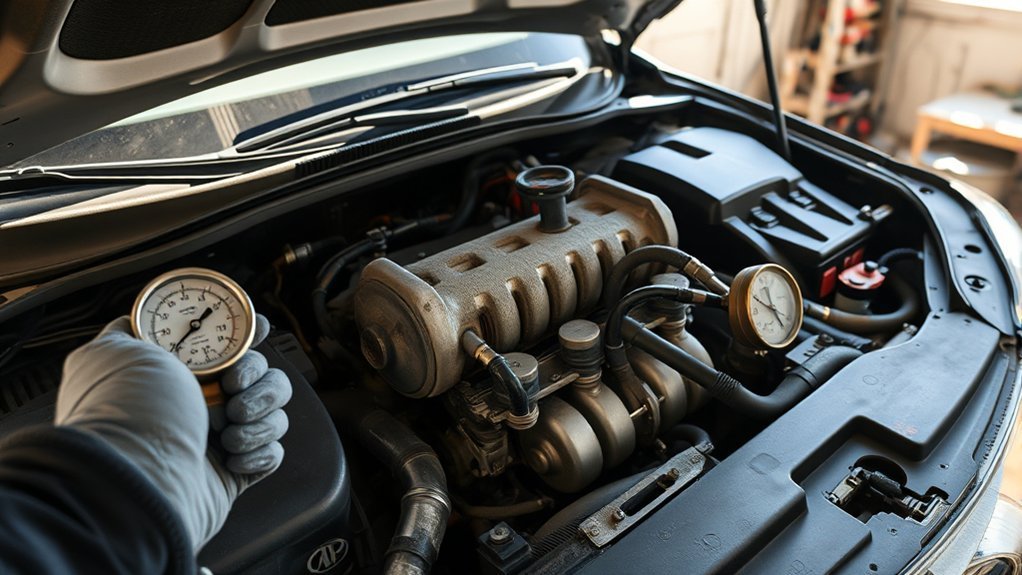
If your Toyota Camry AC is not blowing cold air, use the airflow pattern to narrow the cause before replacing parts. Weak airflow points first to the cabin filter, blower, blocked vents, or an HVAC door. Strong airflow that stays warm points more toward low refrigerant from a leak, poor condenser airflow, a compressor or control fault, or a blend door mixing in heat. Check the settings, filter, fan speeds, and visible debris first. Leave refrigerant, pressure, compressor, and hybrid high-voltage work to a qualified technician.
Quick Answer
A Toyota Camry AC usually stops blowing cold because of low refrigerant from a leak, restricted cabin or condenser airflow, a cooling-fan problem, a compressor or electrical fault, or an air-mix door that is adding heat. The fastest first step is to separate weak airflow from strong but warm airflow. Do not guess at the refrigerant charge, bypass controls, or probe hybrid compressor wiring.
Key Takeaways
- If the air from the vents is weak, check the cabin air filter, blower motor, and vent controls before assuming the refrigerant is low.
- If airflow is strong but warm, suspect low refrigerant, a compressor problem, condenser airflow restriction, or a blend-door issue.
- Do not blindly add refrigerant. Low refrigerant usually means the sealed AC system has a leak that should be found and repaired.
- Hybrid Camry models may use an electric high-voltage AC compressor, so avoid probing compressor wiring or adding generic oils, dyes, or stop-leak products.
- A cabin filter is a simple DIY job, but leak testing, evacuation, recharge, and compressor replacement should be handled with proper equipment by a qualified technician. Paid MVAC service requires Section 609 certification.
At a Glance
| Time Required | About 10–30 minutes for basic owner checks; professional diagnostic time varies with the fault and model year |
| Difficulty | Easy for filter and debris checks; advanced for refrigerant, compressor, and electrical diagnosis |
| Tools Needed | Flashlight, thermometer, gloves, owner’s manual, replacement cabin filter; AC gauges or recovery equipment only for qualified service |
| Typical Cost | General U.S. Camry estimates: professional cabin-filter replacement $89–$116; AC diagnosis or leak inspection $122–$179; recharge $271–$354; compressor replacement $1,292–$1,678. Model year, powertrain, location, taxes, fees, and related repairs can change the total. |
Warning: Do not vent refrigerant, mix refrigerant types, or add “stop leak” to your Camry’s AC system. The EPA’s MVAC service rules require proper refrigerant handling and certified equipment, and anyone performing paid MVAC service must be Section 609 certified. DENSO also warns against leak-stop products. Hybrid Camry compressors may involve high-voltage components and special insulating oil.
Why Is Your Toyota Camry AC Not Blowing Cold Air?
When a Camry AC is not blowing cold air, the best approach is to separate the problem into two questions: is the airflow weak, or is the airflow strong but warm? Weak airflow usually points to the cabin filter, blower motor, vent doors, or duct restrictions. Strong airflow that stays warm usually points to refrigerant, compressor, condenser, cooling fan, or blend-door problems.
What Should You Check First?
- Set a repeatable baseline: Start the vehicle, set the temperature to full cold, select dashboard vents, turn the fan high, and use recirculation after the hottest cabin air has escaped.
- Judge airflow strength: Compare low, medium, and high fan speeds. Weak flow at every vent points toward the filter, blower, inlet, ducts, or door controls.
- Compare idle with road speed: Cooling that improves while driving but fades at idle points toward condenser airflow, cooling-fan operation, charge level, or pressure control.
- Compare left and right vents: A persistent side-to-side temperature difference can indicate zone settings, an air-mix actuator, a sensor fault, or uneven evaporator cooling.
- Listen and look: Record compressor or belt noise, warning lights, oily residue, damaged condenser fins, and whether the fault is constant or intermittent.
This sequence does not identify the failed part by itself. It gives a technician a useful symptom pattern and helps prevent unnecessary refrigerant top-offs or parts replacement.
| Symptom | Most Likely System Area | Safe First Check |
|---|---|---|
| No air or very weak air from vents | Cabin filter, blower motor, blower control, fuse, blocked vent, or mode door | Check the filter, all fan speeds, vent selection, and owner-serviceable fuses |
| Strong air but warm | Low refrigerant, compressor/control fault, condenser airflow, or blend door | Confirm MAX cold and recirculation, inspect for debris or oily residue, and note compressor noise |
| Cold while driving, warm at idle | Cooling-fan problem, dirty condenser, low charge, or high-pressure control issue | Inspect the condenser for debris. From a safe distance, note whether the cooling fans operate; never reach into the fan area |
| One side cold, the other side warm | Dual-zone setting, blend door actuator, temperature sensor, or uneven evaporator cooling | Sync both temperature zones and compare left and right vent temperatures |
| Cooling works intermittently | Electrical control, pressure sensor, compressor control, fan, or evaporator freeze-up | Record when cooling stops, outside temperature, vehicle speed, fan speed, and any warning lights |
| Grinding, squealing, or harsh rattling | Pulley, bearing, belt-driven compressor, or internal compressor damage | Turn the AC off and schedule diagnosis |
Engine-temperature warning: If the temperature gauge rises, a high-temperature warning appears, or the cooling fans do not operate, turn the AC off and prioritize the engine-cooling problem. A fan fault can reduce AC cooling at idle and may also contribute to engine overheating. See the related Camry overheating-at-idle guide.
The symptom pattern narrows the fault faster than guessing at a single part:
- Low refrigerant from a leak: Refrigerant does not get “used up” like fuel. If the charge is low, the system usually has a leak. The EPA explains that topping off or recharging can improve cooling but does not permanently repair a leak.
- Restricted cabin airflow: A clogged filter, weak blower, blocked vent, or mode-door fault can make the AC feel warm because too little air crosses the evaporator.
- Poor condenser heat rejection: Debris or a cooling-fan problem often causes worse cooling at idle than at road speed.
- Compressor or compressor-control problem: Older clutch-equipped systems, newer variable-control systems, and hybrid electric compressors do not all behave the same. Noise, command signals, and pressure readings must be interpreted for the exact year and powertrain.
- Blend door or sensor fault: A stuck actuator or bad temperature input can mix heated air into the vents or make one side warmer than the other. If the airflow is normal but the selected temperature does not match the vent temperature, use the separate Camry blend-door actuator guide to distinguish an air-mix fault from an airflow problem.
- Electrical fault: Fuses, relays, wiring, pressure sensors, fan controls, and control modules can prevent normal cooling even when the refrigerant circuit is intact.
If the cooling cuts in and out rather than staying consistently warm, use the symptom timeline in the Camry intermittent-AC guide. This page remains the broad triage hub; the separate guide focuses on faults that appear only under certain temperatures, speeds, or operating conditions.
Diagnostic shortcut: Before booking service, record the outside temperature, center-vent temperature, left-versus-right vent difference, fan speed, recirculation setting, engine idle versus road-speed behavior, and whether the fault is constant or intermittent. That pattern helps a technician choose between airflow, fan, blend-door, refrigerant, and compressor tests.
Note: Your exact Camry year matters. Older Camrys may use HFC-134a, while many newer light-duty vehicles use HFO-1234yf. The EPA notes that HFO-1234yf is now used in the majority of light-duty vehicles, but existing HFC-134a vehicles can continue to be serviced with HFC-134a. Always verify the refrigerant type on your under-hood label or owner documentation before any service.
How Can You Tell If Your Camry AC Is Low on Refrigerant?
Low refrigerant is a common cause when airflow is strong but warm, yet symptoms alone cannot confirm the charge. A single low-side gauge reading is not a complete diagnosis. A technician should compare high- and low-side pressures with ambient and vent temperatures, verify compressor command and condenser airflow, recover or identify the refrigerant as needed, and recharge to the specified weight for the exact Camry.
Watch for these signs:
- Warm air with strong airflow: If air volume feels normal but the air never gets cold, low refrigerant or compressor trouble is possible.
- Compressor short cycling: On some belt-driven systems, the compressor clutch may click on and off rapidly when the charge is low. This is a clue, not a final diagnosis.
- Oily residue near AC fittings or hoses: Refrigerant oil can leave damp or greasy marks around leaking fittings, lines, condenser seams, or the compressor.
- Cooling fades over days or weeks: A gradual loss of cooling often points to a small leak.
Warning: Avoid one-gauge “quick recharge” guesswork. Overcharging can reduce cooling and damage the compressor, and the wrong refrigerant or sealer can contaminate the system. If the system is low, the better fix is to find the leak, repair it, evacuate the system, and recharge it to the correct specification.
How Do You Check Whether the Camry AC Compressor Is Working?
The compressor circulates refrigerant through the AC system. If it does not run, runs noisily, or cannot build correct pressure, the AC will not cool properly. The safe check depends on whether your Camry has a conventional belt-driven compressor or a hybrid/electric compressor.
[Products Worth Considering]

This A-Premium serpentine belt drive kit is designed for compatible Toyota Camry, RAV4, and Scion tC models with a DOHC 2.5L L4 engine. It includes a serpentine belt and belt tensioner to help maintain smooth engine operation, reduce noise, and support reliable power transfer. Built for dependable replacement performance, it also comes with a one-year unlimited-mileage guarantee for added peace of mind.
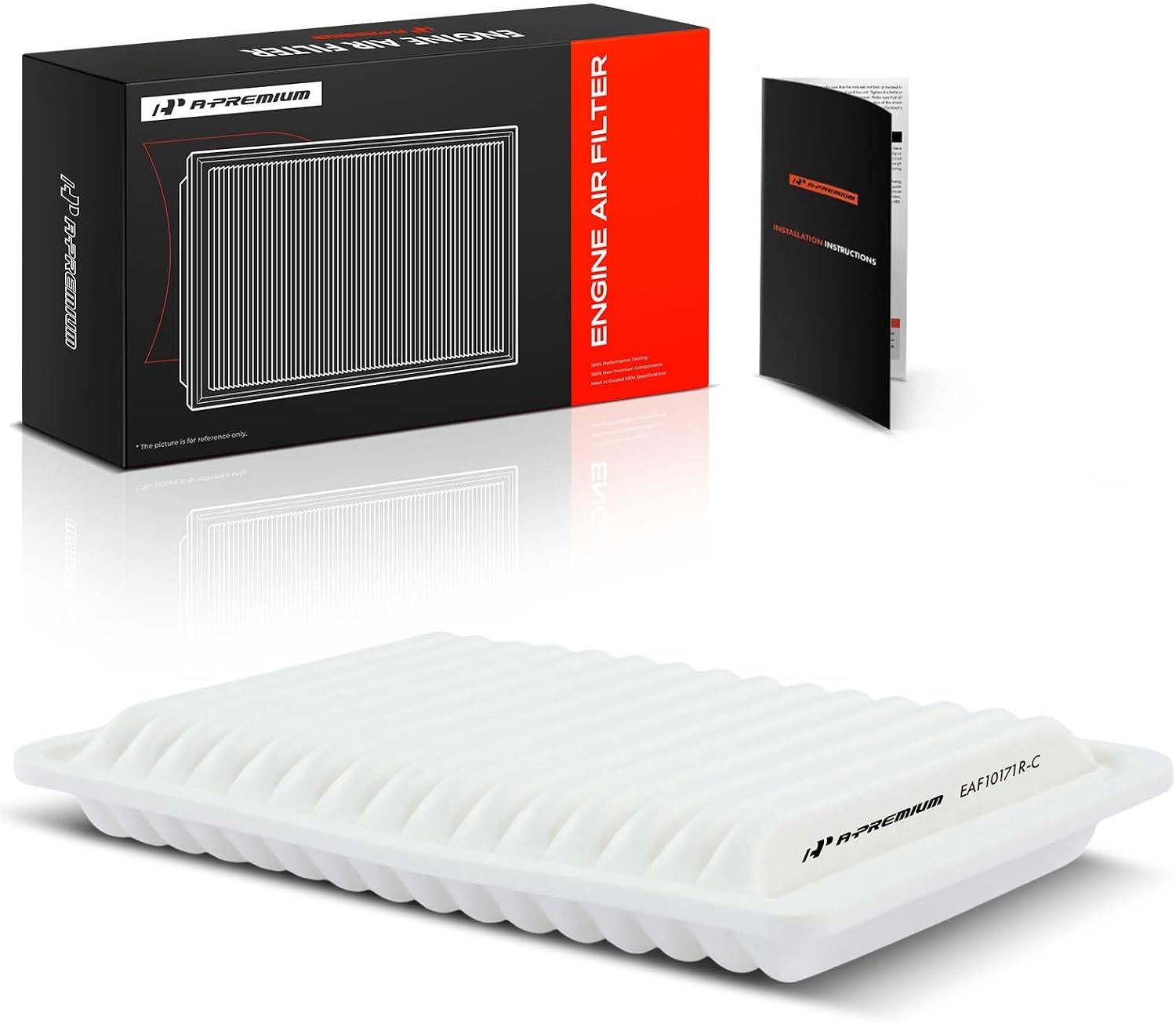
This A-Premium engine air filter is designed to help Toyota Camry and Venza models maintain cleaner airflow and stronger engine performance. Its fine filtration media captures debris while keeping air moving efficiently, and the rectangular, front-mounted design offers a direct replacement fit for select vehicles. Replace it regularly to support engine efficiency and cleaner intake air.

This cabin air filter combines MERV 13 filtration with activated carbon to help trap fine particles and reduce unwanted odors inside your vehicle. Built with four-layer filtration and OEM-sized fitment, it supports cleaner airflow and straightforward installation for a wide range of compatible Hyundai, Kia, GMC, Chevy, and Saturn models. Replace it on schedule to help maintain fresh, comfortable air for everyday driving.
Signs of Compressor Issues
- Warm air from the vents: A failed compressor may move little or no refrigerant through the system.
- Grinding, rattling, or squealing: Mechanical noise can mean clutch, pulley, bearing, or internal compressor damage.
- Rapid cycling: On clutch-equipped systems, quick on/off cycling may point to low refrigerant, pressure-switch behavior, or electrical control issues.
- No compressor operation: The cause may be a fuse, relay, pressure sensor, low charge, wiring problem, control module issue, or failed compressor.
Owner-Safe Compressor Checks
Not every Camry has a compressor clutch that visibly cycles. On a clutch-equipped, non-hybrid system, you may hear or see engagement with the AC set to MAX and the fan high. Other Camrys use different compressor-control strategies, while hybrids may use a high-voltage electric compressor. Limit DIY checks to noise, belt condition where applicable, owner-serviceable fuses, vent temperature, and visible leaks. Do not bypass pressure switches, jump relays, or probe compressor wiring.
| Observation | What It May Mean | Next Step |
|---|---|---|
| Clutch engages on a clutch-equipped system, but air stays warm | Low charge, poor condenser airflow, internal compressor weakness, or blend-door fault | Record vent temperature and arrange pressure and control diagnosis |
| Rapid cycling on a clutch-equipped system | Possible low charge, pressure-control issue, or sensor input | Have both high- and low-side pressures diagnosed |
| No obvious engagement or compressor response | The design may not use a visible clutch, or a fuse, sensor, wiring, charge, control, or compressor fault may be present | Check only owner-serviceable fuses and obtain model-specific diagnosis |
| Grinding, squealing, or loud bearing noise | Possible pulley, bearing, belt, or compressor failure | Turn the AC off and schedule repair |
Hybrid Camry caution: Do not probe orange high-voltage wiring or service an electric AC compressor unless you are trained for hybrid systems. DENSO notes that ND-oil 11 is a POE oil developed for electric driven scroll compressors in hybrid and electric vehicles, with high insulation properties. Generic oil, dye, or stop-leak products can cause costly damage.
How to Check and Replace Your Cabin Air Filter
A clogged cabin air filter is one of the easiest Camry AC problems to check at home. It can make the AC feel weak, noisy, or slow to cool the cabin because less air moves across the evaporator and through the vents. A dirty filter does not prove the refrigerant is low: it mainly reduces air volume. Toyota’s AC troubleshooting guidance lists a clogged cabin filter as a common airflow restriction and directs owners to the maintenance schedule or owner’s manual for the correct inspection interval.
A dirty cabin filter can mimic a weak AC system. If the fan is loud but airflow is low, check the filter before paying for refrigerant diagnosis.
- Locate the filter: In many Camry models, it is behind the glove box. Check your owner’s manual for the exact procedure.
- Remove the old filter: Open the access cover, slide the filter tray out, and note the airflow or “UP” direction marking.
- Inspect it: Replace it if it is dark, dusty, packed with leaves, or has a musty odor.
- Install the new filter correctly: Use a genuine Toyota or quality compatible filter and match the direction marking.
- Test airflow: Turn the fan from low to high and confirm airflow improves at multiple vents.
Toyota’s replacement timing varies by model year, market, and operating conditions. Follow the maintenance guide for your exact Camry, and inspect the filter sooner if airflow drops, the fan becomes unusually loud, or you drive in heavy dust, pollen, smoke, or traffic.
[Products Worth Considering]

This front left door lock actuator assembly is a direct replacement for select Toyota and Lexus models, helping restore reliable power door locking and latch operation. Built as an OEM-quality aftermarket part, it includes the latch assembly and is factory tested for dependable performance. It is designed for driver-side front door fitment across a wide range of compatible vehicles and comes with replacement support for added peace of mind.

This dual filter kit helps keep your vehicle running and riding cleaner by replacing both the engine air filter and cabin air filter at the same time. It is designed for a range of Toyota and Lexus hybrid models, helping support engine performance while reducing odors and airborne particles inside the cabin. Built with high-quality filtration materials, it offers a convenient maintenance solution for routine filter replacement.

KAX CA10171 premium engine air filter is designed as a direct replacement for select Toyota Camry and Venza models, helping maintain clean airflow to protect critical engine components. Its high-performance filter media delivers strong filtration efficiency and long service life for dependable everyday driving. With a precise rectangular fit and easy replacement design, it supports better acceleration, consistent performance, and improved fuel economy.
Why Is the Airflow Weak From Your Camry Vents?

If the AC is not cold, do not skip airflow checks. Poor airflow can make a good refrigeration system feel weak, especially on hot days. Test airflow with the fan on high, recirculation on, temperature set to cold, and all dashboard vents open.
Common Airflow Restrictions
- Clogged cabin air filter: This is the first DIY check because it is cheap, fast, and common.
- Blocked vents: Make sure dashboard vents are open and not blocked by phone mounts, papers, or accessories.
- Dirty evaporator or duct odor: A musty smell can point to moisture and debris in the HVAC case. Use the separate Camry evaporator-cleaning guide if odor is the main complaint.
- Condenser debris: Leaves, bugs, and dirt in front of the radiator/condenser can reduce heat transfer.
- Blend door or mode door fault: If air comes from the wrong vents, one side is warmer, or temperature changes randomly, an actuator or sensor may be stuck or failing.
Pro Tip: Use a simple thermometer in the center vent after the cabin has started cooling. Record the outside temperature, fan speed, recirculation setting, left and right vent temperatures, and whether the reading changes at idle versus road speed. Keep the test conditions the same when comparing results.
Blower Motor Functionality Check
The blower motor pushes air through the evaporator and vents. If it is weak or intermittent, the cabin may not cool even when the AC system itself is cold.
| Check | Action |
|---|---|
| Fan speeds | Confirm low, medium, and high speeds work |
| Noise | Listen for scraping, chirping, or rattling from the blower area |
| Fuse and relay | Check only the owner-serviceable fuses listed in your manual |
| Air direction | Switch between face, floor, and defrost vents to check mode-door operation |
If airflow is low after replacing the cabin filter and confirming the fan settings, a blower motor, blower resistor/control module, or HVAC door actuator may need professional testing.
How Can You Spot a Toyota Camry AC Refrigerant Leak?

AC leaks are common because the system uses rubber seals, crimped hoses, aluminum lines, a condenser exposed to road debris, and an evaporator hidden inside the dash. A small leak may cool for a while after a recharge, then slowly return to warm air.
Look for these signs:
- Oily residue: Refrigerant oil may appear near hose fittings, the compressor, condenser corners, or service ports.
- Persistent hissing with cooling loss: A hiss near a fitting or component may support a leak diagnosis, but a brief sound after shutdown can also be normal pressure equalization.
- Visible condenser damage: Rock impacts, bent fins, or oily patches at the front condenser can indicate a leak.
- Repeated low charge: If the system needs refrigerant again, the leak was not fixed.
- Musty smell or damp carpet is not enough proof: Those can be HVAC drain or evaporator issues, but they do not confirm refrigerant loss by themselves.
Professional AC leak diagnosis may include an electronic leak detector, model-appropriate UV dye, pressure testing, evacuation, and recharge by weight. The EPA notes that certified electronic leak detectors can locate most refrigerant leaks, although very small leaks can remain difficult to find. Dye and oil choice matters, especially on hybrid electric compressors.
Warning: Do not use stop-leak compounds. DENSO warns that leak-stop material can solidify when exposed to air or moisture, while contaminated refrigerant or oil can damage service equipment and AC components. A proper repair finds the leak, replaces or seals the failed component, evacuates the system, and charges it to specification.
[Products Worth Considering]

Puroma cabin air filter helps deliver cleaner, fresher air inside your vehicle while supporting efficient HVAC airflow. Its multi-layer design helps reduce stale odors and capture airborne particles, making daily driving more comfortable. Designed for easy installation and broad fitment across many Toyota, Lexus, Mazda, and Subaru models.

This JADODE combo includes engine and cabin air filters designed to help keep passenger air cleaner while supporting efficient HVAC performance. The activated carbon layer helps absorb odors, exhaust fumes, and pollution, while filtration captures dirt, dust, and pollen for OE-comparable protection. It is compatible with a wide range of Toyota, Scion, Lexus, and Pontiac applications for convenient replacement maintenance.

This automotive circuit tester checks low-voltage DC systems from 3-65V, making it useful for diagnosing headlights, taillights, fuses, sockets, and other vehicle wiring issues. The digital backlit display provides clear voltage readings with fine accuracy, while the bidirectional polarity indicator helps you test from either ground or positive. Built with a durable probe, insulated tip, and extra-long spring wire, it is designed for dependable everyday use in automotive and household electrical work.
How Do You Maintain a Toyota Camry AC System?
Good AC maintenance is mostly about airflow, cleanliness, and catching small problems early.
- Replace the cabin air filter on schedule: Use your Camry’s maintenance guide, and replace sooner in dusty or high-pollen conditions.
- Keep the condenser clear: Gently rinse bugs and dirt from the front condenser area. Do not bend the fins with high pressure.
- Run the AC periodically: Regular use makes it easier to notice changes in vent temperature, airflow, odor, cycling, or noise before the fault becomes severe.
- Watch for oily residue: Oil around AC lines, fittings, or the condenser can point to refrigerant leakage.
- Do not ignore compressor noise: Grinding or squealing should be checked quickly to prevent wider system damage.
- Watch the engine temperature: If AC performance drops at idle and the engine also runs hot, stop treating it as an AC-only complaint. Cooling-fan or engine-cooling faults need priority.
- Use the correct refrigerant and oil: The under-hood label and service information matter more than generic advice.
When Should You Call a Professional for Camry AC Repair?
Call a qualified AC technician if the basic airflow checks do not restore cold air, or if the issue involves refrigerant, compressor operation, pressure readings, or hybrid high-voltage components.
Professional help is the safer choice when you notice:
- Strong airflow but warm air: This often requires pressure testing and leak diagnosis.
- Visible oily leaks: Refrigerant oil on fittings, hoses, the condenser, or compressor should be inspected.
- Rapid compressor cycling: This can point to low charge or pressure-control issues.
- Grinding or squealing: Stop using the AC and schedule service.
- Hybrid/electric compressor concerns: High-voltage systems and special compressor oils are not normal DIY work.
- AC works only after a recharge: That means the underlying leak still needs to be found.
What Should a Complete Camry AC Diagnosis Include?
A complete diagnosis should identify why the system is not cooling instead of treating “warm air” as proof that one part has failed. Depending on the model year and symptom, the service process may include:
- Verifying the under-hood refrigerant label, specified charge weight, compressor oil, and hybrid precautions.
- Checking cabin airflow, vent-door operation, condenser condition, and cooling-fan operation.
- Scanning the HVAC and related control modules for model-specific diagnostic trouble codes and live data.
- Measuring high- and low-side pressures under controlled test conditions and comparing them with ambient and vent temperatures.
- Using an appropriate electronic detector, approved dye, or another model-appropriate method to locate leaks.
- Recovering refrigerant with approved equipment, repairing the fault, evacuating the system, charging by weight, and confirming post-repair cooling performance.
Ask the shop what failed, how it was confirmed, whether the estimate includes leak repair and refrigerant, and whether the quoted cost is specific to your year, engine, and hybrid or non-hybrid system.
| Repair or Service | General U.S. Camry Estimate | Notes |
|---|---|---|
| Professional cabin air filter replacement | $89–$116 | DIY cost depends on the filter chosen; professional estimate includes labor and parts |
| AC diagnosis or leak inspection | $122–$179 | Does not include taxes, fees, location adjustments, or repair parts |
| AC recharge | $271–$354 | May not last if the leak is not repaired |
| AC compressor replacement | $1,292–$1,678 | Can vary by year, engine, hybrid system, parts, and labor rates |
Cost note: These RepairPal ranges were updated June 18, 2026 and are broad Camry estimates, not guaranteed quotes. A year-specific estimate can differ, especially for hybrid compressors, refrigerant type, access time, and related component damage.
Frequently Asked Questions
Why is my Toyota Camry AC not blowing cold air?
The most common causes are low refrigerant from a leak, a clogged cabin air filter, blocked condenser airflow, a failing compressor, a weak blower motor, a bad blend door actuator, or an electrical fault. Start with airflow and filter checks, then move to professional refrigerant and compressor diagnosis if the air is still warm.
What is the most common cause of AC not blowing cold air?
Low refrigerant from a leak is one of the most common causes when airflow is strong but warm. If airflow is weak, the cabin air filter or blower system is often the better first suspect. Do not assume the system only needs refrigerant until airflow and basic controls have been checked.
How much does it cost to fix the AC in a Toyota Camry?
It depends on the fault. RepairPal estimates updated June 18, 2026 list professional cabin-filter replacement around $89–$116, AC diagnosis or leak inspection around $122–$179, AC recharge around $271–$354, and compressor replacement around $1,292–$1,678. Taxes, fees, location differences, and related repairs are extra.
Can I recharge my Camry AC myself?
A DIY recharge can add refrigerant, but it can also overcharge the system, hide a leak, use the wrong refrigerant, or introduce sealer. If the system is low, the more reliable fix is professional leak diagnosis, repair, evacuation, and recharge to the correct weight.
Why does my Camry AC get cold while driving but warm at idle?
This often points to poor condenser airflow, a weak or non-working cooling fan, a dirty condenser, or a low refrigerant charge. At road speed, air naturally moves through the condenser. At idle, the fans must do that job.
Why is one side of my Camry AC cold and the other side warm?
First sync the driver and passenger temperature settings. If the difference remains, a blend door actuator, temperature sensor, HVAC control fault, or uneven evaporator cooling may be responsible. Compare left and right vent temperatures and have the door commands and refrigerant system checked.
Why does my Camry AC work intermittently?
Intermittent cooling can come from a cooling fan, relay, pressure sensor, compressor-control fault, loose electrical connection, low refrigerant, or evaporator freeze-up. Record when the cooling stops, the outside temperature, vehicle speed, fan setting, and any warning lights before diagnosis.
Can a dirty cabin air filter make a Camry AC feel warm?
Yes. A clogged cabin filter mainly reduces airflow, so the cabin cools slowly even if the refrigerant circuit is working. If the fan sounds strong but little air reaches the vents, inspect the filter before assuming the system needs refrigerant.
Is it safe to drive with a Camry AC problem?
Most AC cooling problems do not make the car unsafe to drive, but loud compressor grinding, belt noise, electrical smells, or hybrid high-voltage warnings should be taken seriously. Turn the AC off and schedule service if the compressor sounds damaged.
Conclusion
A Toyota Camry AC not blowing cold air does not automatically mean the compressor has failed. First separate weak airflow from strong but warm airflow. Then compare idle with road speed, left with right vents, and constant with intermittent cooling. Replace a clogged cabin filter or remove safe-to-reach debris, but schedule model-specific diagnosis for refrigerant loss, fan failure, electrical faults, abnormal noise, hybrid compressor concerns, or repeated cooling loss after a recharge. Fixing the confirmed leak, airflow, control, door, fan, or compressor fault is more reliable than repeatedly adding refrigerant.
Sources
- Toyota Owners — 2025 Camry Air Conditioning Filter — supports cabin filter inspection and airflow guidance.
- Toyota — Troubleshooting Common Car AC Issues — supports the airflow, condenser, refrigerant-leak, and compressor overview.
- U.S. EPA — Options for Recharging Your Air Conditioner — supports leak/recharge guidance and why topping off is not a permanent repair.
- U.S. EPA — Regulatory Requirements for MVAC System Servicing — supports refrigerant handling, venting, and service-compliance warnings.
- U.S. EPA — Acceptable Refrigerants and Their Impacts — supports R-134a, R-1234yf, and current MVAC refrigerant context.
- DENSO — A/C Compressor Oil — supports hybrid/electric compressor oil cautions.
- DENSO — Air Conditioning Best Practice — supports warnings about leak-stop products, oil/dye contamination, and professional service practice.
- RepairPal — Toyota Camry Cabin Air Filter Replacement Cost — supports the professional cabin-filter replacement range updated June 18, 2026.
- RepairPal — Toyota Camry AC System Leak Inspection Cost — supports the diagnostic range updated June 18, 2026.
- RepairPal — Toyota Camry AC Recharge Cost — supports the recharge range updated June 18, 2026.
- RepairPal — Toyota Camry AC Compressor Replacement Cost — supports the compressor range updated June 18, 2026.




[…] on a dual-zone system are the strongest clues. Weak airflow, low coolant, heater-core trouble, and poor A/C output can create similar symptoms and need separate […]