
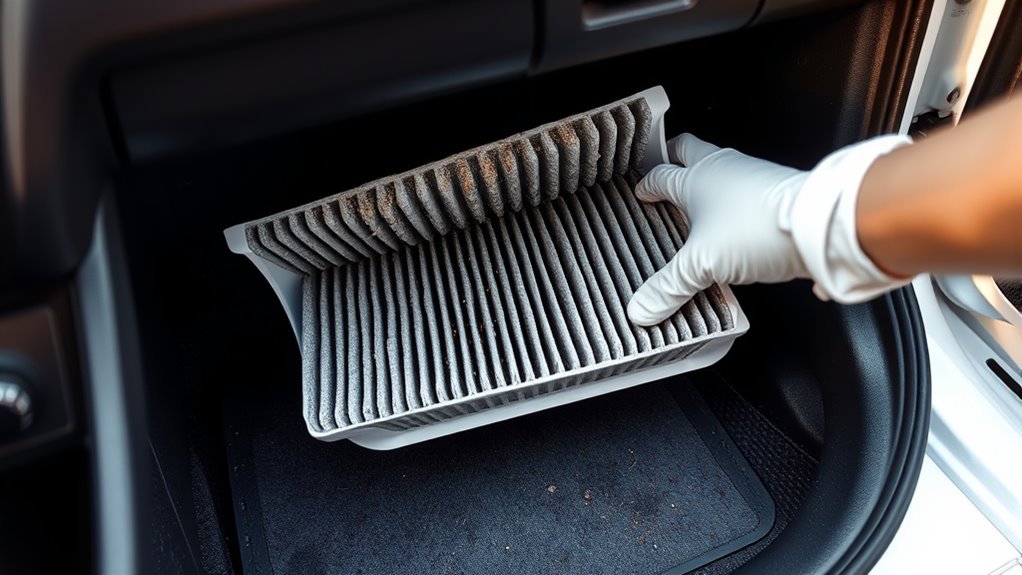
A Toyota Camry cabin air filter is easy to forget because it is tucked out of sight behind the glove box, but it has a direct effect on vent airflow, odors, dust, and allergy comfort inside the car. The safest schedule is simple: follow your exact owner’s maintenance guide, inspect the filter regularly, and replace it sooner when real driving conditions make it dirty.
Quick Answer
For many late-model U.S. Toyota Camry maintenance guides, the cabin air filter is scheduled for replacement every 10,000 miles or 12 months. Replace it sooner if you drive in heavy traffic, dusty roads, desert areas, wildfire smoke, high pollen, or if you notice weak airflow, odors, or extra dust.
Key Takeaways
- Check your exact Camry owner’s manual or maintenance guide first because intervals can vary by model year and market.
- Toyota’s maintenance guidance notes that heavy traffic, dirt roads, urban, desert, and dusty areas can shorten cabin filter life.
- Most Camry cabin air filters are reached through the passenger-side glove box, not the engine bay.
- Replace the filter right away if airflow drops, vents smell musty, dust increases inside the cabin, or the old filter is visibly dirty.
At a Glance
| Time Required | 5–15 minutes for most Camry models |
| Difficulty | Beginner-friendly DIY job |
| Tools Needed | Usually none; a flashlight and small vacuum are helpful |
| Typical Cost | About $10–$65 for the filter; more if a shop installs it |
How Often Should a Toyota Camry Cabin Air Filter Be Replaced?

For many late-model U.S. Toyota Camry models, the practical answer is every 10,000 miles or 12 months, whichever comes first. Toyota’s official Camry maintenance guides list cabin air filter replacement at scheduled intervals, and Toyota also states that driving in heavy traffic, on dirt roads, or in urban, desert, or dusty areas can shorten the filter’s life.
That means mileage alone should not be your only trigger. A Camry that spends most of its time in clean suburban driving may make it to the scheduled interval with no issue. A Camry used in construction zones, high-pollen seasons, heavy city traffic, wildfire smoke, dusty roads, or desert conditions may need a new filter earlier.
Note: The cabin air filter is different from the engine air filter. The cabin filter cleans air entering the passenger compartment through the HVAC system; the engine air filter protects the engine’s intake system.
| Driving Condition | Suggested Cabin Filter Plan | Why It Matters |
|---|---|---|
| Normal mixed driving | Follow the maintenance guide; often 10,000 miles or 12 months on late-model Camrys | Keeps airflow and filtration consistent |
| Heavy traffic or urban pollution | Inspect every 5,000 miles; replace when dirty or at the scheduled interval | Filters load faster with soot, dust, and road particles |
| Dirt, gravel, desert, or construction areas | Inspect more often; replace early if visibly dusty | Dust can clog the pleats and reduce airflow |
| High pollen or allergy season | Replace before peak season if the filter is old | A fresh filter can reduce pollen entering the cabin |
| Musty odor, weak airflow, or visible debris | Replace immediately | Symptoms matter more than mileage |
Factory Schedule vs. Real Driving: When to Change Sooner
The factory schedule is your baseline, not a reason to ignore symptoms. Toyota’s 2023 and 2025 Camry maintenance guides both show regular cabin air filter replacement in the maintenance log, while the maintenance-item explanation says heavy traffic, dirt roads, urban, desert, and dusty areas may require more frequent replacement.
Use this simple rule: replace the filter at the scheduled interval, but inspect it early when your environment is dirty. If the filter is dark, packed with leaves, covered in dust, damp, bent, or giving off odor, replace it even if the mileage interval is not finished.
A clean cabin filter helps the HVAC system move air freely. A clogged one can make the fan work harder, reduce vent output, and let more odor and dust stay in the cabin.
Signs Your Camry Cabin Filter Needs Immediate Replacement
Do not wait for the odometer if the filter is already causing symptoms. Replace your Camry cabin air filter now if you notice any of these signs:
- Weak airflow from the vents: A clogged filter can restrict air passing through the HVAC system.
- Musty or stale vent odor: Dirt, moisture, leaves, and debris can create bad smells inside the filter housing.
- More dust on the dashboard: A filter that is overloaded or poorly seated may no longer capture particles well.
- Worse allergy symptoms while driving: Pollen and fine particles can enter more easily when the filter is dirty or bypassing air.
- Whistling, fluttering, or rattling after replacement: The filter may be misaligned, the cover may not be latched, or debris may be in the blower area.
- Visible leaves, dirt, or dark gray pleats: A dirty filter should be replaced, not washed and reused unless your specific filter is designed as reusable.
Warning: Turn the vehicle off before removing the filter. Do not run the blower with the filter case open because loose leaves or debris can get pulled into the fan.
Where the Cabin Filter Is Located on Camry Model Years
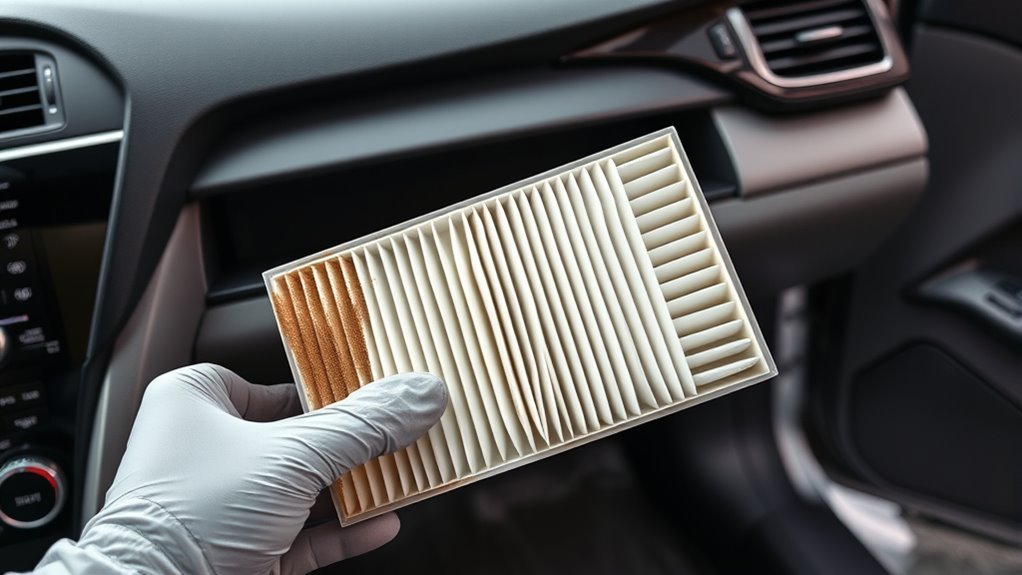
On most modern Toyota Camry models, the cabin air filter is located behind the passenger-side glove box. Toyota’s digital manual for the 2025 Camry Hybrid describes opening the glove box, removing the glove box cover, unlocking the filter cover, and removing the filter case.
Access details can vary slightly by year and trim. Some models use glove box stops, a damper arm, a small inner glove box cover, or a filter tray that slides out after the cover is released. Before buying a filter or forcing any tabs, check your exact model year in the Toyota owner’s manual or the maintenance guide for your vehicle.
| Camry Area | What to Look For | Action |
|---|---|---|
| Passenger glove box | Stops, damper arm, or inner glove box cover | Lower the glove box gently |
| Behind glove box opening | Rectangular HVAC filter cover | Release the tabs or latches |
| Filter tray or case | Arrow markings, dust, leaves, or debris | Note orientation before removing |
DIY: Replace the Camry Cabin Air Filter Step by Step
Replacing the cabin air filter on a Camry is usually a quick DIY job. Work slowly, keep the old filter level as you pull it out, and note the direction markings before installing the new one.
- Turn the vehicle off. Make sure the blower and ignition are off before opening the filter housing.
- Open the glove box. Remove the glove box contents so they do not spill.
- Lower or access the glove box panel. Depending on the year, release the stops, damper arm, or inner cover gently. Do not force the plastic tabs.
- Find the rectangular filter cover. It is normally behind the glove box opening on the passenger side.
- Release the filter cover. Press the tabs or latches and remove the cover.
- Slide out the old filter or filter case. Keep it level so leaves and dust do not fall into the blower area.
- Check the old filter direction. Look for AIR FLOW or UP markings. “AIR FLOW” and “UP” do not always mean the same thing, so follow the wording on the filter and the housing.
- Clean loose debris carefully. Use a small vacuum or a clean cloth around the housing. Do not push debris deeper into the fan.
- Install the new filter. Seat it flat inside the tray or housing with the correct direction marking.
- Reinstall the cover and glove box. Make sure the cover clicks into place and the glove box opens and closes normally.
- Test the HVAC system. Turn the fan on low, then higher, and listen for rattles or air leaks.
Pro Tip: Write the date, mileage, and filter part number on your receipt or maintenance log. It makes the next replacement easier and helps you compare how long each filter lasts in your real driving conditions.
[Products Worth Considering]

This JADODE combo includes engine and cabin air filters designed to help keep passenger air cleaner while supporting efficient HVAC performance. The activated carbon layer helps absorb odors, exhaust fumes, and pollution, while filtration captures dirt, dust, and pollen for OE-comparable protection. It is compatible with a wide range of Toyota, Scion, Lexus, and Pontiac applications for convenient replacement maintenance.

This CF10285 cabin air filter is designed to help keep your vehicle's interior air cleaner by capturing dust, pollen, soot, and road grime. It is compatible with a wide range of Toyota, Lexus, Jaguar, Land Rover, Subaru, Scion, and Pontiac models, making it a versatile replacement choice. The activated carbon design and easy glove-box installation make it a practical upgrade for fresher driving comfort.

This cabin air filter replacement is designed to help keep your vehicle’s interior air fresher and cleaner by capturing dust, odors, and fine particles with a multi-layer filtration structure. The activated carbon layer helps reduce unwanted smells, while the extended service life makes it a practical maintenance part for many compatible Toyota, Lexus, Subaru, Scion, and Jaguar models.
How to Choose: OEM vs. Aftermarket Camry Cabin Filters
The best Camry cabin air filter is the one that fits tightly, seals correctly, and matches your driving needs. Poor fit can allow air to bypass the filter, while overly restrictive filters can reduce airflow if they are not designed well for the vehicle.
[Products Worth Considering]

ECOGARD XC10621C is a premium cabin air filter designed to help keep your vehicle’s interior air cleaner by trapping dust, pollen, pet dander, and other airborne debris. Its activated carbon layer also helps reduce common odors from traffic and outside air while supporting steady HVAC airflow for reliable climate system performance. It is engineered for a wide range of Toyota, Lexus, and Subaru applications.

This KAX HEPA cabin air filter is designed to help keep your vehicle interior air cleaner by capturing fine particles and reducing airborne contaminants. Its multi-layer structure with activated carbon supports strong filtration performance while helping improve HVAC airflow for more efficient heating and cooling. Built for a wide range of Toyota, Lexus, Subaru, and Mazda models, it offers a practical replacement option for maintaining fresher cabin air.

[Vehicle Fitment]: For Toyota: 4Runner (2010-2024), Avalon (2005-2018), Camry (2007-2017), Corolla (2009-2019), Corolla iM (2017-2018), Highlander (2008-2019), Land Cruiser (2008-2011,2013-2021), Matrix (2009-2014), Mirai (2016-2020), Prius (2010-2015), Prius C (2012-2019), Prius Plug-In (2012-2015), Prius V (2012-2018), RAV4 (2006-2018), Sequoia (2008-2022), Sienna (2011-2020), Tundra (2007-2021), Venza (2009-2016), Yaris (2007-2018).
OEM Part Advantages
An OEM Toyota cabin air filter is designed to match Toyota’s size, fit, and housing requirements. Choose OEM if you want the most predictable fit, do not want to compare aftermarket specs, or prefer parts that match Toyota’s original service approach.
Toyota’s warranty information also explains that Toyota Genuine Parts are designed to fit the vehicle’s exact specifications. That does not mean aftermarket parts automatically void warranty coverage, but it does mean fit and installation quality matter.
Aftermarket Cost Savings
Aftermarket filters can cost less and may offer options such as activated carbon for odor control or fine-particle media for pollen and dust. They can be a good choice when they are from a reputable brand and explicitly list compatibility with your Camry’s year, trim, and engine or hybrid configuration.
Before buying, confirm the part number, dimensions, arrow markings, return policy, and customer reports about fit. Avoid filters that bow, leave gaps, or require force to install.
Fit, Filtration, and Warranty
In the U.S., warranty coverage generally is not dependent on using one particular brand of replacement part. However, damage caused by improper maintenance, incorrect installation, or a poorly fitting part may not be covered. That makes careful installation just as important as filter choice.
- Choose standard particulate media for normal dust and pollen control.
- Choose activated carbon if traffic fumes and odors are your main complaint.
- Choose OEM if exact fit and simple selection matter more than saving a few dollars.
- Avoid no-name filters if they do not list clear compatibility or have inconsistent fit reviews.
Camry Cabin Filter Cost: Parts, Labor, and Where to Save
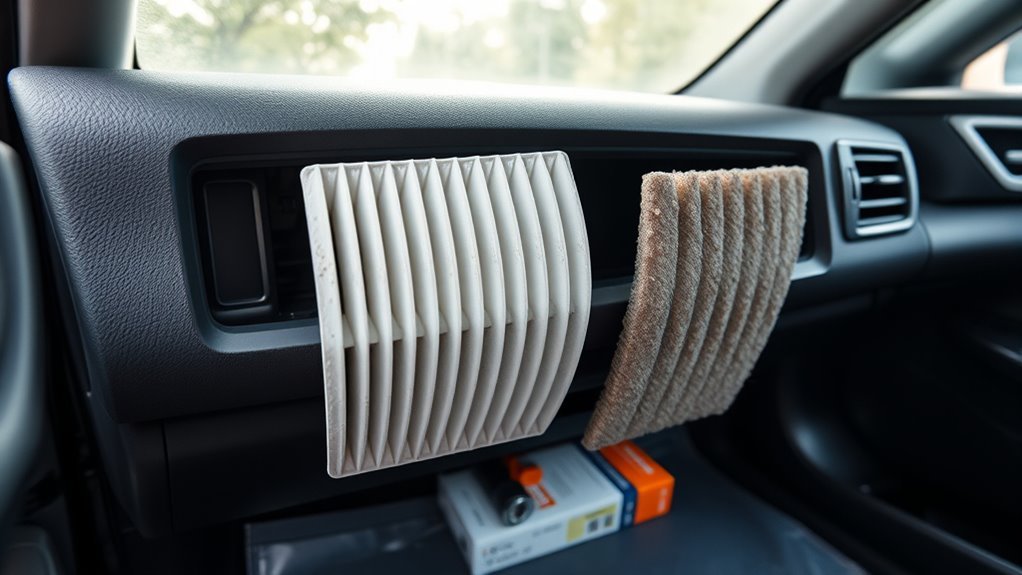
A Toyota Camry cabin air filter is usually inexpensive compared with other maintenance items. Typical U.S. pricing varies by brand, model year, and retailer, but many standard aftermarket filters cost about $10–$35, premium carbon or fine-particle filters often cost about $20–$50, and OEM filters may run about $25–$65.
If a shop installs it, labor is often more expensive than the part because the job is quick but still billed as a service. A dealer, oil-change shop, or repair shop may charge a total of about $50–$120 depending on the filter and labor rate.
| Option | Typical Cost | Best For |
|---|---|---|
| DIY aftermarket filter | $10–$50 | Lowest cost and quick replacement |
| DIY OEM filter | $25–$65 | Predictable fit and Toyota part matching |
| Shop replacement | $50–$120 | Convenience during routine service |
To save money, buy the correct filter before the service visit and replace it yourself, or ask the shop for the installed price before approving the work. If they show you a dirty filter, compare it with your maintenance log and make sure it is actually yours.
[Products Worth Considering]
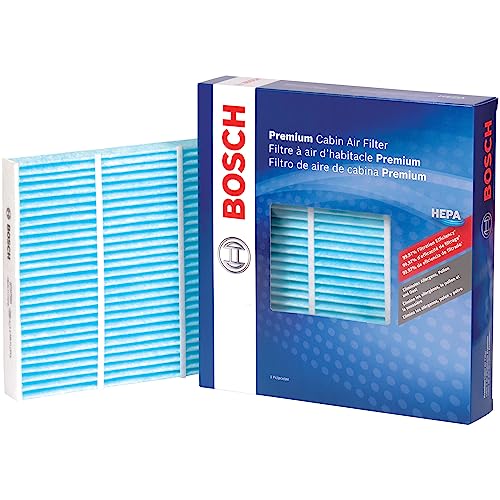
High Efficiency Particulate Cabin Air Filters Are Designed To Trap Microscopic Pollutants Including Pollen, Mold And Common Allergens

Efficient Filtration: Particles are prevented from entering the cabin by a close-meshed, non-woven filter layer that protects your engine from wear to extend the life of your vehicle's system. It also optimizes air conditioning and heating systems, ensuring high flow capacity.

Efficient Filtration: Particles are prevented from entering the cabin by a close-meshed, non-woven filter layer that protects your engine from wear to extend the life of your vehicle's system. It also optimizes air conditioning and heating systems, ensuring high flow capacity.
Camry Maintenance Schedule: When to Check and Log Replacements
Good cabin filter maintenance is simple: inspect it regularly, replace it at the scheduled interval, and write down the date and mileage. Toyota’s maintenance materials also encourage keeping detailed maintenance records, including date of service, mileage, and the work or parts installed.
Use this maintenance log format:
| Log Item | What to Record |
|---|---|
| Date | The day you inspected or replaced the filter |
| Mileage | Odometer reading at replacement |
| Filter part number | OEM or aftermarket part number |
| Condition | Clean, dusty, dark, damp, odor, leaves, pollen, or debris |
| Reason | Scheduled service, weak airflow, smell, allergy season, or dusty driving |
Post-Replacement Issues: Camry Cabin Filter Troubleshooting
If something feels wrong after replacing the filter, the problem is usually fitment, orientation, debris, or an unlatched cover. Start by turning the vehicle off, reopening the glove box area, and checking the filter seating.
| Symptom | Likely Cause | Action |
|---|---|---|
| Low airflow | Filter installed backward, too restrictive, or not seated flat | Check arrow wording, reseat the filter, and confirm the cover is closed |
| Rattle or flutter | Loose filter, loose cover, or leaves near the blower | Remove debris and latch the cover fully |
| Musty smell remains | Odor in evaporator case or vents, not only the filter | Replace the filter, run fresh-air mode, and consider HVAC cleaning if odor persists |
| Dust still enters cabin | Poor seal, wrong filter size, or cover not locked | Verify the part number and inspect the gasket area |
| Glove box will not close correctly | Stops or damper arm reinstalled incorrectly | Recheck the glove box tabs and damper connection |
Note: No cabin filter removes every pollutant or odor. The U.S. EPA explains that filters can reduce particles, but no filter eliminates all pollutants from air. In a car, keeping the filter fresh, using recirculation wisely, and avoiding smoky or dusty air when possible all help.
Frequently Asked Questions
How often should I replace the cabin air filter on my Toyota Camry?
For many late-model U.S. Toyota Camry maintenance guides, replace it every 10,000 miles or 12 months. Always confirm your exact model year in the owner’s manual or maintenance guide, and replace it sooner if it is dirty, smells bad, or reduces airflow.
Should you change the cabin air filter every 10,000 miles?
Yes, 10,000 miles is a sensible interval for many late-model Camrys because Toyota maintenance guides commonly list cabin filter replacement at 10,000-mile intervals. If you drive in dusty, smoky, or high-pollen conditions, inspect it earlier.
Can I clean and reuse a Toyota Camry cabin air filter?
Most standard cabin air filters are disposable. You can gently shake off loose leaves during inspection, but washing or vacuuming a disposable filter can damage the media. Replace it unless the filter manufacturer specifically says it is washable and reusable.
Where is the cabin air filter in a Toyota Camry?
On most modern Camry models, it is behind the passenger-side glove box. Open the glove box, release the appropriate stops or cover for your model year, and look for the rectangular HVAC filter cover.
What happens if I install the cabin filter backward?
A backward or poorly seated filter may reduce airflow, create noise, or allow air to bypass the filter. Check whether the filter marking says “AIR FLOW” or “UP,” then follow the filter and housing directions carefully.
Is an OEM Camry cabin air filter better than aftermarket?
OEM is the easiest choice for exact fit. A quality aftermarket filter can also work well if it matches your Camry’s year and dimensions. The key is a tight seal, correct orientation, and filter media suited to your driving conditions.
Conclusion
Replace your Toyota Camry cabin air filter at the interval listed in your exact maintenance guide, and use 10,000 miles or 12 months as a strong rule for many late-model U.S. Camrys. Change it sooner when you drive in dust, heavy traffic, smoke, pollen, or urban pollution, or when you notice weak airflow, odor, or visible debris. The job is quick, the part is affordable, and a clean filter helps keep your Camry’s cabin air and HVAC performance in better shape.
Sources
- Toyota 2025 Camry Warranty & Maintenance Guide — maintenance log and cabin air filter replacement guidance.
- Toyota 2023 Camry Warranty & Maintenance Guide — scheduled replacement intervals and special-condition notes.
- Toyota 2025 Camry Hybrid Digital Manual: Air Conditioning Filter — glove box access and filter removal procedure.
- Toyota Owners: 2024 Camry Manuals and Warranties — official owner manual and warranty access by model year.
- U.S. EPA: Health and Environmental Effects of Particulate Matter — background on airborne particles and health relevance.
- U.S. EPA: Guide to Air Cleaners in the Home — general filtration limits and particle-removal context.


[…] source is the HVAC and cabin-filter system. Leaves, plastic scraps, a clogged cabin air filter, a warped filter, or a loose filter door can […]