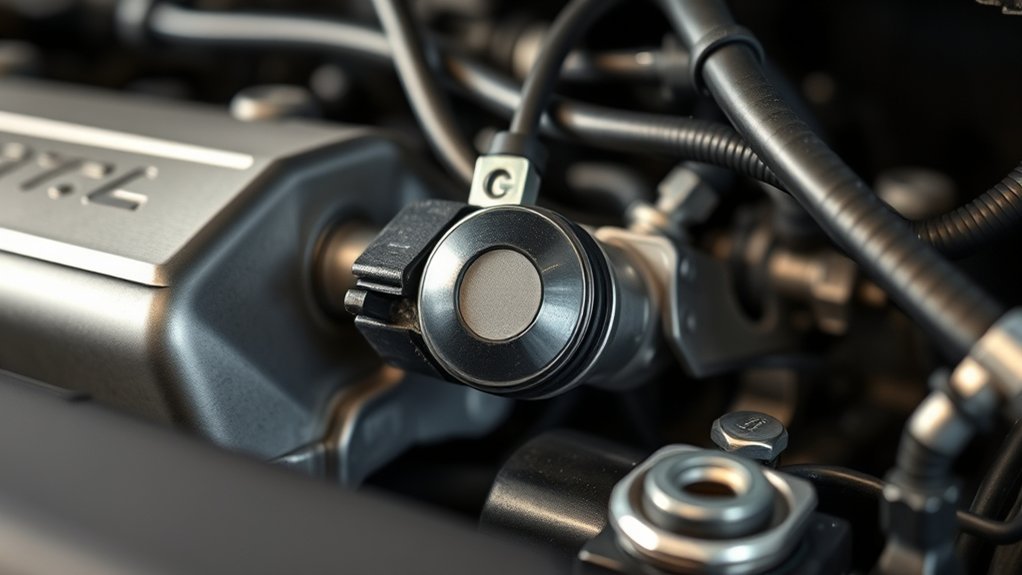
Your Camry’s knock sensor listens for the sharp vibration pattern caused by engine knock, also called detonation or pinging. When the sensor sends that signal to the engine control module, the computer can adjust ignition timing to protect the engine. If the sensor, wiring, or connector fails, the car may lose power, use more fuel, set a check-engine code, or fail an emissions test.
Quick Answer
A Toyota Camry knock sensor detects abnormal engine vibration from detonation and sends that data to the engine computer. The computer uses the signal to adjust ignition timing. A bad sensor usually will not stop the engine immediately, but it should be diagnosed soon because it can reduce power, fuel economy, and engine protection.
Key Takeaways
- The knock sensor helps the ECM detect detonation and adjust ignition timing before knock becomes damaging.
- Common signs include a check-engine light, codes such as P0325, pinging under load, sluggish acceleration, poor fuel economy, or failed emissions testing.
- Camry sensor location depends on model year and engine. Many 4-cylinder models use one sensor; V6 models often use two.
- Do not replace the sensor by mileage alone. Confirm the code, inspect wiring, and follow Toyota service data for your exact VIN.
At a Glance
| Time Required | 30 minutes to several hours, depending on engine access |
| Difficulty | Moderate to advanced; some engines require intake or accessory removal |
| Tools Needed | OBD-II scan tool, multimeter, basic sockets, torque wrench, and service data |
| Cost | Varies by engine, sensor count, gasket needs, and diagnostic/access labor |
Quick Triage: Can You Drive if Your Camry Knock Sensor Fails?
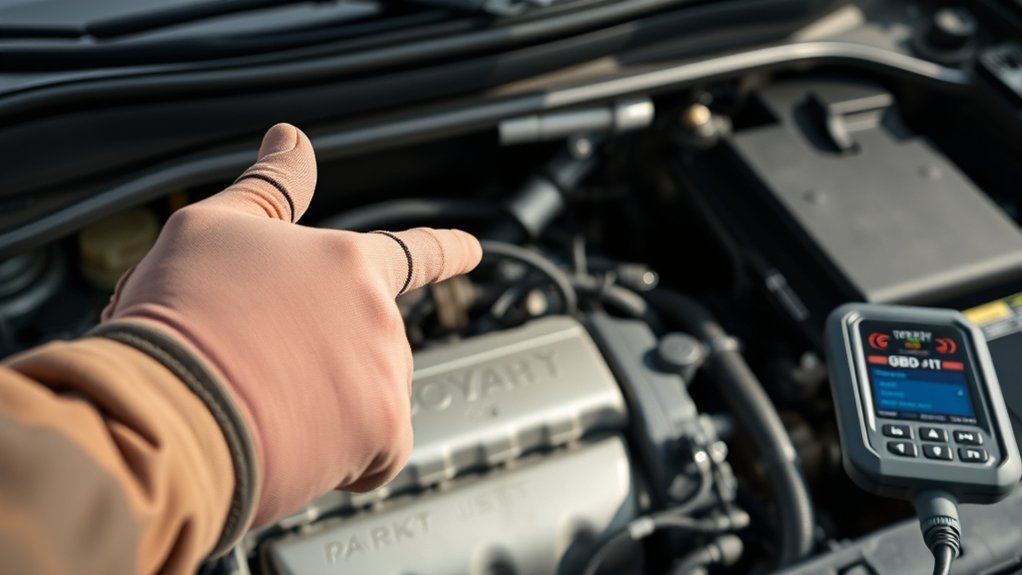
You may be able to drive a short distance with a failed knock sensor if the check-engine light is steady, the engine runs smoothly, and there is no loud pinging or overheating. Treat it as a “get home or get to a shop” situation, not a repair to postpone for weeks.
A failed sensor can make the ECM lose reliable knock feedback. Depending on the fault, the computer may use a conservative timing strategy that reduces power and fuel economy, or it may be less able to respond to real detonation. Either way, the sensor fault should be diagnosed promptly.
Warning: Stop driving and consider towing the car if the check-engine light flashes, the engine knocks loudly under light throttle, the engine overheats, the car misfires badly, or power drops suddenly. Those symptoms can point to active engine or emissions-system damage, not just a sensor circuit fault.
How a Knock Sensor Protects Your Camry Engine
A knock sensor is a vibration sensor mounted to the engine so it can pick up structure-borne noise from abnormal combustion. Suppliers such as Bosch describe the sensor as using a piezoelectric measuring element to detect higher-frequency knock noise, after which the ECU adjusts ignition timing. Toyota’s own Genuine Toyota Knock Control Sensor description also notes that the sensor monitors vibration and supports ignition timing.
Detects Engine Knocking
Engine knock happens when part of the air-fuel mixture burns too early or too violently instead of following the normal spark-initiated flame front. That creates sharp pressure waves in the cylinder. The knock sensor converts those vibrations into an electrical signal that the ECM can read.
This is why a knock sensor fault can feel different from a normal tune-up issue. The problem may not be a dirty air filter or worn spark plug; it may be a circuit, sensor, or actual combustion problem that changes how the ECM controls timing.
Protects Internal Components
Repeated knock can stress pistons, bearings, rods, head gaskets, and other internal parts. The knock sensor gives the ECM a way to react before knock becomes severe. When the signal is reliable, the computer can reduce ignition advance in controlled steps to lower peak cylinder pressure.
- It helps detect knock-specific vibration patterns.
- It lets the ECM respond quickly to abnormal combustion.
- It helps protect pistons, bearings, and cylinder-head components from repeated shock loads.
- It supports smoother power delivery and emissions control.
Optimizes Ignition Timing
The ECM wants ignition timing advanced enough for good power and fuel economy, but not so advanced that the engine knocks. Knock feedback helps the computer stay near that safe limit. If the sensor signal is missing, weak, or noisy, the ECM may set a diagnostic trouble code and use a safer but less efficient strategy.
Where the Camry Knock Sensor Is Located
The exact Camry knock sensor location depends on the model year and engine. Many Toyota knock sensors are mounted on the cylinder block, often in an area that may require removing other parts for access. For some late-model 4-cylinder Camrys, service information shows the knock control sensor bolted to the cylinder block. For some V6 Camrys, service procedures show two knock control sensors, one for each bank.
| Camry Type | Typical Setup | What to Verify |
|---|---|---|
| 4-cylinder gasoline | Usually one knock control sensor on the cylinder block | Engine code, connector routing, bolt torque, and sensor angle |
| V6 gasoline | Often two sensors, Bank 1 and Bank 2 | Which bank has the fault and whether intake/fuel components must be removed |
| Hybrid Camry | Still uses a gasoline engine with knock control | Hybrid-specific service steps, high-voltage safety precautions, and engine code |
Pro Tip: Before buying a sensor, identify the engine code and scan the exact DTC. A V6 bank-specific code can point to a different sensor than a single-sensor 4-cylinder code.
Why Placement Matters
The sensor must be tightly coupled to the engine block so it can “hear” knock without being fooled by unrelated vibration. A loose sensor, wrong angle, dirty mounting surface, damaged connector, or incorrect torque can cause false readings or a repeat code after replacement.
Some Toyota service procedures also warn that a knock control sensor should be replaced if it has been struck or dropped. That is because physical shock can damage the piezoelectric element or change how accurately the sensor responds.
Common Signs a Camry Knock Sensor Is Failing
A failing knock sensor or circuit often shows up first as a check-engine light. The symptoms can overlap with spark, fuel, intake, or wiring problems, so use codes and testing before replacing parts.
- Check-engine light: The ECM may store a knock sensor circuit code.
- Pinging or rattling under load: This can be real engine knock, especially during acceleration or hill climbing.
- Reduced power: The ECM may reduce ignition advance to protect the engine.
- Poor fuel economy: Conservative timing can make the engine less efficient.
- Failed emissions test: Knock sensor faults can affect emissions-related operation.
- Misfire or hesitation: These may be related symptoms, but they can also come from other faults.
Common Knock Sensor Codes on a Camry
The exact code list depends on the model year and engine, but these are common knock-sensor-related codes a scan tool may show:
| Code | General Meaning | First Checks |
|---|---|---|
| P0325 | Knock sensor 1 circuit malfunction | Connector, harness, sensor, freeze-frame data |
| P0327 | Knock sensor 1 circuit low input | Short to ground, damaged wiring, weak sensor signal |
| P0328 | Knock sensor 1 circuit high input | Open circuit, connector issue, sensor signal abnormality |
| P0330 | Knock sensor 2 circuit malfunction | Bank 2 sensor, V6 harness, connector routing |
| P0332 / P0333 | Knock sensor 2 low or high input | Bank-specific wiring, sensor, ECM-side circuit checks |
Note: Do not erase the code before saving freeze-frame data. Engine load, rpm, coolant temperature, and vehicle speed can help show when the fault happened.
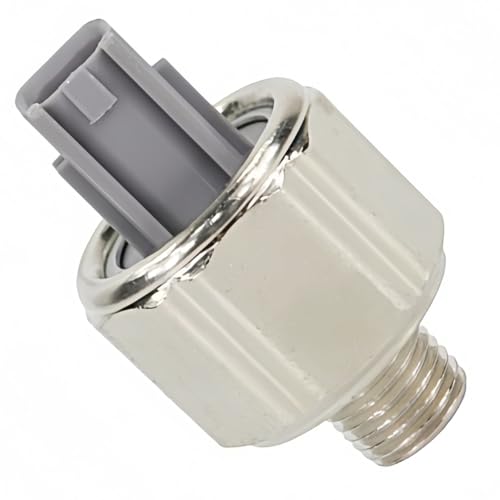
[Products Worth Considering]

Fitment: Replacement for 89615-12090, 89615-12050, 89615-32010, 82219-07010, 5S2254, SU5377, 926-387. Compatible with Toyota (2000–2004 Avalon, 1999–2006 Camry, 2000–2002 Celica, 2001–2004 Highlander, 2000–2003 Sienna, 1999–2003 Solara) and Lexus (2000–2003 ES300, 2005 GS300, 2001–2005 IS300, 1994–2000 SC300, 2000–2003 RX300, 2004–2006 RX330)

[Replaces Part Number:] 9098011166 PT2530 13574939 5161916AA; Please Check the OEM Part Number and Make Sure Your Part Number Matches this Part Number Before Buying!

[Vehicle Fitment]: Compatible with Lexus ES300 1992-1993 V6 3.0L; Compatible with Toyota Camry 2000-2001 L4 2.2L CNG, Camry 1992-2001 L4 2.2L Petrol, Camry 1992-1993 V6 3.0L Petrol, Celica 1991-1999 L4 2.2L Petrol, Cressida 1992 L6 3.0L Petrol, Highlander 2001 L4 2.4L Petrol To 3/01, MR2 1992-1995 L4 2.0L Petrol, MR2 1991-1995 L4 2.2L Petrol, RAV4 1996-2001 L4 2.0L Petrol, Solara 1999-2001 L4 2.2L Petrol, Solara 2002-2003 L4 2.4L Petrol, Supra 1989-1993 L6 3.0L Petrol
Quick Tests for the Camry Knock Sensor and Wiring
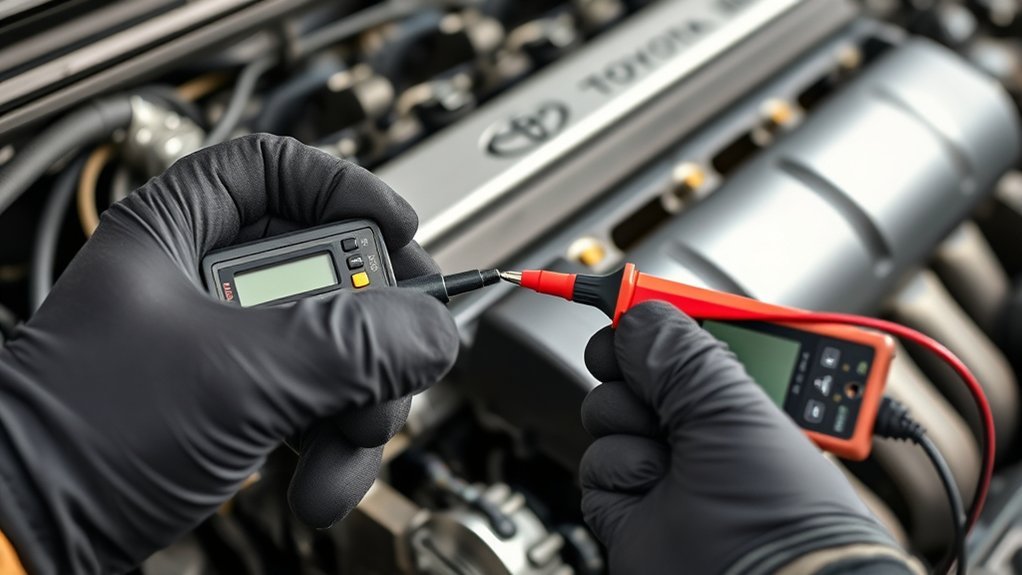
Start with diagnosis, not parts swapping. A knock sensor code can be caused by a failed sensor, broken wire, poor connector contact, corrosion, engine work that disturbed the harness, or actual engine knock.
[Products Worth Considering]

Sturdy & durable: The knock sensor and knock sensor harness are made of alloy and abs plastic, manufactured according to production standards, durable, heat resistant, not easy to age and burst

【Applicability】Compatible with Lexus 2004-2006 ES330,2006 GS300, 2007 GS350, 2006-2007 IS250, 2006-2007 IS350, 2004-2006 RX330, Compatible with Scion tC 2010-2012

Brand New Engine Knock Sensor Wiring Harness Pigtail Connector Assembly
1. Scan the Codes and Save Freeze-Frame Data
Use an OBD-II scan tool to record the stored and pending codes. Write down the freeze-frame data before clearing anything. If the code returns immediately after clearing, suspect a hard circuit fault. If it returns only under load, heat, or rain, suspect an intermittent wiring or sensor problem.
2. Inspect the Harness and Connector
Look for broken insulation, oil contamination, water intrusion, corroded terminals, loose pins, rubbed-through loom, or a connector that was not fully locked after previous intake or engine work. A wiring fault can mimic a bad sensor.
3. Compare Resistance or Continuity to Toyota Service Data
If the service manual for your exact Camry provides a resistance or continuity test, use a multimeter and compare your readings to the listed specification. Do not assume one online resistance number fits every Camry engine.
4. Check Sensor Response When Appropriate
On some piezoelectric knock sensors, a technician can monitor the sensor signal and gently simulate vibration while watching for a voltage response. Pico Technology’s guided knock sensor test describes using an oscilloscope and a light tap to view the waveform. This is an advanced test; do it only with the correct circuit identified and with the engine area safe to work around.
5. Verify the Repair
After repair, clear the code and complete a controlled test drive that recreates the original freeze-frame conditions when safe. Some Toyota procedures also require an inspection-after-repair or initialization step after knock sensor replacement. Check the service data for your engine.
How Your Camry’s ECU Responds to Knock Signals
The ECM watches the knock sensor signal and compares it with expected vibration patterns. When the signal looks like knock, the ECM can reduce ignition advance. Retarding timing reduces peak cylinder pressure and helps suppress detonation.
If timing stays retarded for too long, the engine may feel weaker and less efficient. If the sensor signal is missing or unreliable, the ECM may set a fault code and rely on backup logic. That is why a knock sensor problem can cause both a warning light and a noticeable drop in performance.
A knock sensor is not a power upgrade part. Its job is to help the engine computer protect the engine while keeping ignition timing as efficient as conditions allow.
Choosing and Installing the Right Camry Knock Sensor
Use a sensor that matches your Camry’s VIN, model year, engine code, and bank location. Toyota’s parts catalog and service information are safer than generic fitment guesses because Camry engines and sensor layouts have changed across generations.
- Match the engine: A 4-cylinder sensor and a V6 bank-specific sensor may not be interchangeable.
- Inspect the connector: Replacing the sensor will not fix a corroded or broken harness.
- Use correct torque: Over-tightening can damage the sensor; under-tightening can reduce vibration transfer.
- Clean the mounting surface: Dirt, oil, or corrosion can affect signal quality.
- Replace gaskets as needed: If intake parts must be removed, inspect related gaskets and seals.
- Verify after repair: Clear codes only after saving data, then road-test and rescan.
Note: Toyota does not give Camry owners a normal mileage-based knock sensor replacement interval in the maintenance schedule. Replace it when testing confirms a sensor or circuit fault, when service data calls for it, or when physical damage is found.
[Products Worth Considering]
One year warranty time. You could get a quick and easy refund or replacement if you meet any problem with the part in the warranty time.Please contact us without hesitation.
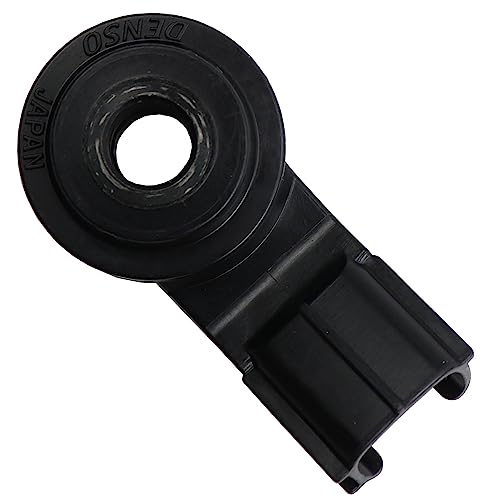
Matches OE form, fit, and function

Quality assurance service: If you encounter quality problems within one year, you can contact us and we will provide you with quality assurance service
Frequently Asked Questions
Can a faulty knock sensor trigger check-engine codes beyond knock-related ones?
Yes. A knock sensor fault can appear alongside misfire, fuel-trim, or emissions-related codes. Do not assume every code was caused by the sensor. Diagnose the first stored code, freeze-frame data, wiring condition, and any real engine misfire or pinging.
Do aftermarket tuners disable or alter knock sensor behavior?
Some performance tunes can change ignition timing maps, knock thresholds, or how aggressively the ECM responds to knock. A safe tune should preserve engine protection. If a knock code appears after tuning, verify the calibration and return to a known-good stock tune for diagnosis when possible.
How often should a Camry knock sensor be replaced?
There is no normal preventive replacement interval for a Camry knock sensor. Inspect related wiring during engine work and replace the sensor only when testing, DTCs, physical damage, or Toyota service procedures support replacement.
Can water or oil contamination permanently damage the knock sensor?
Yes. Moisture, oil, corrosion, or chemical contamination can damage the sensor, connector, or harness. Even if the sensor itself is sealed, the electrical connection can still fail. Clean and inspect the connector before replacing parts.
Do hybrid Camry models use a different knock sensor setup?
Hybrid Camry models still use a gasoline engine, so they still need knock control. The exact sensor location, access steps, and safety procedures can differ by model year and engine. Always use VIN-specific Toyota service information, especially because hybrid models have extra high-voltage safety precautions.
Can a bad knock sensor cause poor gas mileage?
Yes. If the ECM cannot trust the knock signal, it may use conservative ignition timing. That can reduce power and fuel economy. However, poor mileage can also come from tires, oxygen sensors, fuel trims, spark plugs, brakes, or driving conditions, so confirm the fault with diagnostics.
Conclusion
A Camry knock sensor is a small part with an important job: it helps the ECM detect detonation and adjust ignition timing before knock damages the engine. If you have a steady check-engine light and a knock sensor code, you may be able to drive briefly, but you should diagnose it soon. If the engine is knocking loudly, misfiring badly, overheating, or flashing the check-engine light, stop driving and arrange a tow.
For the best repair, scan the codes, save freeze-frame data, inspect the wiring, test the sensor with the correct service information, and install the exact sensor for your engine. Do not replace it by mileage alone, and do not rely on one generic location or torque spec for every Camry.
Sources
- Toyota Genuine Knock Control Sensor — supports Toyota-specific description of vibration monitoring and ignition timing support.
- Toyota Technical Information System — official Toyota service, repair, wiring, and technical publication source.
- Toyota 2024 Camry Warranty & Maintenance Guide — supports maintenance and emissions-related parts context.
- Bosch Mobility: Knock Sensor — supports piezoelectric knock detection and ECU timing response.
- Pico Auto: Knock Sensor Guided Test — supports oscilloscope-based knock sensor signal testing.
- eCFR 40 CFR 86.010-18 — supports OBD malfunction indicator and DTC storage context.