Last updated: July 31, 2026 · Ozone guidance, HVAC-cleaner precautions, smoke-source diagnosis, internal links, and schema were reviewed and updated.
By and technically reviewed by: [VERIFY: add the real author and reviewer names with relevant automotive-detailing, HVAC, occupational-hygiene, or vehicle-service credentials before publication]
To remove stale cigarette or tobacco smoke smell from a Toyota Camry, remove contaminated dust first, wash residue from hard surfaces and glass, deep-clean the seats and carpet, inspect or replace the cabin air filter, clean the HVAC air path with a properly labeled automotive product, and let the cabin dry completely. Passive absorbers can help with faint remaining odor, but they cannot replace physical cleaning.
This guide is for old tobacco-smoke residue, not an active smoke or burning smell. If the odor resembles burning plastic, hot wiring, gasoline, exhaust, burning oil, or sweet coolant, park safely and diagnose the vehicle before cleaning the interior.
Quick Answer
To remove smoke smell from a Toyota Camry, vacuum the entire cabin and trunk, clean glass and hard trim, deep-clean seats and carpet, clean the headliner with minimal moisture, replace an odor-soaked cabin air filter, and use only an automotive HVAC cleaner whose label permits your chosen application method. Dry the car fully, then test it with all fragrance products removed.
Key Takeaways
- Confirm that the smell is stale tobacco odor before cleaning. Burning plastic, fuel, exhaust, oil, and coolant odors require diagnosis.
- Start with dry removal. Vacuum ash, dust, mats, seams, crevices, the rear shelf, and the trunk before applying liquid cleaner.
- Clean every contaminated surface, including glass, seat belts, the headliner, trim, carpet, mats, vents, and the cabin air filter.
- Do not depend on perfume, odor bombs, charcoal, or baking soda to remove residue that is still attached to cabin materials.
- A DIY ozone treatment is not recommended. Ozone can harm lungs, form irritating by-products, and damage some vehicle materials.
At a Glance
| Time Required | Several hours for cleaning, plus additional drying time; severe contamination may require repeat work |
| Difficulty | Easy to moderate; delicate headliner and HVAC work require extra care |
| Tools Needed | Vacuum with crevice and soft-brush tools, microfiber towels, soft brushes, surface-specific cleaners, glass cleaner, correct-fit cabin filter, and optional passive odor absorbers |
| Professional Help | Recommended for saturated headliners, contaminated carpet padding, persistent HVAC odor, respiratory sensitivity, or resale-grade remediation |
Is It Stale Tobacco Smell or an Active Vehicle Problem?
Do not begin an odor detail until you identify the type of smell. Stale cigarette odor is usually strongest after the car has been closed, when the cabin warms, or when contaminated fabric and vents are disturbed. Active mechanical odors may appear while driving, charging, heating, braking, or running the fan.
| Odor | Likely Category | First Action |
|---|---|---|
| Stale cigarette, ashtray, or smoky fabric | Old tobacco residue in dust, surfaces, fabric, filter, or HVAC path | Continue with the cleaning process below |
| Burning plastic, hot insulation, or electrical smell | Possible overheated wiring, connector, motor, accessory, or electronic component | Turn off affected equipment, park safely, and arrange inspection |
| Gasoline or exhaust | Possible fuel-vapor or exhaust-system fault | Ventilate, avoid continued driving if strong, and have the vehicle inspected |
| Burning oil or hot rubber | Possible fluid leak, belt, brake, tire, or overheated component | Stop and identify the external source before cleaning the cabin |
| Sweet coolant smell | Possible cooling-system or heater-core leak | Check for wet carpet, windshield film, coolant loss, and overheating |
| Musty, damp, or sour odor mainly from vents | Moisture, debris, drain, filter, or evaporator odor rather than tobacco alone | Use the Camry A/C evaporator odor guide to inspect the filter, drain, and HVAC case |
Warning: Visible smoke, sparks, melting material, a strong fuel or exhaust odor, or a burning smell that increases while driving is not an interior-detailing problem. Stop using the vehicle or affected system and obtain qualified diagnosis.
Where Is the Smoke Smell Hiding in Your Camry?
Before applying cleaner everywhere, note where the smell is strongest. This source map helps you decide which part of the cabin needs the most attention.
| Where It Smells Strongest | Likely Source | Best First Test |
|---|---|---|
| Immediately after opening the closed car | Headliner, seats, carpet, door trim, or stored items | Remove mats and stored items, then compare the smell after the cabin airs out |
| Only or mainly when the blower starts | Cabin filter, blower housing, ducts, evaporator area, or cowl intake | Inspect the filter and compare fresh-air mode with recirculation |
| Near the roof, sun visors, or grab handles | Smoke-loaded headliner fabric and foam | Test a hidden area with a lightly damp towel; do not soak or scrub |
| Near the seats or floor after humidity | Upholstery, carpet, underlay, mats, or wet padding | Remove mats, inspect for moisture, and smell the carpet at several locations |
| Inside the trunk | Trunk liner, spare-tire well, stored fabric, or transferred cabin contamination | Empty the trunk and inspect beneath the liner and spare-tire cover |
| Near windows or windshield | Smoke film on glass and surrounding trim | Clean a small glass section and compare its clarity and odor with the untreated area |
How to Remove Smoke Smell From Your Toyota Camry: Full Plan
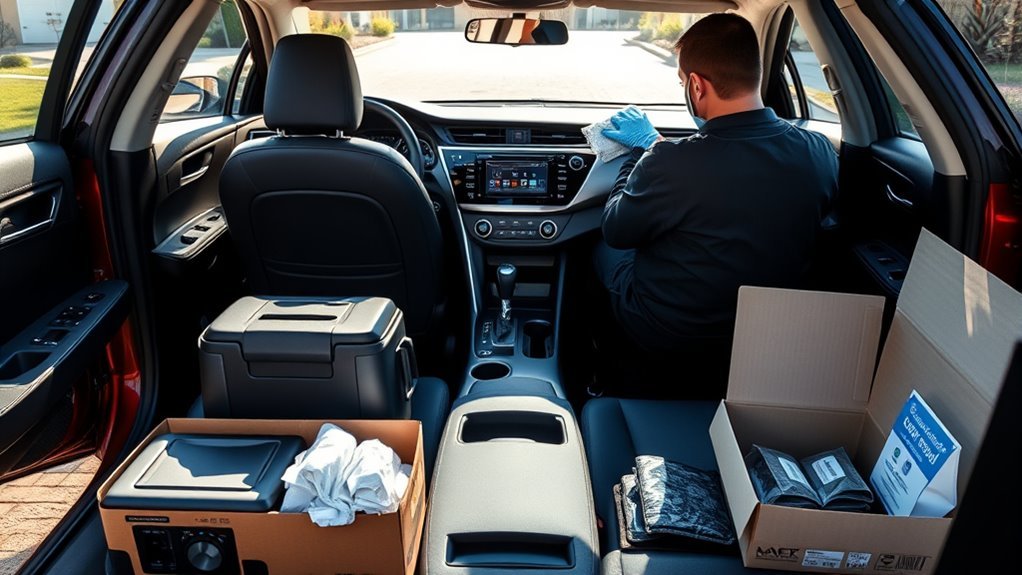
Work in this order: remove loose particles, wash residue from surfaces, clean porous materials, inspect the cabin filter, treat the Camry HVAC system only when needed, dry the cabin, and then evaluate the remaining odor. Applying fragrance before source removal can hide the smell temporarily without removing contamination.
- Empty the car completely. Remove trash, ash, papers, floor mats, seat covers, trunk items, child-seat protectors, and stored fabric.
- Vacuum from top to bottom. Use appropriate low-suction and soft-brush tools around delicate fabric. Clean seat seams, rails, carpet edges, under-seat areas, the rear shelf, trunk carpet, and storage compartments.
- Clean glass and hard surfaces. Remove smoke film from the windshield, rear glass, windows, dash, console, door panels, steering wheel, handles, switches, and trim.
- Clean seats, carpet, mats, seat belts, and the headliner. Match the cleaner and amount of moisture to the material.
- Inspect or replace the cabin air filter. Replace it if it smells smoky, is heavily loaded with dust, or is due under the model-year maintenance guide.
- Clean the HVAC air path only with a correctly labeled automotive product. Do not improvise with a household disinfectant or spray into an application point not permitted by the label.
- Dry the cabin completely. Use safe ventilation and fans. Do not reinstall damp mats or close the car while fabric or carpet remains wet.
- Use passive absorbers only after cleaning. Activated charcoal or zeolite may reduce faint remaining airborne odor, but they do not remove surface residue.
- Test the result without fragrance. Remove air fresheners, let the dry car remain closed for several hours, and compare cabin odor with vent odor.
Why physical cleaning matters: A study sampled 107 used cars and found significantly higher nicotine levels in air, dust, and surface samples from vehicles in which smoking occurred. That evidence supports treating vacuuming and surface washing as source removal, not merely cosmetic detailing.
What Can You Do for a Same-Day Improvement?
A same-day cleanup can reduce odor before a full detail, but it may not remove residue embedded in the headliner, seat foam, carpet padding, or HVAC case. Concentrate on items that can be removed, the largest exposed surfaces, glass, and the cabin filter.
| Step | Tool | What It Addresses |
|---|---|---|
| Remove mats and stored items | Gloves, bags, outdoor work area | Removable sources that may be carrying most of the odor |
| Vacuum seats, carpet, seams, and trunk | Vacuum, crevice tool, soft brush | Loose ash, dust, hair, and contaminated particles |
| Clean glass twice | Automotive glass cleaner, clean microfiber towels | Smoke film, haze, and odor-bearing residue on glass |
| Wipe hard touch points | Interior cleaner, microfiber towels | Residue on the steering wheel, switches, handles, dash, and console |
| Inspect the cabin filter | Correct tools and model-year instructions | Odor and dust held in the HVAC filter |
| Ventilate and dry | Outdoor air and fans in a safe location | Cleaner fumes and moisture that can hide or create odor |
Pro Tip: Use a separate clean towel for the final glass pass. A towel already carrying interior cleaner or smoke residue can spread film back onto the windshield.
How Do You Vacuum and Clean Hard Surfaces?
Vacuuming removes odor-carrying dust before moisture is introduced. Wetting dirty fabric too early can move contaminated material deeper into carpet or upholstery.
Thorough Vacuuming Routine
Start with upper surfaces and finish at the floor. Use a clean soft-brush attachment and low suction around delicate headliner fabric. Vacuum seats, seams, rails, carpet, pedals, mats, door pockets, console gaps, the rear parcel shelf, trunk carpet, and the area beneath the spare-tire cover.
- Remove floor mats and vacuum both sides outside the vehicle.
- Move the seats through their normal travel to expose rails and trapped debris, keeping hands clear of moving parts and wiring.
- Agitate durable fabric lightly with a soft brush, then vacuum again.
- Extend the seat belts and vacuum loose dust from the webbing without pulling debris into the retractor opening.
- Repeat a light vacuum after drying to collect loosened material and dried cleaner residue.
Wipe Down Hard Surfaces
Use a mild automotive interior cleaner that is labeled for the surface. Apply it to a microfiber towel instead of spraying directly onto screens, switches, buttons, seams, vents, or electronic controls. Wipe a small area, then dry it with a second clean towel.
Clean the steering wheel, shifter, turn-signal stalk, window switches, cup holders, seat controls, dashboard seams, center-console trim, door handles, and seat-belt buckles. Frequently change or refold the towel so residue is removed rather than redistributed.
Clean Door Panels and Trim
Use a soft detailing brush to lift residue from textured plastic and trim seams. Wipe away the loosened material immediately. Wait until the smoke odor has been reduced before applying any protectant, and avoid heavy or greasy dressings that can leave a film and attract dust.
How Do You Deep-Clean Camry Seats and Carpet Safely?
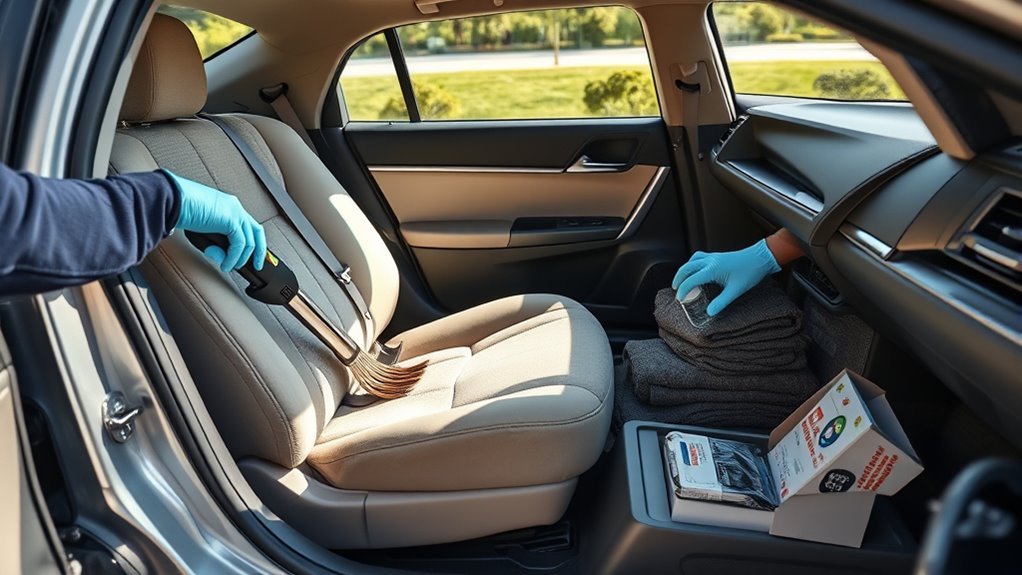
Seats, carpet, mats, trunk liner, headliner, and underlay can retain odor after hard surfaces look clean. Use the least moisture that completes the job, extract or blot residue, and allow the material to dry before evaluating the result.
Cloth Seats and Carpet
Patch-test a low-moisture automotive upholstery or carpet cleaner in a hidden area. Apply it according to the label, agitate gently when permitted, then remove the suspended soil with an extractor, wet-dry vacuum, or clean towels.
Do not saturate seat foam, carpet padding, electrical connectors, occupancy sensors, or wiring under the seats. If carpet padding is soaked with smoke residue or cleaning liquid, surface cleaning may not be enough.
Leather, Vinyl, and SofTex Seats
Use a cleaner labeled for the exact upholstery material. Work in small sections with a microfiber towel or suitable soft brush, then wipe the surface dry. Avoid carpet shampoo, bleach, strong solvents, abrasive pads, and cleaners that leave a sticky coating.
If the seating surface is genuine leather and the care instructions permit it, apply a light compatible conditioner after cleaning and drying. Do not assume every Camry seating surface requires leather conditioner.
Warning: Do not soak the headliner. Its fabric and foam are bonded to a backing, and excess moisture, heat, pressure, or scrubbing can weaken the bond and cause sagging.
How Should You Clean a Smoke-Exposed Headliner?
Test the cleaner on a hidden edge first. Apply a small amount to a clean towel rather than spraying the headliner directly. Blot gently and change towel sections as they collect residue. Avoid hard rubbing, twisting, concentrated steam, and repeated wet passes.
If the headliner is already loose, brittle, stained through, or sagging, do not wet-clean it. Ask an automotive-upholstery specialist whether controlled cleaning or replacement is the safer option.
Mats, Trunk, and Hidden Fabric
Clean removable mats, seat covers, child-seat protectors, trunk liners, and fabric organizers outside the vehicle. Allow them to dry completely before reinstalling them. If an item still smells after cleaning, keep it outside the car temporarily and repeat the closed-car odor test without it.
Inspect beneath the trunk liner and spare-tire cover for ash, spilled liquids, moisture, and stored fabric. A contaminated trunk can feed odor back into the passenger cabin.
Will Replacing the Cabin Air Filter Remove Smoke Smell?
A smoky cabin filter can return odor to the cabin whenever the blower runs, so inspecting it is an important step. Replacement alone usually will not remove residue from the seats, carpet, headliner, glass, trim, ducts, or HVAC case.
Follow the Camry cabin air filter replacement interval for your exact model year and inspect the filter sooner when it has been exposed to smoke, dust, heavy traffic, or reduced airflow.
[Products Worth Considering]

This CF10285 cabin air filter is designed to help keep your vehicle's interior air cleaner by capturing dust, pollen, soot, and road grime. It is compatible with a wide range of Toyota, Lexus, Jaguar, Land Rover, Subaru, Scion, and Pontiac models, making it a versatile replacement choice. The activated carbon design and easy glove-box installation make it a practical upgrade for fresher driving comfort.

ECOGARD XC10621C is a premium cabin air filter designed to help keep your vehicle’s interior air cleaner by trapping dust, pollen, pet dander, and other airborne debris. Its activated carbon layer also helps reduce common odors from traffic and outside air while supporting steady HVAC airflow for reliable climate system performance. It is engineered for a wide range of Toyota, Lexus, and Subaru applications.

This cabin air filter replacement is designed to help keep your vehicle’s interior air fresher and cleaner by capturing dust, odors, and fine particles with a multi-layer filtration structure. The activated carbon layer helps reduce unwanted smells, while the extended service life makes it a practical maintenance part for many compatible Toyota, Lexus, Subaru, Scion, and Jaguar models.
Locate the Cabin Filter
Many modern Camrys have a serviceable cabin filter behind the passenger-side glovebox. Access details can include a damper arm, side stops, an inner panel, a filter cover, or a removable tray. Older models and non-U.S. configurations can differ, so check the exact model-year manual before forcing a panel or purchasing a filter.
Inspect for Smoke Residue
Turn the vehicle and blower off before opening the filter housing. Remove the filter carefully and check for gray dust, leaves, dampness, staining, restricted pleats, or a strong smoky odor. Note the filter and housing arrow markings before removal.
Do not spray perfume onto the filter. Replace an odor-soaked disposable filter rather than attempting to disguise the smell.
Replace With the Correct Filter
Use a filter that matches the exact Camry year, market, and filter housing. Follow the arrow wording on the replacement filter and housing because some arrows indicate airflow while others indicate which side faces upward.
A filter with activated-carbon media may adsorb some gases and odors during its service life, but it cannot clean contamination elsewhere in the cabin. Reinstall the cover and glovebox correctly, then test blower airflow.
How Do You Clean the Camry HVAC Air Path Safely?
Treat the ventilation system after cleaning the rest of the cabin and replacing an odor-soaked filter. If the smell is strongest when the blower or A/C starts, inspect the filter, cowl intake, blower area, condensate drainage, and evaporator case instead of repeatedly spraying fragrance into the vents.
- Read the automotive HVAC cleaner label completely. Confirm that it is intended for vehicle HVAC use and that it permits the application route you plan to use.
- Follow the specified access point. Depending on the product, this may be the fresh-air intake, cabin-filter opening, blower area, evaporator drain, or another approved point.
- Use the required HVAC settings. Follow the product’s instructions for fresh air, recirculation, fan speed, A/C operation, engine status, dwell time, and drying.
- Protect surrounding components. Do not spray screens, exposed connectors, switches, sensors, or trim unless the product specifically permits contact.
- Do not mix cleaners. Do not combine disinfectants, acids, alkaline products, chlorine products, ammonia, fragrances, or other chemicals in the HVAC system.
- Ventilate according to the label. Keep occupants and pets out during treatment and until the required ventilation and drying steps are complete.
Note: Do not substitute a general household disinfectant for an automotive HVAC product unless its label explicitly permits the exact vehicle application. A product that is safe on a countertop is not automatically safe to atomize through a vehicle ventilation system.
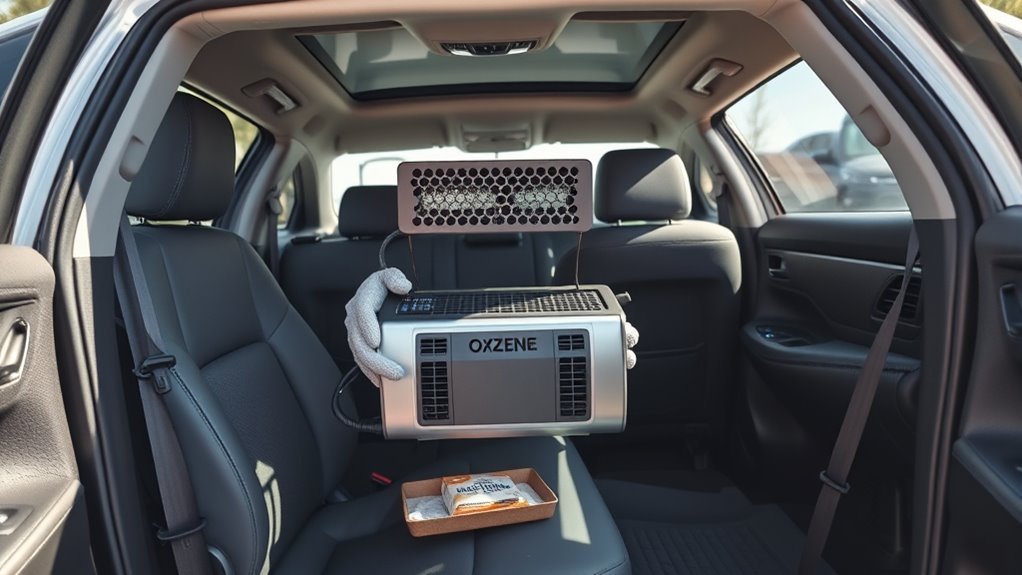
Should You Use an Ozone Generator in a Toyota Camry?
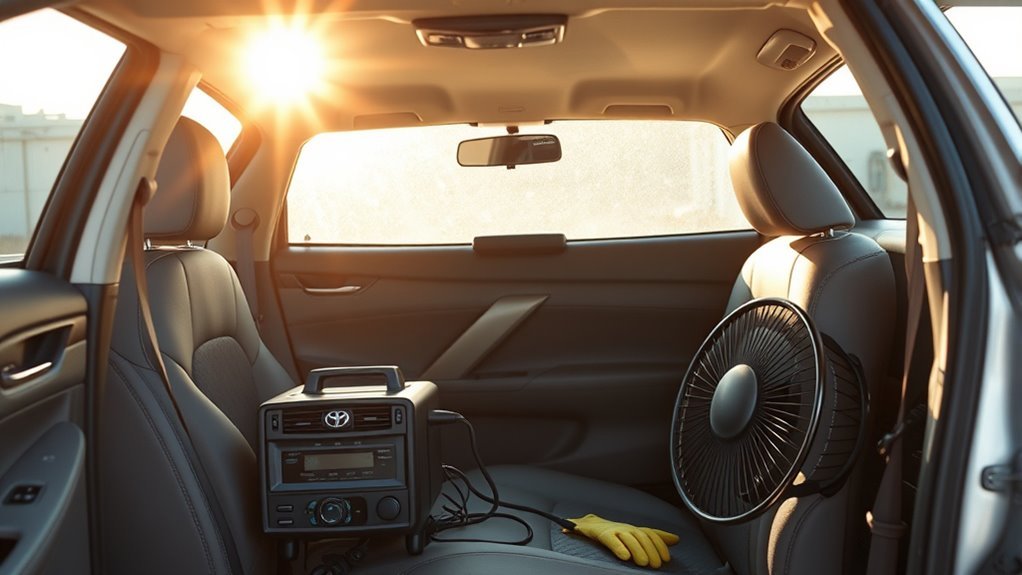
A DIY ozone treatment is not recommended. The U.S. Environmental Protection Agency says ozone has little potential to remove many indoor contaminants at concentrations that do not exceed public-health standards. Higher concentrations can damage lungs, produce irritating or corrosive reaction by-products, and affect materials such as rubber, electrical-wire coatings, and fabrics.
The California Air Resources Board also advises against ozone-generator use in spaces occupied by people or animals.
Warning: Ozone odor is not a reliable safety test. A lack of smell does not prove that the ozone concentration is safe. Never run ozone with a person, pet, or plant inside the vehicle or where gas can enter an occupied building.
If severe smoke contamination remains after source cleaning, consult a professional odor-remediation provider. Ask whether ozone is used, why it is considered necessary, how output and exposure are controlled, how the vehicle is ventilated, how re-entry is determined, and what material-damage precautions are taken.
Do not accept ozone, fogging, or fragrance as a substitute for removing ash, dust, nicotine film, contaminated filter media, dirty upholstery, or saturated porous material.
[Products Worth Considering]

This vehicle-specific cabin and engine air filter combo is designed for Toyota RAV4 2.5L L4 models from 2013 through 2018, excluding hybrids. It helps improve cabin air quality by capturing pollutants while supporting engine airflow for smoother performance. With a direct replacement fit and simple home installation, it offers an easy way to maintain your vehicle.

This cabin air filter combines odor control and HEPA-level filtration to help keep your vehicle’s interior air fresher and cleaner. Its activated charcoal and baking soda work to neutralize odors without added scent, while multi-layer filtration captures dust, pollen, and other airborne contaminants. Designed for dependable airflow and easy installation, it’s a practical upgrade for compatible Toyota, Lexus, Subaru, and other select vehicles.
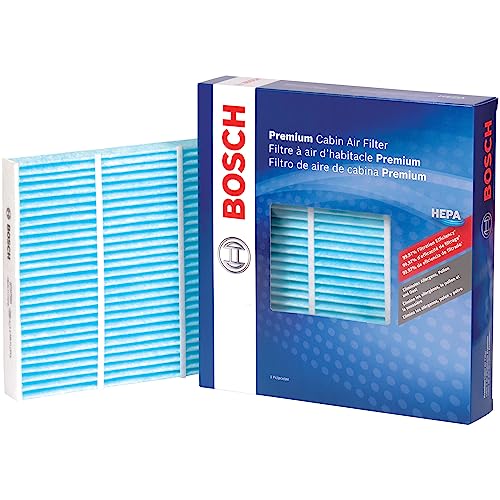
Bosch HEPA Premium Cabin Air Filters are designed and tested to meet High Efficiency Particulate Air (HEPA) standards based on ISO 29463-3:2011 and provide filtration efficiency of 99.97% at 0.3 microns
Which Cleaners and Odor Treatments Should You Use?
Select products by surface and application method. Patch-test cleaners in hidden areas, follow the label, and avoid mixing chemicals.
| Product Type | Appropriate Use | Important Limitation |
|---|---|---|
| Automotive interior cleaner | Compatible dashboard, console, plastic, vinyl, and door-panel surfaces | Do not spray screens, switches, or openings directly |
| Low-moisture upholstery cleaner | Compatible cloth seats, carpet, and mats | Do not saturate seat foam, padding, sensors, or wiring |
| Leather, vinyl, or synthetic-upholstery cleaner | The specific seat material named on the label | Avoid harsh degreasers, bleach, solvents, and abrasive pads |
| Automotive HVAC cleaner | Only the HVAC application points and procedure permitted by its label | Do not improvise the access route or substitute household disinfectant |
| Activated charcoal or zeolite | Passive adsorption after the contamination source has been cleaned | Does not wash residue from fabric, glass, trim, or ducts |
| Baking soda | Dry, compatible carpet or removable mats when it can be vacuumed out completely | Keep it away from damp material, vents, electronics, seams, and moving mechanisms |
| Air freshener | Optional light scent after cleaning and successful testing | Masks odor and can interfere with evaluating whether cleaning worked |
| Ozone generator | Not recommended as a DIY interior treatment | Health, by-product, material-damage, concentration-control, and re-entry concerns |
Do not use perfume bombs before the final odor test. A neutral cabin allows you to determine whether smoke residue remains. Add a mild scent only after the car has passed the closed-cabin and HVAC checks.
[Products Worth Considering]

GHOST AWAY BAD SMELLS - Ghosted Odor Eliminator by Chemical Guys effectively removes bad smells instead of just masking them.

CHEMICAL GUYS ODOR ELIMINATION SYSTEM: Use as a deep-reset treatment before applying Chemical Guys car fresheners; the fogger removes the problem at the source, so the fragrance that follows is genuinely clean

CARPET & FABRIC CLEANER: Simply spray on car upholstery and scrub with a brush to remove dirt and stains. Effective on Car Seats, carpet, rug, cloth, and more. Even your couch cushion or sofa.
How Do You Dry the Car and Check Whether the Smell Is Gone?
Drying is part of the cleaning process. Damp carpet, seat foam, mats, or padding can create a second odor and make it difficult to judge whether the tobacco smell was removed.
- Follow every cleaner’s drying and ventilation instructions. Do not rely on one generic time for all products.
- Ventilate in a safe, dry location. Use fans when appropriate and secure the vehicle while doors or windows are open.
- Keep mats and removable fabric outside the cabin until they are fully dry and pass a separate smell check.
- Remove air fresheners and open odor absorbers before the final evaluation so they do not mask the result.
- Let the dry car remain closed for several hours. Then open one door and evaluate the first odor before starting the blower.
- Test the HVAC separately. Run the fan on fresh air, then briefly compare recirculation. A vent-specific smell points back to the filter, blower, ducts, evaporator area, or cowl intake.
- Repeat the test after warm or humid weather. A returning odor indicates that a contaminated source remains.
When Should You Call a Professional Smoke-Odor Detailer?
Arrange professional help when the headliner is saturated or sagging, carpet padding remains contaminated, the odor is still strong after complete drying, the smell comes mainly from inside the HVAC case, or the vehicle needs documented remediation for resale.
Ask the provider what physical source-removal work is included. The service plan should identify which surfaces will be cleaned, whether carpet or seat extraction is used, whether the cabin filter and HVAC case are inspected, how the interior will be dried, and whether any porous material may need replacement.
If the provider proposes ozone, hydroxyl treatment, fogging, steam, enzymes, or another chemical process, ask for the product or equipment name, its purpose, the application procedure, material precautions, ventilation method, and re-entry standard. Do not assume that a treatment name guarantees residue removal.
Frequently Asked Questions
Will smoke smell return after rain, heat, or humidity?
Yes. Warm or humid conditions can make remaining contamination easier to notice. If the odor returns, let the cabin dry, remove fragrance products, and repeat the source test. Check the headliner, carpet padding, mats, trunk, filter, and HVAC path instead of applying more perfume.
Can smoke residue damage leather or synthetic seats?
Long-term residue can leave film, discoloration, and odor on seating surfaces. Use a cleaner labeled for the exact material, wipe it dry, and avoid bleach, strong solvents, carpet shampoo, abrasive pads, and excessive steam.
Are strongly scented air fresheners safe after cleaning?
A fragrance-free cabin is better for testing whether the source was removed. Strong scents can also bother sensitive occupants or pets. Use passive absorbers first, and add only a mild compatible scent after the car remains neutral when closed and when the blower runs.
How long before a Camry can be described as smoke-free for resale?
There is no guaranteed timeline or universal smoke-free test. Clean and dry the vehicle, replace an odor-soaked filter, remove fragrance products, and test the closed cabin and HVAC system after warm or humid conditions. Disclose known smoking history accurately and keep records of professional remediation.
Can a household ozone generator be used inside a Camry?
A household ozone generator is not recommended as a DIY Camry treatment. Ozone can harm lungs, create irritating by-products, damage some materials, and reach unpredictable concentrations. Odor is not a reliable safety test. Consult a qualified remediation provider if severe contamination remains after physical cleaning.
Why does my Camry still smell smoky after cleaning the seats?
The remaining source may be the headliner, carpet padding, mats, seat belts, glass film, door trim, trunk liner, cabin filter, blower housing, ducts, cowl intake, or evaporator area. Compare the cabin odor before the blower starts with the odor produced by fresh-air and recirculation modes.
Will replacing the cabin air filter remove smoke smell by itself?
Usually not. Replacing a smoky filter prevents that filter from returning odor through the vents, but it does not clean the seats, carpet, headliner, glass, trim, ducts, or HVAC case.
When should smoke-contaminated interior material be replaced?
Replacement may be necessary when a headliner is saturated or sagging, carpet padding or seat foam remains strongly contaminated after proper cleaning and drying, or material damage prevents safe extraction. Ask an upholstery or remediation specialist to inspect the affected material before replacing it.
Conclusion
Removing stale smoke smell from a Toyota Camry requires source removal, not stronger fragrance. Confirm that the odor is not an active electrical, fuel, exhaust, oil, or coolant problem. Then vacuum contaminated dust, wash glass and hard surfaces, clean the seats, carpet, headliner, mats, and trunk, replace an odor-soaked cabin filter, and address the HVAC system only with a correctly labeled automotive process.
Let every surface dry, remove fragrance products, and perform a closed-car and blower test. If the smell remains in saturated porous material or inside the HVAC case, use a professional service that explains its physical cleaning, chemical use, drying method, and re-entry precautions.
Sources
- Nicotine & Tobacco Research: Residual Tobacco Smoke Pollution in Used Cars for Sale — supports the finding that smoking can leave measurable nicotine contamination in vehicle air, dust, and surfaces.
- Nicotine & Tobacco Research: Wipe Sampling for Nicotine as a Marker of Thirdhand Smoke — supports the persistence of tobacco contamination on surfaces in cars and other enclosed environments.
- Centers for Disease Control and Prevention: About Secondhand Smoke — supports the health context for avoiding tobacco-smoke exposure.
- Public Health Reports: Thirdhand Smoke, State of the Science and a Call for Policy Expansion — supports the explanation of persistent smoke residue on dust, surfaces, and indoor materials.
- U.S. Environmental Protection Agency: Ozone Generators Sold as Air Cleaners — supports the ozone effectiveness, health, material-damage, and odor-detection cautions.
- California Air Resources Board: Hazardous Ozone-Generating Air Purifiers — supports caution against ozone-generator use around people and animals.
- Toyota Owners: Camry Manuals and Warranties — supports checking model-year owner information before accessing the cabin filter or interior trim.
- Toyota 2025 Camry Warranty and Maintenance Guide — supports model-year maintenance guidance for the cabin air filter.