
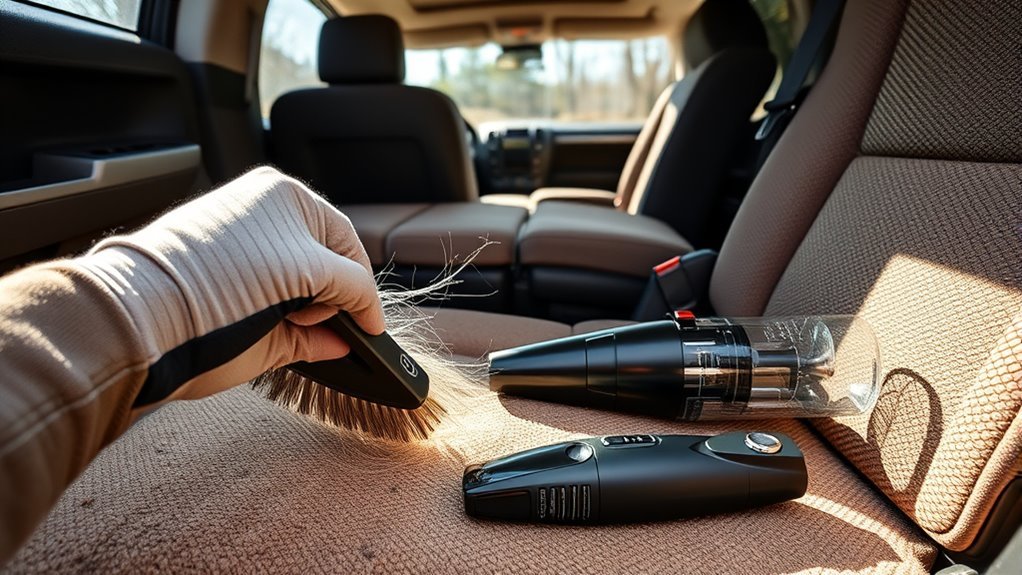
Pet hair sticks to a 4Runner interior because the cargo carpet, cloth seats, seat seams, and rear floor mats all grab fur differently. The fastest fix is not one magic tool; it is a sequence: loosen the hair, pull it into piles, vacuum it up, then prevent the next layer from embedding.
Quick Answer
To remove pet hair from a 4Runner, vacuum loose debris first, then use a damp rubber glove, rubber squeegee, Lilly Brush, or Chemical Guys rubber brush to lift embedded hair from carpet and fabric. Work in small sections, pull hair into piles, vacuum again, and finish with seat covers and pre-ride grooming.
Key Takeaways
- Vacuuming alone usually misses embedded fur, so loosen hair first with rubber, friction, or a pet-hair detailing brush.
- Use gentle pressure on cloth seats, cargo carpet, seat belts, and headliners to avoid fraying or loosening trim.
- Mist only lightly when needed, spot-test first, and avoid harsh cleaners on synthetic leather, leather, plastics, or painted interior trim.
- The best prevention is simple: brush your pet before rides, use a washable cover or cargo liner, and do a quick post-ride cleanup.
At a Glance
| Time Required | 5 minutes for a quick pass; 30–90 minutes for a full deep clean, depending on hair buildup |
| Difficulty | Beginner |
| Tools Needed | Vacuum, rubber glove, rubber squeegee, lint roller or tape, Lilly Brush or rubber pet-hair brush, microfiber towel, optional upholstery-safe cleaner |
| Cost | Low if you already own a vacuum; reusable pet-hair tools and covers vary by brand |
Warning: Always spot-test cleaners and brushes on a hidden area first. Do not soak seats, headliners, carpet backing, electronics, or seat-belt webbing. Avoid bleach, strong solvents, harsh acidic or alkaline cleaners, and aggressive scraping on 4Runner interior materials.
5-Minute Routine to Remove Pet Hair From Your 4Runner
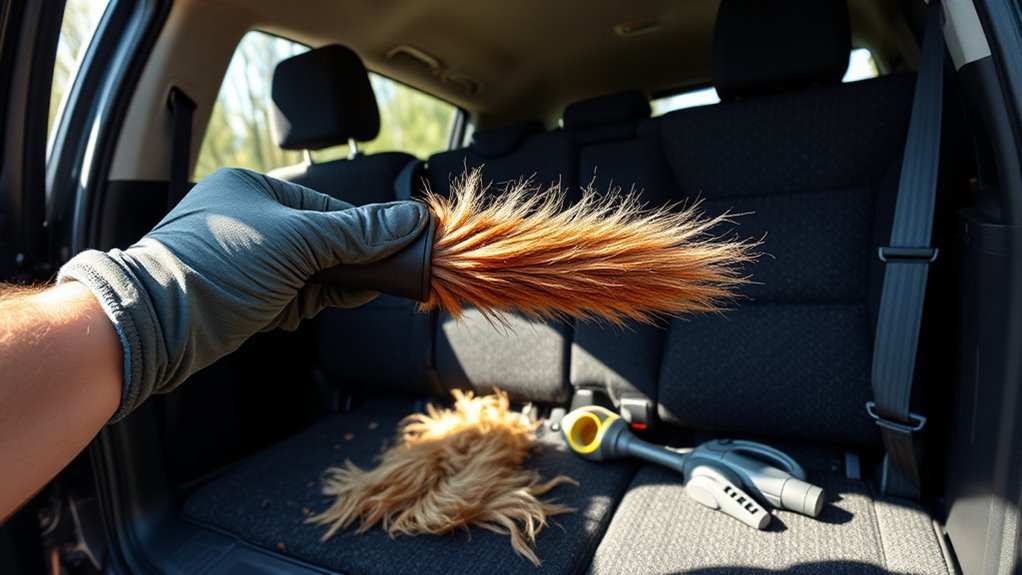
Use this quick routine after dog-park runs, trail days, or short errands before the hair works deeper into the carpet.
- Open the doors and remove loose items. Take out leashes, towels, toys, crates, and cargo bins so you can reach the seams and floor.
- Vacuum first. Use a hose, crevice tool, or brush attachment on the rear seats, cargo area, floor mats, and under-seat edges. This removes loose dirt before you start rubbing hair loose.
- Use a damp rubber glove. Lightly dampen the glove, wipe in one direction, and gather fur into clumps. Do not soak the fabric.
- Follow with a squeegee or pet-hair brush. Pull hair toward one collection point instead of dragging it around the cabin.
- Vacuum again. Pick up the clumps, then run the crevice tool along seams, seat rails, cargo tie-downs, and rear hatch trim.
- Finish the visible spots. Use a lint roller or tape on stray hairs around the seat backs, door panels, and center console edges.
Pro Tip: Work from top to bottom and from front to back. Fur you loosen from seat backs will fall onto the cushions, floor, and cargo carpet, so vacuum those lower areas last.
Why Pet Hair Sticks to 4Runner Interiors
Dog and cat hair clings because of friction, static, and the texture of automotive fabric. The 4Runner’s cargo-area carpet and cloth upholstery can trap short, wiry hairs like tiny hooks, while long soft hair tends to gather in seams, floor-mat grooves, and the rear cargo corners.
That is why the best method is layered. A vacuum handles loose dirt and surface fur. Rubber tools create grip and static. Detail brushes lift stubborn strands. A final vacuum removes the piles.
Deep Clean: Carpets and Fabric Seats Step by Step
Use this deeper reset when hair has been sitting for weeks or after a long trip with your pet.
- Remove floor mats, cargo liners, blankets, and seat covers. Shake washable covers outside before laundering them according to their care labels.
- Dry vacuum every section. Start with the seat backs, then cushions, rear floor, cargo area, and mats. Use slow overlapping passes.
- Loosen embedded hair. Use a damp rubber glove, rubber squeegee, Lilly Brush Mini-Blade, or rubber pet-hair brush in short strokes.
- Pull hair into piles. Do not scrub randomly. Move toward one edge or one central pile so cleanup is easier.
- Vacuum the piles immediately. Hair can redeposit if you keep brushing without removing it.
- Repeat on stubborn zones. Focus on rear seat seams, cargo-wall carpet, seat belt anchors, hatch threshold carpet, and the area under the second-row seats.
- Spot-clean only after hair removal. If you need to clean stains or odor, use a product approved for automotive upholstery and test first.
Note: For synthetic leather, leather, or SofTex-style surfaces, start with vacuuming and a soft cloth. Toyota’s current interior-care guidance recommends mild neutral detergent diluted with water for synthetic leather cleaning, so skip fabric-softener sprays and aggressive brushes on those surfaces.
[Products Worth Considering]

The BLACK+DECKER dustbuster QuickClean Cordless Handheld Vacuum delivers powerful suction in a lightweight, portable design for fast cleanups around the home or car. Its built-in crevice tool helps reach tight spaces, while the transparent dirt bowl and washable filter make maintenance simple. A wall mount provides convenient storage and charging so it is always ready for the next mess.

This cordless BLACK+DECKER dustbuster makes everyday cleanup quick and convenient at home or in the car. Its rotating slim nozzle, pull-out crevice tool, and flip-up brush help reach tight spaces and clean upholstery, while cyclonic action and a 16V MAX lithium-ion battery deliver strong, consistent suction. The translucent washable dirt bowl empties easily for mess-free disposal and simple maintenance.

The Shark Pet Cordless Stick Vacuum delivers powerful suction and cordless convenience for everyday messes, pet hair, and high-traffic areas. It offers up to 40 minutes of runtime, transitions to a hand vac for above-floor cleaning, and includes a Crevice Tool for reaching tight spaces. A low-profile design, LED headlights, and easy-empty dust cup help make whole-home cleaning simpler and more efficient.
Best Tools for 4Runner Interiors: Lilly Brush, Chemical Guys, Squeegee
The best pet-hair tool depends on where the fur is stuck. Keep the vacuum nearby, then choose the tool that fits the surface.
[Products Worth Considering]

This Levoit cordless stick vacuum delivers powerful everyday cleaning with anti-tangle technology designed to handle pet hair with less hassle. It offers up to 50 minutes of runtime in Eco mode, flexible 180° flat reach for cleaning under furniture, and a 5-stage filtration system that captures fine particles for cleaner air. The lightweight design, LED lighting, and included pet and crevice tools make it a practical choice for quick dry-mess cleanup throughout the home.

Protect your Toyota 4Runner interior with custom-fit floor mats and a rear cargo liner designed for all-weather coverage. The 3D-scanned TPE construction offers a precise fit for multiple model years, while raised edges help guard against spills, mud, snow, and everyday debris. Built for durability and easy maintenance, this set delivers reliable cabin protection without trimming.

This stiff bristle cleaning brush helps lift dirt, grime, and debris from carpeted and upholstered surfaces for a deeper interior clean. Its ergonomic, lightweight design with non-slip rubber contact points offers comfort and control while scrubbing. Ideal for automotive interiors as well as home, office, and other fabric surfaces, it works especially well with carpet and upholstery cleaners.
Lilly Brush Usage Tips
A Lilly Brush is useful for embedded hair in cargo carpet, cloth seats, and fabric floor mats. Use short, controlled strokes at a shallow angle. Let the edge lift the hair instead of forcing it into the fabric.
- Best for: embedded hair in carpet, mats, cloth seats, and tight corners.
- Avoid using on: delicate headliners, soft leather, screens, gloss trim, or any surface that scratches easily.
- Technique: scrape gently in one direction, gather hair into clumps, then vacuum the clumps away.
Squeegee and Chemical Guys Brush
A rubber squeegee is fast on broad, flat areas like cargo carpet and cloth seat bottoms. The Chemical Guys Grubbie rubber brush works well on fabric seats, carpets, mats, seams, and low-pile areas because the rubber bristles help pull hair loose.
- Squeegee: best for pulling loose and medium-embedded hair into rows.
- Rubber brush: best for seams, edges, low-pile fabric, and stubborn strands.
- Vacuum pairing: brush a section, vacuum it, then move to the next section.
Lint Rollers, Tape, and Microfiber
Lint rollers and duct tape are not ideal for a full 4Runner cargo cleanout, but they are helpful for final touch-ups. Use them on seat backs, armrests, door fabric, and clothing-level surfaces after the main hair is gone.
DIY Hacks: Rubber Gloves, Damp Spray, Duct Tape, Balloons
If you want low-cost ways to clear pet hair from your 4Runner, start with tools you may already have.
- Damp rubber gloves: Put on a clean glove, lightly dampen it, and sweep fabric in one direction. The hair will clump so you can vacuum it.
- Rubber squeegee: Use firm, angled strokes on carpet and cloth seats. Pull toward one collection point.
- Duct tape or packing tape: Wrap it around your hand sticky-side out for small stubborn patches. Replace the tape as soon as it fills.
- Balloon static: Rub a balloon over fabric for quick loose-hair pickup. This is a light touch-up, not a deep-clean tool.
- Light misting: On cloth only, a very light water mist can help reduce static. Avoid soaking, and skip this on leather, synthetic leather, electronics, and headliners.
Warning: Fabric-softener sprays can leave residue and may not suit every automotive fabric. If you use one, dilute heavily, mist lightly, spot-test first, and never use it on leather, synthetic leather, screens, controls, seat belts, or child-seat contact areas.
Heavy-Duty Tools and Pro Options: Shop Vacs, Brushes, and Air Tools
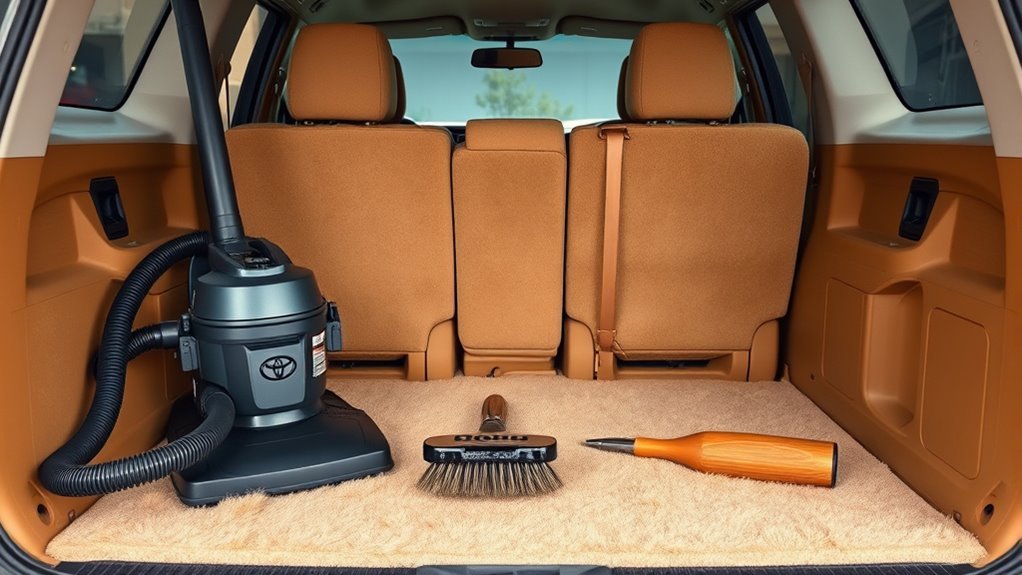
When DIY touch-ups are not enough, use stronger suction and more controlled agitation. Heavy-duty tools help most in the cargo area, rear floor, and floor mats, where hair is often packed into coarse fibers.
[Products Worth Considering]

Custom-designed for Toyota RAV4 gasoline models from 2013 to 2018, this full-coverage interior protection set includes front and rear floor mats, a cargo liner, seat back protectors, and door sill guards. Built with odorless TPE and 3D laser fit precision, it helps block spills, dirt, pet hair, and daily wear while staying securely in place for a clean, family-friendly cabin.

The Bissell Pet Hair Eraser Cordless Hand Vacuum is designed to tackle pet hair, embedded dirt, and everyday messes around the home, in the car, and on furniture. Its motorized brush tool, cordless 14V lithium-ion power, and triple-level filtration help make quick cleanups easier and more effective. The easy-empty dirt bin and included specialized tools add convenience for cleaning stairs, upholstery, auto interiors, and other hard-to-reach areas.

Designed for 2013-2024 Toyota 4Runner models with 5-passenger seating, this custom-fit set delivers full interior coverage with floor mats, a cargo liner, rear seat back protectors, and door sill guards. The all-weather TPE construction helps block spills, dirt, and pet messes while raised edges and secure clips keep everything in place for daily driving. Installation is simple, and cleaning is quick with just water.
Shop Vac Power Tips
A shop vac or strong automotive vacuum is useful because it handles larger clumps, grit, and cargo-area debris better than a small handheld vacuum. Use the crevice tool for seat rails and the hatch threshold, then switch to a wider upholstery nozzle for mats and cargo carpet.
- Vacuum dry first. Wet hair can smear, clump, and clog attachments.
- Use slow passes. Move in overlapping rows instead of quick back-and-forth swipes.
- Empty the tank and clean the filter. Pet hair reduces suction quickly when filters are packed.
- Vacuum after brushing. Agitation lifts hair; suction removes it.
Brush Techniques Without Damaging Upholstery
Use a rubber brush, nylon upholstery brush, or pet-hair detailing brush before you consider anything more aggressive. If you use a wire brush, choose an upholstery-safe option, test in a hidden area, and use light pressure only.
- Do use: short strokes, light pressure, and immediate vacuuming.
- Do not use: stiff wire brushes on headliners, leather, synthetic leather, plastic trim, screens, or delicate seat stitching.
- Stop if you see: fraying, fuzzing, discoloration, pulled threads, or loosened adhesive.
When to Call a Detailer
Call a professional detailer if pet hair is mixed with urine odor, vomit, mud, spilled food, or moisture under the cargo liner. A pro can use extraction, compressed air, specialty pet-hair tools, and odor treatment without over-wetting the cabin.
Surface-by-Surface 4Runner Cleaning Guide
A 4Runner has several hair traps. Clean each one with the least aggressive method that works.
Cloth Seats
Vacuum first, then use a damp glove or rubber brush in one direction. Pay close attention to seat seams, bolsters, and the gap where the seat back meets the cushion. Finish with a lint roller for visible strays.
Cargo Carpet and Rear Hatch Area
This is usually the worst zone if your dog rides in the back. Remove cargo mats, brush the carpet toward the hatch, vacuum the pile, then repeat from the side walls toward the center.
Floor Mats
For carpet mats, remove them and clean outside the vehicle. For all-weather mats, shake them out, vacuum the grooves, rinse if the mat manufacturer allows it, and dry completely before reinstalling.
Seat Belts and Buckles
Pull the belt out gently and use a dry microfiber towel, lint roller, or low-suction vacuum pass. Do not soak seat-belt webbing or apply sticky residue near buckles.
Plastic Trim and Door Panels
Use a microfiber towel and vacuum crevice tool. Avoid dragging pet-hair blades across plastic because they can leave marks.
Headliner
Use the lightest method only: a lint roller, dry microfiber towel, or very gentle vacuum pass. Avoid moisture, stiff brushes, and heavy pressure because headliners can sag or stain.
Prep and Prevention: Grooming, Seat Covers, Pre-Ride Habits
Preventing hair is easier than digging it out later. Before your pet gets into the 4Runner, spend one or two minutes reducing what they bring in.
- Brush first. Heavy-shedding dogs may need brushing several times a week or daily during peak shedding periods, according to American Kennel Club shedding guidance.
- Use a washable seat cover or cargo liner. A cover keeps hair on a removable layer instead of in the carpet.
- Wipe paws and belly fur. Dirt and moisture help hair stick deeper into fabric.
- Use a secured travel setup. A properly sized crate or crash-tested restraint can keep your pet safer and limits roaming hair zones. The Center for Pet Safety lists independently tested pet travel products.
- Do a quick post-ride sweep. Use a rubber glove or lint roller before the fur embeds.
The best pet-hair routine is prevention plus quick cleanup: brush before the ride, cover the seat or cargo area, then remove loose hair before it settles into the carpet.
Odor Control and Ongoing Maintenance Plan
Pet hair carries dander, dirt, outdoor debris, and odor. A clean-looking 4Runner can still smell stale if hair is hiding under mats or in the cargo corners.
- After every messy ride: shake out covers, remove visible hair, and ventilate the cabin.
- Weekly: vacuum seats, mats, cargo carpet, and under-seat areas.
- Monthly: deep-clean the cargo area, wash covers, wipe plastic trim, and inspect hidden corners.
- For odor: use an automotive upholstery-safe odor cleaner or enzymatic pet cleaner only where the label says it is safe. Spot-test and ventilate.
- For moisture: dry the area completely before closing the vehicle. Moisture trapped under mats can make odors worse.
The EPA’s indoor air guidance emphasizes source control, ventilation, filtration, and regular cleaning for biological contaminants. In a vehicle, that means removing hair and dander at the source, airing out the cabin when practical, and keeping filters and fabrics clean.
Troubleshooting Stubborn Pet Hair
Short, Wiry Hair Will Not Vacuum Out
Use a Lilly Brush, rubber pet-hair brush, or squeegee before vacuuming. Short hair often needs friction before suction can grab it.
Long, Soft Hair Keeps Reappearing
Check seat seams, cargo side panels, under-seat rails, and the underside of covers. Long hair often hides in folds and reappears after you drive.
The Carpet Looks Fuzzy After Brushing
You may be using too much pressure or too stiff a brush. Stop, vacuum, and switch to rubber or nylon tools.
The Odor Comes Back
Remove mats and covers and check underneath. Hair and moisture trapped under a cargo liner can keep odor alive even after the visible carpet looks clean.
Frequently Asked Questions
How do I remove dog hair from 4Runner seats and carpet?
Vacuum loose debris first, then use a damp rubber glove, rubber squeegee, or pet-hair detailing brush to pull hair into clumps. Vacuum the clumps, repeat on seams and cargo carpet, then finish with a lint roller for visible strands.
What is the best tool to get pet hair out of a car?
For embedded car hair, a rubber pet-hair brush or Lilly Brush-style detailer is usually more effective than a vacuum alone. For broad cargo carpet, a rubber squeegee works quickly. For final touch-ups, use a lint roller or tape.
Can I use fabric softener to loosen pet hair in my 4Runner?
Only use it with caution on cloth surfaces. Dilute it heavily, mist very lightly, and spot-test first. Do not use fabric softener on leather, synthetic leather, seat belts, screens, controls, child-seat areas, or headliners. Plain water is safer when you are unsure.
Is a wire brush safe for 4Runner carpet?
A wire brush can damage fabric if it is too stiff or used with heavy pressure. Start with rubber or nylon tools first. If you use a wire brush, choose an upholstery-safe brush, test a hidden area, and stop if you see fraying or fuzzing.
How do I keep pet hair from building up again?
Brush your pet before rides, use a washable seat cover or cargo liner, wipe paws, keep a lint roller or rubber glove in the vehicle, and vacuum weekly. A quick post-ride pass prevents loose fur from becoming embedded.
Conclusion
You can get your 4Runner hair-free without spending hours on it, but you need the right order. Vacuum first, loosen embedded hair with rubber or a pet-hair detailing brush, vacuum the clumps, then protect the seats or cargo area before the next ride. Skip unsupported shortcuts, use cleaners carefully, and build a simple routine: brush your pet, cover the ride area, and clean small amounts often before fur becomes a full deep-clean job.
Sources
- Toyota 4Runner Owner’s Manual: Cleaning and protecting the vehicle interior — backs interior-care cautions, vacuuming, and mild cleaning guidance.
- Lilly Brush Mini-Blade — backs product-use claims for embedded pet hair on carpets and fabrics.
- Chemical Guys Grubbie Professional Grade Pet Hair Removal Brush — backs rubber-brush use on seats, carpets, mats, and fabric surfaces.
- EPA: Biological Contaminants and Indoor Air Quality — backs regular cleaning, source control, and ventilation principles.
- American Kennel Club: Managing Dog Shedding — backs brushing and shedding-prevention advice.
- Center for Pet Safety: CPS Certified Products — backs the recommendation to consider independently tested pet travel restraints.

[…] Start with a 15-minute maintenance clean for the dash, console, cupholders, door panels, and screen. Use stronger spot treatments only after a hidden test, and follow the protectant label for both compatible surfaces and reapplication timing. If pet hair is also collecting in the cabin, see this guide to remove pet hair from carpet and seats. […]
[…] vacuum works for light dust, but a shop vacuum with a long hose is better for sand, leaves, pet hair, and […]
[…] inspect the trunk levers, visible cable ends, latch openings, hinges, and seat creases. Dirt, pet hair, spilled cargo, and small objects can interfere with latch […]
[…] trash and loose items, vacuum carpets and seats, wipe hard surfaces with a damp microfiber cloth or approved interior cleaner, clean seats […]
[…] smell from a Toyota Camry, vacuum the entire cabin and trunk, clean glass and hard trim, deep-clean seats and carpet, clean the headliner with minimal moisture, replace an odor-soaked cabin air filter, and use only […]
[…] Pet hair in a Toyota Tacoma can work its way into seat seams, carpet fibers, floor mats, and the tight gaps around the console fast. The most reliable cleanup is to remove loose debris first, loosen embedded fur with a rubber tool, vacuum slowly, and finish stubborn strands with a lint roller or squeegee. Avoid soaking the upholstery. A rubber glove that is dry or only lightly damp can help gather clingy hair, while cleaners are better saved for dirt, stains, or odors after the fur is removed. […]
[…] sand, pet hair, daily […]