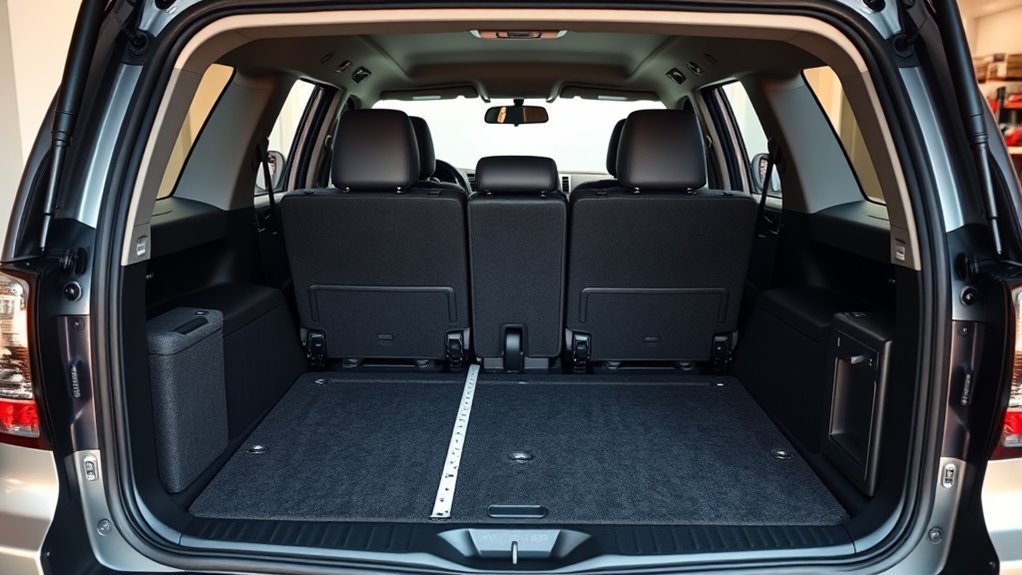
You’ll fit most modular gear in a 4Runner TRD ORP if you plan to work around the wheel wells and seat indention. Cargo width is about 52 inches overall, with roughly 43 inches between wheel wells; usable length with seats folded is near 59 inches and vertical clearance about 31 inches. Keep boxes under 43 inches for between-well placement or use low-profile, staggered bins over wells. Continue for exact measurements, packing layouts, and mitigation tips.
Quick Answers: Will Your Gear Fit a 4Runner TRD ORP?
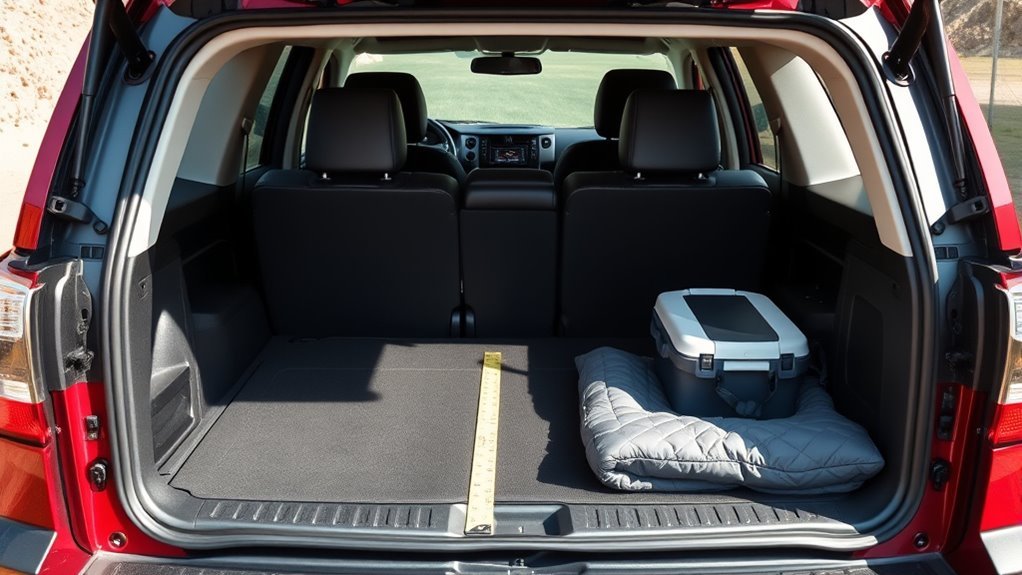
Wondering if your gear will fit the 2024 4Runner TRD Off-Road Premium (ORP)? You’ve got roughly 52 inches of cargo floor width and about 43 inches between the wheel wells, so plan cargo boxes and platforms around that narrower channel. With rear seats folded, you get approximately 59 inches of usable length and about 31 inches of vertical clearance—enough for tall packs, folded bikes, or a compact rooftop-style crate stood on end. For a clean layout, design a flat sleeping platform or drawer system that nests between the wheel wells at roughly 43.5 inches to maximize stability and access. Use modular storage solutions—sliding drawers, stackable cubes, and low-profile cargo boxes—to keep weight low and maintain center access. Prioritize secure mounting points and quick-release tie-downs so you can reconfigure fast. This lets you organize equipment efficiently, freeing you to move, explore, and adapt without being tethered to bulky, ill-fitting gear.
Exact 4Runner TRD ORP Cargo Measurements You Need
You already know the rough floor width and length from the quick answers; now get the exact numbers you’ll use for planning. The 2024 TRD Off-Road Premium gives 43 inches between the wheel wells and about 52 inches overall floor width—measure for tight loads and modular racks. With rear seats folded, usable length to the liftgate is roughly 59 inches; upright seats cut that length dramatically, so plan around reduced depth when you need passengers. Note the indention created by the folded-seat geometry—it alters flatness and effective volume, so confirm box or mattress contact points before committing.
Use cargo organization tips that exploit the full 52-inch span: stagger low-profile bins across the wheel wells and reserve the 43-inch central channel for long, rigid items. Adopt packing strategies that sequence heavy items low and forward, lighter gear atop, and soft bags to fill voids created by the seat indention—this frees you from wasted space and keeps weight centered for better control.
What Fits: Cargo Boxes, Inflatable Mattresses, and Platforms
Three key dimensions dictate what fits in a 4Runner: 43 inches between the wheel wells, about 52 inches overall floor width, and roughly 59 inches of cargo length with the second row folded. Use those numbers as your rule set. For cargo box compatibility, prioritize boxes under 43″ wide if you need them to sit between wheel wells; wider boxes can rest across the full 52″ floor but may limit side clearance. Depth should consider the 59″ length—standard roof boxes won’t fit inside, but shorter modular boxes and slide-out drawers will.
Inflatable mattress sizing must respect the 59″ length and roughly 31″ interior height. A full-length mattress for one or a compact double will fit when inflated to a profile under 31″ tall and 52″ wide or less. Platforms sized near 43.5″ wide by 38.5″ deep bolt into the footprint and free up organized storage beneath. Measure, pick low-profile gear, and claim the space.
Measure Your TRD ORP: Step‑by‑Step Checklist and Pitfalls
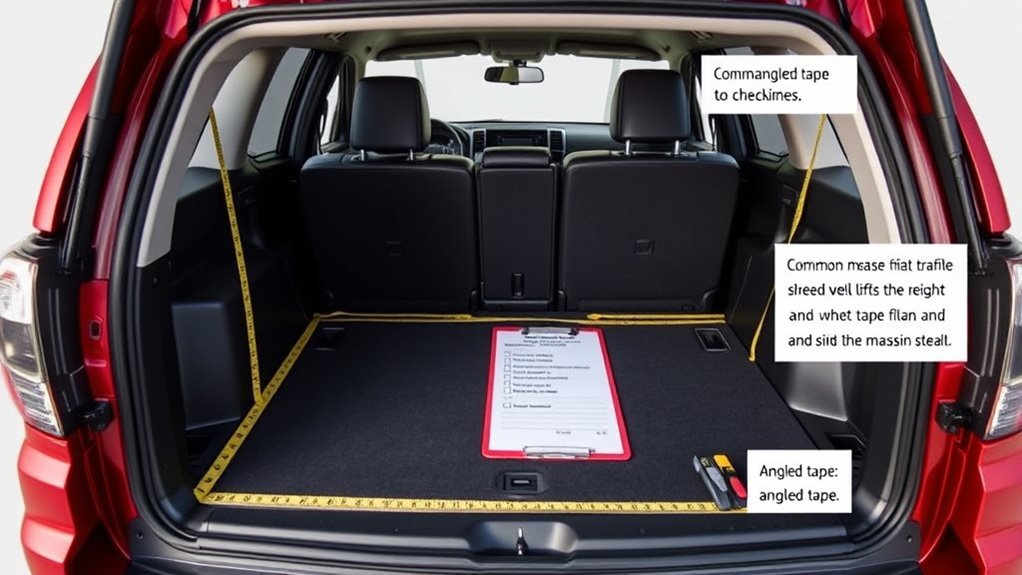
Before you cut or buy anything, measure the TRD ORP cargo bay precisely so your build fits without surprises: use a tape measure and straightedge to record width, length, depth, and anomalies. Start by measuring width between wheel wells (~43 inches); confirm snug fit within 43.5 inches to avoid binding. Measure length from folded-seat backs to liftgate (~59 inches); note the usable depth of 35.75 inches for platform designs. Mark the 2-inch indention that breaks the flat plane when seats fold—plan cutouts or rebates to maintain level surfaces.
Checklist: tape measure, caliper for tight gaps, straightedge, masking tape, marker, camera, notebook. Record three readings per dimension and photograph marks for repeatability. If you’ll ever use 3rd-row seats, measure with them installed and verify dealer specs; cargo space will shrink. Common pitfalls: trusting single reads, ignoring the indention, and overlooking wheel-well taper. Accurate measurement tools, methodical notes, and visual records free you to design liberated, reliable cargo organization.
When It Won’t Fit: Platforms, Drawers, Seat Removal, and Suspension Tips
If a planned platform or drawer layout doesn’t fit, assess where it’s binding and adapt your approach: measure the 43.5″ wheel‑well width and 38.5″ usable depth, verify the 2″ indention at the folded-seat junction, and map any tapers or obstructions that force compromises. Start by sketching a top‑view template to visualize how panels interact with wheel wells and seat folds. If drawers collide, consider staggered depths or offset slides to preserve platform stability while reducing drawer weight per bay. Removing rear seats gives flat length but expect that 2″ lip; bridge it with a thin filler or hinge plate to maintain a sleep surface. If drawer systems add significant mass, upgrade springs or add helper air bags to restore ride height and protect suspension. Use 2.5″ high plywood platforms wrapped in carpet for a low‑profile bed that tucks under headroom limits. Validate fit with a physical mockup and iterate; liberation comes from precise measurements and targeted compromises.
Frequently Asked Questions
How Big Is the Cargo Area of a Toyota 4runner?
You get about 42 inches long and 52 inches wide with seats up, expanding to 59 inches length with seats folded; cargo space height’s ~31 inches, so you can design versatile storage solutions that free your gear and movement.
What Size Bed Fits in the Back of a 4runner?
Measure twice, cut once: you can fit a twin-size bed (about 39″×75″) laid diagonally or a twin air mattress between wheel wells, so you’ll secure camping gear, rig platforms, and sleep liberated on the road.
What Year 4runner to Stay Away From?
You should avoid 2003–2006 and 2007–2009 models; they show common issues like frame rust and V6 oil failure, lowering reliability ratings. You’ll want models with stronger ratings for freedom from costly repairs.
How Big Is the Rear Cargo Area of a 2025 4runner?
You’ll fit plenty: cargo space behind rear seating is about 42 inches deep (59 inches with third row folded), 43 inches between wheel wells, roughly 52 inches overall width, and ~31 inches tall for flexible storage.
Conclusion
You’re ready to pack your TRD ORP, and yes, it’ll hold more than you think — even bulky gear — as long as you measure first and pick low-profile solutions. Don’t panic if a drawer or platform seems tight: swapping to slimmer boxes or folding the rear seat cushion usually solves it without cutting metal or losing ride quality. Use the supplied dimensions, test-fit at home, and enjoy a clean, secure load every trip.