
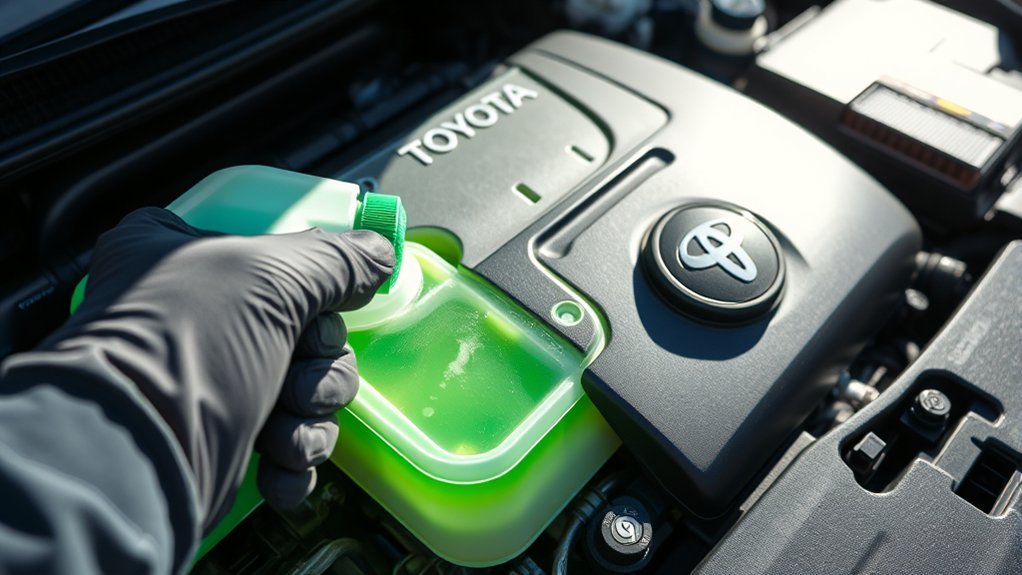
To check and refill coolant in a Toyota Camry, park on level ground and wait until the engine and radiator area are completely cold. Read the coolant level through the translucent reservoir and compare it with the L/LOW and F/FULL marks. If the cold level is at or below LOW, add the exact owner’s-manual-approved coolant slowly to the FULL mark. Never open a hot radiator or pressurized coolant cap. If the reservoir is empty, the coolant drops repeatedly, or the car has overheated, stop driving and diagnose the cause instead of repeatedly topping it off.
Last updated: July 14, 2026 · Reviewed against Toyota’s model-specific owner-manual guidance and the 2024 Camry maintenance schedule. [VERIFY: add the real author/byline and relevant credentials in the CMS.]
Quick Answer
With the engine completely cold, find the labeled translucent coolant reservoir and check whether the level is between L/LOW and F/FULL. Add Toyota Super Long Life Coolant or an owner’s-manual-approved equivalent only when the level is low, and stop at the FULL mark. This procedure covers a normal reservoir top-off, not a complete drain, refill, or air-bleeding service. Check your model-year manual before filling any Camry Hybrid reservoir because it may have separate cooling circuits.
Key Takeaways
- Check coolant only when the engine, radiator area, and upper radiator hose are cool.
- Use the coolant reservoir for a normal level check and top-off. Do not open a hot radiator or pressurized coolant cap.
- Match the coolant specification in your exact Camry owner’s manual rather than relying on fluid color.
- Do not overfill the reservoir because coolant expands as the engine warms.
- An empty reservoir, repeated coolant loss, steam, visible leakage, or overheating requires diagnosis rather than repeated top-offs.
At a Glance
| Hands-On Time | About 5–10 minutes once the engine is fully cold; cooldown time is additional |
| Difficulty | Easy for a normal reservoir level check or minor top-off |
| Tools Needed | Gloves, a clean coolant-only funnel, a clean rag or shop towel, and a flashlight if needed |
| Do Not Continue Driving | If the engine overheats, steam appears, coolant leaks quickly, or the reservoir becomes empty |
Should You Top Off the Coolant or Stop Driving?
A small level correction is different from severe coolant loss. Use the cold reservoir level, recent warning history, and visible symptoms to decide what to do next.
| What You Find | Recommended Action |
|---|---|
| Cold level is slightly below LOW, with no warning, steam, odor, or visible leak | Add the correct coolant slowly to FULL, secure the cap, and monitor the cold level |
| Level drops again after a top-off | Schedule a cooling-system inspection or pressure test instead of repeatedly adding coolant |
| Reservoir is empty | Do not assume a reservoir top-off restores the full system. Check for leakage and arrange professional inspection, especially after overheating |
| Temperature warning, rising gauge, or steam | Pull over safely, shut the engine off, let it cool completely, and arrange roadside assistance if the cause is not clearly minor |
| Coolant is rusty, muddy, milky, oily, or contains debris | Do not correct the condition with a simple top-off. Have the coolant and cooling system inspected |
| System was drained, repaired, or severely depleted | Use the model-specific filling and air-bleeding procedure or have a qualified technician refill it |
What Does Engine Coolant Do in a Toyota Camry?
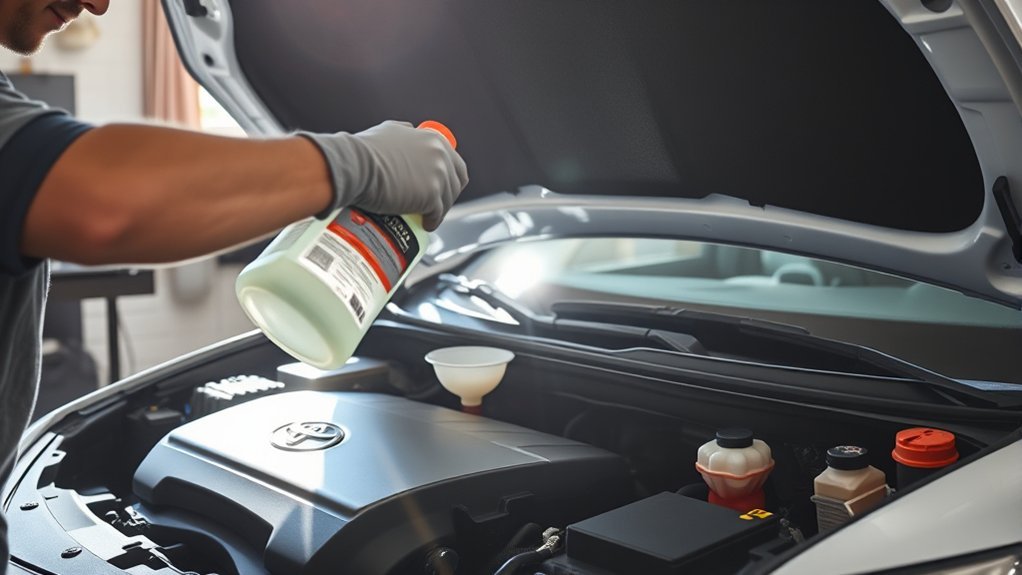
Engine coolant, also called antifreeze, moves heat away from the engine, helps prevent corrosion, raises the fluid’s boiling protection, and provides freeze protection. A low or contaminated coolant supply can contribute to overheating, weak cabin heat, corrosion, and damage to cooling-system or engine components.
Toyota advises owners to use the coolant type listed in the vehicle-specific owner’s manual. For many modern Camry models, that means Toyota Super Long Life Coolant or a similar high-quality ethylene-glycol coolant that meets Toyota’s specified chemistry. Confirm the requirement for your model year through the Toyota Owner’s Manuals and Warranties page or the Specifications section of your manual.
Note: Coolant color alone does not prove compatibility. Pink, red, green, orange, and blue coolants can use different formulas. Match the owner’s manual specification and product label, not just the color.
When Is It Safe to Open the Cooling System?
Park on level ground, set the parking brake, turn the engine off, and wait until the engine, radiator area, and upper radiator hose are cool to the touch. Do not rely on a fixed waiting time. Cooling can take much longer after highway driving, heavy loads, hot weather, or an overheating event.
Warning: Never remove the radiator cap or another pressurized coolant cap while the engine is hot. Hot coolant and steam can escape under pressure and cause severe burns.
For a routine cold level check, you normally do not need to touch the radiator cap. Inspect and top off the coolant through the labeled reservoir. Remove another cooling-system cap only when the owner’s manual or a model-specific repair procedure instructs you to do so.
Where Is the Coolant Reservoir on a Toyota Camry?
Open the hood and look near the radiator or front corner of the engine compartment. The coolant reservoir is normally a translucent plastic tank with level marks molded or printed on its side. Its exact position varies by model year, engine, market, and hybrid layout.
Confirm the tank by reading its cap or reservoir label. Do not identify it by shape alone, and do not confuse it with the windshield-washer-fluid reservoir.
How Do You Read the Reservoir Markings?
Look for markings such as “L” and “F,” “LOW” and “FULL,” or “MIN” and “MAX.” Read the level when the engine is cold. A level between the two marks normally does not need a top-off. If the cold level is at or below the lower mark, add the correct coolant slowly until it reaches the upper mark.
Does a Camry Hybrid Have More Than One Reservoir?
Some Camry Hybrid models may have separate cooling circuits for the gasoline engine and hybrid-related components. Treat each labeled reservoir as a separate system. Do not transfer coolant between tanks or assume that a FULL mark in one reservoir confirms the level in another. Check the labels and your exact owner’s manual before adding coolant.
How to Check and Refill Coolant in a Toyota Camry
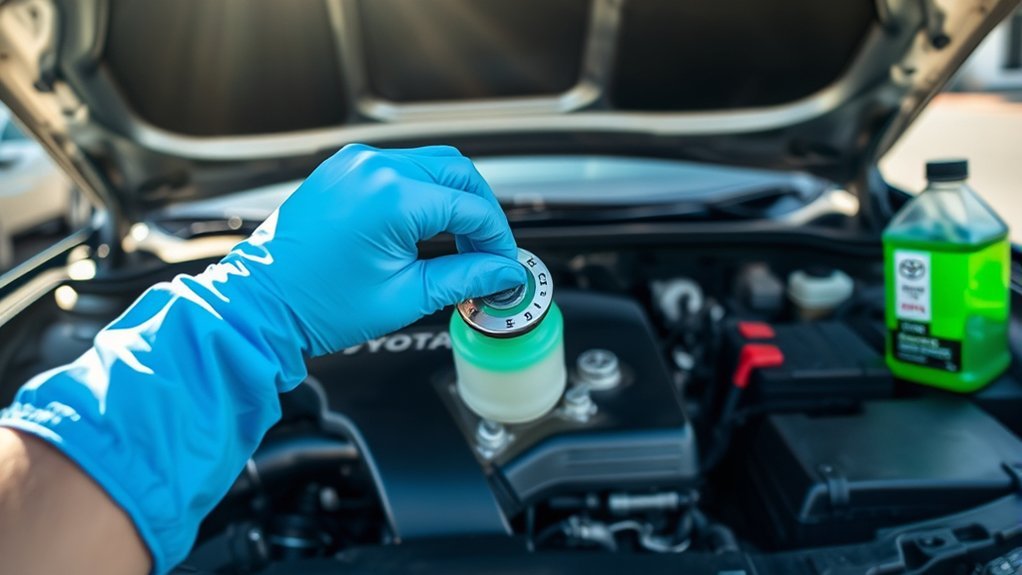
These steps cover a normal cold reservoir check and minor top-off. They do not replace the model-specific procedure for draining, flushing, refilling, or bleeding air from an empty cooling system.
- Park safely. Park on level ground, turn the engine off, set the parking brake, and wait until the engine and cooling-system components are completely cold.
- Open and secure the hood. Pull the interior hood release, release the secondary latch, and secure the hood.
- Identify the correct reservoir. Find the labeled translucent coolant tank near the radiator or front of the engine bay. Confirm the label before opening it.
- Read the cold level. Compare the visible coolant with the L/LOW and F/FULL marks. Use a flashlight if the tank is stained or the marks are difficult to see.
- Confirm the coolant specification. Check the owner’s manual and coolant label. Do not select a product by color alone.
- Check whether the product is premixed. Do not add extra water to a premixed coolant. Dilute a concentrate only in the ratio permitted by its label and the owner’s manual.
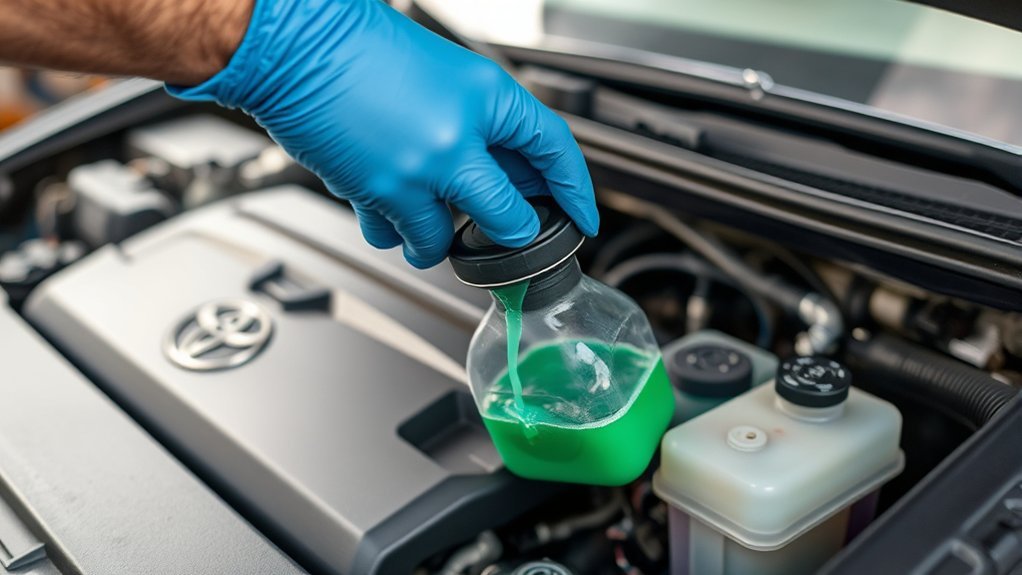
- Add coolant slowly. If the cold level is at or below LOW, remove the reservoir cap and use a clean coolant-only funnel to add the approved fluid in small amounts.
- Stop at the FULL mark. Do not overfill. Coolant expands as it heats, and excess fluid may be pushed out of the reservoir.
- Secure the cap and clean spills. Reinstall the cap firmly, wipe the reservoir and surrounding area, remove the funnel, and close the hood.
- Document and recheck the level. Photograph the cold level and odometer. After the next drive, let the engine cool completely and compare the level under similar cold conditions.
Pro Tip: A dated photo of the cold reservoir level gives you a more reliable comparison than memory. If the level falls again, show the photos and mileage to the technician inspecting the leak.
[Products Worth Considering]

This engine water pump kit is designed to help maintain reliable cooling performance across a wide range of compatible Toyota, Lexus, Scion, and Pontiac vehicles. Built with aluminum and tested for leak-free operation, it offers a direct replacement solution that supports engine efficiency and long-term service life. The kit includes a professional water pump and gasket for a convenient installation-ready repair.

This coolant electric water pump is designed as a replacement for select Toyota vehicles, helping maintain proper engine cooling performance and reliable temperature control. Built to OE specifications, it offers fitment support for compatible Avalon, Camry, and RAV4 models with 2.5L L4 engines. It also includes cross-reference part numbers for easier matching and comes with after-sales support for covered defects.

The OEMTOOLS coolant vacuum refill kit helps quickly refill a vehicle’s cooling system while removing trapped air that can lead to overheating and engine damage. It also performs vacuum leak tests to help confirm system integrity and reduce the chance of repeat repairs. With multiple bushings, adapters, and a tapered cone seal, it is designed for flexible use on many radiator and coolant bottle necks.
Which Coolant Should You Use in a Toyota Camry?
For many modern Camry models, Toyota specifies Genuine Toyota Super Long Life Coolant or a similar high-quality, non-silicate, non-amine, non-borate ethylene-glycol coolant with long-life hybrid organic acid technology. The exact requirement in your model-year owner’s manual remains the final authority.
Do not add a universal coolant, stop-leak product, or aftermarket cooling-system additive unless its documentation clearly confirms compatibility with your Camry’s required specification and the owner’s manual permits it. Mixing incompatible formulas can reduce corrosion protection or create deposits.
[Products Worth Considering]

This all-in-one radiator pressure tester and vacuum refill kit helps diagnose cooling system leaks, measure temperature, and refill coolant efficiently. It includes a wide range of adapters for broad vehicle compatibility, plus a pressure tester, vacuum refiller, thermometer, and storage case for organized use. Designed for DIY mechanics and professionals, it simplifies coolant service while reducing guesswork and unnecessary repairs.

This spill-proof radiator coolant filling funnel kit helps you refill cooling systems cleanly while reducing trapped air pockets that can affect heater and engine performance. It includes a 5-inch extension bar and 45-degree elbow for easier access under shrouds or at awkward angles. Color-matched caps for dedicated adapters make setup simpler and more organized.
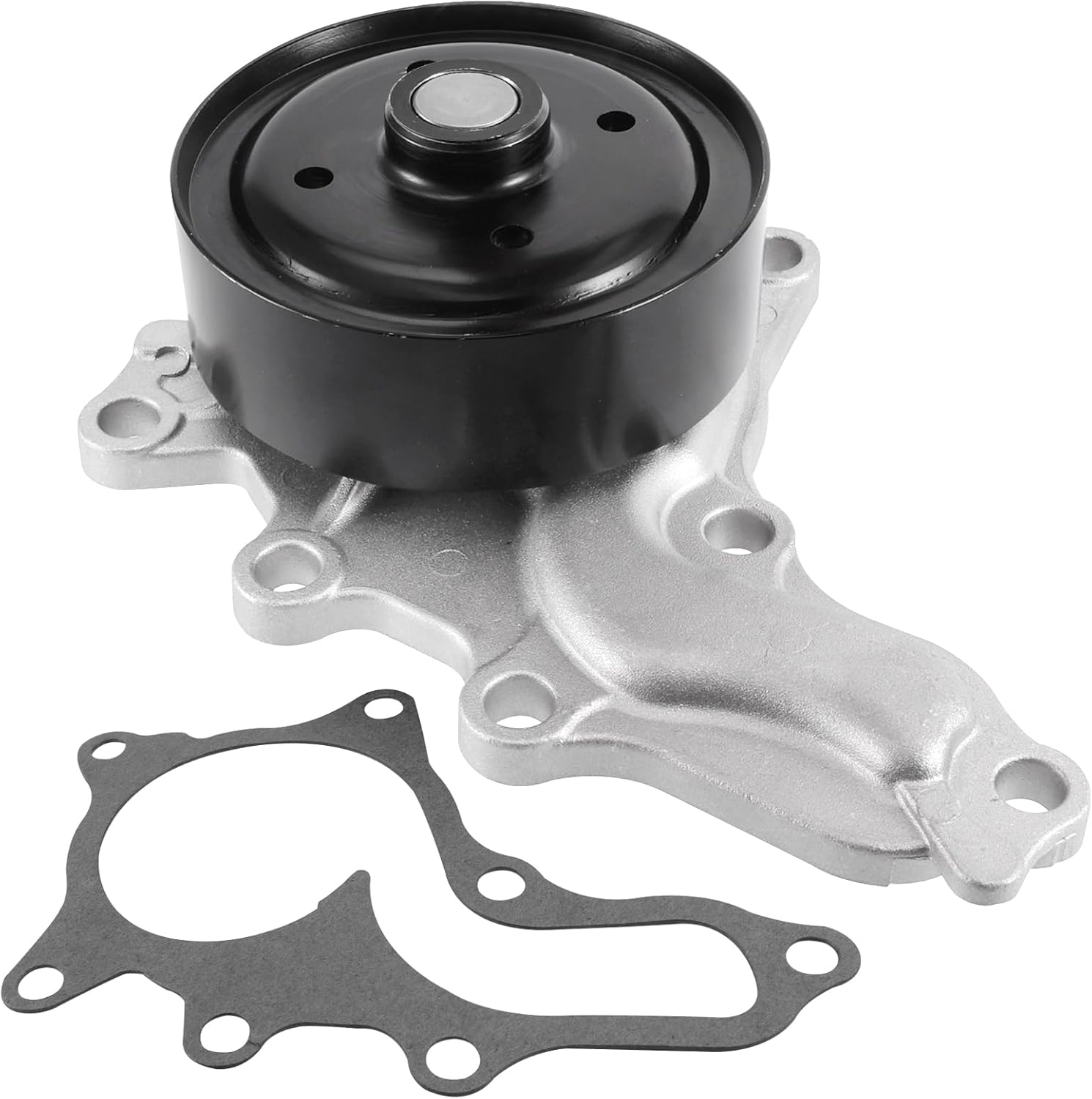
This AW6252 water pump is designed for a wide range of Toyota, Scion, and Lexus applications, helping maintain reliable engine cooling across compatible models. It features case hardened bearings for durability, a graphite-impregnated gasket for a secure seal, and 100% function and leakage testing for dependable performance. Built in TS16949 certified facilities, it offers a strong replacement option backed by service support.
Can You Mix Different Coolant Types?
Avoid mixing coolant types unless compatibility with the existing coolant and Toyota specification is clearly documented. Similar colors do not guarantee similar chemistry. When the existing fluid is unknown or contaminated, a qualified shop may need to identify the coolant and decide whether the system requires service rather than a top-off.
Can You Use Water Instead of Coolant?
Plain water is only a short-term emergency measure. It does not provide the same freeze, boil-over, and corrosion protection as the correct coolant mixture. If an emergency requires water, use distilled water when available and correct the mixture promptly. Do not continue driving an overheating vehicle merely because water was added.
How Often Should You Check or Replace Camry Coolant?
Check the reservoir during routine under-hood inspections, before a long trip, after cooling-system service, and whenever you notice a warning light, rising temperature, weak cabin heat, sweet odor, puddle, steam, or repeated coolant loss.
Replacement intervals vary by model year, market, coolant type, and service history. The 2024 U.S. Toyota Camry Warranty and Maintenance Guide lists initial engine-coolant replacement at 100,000 miles or 120 months, followed by replacement every 50,000 miles or 60 months when the specified Toyota Super Long Life Coolant or an approved equivalent is used. Follow the guide issued for your own Camry rather than applying the 2024 interval to every model year.
How Can You Spot a Toyota Camry Coolant Leak?
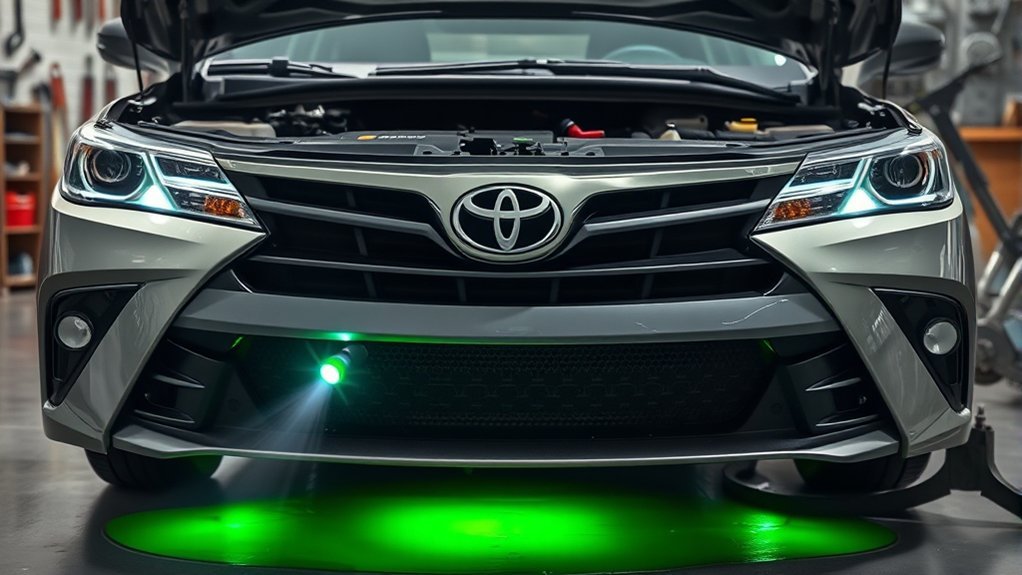
A one-time small correction may not prove that the system has a leak. A level that falls again after a documented cold top-off usually requires further inspection. Look for damp areas, dried crusty residue, staining, a sweet odor, or a colored puddle around the engine compartment and under the vehicle.
| Possible Leak Source | Signs to Look For |
|---|---|
| Radiator or radiator seams | Wet fins, dried residue, coolant odor, or a damp front underbody panel |
| Coolant reservoir | Cracked plastic, wet areas, a damaged cap, or a level that falls after a top-off |
| Hoses and clamps | Cracks, swelling, hardened rubber, loose clamps, or wet hose connections |
| Water-pump area | A dried coolant trail, abnormal noise, or coolant near the pump or belt area |
| Under the vehicle | A colored puddle or sweet odor after the vehicle has been parked |
[Products Worth Considering]

This 16-piece hose clamp pliers set provides a complete solution for removing and installing a wide range of automotive hose clamps. It is designed to reach tight engine spaces and handle spring, flat band, and ring-type clamps on radiator, coolant, fuel, and vacuum hoses. Built from durable heat-treated steel and organized in a carrying case, it helps simplify repairs for cars, trucks, motorcycles, and DIY maintenance.

This radiator burping funnel kit helps simplify coolant refilling, bleeding, flushing, and spill-free maintenance across a wide range of vehicles. Its translucent body with clear scale supports controlled filling, while multiple adaptors, caps, and extension pieces improve compatibility and access in tight engine bays. The built-in shut-off valve and rubber-gasket design help reduce spills and make cooling system service cleaner and more convenient.

This replacement filter set is designed for a range of Toyota hybrid vehicles, including popular models like RAV4 Hybrid, Camry Hybrid, Highlander Hybrid, Sienna, Venza, and more. It combines cabin and engine filtration to help support cleaner airflow, reduce dust and odors, and protect your HVAC and engine systems. Built for easy installation and extended service life, it offers a convenient maintenance upgrade for compatible hybrid and gas-only Corolla models.
How Do You Troubleshoot Low or Contaminated Coolant?
What If the Coolant Level Drops Again?
Do not continue adding coolant without finding the cause. Compare the cold level with your dated photo, inspect for visible leakage, and schedule a cooling-system pressure test or professional diagnosis. A small leak may evaporate on hot components without leaving a large puddle.
What If the Coolant Looks Rusty, Cloudy, or Oily?
Healthy coolant should look clean and consistent. Rusty, muddy, cloudy, foamy, milky, oily, or particle-filled coolant can indicate corrosion, aged fluid, mixed formulas, or an internal engine problem. Do not hide the condition with fresh coolant. Have the system inspected.
What If the Temperature Gauge Rises or a Warning Appears?
Move to a safe stopping place as soon as possible and shut the engine off. Do not continue driving to test whether the warning disappears. Wait until the system is completely cold, and never open a hot coolant cap. Arrange roadside assistance or towing if the warning returns, the reservoir is empty, steam is present, or coolant is leaking.
What If the Reservoir Is Empty?
An empty reservoir may indicate severe coolant loss. A simple reservoir top-off may not refill the engine, radiator, heater circuit, or trapped air pockets. Do not drive after an overheating event or rapid coolant loss. Have the system checked and filled with the correct model-specific bleeding procedure.
How Can You Maintain the Correct Coolant Level?
- Check it cold: Compare the reservoir level only after the engine has cooled completely.
- Use the correct specification: Match the owner’s manual and product documentation rather than choosing by color.
- Confirm premix or concentrate: Follow the product label and do not dilute a premixed coolant.
- Avoid overfilling: Stop at the upper cold-level mark because coolant expands when heated.
- Track repeat loss: Photograph the cold level and mileage after a top-off.
- Inspect connections: Watch hoses, clamps, caps, the reservoir, radiator, and water-pump area for leakage or residue.
- Use a clean funnel: Keep dirt, oil, washer fluid, and other contaminants out of the cooling system.
- Clean spills immediately: Coolant can harm people, pets, wildlife, and the environment.
Warning: EPA guidance states that used antifreeze should not be poured onto land, into surface water, or down a storm drain. Store it in a sealed, labeled container and follow your local recycling or hazardous-waste requirements.
Frequently Asked Questions
Should I check Toyota Camry coolant when the engine is hot or cold?
Check the reservoir when the engine and radiator area are completely cold. The level changes as coolant expands, and opening a hot pressurized system can cause severe burns. Do not rely on a fixed cooldown time.
Can I use water instead of coolant in my Toyota Camry?
Water is only a temporary emergency option. It does not provide the same freezing, boiling, and corrosion protection as the correct coolant mixture. Use distilled water if available, correct the mixture promptly, and do not continue driving an overheating car.
What are the signs of low coolant?
Signs can include a low reservoir level, a temperature warning, a rising gauge, weak cabin heat, a sweet odor, visible leakage, a puddle, or steam. Pull over and shut the engine off if it begins to overheat.
How do I know if my coolant is contaminated?
Coolant may be contaminated if it looks rusty, muddy, cloudy, foamy, milky, oily, or contains floating particles. Have it inspected instead of hiding the condition with a top-off.
Can coolant expire or lose protection over time?
Yes. Coolant additives lose effectiveness as the fluid ages. The replacement schedule depends on the model year, coolant type, and service history, so follow the maintenance guide issued for your Camry.
Is it safe to mix different coolant types?
Avoid mixing coolant types unless the product documentation confirms compatibility with the existing coolant and Toyota specification. Similar colors do not guarantee compatible chemistry.
Where do I add coolant in a Toyota Camry?
For a normal cold top-off, add coolant to the correctly labeled translucent reservoir. Do not open the radiator cap while hot. Check the owner’s manual before filling a Camry Hybrid because it may have separate cooling circuits.
Should I drive if my Camry is overheating?
No. Pull over safely and shut the engine off. Do not open a hot coolant cap. Arrange roadside assistance or towing if the warning returns, coolant is leaking, steam appears, or the reservoir is empty.
Is filling the reservoir the same as refilling the complete cooling system?
No. Filling the reservoir corrects a minor low level. A system that was drained, repaired, emptied by a leak, or overheated may require a model-specific refill and air-bleeding procedure.
Conclusion
Check your Toyota Camry’s coolant reservoir only when the engine is completely cold. Use the exact coolant specification in the owner’s manual, add it slowly to the upper cold-level mark, and never open a hot pressurized cap. A slightly low reservoir may need a careful top-off. An empty tank, repeated loss, contaminated fluid, steam, or overheating needs diagnosis rather than more coolant.
Sources
- Toyota Owner’s Manuals and Warranties — model-year owner’s manual lookup and vehicle-specific guidance.
- Toyota Support: What Type of Coolant Should I Use? — Toyota guidance to consult the Specifications section of the owner’s manual.
- 2024 Toyota Camry Warranty and Maintenance Guide — coolant chemistry, inspection, and replacement-interval guidance.
- EPA: How Do I Dispose of Used Antifreeze? — used-antifreeze disposal guidance.
- EPA Antifreeze Recycling Best Practices — recycling and environmental-handling guidance.

[…] the correct model-year coolant and service interval. See the Toyota Camry coolant check and refill guide for the cold-level inspection […]
[…] Always start with the engine or hybrid system completely cold. A cold check gives a more meaningful reservoir reading and reduces the risk of burns. Park on level ground, open the hood, and identify the correct coolant reservoir. On hybrid Camrys, confirm whether you are looking at the engine coolant reservoir or the separate power-control/inverter coolant reservoir before adding anything. For a more detailed procedure, see the Toyota Camry coolant check and refill guide. […]