Last updated: July 31, 2026
Editorial basis: This guide synthesizes Toyota factory diagnostic information for specific older Camry configurations and U.S. EPA OBD-II guidance. It does not claim a hands-on diagnosis of a particular vehicle. Confirm the VIN, engine, market, and emissions certification before applying any test or specification.
If your older Toyota Camry has an external Exhaust Gas Recirculation (EGR) system, diagnose it as a complete flow-control chain rather than assuming the EGR valve is bad. The system routes a measured amount of exhaust into the intake to lower peak combustion temperature and reduce nitrogen oxide (NOx) emissions. P0401, P0402, rough idle, hesitation, or stalling can come from blocked passages, vacuum hoses, a Vacuum Switching Valve (VSV), feedback sensors, wiring, or the valve itself.
Quick Answer
Start by confirming that the exact Camry uses an external EGR system. Save stored and pending codes plus freeze-frame data, inspect hoses and wiring, test the commanded vacuum or electronic feedback listed in the Toyota procedure, and then check the valve and passages for carbon. Do not buy an EGR valve from the code description alone. A 2000 Camry 5S-FE and a 2000 Camry 1MZ-FE California-specification system use different controls and different P0401 monitoring logic.
Key Takeaways
- EGR lowers peak combustion temperature, which helps reduce NOx formation.
- Camry EGR hardware and monitoring can differ by engine, market, and emissions certification, even within a similar model-year range.
- P0401 means the ECM detected insufficient EGR flow; P0402 means it detected excessive flow on calibrations that support and store that code.
- Blocked passages, damaged hoses, VSV faults, MAP or EGR-sensor faults, and sticking valves can produce overlapping symptoms.
- Record codes and freeze-frame data before clearing them, then test the full control path before replacing parts.
What’s in This Article
- What Does the EGR System Do in an Older Toyota Camry?
- Does Your Older Camry Have an External EGR System?
- How Do Camry EGR Layouts Differ by Engine?
- Before You Start: Safety and Model-Year Checks
- How Does EGR Lower Combustion Temperature and NOx?
- Which EGR Parts Might an Older Camry Use?
- What Commonly Fails in an Older Camry EGR System?
- What Do P0401 and P0402 Mean on a Toyota Camry?
- How Can You Check an Older Camry EGR System?
- Should You Clean or Replace the EGR Parts?
- EGR Repair Checklist
- How to Reduce Repeat EGR Problems
- When to Stop DIY Testing
- Frequently Asked Questions
What Does the EGR System Do in an Older Toyota Camry?
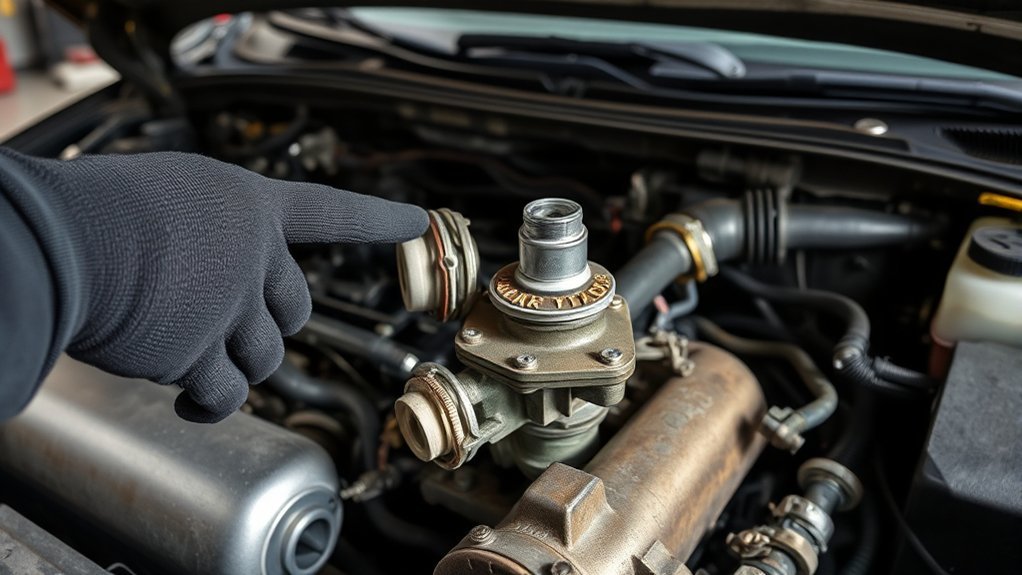
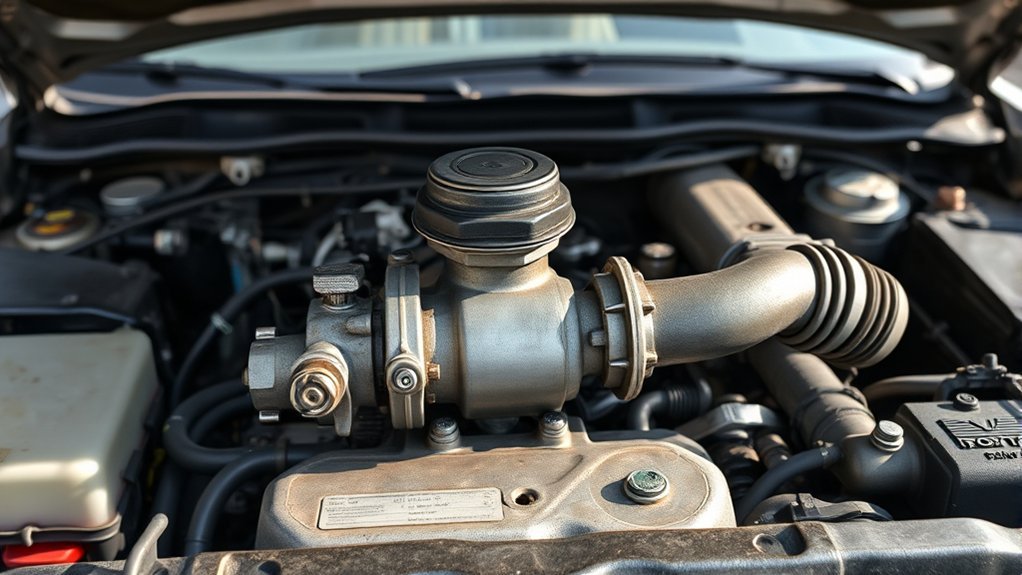
The Exhaust Gas Recirculation (EGR) system routes a measured amount of exhaust gas back into the intake. The recirculated gas dilutes the fresh charge and slows combustion, which lowers peak combustion temperature and reduces NOx emissions.
Toyota used different EGR layouts across Camry years, engines, markets, and emissions packages. A system may include an EGR valve, a vacuum modulator or vacuum-control valve, a VSV, vacuum hoses, an EGR gas-temperature sensor, or an EGR valve-position sensor. Do not assume an external serviceable EGR valve is present; confirm it on the emissions label and in the model-specific Toyota service information.
When an equipped system fails, you may notice rough idle, hesitation, stalling, pinging, weak acceleration, or a Check Engine Light. These symptoms are not proof of an EGR fault because ignition, fuel, intake, and general vacuum problems can feel similar.
Does Your Older Camry Have an External EGR System?
Check the vehicle before you buy or remove parts. “Toyota Camry” is not specific enough to identify the correct EGR layout, and the presence of a P0401 description in a generic code list does not prove which hardware your car uses.
- Read the under-hood emissions label: Note the model year, engine family, emissions certification, and any EGR wording shown on the label.
- Confirm the engine and market: Record the VIN, engine code, and whether the car was built for the U.S., Canada, Japan, Australia, or another market.
- Check model-specific service information: Use the correct Toyota repair manual or a verified parts diagram to confirm the valve, VSV, sensors, hoses, monitor logic, and test procedure.
Do not rely on a parts-store listing or another owner’s engine photo as your only match. Two Camrys from a similar year range can use different emissions hardware or monitoring methods.
How Do Camry EGR Layouts Differ by Engine?
The following examples are verified from 2000 Camry service information. They are examples, not a universal fitment chart.
| Verified service-manual example | Main EGR controls and feedback | How P0401 is monitored |
|---|---|---|
| 2000 Camry 5S-FE | EGR valve, vacuum modulator, VSV, vacuum hoses, and manifold absolute pressure sensor | The ECM evaluates manifold-pressure response while EGR operation is commanded |
| 2000 Camry 1MZ-FE, Ex California specification | Duty VSV, EGR valve-position sensor, EGR gas-temperature sensor, vacuum control valve, and hoses | The ECM looks for the specified EGR gas-temperature rise after warmed driving |
This difference changes the test order. A MAP-sensor fault can mislead the 5S-FE flow monitor, while an EGR gas-temperature sensor or its circuit can create a P0401 path on the listed 1MZ-FE calibration. Confirm the exact system before interpreting live data or buying a valve.
Before You Start: Safety and Model-Year Checks
Confirm your Camry year, engine, market, and emissions label before you test the EGR system. Toyota changed EGR layouts and monitoring methods, so a test that applies to one engine may be wrong for another.
The U.S. EPA states that all 1996 and newer passenger vehicles were required to use On-Board Diagnostics II (OBD-II). Pre-1996 diagnosis is not standardized in the same way, so use the Toyota procedure listed for the exact vehicle instead of assuming a generic scanner or flash-code method applies.
Warning: Let the engine cool before removing EGR parts. During any engine-running test, keep hands, tools, hair, and clothing away from belts, fans, hot exhaust parts, and moving linkages. Skip the test if the service procedure or working conditions are unclear.
How Does EGR Lower Combustion Temperature and NOx?
Exhaust gas contains less oxygen than fresh intake air and absorbs heat during combustion. When a controlled amount enters the intake charge, combustion slows and the peak temperature falls.
Toyota’s Camry repair material describes EGR as a controlled flow that slows combustion, reduces combustion temperature, and reduces NOx. The International Council on Clean Transportation also explains the connection between high combustion temperature and NOx formation.
The valve should not stay open under every condition. For example, the 2000 Camry 1MZ-FE Ex California-specification procedure cuts EGR during warm-up, deceleration, very light load, engine speeds above 4,000 rpm, and idle. The 2000 5S-FE procedure also lists EGR cut above 4,400 rpm and during high load. These are model-specific examples, not universal Camry thresholds.
Which EGR Parts Might an Older Camry Use?
Think of the EGR system as a control chain. A fault anywhere in that chain can reduce flow, create too much flow, or make the engine computer misread what happened.
- EGR valve: Opens the passage that lets exhaust enter the intake.
- Vacuum modulator or control valve: Regulates the vacuum signal on some systems.
- Vacuum Switching Valve (VSV): Uses an electrical command to route or block vacuum.
- Vacuum hoses: Carry the control signal between the intake source, VSV, control valve, and EGR valve.
- Manifold absolute pressure (MAP) sensor: Supplies pressure feedback used by the EGR monitor on some 5S-FE systems.
- EGR gas-temperature sensor: Helps the ECM detect whether hot exhaust reached the EGR passage on some systems.
- EGR valve-position sensor: Reports valve lift to the ECM on some systems.
- ECM, wiring, and connectors: Command the system and process feedback.
Start with identification and simple checks. A cracked hose, blocked port, corroded connector, or clogged passage can mimic a failed EGR valve.
[Products Worth Considering]

This plug-and-play OBD2 scanner helps drivers quickly read and clear engine error codes while providing live data, freeze frame information, I/M readiness, and MIL status for more confident troubleshooting. It adds a built-in voltage test and clear status indicators to support electrical checks and faster diagnostics, making it a practical choice for home users, car enthusiasts, and repair professionals. Compatible with most OBDII vehicles since 1996 and designed with an easy-to-use interface, it offers broad coverage and simple operation in one compact tool.

The FOXWELL NT301 is a plug-and-play OBD2 code reader designed to help drivers and home mechanics diagnose check engine light issues with ease. It reads fault codes, clears emissions-related warnings, displays live sensor data in graph form, and shows I/M readiness so you can quickly check vehicle status before an emissions test. With broad compatibility across many OBD2 vehicles and a clear color screen, it offers a practical, user-friendly way to monitor and troubleshoot engine performance.

FOXWELL NT201 is an easy-to-use OBD2 scanner designed to help drivers quickly read and clear check engine codes, view live engine data, and check emissions readiness. Its color screen, one-key I/M readiness test, and broad compatibility with most gasoline vehicles since 1996 make it a practical tool for everyday diagnostics and maintenance. With plug-and-play operation and lifetime free updates, it offers a simple way to understand vehicle issues without expensive shop visits.
What Commonly Fails in an Older Camry EGR System?
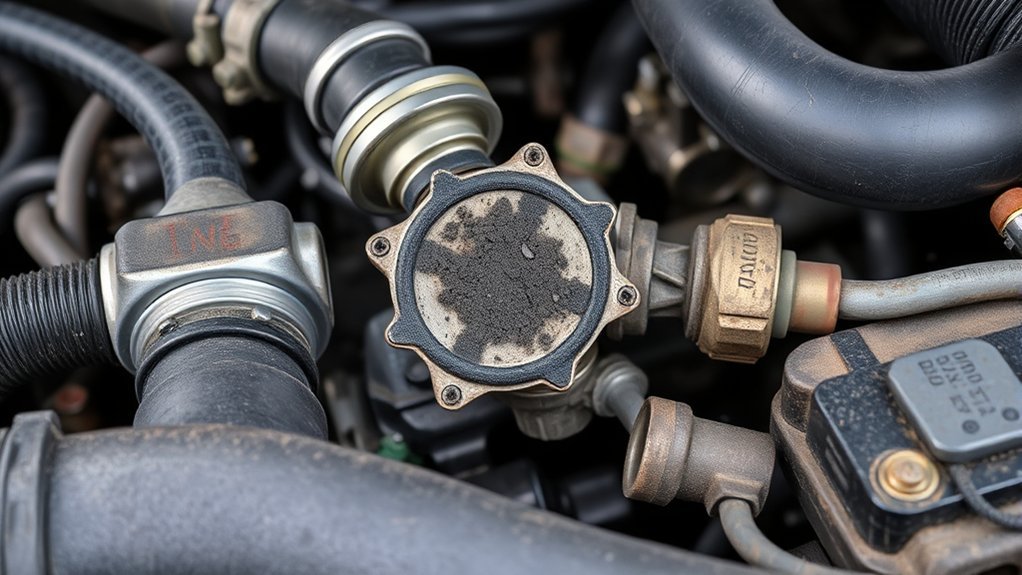
Carbon can narrow the valve, pipe, or intake passage until the system cannot deliver the commanded flow. Age can also harden vacuum hoses, weaken a diaphragm, damage wiring, or cause a valve or VSV to stick.
A valve stuck open can introduce exhaust at idle and cause shaking, stalling, or hard starting. A valve stuck closed or a blocked passage can reduce EGR flow during cruise, increase peak combustion temperature, and trigger an insufficient-flow code on monitored systems.
- Blocked passage: Carbon restricts the valve, pipe, or intake port.
- Sticking valve: The pintle or diaphragm does not move or seal correctly.
- Vacuum leak or blockage: The valve never receives the correct control signal.
- VSV or control-valve fault: Vacuum is routed at the wrong time or not routed at all.
- Sensor, wiring, or connector fault: The ECM receives incorrect feedback.
- Incorrect part or hose routing: A previous repair creates the wrong flow path.
Use symptoms as clues, not a final diagnosis. Test the whole control path before replacing the valve.
What Do P0401 and P0402 Mean on a Toyota Camry?
Too much EGR at idle can make the engine stumble. Too little EGR during the conditions when it is commanded can raise combustion temperature and emissions. The code tells you what the ECM detected, not which part failed.
| Symptom or code | Possible EGR direction | First separation check |
|---|---|---|
| P0401 | Insufficient detected flow | Record freeze-frame data, then inspect hoses, VSV control, monitor-sensor feedback, and passages |
| P0402 | Excessive detected flow | Check for a valve held open, incorrect vacuum control, misrouted hoses, or faulty feedback |
| P0105 or P0106 with an EGR code on an applicable 5S-FE | MAP-sensor data may be corrupting the EGR monitor | Follow Toyota’s code-priority instruction and diagnose the MAP fault first |
| Rough idle or stalling | Possible unwanted EGR flow at idle | Confirm the valve is commanded closed and check for other vacuum, fuel, or ignition faults |
| Pinging during load | Possible low EGR flow | Check commanded operation and blocked passages after ruling out fuel and ignition causes |
| No drivability symptom | Possible monitoring, wiring, or intermittent fault | Use stored data, wiring checks, and the model-specific diagnostic chart |
P0401 means the ECM detected insufficient EGR flow. Depending on the system, causes can include a disconnected or blocked vacuum hose, failed VSV, blocked passage, stuck-closed valve, MAP or EGR-sensor circuit fault, or ECM issue. Toyota’s diagnostic charts list multiple possible causes rather than naming the EGR valve alone.
P0402 means the ECM detected excessive EGR flow on calibrations that support and store that code. Check for a valve held open, incorrect vacuum control, a VSV fault, misrouted hoses, or inaccurate sensor feedback.
On the 2000 Camry 5S-FE chart, Toyota directs diagnosis of P0105 or P0106 before the EGR code when those MAP-sensor codes are stored together. If P0401 and P0402 are both stored, the same chart directs diagnosis of P0402 first. Use this as a model-specific example and follow the priority order for your exact calibration.
How Can You Check an Older Camry EGR System?
Begin with checks that preserve diagnostic evidence and do not require parts removal. Use an OBD-II scanner on applicable U.S.-market 1996 and newer cars, or the exact Toyota diagnostic method specified for an earlier model.
- Identify the system: Confirm the engine, emissions label, EGR components, monitor sensors, and service procedure.
- Read and record the codes: Save all stored and pending codes before clearing anything. Review how to read OBD2 codes on a Toyota Camry if you need help connecting a scanner and saving code data.
- Save freeze-frame data: Record engine temperature, speed, load, MAP or airflow data, and other available values captured when the fault set.
- Inspect hoses and routing: Look for cracks, loose ends, blockages, oil damage, pinched lines, and incorrect connections.
- Inspect wiring and connectors: Check the VSV, MAP sensor, and EGR sensors used by your system for corrosion, damaged insulation, loose pins, or broken locks.
- Test commanded operation: Use the scan-tool active test or vacuum procedure specified in the correct Toyota manual.
- Separate valve movement from passage flow: Confirm whether the valve moves and holds vacuum, then confirm whether exhaust can actually reach the intake.
- Inspect the passages: With the engine cool, remove only the parts allowed by the service procedure and check for carbon in the valve, pipe, and intake port.
- Retest before buying parts: Confirm whether the fault is mechanical, vacuum-related, electrical, sensor-related, or caused by a blocked passage.
[Products Worth Considering]

The BLCKTEC 440 Bluetooth OBD2 scanner helps drivers and DIY mechanics quickly read and clear trouble codes, monitor live data, and check emissions readiness with confidence. Its color display, graphing capabilities, and battery and charging system testing make it a versatile diagnostic tool for OBD-compliant vehicles. Designed for plug-and-play convenience, it runs directly from your vehicle and includes support for report sharing and ongoing updates.

This enhanced OBD2 scanner helps drivers quickly diagnose check engine light issues, read and clear trouble codes, and check emissions readiness before a smog test. It also adds EVAP and O2 sensor testing, live data, freeze frame capture, and a one-click battery health check in a simple plug-and-play tool with a bright color screen.

The ANCEL AD410 PRO combines engine diagnostics and 12V battery testing in one easy-to-use tool, helping you read and clear check engine codes while checking battery health, cranking, and charging performance. It also provides live data, freeze frame details, and I/M readiness checks to help you diagnose issues faster and prepare for emissions testing. With plug-and-play operation, a clear screen, and broad vehicle compatibility, it is a practical solution for home mechanics and everyday drivers.
What Does a Hand-Vacuum Test Actually Prove?
On a system whose Toyota procedure permits this test, a hand vacuum pump answers two separate questions:
- Does the valve respond and hold vacuum? If the diaphragm does not hold the specified vacuum or the valve does not move, the valve or diaphragm may be faulty.
- Does opening the valve create EGR flow? Toyota’s listed 1MZ-FE test expects the warmed idling engine to run rough or stall when vacuum opens the EGR valve. If the valve moves but idle does not change, the exhaust or intake passage may be blocked.
No single result identifies every failed part. A missing control signal, blocked hose, failed VSV, sensor fault, or blocked passage can still require separate testing. Use the hand-vacuum method only when the exact repair manual specifies it.
Toyota’s diagnostic material recommends reading freeze-frame data because it shows the conditions present when the ECM detected the malfunction. That evidence can separate a repeat warmed-cruise fault from an unrelated idle complaint.
Verified post-repair example, not a universal drive cycle: The 2000 Camry 1MZ-FE Ex California-specification procedure uses a warmed engine, driving at 70–90 km/h (43–56 mph) for at least three minutes, about two minutes of idle, repeated operation, and a readiness check. Use the confirmation pattern for your exact engine and calibration instead of copying this example.
How Do You Separate an EGR Fault From Other Rough-Idle Causes?
Do not assume every rough idle comes from EGR. If the EGR valve is confirmed closed at idle, continue checking for intake leaks, ignition faults, fuel-delivery problems, contaminated airflow sensors, or mechanical issues. The Toyota Camry rough-idle diagnosis guide covers those non-EGR paths in more detail.
A scan tool can help by showing whether the rough idle appears with misfire codes, fuel-trim problems, or other system faults. A shop may also use a smoke test, oscilloscope, or live-data comparison when the cause remains unclear.
Should You Clean or Replace the EGR Parts?
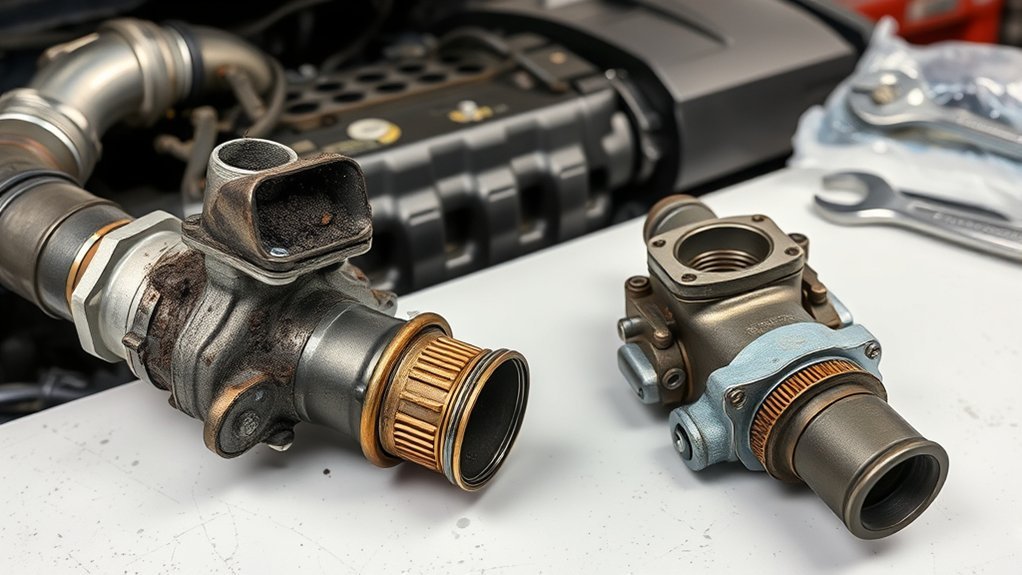
Clean the system when the correct service procedure allows cleaning, carbon is accessible, and the valve or passage is otherwise undamaged. Replace a part when it fails the specified vacuum, electrical, resistance, movement, or sealing test.
[Products Worth Considering]
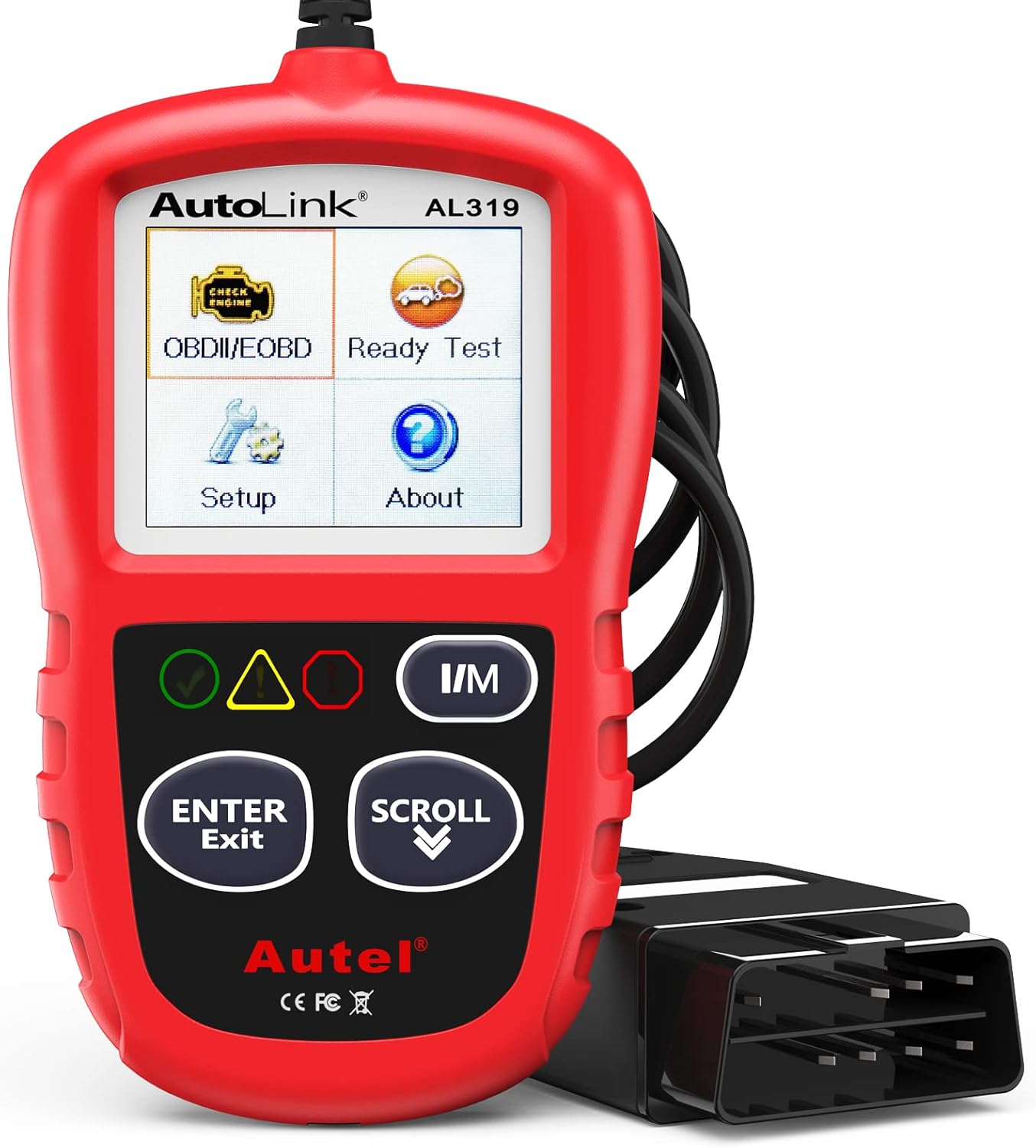
The Autel AL319 is a user-friendly OBD2 scan tool designed to help drivers quickly diagnose check engine light issues and understand vehicle fault codes. It supports reading and clearing DTCs, live data, freeze frame, I/M readiness, and vehicle information, making it a practical choice for DIYers and everyday car owners. With plug-and-play operation, a color display, built-in speaker, and broad vehicle compatibility, it delivers fast, reliable diagnostics without complicated setup.

The Autel MaxiCOM MK900BT is a professional bidirectional diagnostic scan tool built for modern vehicles with advanced system coverage and fast, accurate troubleshooting. It supports 3000+ active tests, 40+ service functions, all-system diagnostics, Auto VIN, pre/post scan reports, and newer vehicle protocols for broad compatibility. Designed for technicians and serious DIY users, it delivers efficient maintenance, smarter diagnostics, and expanded service capabilities across a wide range of makes and models.

Turn your iPhone, Android device, or Windows PC into a professional-grade diagnostic scan tool with this Bluetooth OBD2 adapter. It is designed for broad vehicle compatibility and supports popular apps for deeper diagnostics, live data, and code clearing. Built-in protections and firmware updates help keep your vehicle and scanner safe while delivering reliable performance.
When to Clean
Cleaning makes sense when carbon restricts a removable passage and the valve still moves and seals correctly. Use only the cleaner and method allowed by the Toyota procedure and the cleaner label. Keep solvent away from electrical sensors, coatings, plastic housings, and vacuum diaphragms unless the instructions specifically allow contact.
- Remove and inspect: Check the valve, gasket surface, pipe, and intake port without damaging sealing surfaces.
- Clean permitted areas: Use the approved solvent and a non-damaging tool only where the procedure allows it.
- Replace disturbed gaskets: Install the correct new gasket when required by the service information.
- Reassemble to specification: Route hoses correctly and tighten fasteners to the exact model-specific value.
- Verify the repair: Clear codes after the repair, follow the specified confirmation drive or readiness procedure, and check whether the code returns.
Signs You Need Replacement
Replace the EGR valve if its diaphragm leaks, its pintle binds after approved cleaning, its position feedback fails the manual’s test, or the valve cannot seal. Replace a VSV, sensor, hose, or wiring section only when testing confirms that part is faulty.
Do not replace only the valve when a blocked intake passage, damaged hose, failed VSV, or wiring problem caused the code. A new valve cannot correct a restriction or missing control signal elsewhere.
DIY Versus Professional
DIY work is reasonable when the parts are accessible, the test steps are clear, and you have the correct tools and service information. Stop if fasteners are seized, the EGR pipe is heavily rusted, the wiring diagnosis is unclear, or the repair requires removing major intake components.
- Try DIY: Choose this route for visual checks, hose inspection, code recording, and clearly specified tests.
- Replace confirmed parts: Replace only the component that fails a test or shows clear physical damage.
- Use a shop: Get professional help for seized hardware, repeat codes, wiring faults, conflicting data, or an unsafe engine-running test.
A technician can compare commanded EGR operation with sensor response, run smoke or circuit tests, and inspect passages without replacing good parts by guesswork.
EGR Repair Checklist for an Older Camry
Gather the service information, tools, and confirmed replacement parts before removal. The correct list depends on the engine and emissions package.
| Item | Purpose |
|---|---|
| Exact Toyota repair procedure | Identifies the system, tests, routing, and torque values |
| Scan tool or exact pre-OBD diagnostic method | Reads codes, freeze-frame data, and available active tests where supported |
| Hand vacuum pump | Tests specified vacuum-operated valves and diaphragms |
| Digital multimeter | Checks circuits, resistance, voltage, and continuity as directed |
| Correct gaskets and hoses | Restores seals and vacuum routing after removal |
| Torque wrench | Tightens fasteners to the model-specific service value |
Read and save the codes first. Then inspect hoses and wiring, test commanded operation, and check passages before installing a new valve.
Note: Torque values, electrical specifications, hose routing, and confirmation drive patterns vary by engine and model year. Use the correct Toyota Factory Service Manual instead of copying a value from another Camry.
How Can You Reduce Repeat EGR Problems?
You cannot prevent every age-related failure, but you can avoid conditions that create misleading symptoms or damage emissions components.
- Follow the maintenance schedule: Keep the ignition, air intake, fuel system, and engine oil service current.
- Repair misfires promptly: Misfires can damage the catalytic converter and complicate emissions diagnosis.
- Inspect aging hoses: Replace brittle, swollen, cracked, loose, or oil-damaged vacuum hoses with the correct type.
- Keep routing original: Match every vacuum hose and connector to the diagram for the exact vehicle.
- Use verified parts: Match the valve, VSV, sensors, and gaskets to the VIN, engine, and emissions package.
- Confirm monitor readiness: After repair, complete the specified drive procedure and confirm that the code and monitor status are resolved.
Do not use aggressive high-rpm driving as a substitute for diagnosis or passage cleaning. A blocked passage, failed solenoid, or damaged sensor needs a verified repair.
When Should You Stop DIY Testing and Get Help?
Stop driving and seek help if the engine repeatedly stalls, overheats, loses substantial power, pings heavily under load, or shows a flashing Check Engine Light. These conditions can involve more than the EGR system.
Stop DIY work if you find damaged wiring, fuel or exhaust leaks, seized bolts, stripped threads, or heavy corrosion around the EGR pipe. A technician can test live data, vacuum control, sensor signals, and wiring without replacing parts by trial and error.
Frequently Asked Questions
What Is the EGR System on a Toyota Camry?
On an equipped Camry, the EGR system sends a controlled amount of exhaust gas into the intake under selected operating conditions. This lowers peak combustion temperature and helps reduce NOx emissions.
What Types of EGR Controls Might an Older Camry Use?
Older Camrys may use vacuum-operated valves, ECM-controlled VSVs, vacuum modulators or control valves, MAP-sensor feedback, EGR gas-temperature sensors, and EGR valve-position sensors. The exact combination depends on the engine and emissions package.
Does Every Older Toyota Camry Have an EGR Valve?
Not necessarily. EGR hardware can vary by model year, engine, market, and emissions certification. Check the under-hood emissions label and the correct Toyota service information before ordering a valve.
Where Is the EGR Valve Located on an Older Camry?
The location depends on the engine and emissions package. When fitted, the valve connects an exhaust passage to the intake and may sit near the intake manifold or rear area of the engine. Use the model-specific diagram instead of relying on a generic location.
Does a Bad EGR Valve Always Trigger a Check Engine Light?
No. A sticking valve, small vacuum leak, or intermittent control fault can affect drivability before the ECM stores a code. Other faults can also create the same symptoms.
Can You Drive an Older Camry With P0401 or P0402?
A short trip may be possible when the car runs normally, but diagnose the fault soon. Avoid driving if the engine stalls, overheats, pings heavily, loses power, or shows a flashing Check Engine Light.
Should You Clean the EGR Valve or Replace It?
Clean it only when the correct service procedure permits cleaning and the valve passes its movement, vacuum, electrical, and sealing checks. Replace the part that fails testing, not automatically the valve named in a code description.
Can a Vacuum Leak Cause an EGR Code?
Yes. On a vacuum-controlled system, a disconnected, cracked, blocked, pinched, or misrouted hose can prevent the EGR valve from receiving the correct signal and can contribute to an insufficient-flow fault.
Can a Bad VSV Cause P0401 on a Toyota Camry?
Yes, on a Camry whose EGR system uses a VSV. A failed VSV or an open circuit can prevent the correct vacuum signal from reaching the valve. Test the VSV, its wiring, hose routing, and commanded operation before replacing it.
Will Cleaning the EGR Valve Clear P0401?
Only when carbon in the valve or passage is the confirmed cause and the vacuum controls, sensors, wiring, and valve diaphragm still work correctly. Cleaning will not fix a failed VSV, damaged hose, sensor circuit, or ECM fault.
Why Does P0401 Return After Replacing the EGR Valve?
The code can return when the original problem was a blocked intake passage, failed VSV, damaged or misrouted hose, monitor-sensor fault, wiring problem, incorrect part, or incomplete confirmation drive. Diagnose the entire control path instead of replacing the valve again.
Safety Disclaimer: This article is for informational purposes only and does not replace the Toyota repair manual or professional vehicle repair advice. Use safe tools and procedures, and consult a qualified mechanic when a repair affects drivability, emissions, wiring, hot exhaust parts, or engine safety.
Conclusion
Confirm the exact EGR system before you test or buy parts. Save codes and freeze-frame data, follow any companion-code priority, inspect hoses and wiring, verify commanded operation, and separate valve movement from actual passage flow. Clean only where the correct procedure permits it, replace only confirmed failed parts, and complete the model-specific readiness check. For broader code-reading help, use the Camry OBD2 code guide; for a rough idle with the EGR valve confirmed closed, use the Camry rough-idle diagnosis guide.
References
- DTC P0401 Exhaust Gas Recirculation Flow Insufficient Detected: 2000 Toyota Camry 5S-FE service-manual diagnostic material
- DTC P0401/71 Exhaust Gas Recirculation Flow Insufficient: Toyota Camry 1MZ-FE diagnostic material
- Toyota Technical Information System: Official North American repair manuals, wiring diagrams, service bulletins, and diagnostics access
- EPA Service Information Rule and OBD Systems: U.S. EPA statement on OBD requirements for 1996 and newer passenger vehicles
- Vehicle NOx Emissions: The Basics: International Council on Clean Transportation