Last updated: July 15, 2026
Do not assume one universal throttle body relearn sequence applies to every Camry year and engine. After a battery disconnect or throttle body cleaning, first confirm that the battery is charged, the intake hose and connectors are secure, and no throttle-related trouble codes are active. Then start the engine without touching the accelerator, let it reach normal operating temperature, allow the idle to stabilize with accessories off, and drive gently through several stops. If the engine stalls repeatedly, surges, or shows a warning light, stop repeating the relearn and diagnose the fault.
Quick Answer
To relearn idle after Toyota Camry throttle body service, keep your foot off the accelerator, start the engine with accessories off, let it warm fully, and allow the idle to settle. Then drive gently with several complete stops. Toyota Tech Tip T-TT-0362-15 (2002–2012 Camry and other electronic-throttle-control models) specifically directs technicians to inspect the throttle body for deposits and, after cleaning, idle the fully warmed engine for at least 3 minutes. Exact steps still vary by model year, engine, and repair performed, so use Toyota service information after a throttle body or ECM replacement.
Which Camry Situation Are You In?
| Only disconnected the battery, never touched the throttle body | See the Camry idle relearn after battery disconnect guide for the battery-only routine. |
| Cleaned or replaced the throttle body | Use this guide’s step-by-step procedure and the Tech Tip T-TT-0362-15 cleaning steps below. |
| Idle is high, low, or hunting with no warning light | Follow the warm-up and stabilization routine below, then check the Camry rough idle causes & fixes guide if it doesn’t settle. |
| Engine stalls at stops after service | Scan for codes first — see the Camry stalling at stops guide. |
| Driving a Camry Hybrid | Read the Hybrid note further down this page before starting. |
Key Takeaways
- Do not assume one throttle relearn sequence applies to every Camry year and engine; use model-specific service information before trying a pedal-timing procedure.
- After a battery disconnect or throttle body cleaning, the ECM may need idle time and normal driving to relearn airflow and idle control.
- Toyota Tech Tip T-TT-0362-15 specifies idling the fully warmed engine for at least 3 minutes after cleaning throttle-body deposits.
- A dirty throttle body, weak battery, vacuum leak, loose intake hose, or stored trouble code can make a relearn fail.
- If the engine stalls repeatedly, surges badly, or shows a check engine light, scan the vehicle before repeating the procedure.
At a Glance
| Time Required | Toyota specifies at least 3 minutes of idle after cleaning-related work reaches full operating temperature; allow more time for a full warm-up, stable idle, and a short verification drive, since exact time varies by model year and conditions |
| Difficulty | Easy for a basic idle relearn; moderate if cleaning or diagnostics are needed |
| Tools Needed | OBD-II scanner recommended; throttle body cleaner and basic hand tools only if cleaning is needed |
| Cost | No parts cost for the relearn itself; cleaning supplies, scan-tool access, or professional diagnosis may add cost |
What Does a Toyota Camry Throttle Body Relearn Do?
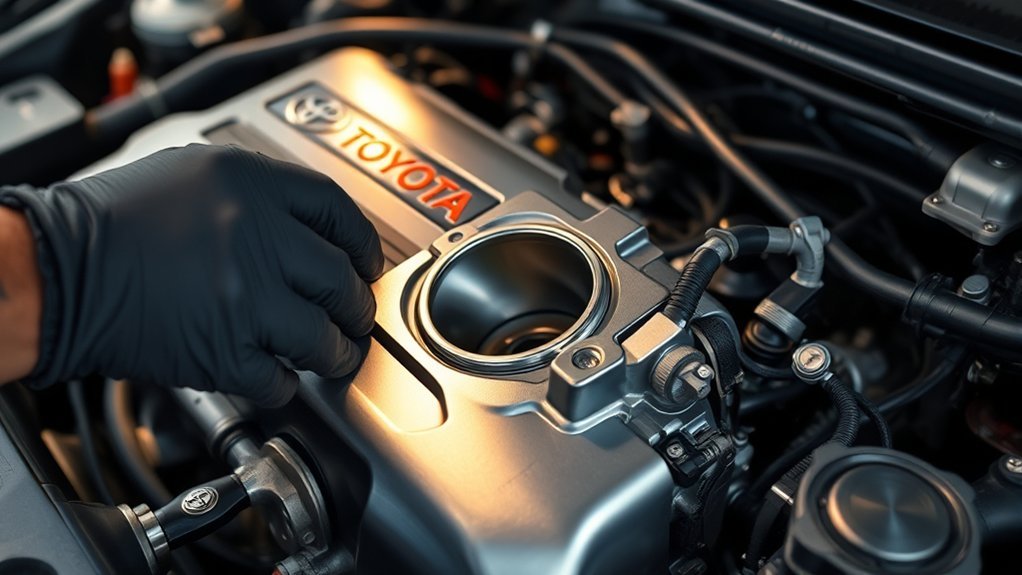
Your Camry’s throttle body controls how much air enters the engine. On models with electronic throttle control, the engine control module commands throttle opening electronically instead of relying only on a mechanical cable.
After a battery disconnect or throttle body cleaning, previously learned idle corrections may no longer match the current airflow. You may notice low idle, rough idle, stalling at stops, or RPM hunting while the ECM readapts. These symptoms should improve, not become more severe, during normal warm-up and driving.
A relearn is an adaptation step, not a repair. It will not fix a failed throttle body, accelerator-pedal sensor fault, vacuum leak, weak battery, loose intake hose, or mass airflow sensor problem. If warning lights are on, scan the vehicle before assuming it only needs a relearn. If you didn’t service the throttle body at all and only disconnected the battery, the Camry idle relearn after battery disconnect guide covers that scenario in more depth, including which engines can require a scan-tool reset.
Warning: If the engine races, the vehicle lurches, the check engine light flashes, or another warning light stays on, stop the relearn attempt and diagnose the problem. Do not idle the vehicle in a closed garage because exhaust gases can build up.
When Does a Toyota Camry Need a Throttle Relearn?
A throttle body or idle relearn is most useful after one of these situations:
- The battery was disconnected, replaced, or fully discharged.
- The throttle body was cleaned and the idle is now too high, too low, or unstable.
- The throttle body, ECM, intake hose, or related sensor was replaced.
- The engine stalls when coming to a stop after recent maintenance.
- The idle feels rough, but there are no active diagnostic trouble codes.
You may not need a relearn if the car starts, idles smoothly, and drives normally after the battery is reconnected. If symptoms begin immediately after battery or throttle-body service, use the controlled checks below before assuming a part has failed.
Note: A throttle relearn is different from an emissions drive cycle. A battery disconnect can also reset OBD-II readiness monitors. The California Bureau of Automotive Repair explains that monitors rerun during normal driving and may require specific operating conditions.
Does a Camry Hybrid Relearn Idle Differently?
A Camry Hybrid can stop and restart its gasoline engine automatically while the vehicle stays in READY mode, so a conventional gasoline-engine idle check does not apply the same way. Normal engine stop/start behavior in READY mode should not be mistaken for a failed relearn. If you drive a Camry Hybrid, use Toyota hybrid-specific service information rather than the gasoline-engine routine on this page for the full procedure.
How Should You Prepare the Camry Before Relearning?
Before you start the throttle body relearn process, prepare the vehicle so the ECM receives steady, clean information.
- Park safely. Choose a level, well-ventilated area. Set the parking brake and keep your foot on the brake when shifting.
- Check battery condition. A weak battery or loose terminal can interrupt learning and cause false symptoms.
- Turn off electrical loads. Switch off the A/C, headlights, rear defroster, heated seats, audio system, and other accessories.
- Inspect the intake path. Make sure the air intake hose is fully seated and the clamps are tight. A loose hose can cause unmetered air and rough idle.
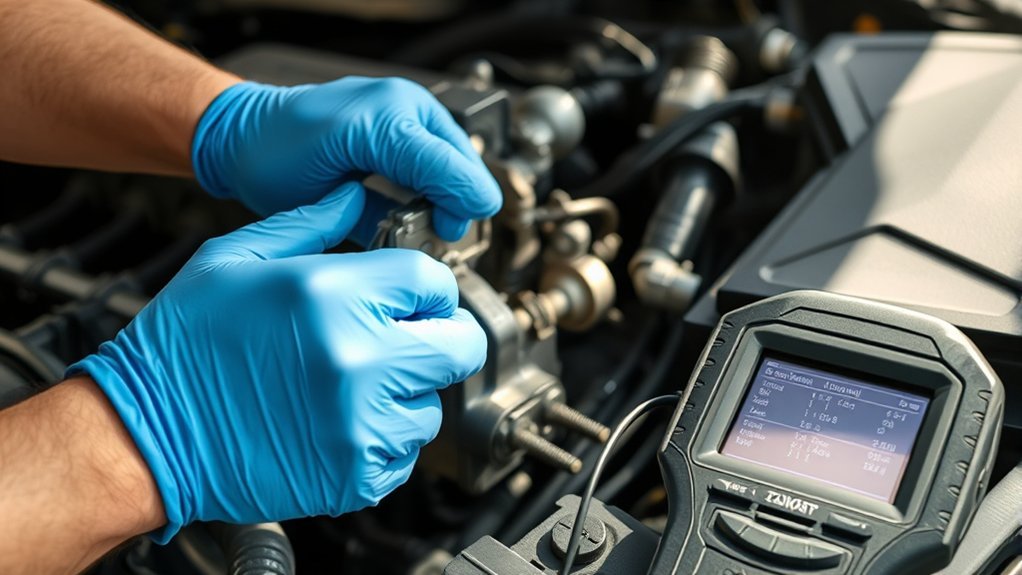
- Scan for codes if possible. Record current, pending, and history codes. Diagnose throttle-actuator, pedal-position, airflow, lean-condition, or misfire codes before doing a relearn. If you don’t own a scanner, the OBD-II basics guide explains what these tools do and how to read the codes.
- Do not press the accelerator unless instructed. Random pedal timing can interfere with a clean idle learn on many electronic throttle systems.
Pro Tip: If the problem began right after throttle body cleaning, recheck every hose, connector, and clamp you touched. A small intake leak can feel like a failed relearn.
How Do You Relearn a Toyota Camry Throttle Body?
The Toyota Technical Information System is Toyota’s service-information source for North American vehicles. Because Camry procedures vary by model year, engine, and repair performed, use the steps below as a conservative idle-stabilization routine after a battery disconnect or throttle body cleaning. After replacing the throttle body or ECM, follow the exact Toyota repair procedure or use a Toyota-capable scan tool. Some newer Toyota engines also require a Techstream-based Learning Value Reset that idling or driving alone does not complete.
- Park and prepare the vehicle. Put the transmission in Park, set the parking brake, and work in a well-ventilated area.
- Confirm the intake is assembled. Check the air duct, clamps, electrical connectors, air-filter housing, and any vacuum hoses disturbed during service.
- Start the engine without touching the accelerator. Keep the A/C, headlights, rear defroster, audio system, and other electrical loads off.
- Let the engine warm fully. Allow it to reach normal operating temperature while the ECM controls the idle on its own. Toyota Tech Tip T-TT-0362-15 specifies idling for at least 3 minutes after full operating temperature is reached, following any throttle body cleaning.
- Wait for the idle to stabilize. Do not blip the throttle or hold the engine at a fixed RPM. Continue only if the idle becomes steady and no warning light appears.
- Check normal accessory load. After the idle is stable, switch the A/C or headlights on one at a time and confirm that the engine does not stall or surge badly. This is a verification check, not a universal calibration command.
- Take a gentle verification drive. Use light acceleration, a steady cruise, and several complete stops. Avoid hard acceleration until the idle and throttle response feel normal.
- Recheck the idle. Park safely and let the engine idle again. A steady idle, normal shift engagement, and no warning lights indicate that adaptation is progressing normally.
If the throttle body or ECM was replaced, or the idle remains unstable after this routine, use model-specific Toyota service information. Toyota’s public manuals portal provides owner documents, while TIS provides repair manuals, service bulletins, wiring diagrams, and diagnostic information.
Do not use a pedal-timing sequence unless it appears in Toyota service information for your exact Camry year and engine. A procedure copied from another Toyota model may not apply.
[Products Worth Considering]

【PRODUCT INFORMATION】: Inner Diameter 65 mm, Outer Diameter 76.82 mm, 6-pin. Replacement for S20140, 22030-0V010, 22030-36010, TBT004, 67-8015, TB1105

Note: Please check your vehicle's engine displacement before purchasing—this product is only compatible with 2.4L engines.

[Vehicle Fitment]: Compatible with Lexus ES250 2022-2023 L4 2.5L, NX250 2022-2023 L4 2.5L, NX350h 2022 L4 2.5L, NX450h+ 2022-2023 L4 2.5L; Compatible with Toyota Avalon 2021 L4 2.5L, Camry 2018-2023 L4 2.5L, RAV4 2019-2023 L4 2.5L
Why Does a Camry Idle Roughly After the Battery Is Disconnected?
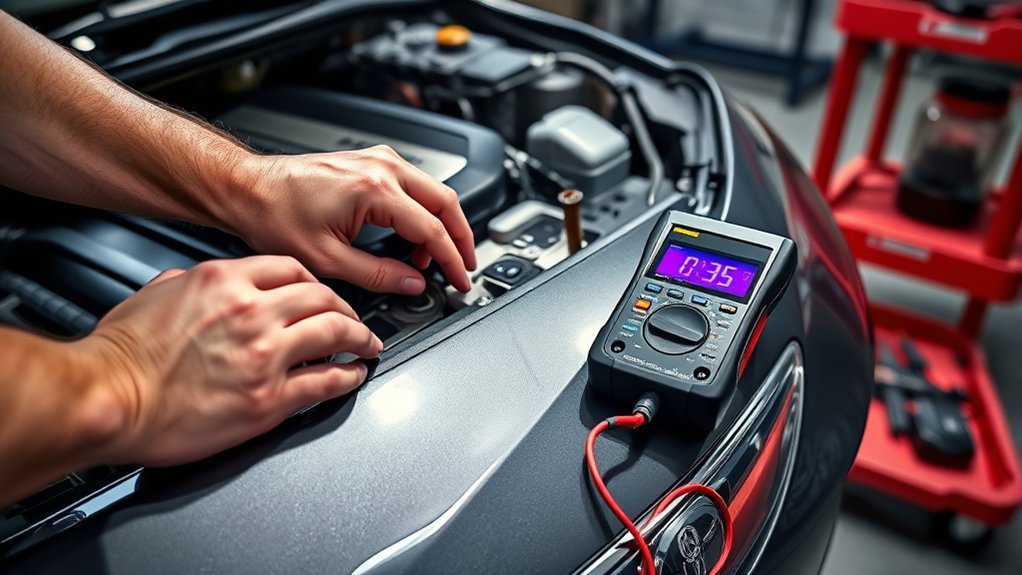
After disconnecting the battery, you might notice common symptoms like rough idling, sluggish acceleration, or stalling when stopping. These symptoms often improve after the ECM relearns idle control, but they can also point to a dirty throttle body, air leak, sensor fault, or low battery voltage. If the battery was the only thing disturbed, the Camry idle relearn after battery disconnect guide walks through that scenario specifically.
Which Symptoms Need a Relearn, and Which Need Diagnosis?
Watch for these symptoms during the first few starts after a battery disconnect or throttle body service:
- Idle speed drops too low when the vehicle is stopped.
- The engine stalls when shifting into Drive or Reverse.
- RPM rises and falls while the car is parked.
- Acceleration feels delayed or uneven.
- The check engine light, slip indicator, or other warning light appears.
- An OBD-II scanner shows throttle, airflow, or idle-related codes.
| What you notice | Best next step |
|---|---|
| Low or rough idle began after a battery disconnect or cleaning, with no active codes | Complete the warm-up, stable-idle, and gentle-drive routine once, then reassess. |
| High idle does not settle | Inspect the intake duct, clamps, vacuum hoses, throttle plate, and airflow-sensor connections. |
| Engine stalls in Drive or Reverse | Scan for codes and check battery and charging-system health before repeating the relearn. See the Camry stalling at stops guide for a full breakdown. |
| Flashing check engine light, severe surging, or unsafe throttle response | Stop driving and arrange diagnosis or towing as needed. |
A brief idle change can be normal during relearning. Repeated stalling, a high idle that will not settle, or a warning light should be treated as a diagnostic problem, not just a relearn problem. Toyota’s owner guidance for warning lights generally recommends having the vehicle inspected if a warning light continues to appear. If idle stays rough well after warm-up and a drive, the Camry rough idle causes & fixes guide covers the next diagnostic steps.
What Improvement Should You Expect?
After the ECM adapts to the current airflow, the improvement should be practical and easy to observe. The engine should idle steadily, accept normal accessory loads, and transition smoothly into light acceleration. A relearn should not be used to explain persistent warning lights or severe drivability problems.
A successful relearn can help with:
- More stable idle speed at stops.
- Smoother transition from idle to light acceleration.
- Less stalling after recent maintenance.
- Better response when the A/C or electrical loads are switched on.
How Should You Clean an Electronic Throttle Body Safely?
If the idle relearn does not work and the throttle body is dirty, cleaning may help. Toyota Tech Tip T-TT-0362-15 recommends spraying a throttle-plate cleaner onto a rag rather than into the throttle body, and warns that spraying cleaner directly into the bore can carry contamination through the throttle shaft and damage the throttle motor or position sensor. Use light pressure and remove the intake duct as needed, but avoid soaking electrical connectors.
- Turn the engine off and remove the key.
- Disconnect the negative battery cable only if your repair procedure calls for it.
- Remove the air intake hose from the throttle body.
- Spray cleaner on a cloth, not heavily into the throttle body.
- Wipe carbon from the throttle bore and the edge of the throttle plate.
- Do not force an electronic throttle plate open against resistance unless the service procedure allows it.
- Reinstall the intake hose securely and tighten all clamps.
- Perform the idle relearn after the cleaner has evaporated and the intake is fully assembled. Idle the fully warmed engine for at least 3 minutes, per Toyota Tech Tip T-TT-0362-15.
Warning: Never place fingers inside the throttle bore with the ignition on. An electronic throttle plate can move unexpectedly and may cause injury or damage.
How Do You Check Whether the Relearn Worked?
After the relearn, monitor the Camry for a few short trips. The ECM may continue fine-tuning idle and fuel trim during normal driving.
- Idle stability: Let the engine idle in Park after the test drive. The idle should be steady without repeated surging or near-stalling.
- Shift engagement: With your foot on the brake, shift from Park to Drive and Reverse. A small RPM change is normal, but the engine should not stall.
- Acceleration response: Light throttle should feel smooth and predictable. Hesitation may point to airflow, fuel, ignition, or sensor issues.
- Warning lights: If the check engine light comes on, scan for codes before repeating the relearn.
- Readiness monitors: If you need an emissions test, use an OBD-II scanner to confirm monitor status after several drive cycles.
If the idle improves but still feels slightly unstable, drive the vehicle normally for another day or two. If it does not improve, continue troubleshooting rather than repeating the same relearn over and over.
[Products Worth Considering]

[SAVE MONEY ON BRAKE & MAINTENANCE REPAIRS - 10 SERVICE FUNCTIONS + FREE LIFETIME SOFTWARE UPDATES] Perform common maintenance at home with XTOOL D5 OBD2 scanner and reset tool. Complete EPB service, ABS bleeding, throttle body relearn, Oil Reset, TPMS Reset, BMS Reset, SAS Reset, Injector Coding and more. Use XTOOL D5 obd2 scanner with relearn to put electronic parking brakes into service mode, bleed ABS after brake repairs, relearn the throttle after replacement, reset maintenance lights, and perform battery-related service without unnecessary shop visits. Functions vary by vehicle make, model, year, and ECU. Send us your VIN before purchase for a free compatibility check

【Great Ideal For Every Car Owner】Prefect choice for your father, husband, brother or boyfriend. EVERY CAR OWNER WILL NEED IT! Also, the lifetime update is provided for more vehicle coverage, bug fixes. SAVE AT LEAST $1000+ PER YEAR!Get LAUNCH CRP123 V3.0 car diagnostic scanner and give your lover a surprise!*R each us to Get the Extra Gifts :Protective Case Storage Bag.
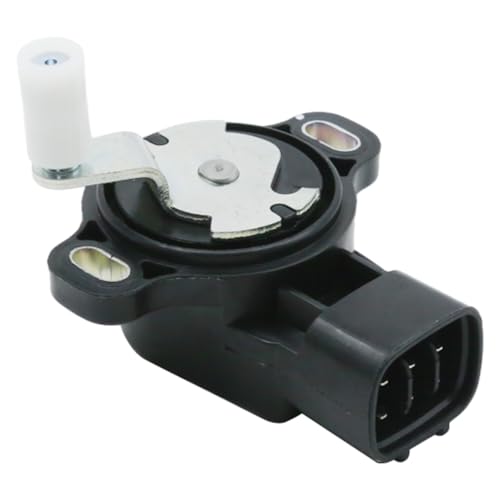
Replaces Part Number: 89281-33010, 8928133010
What to Do If the Throttle Relearn Procedure Doesn’t Work?
If the throttle relearn procedure does not restore normal idle, work through the likely causes in order. This prevents replacing a good throttle body when the real problem is a loose hose, weak battery, dirty sensor, or stored fault code.
Check for Diagnostic Trouble Codes
Use an OBD-II scanner to look for current, pending, and history codes. Throttle-related codes, mass airflow sensor codes, lean mixture codes, and misfire codes can all affect idle. Clear codes only after recording them, because they are clues that can guide diagnosis.
Inspect the Intake and Vacuum System
Look for cracked intake boots, loose clamps, disconnected vacuum hoses, a loose oil cap, or a poorly seated air filter box. Any air entering the engine after the mass airflow sensor can cause unstable idle.
Verify Battery and Charging System Health
A low battery, corroded terminal, or weak charging system can create unstable electronic throttle behavior. Make sure the battery terminals are clean and tight. If the battery has recently gone dead, charge and test it before continuing.
Clean or Check the Mass Airflow Sensor
A dirty mass airflow sensor can misreport incoming air and cause rough idle. Use only MAF-sensor-safe cleaner and do not touch the sensor wires. Let it dry fully before reinstalling.
Consider a Scan-Tool Relearn or Professional Diagnosis
If the throttle body or ECM was replaced, or the Camry still stalls after cleaning and basic relearning, a Toyota-capable scan tool may be needed. Use the Toyota Technical Information System for the repair manual, wiring diagram, service bulletin, and diagnostic steps that match the exact model year and engine.
Common Mistakes to Avoid
- Using random pedal-timing steps: A procedure that works on one vehicle may not apply to your Camry year or engine.
- Skipping code checks: A relearn will not fix a failed throttle actuator, sensor circuit, or vacuum leak.
- Touching the accelerator during idle learn: This can interrupt the ECM’s ability to settle the idle.
- Cleaning too aggressively: Excess cleaner or forced movement can damage electronic throttle components.
- Ignoring a weak battery: Voltage problems can cause confusing symptoms and failed relearn attempts.
- Forgetting emissions readiness: Battery disconnects can reset OBD readiness monitors even if the car runs well.
Frequently Asked Questions
How do you let the ECU relearn a new Toyota Camry throttle body?
After installing a new throttle body, verify every connector and intake hose, scan for codes, and follow the Toyota repair procedure for the exact model year and engine. A basic warm-up and idle-stabilization routine may help after cleaning or battery service, but replacement can require a Toyota-capable scan-tool initialization.
How do you relearn a throttle body position sensor?
On many Camry models, throttle-position sensing is built into the electronic throttle body. Do not adjust or replace it based on a generic reset sequence. Record the codes, verify the wiring and connectors, and use the model-specific Toyota diagnostic procedure.
Should I press the accelerator pedal during a Camry throttle relearn?
For the conservative idle-stabilization routine in this guide, no. Start and warm the engine with your foot off the accelerator. Use a pedal-timing sequence only when Toyota service information lists it for your exact Camry year and engine.
How long does a Toyota Camry idle relearn take?
No single fixed relearn time applies to every Camry. Toyota Tech Tip T-TT-0362-15 specifies idling for at least 3 minutes after full operating temperature following throttle body cleaning. Beyond that, allow enough time for a full warm-up, a stable idle period, and a short verification drive. The ECM may continue adapting during later trips.
Do I need a scan tool for a Toyota Camry throttle relearn?
Not always. A scan tool may be unnecessary after a simple battery disconnect if the engine has no codes and the idle stabilizes normally. Use a Toyota-capable scan tool when the throttle body or ECM was replaced, codes remain, or the engine keeps stalling or surging.
Will disconnecting the battery reset the throttle body?
Disconnecting the battery can erase adaptive values and reset OBD-II readiness monitors, but it does not repair a dirty or failed throttle body, an intake leak, weak voltage, or a sensor fault. Repeated battery resets can also erase useful diagnostic information.
Can I drive my Camry while it is relearning idle?
Yes, when the vehicle is safe to drive and no serious warning light is present. Use gentle acceleration and several complete stops. Do not drive if the engine stalls repeatedly, surges badly, responds unpredictably, or the check engine light flashes.
Is the Idle Relearn the Same for a Camry Hybrid?
No. A Camry Hybrid can stop and restart its gasoline engine automatically while the vehicle stays in READY mode, so a conventional gasoline-engine idle check does not apply the same way. Use Toyota hybrid-specific service information rather than the gasoline-engine routine on this page.
What If I Only Disconnected the Battery and Didn’t Touch the Throttle Body?
This guide focuses on relearns tied to throttle body service. If your only work was a battery disconnect or replacement, the Camry idle relearn after battery disconnect guide walks through that scenario, including which engines may need a scan-tool Learning Value Reset.
Conclusion
For a Toyota Camry throttle body relearn, begin with a charged battery, a sealed intake path, and a code scan. Start the engine without pedal input, let it warm and stabilize — idling at least 3 minutes after cleaning, per Toyota Tech Tip T-TT-0362-15 — then complete a gentle verification drive. If the engine still stalls, surges, or sets a warning light, stop repeating the routine and diagnose the battery, intake system, sensors, wiring, and throttle body with model-specific Toyota service information.
Sources
- Toyota Manuals and Warranties: official access point for Toyota owner documents and model-specific vehicle guidance.
- Toyota Technical Information System: Toyota’s service-information source for North American vehicles, including repair manuals, service bulletins, wiring diagrams, and diagnostics.
- Toyota Tech Tip T-TT-0362-15: Hard Start or Poor Idle after 12 Volt Power Interruption: Toyota’s documented condition, cause, and repair steps for 2002–2012 Camry and other electronic-throttle-control models, including the 3-minute post-cleaning idle instruction.
- California Bureau of Automotive Repair: On-Board Diagnostic Test Reference: explains readiness monitors and why they must rerun after battery disconnection or emissions-related repairs.
- NHTSA: Technical Assessment of Toyota Electronic Throttle Control Systems: official background on Toyota electronic throttle control systems and safety analysis.