
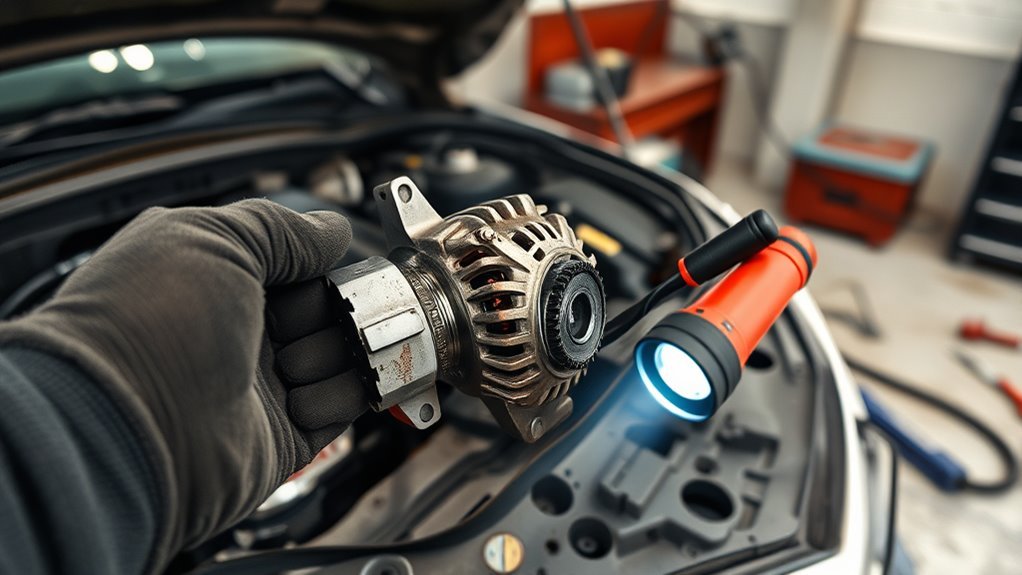
On a non-hybrid Toyota Camry, the strongest alternator-failure clues are a charging-system warning light that stays on, lights that pulse with engine speed, weak accessories, repeated battery discharge after driving, and whining or grinding near the belt drive. A dead battery by itself does not prove the alternator is bad. Check the battery’s condition, cable connections, drive belt, running voltage, loaded voltage, and AC ripple before replacing parts. Camry Hybrid models use a different 12-volt charging path, so do not apply this belt-driven alternator test to them.
Last updated: July 31, 2026. Cost data and U.S. Camry hybrid coverage were rechecked against current sources.
Quick Answer
On a non-hybrid Camry, suspect a charging fault when the battery/charging light stays on, lights pulse with engine speed, accessories weaken, alternator-area noise appears, or the battery dies again after driving. Compare engine-off, running, and loaded voltage; then inspect the belt, terminals, grounds, and AC ripple. Treat 13.8–14.4 volts only as a common screening range for many conventional systems, not a universal Camry specification.
Key Takeaways
- A dead battery alone does not prove the alternator is bad; test the battery and charging system together.
- Many conventional systems charge in the high-13- to mid-14-volt range, but temperature, battery state, electrical load, and control strategy can change the reading. Use service data for your exact year and engine.
- A loose belt, corroded terminal, weak ground, bad battery, damaged cable, or blown charging fuse or fusible link can mimic alternator failure.
- Camry Hybrid models do not use the same belt-driven alternator diagnosis. The 2025 and 2026 U.S. Camry lineups are hybrid-only, so use hybrid-specific service information and avoid orange high-voltage components.
At a Glance
| Time Required | 15–30 minutes for basic driveway checks |
| Difficulty | Easy to moderate; stop if wiring, belt access, or hybrid components are involved |
| Tools Needed | Digital multimeter, flashlight, gloves, eye protection, and a battery-terminal cleaning tool for battery and cable checks |
| Cost | Basic testing costs little if you own a meter. RepairPal listed a U.S. average of $564–$832 for Camry alternator replacement on June 18, 2026; year, engine, location, taxes, and related repairs can change the quote |
Fast Diagnostic Map: What Do the Results Mean?
Use the pattern below as a screening guide. It narrows the next test, but it does not replace year-specific Toyota service data or a battery load test.
| What you observe | Most useful interpretation | Next check |
|---|---|---|
| Engine-off battery is low before testing | The battery is discharged, so the running-voltage result may be misleading | Charge and load-test the battery first |
| Running voltage stays near the engine-off reading or keeps falling | The vehicle may be operating mainly from battery reserve | Inspect belt drive, charging fuse/fusible link, cables, grounds, and alternator output |
| Voltage rises while running but collapses under lights, blower, and defogger load | Output may be weak, the belt may slip, or cable resistance may be excessive | Repeat the loaded test and request cable voltage-drop testing |
| Charging voltage looks normal, but the battery dies after the car sits | Battery condition or parasitic draw is more likely than an alternator that simply undercharges | Load-test the battery and follow a Camry battery-drain diagnosis |
| AC ripple reaches the 0.30–0.50-volt fault range | A rectifier diode, stator winding, or ground fault may be disturbing DC output | Confirm grounds and have the alternator tested professionally |
| Camry Hybrid or 2025–2026 U.S. Camry | The conventional belt-driven alternator path does not apply | Use the owner’s manual and hybrid-specific 12-volt charging diagnosis |
Quick Checklist: Is My Camry’s Alternator Failing?
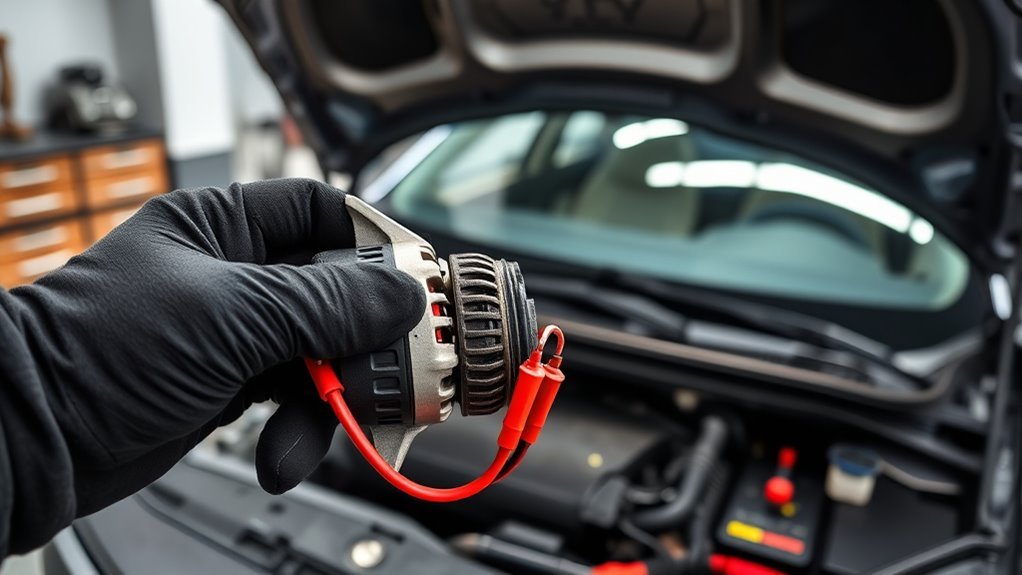
Use this quick checklist before buying an alternator:
- Battery or charging-system light: If it stays on while driving, treat it as a real warning. Toyota identifies it as a charging-system malfunction; follow the message and owner’s-manual instructions for your exact Camry.
- Dim or flickering headlights: Lights that pulse, dim, or brighten with engine speed can point to unstable charging voltage.
- Slow accessories: Weak blower speed, slow power windows, dim dashboard lights, or unstable infotainment power can show the electrical system is not being supported well.
- Repeated dead battery: A battery that dies again after being fully charged may not be receiving enough charge, but the battery itself must still be tested.
- Whining, grinding, or growling: Noise from the alternator area can mean worn bearings, pulley trouble, or internal alternator damage.
- Belt problems: A loose, cracked, glazed, contaminated, or slipping serpentine belt can reduce alternator output even if the alternator is still good.
Warning: Never pull a battery cable off while the engine is running to “test” the alternator. On modern vehicles, that old shortcut can cause voltage spikes and damage electronics. Keep hands, hair, jewelry, and test leads away from moving belts and fans.
Gas vs Hybrid Camry: Check This Before You Test
This guide mainly applies to non-hybrid Toyota Camry models with a conventional belt-driven alternator. A Camry Hybrid supports its 12-volt electrical system through the hybrid power-control hardware rather than the same belt-driven alternator used on a gasoline-only Camry. Toyota made the 2025 U.S. Camry exclusively hybrid, and Toyota describes the 2026 U.S. Camry as all-hybrid.
Hybrid safety: Toyota warns that Camry Hybrid models contain high-voltage DC and AC systems in addition to the 12-volt system. Do not touch, disconnect, disassemble, or replace orange high-voltage cables or connectors. For a hybrid charging warning, use the exact owner’s manual and a Toyota dealer or qualified hybrid technician.
How Do You Know If a Toyota Camry Alternator Is Failing?
If your gas Camry’s alternator is failing, the first symptoms often show up as electrical problems, not engine problems. Watch for these five signs:
- Battery or charging-system warning light: A battery-shaped light or charging warning while driving can mean the alternator is not keeping up, the belt is slipping, or the charging circuit has a fault.
- Dim, flickering, or pulsing lights: Headlights, dash lights, and interior lights may fade at idle and brighten when you rev the engine.
- Weak electrical accessories: Heated seats, blower motor, phone charging, windows, and infotainment may act slow or unstable under normal driving.
- Frequent dead battery or hard starts: The battery may test low after driving because it is not being recharged, but a weak battery can also make a good alternator look bad.
- Whining, grinding, or belt noise: A bad alternator bearing, pulley, slipping belt, or internal electrical fault can create noise that changes with engine speed.
A weak alternator can cause dim lights, repeated jump starts, electrical power loss, and eventually stalling. Test the whole starting and charging system before replacing parts.
Bad Alternator vs Bad Battery vs Starter
A Camry that will not start is not always an alternator problem. Use the pattern of symptoms to narrow it down:
| Problem | Common signs | Best next check |
|---|---|---|
| Weak battery | Slow crank, clicking, starts after a jump, low resting voltage | Charge and load-test the battery first |
| Bad alternator or charging fault | Battery light while driving, lights dim under load, battery dies again after driving | Test charging voltage, belt, wiring, and ripple |
| Starter problem | Single click or no crank even with a strong battery | Test starter current draw and starter circuit voltage drop |
| Bad connection or ground | Intermittent no-start, corrosion, random electrical dropouts | Clean/tighten terminals and test voltage drop |
How Do You Test a Toyota Camry Alternator at Home?
These checks can help you decide whether the problem is likely the alternator, the battery, the belt, or the wiring. Work on a cool engine when possible, park on level ground, set the parking brake, and keep loose clothing away from moving parts.
[Products Worth Considering]

This A-Premium serpentine belt is engineered for select Toyota, Scion, and Pontiac vehicles with the L4 2.4L gas engine, delivering dependable air conditioning drive performance. Made with durable EPDM and precision dimensions, it helps resist cracking, reduce noise, and maintain stable tension for smooth operation. It's designed for straightforward installation and backed by a one-year unlimited-mileage guarantee for added confidence.
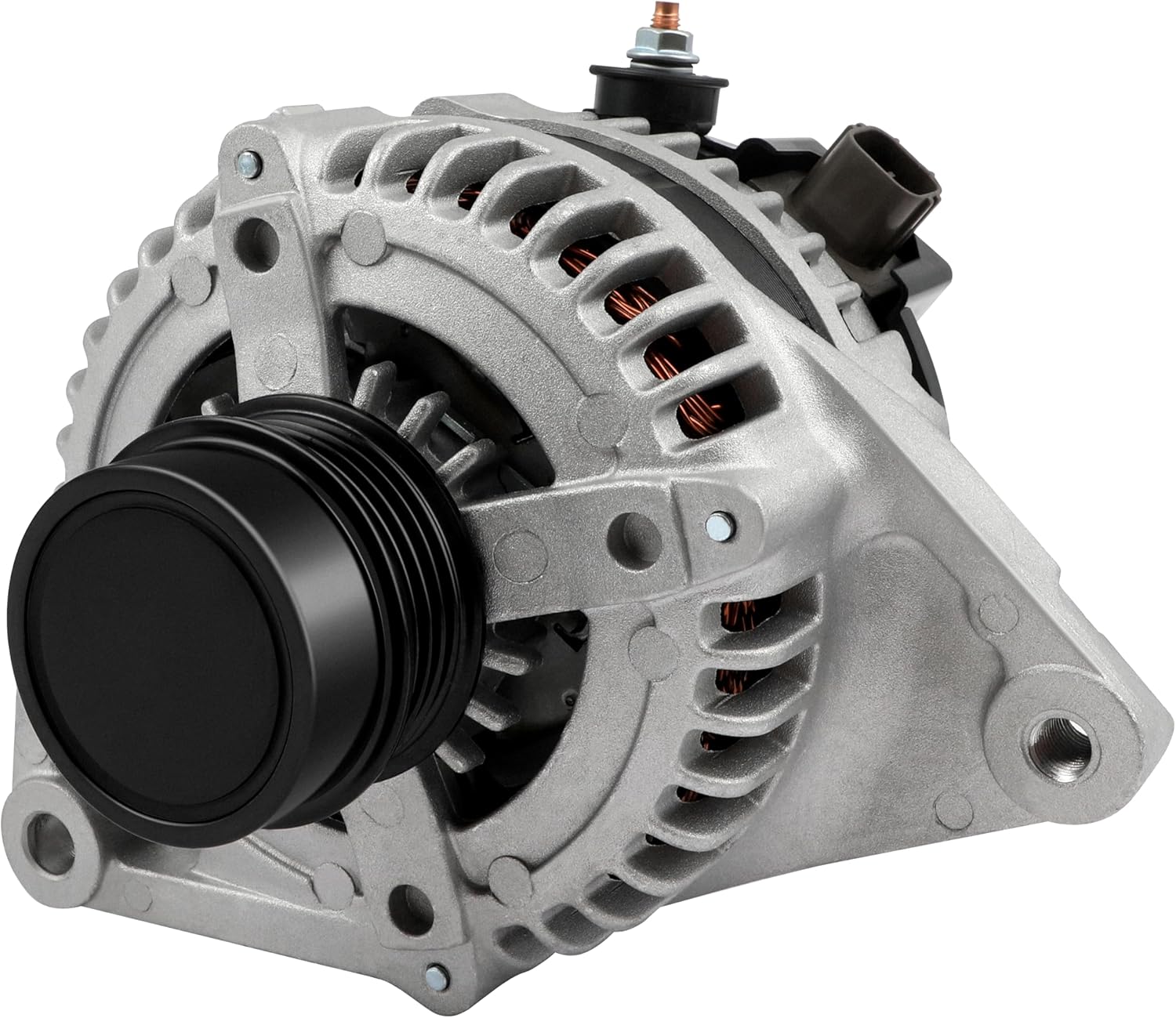
This high output alternator is designed to fit select Toyota, Scion, and RAV4 2.5L applications, delivering reliable charging performance for everyday driving. Built with a 12-volt, 100-amp design and precision-engineered components, it helps support battery recharge, stable electrical output, and consistent operation when your vehicle shows signs of charging issues.

This A-Premium serpentine belt drive kit is designed for compatible Toyota Camry, RAV4, and Scion tC models with a DOHC 2.5L L4 engine. It includes a serpentine belt and belt tensioner to help maintain smooth engine operation, reduce noise, and support reliable power transfer. Built for dependable replacement performance, it also comes with a one-year unlimited-mileage guarantee for added peace of mind.
Step 1: Check Battery Voltage With the Engine Off
Set a digital multimeter to DC volts. Touch red to the positive battery post and black to the negative post. A fully charged, rested 12-volt battery commonly reads about 12.6 volts or higher. A reading below that does not automatically mean the battery has failed, but it does mean you should charge and load-test it before judging alternator output.
Step 2: Check Charging Voltage With the Engine Running
Start the engine and measure again at the battery posts or the approved under-hood jump points. Many conventional systems rise into roughly the high-13- to mid-14-volt range while charging, but the exact value changes with temperature, battery state, load, and vehicle strategy. The key screening clue is whether voltage rises above the rested reading and remains stable. If it stays near the engine-off value and continues falling, the battery may be supporting the car without enough charging-system output.
Step 3: Add Electrical Load
Turn on the high beams, rear defogger, and blower motor. Bring the engine to about 1,800–2,000 rpm only if the vehicle is secure and you can do so safely. Voltage may dip as the load is applied, but it should stabilize rather than keep falling. A sustained drop points to weak output, belt slip, poor grounds, an open charging circuit, or high resistance in the cables.
Step 4: Check AC Ripple
Set the multimeter to AC volts and measure across the battery posts with the engine running; this avoids reaching toward the alternator’s exposed output terminal and moving belt. Fluke classifies 0.30–0.50 volts AC or more as a fault range that can indicate a failed rectifier diode or stator problem. Meter design affects low-level AC readings, so confirm an abnormal result with a professional tester or oscilloscope before replacing the alternator.
Step 5: Inspect the Belt and Listen for Noise
With the engine off, inspect the serpentine belt for cracks, glazing, fraying, oil contamination, or looseness. With the engine running, listen from a safe distance for whining, grinding, chirping, or growling near the alternator. Noise that changes with rpm can point to a pulley, bearing, belt, or alternator issue.
Pro Tip: Write down each voltage reading: engine off, idle, and loaded at higher rpm. A shop can use those numbers to confirm whether you are dealing with a weak alternator, bad battery, belt slip, or wiring resistance.
Can You Drive a Camry With a Bad Alternator?
If the battery/charging warning appears while driving, reduce nonessential electrical loads and move to a safe location. Do not assume a short trip is harmless because the remaining battery reserve is unpredictable. Follow any stop-vehicle message in the owner’s manual. Arrange a tow when the warning is paired with fading lights, multiple warning messages, stalling, heavy electrical loss, a burning smell, severe belt noise, overheating, smoke, or repeated shutdowns.
Do not keep driving a Camry that is losing electrical power. Once the battery reserve is depleted, the engine can stall and may not restart with a jump if the alternator is no longer charging.
Repair vs Replace: How to Decide for Your Camry Alternator

Decide with test results, not mileage alone. Alternator life varies with heat, belt condition, bearing wear, electrical load, contamination, and cable resistance. If testing confirms low output, excessive ripple, regulator failure, or bearing damage, replacing the complete unit is usually more dependable than repeatedly addressing isolated symptoms.
| Situation | Better choice | Why |
|---|---|---|
| Loose or corroded battery terminals | Repair connection first | A poor connection can mimic alternator failure |
| Cracked or slipping serpentine belt | Replace belt/tensioner as needed | The alternator cannot charge correctly if it is not being driven properly |
| High AC ripple, low output, or bad regulator confirmed | Replace alternator | Internal electrical faults usually justify replacement |
| Grinding or growling bearing noise | Replace alternator or pulley assembly | Bearing failure can leave you stranded |
| Older unit with several symptoms | Replace with warranty-backed part | A new or quality remanufactured unit is usually more dependable than repeated repairs |
[Products Worth Considering]

This A-Premium serpentine belt is designed to deliver dependable drive performance for compatible Toyota and Scion vehicles with exact-fit sizing for smooth operation. Built with premium EPDM and polyester cord construction, it helps resist cracking, reduce noise, and maintain stable tension in demanding engine conditions. It is a practical replacement choice for restoring reliable accessory drive performance and long-term confidence.

The TOPDON BT100 helps you quickly check the health and charge status of 12V lead-acid batteries with clear analytical results, including state of health, state of charge, voltage, and cranking performance. It supports a wide range of battery types and vehicles, making it a practical tool for diagnosing starting and charging issues at home or in the shop. Compact and easy to use, it provides fast, reliable testing without needing to charge the device first.

This automotive test light combines a bright LED voltage display with quick polarity indication for fast, accurate circuit checks in a wide range of vehicle systems. It helps diagnose battery, charging, lighting, and fuse issues with a sharp stainless probe, long spring wire, and easy-to-use alligator clip for efficient troubleshooting.
How Much Does a Toyota Camry Alternator Replacement Cost?
As of June 18, 2026, RepairPal estimated $564–$832 for an average U.S. Toyota Camry alternator replacement, before taxes, fees, location adjustments, and related repairs. Model year, engine, drivetrain, labor rate, and the choice of new, remanufactured, aftermarket, or Toyota Genuine parts can move the quote. A battery, belt, tensioner, charging fuse, cable, or ground repair may add cost.
A shop should not replace the alternator based on symptoms alone. Ask for a full starting-and-charging-system test that includes:
- Battery state-of-charge and load test
- Charging voltage at idle and under load
- AC ripple or diode test
- Belt, pulley, and tensioner inspection
- Battery terminal, ground, and charging-cable voltage-drop check
- Scan for current, pending, and history diagnostic trouble codes, including system-voltage or charging-related codes that apply to the exact model year
Also ask whether the quote includes a new, remanufactured, aftermarket, or Toyota Genuine alternator. Get the part and labor warranty in writing, including any mileage limit, exclusions, core charge, and roadside-labor coverage.
[Products Worth Considering]

This battery terminal cleaning and repair kit helps restore worn or damaged top-post battery connections for cars, RVs, boats, and other vehicles. It includes lead shims for improving fit, stainless steel brushes for removing corrosion and debris, and fiber washers to help reduce future buildup and maintain a reliable electrical connection.

The Fluke 15B+ Digital Multimeter is a rugged, easy-to-use tool designed for accurate electrical troubleshooting in residential, commercial, automotive, and equipment applications. It measures AC/DC voltage and current, resistance, continuity, diode, and capacitance, helping you diagnose problems quickly and confidently. With a safety-focused design and one-handed operation, it is built for dependable everyday use.

The KONNWEI KW371 is a versatile 2-in-1 diagnostic tool that tests automotive batteries and 4/5-pin relays with fast, accurate results. It supports 6V, 12V, and 24V systems across multiple battery types, and also checks cranking and charging performance to help pinpoint battery, starter, or alternator issues. Built for mechanics and DIY users, it offers clear visual readouts, multiple language support, and convenient vehicle-powered operation with no batteries required.
How to Prevent Repeat Charging Problems
After the repair, a few habits can reduce repeat charging issues:
- Have the battery tested when it is several years old or after repeated jump starts.
- Keep battery terminals clean, tight, and free of corrosion.
- Inspect the serpentine belt during oil changes.
- Do not ignore a chirping belt, burning rubber smell, or flickering lights.
- Avoid leaving accessories on with the engine off for long periods.
- If you added amplifiers, lights, or other high-draw accessories, make sure the charging system is sized for the extra load.
Frequently Asked Questions
How do I know if the alternator is bad on a Toyota Camry?
Common signs include a battery or charging-system warning light, dim or pulsing headlights, weak accessories, whining or grinding from the alternator area, repeated dead batteries, and voltage that stays near 12.6 volts or keeps dropping while the engine runs. Confirm with battery, belt, charging-voltage, ripple, and wiring checks.
How long does an alternator last in a Toyota Camry?
There is no fixed replacement interval that applies to every Camry. Heat, belt condition, corrosion, bearing wear, driving conditions, and added electrical load all affect service life. Replace the unit when testing confirms weak output, excessive ripple, regulator failure, or mechanical damage.
What voltage should a Camry alternator show?
Many conventional non-hybrid systems operate in roughly the high-13- to mid-14-volt range while charging, but there is no single correct number for every Camry. Compare the rested, idle, loaded, and higher-rpm readings with service data for the exact year and engine. A reading that remains near engine-off voltage and keeps falling is a stronger undercharging clue than one isolated number.
Can a bad battery look like a bad alternator?
Yes. A weak or sulfated battery can pull voltage down and make a healthy alternator appear weak. Always charge and load-test the battery before condemning the alternator, especially if the only symptom is slow cranking or a dead battery after the car sits.
Can I drive my Camry with a bad alternator?
Do not count on a specific driving distance because battery reserve and electrical load vary. Reduce nonessential loads, move to a safe place, and follow the owner’s-manual warning. Tow the car if lights fade, warnings multiply, severe belt noise or burning odor appears, the engine stalls, or electrical power drops quickly.
Does a Camry Hybrid have the same alternator?
No. A Camry Hybrid supports its 12-volt system through hybrid power-control hardware instead of the same conventional belt-driven alternator used on a gasoline-only Camry. Do not touch orange high-voltage cables or connectors. Use the model-specific owner’s manual and a qualified hybrid technician for charging warnings.
Conclusion
If a non-hybrid Camry has dim or pulsing lights, a charging warning, weak accessories, repeated battery discharge, or alternator-area noise, start with evidence: charge and load-test the battery, compare engine-off and running voltage, add electrical load, check AC ripple at the battery, and inspect the belt, terminals, cables, and grounds. Replace the alternator only after the fault is confirmed. For any Camry Hybrid, including every 2025 and 2026 U.S. Camry, avoid orange high-voltage components and use hybrid-specific diagnosis.
Sources
- Toyota Owners — Warning Lights — charging-system warning-light meaning and owner-manual direction
- Toyota Owners — 2025 Camry Hybrid High-Voltage Precautions — hybrid high-voltage safety warning
- Toyota USA Newsroom — 2025 Camry Goes Exclusively Hybrid — 2025 U.S. powertrain context
- Toyota — 2026 Camry — current U.S. all-hybrid Camry lineup
- Interstate Batteries — Battery Voltage FAQ — rested and engine-running voltage screening ranges
- Fluke — How to Test Alternator Ripple Voltage — battery-post ripple procedure and fault-range context
- RepairPal — Toyota Camry Alternator Replacement Cost — June 18, 2026 U.S. estimate and year-specific ranges
- CarParts.com — ASE-Reviewed Alternator Testing Guide — multimeter, load-testing, and modern-system cautions




[…] gasoline-only Camry shows a charging warning or repeatedly loses charge after driving, review these Toyota Camry alternator warning signs. Hybrid owners should ask for a test of the hybrid 12-volt charging system rather than assuming the […]
[…] Start with symptoms, then verify the cause. A dead battery by itself does not prove the alternator is bad. Battery condition, belt slip, a blown charging fuse or fusible link, corroded cables, poor grounds, and connector faults can produce similar symptoms. For a shorter pre-test symptom checklist, see our Camry alternator symptoms and lifespan guide. […]