
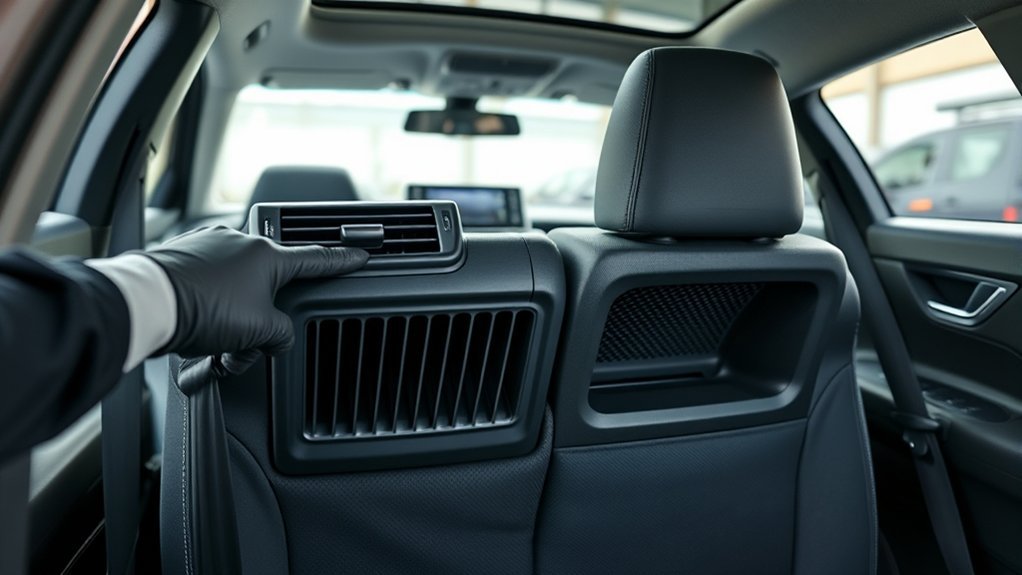
The Toyota Camry Hybrid battery cooling system is simple, but it is not something to ignore. The traction battery uses a fan-assisted air path that pulls cabin air through an intake vent and filter, moves that air through the battery cooling ducting, and helps carry heat away from the pack. When the vent, filter, duct, or cooling fan gets clogged with lint, pet hair, dust, or cargo debris, the battery can run hotter, fuel economy can drop, and the car may show a traction-battery cooling warning.
Quick Answer
The Camry Hybrid traction battery is cooled by fan-assisted cabin air, not by a dedicated battery coolant loop. Keep the rear-seat air intake vent and filter clean, never use water or an air blow gun on the intake/filter, and have a Toyota dealer inspect the system if the warning message stays on.
Key Takeaways
- The Camry Hybrid uses a battery cooling fan, ducting, and an air intake filter to move cabin air through the traction-battery cooling path.
- Dust, lint, pet hair, and blocked vents are the most common owner-serviceable problems.
- For the owner-accessible intake/filter, use a vacuum and light pressure only. Do not use water, liquids, or an air blow gun.
- Do not disassemble the high-voltage battery case. Fan assembly removal and internal duct cleaning are professional service jobs.
- If “Maintenance Required for Traction Battery Cooling Parts See Owner’s Manual” stays on after cleaning, schedule dealer diagnosis.
What This Guide Helps You Find
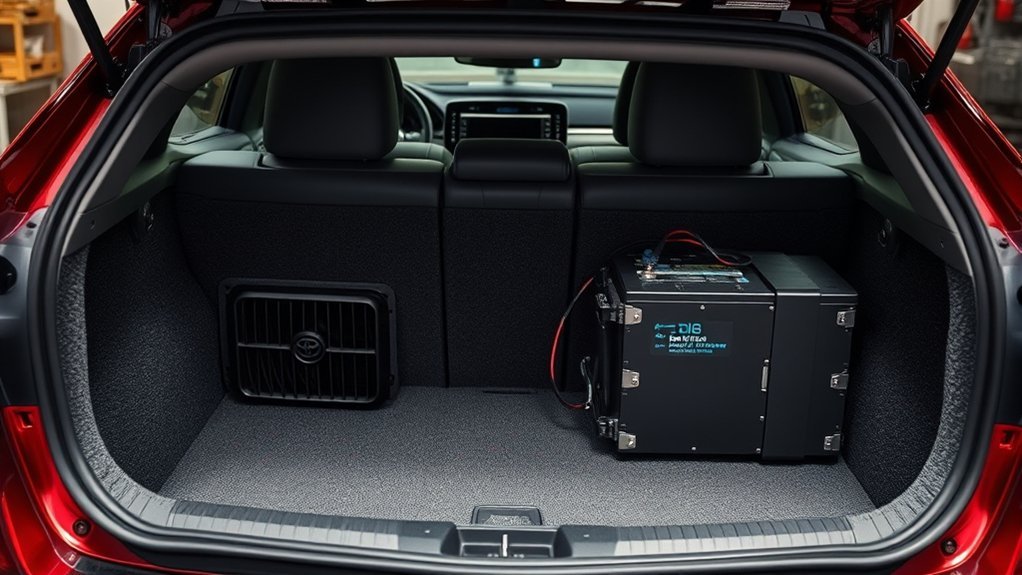
This guide explains how the Camry Hybrid traction-battery cooling system works, where airflow usually gets restricted, and what you can safely inspect before paying for deeper service. It focuses on practical checks: the rear-seat air intake vent, the removable filter on newer models, the signs of a blocked cooling path, and the point where DIY cleaning should stop.
The most important correction is this: the Camry Hybrid battery cooling system should be described as fan-assisted cabin-air cooling, not purely passive cooling. A battery cooling fan helps move air through the system, and that fan depends on a clean intake path to do its job.
At a Glance
| Time Required | 10–20 minutes for owner-accessible intake/filter cleaning |
| Difficulty | Easy for intake/filter cleaning; professional level for fan removal or battery-case service |
| Tools Needed | Vacuum cleaner with a soft plastic brush or narrow nozzle, flashlight, clean cloth |
| Estimated Cost | Usually $0–$30 for basic cleaning; more if the filter or fan needs replacement |
How Camry Hybrid Battery Cooling Works
The Camry Hybrid traction battery creates heat as it charges and discharges. To control that heat, the system draws air from inside the cabin through a dedicated intake vent, passes it through a filter or intake screen depending on model year, and uses a cooling fan to move air through battery ducting.
The hybrid control system monitors battery conditions and commands cooling as needed. When airflow is restricted, the fan may run harder or longer, the battery may reduce output to protect itself, and the driver may notice lower fuel economy or a warning message.
For current Camry Hybrid owner maintenance, Toyota directs owners to visually inspect the hybrid battery air intake vent for dust or clogs and clean it if it is dusty, clogged, or if the multi-information display shows the traction-battery cooling maintenance message. You can confirm the exact procedure for your model year in the Toyota owner manuals and warranties portal.
Is the Camry Hybrid Battery Air-Cooled?
Yes. For normal owner maintenance, treat the Camry Hybrid traction battery as an air-cooled system. The cooling path uses cabin air, intake ducting, a filter or screen, and a cooling fan. It is not serviced like an engine radiator, inverter coolant loop, or liquid-cooled EV battery pack.
That distinction matters because adding coolant-line advice to a Camry Hybrid traction-battery cooling article can confuse readers. If your car has an engine or inverter coolant issue, that is a separate cooling-system diagnosis. It is not the normal fix for a clogged traction-battery intake vent or filter.
Note: Model-year details vary. Some Camry Hybrid years have a more obvious removable intake filter, while older vehicles may require different service access. Always check the owner’s manual or repair information for your exact year before removing covers.
Why Toyota Uses Fan-Assisted Cabin-Air Cooling
Toyota’s approach keeps the traction-battery cooling system compact and low-maintenance. Instead of adding a separate battery refrigerant loop or liquid-cooling hardware, the Camry Hybrid uses air that is already inside the cabin. That keeps the system simpler, lighter, and easier to inspect.
Simplicity and Reliability
A fan-assisted air path has fewer service points than a dedicated liquid-cooling system. Owners mainly need to keep the intake vent clear and avoid blocking the rear-seat area where the vent is located. Technicians handle deeper work, such as cooling fan removal, fan blade cleaning, duct inspection, or electrical diagnosis.
Cost and Packaging Advantages
Using cabin air also helps packaging. The intake vent, filter, ducting, and fan can be built around the rear-seat/battery area without adding a separate battery radiator, coolant pump, or refrigerant circuit. The trade-off is that the system depends heavily on clean airflow.
| Design Choice | Owner Impact |
|---|---|
| Cabin-air intake | Keep rear-seat vents clear |
| Cooling fan/blower | Listen for unusual fan noise or constant high-speed operation |
| Filter or intake screen | Vacuum dust, lint, and pet hair before airflow is restricted |
| Ducted airflow | Avoid cargo, covers, or seat items that block the vent path |
Where the Camry Hybrid Draws Cooling Air
The Camry Hybrid draws traction-battery cooling air from the passenger cabin through a dedicated intake vent, usually near the rear-seat area. The exact location and access method vary by model year, but the vent is placed where it can pull relatively clean cabin air toward the battery cooling fan and ducting.
Avoid placing bags, clothing, seat covers, pet blankets, or loose paper near the intake. Even a partial blockage can make the fan work harder and reduce cooling performance.
- Intake path: cabin air enters through the rear-seat intake vent.
- Filter or screen: dust, lint, sand, and pet hair are trapped before they reach the fan.
- Fan/blower: the system moves air through the battery cooling path as needed.
- Ducting: warmed air is routed away from the intake through designed passages.
Common Airflow Blockages on Camry Hybrids
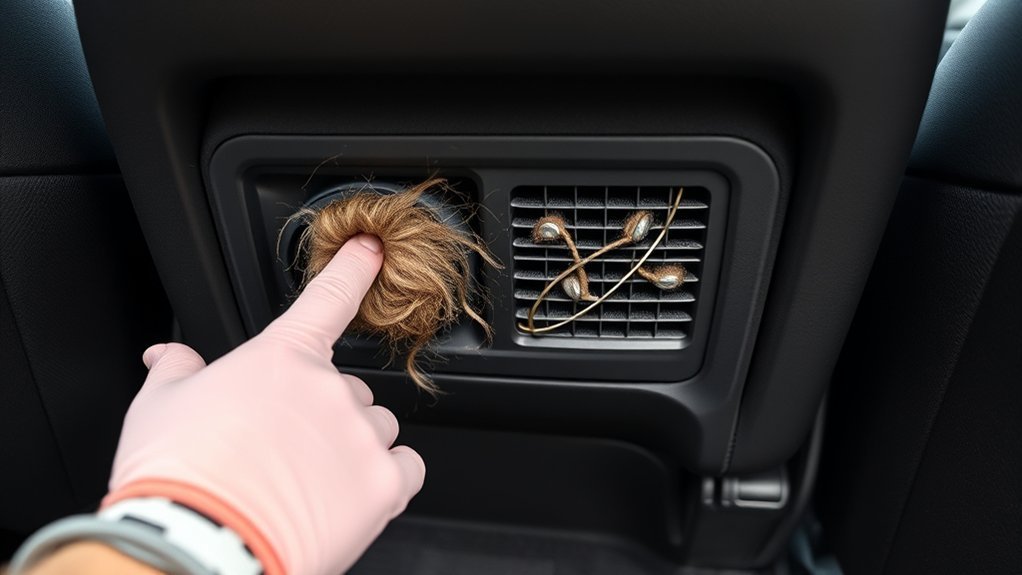
The most common problem is simple debris. Toyota Technical Service Bulletin T-SB-0062-20 describes excessive buildup of dust, lint, or debris in the HV battery intake filter or cooling fan on several Toyota hybrids, including 2007–2020 Camry Hybrid models. The same bulletin recommends checking the battery intake filter for debris every 5,000 miles and performing the bulletin procedures every 20,000 miles or whenever the battery assembly is replaced.
For newer Camry Hybrid models, the owner’s manual guidance is more direct: inspect the traction-battery air intake vent periodically, clean it if dusty or clogged, and clean it immediately if the traction-battery cooling maintenance message appears.
- Pet hair: common when pets ride in the rear seat.
- Dust and sand: more likely in dry, dusty, or construction-heavy areas.
- Lint: common from clothing, blankets, cargo covers, and upholstery.
- Blocked vent openings: caused by bags, floor mats, jackets, seat covers, or cargo.
- Damaged filter: a torn or distorted filter should be replaced, not reused.
Pro Tip: If you carry pets, vacuum the rear-seat area and the battery intake vent more often than the normal service rhythm. Pet hair is one of the fastest ways to restrict airflow.
Inspect the Camry Hybrid Battery Cooling Intake and Filter
Start with the owner-accessible parts only: the visible intake vent, vent cover, and removable filter if your Camry has one. You are looking for dust mats, lint, pet hair, sand, damaged filter pleats, or anything that keeps light and air from moving through the filter.
[Products Worth Considering]

KAX CA10171 premium engine air filter is designed as a direct replacement for select Toyota Camry and Venza models, helping maintain clean airflow to protect critical engine components. Its high-performance filter media delivers strong filtration efficiency and long service life for dependable everyday driving. With a precise rectangular fit and easy replacement design, it supports better acceleration, consistent performance, and improved fuel economy.

This replacement filter set is designed for a range of Toyota hybrid vehicles, including popular models like RAV4 Hybrid, Camry Hybrid, Highlander Hybrid, Sienna, Venza, and more. It combines cabin and engine filtration to help support cleaner airflow, reduce dust and odors, and protect your HVAC and engine systems. Built for easy installation and extended service life, it offers a convenient maintenance upgrade for compatible hybrid and gas-only Corolla models.

This engine water pump kit is designed to help maintain reliable cooling performance across a wide range of compatible Toyota, Lexus, Scion, and Pontiac vehicles. Built with aluminum and tested for leak-free operation, it offers a direct replacement solution that supports engine efficiency and long-term service life. The kit includes a professional water pump and gasket for a convenient installation-ready repair.
Cooling Fan Condition Check
You should not remove the battery cooling fan unless you have the correct service information and hybrid safety training. However, you can watch for symptoms that suggest the fan or ducting needs professional inspection:
- Fan noise from the rear-seat area becomes louder than usual.
- The fan runs frequently even in mild weather.
- The traction-battery cooling maintenance message appears.
- Fuel economy drops without another clear reason.
- The filter is clean, but the warning returns.
If deeper fan service is needed, Toyota’s TSB instructs technicians not to clean the HV battery cooling fan while it is installed because dust and debris can enter the battery case. It also warns that fan blades must be secured during cleaning to avoid electronic circuit damage from over-spinning.
Inlet Filter Inspection
Inspect the filter gently. If dust has accumulated on the cover or filter, remove it with a vacuum cleaner. Toyota’s current owner procedure recommends lightly moving the vacuum nozzle along the folds of the filter and holding the filter up to light to check whether it remains clogged.
| Item | What to Check | Safe Action |
|---|---|---|
| Vent cover | Dust, lint, pet hair, sand | Vacuum gently |
| Filter media | Clogged pleats or trapped debris | Vacuum lightly; replace if damaged |
| Filter frame | Cracks, distortion, broken tabs | Have it replaced if damaged |
| Vent area | Cargo or seat items blocking airflow | Clear the area |
Airflow Path Clearance
Do not push tools, hands, liquids, or compressed air into the intake duct. Your safe goal is to clear the vent opening and filter, then reinstall everything exactly as designed. If the warning remains, the restriction may be deeper in the fan or ducting, and the vehicle should be inspected by a Toyota dealer or hybrid-qualified technician.
DIY: Clean the Battery Air Intake Vent and Filter
This owner-safe procedure follows Toyota’s basic approach for the air intake vent and filter. It does not require opening the high-voltage battery case.
Warning: Turn the power switch off before cleaning. Do not use water or other liquids. Do not use an air blow gun. Do not put your hand or leg into the air intake vent. The hybrid system contains high-voltage parts and a cooling fan that can cause serious injury.
- Park safely and turn the vehicle off. Make sure the power switch is off and the hybrid system is not in READY mode.
- Locate the traction-battery air intake vent. Check the rear-seat area shown in your owner’s manual for your exact model year.
- Remove the vent cover only if your manual allows it. Use gentle pressure and avoid breaking plastic claws or tabs.
- Remove the filter if equipped and owner-removable. Keep track of its original orientation so it goes back the same way.
- Vacuum the cover and filter. Use a plastic brush or light nozzle pressure. Move along the filter folds instead of crushing them.
- Check the filter against light. If dust or sand cannot be removed or the filter is damaged, have it replaced.
- Reinstall the filter and cover. Do not drive with the filter or cover missing.
- Restart and recheck the message. If the traction-battery cooling maintenance message remains or returns, schedule dealer inspection.
Do not spray cleaner, water, compressed air, or deodorizer into the vent. Liquids and forced air can move debris deeper into the system or damage components.
[Products Worth Considering]

This coolant electric water pump is designed as a replacement for select Toyota vehicles, helping maintain proper engine cooling performance and reliable temperature control. Built to OE specifications, it offers fitment support for compatible Avalon, Camry, and RAV4 models with 2.5L L4 engines. It also includes cross-reference part numbers for easier matching and comes with after-sales support for covered defects.

This ALLWELL engine air filter is designed to help maintain clean airflow for compatible Toyota, Lexus, and Subaru vehicles, supporting engine performance and efficient operation. It serves as a direct replacement for multiple OE part numbers and fits a wide range of hybrid and standard models across several years. Built for broad compatibility, it is a practical maintenance part for keeping your vehicle’s intake system protected.

This coolant thermostat is a direct replacement designed for a wide range of Toyota, Lexus, and Scion vehicles. It helps maintain proper engine temperature, supports reliable cooling system performance, and installs easily without special tools or programming. Built to meet OEM standards, it offers durable, stable operation and dependable fitment for compatible models.
Do You Need Coolant Lines or an Active Cooling Retrofit?
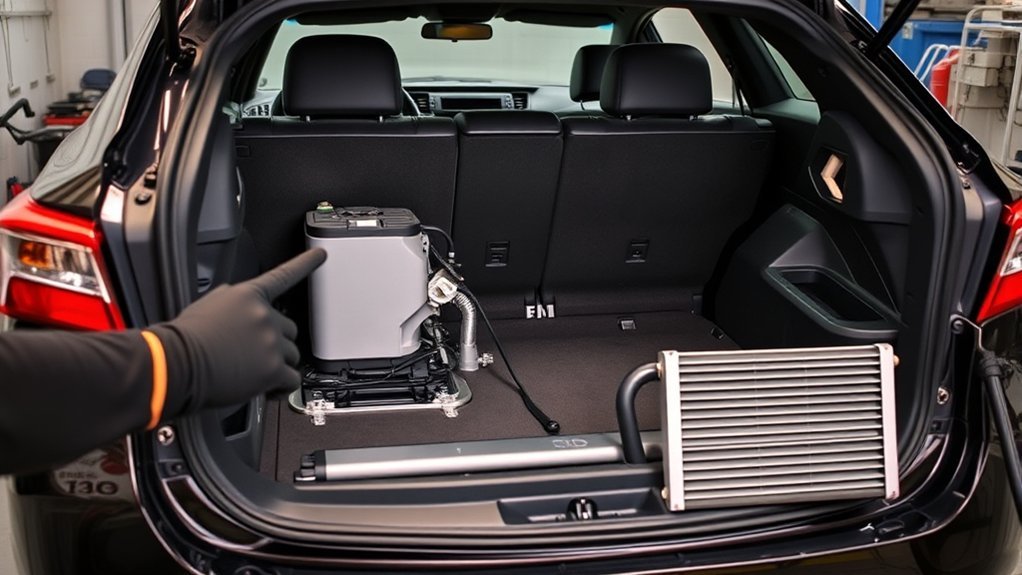
For a normal Toyota Camry Hybrid, no. A clogged traction-battery intake vent or filter is not fixed by adding coolant lines or installing an active cooling retrofit. The practical repair path is to restore the OEM airflow system: clean or replace the intake filter, clear the vent area, inspect ducting, and diagnose the cooling fan if needed.
Active cooling retrofits are not a normal maintenance item for a street-driven Camry Hybrid. They can interfere with battery temperature control, diagnostic logic, warranty coverage, and vehicle safety. If the battery is repeatedly overheating or setting diagnostic trouble codes after the intake/filter is clean, the correct next step is professional diagnosis, not a custom retrofit.
Note: Engine coolant, inverter coolant, and air-conditioning service are separate systems. They matter to vehicle health, but they are not the normal service path for a clogged Camry Hybrid traction-battery air intake.
[Products Worth Considering]

This Levoit cordless stick vacuum delivers powerful everyday cleaning with anti-tangle technology designed to handle pet hair with less hassle. It offers up to 50 minutes of runtime in Eco mode, flexible 180° flat reach for cleaning under furniture, and a 5-stage filtration system that captures fine particles for cleaner air. The lightweight design, LED lighting, and included pet and crevice tools make it a practical choice for quick dry-mess cleanup throughout the home.

ECOGARD XA5786 is a premium engine air filter designed to help protect your engine by trapping dust, dirt, pollen, and road particles before they enter the intake system. It supports smooth airflow for consistent engine response and fuel efficiency, and it is intended for regular replacement to help maintain reliable performance and engine longevity.

The Bissell Pet Hair Eraser Cordless Hand Vacuum is designed to tackle pet hair, embedded dirt, and everyday messes around the home, in the car, and on furniture. Its motorized brush tool, cordless 14V lithium-ion power, and triple-level filtration help make quick cleanups easier and more effective. The easy-empty dirt bin and included specialized tools add convenience for cleaning stairs, upholstery, auto interiors, and other hard-to-reach areas.
Signs the Cooling System Needs Attention
A blocked intake or weak cooling fan may not feel dramatic at first. The system often compensates by running the fan more often or reducing battery output. Watch for these warning signs:
| Symptom | Likely Cause | What to Do |
|---|---|---|
| “Maintenance Required for Traction Battery Cooling Parts See Owner’s Manual” | Dirty or clogged intake/filter | Clean the intake/filter immediately; schedule service if it remains |
| Louder fan noise near rear seat | Restricted airflow or fan working harder | Inspect and vacuum the intake/filter |
| Lower fuel economy | Battery temperature control limiting hybrid assist | Check airflow first, then diagnose if unresolved |
| Hybrid warning light or repeated message | Cooling fault, sensor issue, fan issue, or deeper restriction | Have the vehicle inspected by a Toyota dealer or hybrid-qualified technician |
| Visible dust, lint, or pet hair on vent | Intake restriction starting | Vacuum the vent and filter before the warning appears |
A clean traction-battery air intake is small maintenance with big upside: it helps the hybrid system protect battery temperature, fuel economy, and long-term reliability.
Maintenance Checklist for Long-Term Cooling Health
Use this checklist during routine cleaning, oil-change visits, or seasonal maintenance:
- Inspect the rear-seat intake vent. Look for dust, pet hair, lint, sand, or blocked openings.
- Vacuum the vent area. Use light pressure and avoid pushing debris inward.
- Clean the removable filter if equipped. Vacuum along the folds and avoid crushing the media.
- Replace a damaged filter. Do not reuse a torn, warped, or broken filter.
- Keep cargo away from the vent. Bags, jackets, blankets, and pet covers can block airflow.
- Listen for fan changes. A louder or more frequent fan can point to restricted airflow.
- Do not ignore warning messages. Continued driving with a traction-battery cooling warning may lead to output restriction or malfunction.
- Use dealer service for fan or duct cleaning. Fan assembly removal and internal duct cleaning require correct repair procedures.
For affected 2007–2020 Camry Hybrid models, Toyota TSB T-SB-0062-20 gives technicians an HV battery cooling system maintenance procedure and recommends intake-filter inspection for dust, lint, and debris every 5,000 miles, with the bulletin procedures performed every 20,000 miles or when the battery assembly is replaced. Newer owners should follow their current owner’s manual and maintenance guide.
Frequently Asked Questions
What does “Maintenance Required for Traction Battery Cooling Parts” mean?
It means the Camry Hybrid has detected a traction-battery cooling maintenance issue, commonly related to a dusty or clogged air intake vent or filter. Turn the vehicle off, clean the owner-accessible intake/filter as described in the manual, and have the vehicle inspected if the message does not go away.
What does “Cooling performance of the hybrid battery is low” mean?
It means the battery cooling system is not controlling temperature as expected. The cause may be a blocked intake/filter, fan problem, duct restriction, sensor issue, or another hybrid-system fault. Start with the safe intake/filter inspection, then schedule professional diagnosis if the warning remains.
Can I clean the Camry Hybrid battery cooling fan myself?
Owners can usually clean the visible intake vent and removable filter. Cooling fan removal is different. Toyota service information warns against cleaning the fan while installed because debris can enter the battery case, so fan cleaning is best handled by a Toyota dealer or hybrid-qualified technician.
Can I use compressed air to clean the battery air intake filter?
No. For the owner-accessible intake/filter, use a vacuum with light pressure. Toyota warns not to use an air blow gun because dust may be blown deeper into the system and cause malfunction or battery output restriction.
Does the Camry Hybrid battery use coolant?
For normal traction-battery cooling maintenance, treat it as an air-cooled system. The Camry Hybrid has other cooling systems for the engine and hybrid components, but a clogged traction-battery intake/filter is handled by restoring airflow, not by adding coolant lines.
How often should I inspect the battery air intake?
Inspect it periodically and more often if you drive in heavy traffic, dusty areas, or carry pets. For 2007–2020 Camry Hybrid models covered by Toyota TSB T-SB-0062-20, Toyota recommends checking the battery intake filter for debris every 5,000 miles and performing the bulletin procedures every 20,000 miles or when the battery assembly is replaced.
Conclusion
The Camry Hybrid battery cooling system is best thought of as a fan-assisted breathing path for the traction battery. Cabin air enters through the intake vent, passes through a filter or screen, moves through ducting with help from a cooling fan, and carries heat away from the battery area. Keep that path clean, never block the rear-seat intake, and do not use water or compressed air on the intake/filter.
If a simple intake/filter cleaning clears the warning, you have likely solved the most common maintenance issue. If the message returns, the fan is unusually loud, or hybrid performance still feels reduced, stop guessing and have the vehicle checked by a Toyota dealer or hybrid-qualified technician.
Sources
- Toyota Owner Manuals and Warranties — current owner-manual access and model-specific maintenance guidance.
- Toyota 2025 Camry Hybrid Owner’s Manual: Cleaning the hybrid battery air intake vent — safe intake/filter cleaning procedure and warnings.
- Toyota Technical Service Bulletin T-SB-0062-20 via NHTSA — HV battery cooling system maintenance, Camry HV applicability, inspection intervals, and fan-cleaning cautions.
- NHTSA Emergency Response Guides — hybrid and electrified-vehicle safety information resources.
- Toyota Electrified Vehicle Battery Warranty — Toyota Hybrid battery warranty coverage context.


[…] clean it at 20,000-mile intervals. Keep the intake area clear of lint, pet hair, and cargo. See the Camry hybrid battery cooling system guide for the system layout and warning […]