A Toyota Camry whistling noise at speed is usually wind noise when it appears only while the car is moving and becomes louder or higher-pitched as road speed rises. Start with the door and window weatherstripping, mirror triangle trim, windshield or roof molding, sunroof seal, cowl area, and loose splash shields. If the sound also occurs while parked or changes with engine RPM, acceleration, HVAC fan speed, braking, steering, gear, or vehicle load, treat it as a different problem.
Last updated: July 23, 2026 — revised for 2025–2026 U.S. Camry hybrid-only model-year distinctions, source verification, and safer diagnostic guidance.
Quick Answer
A Toyota Camry whistling noise at speed usually comes from wind passing through a small gap around a seal, trim piece, glass edge, mirror, roof opening, cowl, or underbody panel. If the sound changes with engine RPM, acceleration, fan speed, gear, or warning lights, also consider an HVAC restriction, intake or vacuum leak, exhaust leak, drivetrain whine, or an accessory-belt problem on Camry models that use a conventional belt drive. The 2025–2026 U.S. Camry is all-hybrid, so confirm the exact model year and powertrain before applying older gasoline-model belt or alternator advice.
Key Takeaways
- A whistle that happens only at highway speed is usually a wind, seal, glass, mirror, trim, or exterior-panel issue.
- A chirp or squeal that changes with RPM can point to an accessory belt, tensioner, pulley, or related drive component on models equipped with that system.
- A whistle that changes with fan speed usually points to the HVAC blower area, cabin air filter, filter door, or debris in the ducting.
- The 2025–2026 U.S. Camry is all-hybrid, so do not assume it uses the same alternator or accessory-drive layout as an older gasoline Camry.
- Stop DIY testing and get help if you see warning lights, smell burning rubber or exhaust, notice overheating, hear severe mechanical noise, or feel sudden power loss.
At a Glance
| Time Required | 15 to 45 minutes for safe basic checks |
| Difficulty | Easy for wind and HVAC checks; moderate for belt inspection on applicable models; professional help for intake, exhaust, pulley, drivetrain, electrical, or hybrid-system diagnosis |
| Tools Needed | Flashlight, painter’s tape, paper towel, phone for passenger-seat recording, exact model-year or VIN information, and an OBD-II scanner if a warning light is on |
| Cost | DIY inspection is usually $0; repair cost depends on the confirmed seal, trim, filter, belt-drive part, intake part, exhaust part, drivetrain component, or labor needed |
Warning: Inspect belts and pulleys only with the engine off, the key removed, and loose clothing, hair, and tools kept away from moving parts. Do not touch hybrid high-voltage components or orange high-voltage cables. If the check-engine light, hybrid-system warning, battery/charging warning, overheating warning, smoke, or burning smell appears, stop driving and get professional help.
What Causes a Toyota Camry Whistling Noise at Speed?
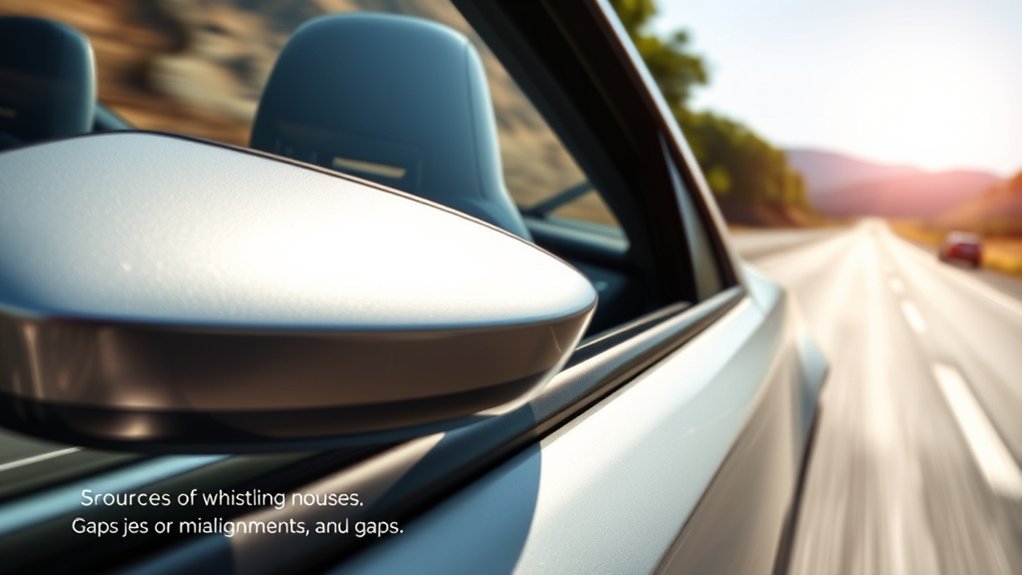
The first clue is when the sound happens. A steady whistle at highway speed behaves differently from a belt chirp, HVAC whistle, intake leak, exhaust leak, brake squeal, or drivetrain whine. Use this symptom map before replacing parts.
| When the Sound Happens | Likely Area to Check | What to Try First |
|---|---|---|
| Only above about 40 to 50 mph | Door seals, window channels, mirror trim, windshield trim, roof molding, sunroof, cowl, or loose splash shield | Inspect seals and trim; use temporary painter’s tape to isolate one safe area at a time |
| Changes with engine RPM while parked or moving | Accessory belt on applicable models, tensioner, pulley, intake leak, exhaust leak, or another rotating component | Confirm the model year and powertrain first; inspect visible components only with the vehicle safely off |
| Happens during acceleration | Intake leak, vacuum leak, exhaust leak, drivetrain/transaxle whine, or load-related accessory noise | Check for warning lights, rough running, exhaust smell, reduced power, or a change with gear and coasting |
| Changes with HVAC fan speed | Cabin air filter, blower fan, filter door, HVAC ducting, leaves, or debris | Turn fan speeds up and down; check filter direction, fit, cover latches, and cleanliness |
| Changes with gear, load, or coasting | Transmission, hybrid transaxle, wheel bearing, differential, or another drivetrain component | Document the gear, speed, throttle position, and whether the sound continues while coasting |
| Appears while braking or turning | Brake hardware or wear indicator, dust shield, wheel bearing, or tire issue | Have the wheel and brake area inspected if the sound is sharp, metallic, or worsening |
Is It a Whistle, Hiss, Squeal, or Whine?
| Sound Description | Common Pattern | Likely Direction |
|---|---|---|
| Whistle | Narrow, steady tone that follows road speed or airflow | Body seal, mirror, glass edge, roof opening, cowl, underbody panel, or HVAC air gap |
| Hiss | Air-escape sound at idle, acceleration, or near the exhaust | Intake, vacuum, PCV-related hose, or exhaust leak |
| Chirp or squeal | Sharp friction sound that follows RPM, braking, or wheel rotation | Accessory belt on applicable models, pulley, brake wear indicator, or rotating contact |
| Whine | Smooth rising tone that follows gear, load, acceleration, or component speed | Transmission/transaxle, bearing, differential, electric drive component, or accessory |
Start With This Quick Pattern Check
Before you open the hood or pull trim panels, narrow the sound into one of five groups: road speed, engine RPM, fan speed, acceleration/load, or gear/coasting. That split helps you avoid replacing a belt for a wind leak or chasing a door seal when the HVAC fan is the real cause.
- Road-speed whistle: The pitch or volume follows vehicle speed. Start with seals, mirror trim, windshield trim, roof molding, sunroof seals, cowl panels, and splash shields.
- RPM-related chirp, squeal, or whistle: The sound rises or falls when the engine revs. On models with a conventional accessory drive, inspect the belt, pulleys, and tensioner. Also consider the intake and exhaust systems.
- Fan-speed whistle: The sound changes when you move the blower from low to high. Check the cabin air filter, filter door, blower cage, and ducting.
- Acceleration or load sound: The noise appears when the powertrain works harder. Look for intake, exhaust, drivetrain, or applicable accessory-drive problems.
- Gear or coasting whine: The pitch changes with gear selection, vehicle load, or whether you are on or off the accelerator. A transmission, transaxle, bearing, or differential diagnosis may be needed.
Model-year check: Toyota states that the U.S. 2025 Camry became exclusively hybrid, and the 2026 Camry uses an all-hybrid powertrain. Do not assume those vehicles have the same conventional alternator or accessory-drive layout as an older gasoline Camry. Confirm the year, VIN, and powertrain before buying parts.
Weatherstripping and body seals close the gaps around doors, glass, the trunk, and other body openings. When rubber is cracked, flattened, dirty, loose, folded, or not fully seated, air can squeeze through a small opening and create a whistle at speed. For model-specific parts, warnings, and maintenance procedures, use the official Toyota Owner’s Manuals and warranties page.
On Camry models equipped with a conventional accessory belt, a worn belt, weak tensioner, misaligned pulley, or failing pulley bearing can make a high-pitched sound that rises and falls with engine speed. Gates notes that many modern EPDM belts may not show obvious cracks even when worn, so do not judge belt condition by cracks alone; rib wear and material loss matter too. See Gates’ accessory belt drive inspection guidance.
Another source is the HVAC and cabin-filter system. Leaves, plastic scraps, a clogged cabin air filter, a warped filter, or a loose filter door can force air through a narrow gap and create a whistle. If the sound changes when you adjust fan speed or recirculation, start behind the glove box and blower area before looking outside the car.
Finally, do not ignore an intake, vacuum, exhaust, or drivetrain problem. If the sound comes with rough idle, hesitation, fuel smell, exhaust smell, poor fuel economy, a change with gear, reduced power, or a check-engine light, the issue is no longer just an annoyance. Federal OBD rules require covered vehicles to detect qualifying emission-control malfunctions and store diagnostic information, so a scan tool can help point a technician toward the affected system.
Note: Camry belt layouts, HVAC parts, trim, transmissions, and hybrid components vary by model year and powertrain. Always confirm procedures in the owner’s manual or maintenance guide for your exact year, trim, engine, transmission, or hybrid system.
How Do You Diagnose a Camry Whistling Noise Before a Shop Visit?
Diagnosing the pattern can save time before heading to a mechanic. Do parked checks first, then use a passenger to listen during a road test. Choose a safe road, obey posted speed limits, and never hold a phone or lean around the cabin while driving.
- Write down the exact condition. Note the speed, road surface, wind direction, weather, fan setting, AC setting, window position, gear, and whether the noise changes during acceleration or coasting.
- Turn the HVAC system off. If the whistle disappears, focus on the blower, cabin air filter, vents, and ducting. If it stays, look outside the HVAC system.
- Change fan speed and recirculation. A whistle that changes with fan speed usually points to airflow restriction, debris, or a filter seating problem.
- Crack one window slightly. If the pitch changes, cabin pressure may be interacting with a door, window, trunk, or sunroof seal.
- Check door and window seals. Look for tears, flattened rubber, loose clips, dirt buildup, or sections that are not fully seated.
- Use painter’s tape briefly to isolate wind noise. Tape one suspected seam at a time, such as the mirror triangle or upper door seal, then do a short test drive. Remove the tape after testing so it does not damage trim or paint.
- Compare RPM with road speed. If the car can reproduce the sound while parked, it is not ordinary exterior wind noise. If the sound follows road speed but not RPM, focus on the body, wheels, or drivetrain.
- Inspect the engine bay only when safe. With the vehicle off, look for loose covers and, on models equipped with an accessible conventional belt, rib wear, missing material, glazing, contamination, or visible pulley misalignment.
- Scan warning lights. If a check-engine light is on, read codes before clearing them. The code does not replace diagnosis, but it can narrow the system.
Pro Tip: Record a short audio clip from the passenger seat while someone else drives. State the speed, RPM, gear, HVAC setting, window position, weather, and whether the vehicle is accelerating or coasting. That information is often more useful than saying “it whistles sometimes.”
| Step | Action | Purpose |
|---|---|---|
| Listen for the trigger | Note speed, RPM, gear, fan setting, wind, acceleration, and coasting | Separate wind noise from engine, HVAC, or drivetrain noise |
| Check for obstructions | Inspect vents, cabin-filter area, and blower intake | Eliminate airflow restriction or debris |
| Verify installation | Confirm the cabin air filter and covers are seated correctly | Prevent air from squeezing through a gap |
| Inspect seals and trim | Check weatherstripping, mirror trim, windshield trim, roof molding, and sunroof seal | Find small exterior gaps that whistle at speed |
| Document symptoms | Share notes, audio, warning-light information, model year, VIN, and recent repair history | Help the mechanic reproduce the noise faster |
Mistakes to Avoid During Diagnosis
- Do not clear diagnostic codes before saving them. Clearing codes can erase useful freeze-frame information.
- Do not leave painter’s tape on the car. Use it only for a short test, then remove it gently.
- Do not cover lights, cameras, sensors, mirrors, air intakes, or moving parts with tape.
- Do not spray flammable cleaners around a running engine to find leaks. Leave smoke testing and pressure testing to a shop.
- Do not keep driving with exhaust smell, overheating, smoke, or sudden power loss. These symptoms can point to a safety or breakdown risk.
How Do You Check Camry Wind Noise and Body Air Leaks?
If the Camry whistles only at highway speed and the sound does not change with engine RPM, fan speed, or gear, start with wind noise. Small gaps can sound surprisingly loud because air is forced through a narrow opening.
[Products Worth Considering]

This JADODE combo includes engine and cabin air filters designed to help keep passenger air cleaner while supporting efficient HVAC performance. The activated carbon layer helps absorb odors, exhaust fumes, and pollution, while filtration captures dirt, dust, and pollen for OE-comparable protection. It is compatible with a wide range of Toyota, Scion, Lexus, and Pontiac applications for convenient replacement maintenance.

This cabin air filter replacement is designed to help keep your vehicle’s interior air fresher and cleaner by capturing dust, odors, and fine particles with a multi-layer filtration structure. The activated carbon layer helps reduce unwanted smells, while the extended service life makes it a practical maintenance part for many compatible Toyota, Lexus, Subaru, Scion, and Jaguar models.

This CF10285 cabin air filter is designed to help keep your vehicle's interior air cleaner by capturing dust, pollen, soot, and road grime. It is compatible with a wide range of Toyota, Lexus, Jaguar, Land Rover, Subaru, Scion, and Pontiac models, making it a versatile replacement choice. The activated carbon design and easy glove-box installation make it a practical upgrade for fresher driving comfort.
Door, Window, and Mirror Seals
Inspect the upper door seals, B-pillar area, mirror triangle trim, window channels, and door-glass alignment. Look for rubber that is cracked, flattened, torn, dirty, or folded under itself. Clean dirty seals with mild soap and water, then dry them before testing again. Do not apply grease or heavy silicone unless the Toyota repair procedure for your vehicle calls for it, because some products attract dirt or soften rubber.
Windshield, Sunroof, and Trim
A whistle near the dashboard or roof can come from windshield trim, roof molding, a sunroof seal, or a loose cowl panel. If the windshield was replaced recently, ask the installer to inspect the molding, glass alignment, sealant bead, and cowl fit. Review the Camry windshield compatibility guide if the noise began after glass replacement or trim work. If the Camry has a sunroof, check its seal for dirt, gaps, or a section that is not sitting flat.
Loose Underbody Shields and Splash Panels
A loose splash shield, fender liner, bumper corner, or underbody panel can vibrate at speed and sound like a whistle, flutter, or reed-like buzz. Look for missing clips, hanging plastic, or panels that move by hand. Replace missing clips with the correct style rather than forcing universal fasteners into the wrong holes.
Recent Work That Can Create a Whistle
If the noise started right after service or body work, check the areas touched during that job first. Windshield replacement, mirror removal, door-trim repair, speaker work, cabin air filter service, bumper repair, splash-shield removal, roof-rack installation, and aftermarket accessories can leave a small gap that did not exist before.
Can an Accessory Belt Cause a Camry Whistling Noise?
On Camry models equipped with a conventional accessory or serpentine belt, inspect the belt and related drive components if the sound changes with engine speed, appears during cold starts, or becomes louder when the engine or belt-driven accessories are under load. A belt-related sound is usually described as a chirp, squeal, whine, or high-pitched whistle rather than a road-speed-only wind noise.
This diagnosis does not apply equally to every Camry. The U.S. 2025–2026 Camry is all-hybrid, and other hybrid or model-year configurations may use different component layouts. Check your exact vehicle through Toyota’s model-specific manuals before assuming an alternator pulley, tensioner, or conventional belt is present.
A thorough belt-drive inspection on an applicable model should include:
- Rib wear: Look for rounded ribs, missing rubber, uneven wear, or a belt sitting too low in the pulley grooves.
- Cracks or fraying: Cracks can matter, but modern EPDM belts may wear without obvious cracking.
- Glazing: A shiny, hardened belt surface can slip and make noise.
- Contamination: Oil, coolant, road grit, or water can cause slipping or accelerated wear.
- Tensioner movement: A weak or bouncing tensioner can let a belt slip.
- Pulley alignment: A misaligned pulley, rough bearing, worn tensioner, or damaged harmonic balancer can create noise even if the belt is new.
Do not treat “60,000 to 100,000 miles” as a universal replacement rule for every Camry. Inspect the applicable belt system according to the exact model-year guidance and replace parts when wear, contamination, noise, or a confirmed diagnosis supports it. Gates explains why EPDM material loss can be more useful than visible cracking, while Dayco’s belt-drive guidance notes that misalignment, pulley wear, bearing wear, and related drive components can cause persistent noise.
For a deeper component-specific check on applicable older models, see the Camry serpentine-belt inspection guide.
Warning: If you see a shredded belt on an applicable model, a battery/charging warning, overheating, smoke, or severe noise from the belt area, do not keep driving. A failed drive component can quickly lead to a breakdown or additional damage.
[Products Worth Considering]

ECOGARD XC10621C is a premium cabin air filter designed to help keep your vehicle’s interior air cleaner by trapping dust, pollen, pet dander, and other airborne debris. Its activated carbon layer also helps reduce common odors from traffic and outside air while supporting steady HVAC airflow for reliable climate system performance. It is engineered for a wide range of Toyota, Lexus, and Subaru applications.

This activated carbon cabin air filter helps improve in-cabin air quality by capturing dust, smoke, pollen, and odors for a fresher driving experience. Designed as a direct replacement for many Toyota, Lexus, Subaru, and other compatible models, it supports HVAC performance and offers easy, tool-free installation.

[Vehicle Fitment]: ① Compatible with Toyota Camry 2012-2017 L4 2.5L, RAV4 2009-2018 L4 2.5L; ② Compatible with Scion tC 2011-2016 L4 2.5L --- Fits DOHC Engine Only
Can the HVAC System Cause a Whistling Noise?
If you notice whistling noises from the dash or vents, focus on the HVAC system. A narrow air gap, clogged cabin air filter, loose access door, or debris in the blower cage can make the vents whistle.
Toyota’s 2025 Camry Warranty and Maintenance Guide calls for cabin-filter replacement at specified intervals and notes that heavy traffic, dirt roads, urban areas, deserts, or dusty conditions may shorten the filter’s service life. Use the guide for your exact model year rather than assuming one interval applies to every Camry.
- Turn the fan from low to high. If the pitch or volume changes with fan speed, the HVAC system is likely involved.
- Switch between fresh air and recirculation. A change in sound can point to an intake door, filter, or airflow path.
- Check the cabin air filter orientation. Make sure the filter is seated flat and that the case or filter markings are followed for your model.
- Inspect the filter condition. Replace a clogged, damp, damaged, or warped filter.
- Inspect the blower cage area. Leaves, paper, insulation, or small debris can lodge in the blower fan and create a whistle, flutter, or ticking sound.
- Check covers and clips. A loose filter door or glove-box panel can create a small gap that whistles under airflow.
If the blower motor itself squeals, rattles, or changes speed unexpectedly, the issue may be a bearing, motor, resistor or control module, or wiring problem. That is a better job for a technician, especially if the noise comes with a burning smell or intermittent fan operation.
[Products Worth Considering]

[Vehicle Fitment]: For Toyota: 4Runner (2010-2024), Avalon (2005-2018), Camry (2007-2017), Corolla (2009-2019), Corolla iM (2017-2018), Highlander (2008-2019), Land Cruiser (2008-2011,2013-2021), Matrix (2009-2014), Mirai (2016-2020), Prius (2010-2015), Prius C (2012-2019), Prius Plug-In (2012-2015), Prius V (2012-2018), RAV4 (2006-2018), Sequoia (2008-2022), Sienna (2011-2020), Tundra (2007-2021), Venza (2009-2016), Yaris (2007-2018).
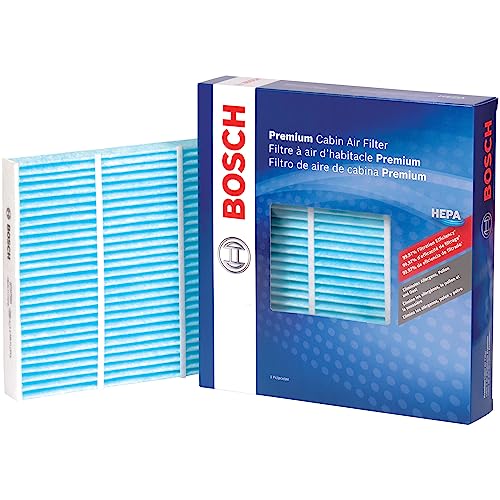
High Efficiency Particulate Cabin Air Filters Are Designed To Trap Microscopic Pollutants Including Pollen, Mold And Common Allergens

Efficient Filtration: Particles are prevented from entering the cabin by a close-meshed, non-woven filter layer that protects your engine from wear to extend the life of your vehicle's system. It also optimizes air conditioning and heating systems, ensuring high flow capacity.
Can Intake, Vacuum, or Exhaust Leaks Whistle?
A whistling or hissing noise during acceleration or idle can come from air entering or escaping where it should not. This is different from wind noise around the body.
Vacuum or Intake Leak Signs
Possible signs include rough idle, hesitation, high idle, poor fuel economy, lean-condition codes, or a check-engine light. Inspect visible intake hoses, clamps, and rubber boots for cracks or disconnected fittings. Do not spray flammable cleaners into the engine bay to find leaks; that method is risky and unnecessary for most DIY checks. See the Camry acceleration-hesitation guide if the sound comes with a clear loss of response.
Exhaust Leak Signs
An exhaust leak can sound like a whistle, tick, puff, or hiss, especially under load. A strong exhaust smell, headache, loud ticking near the engine, or black soot around a flange or joint needs prompt attention. Exhaust leaks can let fumes enter the cabin, so do not ignore them.
Could a Transmission or Hybrid Transaxle Whine Sound Like a Whistle?
Yes. A smooth mechanical whine that changes with gear, acceleration, vehicle load, or coasting can come from a transmission, transaxle, bearing, differential, or another rotating component rather than an air leak. Toyota bulletin T-SB-0008-21 describes a whine or grind condition on certain 2021 Camry vehicles within specified transaxle production ranges. It does not apply to every 2021 Camry or to other model years, so a shop must confirm the vehicle and transaxle applicability before using it.
What If a Warning Light or Scan Code Appears?
If the check-engine light is on, scan the vehicle before clearing codes. OBD systems are designed to detect qualifying emission-control malfunctions and store diagnostic trouble information under federal requirements in 40 CFR §86.1806-17. A code does not automatically identify the failed part, but it gives the mechanic a starting point.
When Should You Stop Driving and Call a Mechanic?
Call a mechanic when the sound is paired with warning lights, heat, smoke, exhaust smell, drivability changes, or severe mechanical noise. Use the table below to decide how urgent the next step should be.
| Condition | Action Needed | Why It Matters |
|---|---|---|
| Whistling increases with road speed only | Inspect weatherstripping, window channels, mirror trim, windshield trim, roof molding, and splash shields | Likely wind or body-gap issue |
| Noise changes with engine RPM | Confirm model-year configuration, then inspect applicable belt-drive, intake, exhaust, or rotating components | A mechanical component may fail or affect drivability |
| Whine changes with gear, load, or coasting | Have the transmission, transaxle, bearings, differential, and related drivetrain inspected | The sound may not be an exterior air leak |
| Noise persists at idle with rough running | Check for intake, vacuum, or exhaust leaks | Can affect emissions, performance, and drivability |
| Whistle changes with HVAC fan speed | Inspect cabin filter, blower cage, filter cover, and HVAC ducting | Airflow restriction, a loose cover, or debris is likely |
| Warning lights appear | Scan codes and seek professional diagnosis | The issue may involve emissions, charging, cooling, drivetrain, or hybrid systems |
| Burning smell, smoke, exhaust smell, overheating, or sudden power loss | Stop driving and call for help | Potential safety or breakdown risk |
Before your appointment, write down the speed, RPM, gear, weather, HVAC setting, window position, and whether the sound happens during acceleration, braking, turning, or coasting. Also mention recent windshield work, cabin-filter replacement, body work, underbody repairs, or accessory installation. If the issue could relate to a safety recall, check your VIN on the official NHTSA recall lookup.
What Will a Mechanic Check for a Camry Whistling Noise?
A technician may road-test the car, compare the sound with road speed and engine speed, use chassis ears or listening tools, inspect seals and trim, check applicable belt alignment, test pulleys and bearings, smoke-test the intake system, scan diagnostic trouble codes, inspect the exhaust, check drivetrain operation, and remove the cabin filter or blower motor for inspection. The shop may also check the VIN and applicable Toyota service information before assuming a bulletin or repair applies.
Common repair paths include reseating or replacing weatherstripping, securing loose trim, correcting windshield or cowl fitment, replacing a cabin air filter, removing blower debris, repairing an applicable belt-drive component, replacing a rough bearing, repairing an intake hose, fixing an exhaust leak, or diagnosing a transmission or hybrid transaxle concern. The right repair depends on the confirmed source, not just the word used to describe the sound.
Frequently Asked Questions
Why is my car making a whistling noise when I go fast?
A whistling noise that appears only at higher speeds usually comes from air passing through a small gap around the door seal, window channel, mirror trim, windshield trim, roof molding, sunroof seal, cowl panel, or loose exterior panel. If the sound changes with RPM, gear, acceleration, or fan speed instead of road speed, check the relevant mechanical or HVAC system.
Why does my Toyota make a whistling sound when accelerating?
A whistle or whine during acceleration can come from an intake hose, vacuum leak, exhaust leak, drivetrain component, transmission or hybrid transaxle, or an accessory belt and pulley on models equipped with a conventional belt drive. If the Camry also hesitates, idles roughly, loses power, smells like exhaust, or shows a warning light, have it scanned and diagnosed before replacing parts.
Can a cabin air filter cause a whistling noise?
Yes. A clogged, warped, backward, or poorly seated cabin air filter can force air through a narrow gap and create a whistle from the vents. If the noise changes when you adjust fan speed or switch recirculation on and off, inspect the cabin filter, filter door, and blower area first.
Is a whistling serpentine belt dangerous?
It can be on a Camry equipped with a conventional accessory belt. A light chirp may be early belt or pulley wear, but a loud squeal, shredded belt, burning-rubber smell, overheating, or battery/charging warning can signal a failure. The 2025–2026 U.S. Camry is all-hybrid, so confirm the exact powertrain before assuming an older gasoline-model belt diagnosis applies.
Can a new windshield cause a whistle in a Camry?
Yes. A whistle that starts after windshield replacement can come from trim fitment, molding gaps, cowl-panel fit, glass alignment, or sealant issues. Ask the installer to recheck the glass and surrounding parts instead of replacing unrelated engine components.
Is it safe to use painter’s tape to find wind noise?
Painter’s tape can help isolate a suspected wind-noise seam during a short test drive, but use it carefully and remove it right after testing. Do not cover lights, sensors, cameras, mirrors, air intakes, or moving parts. Avoid using tape on dirty, hot, freshly painted, or fragile surfaces.
How do I tell wind noise from engine or drivetrain noise?
Wind noise usually follows road speed and may change when you crack a window, encounter a crosswind, or temporarily tape a body seam. Engine-related noise usually follows RPM. Drivetrain or transaxle whine may change with gear, acceleration, load, or coasting. HVAC noise usually changes with fan speed.
Should I keep driving if my Camry whistles?
If it is only mild wind noise and there are no warning lights, smells, leaks, vibration, or performance changes, you can usually schedule a normal inspection. Stop driving and call for help if the sound comes with warning lights, overheating, smoke, burning smell, exhaust smell, sudden power loss, harsh shifting, or severe mechanical noise.
Conclusion
A Toyota Camry whistling noise at speed is easiest to solve when you identify the trigger before replacing anything. A speed-only whistle usually comes from seals, glass edges, mirror trim, roof or cowl trim, or loose exterior panels. A sound that follows fan speed points toward the HVAC system. A chirp or squeal that follows RPM may involve an accessory belt on an applicable older model, while a smooth whine that follows gear, load, or coasting may need drivetrain or transaxle diagnosis.
Start by recording the exact speed, RPM, gear, HVAC setting, and recent service history. Confirm the Camry’s model year and powertrain, especially on the all-hybrid 2025–2026 U.S. models. Stop driving if warning lights, overheating, smoke, burning odor, exhaust smell, severe noise, or power loss appears.
Sources
- Toyota Owners — Manuals and Warranties — model-specific owner-manual and warranty reference.
- Toyota USA Newsroom — 2025 Camry Goes Exclusively Hybrid — official U.S. model-year powertrain context.
- Toyota — 2026 Camry — current all-hybrid U.S. Camry powertrain context.
- Toyota 2025 Camry Warranty & Maintenance Guide — hybrid safety precautions, cabin air filter context, and maintenance guidance.
- Gates Tech Tip: Accessory Belt Drive System — EPDM belt wear, material loss, and rib-wear guidance.
- Dayco TechHub: Problematic Automotive Belt Drive Systems — belt-drive noise, misalignment, pulley, bearing, and tensioner context.
- Toyota T-SB-0008-21 via NHTSA — limited 2021 Camry transaxle whine or grind applicability example.
- eCFR 40 CFR §86.1806-17 — Onboard Diagnostics — OBD malfunction detection and diagnostic-information context.
- NHTSA Recalls Lookup — VIN-based safety-recall lookup.