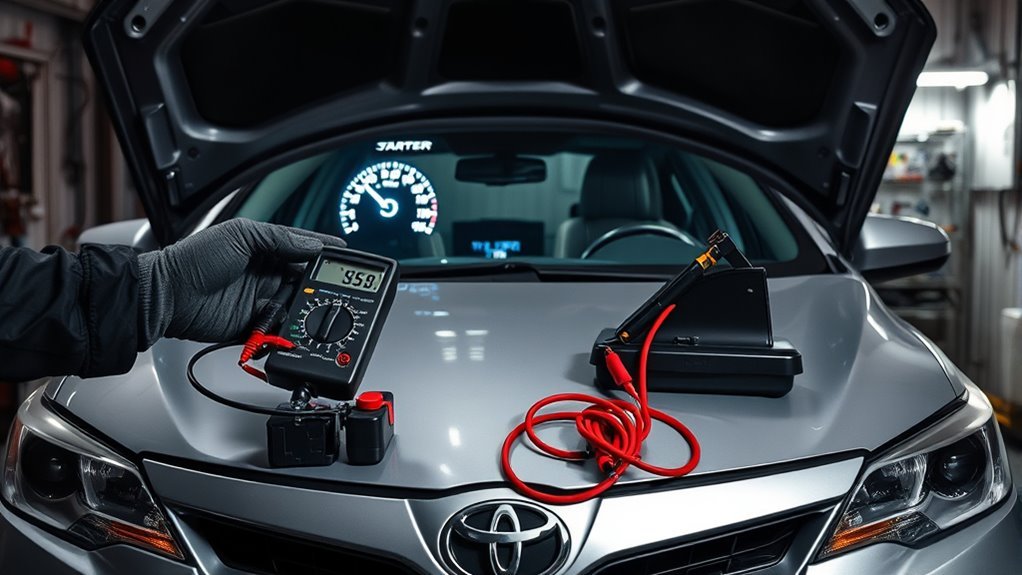
Last updated: July 31, 2026
Toyota does not set a fixed replacement mileage for the 2012 Camry serpentine belt. For a gasoline model, inspect the drive belt at 60,000 miles or 72 months, then every 15,000 miles or 18 months. Replace it when inspection finds damage, contamination, poor pulley-groove fit, measurable rib wear, or persistent noise linked to the belt drive.
On both 2012 Camry gasoline engines, the V-ribbed belt drives the alternator, A/C compressor, and engine water pump. If the belt breaks or leaves the pulleys, charging and coolant circulation can stop. Pull over safely and shut the engine off. The 2012 Camry uses electric power steering, so the belt does not directly drive a hydraulic steering pump.
This guide covers the official interval, gasoline-engine differences, urgent failure signs, safe inspection steps, DIY difficulty, and the current shop-cost reference.
Quick Answer
Inspect a 2012 Toyota Camry gasoline-model drive belt at 60,000 miles or 72 months, then every 15,000 miles or 18 months afterward. Toyota makes replacement condition-based, not mileage-based. Replace the belt immediately if it has exposed cords, missing rib chunks, heavy fraying, oil or coolant saturation, poor groove fit, or damage that lets it walk off a pulley. Do not drive with a broken or displaced belt because the alternator and water pump can stop.
Key Takeaways
- Toyota’s official 2012 Camry maintenance guide calls for the initial drive-belt inspection at 60,000 miles/72 months, then every 15,000 miles/18 months.
- A failed belt can stop the alternator, A/C compressor, and engine water pump. The 2012 Camry uses electric power steering rather than a belt-driven hydraulic steering pump.
- Modern EPDM belts can lose rib material without developing obvious cracks. Check groove profile and fit instead of relying on cracks alone.
- A weak tensioner, misaligned pulley, rough bearing, oil leak, or coolant leak can damage a new belt quickly. Inspect the complete accessory-drive system before replacing only the belt.
At a Glance
| Inspection Interval | 60,000 miles/72 months initially; every 15,000 miles/18 months afterward |
| Engine Scope | 2.5L 2AR-FE and 3.5L 2GR-FE gasoline engines; 2012 Camry Hybrid excluded |
| Replace When | Damaged, contaminated, off-track, measurably worn, or linked to a confirmed belt-drive fault |
| Basic Inspection Tools | Flashlight, gloves, inspection mirror, and an EPDM belt-wear gauge if available |
| Current Cost Reference | RepairPal lists about $121–$161 before taxes, fees, location differences, and related repairs; rechecked July 31, 2026 |
Should You Replace the 2012 Camry Serpentine Belt Now?
Use the belt’s condition and the car’s symptoms, not mileage alone. The table below separates defects that require the car to stop from wear that needs prompt diagnosis.
| Condition | What to Do | Why |
|---|---|---|
| Exposed cords, missing rib chunks, belt off a pulley, rising temperature, or charging warning with visible belt trouble | Stop and arrange a tow | The belt may stop driving the water pump or alternator |
| Frayed edge, heavy glazing, fluid contamination, repeated squeal, chirp, or flutter | Schedule diagnosis promptly | The belt, tensioner, alignment, bearing, or a leak may be failing |
| No damage, no unusual noise, correct groove fit, and inspections are current | Continue scheduled inspection | Toyota uses condition-based replacement |
What a Serpentine Belt Does on a Toyota Camry
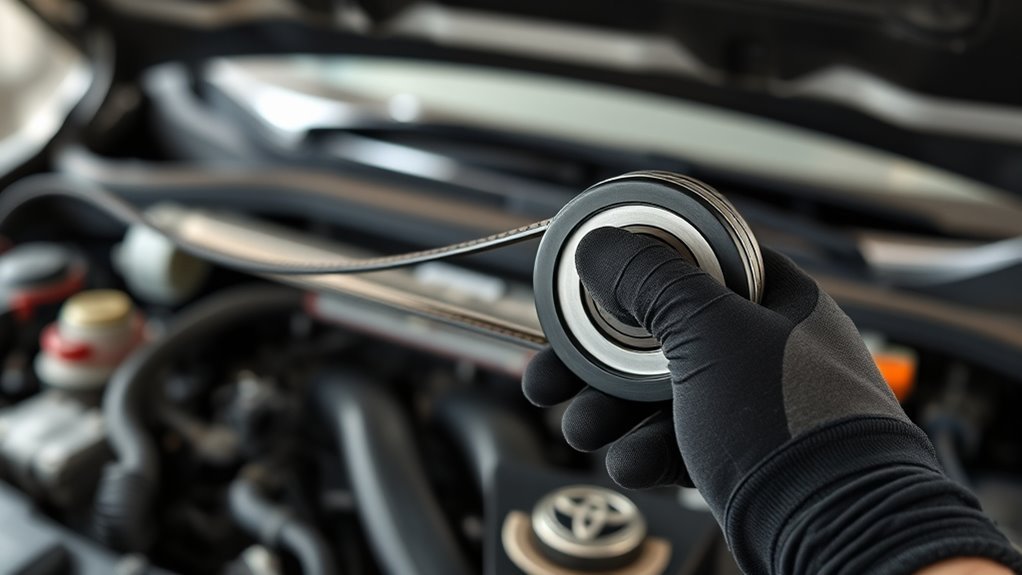
The serpentine belt, which Toyota calls a drive belt or V-ribbed belt, transfers crankshaft rotation to external accessories. On both gasoline engines covered here, it drives the alternator, A/C compressor, and engine water pump. Pulley routing and service access differ between the 2.5-liter 2AR-FE four-cylinder and 3.5-liter 2GR-FE V6, so use the routing diagram and service information for your exact engine.
| 2012 Camry Powertrain | Belt-Driven Functions Covered Here | Steering and Scope Note |
|---|---|---|
| 2.5L gasoline, 2AR-FE | Alternator, A/C compressor, and engine water pump | Electric power steering; use 2AR-FE routing |
| 3.5L gasoline, 2GR-FE | Alternator, A/C compressor, and engine water pump | Electric power steering; use 2GR-FE routing |
| 2.5L Hybrid, 2AR-FXE | Not covered by this gasoline-model guide | Use VIN-specific hybrid service information |
If the gasoline-model belt slips, jumps a groove, or breaks, the alternator may stop charging, the A/C may stop working, and the water pump may stop circulating coolant. Treat a battery warning light, rising coolant temperature, steam, or sudden severe belt noise as a reason to pull over safely and shut the engine off.
The 2012 Camry uses electric power steering. Unlike an older vehicle with a belt-driven hydraulic pump, this Camry does not lose steering assist simply because a hydraulic steering pulley stops. A broken belt is still an immediate safety concern because charging and coolant circulation can stop.
The ribbed side must sit fully inside the matching pulley grooves. Toyota says to inspect drive belts for cracks, excessive wear, and oiliness, check tension, and replace damaged belts. Also look for missing rib material, exposed cords, edge fraying, glazing, contamination, and signs that the belt has moved out of a groove.
Warning: Do not put your hands, sleeves, hair, or tools near a moving belt. Perform close inspection with the engine off and cool. If you need to listen for noise with the engine running, keep clear of the belt path and rotating pulleys.
Serpentine Belt vs. Timing Chain: Key Differences
A serpentine belt and a timing chain are different parts. The serpentine belt sits outside the engine and drives accessories. The timing chain runs inside the engine and synchronizes the crankshaft and camshafts.
Toyota’s timing-belt and timing-chain reference lists timing chains for the 2012 Camry four-cylinder and V6 gasoline engines. You do not have a scheduled timing-belt replacement on these engines, but you still have an external drive belt that needs routine inspection.
| Feature | Serpentine Belt | Timing Chain |
|---|---|---|
| Location | Outside the engine | Inside the engine |
| Job | Drives external accessories | Controls valve timing |
| Maintenance approach | Scheduled visual inspection and condition-based replacement | Internal diagnosis when symptoms or faults appear |
| Failure impact | Charging, A/C, and water-pump loss | Serious engine-timing problems |
What Is the 2012 Camry Serpentine Belt Inspection Interval?
For a 2012 Toyota Camry gasoline model, Toyota’s factory schedule says to inspect the drive belt at 60,000 miles or 72 months, then every 15,000 miles or 18 months afterward. Use whichever limit comes first. Toyota does not list a single mandatory replacement mileage for this belt.
| Scheduled Inspection | Mileage | Time |
|---|---|---|
| Initial inspection | 60,000 miles | 72 months |
| Next inspection | 75,000 miles | 90 months |
| Following inspection | 90,000 miles | 108 months |
| Continuing schedule | Every additional 15,000 miles | Every additional 18 months |
Replace the belt when inspection finds cracks that indicate damage, exposed cords, missing rib chunks, heavy glazing, oil or coolant saturation, frayed edges, measurable rib-material loss, or poor pulley-groove fit. Persistent squeal, chirp, or flutter also needs diagnosis, but a new belt should not be installed until you check the tensioner, pulley alignment, bearings, and fluid leaks.
If records do not show a belt inspection at or after 60,000 miles/72 months, or the belt may be original, inspect it now. Age alone does not prove the belt has failed, but a belt that has spent more than a decade under heat, tension, and possible contamination deserves a close rib-wear and accessory-drive check.
Scope: This guide excludes the 2012 Camry Hybrid with the 2AR-FXE engine. Do not use a gasoline-model routing diagram or replacement procedure on a Hybrid. Confirm the VIN, engine, and hybrid-specific Toyota service information before buying parts or beginning work.
How Do You Spot Early Serpentine Belt Wear?
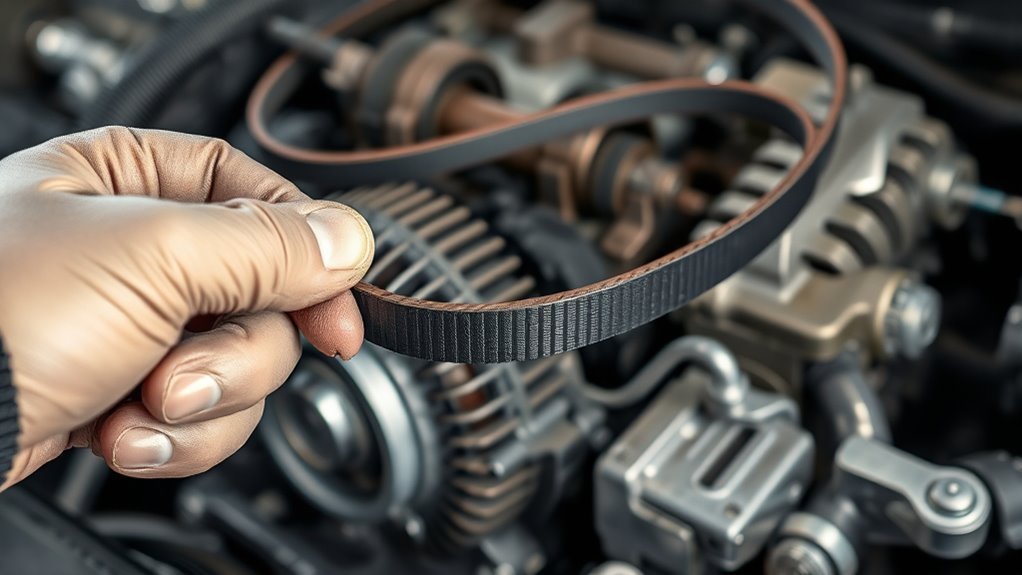
Inspect the belt with the engine off and cool. Use a flashlight and inspection mirror to view the ribbed side, smooth back, and both edges. Do not reach into the belt path or try to rotate the engine unless you have the correct procedure and tools. A technician can inspect hidden sections if access is limited.
What Should You Look for on the Belt Surface?
Look for cracks, fraying, glazing, missing chunks, exposed cords, oil contamination, coolant residue, and ribs that look flattened, widened, rounded, or uneven. Cracks remain important, but they are not the only wear sign.
Gates explains that modern EPDM belts may run 100,000 miles or more without obvious cracking and that roughly 5% rib-material loss can create drive problems. Use cracks as one clue, not the only pass-or-fail test.
| Defect | What It May Mean | Action |
|---|---|---|
| Cracks or exposed cords | Rubber breakdown or structural wear | Replace the damaged belt |
| Frayed edge | Misalignment, edge contact, or pulley damage | Inspect pulleys and replace the belt |
| Glazing | Slippage or excess heat | Check the tensioner and pulleys |
| Missing rib chunks | Advanced belt damage | Replace immediately |
| Oil or coolant | A leak has contaminated the belt path | Repair the leak and replace the belt |
| Rounded, flattened, or widened grooves | EPDM rib-material loss | Measure with a compatible wear gauge |
When using a compatible EPDM belt-wear gauge, press it gently into the belt grooves with the engine off. Gates says a gauge that remains seated and resists side-to-side movement indicates usable rib profile. A gauge that rocks laterally indicates worn grooves and a belt that needs replacement.
For a broader symptom guide covering other model years, see Toyota Camry serpentine belt failure signs. This page remains focused on the 2012 inspection interval, engine effects, and replacement decision.
What Does Squealing or Chirping Mean?
A quiet belt drive is normal. A new squeal, chirp, rhythmic tick, or flutter during startup, acceleration, or A/C use means you should inspect the system. Noise can come from belt wear, weak tension, pulley misalignment, a rough bearing, contamination, or the wrong belt size.
Note when the sound occurs. A startup squeal can indicate slip under sudden accessory load. A chirp that changes with engine speed often points toward alignment trouble. Grinding or a rough growl can indicate a pulley or accessory bearing. Do not assume that replacing the belt alone will fix every noise.
How Do You Check the Tensioner and Pulleys?
The automatic tensioner must maintain enough force to prevent slip without overloading accessory bearings. With the engine off, look for a crooked tensioner arm, pulley wobble, corrosion, binding, or a belt that sits unevenly. A complete bearing and pulley check normally requires belt removal so each accessible pulley can be turned and checked separately.
| Symptom | Likely Area | Action |
|---|---|---|
| Squeak or vibration | Tensioner or pulley bearing | Inspect and replace the faulty part |
| Belt walks out of a groove | Misalignment or pulley damage | Correct the cause before fitting a new belt |
| Belt slaps or flutters | Weak tensioner damping | Replace the tensioner if diagnosis confirms failure |
What Should You Do When Belt Symptoms Appear?
If your Camry squeals, chirps, shows a battery warning light, runs hot, or has visible belt damage, treat the symptom as an accessory-drive problem until inspection proves otherwise. Use this order: stop if the car is unsafe, inspect the belt, identify the root cause, and replace every failed part.
How to Inspect the Belt Safely
- Park on a level surface, set the parking brake, shut the engine off, remove the key, and let the engine cool.
- Open the hood and locate the belt-routing decal if present. If it is missing, photograph the routing before any removal.
- Use a flashlight and mirror to inspect the ribbed side, smooth back, and both edges without reaching into the belt path.
- Check pulley grooves for rubber buildup, oil, coolant, grit, or visible damage.
- Look at the tensioner and idler pulleys for wobble, an unusual angle, corrosion, or signs of bearing trouble.
- Replace a damaged belt, but repair any leaking component, failed pulley, or faulty tensioner that caused the damage.
| Component | What to Look For | Best Fix |
|---|---|---|
| Belt | Fraying, glazing, missing ribs, exposed cords, contamination, poor groove fit | Replace the belt |
| Tensioner | Bounce, binding, crooked travel, weak return, or noise | Replace it if faulty |
| Pulleys | Wobble, damaged grooves, rough bearing movement | Replace the damaged pulley or accessory |
| Leaks | Oil or coolant on the belt path | Repair the leak before fitting a new belt |
Can You Drive Temporarily With Belt Noise?
Only consider a short drive to a nearby repair shop when the belt is fully seated, has no exposed cords, missing rib sections, contamination, or edge damage, and the car has no battery warning, rising temperature, steam, burning smell, or severe noise. Avoid high engine speed and stop immediately if the symptom worsens.
Do not drive if the belt is off a groove, heavily frayed, oil-soaked, coolant-soaked, missing rib chunks, or linked to overheating or charging loss. Arrange a tow. Do not apply belt dressing, silicone spray, oil, or household lubricant because these products can contaminate the belt and pulley grooves without correcting the cause.
Pro Tip: Before removing the old belt, take a phone photo of the routing from two angles. A belt routed one pulley off can appear to fit, then squeal, track poorly, or come off after startup.
Is 2012 Camry Serpentine Belt Replacement a DIY Job?
A visual inspection is approachable for many owners, but replacement is a moderate mechanical job rather than a universal beginner procedure. You must confirm the engine-specific routing, control the spring-loaded automatic tensioner, keep every rib seated, and inspect the pulleys before startup.
Access also differs by engine. Toyota’s 3.5L 2GR-FE service procedure begins from the right-front wheel and wheel-opening area before the belt is removed. Do not copy the tensioner direction, access steps, tool size, or routing from a different engine.
Use a professional if the routing decal is missing, the tensioner binds or snaps unevenly, a pulley feels rough, fluid has contaminated the belt path, or you cannot inspect the lower crankshaft-pulley grooves. After installation, the belt must track smoothly without walking, chirping, fluttering, or leaving a pulley groove.
[Products Worth Considering]
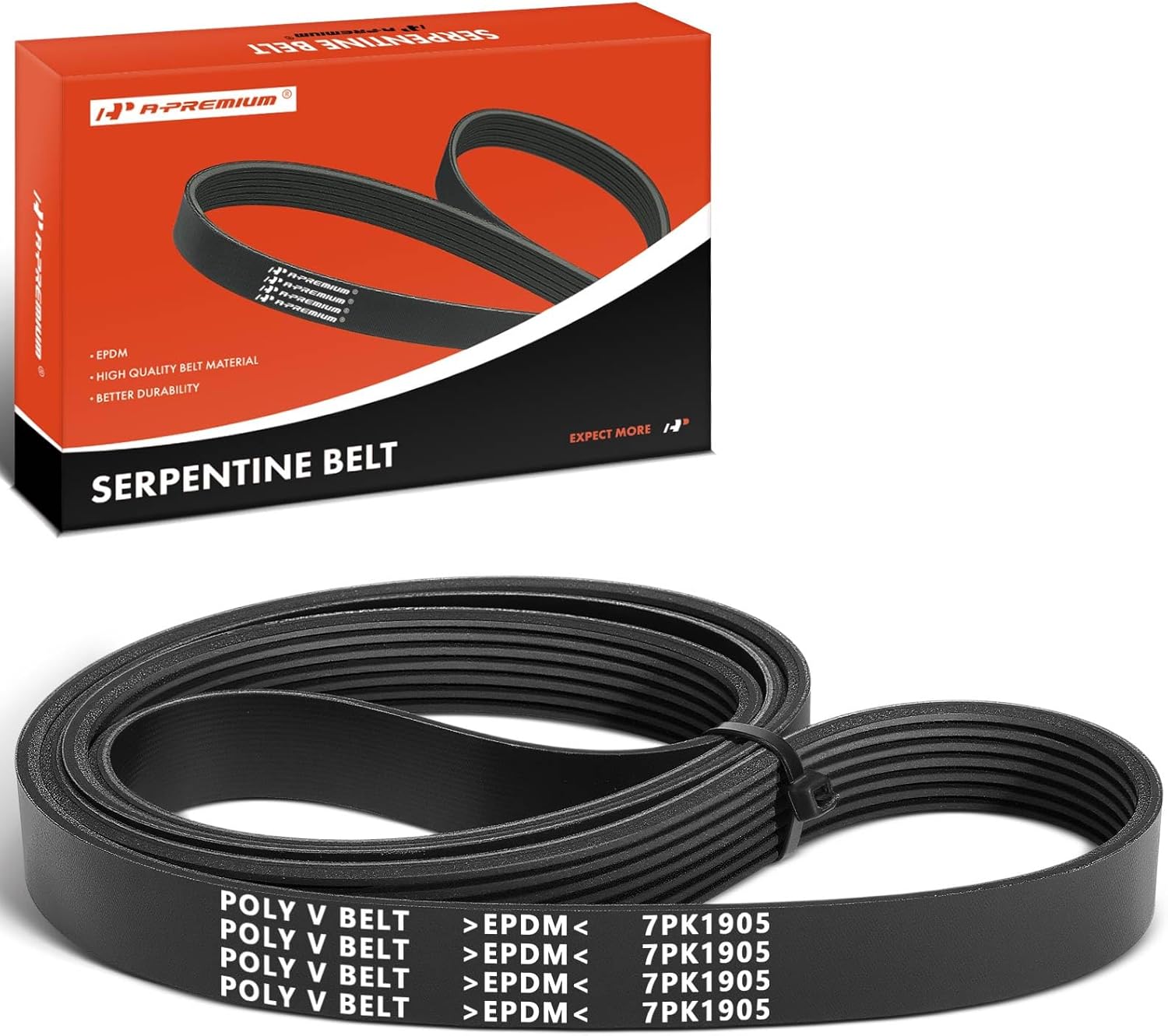
This A-Premium serpentine belt is engineered for select Toyota, Scion, and Pontiac vehicles with the L4 2.4L gas engine, delivering dependable air conditioning drive performance. Made with durable EPDM and precision dimensions, it helps resist cracking, reduce noise, and maintain stable tension for smooth operation. It's designed for straightforward installation and backed by a one-year unlimited-mileage guarantee for added confidence.
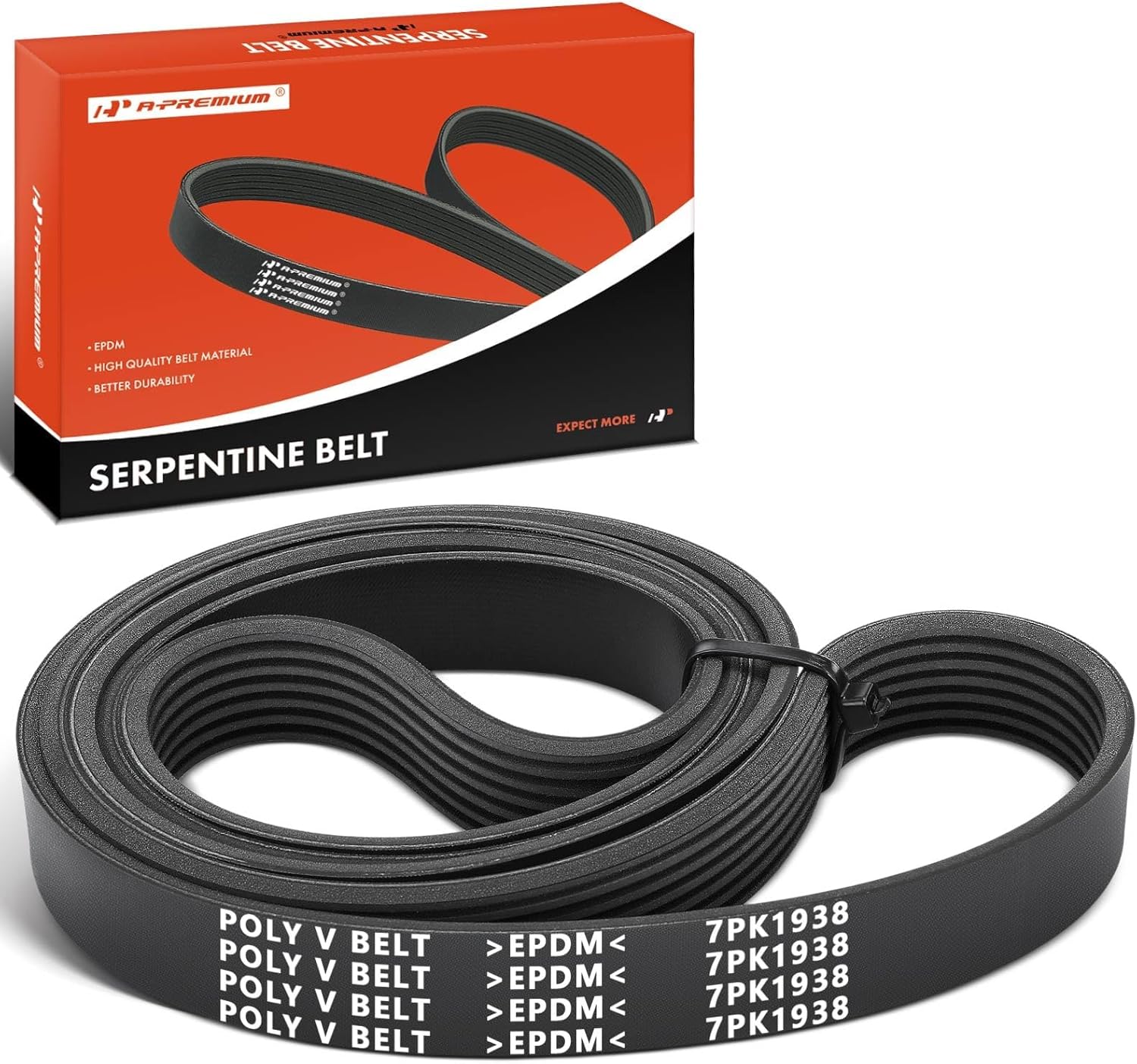
This A-Premium serpentine belt is designed to deliver dependable drive performance for compatible Toyota and Scion vehicles with exact-fit sizing for smooth operation. Built with premium EPDM and polyester cord construction, it helps resist cracking, reduce noise, and maintain stable tension in demanding engine conditions. It is a practical replacement choice for restoring reliable accessory drive performance and long-term confidence.

[Vehicle Fitment]: ① Compatible with Toyota Camry 2012-2017 L4 2.5L, RAV4 2009-2018 L4 2.5L; ② Compatible with Scion tC 2011-2016 L4 2.5L --- Fits DOHC Engine Only
Should You Choose an OEM or Aftermarket Belt?
Both an OEM belt and a high-quality aftermarket belt can work well when the part matches your exact engine and accessory layout. Fit, construction, rib count, and effective length matter more than the label on the package.
Choose OEM when you want the simplest dealer-catalog match by VIN or when the car has had repeat noise or fitment problems. Choose aftermarket when a reputable belt manufacturer lists a verified match with the correct construction, rib count, and effective length.
Before buying, confirm all of the following:
- VIN and 2012 model year
- 2.5-liter 2AR-FE or 3.5-liter 2GR-FE gasoline engine
- Gasoline or hybrid powertrain
- Rib count, width, and effective length
- Production-region or option differences listed in the catalog
The 2.5L and 3.5L gasoline engines do not use one universal belt or routing procedure. If noise caused the replacement, inspect the tensioner, idler pulleys, accessory bearings, alignment, and fluid leaks at the same time. The wrong belt or an unresolved pulley problem can make a new belt squeal or fail early.
[Products Worth Considering]

Advanced Goodyear Engineering: From V-Belts to Serpentine, Goodyear belts are built for the heat, load, and RPM demands of modern engines

[Vehicle Fitment-1]: Compatible with Hyundai Accent/Veloster 2016-2017 L4 1.6L, Elantra 2017-2021 L4 1.6L, Elantra GT 2018-2020 L4 1.6L, Kona 2018-2019 L4 1.6L, Sonata 2015-2019 L4 1.6L, Tucson 2016-2018 L4 1.6L; Compatible with Kia Forte 2019-2023 L4 1.6L, Forte Koup 2014-2015 2017 L4 1.6L, Forte5 2014-2018 2020-2023 L4 1.6L, Optima 2016-2020 L4 1.6L, Rio 2013-2017 L4 1.6L, Soul 2014-2016 L4 1.6L, Soul 2017-2019 L4 1.6L ( With 120A. Alternator), Soul 2020-2022 L4 1.6L
Proprietary “Run Quiet” technology for better grip, less slip resulting in a quieter operation.
How Much Does 2012 Camry Serpentine Belt Replacement Cost?
RepairPal’s 2012-specific estimate page lists about $121 to $161 before taxes, fees, location adjustments, and related repairs. The page says its estimate was last updated January 28, 2026; this article rechecked the page on July 31, 2026. RepairPal separates roughly $85–$125 for labor and about $36 for the belt.
Treat this as a baseline, not a guaranteed quote. The total rises if the shop also replaces a failed tensioner, idler pulley, accessory bearing, water pump, or leaking component that contaminated the belt. That added work may be necessary because a damaged pulley or weak tensioner can ruin the replacement belt.
Ask for a written estimate that separates the belt, tensioner, pulleys, labor, shop supplies, taxes, and warranty terms. Also ask the shop to show you the old belt’s defect and identify the root cause on the invoice.
[Products Worth Considering]

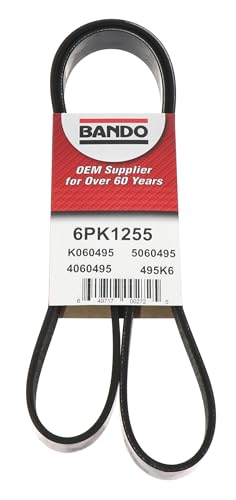
[PERFECT OE MATCH & COMPATIBILITY] Expertly engineered 6PK1255 (90916-A2021, K060495, 6K494) serpentine drive belt, precision-molded for a perfect factory fit. Highly compatible with Toyota Camry 2012-2017 2.5L L4 (Gasoline Engine Only, Non-Hybrid), Toyota RAV4 2009-2018 2.5L L4 (Gas Only, Not for Hybrid Models), and Scion tC 2011-2016 2.5L. Also fits Hyundai Accent 2016-2017 1.6L, 2016-2017 1.6L, Kia Rio 2013-2017 1.6L, and Kia Soul 2014-2016 1.6L (Models with 120A Alternator).
What Should a Professional Belt Service Include?
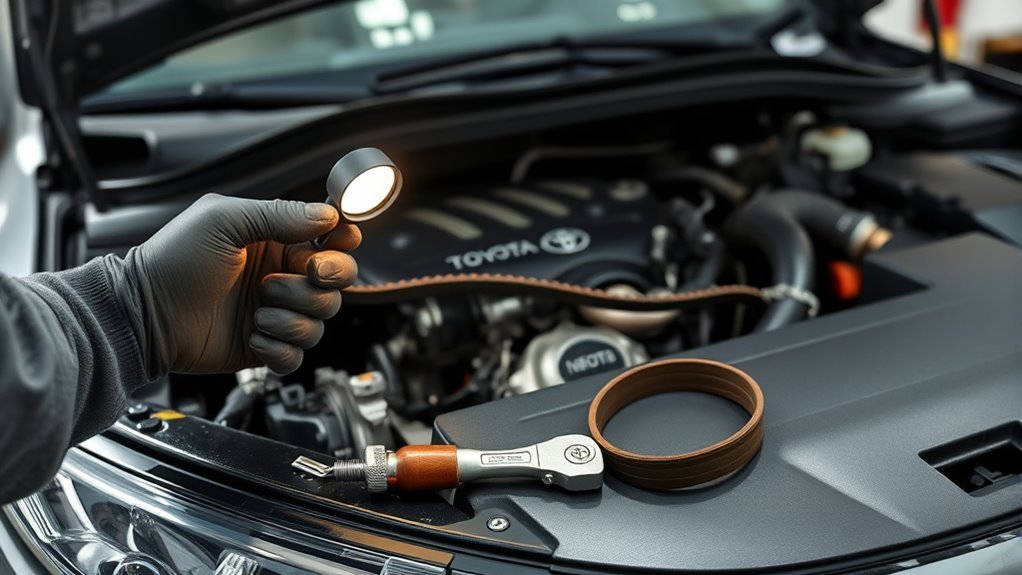
A proper belt service checks more than the visible rubber. The technician should inspect rib wear, belt alignment, groove seating, tensioner travel, idler bearings, accessory pulleys, and signs of oil or coolant contamination.
During replacement, the technician releases belt tension, removes the old belt, compares the new belt’s length and rib count, checks pulley rotation, follows the engine-specific routing diagram, confirms every rib is seated, and verifies smooth tracking after startup.
Ask whether the tensioner, idlers, water-pump pulley and bearing, alternator pulley, A/C pulley, and overall alignment passed inspection. If contamination or pulley damage caused the old belt to fail, the invoice should identify that root-cause repair. Replacing the belt alone may provide only temporary relief.
Frequently Asked Questions
How often do you change the serpentine belt on a Toyota Camry?
For a 2012 Toyota Camry gasoline model, Toyota schedules the first drive-belt inspection at 60,000 miles or 72 months, then every 15,000 miles or 18 months. Toyota does not give one fixed replacement mileage. Replace the belt when inspection finds damage, contamination, poor groove fit, measurable rib wear, or a confirmed belt-drive fault.
How long do Toyota serpentine belts last?
A serpentine belt has no guaranteed lifespan because heat, age, alignment, tensioner condition, fluid leaks, and driving conditions change its wear rate. Follow Toyota’s inspection schedule and use rib profile, surface condition, groove fit, contamination, and noise to decide when replacement is due.
Can a serpentine belt last 200,000 miles?
A belt may remain installed for very high mileage, but 200,000 miles is not a safe maintenance target. EPDM belts can lose rib material without obvious cracks, while tensioners, pulleys, and bearings also wear. Inspect the system on Toyota’s schedule and replace damaged or measurably worn parts.
Is a squealing Camry belt always a bad belt?
No. Squeal can come from a worn or contaminated belt, but it can also come from a weak tensioner, misaligned pulley, rough bearing, accessory drag, or wrong belt size. Inspect the complete accessory drive before replacing parts.
Should I use belt dressing to stop a Camry serpentine belt squeal?
No. Belt dressing is not a proper repair for a modern serpentine belt. It can contaminate the belt, attract debris, and hide the real cause. Diagnose belt wear, tension, alignment, pulley bearings, accessory drag, and fluid leaks instead.
Can you drive with a damaged serpentine belt?
Do not drive if the belt has exposed cords, missing rib chunks, severe fraying, fluid saturation, poor groove fit, or if the car shows a battery warning, rising temperature, steam, burning smell, or severe noise. Tow the car. A short drive to a nearby shop is reasonable only when the belt is fully seated, no damage is visible, and no warning or overheating symptom is present.
What happens if the serpentine belt breaks on a 2012 Camry?
On a gasoline 2012 Camry, the alternator, A/C compressor, and engine water pump can stop. The battery warning may appear and engine temperature may rise as coolant circulation stops. Pull over safely, shut the engine off, and arrange repair or towing.
Does the 2012 Camry serpentine belt power the steering?
No. The 2012 Camry uses electric power steering, so the serpentine belt does not directly turn a hydraulic steering pump. A broken belt is still urgent because the alternator and water pump can stop operating.
Can I replace a 2012 Camry serpentine belt myself?
A basic inspection is approachable, but replacement is a moderate job. You need the correct 2AR-FE or 2GR-FE routing, safe control of the spring-loaded tensioner, access to the lower pulleys, and a complete pulley and bearing check. Use a shop if routing is uncertain, access is limited, or the tensioner or pulleys show faults.
Does a 2012 Toyota Camry have a timing belt or timing chain?
The 2012 Camry 2.5L four-cylinder and 3.5L V6 gasoline engines use timing chains, not scheduled-replacement timing belts. They still use an external accessory drive belt that Toyota tells you to inspect at the specified intervals.
Conclusion
For a 2012 Toyota Camry gasoline model, inspect the drive belt at 60,000 miles or 72 months, then every 15,000 miles or 18 months. Toyota makes replacement condition-based, so mileage alone does not decide when the belt comes off.
Replace a belt that has exposed cords, missing rib material, heavy fraying, contamination, poor groove fit, measurable rib wear, or confirmed damage. If records do not show the scheduled inspection or the belt may be original, arrange an inspection now. Ask the technician to check the tensioner, pulleys, water pump, alignment, bearings, and leaks before installing a new belt.
How this guide was checked: The interval was cross-checked against Toyota’s 2012 Camry maintenance guide. Engine-specific belt and water-pump relationships were checked against 2AR-FE and 2GR-FE service information. Electric-power-steering information was checked against Toyota’s 2012 Camry release. EPDM wear guidance comes from Gates, belt-noise and belt-dressing guidance comes from Dayco, and the cost range was rechecked against RepairPal on July 31, 2026. This is a documentation-based guide and does not claim a hands-on inspection of your vehicle.
Sources
- Toyota 2012 Camry Warranty & Maintenance Guide — official drive-belt inspection interval and maintenance-item description.
- Toyota USA Newsroom: Seventh-Generation Camry for 2012 — confirms the 2012 Camry’s electric power-steering system.
- Toyota Support: Timing Belt or Timing Chain Reference — timing-chain information for 2012 Camry gasoline engines.
- Gates Tech Tip TT002-15 — EPDM rib-material loss, crack limitations, belt-wear measurement, and the 5% wear reference.
- Operation CHARM: 2012 Camry 2AR-FE Water Pump Installation — connects the 2.5L water-pump service procedure with V-ribbed-belt installation.
- Operation CHARM: 2012 Camry 2GR-FE Water Pump Removal — connects the 3.5L water-pump pulley and service procedure with V-ribbed-belt removal.
- Operation CHARM: 2012 Camry 2GR-FE Drive Belt Inspection — Toyota service-manual-style criteria for cracks, exposed cords, missing rib chunks, and groove fit.
- RepairPal 2012 Toyota Camry Serpentine Belt Replacement Cost — estimate range and labor/parts breakdown, rechecked July 31, 2026.
- Dayco Technical Guidance on Belt Squeal — contamination, tensioner, pulley, bearing, and belt-dressing guidance.