
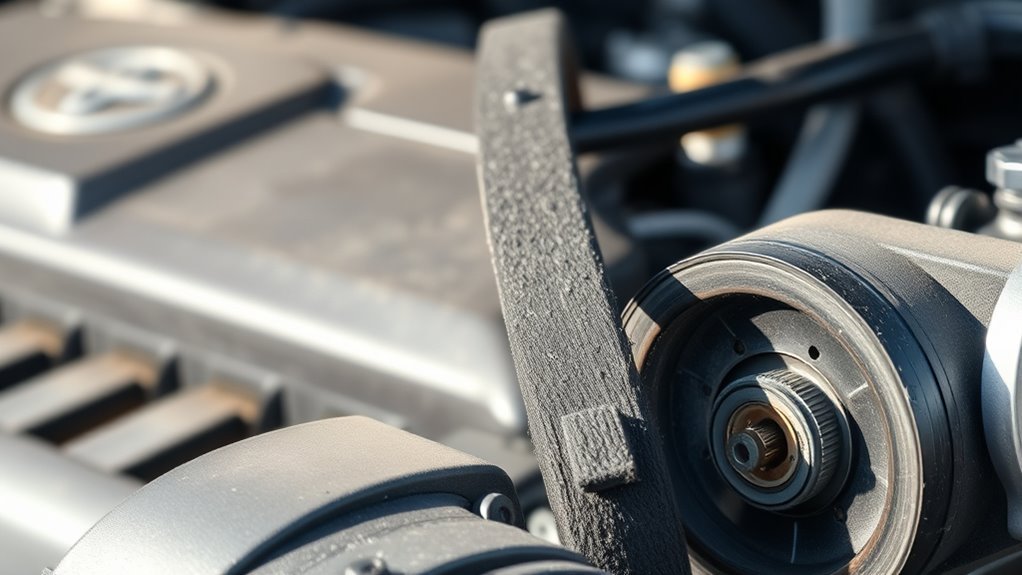
Toyota Camry serpentine belt failure signs include persistent squealing or chirping, frayed edges, missing ribs, glazing, belt dust, a burning-rubber smell, belt walk, and accessory problems. Stop driving if the belt is shredding or off-track, smoke appears, steering assist changes, the engine temperature rises, or a charging warning appears with belt noise. Camry belt layouts and the accessories they drive vary by year, engine, market, and hybrid system, so verify the VIN-specific routing before replacing parts.
Last updated: July 23, 2026. Cost data, hybrid-model guidance, source links, and safety steps were rechecked.
Quick Answer
Replace a Camry serpentine belt if it is oil-soaked, frayed, glazed, chunked, missing ribs, exposing cords, riding off a pulley, or slipping after warm-up. On modern EPDM belts, do not rely on cracks alone. Rib material loss, contamination, pulley alignment, and tensioner condition can reveal serious wear before obvious cracks appear.
Key Takeaways
- The urgent signs are belt squeal, a burning smell, smoke, a charging warning, sudden accessory loss, belt wobble, frayed edges, missing ribs, exposed cords, or fluid contamination.
- Modern EPDM serpentine belts can be badly worn even when they show few cracks, so check rib depth, material loss, glazing, tracking, and pulley alignment.
- A new belt can fail quickly if a leak, weak tensioner, rough idler, seized mechanical pulley, or misaligned accessory is not corrected first.
- The 2025 and 2026 U.S. Camry lineups are all-hybrid. A charging or accessory warning on these vehicles may involve the hybrid electrical system rather than a conventional belt-driven alternator.
- Do not touch or closely inspect a moving belt. Perform hands-on checks with the engine off, the key removed, and the engine cool.
At a Glance
| Time Required | About 10–20 minutes for an engine-off inspection; replacement time varies by model year, engine, access, and the parts being replaced |
| Difficulty | Beginner for visual inspection; moderate for replacement because the tensioner is spring-loaded and routing is model-specific |
| Tools Needed | Flashlight, gloves, safety glasses, inspection mirror, belt-wear gauge, and the model-specific tensioner tool; a torque wrench is needed if a pulley or tensioner is replaced |
| Typical Shop Cost | As of July 2026, RepairPal lists an average Camry serpentine-belt replacement cost of about $146–$202 before taxes, location differences, and related pulley or tensioner repairs |
Warning: Never touch the serpentine belt with the engine running. Keep hands, clothing, hair, and tools away from pulleys. Let the engine cool, remove the key, and remember that the belt tensioner is spring-loaded and can snap back with force.
Can You Drive With a Failing Camry Serpentine Belt?
Whether you should drive depends on the symptom, the belt’s condition, and which accessories your exact Camry drives mechanically. Use the most serious symptom to make the decision.
| What you notice | Recommended action | Why |
|---|---|---|
| Smoke, strong burning-rubber smell, belt off a pulley, exposed cords, missing sections, severe fraying, or a seized pulley | Shut the engine off and arrange towing | The belt can break, damage nearby parts, or stop driving a required accessory |
| Temperature rising, steering assist changing, or a charging warning appearing with belt noise | Pull over safely and shut the engine off | Cooling, steering, charging, or another system may be affected depending on the layout |
| Belt fully seated, temperature normal, no warning lights, no smell, and only minor surface cracking | Arrange inspection promptly and avoid unnecessary driving | Minor cracks alone do not measure EPDM rib wear, and the condition can worsen without warning |
| Brief chirp only during a wet or cold start, with no visible damage or other symptoms | Schedule an inspection if it repeats | Moisture can cause a temporary sound, but repeated chirping can indicate alignment, tensioner, or belt wear |
What Are the Main Toyota Camry Serpentine Belt Failure Signs?
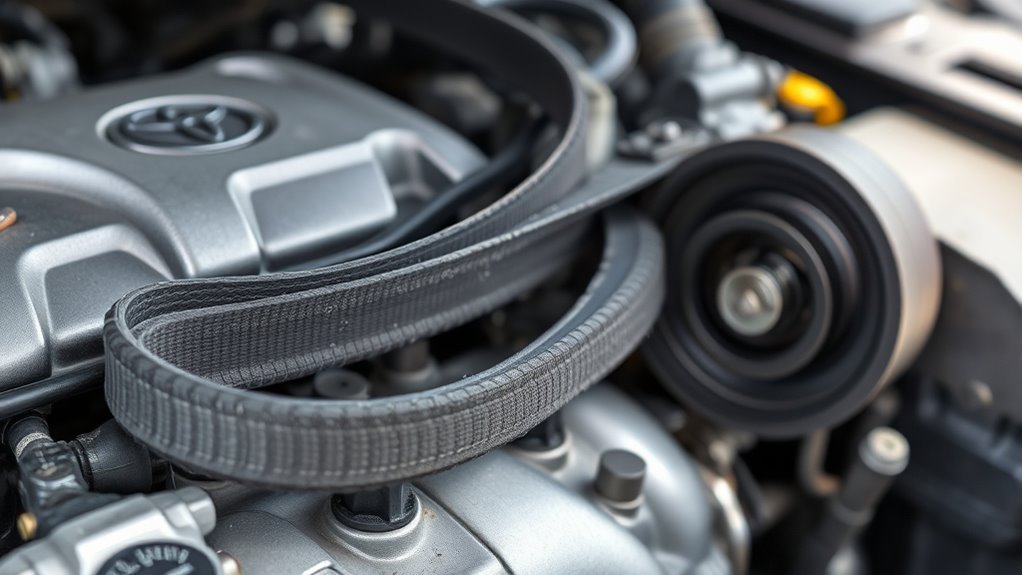
Check the Camry’s accessory drive promptly if you notice any of these symptoms:
- Persistent squeal or chirp: A brief chirp on a cold or wet start can occur, but repeated noise after warm-up usually points to slippage, contamination, weak tension, pulley wear, or misalignment.
- Grinding, clicking, or rattling near the belt path: These sounds can come from a worn mechanical idler, tensioner, pulley bearing, or belt-driven accessory.
- Battery or charging warning: On a Camry with a belt-driven alternator, a slipping or broken belt may reduce charging. Hybrid Camrys use a different electrical architecture, so do not assume the belt is the cause of a hybrid charging message.
- Sudden heavy steering: This applies to Camrys equipped with belt-driven hydraulic power steering. Many later models use electric power steering, so verify the system fitted to your year and trim.
- Weak A/C or accessory loss: A belt-driven accessory may work poorly or stop if the belt slips. Hybrid and other electrically driven accessories may have different causes.
- Burning-rubber smell, smoke, or visible belt dust: Stop and inspect. The belt may be slipping, rubbing against another part, or dragging over a failing mechanical pulley.
- Engine temperature rising: Shut the engine off if temperature rises. The belt may drive a cooling component on some layouts, while other Camrys use electrically driven cooling components.
Note: A bad serpentine belt does not always turn on the check engine light. A charging warning, squeal, burning smell, accessory change, abnormal belt tracking, or visible belt damage is usually a more direct clue.
How Do You Confirm the Correct Camry Belt Setup?
Before loosening the tensioner, confirm that your exact Camry year, engine, trim, market, and drivetrain use the belt layout you are inspecting. Use the VIN, the under-hood routing label, the owner’s manual, or the official Toyota Owners manuals and warranties page.
The 2025 U.S. Camry became exclusively hybrid, and the 2026 lineup remains all-hybrid. A warning on these vehicles can involve the hybrid generator, inverter, electric motor, motor-driven cooling component, compressor, wiring, or control system. Do not diagnose a hybrid charging or accessory warning from belt appearance alone.
Take a clear photo of the belt path before removal. If the routing label is missing or unreadable, do not guess. A belt routed one rib off, twisted, or passed around the wrong side of a pulley can shred, slip, or damage nearby components.
Hybrid safety: Keep hands and tools away from orange high-voltage cables, inverter connectors, and hybrid electrical components. A normal belt inspection is limited to identified external mechanical parts. Have a qualified technician diagnose a hybrid-system warning or any condition that requires high-voltage access.
Source note: This guide combines Toyota model-specific documentation with Gates and Dayco accessory-drive guidance. It does not replace the VIN-specific Toyota repair procedure for your engine.
How Should You Inspect a Camry Serpentine Belt?
Start with the engine off and cool. Use a flashlight to inspect the belt across the visible top run, ribbed face, smooth back, and edges. The old “count the cracks” method can miss wear on modern EPDM belts, so treat cracking as one clue rather than the only test.
Replace the belt if you find any of these conditions:
- Missing ribs, chunking, or exposed cords: The belt has structural damage and may fail without warning.
- Frayed edges: The belt may be running off-track because of pulley misalignment, tensioner wear, or a damaged bracket.
- Glazing or shiny hard spots: The belt has slipped, overheated, or run against a worn surface.
- Rib material loss: Rounded ribs can sit too deeply in the pulley grooves and lose the wedging force needed to transfer power.
- Oil, coolant, power-steering fluid, or other lubricant on the belt: Contamination can soften or swell the rubber and cause slip.
- Deep cracks reaching the cord line: The belt is no longer reliable.
- Stiff or brittle rubber: Heat and age have reduced the belt’s flexibility.
Pro Tip: Use a compatible serpentine-belt wear gauge on an EPDM belt. A belt can look acceptable from above while its ribs have lost enough material to slip under accessory load.
Cracks matter, but rib wear, material loss, contamination, pulley alignment, and tensioner condition determine whether the belt can still grip correctly.
Which Belt Wear Patterns Mean Replace It Now?
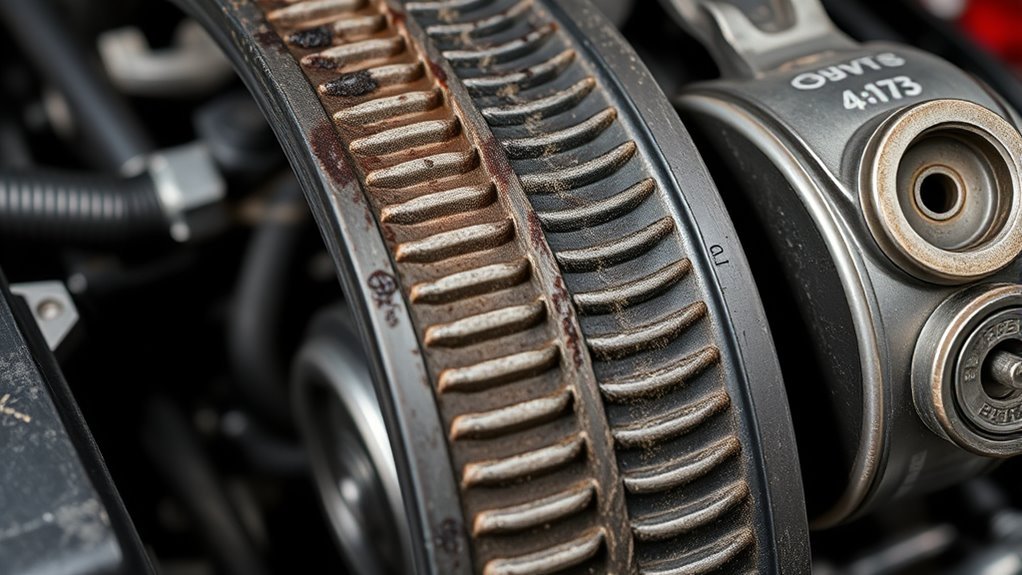
If you find oil, coolant, or another fluid on the serpentine belt, replace the contaminated belt and repair the leak before installing the new one. Fluid can make EPDM rubber swell, soften, glaze, or slip. Possible sources near a Camry belt path vary by engine but may include engine-oil seepage, a coolant leak, hydraulic power-steering fluid on older equipped models, or fluid spilled during service.
Use the wear pattern to identify the likely root cause:
| What you see | Likely cause | What to do |
|---|---|---|
| Wet or swollen belt ribs | Oil, coolant, or other fluid contamination | Find and repair the leak, clean the affected pulley surfaces as directed, and replace the belt |
| One edge fraying | Misaligned pulley, worn tensioner pivot, bent bracket, or off-track belt | Correct the alignment problem before fitting a new belt |
| Polished or glazed rib face | Slippage, heat, weak tension, or pulley-groove wear | Inspect the tensioner, pulley grooves, alignment, and accessory load |
| Belt dust near one pulley | Rib wear, misalignment, or contact with another part | Inspect the complete path and locate the point of rubbing |
| Missing chunks or exposed cord | Advanced belt failure | Do not continue driving; replace the belt and inspect every identified mechanical pulley |
[Products Worth Considering]

This reusable stretch belt installation and removal tool helps guide stretch-fit belts on and off pulleys with greater control during service. It is designed to improve alignment, reduce belt damage, and make installation easier on compatible vehicles. Built for repeated use, it offers a practical solution for mechanics and DIY repairs working with stretch belt systems.

This A-Premium serpentine belt drive kit is designed for compatible Toyota Camry, RAV4, and Scion tC models with a DOHC 2.5L L4 engine. It includes a serpentine belt and belt tensioner to help maintain smooth engine operation, reduce noise, and support reliable power transfer. Built for dependable replacement performance, it also comes with a one-year unlimited-mileage guarantee for added peace of mind.
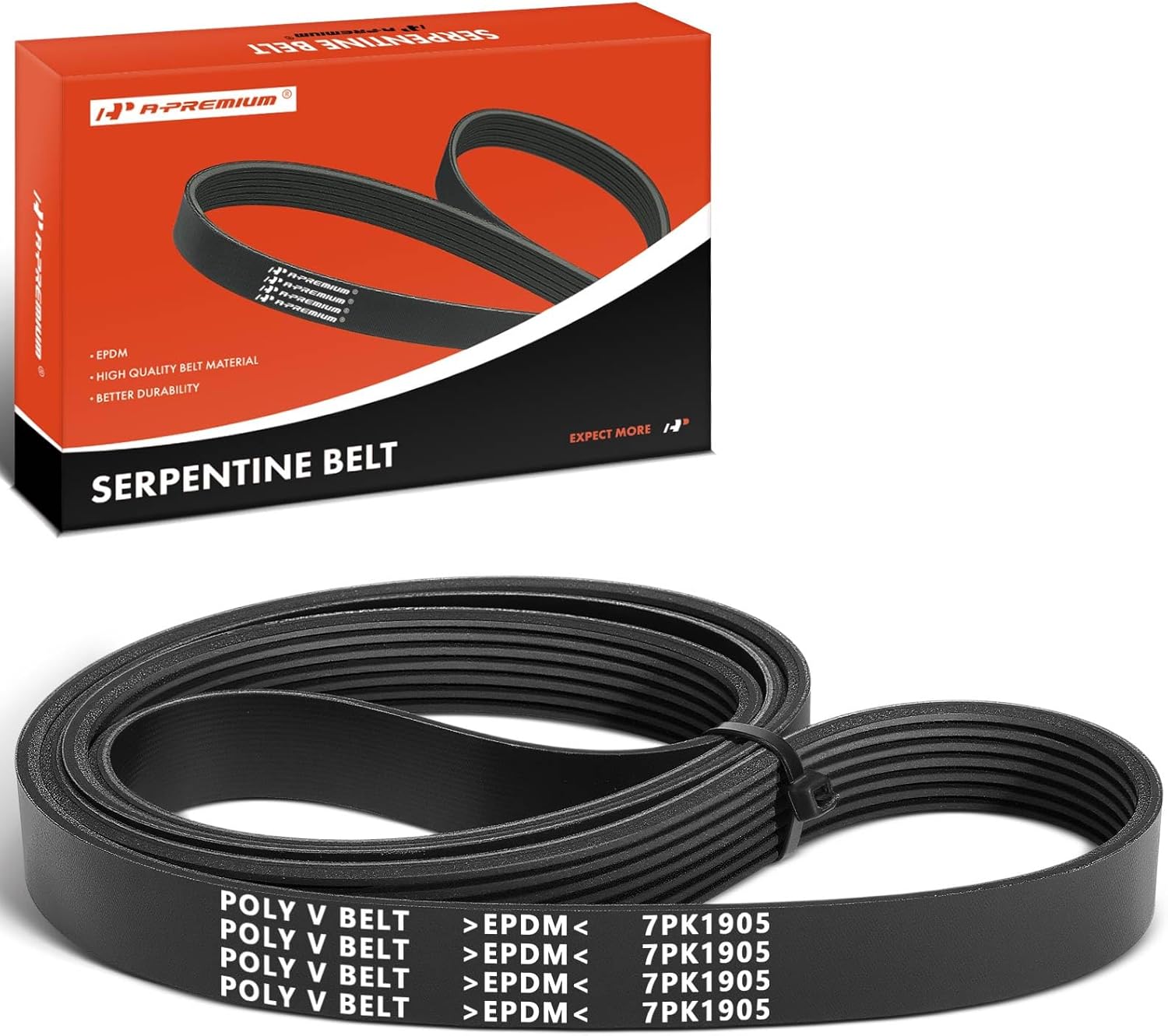
This A-Premium serpentine belt is engineered for select Toyota, Scion, and Pontiac vehicles with the L4 2.4L gas engine, delivering dependable air conditioning drive performance. Made with durable EPDM and precision dimensions, it helps resist cracking, reduce noise, and maintain stable tension for smooth operation. It's designed for straightforward installation and backed by a one-year unlimited-mileage guarantee for added confidence.
How Do You Check the Tensioner and Mechanical Pulleys?
A belt can be the damaged part without being the root cause. Edge wear points toward alignment trouble. Glazing points toward slip or heat. Wobble points toward tensioner, bearing, or mounting wear. Fluid on the belt points toward a leak that must be corrected first.
With the engine off and cool, release belt tension only in the direction specified for your exact engine. Hand-check only the accessible mechanical idlers and pulleys identified in the service procedure. Do not force hybrid-system components, electrical compressors, orange high-voltage connectors, or sealed assemblies.
| What you do | What you hear or feel | What it suggests |
|---|---|---|
| Move the tensioner through its specified range | Binding, jerky travel, or a mechanical snap | Worn tensioner pivot, spring, or assembly |
| Release the tensioner slowly | Weak return, sticking, or poor damping | The tensioner may not maintain belt grip |
| Check an identified mechanical pulley for side play | Rattle, wobble, or looseness | Bearing, mounting, or pulley wear |
| Hand-turn an accessible mechanical pulley | Grinding, roughness, binding, or clicking | Bearing or accessory diagnosis is needed |
| Inspect the belt’s previous tracking marks | Wear concentrated toward one pulley edge | Possible misalignment, bent bracket, or tensioner-pivot wear |
| No abnormal condition found | Smooth movement, quiet rotation, and centered wear | Recheck routing and operation after installation |
If an identified mechanical pulley feels rough, loose, or noisy, diagnose or replace it before installing a new belt. A worn bearing, weak tensioner, or alignment fault can damage a fresh belt quickly.
[Products Worth Considering]
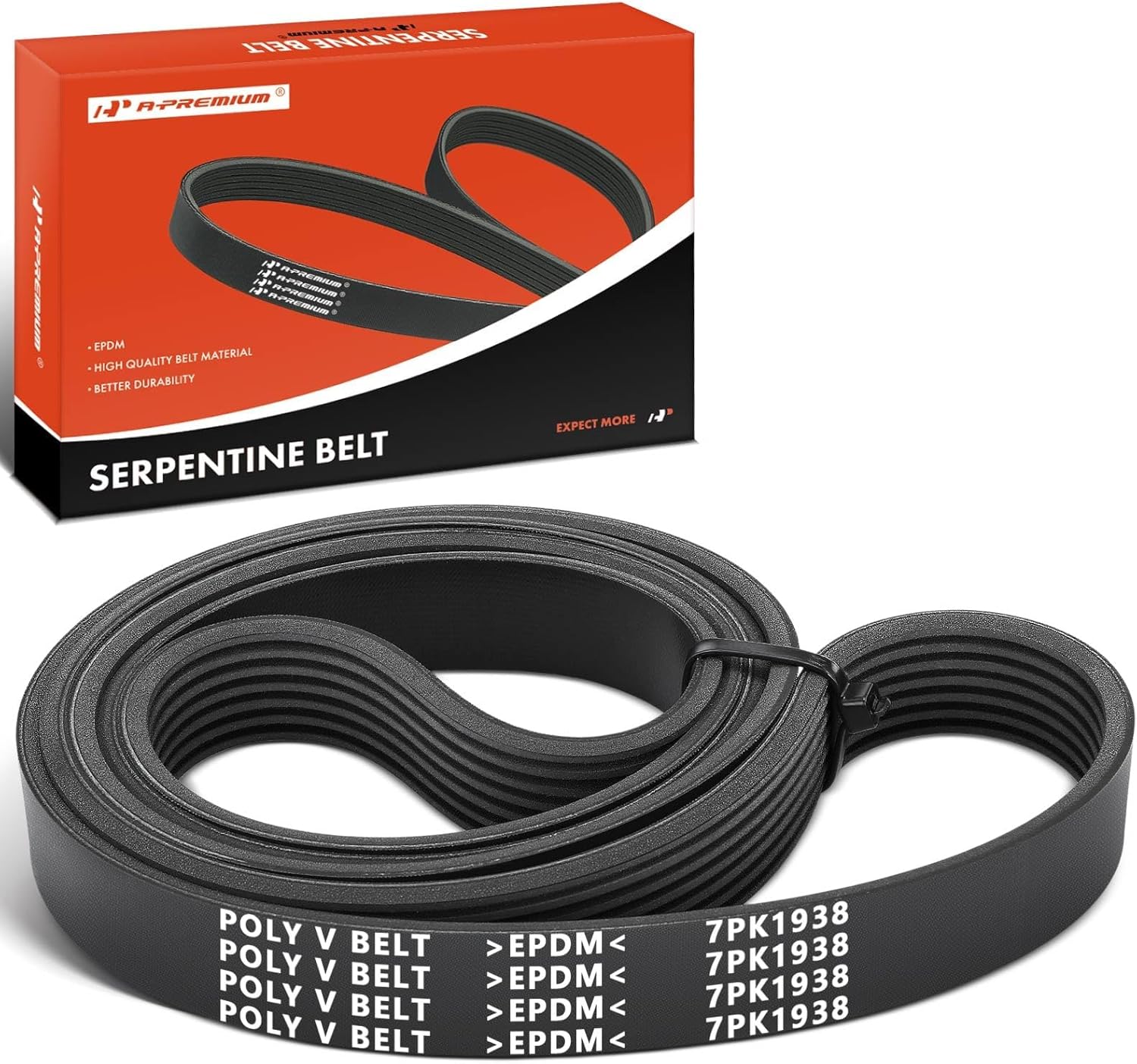
This A-Premium serpentine belt is designed to deliver dependable drive performance for compatible Toyota and Scion vehicles with exact-fit sizing for smooth operation. Built with premium EPDM and polyester cord construction, it helps resist cracking, reduce noise, and maintain stable tension in demanding engine conditions. It is a practical replacement choice for restoring reliable accessory drive performance and long-term confidence.

This A-Premium serpentine belt is designed to deliver dependable drive performance for a wide range of compatible Toyota, Hyundai, Kia, Lexus, and Scion vehicles. Built with EPDM construction and precision dimensions, it helps promote stable tension, reduced noise, and reliable operation in demanding driving conditions. It is a practical replacement choice for maintaining accessory system performance and long-term confidence.

This replacement gas cap is designed to restore a tight fuel-tank seal, helping reduce vapor leaks, prevent check engine light issues, and maintain proper fuel system performance. Built in OE-style form for a wide range of Toyota and Lexus vehicles, it offers a direct DIY fix with durable materials for reliable, long-lasting use.
What Should You Replace, and How Do You Verify the Repair?
Replace a belt that is contaminated, frayed, chunked, glazed, exposing cords, missing ribs, tracking incorrectly, or worn beyond the applicable gauge limit. Replace or repair the tensioner, idler, mechanical pulley, bracket, leak source, or accessory that caused the damage.
For model-specific removal, routing, and installation details, see our Camry serpentine belt replacement guide. This article focuses on identifying failure signs and deciding what must be corrected.
- Verify the application and route. Match the replacement belt to the VIN, engine, rib count, width, and model-specific parts listing. Save a clear photo of the old route.
- Let the engine cool and secure the vehicle. Remove the key and keep your body clear of the tensioner’s travel path.
- Release the tensioner as specified. Use the correct tool point and movement direction for your engine. Do not infer the direction from another Camry generation.
- Compare the old and new belts. Confirm the rib count, width, and effective length before installation.
- Inspect the complete mechanical drive path. Check identified idlers, pulleys, mounting points, alignment, and nearby leak sources.
- Route the new belt exactly as shown. The ribbed side belongs in grooved pulleys, and the smooth side belongs against the designated smooth pulleys.
- Release the tensioner gently. Do not let it snap back. Confirm that every rib is seated and the belt is centered.
- Perform a safe-distance startup check. Remove all tools, start the engine, and observe without leaning over the belt path. Shut the engine off immediately if the belt walks, wobbles, smokes, or makes a harsh noise.
- Recheck after a short test. With the engine off and cool again, inspect belt seating, edge wear, tracking, and fluid leakage.
Toyota recommends Genuine Parts and states that warranty coverage is not dependent on using one replacement-parts brand. Any alternative part should be equivalent in quality and appropriate for the exact application. Follow the part manufacturer’s maintenance schedule if it differs from Toyota’s schedule.
[Products Worth Considering]

This engine water pump kit is designed to help maintain reliable cooling performance across a wide range of compatible Toyota, Lexus, Scion, and Pontiac vehicles. Built with aluminum and tested for leak-free operation, it offers a direct replacement solution that supports engine efficiency and long-term service life. The kit includes a professional water pump and gasket for a convenient installation-ready repair.

The ANCEL AD410 PRO combines engine diagnostics and 12V battery testing in one easy-to-use tool, helping you read and clear check engine codes while checking battery health, cranking, and charging performance. It also provides live data, freeze frame details, and I/M readiness checks to help you diagnose issues faster and prepare for emissions testing. With plug-and-play operation, a clear screen, and broad vehicle compatibility, it is a practical solution for home mechanics and everyday drivers.

This plug-and-play OBD2 scanner helps drivers quickly read and clear engine error codes while providing live data, freeze frame information, I/M readiness, and MIL status for more confident troubleshooting. It adds a built-in voltage test and clear status indicators to support electrical checks and faster diagnostics, making it a practical choice for home users, car enthusiasts, and repair professionals. Compatible with most OBDII vehicles since 1996 and designed with an easy-to-use interface, it offers broad coverage and simple operation in one compact tool.
Why Does a New Camry Belt Still Squeal or Wear?
If the Camry still squeals or the new belt begins wearing quickly, do not assume the replacement belt is defective. Use the symptom pattern to identify what remains unresolved.
| Symptom after repair | Most likely causes | Next check |
|---|---|---|
| Chirp at startup | Belt not fully seated, pulley misalignment, contamination, or tensioner wear | Shut the engine off and recheck rib seating, alignment, and tensioner movement |
| Squeal when a belt-driven load engages | Slipping belt, weak tensioner, accessory drag, or pulley problem | Confirm which accessories are mechanically belt-driven on that exact Camry |
| Belt walks toward one edge | Misaligned pulley, bent bracket, incorrect routing, or worn tensioner pivot | Stop the engine and check pulley alignment and mounting condition |
| New belt becomes shiny quickly | Slippage, contamination, excess heat, or worn pulley grooves | Look for leaks, inadequate tension, drag, and groove wear |
| Charging warning remains on | Charging-system, hybrid-system, wiring, battery, alternator, or belt-drive fault depending on the model | Follow the correct charging-system diagnostic procedure; see the Camry charging-system warning guide |
| Grinding or roughness is felt while hand-turning an identified pulley with the engine off and belt removed | Worn pulley bearing, accessory fault, or tensioner damage | Do not restart until the rough or binding component is diagnosed |
| Charging voltage remains abnormal on a non-hybrid belt-driven-alternator model | Alternator, wiring, battery, connection, or belt-drive problem | Test the complete system before replacing more parts; see the Camry alternator diagnosis guide |
Warning: Do not use belt dressing to hide a squeal. Belt and tensioner manufacturers advise finding the cause, such as contamination, incorrect tension, misalignment, pulley wear, or accessory drag.
Frequently Asked Questions
How often should I replace the serpentine belt on my Camry?
There is no single safe replacement interval for every Camry year and engine. Some EPDM belts can run 100,000 miles or more without obvious cracks, but that is not a replacement guarantee. Follow your model-specific manual and replace the belt whenever inspection shows material loss, contamination, fraying, glazing, missing ribs, exposed cords, noise, or poor tracking.
Can a bad belt trigger the check engine light?
It can happen indirectly if belt slip contributes to low voltage, cooling trouble, or an accessory-related fault, but the check engine light is not the most reliable belt warning. A charging warning, squeal, burning smell, accessory change, abnormal tracking, or visible belt damage is more direct.
Are aftermarket belts as reliable as OEM for Camrys?
A quality aftermarket belt can be reliable when it matches the correct application, rib count, width, effective length, material, and quality requirements for your exact Camry. Toyota states that warranty coverage is not dependent on using one brand, but replacement parts should be equivalent in quality and appropriate for the vehicle.
Can I drive my Camry with a damaged serpentine belt?
Do not continue driving if the belt is frayed, oil-soaked, missing ribs, exposing cords, riding off a pulley, smoking, or causing a charging warning, steering change, or rising engine temperature. Minor surface cracks alone may not mean immediate failure, but they also do not prove an EPDM belt is healthy. Arrange inspection promptly.
Do serpentine belt issues affect fuel economy?
A slipping or dragging accessory drive can waste energy, but fuel economy is usually not the first or clearest symptom. Treat belt noise, charging problems, accessory changes, overheating, burning odor, and visible wear as the more important warnings.
Is the serpentine belt the same as the timing belt?
No. A serpentine or accessory-drive belt runs outside the engine and drives selected external components. A timing belt, when used, synchronizes internal engine operation. Many Camry engines use a timing chain instead, but confirm the design for your exact year and engine.
What happens if the serpentine belt breaks while driving?
The result depends on the Camry’s engine and accessory layout. A broken belt may stop a belt-driven alternator, hydraulic power-steering pump, cooling component, or other accessory. Pull over safely and shut the engine off if a warning appears, steering assist changes, the temperature rises, or you smell burning rubber.
Conclusion
Your Camry’s serpentine belt should run quietly, stay centered, and remain free of fluid contamination, frayed edges, missing ribs, exposed cords, and heavy glazing. Do not replace the belt without checking why it wore. Repair leaks, correct alignment, diagnose rough mechanical pulleys, and replace a weak tensioner before it damages the new belt.
If the belt is off-track, shredding, smoking, or causing a charging warning, steering change, or rising temperature, shut the engine off and arrange repair or towing. For less urgent wear, verify the VIN-specific layout and schedule an inspection before the symptoms become a breakdown.
Sources
- Toyota Owners Manuals and Warranties — official model-specific owner’s manual and warranty access.
- Toyota 2025 Camry Warranty & Maintenance Guide — scheduled-maintenance, hybrid-system, and replacement-parts guidance.
- Toyota: 2025 Camry Goes Exclusively Hybrid — official U.S. model-line and powertrain context.
- Gates Tech Tip: Accessory Belt Drive System — EPDM material loss, crack-count limitations, rib wear, and belt-wear gauge guidance.
- Gates TechZone: Accessory Belt Wear Symptoms — belt, pulley, alignment, tensioner, and contamination symptoms.
- Dayco Technical Hub — oil-soaked belt, tensioner, pulley, and belt-dressing guidance.
- RepairPal Toyota Camry Serpentine Belt Replacement Cost — July 2026 cost estimate and replacement overview.


[…] a broader symptom guide covering other model years, see Toyota Camry serpentine belt failure signs. This page remains focused on the 2012 inspection interval, engine effects, and replacement […]