
What’s in This Article
- What Octane Gas Does a Toyota Camry Take?
- Regular, Midgrade, or Premium: Which Should You Choose?
- What Fuel Does a 2004 Toyota Camry Use?
- What Happens if You Use the Wrong Octane?
- Does Higher Octane Improve Camry Performance?
- Is Premium Gas Worth It in a Toyota Camry?
- How to Compare Fuel Cost per Mile
- What Changes Can You Actually Notice?
- How to Confirm the Fuel for Your Exact Camry
- Frequently Asked Questions
- Conclusion
- References
Most Toyota Camry models sold in the United States use regular unleaded gasoline rated 87 AKI or higher. A Camry designed for regular fuel normally gains little or no everyday benefit from 89, 91, or 93 octane. One important exception appears in older manuals: Toyota allowed 87 AKI in the 2004 Camry V6 but recommended 91 AKI premium for improved performance. Always follow the wording for your exact model year, engine, and market.
Quick Answer
Press the 87-octane regular button for most U.S.-market Toyota Camrys when the owner’s manual says “87 AKI or higher.” Use premium when the manual requires it. If premium is only recommended, it may improve performance under some conditions but is not the minimum safe grade.
Key Takeaways
- Most U.S.-market Toyota Camrys use 87 AKI regular unleaded gasoline or higher.
- Midgrade is usually safe but unnecessary when the manual specifies 87 AKI.
- Premium does not automatically provide more power, better mileage, cleaner fuel, or longer engine life.
- The 2004 Camry four-cylinder uses 87 AKI, while Toyota recommended 91 AKI for improved performance in the 3.0-liter and 3.3-liter V6 engines.
- If your Camry knocks on fresh, correct-octane fuel, diagnose the cause instead of routinely masking it with a higher grade.
- Toyota commonly pairs 87 AKI with 91 RON in U.S. manuals because the rating systems use different test methods.
| Fuel Grade | Typical U.S. Pump Label | When to Use It in a Camry | Likely Result |
|---|---|---|---|
| Regular | 87 AKI | Use it when the manual states 87 AKI or higher. | Meets the requirement for most U.S. Camrys. |
| Midgrade | 89–90 AKI | It is normally safe when 87 or higher is allowed, but it is rarely necessary. | Usually little or no noticeable everyday benefit. |
| Premium | 91–94 AKI | Use it when required. Consider it when the manual specifically recommends it for improved performance. | Useful mainly when the engine calibration can take advantage of the extra knock resistance. |
What Octane Gas Does a Toyota Camry Take?

Most U.S.-market Toyota Camrys take regular unleaded gasoline rated 87 AKI or higher. AKI means anti-knock index. It is the number displayed on fuel pumps in the United States and Canada.
AKI averages two laboratory measurements: Research Octane Number and Motor Octane Number. You may see the formula written as (RON + MON) ÷ 2. Many Toyota U.S. manuals list 87 AKI alongside 91 RON to show the corresponding requirement under the two labeling systems.
Octane measures how strongly gasoline resists uncontrolled combustion, commonly called knock or pinging. It does not directly measure the fuel’s energy content, detergent quality, or overall cleanliness.
If a Camry engine already runs as designed on 87 AKI, a higher octane number does not force the engine to produce more power. The engine must have a calibration that can use the additional knock resistance.
[Products Worth Considering]

This coolant electric water pump is designed as a replacement for select Toyota vehicles, helping maintain proper engine cooling performance and reliable temperature control. Built to OE specifications, it offers fitment support for compatible Avalon, Camry, and RAV4 models with 2.5L L4 engines. It also includes cross-reference part numbers for easier matching and comes with after-sales support for covered defects.
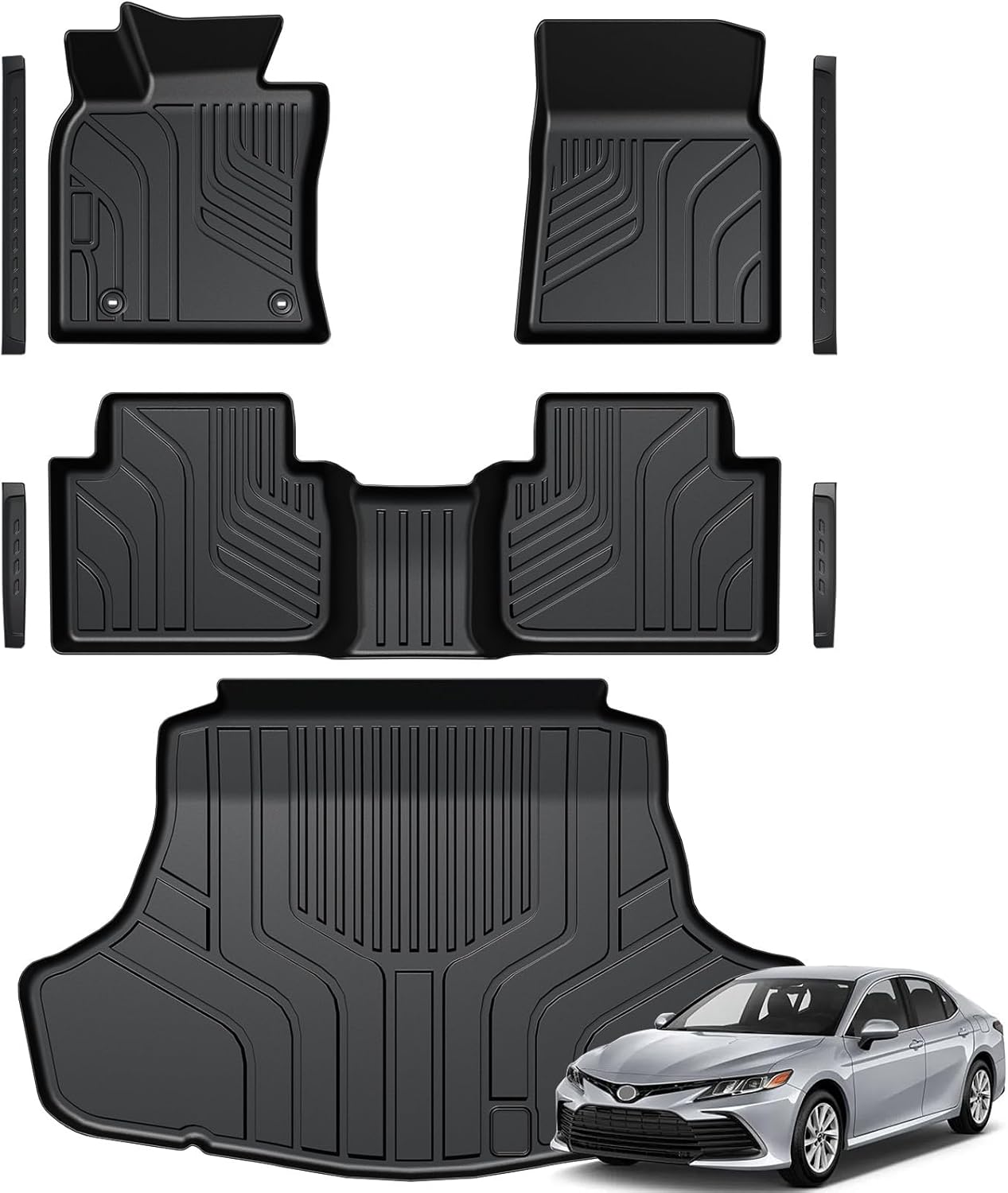
Custom-fit floor mats and accessories designed for 2018-2024 Toyota Camry gas FWD models provide full-coverage protection for the cabin, trunk, and door sills. Built with all-weather materials and raised edges, they help block dirt, spills, and debris while staying securely in place for everyday driving. The set is easy to install, simple to clean, and made to keep your vehicle looking neat and protected.

NGK Iridium IX spark plugs are designed to deliver a stable spark, reliable ignition, and long-lasting performance for compatible Toyota Camry 2.5L engines. The fine-wire iridium center electrode helps improve durability and efficient combustion, making these plugs a smart replacement choice for maintaining smooth engine operation. Sold in a convenient four-pack, they are built for consistent performance and dependable fitment.
Regular, Midgrade, or Premium: Which Should You Choose?
Start with the fuel section in your owner’s manual. Pay close attention to whether Toyota describes the octane grade as required, recommended, or simply 87 AKI or higher.
- Required: Do not use a lower grade. The engine depends on that minimum knock resistance.
- Recommended: A lower grade may be permitted, but acceleration, efficiency, or full-load performance may decrease.
- 87 AKI or higher: Regular gasoline meets the requirement. A higher grade is allowed but is not automatically better.
For most Camry owners, regular 87 AKI is the correct everyday choice. Midgrade does not create a special middle setting in the engine. It simply offers more knock resistance than regular and less than premium.
Premium gasoline works best when an engine requires or recommends it. In an engine designed only for regular fuel, premium normally provides little or no measurable daily-driving benefit.
Note: Toyota commonly lists 87 AKI and 91 RON as equivalent manual requirements. Do not compare an overseas RON label directly with the same-numbered U.S. AKI label.
Warning: Do not assume 85 AKI is safe because you are driving at high elevation. Use at least the minimum grade stated in your Camry owner’s manual.
[Products Worth Considering]

This replacement gas cap is designed to restore a tight fuel-tank seal, helping reduce vapor leaks, prevent check engine light issues, and maintain proper fuel system performance. Built in OE-style form for a wide range of Toyota and Lexus vehicles, it offers a direct DIY fix with durable materials for reliable, long-lasting use.

This replacement gas cap is designed for a wide range of Toyota and Lexus models, offering a direct-fit solution for restoring a proper seal at the fuel tank. It helps address check engine light issues related to the fuel cap while providing easy installation and dependable performance. Built from durable materials and rigorously tested before shipping, it is a practical replacement for worn or damaged fuel caps.

The KZYEE KS40 helps diagnose weak spark plugs, ignition coil problems, and misfires by simulating real engine conditions under load. With adjustable RPM testing and dual-port comparison, it makes it easier to spot hidden ignition faults quickly and accurately. Its enclosed spark-proof design supports safer testing for both professionals and DIY users across a wide range of 12V gasoline engines.
Does TOP TIER Gas Mean Premium Octane?
No. TOP TIER Approved Gasoline refers to a detergent-performance standard, not a specific octane grade. A station can sell TOP TIER regular, midgrade, and premium gasoline.
When it is available, choose TOP TIER gasoline in the octane grade your manual specifies. That lets you follow Toyota’s octane requirement while also choosing fuel tested against deposit-control standards.
Your manual may also limit the amount of ethanol permitted in the fuel. Ethanol compatibility can vary by model year and market, so do not infer the allowed blend from the octane number.
What Fuel Does a 2004 Toyota Camry Use?
The 2004 Toyota Camry requires engine-specific guidance. Toyota’s U.S. owner’s manual allows 87 AKI or higher in all three listed engines, but it includes an additional premium recommendation for the V6 models.
| 2004 Camry Engine | Minimum Fuel | Toyota’s Additional Guidance |
|---|---|---|
| 2.4L four-cylinder, 2AZ-FE | 87 AKI, shown as 91 RON in the manual | Regular meets the stated octane requirement. |
| 3.0L V6, 1MZ-FE | 87 AKI, shown as 91 RON in the manual | Toyota recommended 91 AKI premium, shown as 96 RON, for improved vehicle performance. |
| 3.3L V6, 3MZ-FE | 87 AKI, shown as 91 RON in the manual | Toyota recommended 91 AKI premium, shown as 96 RON, for improved vehicle performance. |
This means 87 AKI is acceptable in the 2004 V6 engines, while premium may allow the engine to deliver the performance Toyota intended under demanding conditions. Premium was recommended for improved performance, not listed as the minimum fuel required to operate the car.
You can confirm the wording in the 2004 Toyota Camry owner’s manual.
How Should You Fuel a 2004 Camry?
- Use 87 AKI or higher in the 2.4-liter four-cylinder.
- Use at least 87 AKI in the 3.0-liter or 3.3-liter V6.
- Consider 91 AKI in a 2004 V6 when you want the improved performance described by Toyota.
- Check the manual if the vehicle was imported from another market.
- Use a trusted station and the ethanol blend permitted by the manual.
- Keep the ignition, cooling, and fuel systems maintained if knock develops.
What Does a Higher Octane Number Change?
A higher octane number provides more resistance to knock. It does not automatically contain more usable energy, clean the engine more effectively, or increase fuel economy.
A 2004 Camry V6 may use the extra knock resistance because Toyota specifically recommended premium for improved performance. The four-cylinder manual does not include the same performance recommendation.
What Happens if You Use the Wrong Octane?
The result depends on whether the fuel is above or below the minimum grade and whether the engine requires or merely recommends premium.
If You Accidentally Use Higher Octane
Using 89, 91, or 93 AKI in a Camry that requires only 87 normally does not harm the engine. You can drive normally and return to the manual-specified grade at the next fill-up.
The main downside is cost. A regular-fuel engine may not adjust its operation enough to produce a noticeable benefit from the higher grade.
If You Use Fuel Below the Required Grade
Lower-than-required octane can cause knock, reduced power, and lower efficiency. Many engine-control systems can reduce ignition timing to protect the engine, but that response is not a reason to keep using the wrong fuel.
- Avoid hard acceleration, steep high-load climbs, and other heavy engine loads.
- Refill with the manufacturer-specified grade as soon as practical.
- Listen for sharp metallic pinging during acceleration.
- Stop driving and seek help if the knock is severe or comes with overheating, power loss, or warning lights.
Persistent knock can stress combustion-chamber parts and may damage the engine or emissions system over time. U.S. DOE/EPA guidance also warns that lower-than-required octane can reduce performance and fuel economy.
Warning: If your Camry knocks while using fresh fuel at the correct octane, do not rely on premium as a permanent fix.
Bad fuel, excessive carbon deposits, overheating, incorrect spark plugs, a lean air-fuel mixture, sensor faults, and internal mechanical wear can all create knock or knock-like sounds. Use this Camry engine knocking guide to separate detonation from deeper mechanical noise.
Does Higher Octane Improve Camry Performance?

Higher octane improves performance only when the engine calibration can use the added knock resistance. Engines with high compression, forced induction, or premium-optimized ignition timing are more likely to benefit.
A Camry manual that simply states “87 AKI or higher” tells you that regular meets the requirement. Under normal driving, premium in that engine will usually produce little or no measurable difference.
A manual that says premium is “recommended for improved performance” describes a different situation. The engine can operate on the permitted lower grade, but the higher grade may help it maintain more aggressive timing or full-load output. In a separate 2017 AAA/Automobile Club of Southern California test of vehicles where premium was recommended rather than required, fuel economy improved by an average of 2.7% under extreme-load conditions such as towing and hard acceleration — the kind of demanding driving where a 2004 Camry V6 is most likely to benefit from the recommended 91 AKI.
For newer Camry Hybrid models, the gasoline engine, motor-generators, battery, and control system operate as one managed powertrain. Learn more in this Camry Hybrid powertrain guide.
Is Premium Gas Worth It in a Toyota Camry?
Premium is worth buying when your owner’s manual requires it. It may also be reasonable when Toyota specifically recommends it and you value the available performance benefit.
If the manual lists only 87 AKI or higher, premium rarely pays for itself in normal Camry driving. A 2016 AAA/Automobile Club of Southern California dynamometer test found no benefit from premium in vehicles designed to run on regular gasoline.
- Buy regular when Toyota lists 87 AKI or higher with no premium recommendation.
- Consider premium when Toyota recommends it for improved performance.
- Buy premium when the manual requires it as the minimum grade.
- Diagnose persistent knock instead of treating premium as a repair.
[Products Worth Considering]

This replacement gas cap is designed to fit a wide range of Toyota and Lexus models, helping restore a secure seal for the fuel tank. It is built as a direct replacement for easy installation and reliable everyday use, with compatibility verified by part number to help ensure the right fit. Backed by warranty support and customer service, it is a practical solution for replacing a worn, cracked, or failing fuel cap.

This ignition coil and iridium spark plug kit is designed to restore smooth engine performance, reliable starts, and efficient combustion for compatible Toyota models. Built for a precise fit across select Camry, RAV4, Sienna, Highlander, and Venza applications, it helps improve idle stability, fuel economy, and emissions. The kit includes durable replacement parts backed by a one-year unlimited-mileage guarantee for added confidence on the road.

This OEM replacement fuel tank gas cap is designed for a wide range of Toyota, Lexus, and Scion vehicles, helping restore a proper seal for reliable everyday driving. It helps reduce fuel vapor leakage, may prevent check engine light issues caused by a faulty cap, and offers durable construction for long-lasting performance. Installation is simple with a direct-fit design that twists into place quickly.
How to Compare Fuel Cost per Mile
Do not judge premium fuel from one short trip or a dashboard estimate immediately after filling the tank. Traffic, temperature, route, tire pressure, idling, and driving style can create a larger difference than the fuel grade.
Use this calculation after measuring several similar tanks:
Fuel cost per mile = price per gallon ÷ measured miles per gallon
Record the odometer reading and gallons added at each fill-up. Compare regular and premium over similar routes and weather conditions. Premium saves money only if any improvement in measured fuel economy is large enough to offset its higher price per gallon.
For a Camry designed only for regular fuel, that break-even improvement is uncommon. Correct tire pressure, smooth acceleration, reduced idling, and timely maintenance usually have a clearer effect on operating cost.
To estimate the total cost of a fill-up rather than just cost per mile, pair this calculation with your exact tank size — see this Camry fuel tank size guide for capacity by model year.
What Changes Can You Actually Notice?
[VERIFY: add a first-hand fill-up comparison here — the Camry’s model year and engine, how many tanks of 87 vs. 91 AKI were compared, the observed MPG difference, and whether acceleration or knock felt different] That kind of side-by-side result is the clearest way to confirm what AAA’s lab testing already found in regular-fuel engines: no measurable gain from premium under normal driving.
In a Camry calibrated for regular gasoline, switching from 87 to premium may produce no noticeable change. The engine already has enough knock resistance to meet its normal timing and load targets.
In a Camry where Toyota recommends premium for improved performance, you may notice a difference during firm acceleration, hot weather, steep climbs, or other high-load conditions. That does not mean regular is unsafe when the manual explicitly permits it.
A sudden improvement after changing stations may reflect fresher or uncontaminated fuel rather than the octane increase itself. Likewise, reduced hesitation after using TOP TIER gasoline relates to detergent performance and deposit control, not simply the premium label.
How to Confirm the Fuel for Your Exact Camry
Your owner’s manual is the final authority because Toyota can change fuel guidance by engine, model year, and sales market. Two Camrys with similar badges may have different powertrains or fuel-label systems.
- Find the fuel or vehicle-specifications section in the manual.
- Confirm whether the pump uses AKI or RON.
- Identify the exact engine when the manual lists more than one.
- Look for the words “required,” “recommended,” or “87 or higher.”
- Check the permitted ethanol concentration separately from octane.
- Follow any additional warning about persistent knocking.
If the paper manual is missing, use Toyota’s owner manual resources. Select the correct year and model, or contact a Toyota dealer with the vehicle identification number when the vehicle was imported or has an uncertain engine specification.
Frequently Asked Questions
What Octane Gas Does a Toyota Camry Take?
Most Toyota Camry models sold in the United States take regular unleaded gasoline rated 87 AKI or higher. Check the exact owner’s manual because older V6 models and vehicles from other markets may include different recommendations.
What Happens if I Put Premium Gas in My Camry?
Premium normally will not harm a Camry that requires only regular gasoline. However, a regular-fuel engine may provide little or no noticeable improvement in power or mileage, so the main difference may be the higher fuel cost.
Is the Toyota Camry 91 or 95?
The answer depends on the rating system and market. Toyota U.S. manuals commonly pair 87 AKI with 91 RON. A pump showing 91 RON is not the same as a U.S. pump showing 91 AKI.
Can I Use 89 Octane in a Toyota Camry?
Yes, 89 AKI is normally safe when your manual permits 87 AKI or higher. Most Camrys designed for regular fuel do not need midgrade, and you may not notice a benefit.
Can I Use 85 Octane in a Camry at High Altitude?
Do not use 85 AKI merely because it is sold at high elevation. If your Camry requires at least 87 AKI, continue using 87 or higher unless the owner’s manual explicitly states otherwise.
What if I Accidentally Use Lower-Octane Gas?
Avoid heavy acceleration and refill with the manufacturer-specified grade as soon as practical. Stop driving and seek help if you hear severe knock or notice overheating, reduced power, or warning lights.
What Should I Do if My Camry Knocks on 87 Octane?
Try fresh 87-octane fuel from a trusted station and avoid heavy engine load. If the noise continues, have the ignition, cooling, fuel, sensor, and internal mechanical systems inspected instead of relying on premium as a permanent fix.
Does the Toyota Camry Hybrid Need Premium Gas?
No. Every Camry Hybrid model, past and present, uses the same 87 AKI or higher regular-fuel requirement as the standard gas engines. See this Camry Hybrid powertrain guide for how the gas engine and electric motors share the work.
Conclusion
Most U.S.-market Toyota Camrys use regular unleaded gasoline rated 87 AKI or higher. Premium is usually unnecessary when the manual lists only 87 or higher. The 2004 Camry V6 is an important exception: Toyota allowed 87 but recommended 91 AKI premium for improved performance. Before choosing a grade, check whether your exact manual says premium is required, recommended, or simply permitted.
References
- 2004 Toyota Camry Owner’s Manual — Toyota Motor Sales [VERIFY: the linked PDF’s own header identifies it as the 2005-model manual for Sept. 2004 production (OM33684U) — confirm this is the correct document, or swap in the exact 2004-model-year manual PDF]
- Toyota Warranty and Owner’s Manuals — Toyota Motor Sales
- What Is Octane Rating? — Toyota Motor Sales
- Selecting the Right Octane Fuel — U.S. Department of Energy and U.S. Environmental Protection Agency
- Gasoline Explained: Octane in Depth — U.S. Energy Information Administration
- TOP TIER Performance Standards — TOP TIER Approved Fuels
- Premium Fuel Testing for Regular-Fuel Vehicles — AAA, 2016
- AAA Test of Vehicles With Recommended Premium Fuel — reported by Forbes, 2017


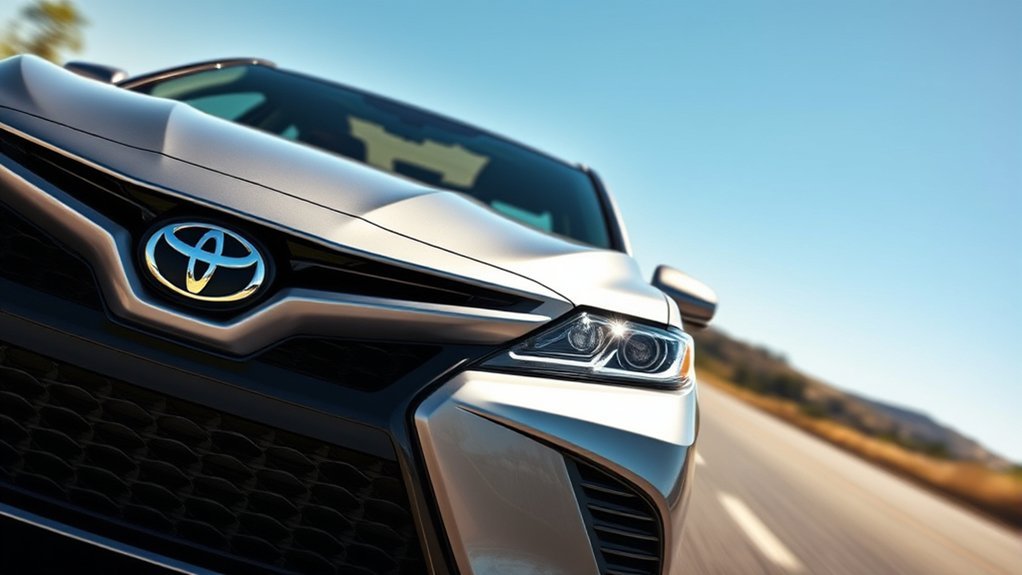
[…] For the current Camry Hybrid, Toyota specifies unleaded gasoline with an octane rating of 87 AKI or higher in the U.S. Using fuel below the required octane can cause knocking and possible engine […]