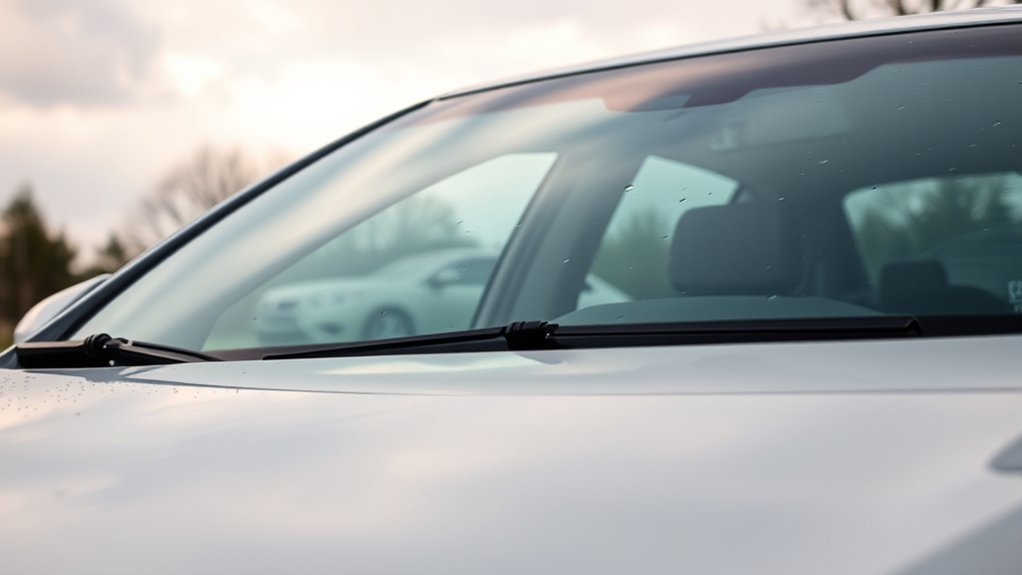
If your Toyota Camry wipers are not working, first clear ice or debris, test every switch position, listen for motor sound, and inspect the correct wiper fuse for your model year. If the motor runs but the arms stay still, suspect a loose arm connection or damaged linkage. If both arms are silent, check the fuse, switch or control circuit, motor power, ground, and wiring before replacing parts.
Do not drive in rain, snow, fog, or heavy road spray until the wipers operate reliably. This guide helps you separate a movement failure from worn blades, windshield contamination, or another problem that affects wiping quality rather than arm movement.
Last updated: August 31, 2026
Update note: Refreshed the current Camry wiper-motor cost benchmark, replaced cross-model internal links with Camry-specific guides, and added the 2025 generation breakpoint so model-year diagrams are not mixed.
Quick Answer
If your Camry’s wiper arms do not move, common causes include a blown fuse, frozen or jammed arms, a faulty switch, a relay or integrated control-circuit fault, a weak motor, damaged linkage, poor ground, or corroded wiring. If the arms move but smear, skip, chatter, or leave haze, inspect the blades, windshield surface, arm alignment, and blade size instead.
Key Takeaways
- If both wipers are dead, check the fuse, switch, relay or control circuit, motor connector, power, and ground first.
- If the motor runs but the arms do not move, suspect a loose wiper arm nut, stripped splines, a damaged pivot, or disconnected linkage.
- If only intermittent mode or one speed fails, the issue may be in the switch, wiring, motor speed circuit, park circuit, or model-specific control logic.
- Replace fuses only with the same amperage rating, and use the fuse box lid or your exact Toyota owner’s manual for your Camry year.
- Certain 2013–2014 Camry and Camry Hybrid vehicles were included in a wiper-switch recall, so check your VIN before paying for switch replacement.
- Do not drive in rain, snow, fog, or heavy road spray until the wipers work reliably.
At a Glance
| Time Required | A few minutes for blockage, switch-setting, and fuse checks; longer if access, wiring diagnosis, linkage, or motor work is needed |
| Difficulty | Easy for blades, blockage, fuse, and visible connector checks; moderate to advanced for wiring, switch, motor, and linkage testing |
| Tools Needed | Owner’s manual, flashlight, fuse puller, same-rated replacement fuse, multimeter, model-year wiring information, basic hand tools, gloves, and safety glasses |
| Cost | Low for blades or fuses; higher for motor, switch, linkage, or electrical diagnosis. RepairPal’s Toyota Camry wiper motor estimate lists $366–$416 before taxes, fees, location adjustments, or related repairs. |
Warning: Keep hands, tools, jewelry, and loose clothing away from the wiper linkage while testing. Turn the ignition off before inspecting moving parts. Avoid disconnecting the battery unless your model-specific repair procedure requires it. The basic blockage, fuse, connector, and listening checks below do not require battery disconnection.
Editorial basis: This guide is grounded in Toyota owner resources, Toyota/NHTSA recall material, federal wiper-system requirements, FHWA wet-weather data, AAA blade-maintenance guidance, and current RepairPal cost data. Electrical pinouts and service procedures still need to match your exact Camry model year.
Before You Start: Confirm Your Camry Year
Toyota Camry wiper layouts are not identical across every model year. Fuse names, fuse locations, relay design, switch wiring, connector terminals, and body-control logic can change between generations. Your first references should be the fuse box lid and the manual for your exact Camry year.
Use Toyota’s official owner manual lookup if you do not have the printed booklet. Do not rely on a random fuse diagram from a different Camry year, even if the car looks similar.
Toyota identifies the 2025 Camry as the ninth generation. Treat 2025 as a generation boundary when using troubleshooting diagrams: do not assume 2018–2024 fuse, relay, connector, or service-position information applies to a 2025–2026 Camry unless your exact-year manual or service information confirms it.
Note: The federal windshield wiping and washing standard applies to passenger cars and other covered vehicles. Working wipers protect the clear forward view you need during rain, snow, fog, and road spray.
Check for the 2013–2014 Camry Wiper-Switch Recall
Certain 2013–2014 Toyota Camry and Camry Hybrid vehicles were included in Safety Recall 13V-505. Toyota reported that incorrectly manufactured contacts inside the wiper switch could cause a short when the switch was moved from OFF to MIST. The short could make the windshield wipers inoperative.
Do not assume every 2013 or 2014 Camry is affected. Enter your 17-digit VIN or license-plate information in the official Toyota recall lookup. The Toyota and NHTSA recall notice states that an authorized Toyota dealer will replace the affected windshield-wiper switch at no charge.
Why Are My Toyota Camry Wipers Not Working?

If your Camry’s wiper arms do not move, the fault is usually mechanical or electrical. If they move but leave streaks, haze, chatter, or unwiped areas, the problem is more likely related to the blades, glass surface, arm pressure, or blade fit.
- Worn or damaged blades: If the wipers move but smear, skip, chatter, or leave streaks, inspect the blades and windshield surface before diagnosing the motor. If fit is uncertain, confirm the correct Camry wiper blade size and connector.
- Frozen or stuck wiper arms: Ice, packed snow, leaves, or debris at the cowl can strain the motor, damage the linkage, or blow the fuse.
- Loose wiper arm or linkage: If the motor runs but one or both arms do not move correctly, the arm nut, splines, pivot, or linkage may be loose or damaged.
- Blown fuse: A short, jammed linkage, frozen blades, or overloaded motor can blow the wiper fuse.
- Bad relay or control circuit: Some Camry models use relay or body-control logic for wiper speed, intermittent timing, and park behavior.
- Faulty wiper switch: If the washer and wiper commands do not respond correctly, the stalk switch or its wiring may be at fault.
- Weak wiper motor: A failing motor can stop, run slowly, work only after a bump, or fail to park the blades properly.
- Corroded wiring or poor ground: Moisture near the cowl area can cause corrosion, voltage drop, or intermittent operation.
How to Diagnose Wiper Issues in Your Camry
The fastest way to diagnose a Camry wiper problem is to match the symptom to the most likely system. Do not replace the motor until you have checked for blockage, confirmed the fuse, and determined whether commanded power and ground reach the motor.
Fastest Decision Path
- Do the arms move? If yes, focus first on blades, glass contamination, arm alignment, and fit rather than a total movement failure.
- No movement: Listen for the motor while trying MIST, LOW, HIGH, intermittent, and washer functions.
- Motor runs or hums: Inspect the arm nuts, splines, pivots, linkage, and motor-to-linkage drive.
- Motor is silent: Check the correct fuse, affected-year recall status, switch or control circuit, motor connector, power, ground, and wiring.
- A replacement fuse blows again: Stop repeated fuse replacement and diagnose a short, jam, wiring fault, or overloaded motor.
[Products Worth Considering]
This front wiper blade set is designed as a direct replacement for select Toyota Corolla and RAV4 models, helping restore clear visibility in rain and road spray. Built for smooth, quiet performance with an easy plug-and-play installation, it includes both blades needed for the front windshield and is made to support dependable everyday driving.
This three-piece windshield wiper set is designed for compatible Toyota RAV4 and Highlander models to help deliver clear visibility in everyday driving. The natural rubber blades feature a graphite-treated surface for quiet, smooth wiping performance and reliable weather resistance. Installation is quick and tool-free, making it easy to replace worn blades on the front and rear of your vehicle.
This front wiper blade set is designed to deliver clear, quiet visibility for compatible Toyota, Hyundai, and Honda vehicles with J/U hook wiper arms. The included driver and passenger blades provide a straightforward replacement for worn front wipers, with an OE-style connector and natural rubber edge for smooth wiping in rain, snow, and everyday driving. Always confirm your vehicle's fitment and original blade sizes before ordering.
Common Symptoms to Observe
| Symptom | Most Likely Areas to Check |
|---|---|
| Both wipers completely dead | Fuse, recall status on affected years, switch, relay/control circuit, motor connector, motor power, motor ground |
| Motor hums but arms do not move | Loose arm nut, stripped arm splines, damaged pivot, disconnected linkage, broken linkage |
| Only one wiper moves | Loose arm nut, stripped splines, worn pivot, disconnected linkage arm, damaged linkage bushing |
| Wipers move slowly | Weak motor, binding linkage, poor ground, voltage drop, heavy debris, ice load, dirty windshield |
| Only intermittent mode fails | Switch, relay/control module, motor park circuit, wiring, body-control logic |
| Only one wiper speed works | Switch contacts, speed-specific motor circuit, wiring, integrated control circuit, motor park circuit |
| Wipers stop in the wrong position | Motor park circuit, wiper arm alignment, linkage position, stripped arm splines |
| Washer sprays but wipers do not move | Wiper fuse, switch output, relay/control circuit, motor power, motor ground |
| Wipers move but smear or chatter | Wiper blades, windshield contamination, bent arm, wrong blade size, dry glass |
Step-by-Step Diagnostic Process
- Check for physical blockage. Clear ice, leaves, twigs, or packed debris from the windshield base and wiper arms.
- Inspect the blades and arms. Look for cracked rubber, bent frames, loose arm nuts, or arms sitting too low or too high on the windshield.
- Test all wiper settings. Try mist, low, high, intermittent, and washer. Note which functions work and which do not.
- Listen for the motor. A humming motor with no arm movement points toward an arm, pivot, linkage, or internal motor-drive problem. No sound points more toward the fuse, switch, wiring, control circuit, ground, or motor power.
- Check the wiper fuse. Use the fuse box diagram for your exact Camry year. Replace a blown fuse only with the same amperage rating.
- Inspect connectors and visible wiring. Look for loose plugs, corrosion, water intrusion, rubbed wires, or damage near the cowl and wiper motor.
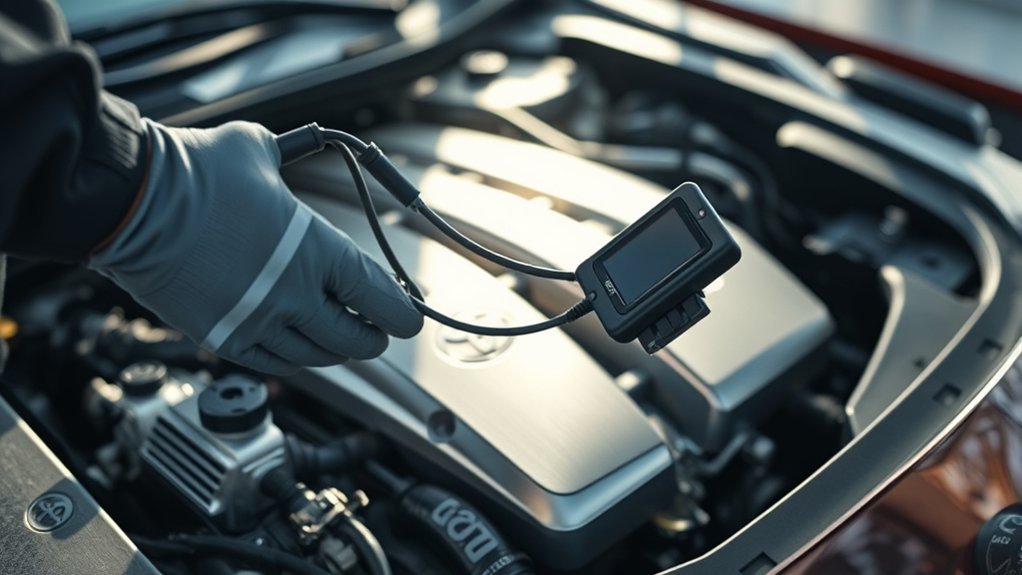
- Test voltage and ground at the motor. Use the wiring diagram for your exact model year to identify the correct terminals. Confirm commanded power and a usable ground while the wiper switch is on.
- Stop before guessing. If the fuse blows again, terminal identification is unclear, the wiring is damaged, or the motor area is hard to access, get a professional diagnosis.
Note: Do not apply battery voltage to unknown motor terminals, pierce wire insulation unnecessarily, or assume a connector pinout from another Camry year. Incorrect probing can damage a connector, fuse, control circuit, or meter.
Pro Tip: If a new fuse blows immediately, do not keep replacing it. A repeated blown fuse usually means the circuit is overloaded or shorted, and repeated fuse replacement can hide the real problem.
What Does It Mean If the Wiper Fuse Blows Again?
A blown fuse is not always the root problem. The fuse protects the circuit when something draws too much current. If the replacement fuse blows again, the system may have a short, a jammed linkage, frozen arms, damaged wiring, or a motor that is pulling too much current.
Use only the same amperage rating shown on the fuse box cover or owner’s manual. Never install a higher-rated fuse to “see what happens.” That can overheat wiring and create a larger repair or fire risk.
- If the fuse blew after ice or snow: Clear the blades and cowl area fully before testing again.
- If the fuse blows as soon as you turn the switch on: Stop testing and check for a short, seized motor, or jammed linkage.
- If the fuse blows randomly: Inspect the harness for rubbed insulation, moisture, loose connectors, or corrosion near the cowl.
What If the Wiper Motor Runs but the Arms Do Not Move?
A motor sound with no arm movement means the motor is receiving at least part of the command, but it does not prove the complete motor and linkage assembly is healthy. Focus on the parts that transfer motor movement to the wiper arms.
Check whether the arm nut is loose under the plastic cap at the base of the wiper arm. Also look for one arm moving while the other stays still, arms colliding, or arms sitting in a strange rest position. Those signs can point to stripped splines, loose pivots, a separated linkage joint, or damaged linkage.
Why Does Only One Camry Wiper Move?
If one wiper moves normally while the other remains still, start with the stationary arm rather than the shared fuse. Check its retaining nut, the splines beneath the arm, the pivot, and the linkage connection under the cowl. A loose nut may let the pivot turn without moving the arm, while stripped splines or a disconnected linkage joint can leave the arm completely inactive.
Turn the ignition off before touching the arm or inspecting beneath the cowl. If the linkage has separated or a pivot is binding, repair the mechanical fault before operating the motor again.
Warning: Do not force the wiper arms through their sweep by hand. If the linkage is jammed or misaligned, forcing the arms can strip the arm connection, bend the linkage, crack trim, or overload the motor.
Why Does the Washer Spray but the Wipers Do Not Move?
If the washer sprays normally but the wipers do not move, the washer-pump circuit may still be working while the wiper circuit has failed. Check the wiper fuse, switch output, control circuit, motor power, motor ground, and motor connector.
This symptom shows that at least part of the stalk command is being recognized, but it does not prove the wiper motor is bad. Test the wiper circuit before replacing the motor.
Why Do the Wipers Stop in the Wrong Position?
Wipers that stop halfway up the windshield often point to a park-circuit, arm-position, linkage, power-supply, or motor issue. The park circuit keeps the motor operating until the blades reach their rest position after you switch them off.
If the arms were recently removed, they may have been reinstalled one or two splines away from their correct position. In that case, the motor may be fine, but the arm position needs correction. If the arms moved out of position without recent work, inspect the linkage and pivots before resetting them.
How Do You Inspect Camry Wiper Wiring and Connections?
Because the wiper motor and nearby harness sit close to the lower windshield and cowl, inspect that area for moisture, debris, loose connections, and damaged wiring when the fault is intermittent. A careful inspection can prevent you from replacing a working motor.
Common Wiring Issues
Look for loose plugs, green or white corrosion on terminals, damaged insulation, water tracks, and wires rubbing against metal brackets. Pay close attention to the connector at the wiper motor and any harness section that passes near the cowl. Poor contact can make the wipers work one day and fail the next.
Checking Connector Integrity
With the ignition off, gently check whether the wiper motor connector is fully seated. Do not yank the harness. If the connector is dirty or damp, unplugging, drying, and reconnecting it may help, but corroded terminals should be repaired correctly rather than forced back together.
Testing for Moisture Damage
Moisture can enter through clogged cowl drains, damaged seals, or repeated exposure to leaves and road grime. If you find water near the motor or connectors, clean the area and confirm the drain path is clear. Then test the circuit with a multimeter instead of guessing which part failed.
What Causes Wiper Relay or Control-Circuit Failures?
A wiper relay or control circuit can fail from age, heat, moisture, overloaded wipers, or worn electrical contacts. On some Camry years, a relay may be a separate serviceable part. On others, wiper control may be integrated into the switch, motor assembly, or a larger body-electrical system. Check the model-specific fuse label and wiring information before ordering a relay.
Signs that point toward a relay or control issue include wipers that work on one speed but not another, intermittent-mode failure, clicking without arm movement, or wipers that stop randomly even though the fuse is good. These symptoms can overlap with switch, wiring, ground, motor, and park-circuit faults, so testing is more reliable than parts-swapping.
How to Fix Intermittent Wiper Issues Yourself
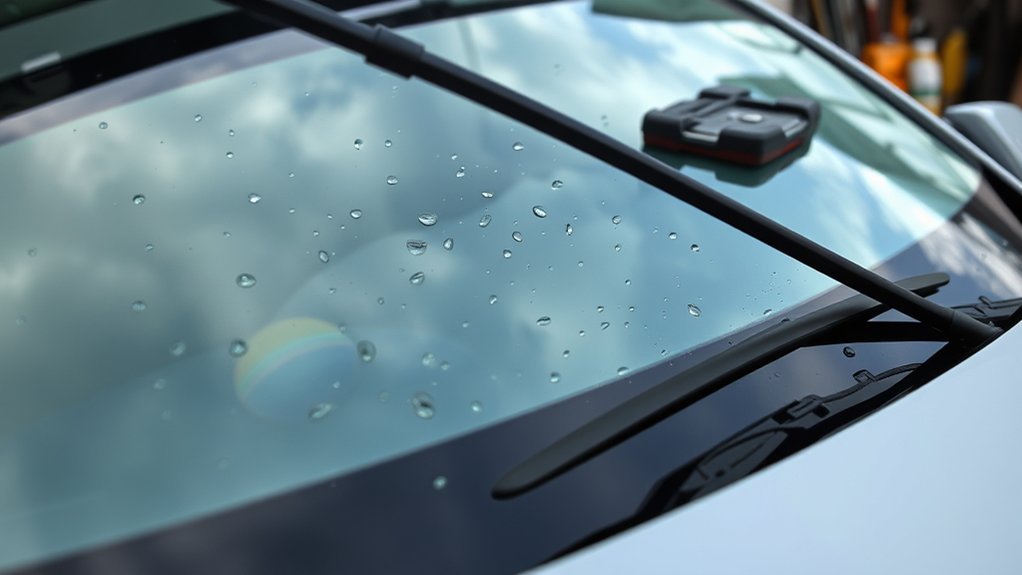
Intermittent wiper problems can be frustrating because the system may work during testing and fail later. Start with safe, reversible checks before removing trim or replacing electrical parts.
| Step | Action | DIY-Friendly? |
|---|---|---|
| 1 | Clean the windshield, blades, and cowl area. | Yes |
| 2 | Replace worn blades if they streak, chatter, skip, crack, or leave haze. | Yes |
| 3 | Check the wiper fuse and replace it with the same rating if blown. | Yes |
| 4 | Inspect visible wiring and the motor connector for corrosion or looseness. | Yes, if accessible |
| 5 | Use model-specific wiring information to test commanded power and ground at the motor. | Moderate |
| 6 | Diagnose the switch, integrated control circuit, serviceable relay, wiring, or internal motor park circuit. | Best for experienced DIYers or mechanics |
[Products Worth Considering]
This JustCar windshield wiper blade set is designed as a premium replacement for compatible Toyota and Kia models, delivering smooth, streak-free wiping in all weather conditions. Built with a dual spring steel design, asymmetrical wind spoiler, and natural rubber, it helps reduce chatter while maintaining strong windshield contact. The easy-install fit supports U/J hook arms and comes as a matched set for dependable front wiper replacement.
This 3-piece windshield wiper set is designed for Toyota RAV4 models from 2019 to 2024 and also fits select Mazda 5 vehicles. It includes front and rear blades for a complete replacement, with Teflon-coated rubber for smooth, quiet wiping and reliable all-weather performance. The easy-install design helps match the original wiper arm structure for a simple, secure fit.
【PREMIUM WIPER BLADES】: High quality automotive replacement windshield wiper blades, improve driving visibility and safety, to achieve smooth, clean wiping effect.
Why Does Only One Wiper Speed Work?
If high speed works but low or intermittent does not, the shared fuse is less likely to be the only problem. Depending on the Camry year, the fault may involve worn switch contacts, a speed-specific motor circuit, the park circuit, wiring, or integrated body-control logic.
Do not assume every Camry has a separate plug-in intermittent-wiper relay. Confirm the circuit design for your exact year before replacing a relay, switch, or motor.
Stop DIY testing if the fuse keeps blowing, the motor area is difficult to access, the wiring looks damaged, terminal identification is unclear, or you need to remove steering-column trim. Those repairs can involve components that are easy to damage without the correct wiring information.
Is It Time to Call a Mechanic for Wiper Problems?
Call a mechanic if the basic checks do not reveal the problem or if the failure affects safe driving. A professional can test the circuit under load and confirm whether the issue is the motor, switch, control circuit, wiring, ground, arm connection, or linkage.
Get help right away if:
- The fuse blows more than once. This may indicate a short, jammed linkage, or overloaded motor.
- The wipers stop mid-sweep. This can point to motor, park circuit, linkage, or power-supply issues.
- The wipers work only when the harness is moved. That suggests a wiring or connector fault that should be repaired properly.
- The arms move unevenly or collide. The linkage, pivot, splines, or arm alignment may be damaged.
- You need to remove steering-column trim or diagnose the switch. This area is more complicated than a basic fuse, blockage, or blade check.
Rain and wet pavement increase driving risk. The Federal Highway Administration reports that 75% of weather-related crashes occur on wet pavement and 47% happen during rainfall.
Toyota Camry Wiper Repair Cost: DIY Checks vs. Professional Repair
The cheapest repair is the one based on the correct diagnosis. Cleaning debris, replacing blades, checking a fuse, or reseating an accessible connector can be low-cost. A wiper motor, switch, linkage, or wiring repair can cost much more.
As a public benchmark, RepairPal lists Toyota Camry windshield-wiper motor replacement at $366–$416, with estimates last updated August 7, 2026. That range does not include taxes, fees, location adjustments, or related repairs, so your final quote may differ.
Use this cost logic before approving work:
- Low-cost DIY checks: Cleaning the windshield, replacing blades, checking the fuse, and inspecting accessible connectors.
- Moderate repairs: Replacing a confirmed serviceable relay, tightening a loose wiper arm, or correcting arm position after removal.
- Higher-cost repairs: Wiper motor, linkage, switch, body-control diagnosis, or wiring repair.
- Best value step: Pay for diagnosis if the fuse is good and the motor does not respond. Guessing at parts can cost more than testing.
Note: If your Camry is still under warranty, falls within the 2013–2014 wiper-switch recall, or has another open service campaign, check with Toyota or a dealer before paying out of pocket.
Maintaining Your Wiper System for Longevity
Regular maintenance helps prevent small wiper problems from becoming electrical or mechanical failures. AAA recommends replacing windshield-wiper blades about every 6–12 months, depending on climate and driving conditions, and sooner if they streak, skip, chatter, crack, or reduce visibility.
- Clean the blades and windshield: Dirt and road film can make good blades perform badly.
- Replace worn blades in pairs: Both blades face similar sun, heat, cold, dirt, and rain exposure.
- Clear ice before turning wipers on: Starting frozen wipers can overload the motor or blow the fuse.
- Keep the cowl area clear: Leaves and debris can hold moisture and interfere with linkage movement.
- Use the correct washer fluid: In freezing weather, use washer fluid rated for low temperatures.
- Inspect after heavy storms: Check for loose arms, damaged blades, and debris around the windshield base.
Frequently Asked Questions
Why are my Toyota Camry windshield wipers not working?
If the arms do not move, common possibilities include a blown fuse, frozen arms, a faulty switch, a control-circuit fault, poor motor ground, damaged wiring, a failed motor, or broken linkage. Start with blockage, fuse condition, recall status on affected years, and whether the motor makes noise.
Why would both windshield wipers stop working at the same time?
When both wipers stop together, check components shared by both arms: the fuse, switch, motor, power supply, ground, control circuit, and main linkage. On certain 2013–2014 Camry models, also check whether the wiper-switch recall is open for your VIN.
Where is the windshield wiper fuse on a Toyota Camry?
The exact fuse location and label depend on your Camry model year. Check the fuse box cover and your exact Toyota owner’s manual before pulling fuses. Do not use a diagram from another Camry year unless you confirm that the layout matches your car.
What does it mean if the wiper motor makes noise but the arms do not move?
A humming or running motor with no arm movement usually points toward a mechanical transfer problem, such as a loose arm nut, stripped splines, a damaged pivot, disconnected linkage, or broken linkage. An internal motor-drive problem is also possible.
Why does only one Toyota Camry wiper move?
If one arm moves and the other does not, inspect the stationary arm’s retaining nut, splines, pivot, and linkage connection. A shared fuse is less likely when the other arm still moves normally.
Why does the washer spray but the wipers do not move?
The washer pump and wiper motor can operate through different parts of the circuit. If the washer sprays but the wipers stay still, check the wiper fuse, switch output, control circuit, motor connector, motor power, and motor ground.
Is there a Toyota Camry windshield-wiper recall?
Certain 2013–2014 Camry and Camry Hybrid vehicles were included in Safety Recall 13V-505 for a windshield-wiper switch that could short and make the wipers inoperative. Use Toyota’s official VIN lookup to confirm whether your specific vehicle has an open recall.
Can I drive my Camry if the wipers are broken?
Do not drive in rain, snow, fog, or road spray with broken wipers. Even if the weather is clear when you leave, the safest choice is to repair the wipers before conditions change.
What does it mean if my wipers stop in the middle of the windshield?
Wipers that stop in the wrong position may have a motor park-circuit problem, weak motor, poor power or ground, misaligned linkage, or incorrectly positioned arms. If the arms were recently removed, they may have been reinstalled in the wrong position.
How often should I replace Toyota Camry wiper blades?
Inspect them seasonally and replace them when they streak, chatter, skip, crack, or leave haze. A common interval is every 6–12 months, but heat, ice, heavy rain, sun exposure, and dirty glass can shorten blade life.
Conclusion
When Toyota Camry wipers stop moving, start with ice or debris, arm condition, the correct fuse, recall status on affected 2013–2014 vehicles, and whether the motor makes noise. If the motor runs but the arms do not, inspect the arm connections, pivots, and linkage. If both arms are silent and the fuse is good, move carefully into model-specific testing for switch output, motor power, ground, wiring, and control-circuit operation.
Do not keep replacing fuses, install a higher-rated fuse, force the arms by hand, or guess at expensive parts. If the fuse blows again, the wiring looks damaged, terminal identification is unclear, or the motor receives proper power and ground but still does not work, arrange a professional diagnosis before driving in poor weather.
Sources
- Toyota Owners Manuals and Warranties — model-specific owner manual lookup and operating information.
- Toyota Safety Recalls and Service Campaigns — VIN and license-plate recall lookup for eligible U.S.-market vehicles.
- Toyota and NHTSA Safety Recall 13V-505 Notice — certain 2013–2014 Camry and Camry Hybrid windshield-wiper switch recall details.
- eCFR: 49 CFR §571.104, Windshield Wiping and Washing Systems — federal safety-standard context for vehicle wiper and washer systems.
- Federal Highway Administration: Rain and Flooding — wet-pavement, rainfall, visibility, and crash-risk context.
- AAA: When to Replace Windshield Wipers — wiper-blade replacement intervals and wear signs.
- RepairPal: Toyota Camry Wiper Motor Replacement Cost — August 7, 2026 public cost estimate and diagnosis notes.
- Toyota USA Newsroom: Next-Generation 2025 Camry — confirms the 2025 model as the ninth-generation Camry.