
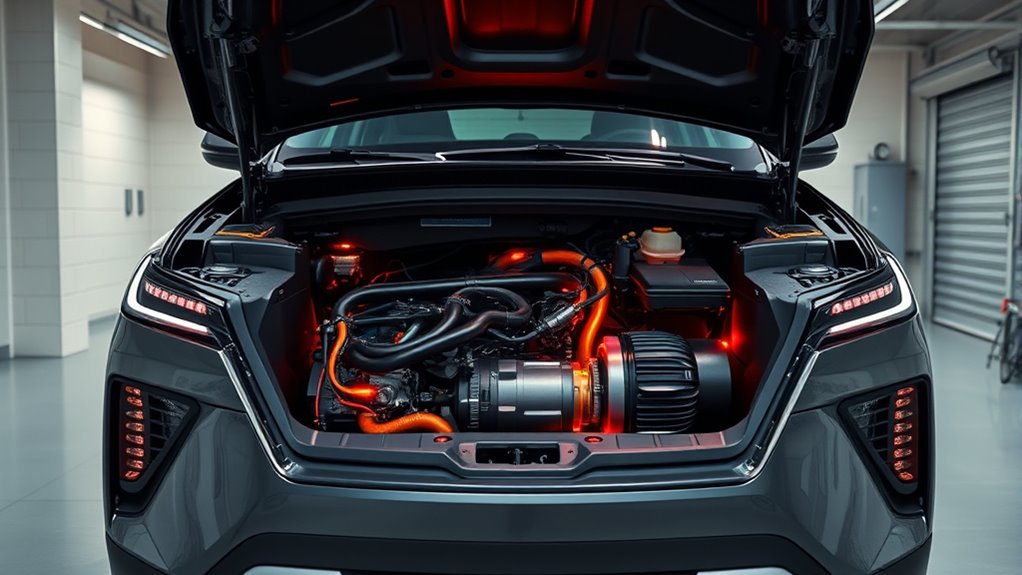
An SUV hybrid combines a gasoline engine with one or more electric motors to improve fuel economy, reduce tailpipe emissions, and keep the cargo space and everyday usefulness people expect from an SUV. The right choice depends on how you drive: regular hybrids work best for simple fuel savings, while plug-in hybrids make sense when you can charge often and cover short trips on electricity.
Quick Answer
An SUV hybrid uses a gasoline engine, electric motor, battery pack, and regenerative braking to use less fuel than a gas-only SUV. A regular hybrid charges itself while driving, while a plug-in hybrid can be charged from an outlet and usually offers a short all-electric driving range.
Key Takeaways
- A hybrid SUV blends gasoline and electric power to improve MPG, especially in city and stop-and-go driving.
- Regular hybrids do not plug in; plug-in hybrids use a larger battery and can drive limited miles on electricity before switching to hybrid mode.
- Hybrid SUVs can feel quick at low speeds because electric motors deliver instant torque.
- Towing, cargo space, and warranty coverage vary widely by model, so always check the exact trim before buying.
- Battery warranties are usually long, but coverage terms, transfer rules, and degradation limits differ by manufacturer.
What Is an SUV Hybrid?
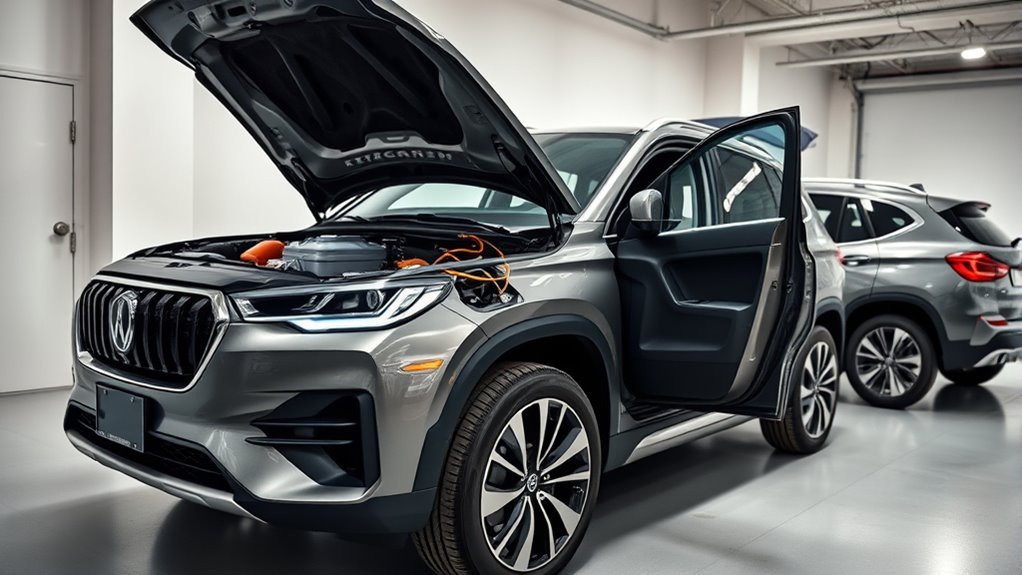
An SUV hybrid is a sport utility vehicle that uses an internal combustion engine and one or more electric motors. Energy is stored in a battery pack, and the vehicle’s control system decides when to use the motor, the engine, or both. According to the U.S. Department of Energy’s Alternative Fuels Data Center, a standard hybrid electric vehicle uses regenerative braking and the gasoline engine to recharge its battery, rather than plugging into an external charger: AFDC: How Hybrid Electric Cars Work.
The benefit is simple: the electric motor helps the engine during acceleration, reduces engine idling, and recovers some energy that would otherwise be lost during braking. That usually means better fuel economy than a similar gas-only SUV, especially around town. For example, some 2026 Toyota RAV4 hybrid listings on FuelEconomy.gov are rated in the low-40-MPG combined range, depending on trim and drivetrain: FuelEconomy.gov 2026 Toyota RAV4 ratings.
The biggest real-world advantage of an SUV hybrid is not just better MPG. It is better MPG while keeping the ride height, seating position, cargo flexibility, and daily practicality that make SUVs popular.
Hybrid Architectures for SUVs: Parallel, Series, Power-Split, and Plug-In
Not every hybrid SUV works the same way. The architecture affects fuel use, driving feel, towing ability, and whether the vehicle needs to be charged.
Parallel Hybrid
In a parallel hybrid, the gasoline engine and electric motor can both help drive the wheels. This setup is common because it is compact, efficient, and good for everyday driving. At low speeds, the motor can assist or sometimes move the SUV briefly on electric power. At higher speeds, the engine usually does more of the work.
Series Hybrid
In a series hybrid, the electric motor drives the wheels and the gasoline engine mainly acts as a generator. This can work well in city driving because the motor handles propulsion smoothly, but it is less common in mainstream SUV hybrids than parallel or power-split designs.
Power-Split Hybrid
A power-split hybrid blends series and parallel behavior, often using a planetary gearset or electronically controlled transmission logic to move between electric assist, engine drive, and combined power. This is why many hybrid SUVs feel smooth in traffic: the system can change power sources without the harsh shifts you might expect from a traditional transmission.
Plug-In Hybrid SUV
A plug-in hybrid SUV, often called a PHEV, uses a larger battery than a regular hybrid and can charge from external equipment. The U.S. Department of Energy notes that PHEVs use batteries to power an electric motor and another fuel, such as gasoline, to power an engine or other propulsion source: AFDC: Plug-In Hybrid Electric Vehicles.
Many PHEVs can cover daily errands on electricity before switching to hybrid operation. Electric range varies by model; for example, Ford lists a maximum EPA-estimated all-electric range of 37 miles for the 2026 Escape Plug-In Hybrid: Ford 2026 Escape.
Note: A regular hybrid SUV is easiest if you never want to plug in. A plug-in hybrid SUV makes the most sense when you can charge at home, work, or another reliable location several times a week.
Power-Split Drivetrains Explained
A power-split drivetrain is one of the most familiar hybrid systems because it balances the engine and electric motor automatically. At low speeds, the electric motor may handle light driving. During harder acceleration, the motor and engine can work together. When cruising, the system can keep the engine in a more efficient operating range.
Regenerative braking is a key part of this design. When you slow down, the electric motor can act like a generator, capturing some energy and storing it in the hybrid battery. The Department of Energy explains that hybrids capture energy normally lost during braking by using the electric motor as a generator and storing the captured energy in the battery: AFDC: Hybrid Electric Vehicles.
The result is a drivetrain that is especially helpful in traffic. Instead of wasting fuel while creeping forward or stopping repeatedly, the SUV can lean more heavily on electric assist and recover energy during deceleration.
Real-World Impacts: MPG, Performance, and Towing Capacity
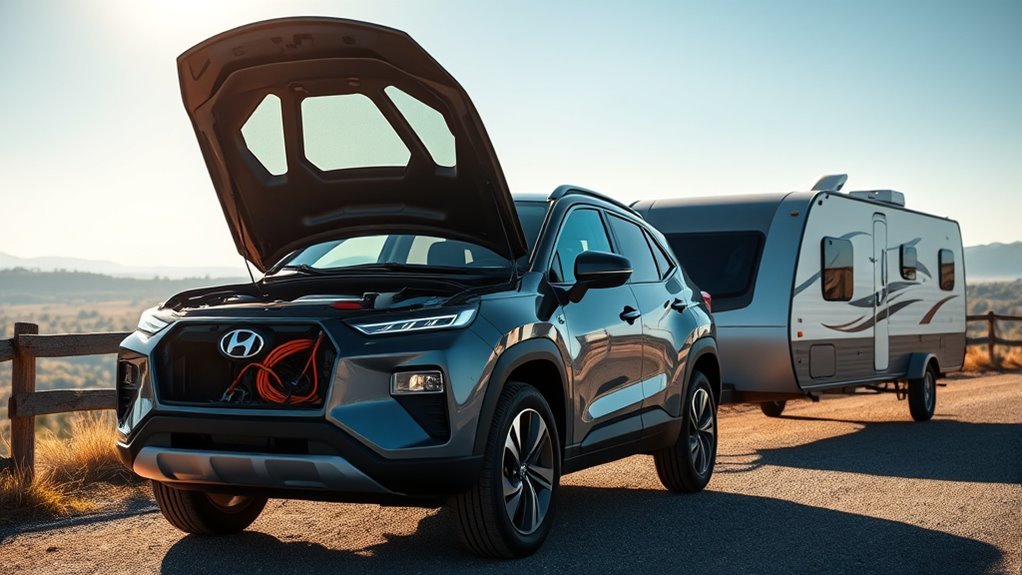
Fuel economy is the main reason most people consider a hybrid SUV, but performance and towing matter too. A well-designed hybrid can feel stronger than its horsepower number suggests because the electric motor adds quick low-speed torque. That helps with city acceleration, merging, and climbing hills with passengers aboard.
| Metric | Typical Hybrid SUV Outcome | What to Check Before Buying |
|---|---|---|
| Fuel economy | Best gains usually appear in city and mixed driving | EPA city, highway, and combined ratings for the exact trim |
| Acceleration | Often strong at low speeds because of electric torque | Total system horsepower and real test-drive feel |
| Towing | Useful, but often lower than larger gas SUVs | Tow package, trailer weight, tongue weight, and payload |
| Cargo space | Usually practical, but batteries can reduce underfloor or rear cargo room | Cargo volume behind the second row and underfloor storage |
Towing capacity is where buyers need to slow down and read the fine print. Ford’s 2026 Escape towing guide lists the 2.5L hybrid and 2.5L plug-in hybrid at 1,500 pounds when properly equipped, while some other Escape engine configurations can tow more: 2026 Ford Escape Towing Information. That does not mean every hybrid SUV is limited to 1,500 pounds; it means towing is model-specific.
Warning: Never assume a hybrid SUV can tow the same trailer as a gas-only trim. Check the owner’s manual, factory tow guide, payload sticker, tongue-weight limit, and required towing package before hitching anything.
Regular Hybrid vs. Plug-In Hybrid SUV
The biggest buying decision is whether you want a regular hybrid or a plug-in hybrid. Both use gasoline and electricity, but they fit different lifestyles.
| Feature | Regular Hybrid SUV | Plug-In Hybrid SUV |
|---|---|---|
| Charging | No plug needed | Charges from an outlet or charging station |
| Battery size | Smaller | Larger |
| Electric-only driving | Limited and usually brief | Useful for short commutes and errands |
| Best for | Drivers who want easy MPG gains without charging | Drivers who can charge often and want to reduce gasoline use |
| Main drawback | Less electric-only driving | Higher cost, more weight, and less benefit if rarely charged |
A plug-in hybrid can be excellent when your daily driving falls within its electric range. If you rarely charge it, however, you may carry the cost and weight of the bigger battery without getting the full benefit.
[Products Worth Considering]

[2026 INTELLIGENT CHARGING UPGRADE — PRECISION CONTROL MEETS SMART SCHEDULING] After surveying 100K+ U.S. EV owners, the Raylix R&D team found that nearly all drivers recognized the necessity of adjustable current and scheduled charging. Our upgraded J1772 charger features 4-level adjustable current (8A/10A/12A/16A) and a 1–12 hour smart delay timer. Whether you're charging overnight or during off-peak hours, enjoy smarter energy use, lower costs, and total convenience—on your schedule.

Primary Function: This EV charger holder neatly organizes electric vehicle charging cables, keeping them from getting tangled or dragged across the floor to help avoid accidental damage. It also doubles as a storage solution for ladders, hoses, ropes, and garden tools

Convenient Cable Management: The charging cable bag organizes electric vehicle cords with a clutter-free interior. The spacious interior comfortably houses all standard charging cables, maintaining a tidy, untangled appearance.
Maintenance, Warranty, and Battery Longevity for Hybrid SUVs
Hybrid SUVs still need normal maintenance: tires, brakes, fluids, filters, wipers, inspections, and software updates. The difference is that the hybrid system adds high-voltage components, power electronics, cooling systems, and battery monitoring.
Battery Warranty Coverage
Hybrid battery coverage is one of the most important ownership details. Toyota states that every Toyota Hybrid battery is supported by a 10-year/150,000-mile limited warranty, whichever comes first: Toyota Hybrid Battery Warranty. Hyundai states that it covers batteries and system components for hybrid, plug-in hybrid, and all-electric vehicles with a 10-year/100,000-mile warranty: Hyundai Warranty.
Those examples show why you should not rely on a single “standard” warranty number. Coverage depends on the manufacturer, model year, state rules, original owner status, and whether the warranty transfers to later owners.
Routine Hybrid Maintenance
Routine maintenance is usually straightforward, but it must be done on schedule. Follow the maintenance guide for your exact vehicle, not a generic interval from another brand. Hybrid systems are sensitive to cooling performance, software calibration, and battery state-of-health monitoring, so skipped service can create expensive problems later.
- Keep service records: They protect resale value and may help with warranty claims.
- Use the correct fluids: Hybrid transmissions, cooling systems, and brakes may have specific requirements.
- Watch the 12-volt battery: Many hybrid issues start with a weak conventional battery, not the high-voltage pack.
- Inspect brakes regularly: Regenerative braking can reduce friction brake use, but calipers, rotors, and pads still need inspection.
- Use trained technicians: High-voltage systems require proper safety procedures.
Pro Tip: When shopping used, ask for a hybrid battery health report, warranty transfer details, service history, and proof that any open recalls or software updates have been completed.
Long-Term Battery Health
Modern hybrid batteries are managed by software that controls temperature, charge level, and discharge rates. You can help battery life by keeping up with service, avoiding long periods of neglect, repairing cooling-system problems quickly, and using the vehicle regularly.
Signs of a weak hybrid battery can include sudden MPG drops, warning lights, unusual engine behavior, reduced electric assist, or a battery gauge that swings rapidly between full and low. These symptoms do not automatically mean the battery has failed, but they are a reason to schedule diagnostics.
How to Choose the Right Hybrid SUV
The right hybrid SUV is the one that fits your actual driving, not just the one with the highest advertised MPG. Use this checklist before you buy.
[Products Worth Considering]

✅ WEIZE hitch cargo carrier is designed to fit a 2" receiver hitch on the rear of your vehicle. It is intended for installation on the back of your car, SUV, or truck. Please confirm your vehicle is equipped with a 2" receiver hitch before purchasing. This product is not compatible with other hitch sizes.

Premium Quality: The cloth features precise, durable stitching that resists loosening over time, while the nylon model is resistant to fraying and wear. Each includes a strong triangular metal buckle that ensures secure attachment, making them suitable for both decoration and daily use

【Universal Size】- Nilight Hitch Step is a multipurpose solution designed to fit universally with all 2-inch trailer hitches, seamlessly integrating with pickup trucks, SUVs, vans, and off-road vehicles.
1. Match the Hybrid Type to Your Driving
Choose a regular hybrid if you want lower fuel use with no charging routine. Choose a plug-in hybrid if your daily mileage is short enough to use electric driving often and you have reliable charging access.
2. Compare Exact EPA Ratings
Do not compare only model names. Compare the exact model year, trim, wheel size, drivetrain, and powertrain on FuelEconomy.gov. AWD, larger wheels, roof racks, and heavier trims can change real-world fuel economy.
3. Check Cargo Space and Seating
Hybrid batteries are usually packaged well, but they can still affect underfloor storage, spare tire availability, or rear cargo volume. Bring the stroller, golf clubs, pet crate, cooler, or luggage you actually use and test the space in person.
4. Verify Towing and Payload
Towing capacity is not only about trailer weight. Payload matters too because passengers, luggage, hitch weight, roof cargo, and accessories all count against the vehicle’s limits. If you tow regularly, compare the hybrid SUV’s gross combined weight rating, tongue-weight limit, and required towing package.
5. Run the Ownership Math
Use a simple payback formula:
Payback period = hybrid price premium ÷ estimated yearly fuel savings
For a plug-in hybrid, add home charging costs, public charging costs, available incentives, and how often you realistically expect to plug in. A PHEV that is charged daily may save far more fuel than one that is driven mostly in gasoline mode.
6. Test Drive It Like You Own It
During the test drive, check acceleration from a stop, highway merging, braking feel, noise when the engine starts, visibility, ride quality, infotainment ease, and cargo loading height. A hybrid SUV should feel smooth and natural, not like a compromise.
Main Pros and Cons of Hybrid SUVs
| Pros | Cons |
|---|---|
| Better fuel economy than many gas-only SUVs | Higher purchase price in many cases |
| Strong low-speed torque | Battery and power electronics add complexity |
| Less engine idling in traffic | Some models lose cargo space or spare tire storage |
| Regenerative braking can reduce friction brake use | Towing capacity may be lower than larger gas SUVs |
| Plug-in models can reduce gasoline use on short trips | PHEVs need regular charging to deliver their best savings |
[Products Worth Considering]

【Up To 7.2kWh High Speed Charging】The protable level 2 ev charger provides max 30Amp current with 110-240V voltage, up to a max 7.2kW charging power 5x faster charging compared to standard level 1 ev chargers, allowing you to charge your electric vehicle more quickly

【High Compatibility】 AplysiaTech EV charger is compatible with SAE J1772 electric vehicles that meet SAE J1772 standards. our EV charger comes with convert NEMA 5-15 and 6-20 plugs that allow it to be used for both level 1 & level 2.

Effective Connection: The side post battery bolts help you charge batteries that are not installed in your car, providing a great solution for top post-less battery connections. The practical design ensures a safe and stable electrical connection to the car battery and protects it for prolonged use
Frequently Asked Questions
What is the main disadvantage of a hybrid SUV?
The main disadvantage is usually higher upfront cost. Some hybrid SUVs also have more complex components, slightly reduced cargo space, or lower towing limits than certain gas-only SUVs. The fuel savings can offset the price premium, but only if the model fits your mileage and driving pattern.
Do hybrid SUVs need to be plugged in?
Regular hybrid SUVs do not need to be plugged in. They recharge through regenerative braking and the gasoline engine. Plug-in hybrid SUVs can be plugged in and usually provide a useful electric-only range before switching to hybrid operation.
Are hybrid SUVs good for highway driving?
Yes, but the biggest fuel economy gains often appear in city and mixed driving because regenerative braking and electric assist are used more often. On long highway trips, a hybrid SUV may still beat a similar gas-only SUV, but the advantage is usually smaller than in stop-and-go traffic.
How long do hybrid SUV batteries last?
Hybrid battery life varies by brand, climate, mileage, and maintenance. Many manufacturers provide long battery warranties, such as Toyota’s 10-year/150,000-mile hybrid battery coverage and Hyundai’s 10-year/100,000-mile hybrid and EV battery coverage. Always read the warranty guide for the exact vehicle.
Can a hybrid SUV tow a trailer?
Many hybrid SUVs can tow, but capacity varies widely. Some compact hybrid SUVs are rated for light trailers, while larger hybrid SUVs may tow more. Check the exact trim, factory tow package, payload limit, and owner’s manual before towing.
Is a plug-in hybrid SUV worth it?
A plug-in hybrid SUV is worth it if you can charge regularly and your daily trips fit within its electric range. If you rarely plug it in, a regular hybrid may be cheaper, lighter, simpler, and more efficient in normal hybrid driving.
Conclusion
An SUV hybrid gives you a practical middle ground between a gas-only SUV and a fully electric vehicle. You get better fuel economy, smooth electric assist, and familiar gasoline range without giving up everyday SUV usefulness. The smartest choice comes down to your driving habits: choose a regular hybrid for simple efficiency, or choose a plug-in hybrid if you can charge often and want more electric driving.
Before buying, compare exact EPA ratings, cargo space, towing limits, warranty coverage, and real ownership costs. A hybrid SUV is not automatically the best choice for every driver, but when the powertrain matches your routine, it can lower fuel use while keeping the comfort, capability, and flexibility that make SUVs so useful.
Sources
- U.S. Department of Energy Alternative Fuels Data Center: How Hybrid Electric Cars Work — hybrid components, charging behavior, and regenerative braking basics.
- U.S. Department of Energy Alternative Fuels Data Center: Plug-In Hybrid Electric Vehicles — plug-in hybrid operation and charging overview.
- FuelEconomy.gov: 2026 Toyota RAV4 Fuel Economy Ratings — EPA fuel economy example for a current hybrid SUV.
- Toyota Hybrid Battery Warranty — Toyota’s hybrid battery warranty terms.
- Hyundai USA Warranty — Hyundai hybrid, plug-in hybrid, and EV battery warranty coverage.
- 2026 Ford Escape Towing Information — official towing-capacity example for hybrid and plug-in hybrid SUV trims.



[…] the rear seats and up to 69.8 cubic feet with the seats folded flat. These numbers hold across the hybrid and plug-in hybrid variants. (The 2026 RAV4 is now hybrid-only, so there is no gas-only model to […]
[…] the ignition off before you unplug connectors. On RAV4 Hybrid or Prime models, stay away from orange high-voltage cables and battery components. You only need […]
[…] most 2011-2023 trucks, and 18.2 gallons for current-generation 2024-2026 Tacoma gas and i-FORCE MAX hybrid models. Your real range still depends on MPG, fuel reserve, terrain, payload, tires, weather, and driving […]
[…] design lets your hybrid system power key vehicle electronics without adding a belt-driven alternator. It also keeps the […]
[…] your 2024 or 2025 Toyota Tundra or Tundra Hybrid has a Panoramic View Monitor, check your VIN before your next service visit. Toyota recall 26TB02 […]
[…] and kept that direction for 2026. That means a new 2025 or 2026 U.S. Camry uses Toyota’s hybrid system and a variable-speed hybrid transaxle/eCVT setup, not the older gas-only 8-speed […]
[…] hybrid system coordinates the gasoline engine, electric motors, inverter, traction battery, sensors, control […]
[…] Hybrid System Malfunction: What It Means and What to […]
[…] internal combustion engine can start even when EV mode is selected. The plug-in hybrid system may use it when power demand, speed, climbing, battery conditions, heating, defrosting, or system […]
[…] battery if the computers cannot wake up and place the vehicle in READY mode. See the complete hybrid system explanation for more […]
[…] SUV Hybrid Guide 2026: MPG, PHEVs, Towing & Costs — Autoreviewnest […]