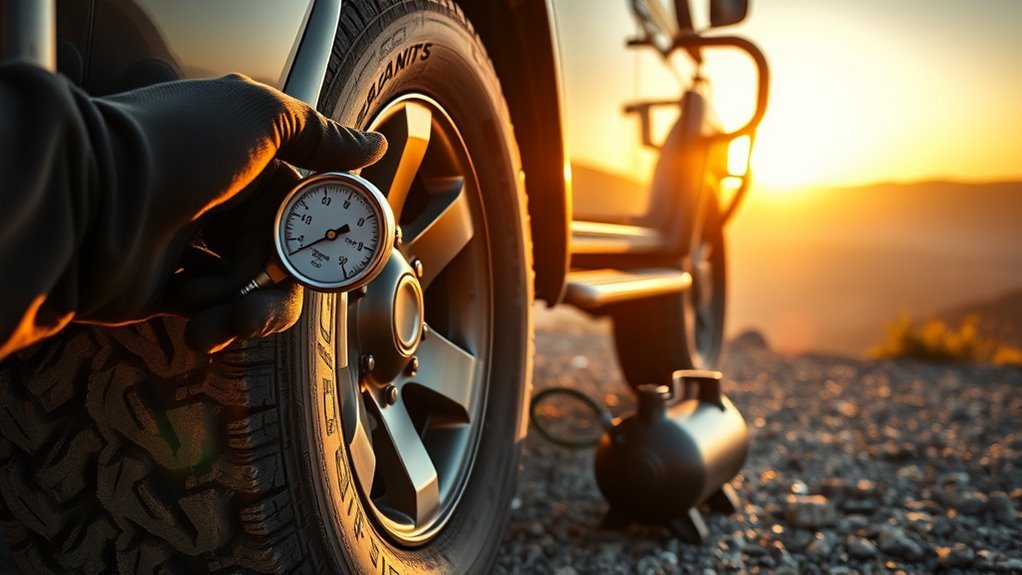
Do not assume a Land Cruiser tow hook is a safe recovery point simply because it looks strong or attaches near the frame. Toyota Land Cruiser generations, factory attachment points, and aftermarket systems differ. Use a point for vehicle recovery only when the vehicle manufacturer or recovery-point manufacturer identifies the application and provides suitable instructions or ratings. Before every pull, inspect the point, its mounting structure, the attachment hardware, and the recovery gear, and keep the pull within the equipment maker’s permitted direction and load limits.
Last updated: August 8, 2026
Inspect Recovery Points: Quick Strength Checklist (Land Cruiser)
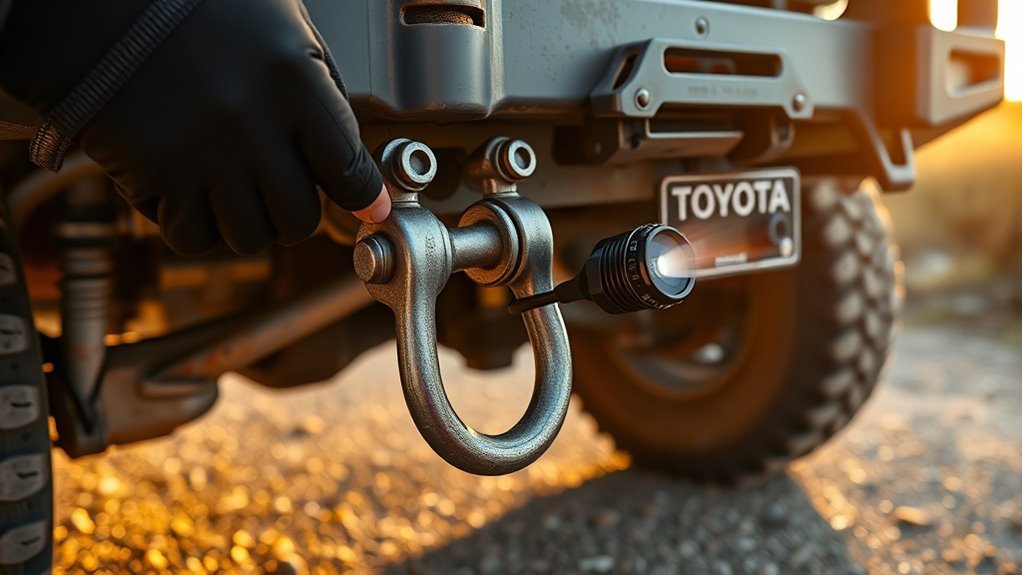
Start by identifying the exact attachment point on your Land Cruiser and confirming what the manufacturer says it is designed to do. A hook, loop, or eye should not be treated as recovery-rated based on appearance alone. Factory terminology and hardware differ by Land Cruiser generation, and aftermarket ratings apply only to the specific product and installation that was tested.
- Confirm intended use: Check the vehicle manual or recovery-point documentation. Distinguish a recovery point from a transport tie-down, towing eye, or other attachment.
- Check the published rating: Use the rating supplied for the exact point rather than assuming that every factory or aftermarket component has the same capacity.
- Inspect mounting hardware: Look for looseness, missing hardware, damaged threads, elongated holes, movement, or evidence that incorrect fasteners were substituted.
- Use the specified hardware and torque: Do not choose bolts simply because they carry a particular strength grade. Follow the recovery-point manufacturer’s exact hardware, reuse, thread-locking, spacer, and torque instructions.
- Inspect the structure: Look for cracks, bent brackets, torn metal, damaged welds, severe corrosion, or deformation around the chassis mounting area.
- Inspect the attachment eye: Check for burrs, sharp corners, gouges, distortion, or wear that could damage a soft shackle or prevent a steel shackle from aligning correctly.
A documented rating is far more useful than a generic claim such as “heavy duty” or “8-ton.” For example, ARB currently lists its vehicle-specific forged recovery point for the 2024+ Land Cruiser 250 at 17,600 lb and permits loading in directions up to 35 degrees for that particular product. Those figures apply to that ARB point and its specified installation; they should not be transferred to another factory or aftermarket attachment.
Decide: Factory Tow Hook or Dedicated Recovery Point?
The correct choice depends on documented intended use, not the name or appearance of the part. Some products called “tow hooks” are designed as recovery attachments, while other factory hooks, loops, or tie-downs may have a more limited purpose. If you cannot verify that a Land Cruiser attachment is suitable for the recovery you plan to perform, do not assume that it is.
| What You Have | What to Verify | Recovery Decision |
|---|---|---|
| Factory hook, eye, or loop | Owner’s-manual purpose and restrictions | Use only as Toyota permits for that model |
| Transport/tie-down point | Whether recovery use is specifically approved | Do not use for recovery unless explicitly approved |
| Vehicle-specific recovery point | Rating, pull angle, installation and compatible rigging | Use within the published instructions |
| Unrated/custom attachment | Engineering, mounting and documented capacity | Treat recovery capability as unverified |
A dedicated recovery point is most useful when it provides something the existing attachment cannot: a documented recovery rating, vehicle-specific mounting, an appropriate shackle interface, and defined directional-loading limits. The mounting structure matters as much as the visible hook or plate, so replacing only the exposed attachment does not automatically make the entire load path stronger.
[Products Worth Considering]

Rhino USA D Ring Shackles provide a dependable recovery connection for off-road and towing setups, with a high break strength designed for demanding use. They fit most aftermarket bumpers and universal shackle mounts, and the included rubber isolator kit helps reduce noise, vibration, and wear. Built from chromoly steel with an anti-rust powder-coated finish, these shackles are made for long-lasting performance in harsh conditions.

Built for towing, winching, and off-road recovery, this D-ring shackle set delivers dependable strength in a compact, easy-to-use design. The drop-forged steel construction and protective coated finish help provide reliable performance and resistance to rust in demanding outdoor conditions. Compatible with Jeeps, ATVs, UTVs, trucks, trailers, and SUVs, it is a practical recovery accessory for everyday trail and rescue use.

This Rhino USA recovery tow strap is built for reliable vehicle pulling and towing in flat recovery situations. Made from durable polyester with reinforced loop ends, it is designed to help secure safe connection points while resisting wear, abrasion, and stress during recovery use. It is a practical choice for off-road recovery, roadside assistance, and general towing needs.
Attach Safely: Straps, Soft Shackles, Steel Shackles, and Bridles
Match every part of the recovery system to the approved recovery point and the type of pull. Recovery straps, kinetic ropes, winch lines, shackles, bridles, receiver adapters, and recovery points each have their own ratings and instructions. The safest system is not simply the component with the largest number printed on it; the components must also be compatible with one another and with the vehicle.
- Use rated recovery gear: Check the manufacturer’s label or documentation before use. Do not rely on appearance, diameter, or product color to judge strength.
- Keep the pull as straight as practical: Do not side-load a recovery point unless its manufacturer specifically publishes an allowable angled-pull range.
- Protect soft shackles from sharp edges: Soft shackles should contact smooth, radiused surfaces intended for synthetic rigging. A sharp or burred steel edge can cut their fibers under load.
- Use steel shackles where appropriate: A correctly rated steel bow or D-shackle may be appropriate where the recovery point is designed for it and the shackle can align without damaging side load.
- Never attach a recovery strap to a tow ball: A standard trailer ball is not a recovery point and can become a dangerous projectile if the attachment fails.
- Keep people clear: No one should stand between vehicles, beside a loaded line, or in the likely path of a failed recovery component.
[Products Worth Considering]
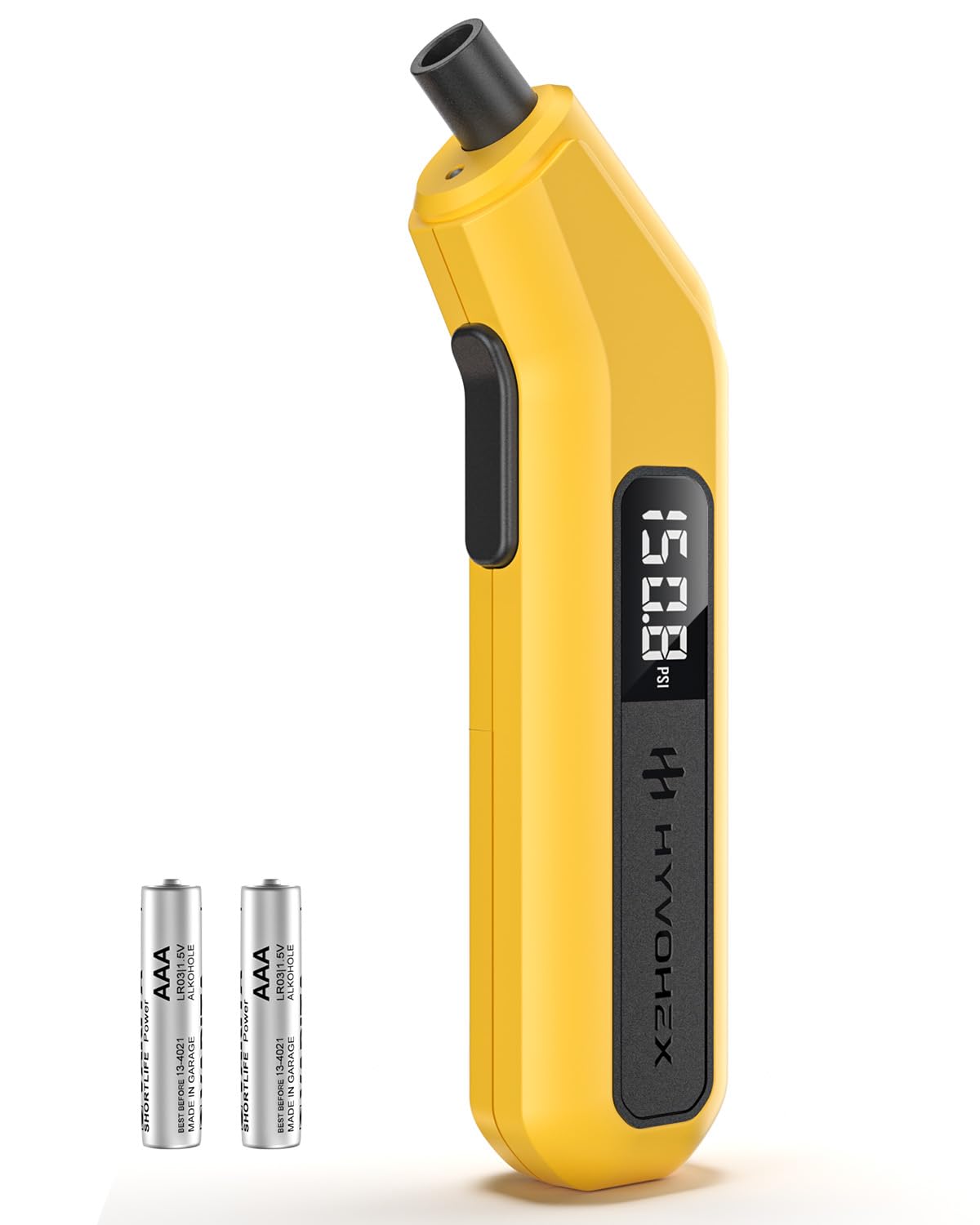
HYVOHEX digital tire pressure gauge delivers fast, accurate readings with an easy-to-read LED backlit display and a high-sensitivity sensor for reliable tire checks. Its valveless one-click operation, rotating valve head, and broad compatibility make it a practical tool for cars, bikes, and trucks. Built with a durable rubber shell and aluminum nozzle, it is compact enough to keep in your glove box or tool bag.

This recovery combo kit gives off-road drivers a dependable towing and extraction solution for unexpected trail situations. It includes a static tow strap and D-ring shackles designed for strong recovery performance and confident use when a vehicle needs assistance. Ideal for basic off-road recovery, it offers a compact setup that helps you stay prepared on the trail.
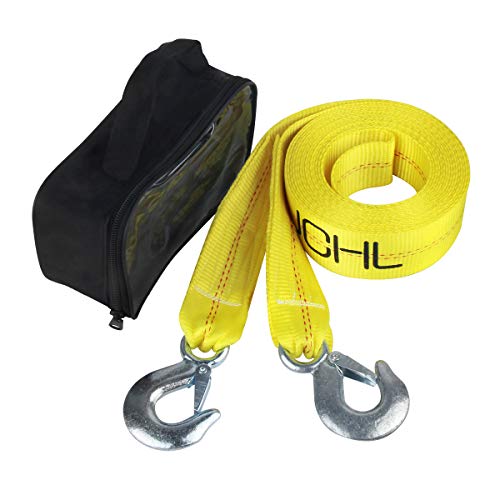
2 inch x 20 feet Yellow High Strength Polyester Strap, 20,000Lb Break Strength Capacity
When Should You Use a Recovery Bridle?
A recovery bridle can distribute force between two approved recovery points when the vehicle and recovery-point instructions allow that configuration. Do not assume a bridle produces a perfect 50/50 load split: the load at each point changes with geometry, angle, movement, and how the bridle equalizes. Some vehicle-specific recovery points are individually rated for particular angled pulls, so follow the manufacturer’s recovery configuration rather than assuming that two points and a bridle are always required.
Upgrade Smart: Choose Vehicle-Specific, Documented Recovery Points
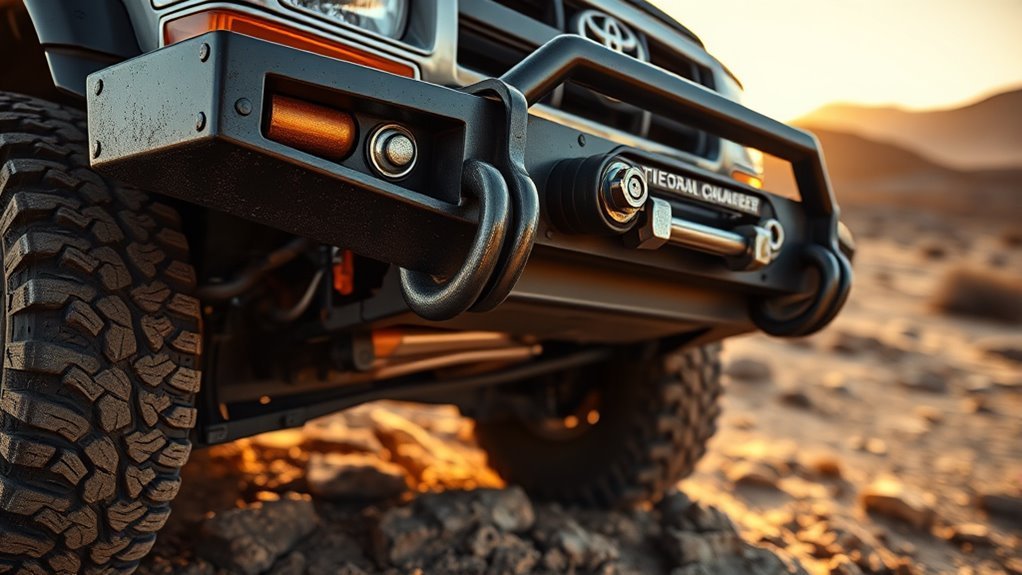
If the factory attachment does not have documented recovery capability for the type of pulling you expect to do, choose a vehicle-specific recovery point with published fitment, capacity, directional-load guidance, compatible rigging, and installation instructions. Avoid selecting a part solely because it bolts into an existing hole or fits another Toyota platform.
The 2024+ Land Cruiser 250 provides a useful example of what documented aftermarket information looks like. ARB’s current forged LC250 recovery point is vehicle-specific, published at 17,600 lb, rated for loading up to 35 degrees for that application, and specified for compatible recovery rigging. That rating does not automatically apply to an OEM hook, another aftermarket point, or a homemade bracket.
Do not substitute hardware or invent a torque value during installation. Use the exact bolts, spacers, washers, thread treatment, tightening sequence, and torque procedure specified by the manufacturer. After installation, confirm that the recovery point does not interfere with steering, protection panels, bumper components, sensors, wiring, or other nearby systems.
Custom fabrication requires extra caution. A thick plate or large weld is not proof that the vehicle’s surrounding structure can carry a dynamic recovery load. For a fabricated point, the load path into the chassis, fasteners, weld design, material, pull direction, fatigue and surrounding structure all need to be considered. For serious recovery use, a documented vehicle-specific system is preferable to an unverified fabrication.
[Products Worth Considering]

[Custom Design for Tacoma/4Runner]: Our tow hooks are uniquely designed to perfectly fit and enhance the front of your Tacoma 2024-2026/4Runner 2025-2026//Land Cruiser 250 2024-2026. This custom design ensures seamless integration for a personalized and sophisticated look.

【Compatible with】: Uniquely engineered tow hooks for 2024–2026 Tacoma, 2025–2026 4Runner, and 2024–2025 Land Cruiser 250. Replaces OEM part number PT974-35250 for seamless integration and precise factory alignment.

Vehicle-Specific Fitment - Specifically designed for 2024-2026 Toyota Tacoma, 2025-2026 Toyota 4Runner, and 2024-2025 Land Cruiser 250. Replaces OEM part PT974-35250 with a precise, factory-like fit for seamless integration with the front bumper
Pre-Trip Recovery Checklist and Maintenance Steps
Inspect the complete recovery system before leaving for a trail and again after any significant recovery. Look for damage that can reduce capacity or damage connected gear. Do not perform improvised proof-load testing on straps or shackles; follow each manufacturer’s inspection and retirement criteria.
| Item | Inspection Criteria | Action |
|---|---|---|
| Recovery point | Correct application, no cracks, bending or movement | Stop use if damaged or unverified |
| Mounting hardware | Correct hardware, secure mounting, no damaged threads or holes | Service to manufacturer specification |
| Recovery strap/rope | Label readable; no cuts, serious abrasion, contamination or damaged stitching | Retire according to manufacturer instructions |
| Soft shackle | No cut fibers, heavy abrasion, stiffness or heat damage | Replace if damaged |
| Steel shackle | No bending, cracks, severe corrosion, damaged pin or distorted threads | Replace if damaged |
| Receiver recovery adapter | Correct receiver size, pin, rating and condition | Use only as its manufacturer specifies |
Keep recovery equipment clean and dry after use, especially after mud, sand, salt water, or road salt exposure. Inspect soft gear for abrasion and contamination before putting it back into storage. Recheck recovery-point hardware according to the installation instructions, particularly after installation, hard trail use, an impact, or a demanding recovery.
Basic Land Cruiser Recovery Gear Checklist
- A recovery strap, kinetic rope, or winch equipment appropriate for the recovery method
- Rated soft or steel shackles that match the attachment points
- Recovery damper where required by the recovery method or equipment instructions
- Gloves
- Shovel and traction boards for lower-risk self-recovery before using a loaded recovery line
- Tree protector if a tree will be used as an approved winch anchor
- Air compressor and tire gauge when airing down is part of the off-road plan
If you cannot positively identify safe attachment points on both vehicles, do not proceed with a strap or kinetic recovery. A professional recovery service is safer than experimenting with a bumper, suspension component, tow ball, tie-down loop, or unknown mounting point.
Frequently Asked Questions
Are Tow Hooks Recovery Points?
Sometimes, but the name alone does not tell you. Some frame-mounted products described as tow hooks are designed and rated for recovery, while other hooks, towing eyes, or transport tie-downs have more limited purposes. For a Land Cruiser, check the instructions for the exact model year and attachment point. If recovery use is not documented, treat its recovery capability as unverified.
Can You Use a Tow Hitch as a Recovery Point?
Do not attach recovery gear to the tow ball. A receiver may be used only with an appropriately rated, purpose-built receiver recovery insert or shackle bracket and when the receiver system is suitable for that recovery method. Towing capacity by itself does not prove that an attachment is safe for a dynamic vehicle recovery.
What Is the Difference Between a Tow Hook and a Recovery Hook?
The terminology is inconsistent, so the important difference is documented intended use. A true recovery attachment should have a defined vehicle application, secure structural mounting, compatible rigging guidance and a documented capacity or recovery-use specification. Do not classify a hook as safe merely because it is thick, forged, brightly painted, or mounted near the chassis.
Do You Need Two Recovery Points and a Bridle?
Not always. Use a bridle when the vehicle or recovery-point manufacturer allows or requires load sharing between two points. A bridle can distribute load, but it should not be assumed to divide force exactly in half. Some purpose-built recovery points are individually rated for specified angled pulls, so their instructions take priority.
Can You Use a Soft Shackle on a Metal Recovery Point?
Yes, when that point has a smooth, suitably radiused attachment surface and its manufacturer permits soft shackles. Do not load a soft shackle against a sharp, square, burred, or damaged steel edge because abrasion or concentrated pressure can cut the synthetic fibers.
Sources and Verification Notes
- ARB USA — Forged Recovery Point LHS 2821040, Toyota Land Cruiser 250 2024+: vehicle-specific recovery point; published 17,600-lb rating and directional rating up to 35 degrees.
- ARB — Recovery Techniques & Equipment: advises using suitably rated recovery points and warns against attaching recovery straps to tow balls or tie-down points.
- WARN Industries — Top 10 Vehicle Recovery Mistakes: advises identifying proper vehicle recovery points, avoiding trailer balls, and using a receiver shackle bracket where appropriate.
- WARN Industries — Metal Shackles vs. Soft Shackles: notes that sharp recovery-point edges can damage synthetic soft-shackle fibers.
- BFGoodrich — Off-Road Recovery Gear and Safety Guide: recommends rated recovery points and warns against tow balls, bumper hitches, side-loaded points, and damaged straps.
Conclusion
The safest approach to Land Cruiser tow hooks and recovery points is verification rather than assumption. Identify your Land Cruiser generation and exact attachment point, confirm its intended recovery use, inspect the point and its mounting structure, and match it with rated recovery gear. Do not use a tow ball, do not invent bolt or torque specifications, do not assume a bridle always splits the load equally, and do not transfer one aftermarket product’s rating to another point. If your existing attachment has no documented recovery capability for the pull you intend to make, install an appropriately engineered vehicle-specific recovery point or use professional recovery assistance.