If your Toyota 4Runner’s ABS, VSC, TRAC, VSC OFF, or slip warning lights come on, do not replace a wheel sensor just because several lights appeared together. First check whether the red brake-system warning is also on and whether the brake pedal, steering, or stopping performance feels abnormal. If the ABS warning and brake-system warning remain on together, or braking performance has changed, stop in a safe place and arrange professional service. If braking feels normal and only ABS/VSC/TRAC-related warnings are present, the vehicle may still have conventional braking but some electronic safety aids can be disabled, so drive cautiously only as necessary and scan the ABS/VSC system promptly. Common causes include low system voltage, stop-light-switch faults, wheel-speed-sensor or wiring problems, engine-control faults that disable VSC/TRAC, and model-specific calibration problems.
Last updated: September 14, 2026.
What Should You Check First When ABS/VSC/TRAC Lights Appear?
Start with the conditions that change whether the 4Runner is safe to move. Check the brake-fluid level, look for visible fluid leakage, and press the brake pedal while stopped to confirm that pedal travel and firmness feel normal. If the red brake-system warning is illuminated together with the ABS warning, or the pedal becomes unusually soft, hard, or ineffective, do not continue driving. Toyota’s warning-light guidance treats brake-system warnings as conditions that require immediate attention. You can also compare the symbols on your dash with Toyota’s warning-light guide.
Next, check whether the brake lamps work normally, inspect battery terminals for looseness or corrosion, and look for damaged wiring near any wheel that recently hit a curb, pothole, or road debris. Then use a scan tool that can communicate with the ABS/VSC skid-control module. A basic engine-only OBD-II reader may show powertrain codes while missing the chassis codes and live wheel-speed data needed to diagnose the warning lights.
[Products Worth Considering]

The ANCEL AD410 PRO combines engine diagnostics and 12V battery testing in one easy-to-use tool, helping you read and clear check engine codes while checking battery health, cranking, and charging performance. It also provides live data, freeze frame details, and I/M readiness checks to help you diagnose issues faster and prepare for emissions testing. With plug-and-play operation, a clear screen, and broad vehicle compatibility, it is a practical solution for home mechanics and everyday drivers.

The ANCEL AD410 helps drivers quickly read and clear engine-related fault codes, view live data, and understand why the check engine light is on before heading to a repair shop. With built-in code definitions, readiness checks, and support for common OBD2 functions, it makes basic diagnostics straightforward for beginners and DIY users. Powered directly from the vehicle and easy to use with no app required, it offers practical value for everyday vehicle troubleshooting.

This foldable dog car ramp is designed to help pets enter and exit vehicles more safely and comfortably, reducing strain on joints and paws. Built with a sturdy aluminum frame, anti-slip walking surface, and a gentle longer incline, it supports everyday use for small to large dogs. Its four-fold design and built-in carry handle make it easy to store, transport, and use at home or on the go.
What Do ABS, VSC and Traction Control Actually Do?
ABS rapidly modulates brake pressure when a wheel is about to lock during hard braking. Its main benefit is helping you retain steering control while braking. VSC, Toyota’s vehicle stability control system, compares vehicle movement with driver input and can reduce engine torque or brake individual wheels when it detects unwanted yaw or a skid. TRAC or traction control limits excessive wheelspin during acceleration by reducing engine torque and, depending on the system, applying brake pressure to a spinning wheel.
These systems share information from components such as wheel-speed sensors, the brake switch, steering-angle data, yaw/acceleration sensors, the engine-control system, and the skid-control ECU. That shared architecture explains why one underlying fault can illuminate several warning lights at the same time.
What Do the ABS, VSC, TRAC and VSC OFF Lights Mean?
The exact symbols vary by 4Runner generation and equipment, so confirm them in the Toyota owner’s manual for your exact model year. A steady ABS warning generally means the anti-lock brake or related brake-assist system has detected a malfunction. When the ABS warning is on while the red brake-system warning is off and normal braking remains available, the conventional brake system may still operate, but anti-lock assistance can be unavailable.
A slip, VSC, TRAC, or VSC TRAC warning can mean stability or traction-control functions are active, disabled, or have detected a fault depending on the model year and whether the light is flashing or steady. Do not assume every VSC OFF or TRAC OFF indicator means a failure. On some 4Runner configurations, selecting low-range four-wheel drive, locking a differential, or manually turning VSC/TRAC off can illuminate these indicators as part of normal system operation.
If several warning lights appear unexpectedly during normal driving, scan the vehicle before replacing parts. The combination of lights helps narrow the problem, but the stored DTCs and live data are more reliable than the lamp count alone.
How Do You Read 4Runner ABS/VSC Codes?
Use an ABS-capable diagnostic scan tool that can communicate with the skid-control ECU, read chassis DTCs, and display live data. Useful live values include individual wheel speeds, brake-switch status, system voltage, steering-angle data, and other sensor values supported by your model year. Record all codes before clearing anything because the combination of codes often identifies the real fault faster than a single code viewed in isolation.
C1201 means Engine Control System Malfunction in applicable Toyota 4Runner service information. It commonly tells you that the engine-control system reported a fault to the skid-control ECU, which then disabled functions such as VSC or TRAC. If C1201 appears with a check-engine light and powertrain DTCs, diagnose the accompanying engine code first rather than replacing an ABS component simply because C1201 is stored.
C1241 is associated with low power-supply voltage in applicable 4Runner service information. That points diagnosis toward system voltage, the battery/charging circuit, related fuses, wiring, grounds, and the voltage reaching the skid-control ECU rather than automatically toward a wheel-speed sensor.
C1391, on Toyota brake systems that use this DTC, refers to abnormal accumulator-pressure leakage or an accumulator leak malfunction. DTC availability and definitions can vary by model year and brake-system design, so use the Toyota service information for your exact 4Runner before ordering an actuator, booster, sensor, or ECU.
What Simple Checks Should You Try Before Buying Parts?
Check battery and charging-system condition first when low-voltage codes are present. Make sure the terminals are secure and free of heavy corrosion. Do not assume that disconnecting the battery is a repair; it can erase useful diagnostic information, and an active fault will normally return.
Check the brake-fluid reservoir and investigate the reason for a low level rather than repeatedly topping it off. Inspect for visible leakage and brake wear if appropriate. Verify that all brake lamps illuminate when the pedal is pressed and switch off when the pedal is released. The stop-light switch is an input used by the vehicle’s control systems, so an incorrect brake-switch signal can contribute to warning-light problems.
At each wheel, inspect accessible sensor wiring and connectors for damage, looseness, corrosion, or evidence of recent impact. Do not replace a wheel-speed sensor solely because the ABS light is on. Compare live wheel-speed readings while the vehicle is safely tested; one wheel dropping out or reporting implausible speed can point toward its sensor, wiring, tone ring, or hub area.
What Commonly Causes 4Runner ABS/VSC/TRAC Warning Lights?
Wheel-speed-sensor and wiring faults are possible because ABS, stability control, and traction control all depend on accurate wheel-speed information. The useful diagnostic clue is not simply “ABS light equals sensor.” Look for a relevant DTC, compare all four live wheel speeds, inspect the harness and connector, and check the tone-ring or hub area where applicable.
A stop-light-switch fault can also affect several control systems because the ECU needs to know when the driver is applying the brake. Confirm brake-lamp operation and, when supported by the scan tool, compare the brake-switch data value with actual pedal movement.
Low electrical-system voltage is especially relevant when C1241 is stored. Check the battery, charging system, fuses, grounds, and skid-control ECU supply circuit as directed by the service information instead of assuming that a weak battery permanently damaged the ABS system.
Engine-control faults matter when the check-engine light appears with VSC/TRAC warnings. On applicable 4Runners, an engine fault can cause the skid-control system to disable VSC/TRAC and store C1201. Read the accompanying powertrain DTC before blaming the stability-control hardware.
Zero-point calibration is another possible cause in specific circumstances, particularly after certain VSC-related components have been replaced, calibration data has been cleared, or a model-specific service procedure calls for recalibration. It should not be treated as a universal fix for every VSC/TRAC warning.
Which ABS/VSC Repairs Are Reasonable DIY Jobs?
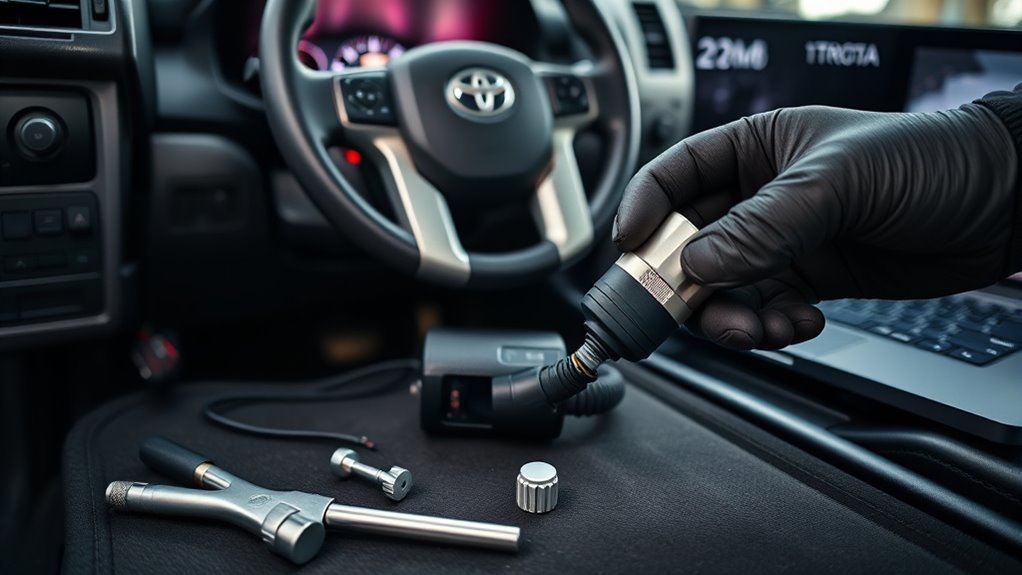
Basic inspection is reasonable for many owners, but the repair should follow the diagnosis. A stop-light switch can often be accessed near the brake pedal, yet switch adjustment and installation vary by model year. Wheel-speed-sensor wiring and connectors can be visually inspected, but removing a seized sensor can damage it or surrounding components. Confirm the fault before disassembly.
| Task | Key Action |
|---|---|
| Stop-light switch | Verify brake lamps and scan-data status before replacement or adjustment |
| Wheel sensor | Compare live wheel speeds; inspect sensor wiring, connector and tone-ring/hub area |
| Recalibrate | Use the exact Toyota procedure for the model year and installed VSC system |
Do not use a generic battery-disconnect routine as a substitute for Toyota’s zero-point-calibration procedure. Calibration requirements differ by generation and equipment. Procedures can require a level surface, a centered steering wheel, specific ignition conditions, Techstream utilities, or model-specific DLC3 steps. Use the factory procedure for your exact year, and do not short diagnostic-port terminals based on instructions written for a different 4Runner generation.
[Products Worth Considering]

This custom-fit floor mat and cargo liner set is designed for select Kia K5 and Hyundai Sonata models, offering full interior coverage for the front row, second row, and trunk. Made from odorless TPE with raised edges and anti-slip backing, it helps block dirt, water, snow, and spills while staying securely in place. The durable, easy-to-clean design is ideal for daily driving, family use, and messy outdoor adventures.

Comprehensive OBD2 Scanner with 16 Resets: The XTOOL D5S car code reader and vehicle reset tool provides an advanced diagnostic solution with 16 commonly needed reset functions, including Electronic Parking Brake Reset (EPB Reset), SAS, BMS Reset (Battery Test), Throttle Body Relearn, TPMS Reset, ABS Bleeding, Injector Coding, Gearbox Match, Suspension Adjustment, Headlight, Window Initialization, Crank Sensor Relearn and more. Equipped with CAN FD Protocol and FAC AutoAuth, the D5S obd2 scanner diagnostic tool ensures compatibility with a broad range of modern vehicles, allowing users to address common maintenance needs quickly. NOTE: Please Check the Compatibility before ordering.

😀【Why Choose NT604 Over Basic Code Readers?】The NT604 incorporates all features found in FOXWELL NT201/NT301 and other basic code readers on the market. Beyond their standard 10 OBDII functions, ✅it adds deep diagnostics for the 4 most critical systems: ABS, SRS, Engine, and Transmission. ✅After automatic VIN identification, NT604 thoroughly checks potential faults one by one with a single scan, then presents consolidated results.✅ It also generates diagnostic reports you can take directly to repair shops, saving inspection fees and labor costs.
Can You Drive With the ABS/VSC/TRAC Lights On?
The answer depends on the brake warning, brake performance, and exact light combination. A warning light by itself does not tell you enough to decide whether the vehicle needs a tow.
When Is Cautious Driving Usually Possible?
If the ABS warning is on but the red brake-system warning is off, the brake pedal feels normal, the fluid level is normal, and the vehicle stops and steers normally, conventional braking may remain available while ABS or other electronic aids are disabled. In that situation, avoid hard driving, slippery-road testing, towing, or unnecessary travel. Drive cautiously only as needed to reach a safe location or obtain diagnosis.
The same general approach can apply to a VSC/TRAC-related fault when normal braking and steering remain available. However, expect reduced electronic assistance during wheelspin or a skid. If a check-engine light is also on, scan the engine-control module as well as the ABS/VSC module because the engine fault may be the reason VSC/TRAC was disabled.
When Should You Stop and Arrange a Tow?
Stop driving if the ABS warning and red brake-system warning remain on together, braking performance changes, the pedal becomes unusually soft or ineffective, brake fluid is very low because of a suspected leak, steering or vehicle control becomes abnormal, or you cannot confidently stop the vehicle. Pull over safely and arrange professional diagnosis or transport rather than continuing to test the vehicle on public roads.
A warning buzzer or repeated brake-booster/actuator pump operation combined with brake-system DTCs also deserves prompt professional diagnosis. Do not use the number of illuminated lights alone as the tow decision.
How Much Do Typical 4Runner ABS/VSC Repairs Cost?
Repair cost depends heavily on the confirmed fault. Current U.S. estimates provide a more useful benchmark than assuming every sensor or switch costs less than $200. RepairPal’s 2026 estimate for a Toyota 4Runner brake-light-switch replacement is about $105–$166. Its estimate for a wheel-speed-sensor replacement is about $294–$468. A 4Runner ABS control-module replacement averages about $698–$731.
These are broad estimates before taxes, location differences, model-year variation, diagnosis, and any related repairs. A C1201-related repair cannot be priced from C1201 alone because the real cost depends on the underlying engine DTC. Likewise, brake-actuator or accumulator-related faults should be diagnosed and estimated for the exact model year before parts are authorized.
[Products Worth Considering]
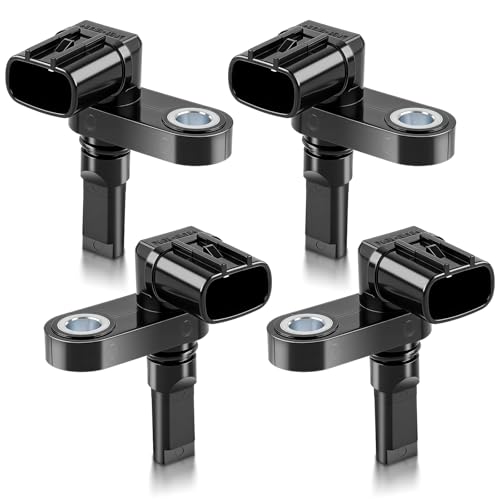
【OEM Replacement & Fitment】 Includes 4 pcs ABS wheel speed sensors (Front Left, Front Right, Rear Left, Rear Right). Direct replacement for OEM numbers: 89542-04020, 8954204020, 89542-60050, 8954260050, 8954304020, 8954360050, SU8267, 0844270, ALS684, 5S7092, 2ABS0293, AB1603, 970330, SS11655

Compatible with Toyota Vehicles: Fits 2003-2019 4Runner, 2007-2014 FJ Cruiser, 2008-2018 Land Cruiser, and 2005-2018 Tacoma.

[Compatible Model]: ABS Wheel Speed Sensor fits for Lexus GX460 4.6L 2010-2020, for GX470 4.7L 2003-2009, for LX570 5.7L 2008-2011, 2013-2020; fit for Toyota 4Runner 2.7L 2003-2020, for FJ Cruiser 4.0L 2007-2014, for Land Cruiser 5.7L 2008-2011, 2013-2020, for Toyota Tacoma 2.7L/3.5L/4.0L 2005-2020, Engine:V8, V6, L4
How Should You Prioritize the Repair?
Prioritize by safety and diagnostic certainty, not by choosing the cheapest part first. Begin with the warning-light pattern and basic brake inspection, then read the ABS/VSC and engine DTCs. Check live data and circuit condition before replacing a component. A new wheel-speed sensor will not repair corroded wiring, a damaged tone ring, low system voltage, or an unrelated engine fault that disabled VSC.
What Diagnostic Order Avoids Unnecessary Parts?
- Confirm brake-fluid level, pedal feel, brake warning status, and brake-lamp operation.
- Read ABS/VSC chassis codes and any engine-control DTCs before clearing them.
- Use live data to compare wheel speeds, brake-switch state, and system voltage where supported.
- Inspect the wiring, connectors, hubs/tone rings, battery/charging circuit, or other system identified by the DTC.
- Replace or recalibrate a component only after the evidence points to that repair.
How Can You Reduce Future ABS/VSC/TRAC Problems?
Follow the maintenance schedule for your exact 4Runner and investigate warning lights when they first appear. Keep the brake-fluid level within specification and have unexpected fluid loss inspected. Maintain the battery and charging system so the skid-control ECU receives stable voltage.
Keep all four tires properly inflated and use appropriate, closely matched tire sizes and wear levels. During brake, bearing, suspension, or hub work, avoid stretching or damaging wheel-speed-sensor wiring. If warning lights appear immediately after a repair, inspect the components and connectors that were disturbed before assuming an unrelated module has failed.
Do not perform routine code clearing simply to make the lights disappear. Stored DTCs and freeze-frame/live data can be the most valuable evidence for finding an intermittent electrical or sensor problem.
Frequently Asked Questions
Is ABS and Traction Control Necessary?
ABS, VSC, and traction control are important safety systems because they can help preserve steering, stability, and traction when the tires approach their grip limits. A fault does not always mean the basic hydraulic brakes have completely failed, but one or more electronic safety functions may be unavailable until the underlying problem is repaired.
Can You Drive With ABS, VSC and TRAC Lights On?
You may be able to drive cautiously for diagnosis if braking and steering feel completely normal, the red brake-system warning is off, and there is no fluid leak or other serious symptom. Stop driving if the ABS and red brake warnings remain on together, braking performance changes, brake fluid is very low from a suspected leak, or vehicle control feels abnormal.
Can a Weak Battery Cause ABS/VSC/TRAC Lights?
Low system voltage can contribute to ABS/VSC warnings, and Toyota 4Runner service information identifies C1241 as a low power-supply-voltage malfunction on applicable models. Test the battery and charging system when a voltage-related code is present instead of automatically replacing a wheel sensor.
What Does C1201 Mean on a Toyota 4Runner?
C1201 means the skid-control system has received an engine-control-system malfunction signal on applicable 4Runners. Check the engine-control DTCs that accompany it. Correcting the underlying engine fault is usually more important than treating C1201 as a failed ABS component.
Can a Loose Gas Cap Cause VSC/TRAC Lights?
A loose or faulty fuel cap does not directly damage the VSC system, but if it causes an evaporative-emissions engine DTC and check-engine light, some 4Runner systems can disable VSC/TRAC because of that engine fault. Read the actual engine codes before assuming the gas cap is responsible.
Will Disconnecting the Battery Reset VSC/TRAC Lights?
Disconnecting the battery may erase some stored information or temporarily turn off a warning, but it does not repair an active fault and is not a universal zero-point-calibration procedure. Read the codes first, then follow the Toyota diagnostic or calibration procedure for the exact model year if calibration is actually required.
Conclusion
If your 4Runner shows ABS, VSC, TRAC, VSC OFF, or slip warnings, diagnose the light pattern and stored codes before replacing parts. Check brake safety first, then scan both the ABS/VSC and engine systems. C1201 points toward an engine-control fault, C1241 points toward low system voltage on applicable models, and wheel-speed-sensor faults should be confirmed with codes and live data rather than guessed from the warning light. If the ABS and red brake-system warnings remain on together or braking performance changes, stop driving and arrange professional service.