Your 4Runner’s A‑TRAC watches for a spinning wheel, then taps the brake on that wheel to redirect torque to the wheel with grip, stabilizing climbs on loose, steep, or slick surfaces; it’s brake‑based, works best at low speeds in 4LO, and won’t help on high‑traction pavement where it can stress the driveline. It complements TRAC and VSC, and sits between basic traction control and a mechanical locker—keep going to see how activation, limits, and troubleshooting work.
Quick A-TRAC Summary: When It Helps and When It Won’t
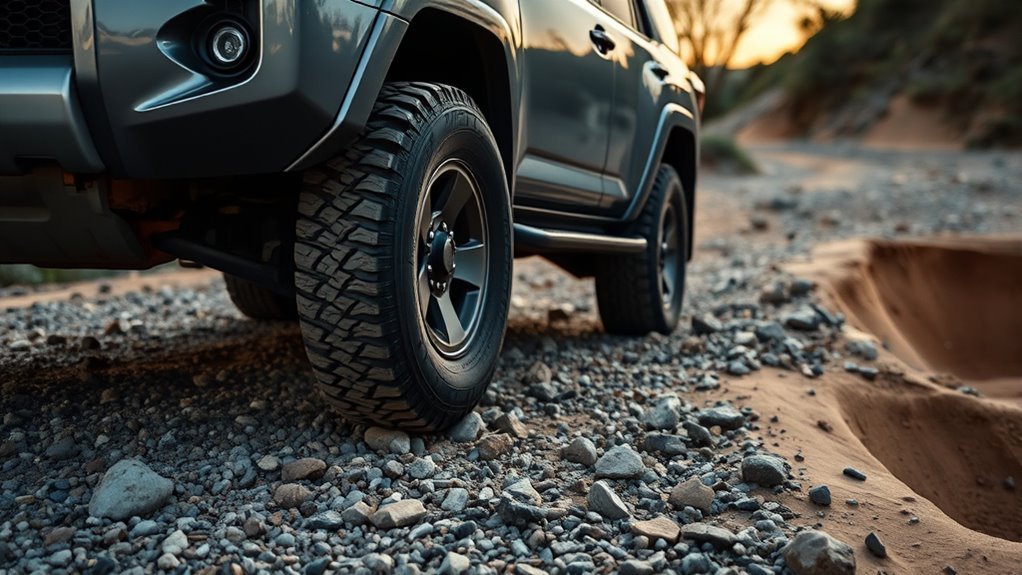
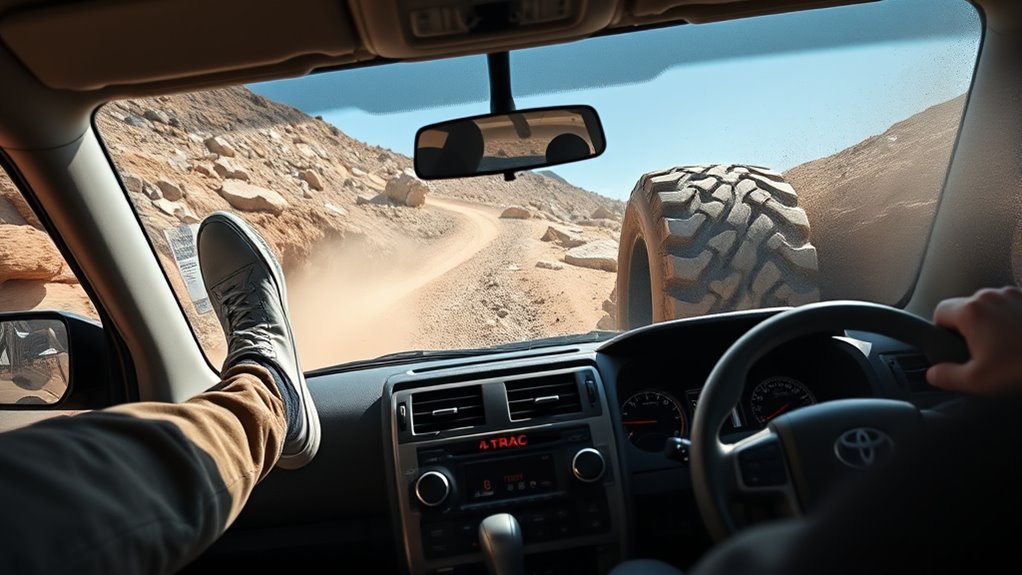
When you switch into 4LO and see the A‑TRAC light, the system steps in like a brake‑locking limited‑slip to slow any spinning wheel and send torque where it’ll bite, which is especially useful on steep, loose, or slick terrain; however, A‑TRAC won’t help — and can even hurt — on high‑traction surfaces where braking a planted wheel causes unnecessary slip and strains the drivetrain. You’ll find A TRAC benefits most when traction’s uneven: it steadies climbs, frees you from wheel‑spin panic, and gives rookies confidence to push through mud, gravel, or rutted slopes. Because it only activates in 4LO, you control when that intervention occurs. But respect the A TRAC limitations: on firm pavement or packed rock, its braking action can induce slip, sap efficiency, and risk drivetrain stress. Use A‑TRAC as a targeted tool—not an always‑on crutch—so you keep momentum, protect components, and stay free to choose the line that keeps you moving.
How A-TRAC Works (Brake-Based Traction Control and Activation Triggers)
Although it may seem like a mysterious electronic aid, A‑TRAC simply uses the brakes to stop a spinning wheel and force torque to the tires that still have grip, giving you more predictable traction off‑road. You’ll feel the braking mechanism engage as the system senses slip, applying brake force to the free wheel so power routes to the planted wheels, a direct traction enhancement without complex gearing. It integrates with the vehicle braking system and Auto LSD, so it helps in mud, snow, or loose gravel and can assist in both 2WD and 4WD when conditions demand.
- Activates automatically with 4WD; manual activation required in 4Low (A‑TRAC dash light confirms).
- For 4Low engagement, stop and put the transmission in neutral before enabling A‑TRAC.
- Works best at low speeds and on intermittent traction patches to maintain forward momentum.
Use it to move freely where tires meet uncertainty.
A-TRAC vs TRAC, VSC, and a Mechanical Locker : Key Differences
Because each system tackles wheel slip differently, you’ll want to pick the right tool for the situation: A-TRAC advantages show when you need targeted brake-based intervention in steep, slippery terrain, mimicking a limited-slip differential to free you from stuck moments. TRAC limitations appear in extreme off-road spots — it’s automatic at ignition and curbs engine power to prevent spin, but it won’t substitute for focused braking on an isolated wheel. VSC integration ties both A-TRAC and TRAC into vehicle stability, helping keep direction and control when surfaces shift, so you get coordinated assistance rather than isolated corrections. A mechanical locker differs fundamentally: it physically locks rear wheels for maximum bite. Use Mechanical locker scenarios only in low-traction, low-speed maneuvers; on high-traction pavement it risks binding and drivetrain damage. You’ll choose based on terrain: TRAC for general slippery driving, A-TRAC for technical traction needs with VSC support, and a locker for committed, low-speed extraction.
When to Use A-TRAC vs Rear Locker and Crawl Control
If you’re picking between A-TRAC, a rear locker, and Crawl Control, match the tool to the terrain and task: use A-TRAC for automatic, brake-based traction help across mixed slippery surfaces and steep climbs; flip the rear locker for low-speed, loose-ground situations like deep mud or gravel where equal rear-wheel torque is essential; and engage Crawl Control in 4LO when you want the system to manage low-speed momentum over technical obstacles so you can focus solely on steering. You’ll choose A-TRAC when you want hands-free traction management across varying surfaces—the A TRAC benefits are automatic modulation and minimal driver intervention. Use the rear locker when both rear wheels must turn together for maximum bite, but respect Rear locker limitations: it’s harsh on pavement and reduces maneuver flexibility. Crawl Control is your liberating tool for controlled, low-speed obstacle runs; it pairs well with A-TRAC for stability. Pick tools by scenario, not by habit, and let the systems extend your capability without costing control.
- Match tool to terrain.
- Prefer A-TRAC for mixed slippery slopes.
- Reserve rear locker for deep loose surfaces.
Diagnose, Test, and Troubleshoot A-TRAC Safely (Quick Checks and Fixes)
Start with a quick activation and safety check before diagnosing A-TRAC: shift into 4LO, confirm the A-TRAC indicator is lit, set the parking brake, and choose a safe, low-traffic area with gravel, packed snow, or shallow mud for testing. You’ll verify A TRAC functionality by observing reduced wheel spin when you gently apply throttle; consistent brake modulation and power transfer to wheels with grip show the system’s working. If nothing changes, use these troubleshooting techniques: confirm the transfer case engages properly and that the vehicle is truly in neutral or 4Low as required, re-check gear selection, and repeat tests on another surface. Watch brake response closely—if brakes don’t pulse or spin persists, stop testing. For on-trail fixes, reseat the transfer-case shifter, cycle 4LO, and reattempt activation. If problems remain, seek a shop with Toyota A-TRAC diagnostic equipment. Stay safe, deliberate, and free to explore.
Frequently Asked Questions
Should Advancetrac Be on or Off?
You should keep Advancetrac on for everyday driving and bad weather, but turn it off on loose surfaces when you want more wheel spin. A TRAC benefits stability; traction control preserves safety while you choose freedom.
What Does H2, H4, and L4 Mean in 4runner?
H2 sends power to the rear wheels for efficient highway cruising; H4 engages four-wheel drive for balanced 50/50 traction at higher speeds; L4 gives low-range torque for crawling obstacles. Use gear selection and traction control wisely.
Conclusion
You’ve seen how A-TRAC tames wheel slip by braking the spinning tire, not by clamping axles like a locker. Think of it as a skilled shepherd steering strays back to the flock—subtle, precise, and limited. Use it for uneven grip or when you need smooth correction; don’t expect locker toughness off-camber or in deep mud. Know its triggers, test sensors, and pair it with crawl or a locker when you need brute force. Trust the logic, know its limits.