
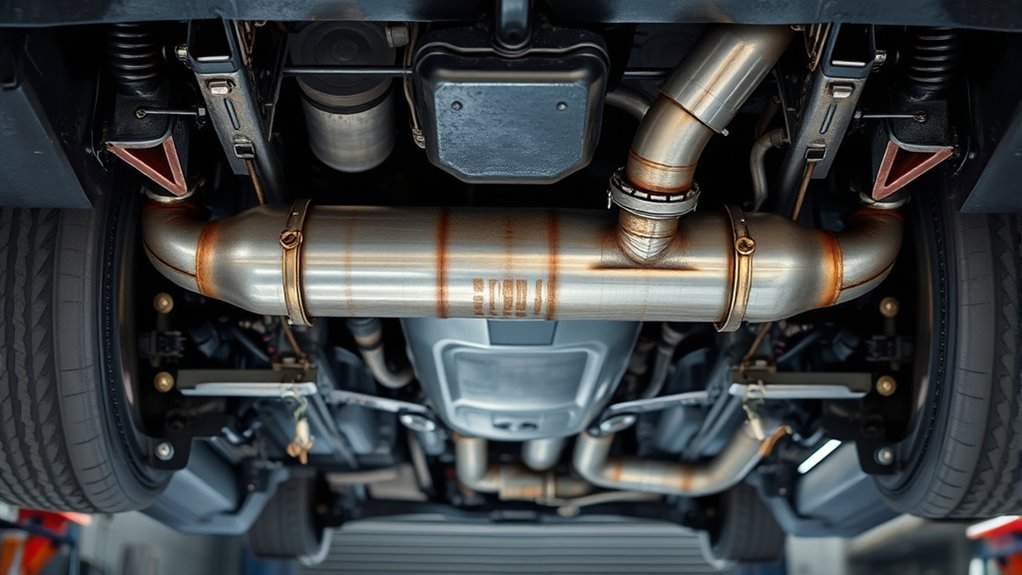
Your 4Runner’s catalytic converter is part of the exhaust system that helps clean up harmful gases before they leave the tailpipe. When it fails or gets stolen, you may notice poor acceleration, rough idle, lower fuel economy, sulfur or rotten-egg smell, rattling, louder exhaust noise, or a check engine light with codes such as P0420. The right fix depends on the cause, so start with safe inspection, scan data, leak checks, and emissions-label verification before buying parts.
Quick Answer
A bad 4Runner catalytic converter can cause sluggish power, poor MPG, rotten-egg smell, rattling, failed emissions readiness, and P0420-style catalyst-efficiency codes. Do not replace it on the code alone. Check for exhaust leaks, misfires, fuel-trim problems, oxygen-sensor issues, and the correct Federal or California emissions fitment first.
Key Takeaways
- The catalytic converter is only one possible cause of P0420. Exhaust leaks, misfires, oil burning, rich running, and bad sensor data can trigger the same path.
- Never buy a converter by model year alone. Match the VIN, engine, emissions label, test group or engine family, bank location, and Federal or California requirement.
- A missing, gutted, bypassed, or defeated converter can create inspection and legal problems. California has especially strict aftermarket converter rules.
- Theft prevention matters on 4Runners because ground clearance makes access easier. A shield, engraving, secure parking, and insurance documentation can reduce risk.
At a Glance
| Time Required | 15–30 minutes for basic inspection and code scan; 1–2 hours for deeper leak and live-data checks |
| Difficulty | Beginner for visual checks; intermediate for live data, smoke testing, and temperature comparison |
| Tools Needed | OBD-II scanner, flashlight, gloves, wheel chocks, jack stands or ramps, infrared thermometer, and smoke machine if available |
| Cost | Free for basic inspection; diagnostic shop time varies; replacement can range widely by generation, engine, emissions rules, and OEM vs approved aftermarket part |
Symptoms of a Bad 4Runner Catalytic Converter
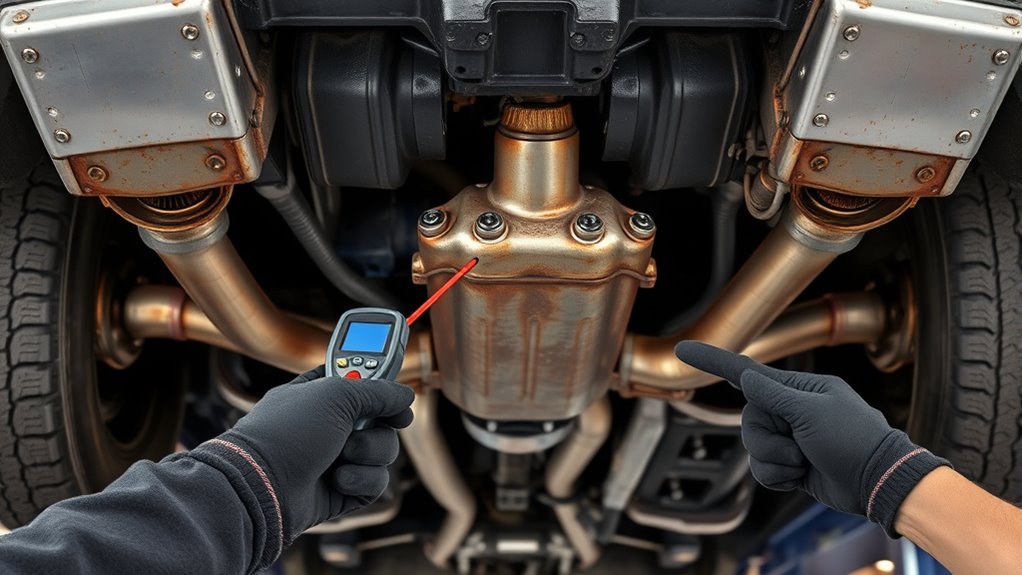
A failing 4Runner catalytic converter often shows up as a cluster of symptoms, not one single clue. You may feel weak acceleration, hesitation under load, rough idle, stalling, lower MPG, or a vehicle that feels like it cannot breathe at higher RPM. These problems happen when the converter is restricted, overheated, broken internally, or no longer cleaning the exhaust well enough for the computer’s catalyst monitor.
Smell and sound also matter. A sulfur or rotten-egg odor can point to overheated catalyst material, rich running, or fuel-control problems. A metallic rattle can mean the ceramic honeycomb inside the converter has cracked or collapsed. Louder exhaust noise can mean the converter or nearby pipe was stolen, cut, cracked, or leaking.
The check engine light is another major clue. A code such as P0420 usually means the computer sees low catalyst efficiency, but that does not prove the converter is the only bad part. Exhaust leaks, slow oxygen sensors, misfires, fuel-trim problems, coolant contamination, oil burning, or aftermarket parts can all confuse the diagnosis.
Note: If the check engine light is flashing, stop driving hard and get the engine checked quickly. A flashing light often points to a misfire, and raw fuel from a misfire can overheat and damage the catalytic converter.
Quick Diagnostics and DIY Checks for 4Runners
Start with the simple checks before you spend money on a converter. The goal is to confirm whether the converter is actually restricted, damaged, missing, or inefficient, and to catch upstream problems that can ruin a new converter.
Warning: Exhaust parts can stay hot long after the engine is shut off. Work on level ground, chock the wheels, use ramps or jack stands rated for the vehicle, and never crawl under a 4Runner supported only by a jack. Do not cut, gut, bypass, or remove a converter for testing.
[Products Worth Considering]

Walker exhaust pipe flange gasket is designed to help complete exhaust repairs with a reliable seal for compatible vehicles. Built to work with OE exhaust components and Walker replacement parts, it features heat-deflecting construction, durable materials, and slotted bolt holes where applicable for easier installation. Engineered and tested for real-world performance, it supports long-lasting exhaust system service.

Walker 36454 is a spring bolt kit designed to help secure exhaust components and maintain a tight, leak-resistant connection. It is made for ball and socket joint applications and uses durable materials for long-lasting performance. This hardware is a practical choice for exhaust repairs and compatible replacement needs on select vehicles.

The FOXWELL NT301 is a plug-and-play OBD2 code reader designed to help drivers and home mechanics diagnose check engine light issues with ease. It reads fault codes, clears emissions-related warnings, displays live sensor data in graph form, and shows I/M readiness so you can quickly check vehicle status before an emissions test. With broad compatibility across many OBD2 vehicles and a clear color screen, it offers a practical, user-friendly way to monitor and troubleshoot engine performance.
Visual Inspection Under Vehicle
Once the exhaust is cool and the vehicle is safely supported, inspect the catalytic converter and the nearby exhaust pipes. Look for fresh cut marks, missing sections, crushed converter shells, heavy rust, broken welds, loose heat shields, bent flanges, and black soot marks around joints. Soot near a flange or weld often means an exhaust leak, and leaks before or near oxygen sensors can cause false catalyst-efficiency codes.
- Check that the converter body is present and not cut out.
- Look for fresh saw marks, new clamps, or mismatched pipe sections.
- Inspect hangers, flanges, gaskets, and clamps for movement or leaks.
- Look for crushed areas from trail damage or improper lifting.
- Check oxygen-sensor wiring for melted insulation, chafing, or loose connectors.
- Listen for rattles at idle and during a light throttle blip.
Basic Sensor and Leak Checks
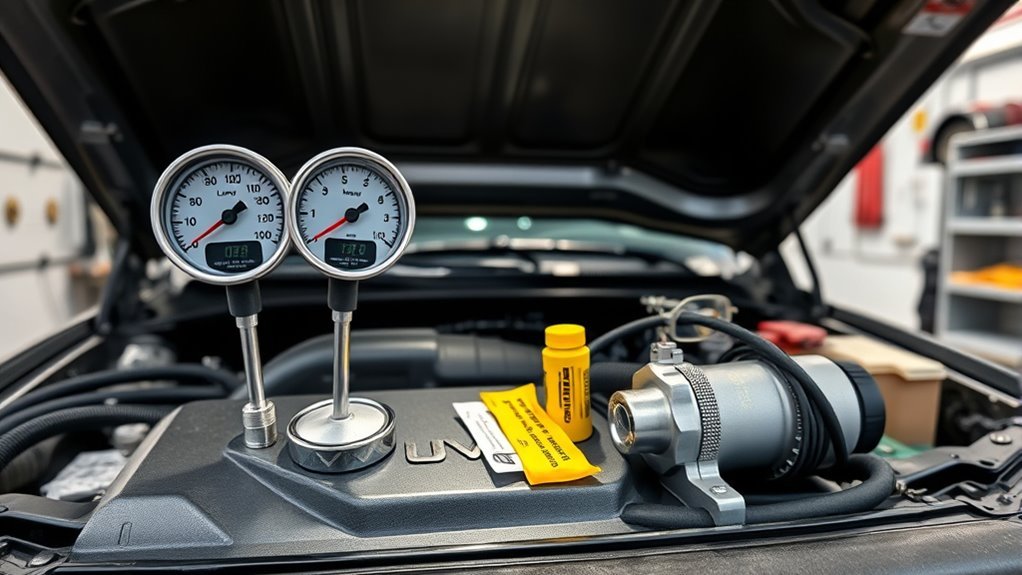
Use an OBD-II scanner to record stored codes, pending codes, freeze-frame data, fuel trims, misfire counters, and oxygen-sensor or air-fuel sensor behavior. Do not clear codes until you save the data. Clearing codes also resets emissions readiness monitors, which can delay an inspection.
Next, check for exhaust leaks. A smoke test is best because even a small leak can pull in outside oxygen and make the downstream sensor reading look wrong. If you do not have a smoke machine, listen for ticking or hissing at cold start, then look for soot trails once the exhaust is cool.
An infrared thermometer can help, but it is not a final verdict. A healthy converter is often hotter at the outlet than the inlet after warm-up, but readings vary with engine load, idle time, air flow, and converter design. A large abnormal difference, combined with poor power and scan data, can support the diagnosis.
Pro Tip: Fix misfires, rich running, vacuum leaks, exhaust leaks, and oil or coolant burning before installing a new catalytic converter. A new converter can fail early if the root cause is still sending raw fuel, oil, or coolant into the exhaust.
4Runner Exhaust Layout: Manifold to Tailpipe
A 4Runner exhaust system starts at the exhaust manifold or manifold-integrated section, then routes hot gases through converter assemblies, oxygen or air-fuel sensors, mid-pipes, mufflers, resonators if equipped, and the tailpipe. Exact layout changes by generation, engine, emissions package, and drivetrain, so bank and sensor location matter when ordering parts.
- Manifold or header area: Collects exhaust pulses from the engine and sends them downstream.
- Upstream oxygen or air-fuel sensor: Helps the engine computer adjust fuel mixture.
- Catalytic converter: Uses catalyst-coated honeycomb material to treat exhaust gases.
- Downstream oxygen sensor: Helps the computer judge catalyst performance.
- Muffler and tailpipe: Reduce noise and route exhaust away from the cabin.
For V-type engines, “Bank 1” and “Bank 2” matter. A code or parts listing may refer to one bank, one sensor position, or one converter assembly. Matching the wrong bank can waste money and create new fitment problems.
How the 4Runner Catalytic Converter Works
A catalytic converter is a high-heat reaction chamber. Exhaust gases pass through a ceramic or metallic honeycomb coated with catalyst materials. On a gasoline 4Runner, the converter helps reduce nitrogen oxides and oxidize carbon monoxide and unburned hydrocarbons into less harmful gases when the engine is warm and the air-fuel mixture is controlled correctly.
Converter Location and Flow
The converter sits in the exhaust stream where it can reach operating temperature quickly and receive steady exhaust flow. Some layouts place converters close to the manifolds, while others use underbody converter assemblies. Close placement helps light-off after cold start, but it also exposes the converter to more heat and makes upstream engine problems more damaging.
A restricted converter can increase backpressure. That can make the engine feel weak, especially under load. A broken converter can rattle, and a missing converter can make the exhaust loud and trigger sensor-related codes.
Catalyst Materials and Function
The internal honeycomb gives the exhaust a large surface area to contact the catalyst coating. The catalyst does not work like a filter that simply catches dirt. It supports chemical reactions while the exhaust flows through it.
Heat, misfires, lead contamination, silicone contamination, oil burning, coolant burning, and rich running can damage the coating or melt the honeycomb. Once the substrate is melted, broken, or heavily contaminated, cleaning additives rarely solve the real problem.
Oxygen Sensors and Control
Oxygen sensors and air-fuel sensors help the engine computer keep the mixture in the correct range. The upstream sensor is mainly for fuel control. The downstream sensor is mainly used to monitor catalyst performance. If the downstream sensor begins to mimic the upstream sensor too closely, the computer may decide the converter is not storing and using oxygen as expected.
Sensor data must be read in context. A bad downstream sensor, exhaust leak, wiring issue, or wrong aftermarket part can look like a catalyst problem. That is why a scan, leak check, and visual inspection should come before replacement.
Which Converter Your 4Runner Has by Year, Engine, and Emissions Label
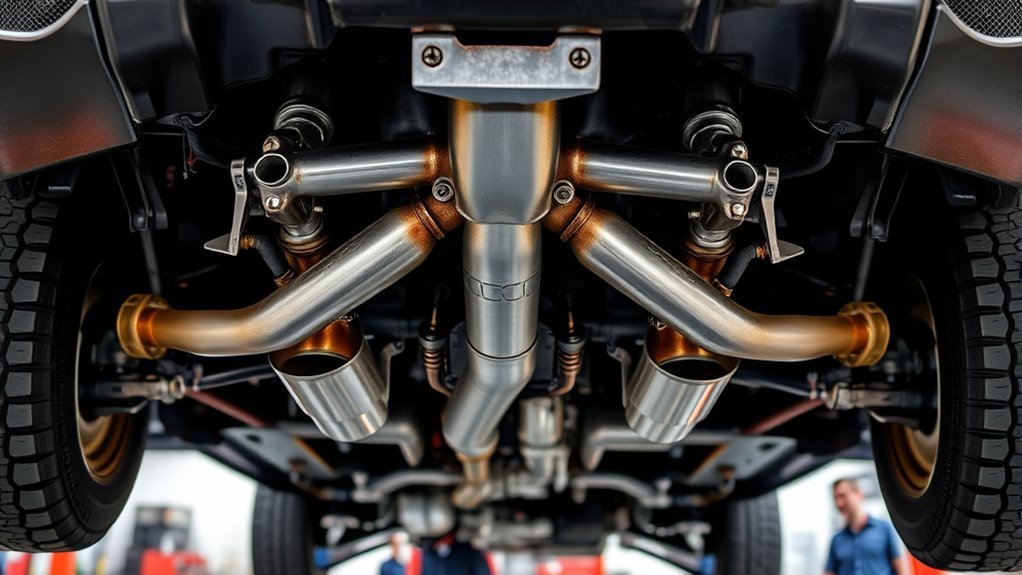
Do not choose a 4Runner catalytic converter by year alone. Toyota changed engines, exhaust layouts, sensors, emissions packages, and current-generation powertrains over time. The safest match comes from the VIN, under-hood emissions label, engine size, drivetrain, bank location, and whether the vehicle is Federal emissions or California emissions.
| Model Years | Common U.S. Context | What to Verify Before Buying |
|---|---|---|
| 1996–2002 | Third-generation 4Runner with 2.7L four-cylinder or 3.4L V6 options | VIN, emissions label, engine family, Federal vs California emissions, sensor locations, and pipe assembly style |
| 2003–2009 | Fourth-generation 4Runner with 4.0L V6 or 4.7L V8 options | Bank 1 vs Bank 2, oxygen sensor position, emissions certification, and whether the part is direct-fit or assembly-based |
| 2010–2024 | Fifth-generation 4Runner with 4.0L V6 in the U.S. market | Bank, sensor layout, emissions label, state requirement, and OEM or approved aftermarket fitment |
| 2025+ | Sixth-generation 4Runner with 2.4L i-FORCE turbo and available i-FORCE MAX hybrid powertrains, according to Toyota USA Newsroom | Use VIN-based Toyota parts data or a qualified parts supplier. Do not assume fifth-generation converter fitment carries over. |
Note: The under-hood emissions label is one of the most important clues. It lists the emissions certification information a parts supplier may need, including the test group or engine family. This is especially important if your state follows California emissions rules.
When to Replace a 4Runner Catalytic Converter
Replace the converter only after testing supports the diagnosis. A confirmed failed converter usually has one or more of these conditions: broken or melted substrate, severe restriction, missing or cut-out converter, repeated catalyst-efficiency failure after leaks and sensor problems are fixed, or failed emissions inspection with catalyst monitor failure.
Do not replace the converter first if the scan shows active misfires, rich fuel trims, oxygen-sensor heater faults, intake leaks, exhaust leaks, or oil and coolant contamination. Those problems can damage the new part and bring the code back.
- Replace the converter if it is stolen, physically damaged, internally rattling, melted, or confirmed inefficient after upstream faults are repaired.
- Repair first if you find exhaust leaks, misfires, rich running, sensor wiring problems, or fuel-control issues.
- Verify fitment before ordering. Match VIN, emissions label, engine, bank, and state rules.
- Save receipts for emissions inspection, warranty, and insurance records.
[Products Worth Considering]

This oxygen O2 sensor set is designed for select Toyota Camry and RAV4 models with 2.4L engines, providing upstream and downstream replacement coverage in one package. Built to OEM specifications for plug-and-play installation, it helps improve fuel efficiency, support accurate air-fuel monitoring, and restore reliable engine performance. The stainless steel and heat-resistant construction is made for long-lasting durability and stable operation.

FOXWELL NT201 is an easy-to-use OBD2 scanner designed to help drivers quickly read and clear check engine codes, view live engine data, and check emissions readiness. Its color screen, one-key I/M readiness test, and broad compatibility with most gasoline vehicles since 1996 make it a practical tool for everyday diagnostics and maintenance. With plug-and-play operation and lifetime free updates, it offers a simple way to understand vehicle issues without expensive shop visits.

The BLCKTEC 440 Bluetooth OBD2 scanner helps drivers and DIY mechanics quickly read and clear trouble codes, monitor live data, and check emissions readiness with confidence. Its color display, graphing capabilities, and battery and charging system testing make it a versatile diagnostic tool for OBD-compliant vehicles. Designed for plug-and-play convenience, it runs directly from your vehicle and includes support for report sharing and ongoing updates.
Maintenance Checklist, Common Repairs, and Replacement Triggers
The catalytic converter lasts longest when the engine runs cleanly. Most converter failures are caused by heat, contamination, impact damage, theft, or long-term engine problems that were not repaired early.
- Scan codes before clearing them, and save freeze-frame data.
- Fix misfires quickly to prevent raw fuel from overheating the converter.
- Repair exhaust leaks before judging catalyst efficiency.
- Monitor oil consumption and coolant loss because both can contaminate the catalyst.
- Inspect hangers, clamps, and shields after trail use or underbody impacts.
- Use the correct fuel and engine oil for your model.
- Check emissions readiness before a state inspection.
Common related repairs include oxygen or air-fuel sensor replacement, exhaust gasket replacement, broken hanger repair, flange repair, misfire repair, fuel-injector diagnosis, and converter shield installation. A good shop should explain why the converter failed, not just quote the part.
[Products Worth Considering]

The ANCEL AD410 helps drivers quickly read and clear engine-related fault codes, view live data, and understand why the check engine light is on before heading to a repair shop. With built-in code definitions, readiness checks, and support for common OBD2 functions, it makes basic diagnostics straightforward for beginners and DIY users. Powered directly from the vehicle and easy to use with no app required, it offers practical value for everyday vehicle troubleshooting.

This enhanced OBD2 scanner helps drivers quickly diagnose check engine light issues, read and clear trouble codes, and check emissions readiness before a smog test. It also adds EVAP and O2 sensor testing, live data, freeze frame capture, and a one-click battery health check in a simple plug-and-play tool with a bright color screen.

The ANCEL AD410 PRO combines engine diagnostics and 12V battery testing in one easy-to-use tool, helping you read and clear check engine codes while checking battery health, cranking, and charging performance. It also provides live data, freeze frame details, and I/M readiness checks to help you diagnose issues faster and prepare for emissions testing. With plug-and-play operation, a clear screen, and broad vehicle compatibility, it is a practical solution for home mechanics and everyday drivers.
4Runner Catalytic Converter Theft: Prevention and Cost Guide
A 4Runner’s ground clearance can make the converter easier to reach than on a low passenger car. Theft risk changes by city, parking situation, metal prices, enforcement, and local resale rules. State Farm data reported by AP showed catalytic converter theft claims fell in the first half of 2023 after years of increases, but local spikes still happen.
| Risk Factor | Practical Fix | Expected Outcome |
|---|---|---|
| High ground clearance | Install a converter shield, cage, or hardened anti-theft plate | Makes cutting slower and noisier |
| Dark street parking | Park in a garage, near lighting, or near cameras when possible | Reduces easy, hidden access |
| No part ID | Engrave VIN or use a traceable ID marking program | May help police recovery and resale deterrence |
| No documentation | Keep photos, receipts, police report, and insurance claim details | Speeds up claims and replacement approval |
If the converter is stolen, you may hear a sudden loud exhaust roar at startup, smell fumes, see cut pipes under the vehicle, and get oxygen-sensor or catalyst codes. Do not keep driving if exhaust fumes may enter the cabin. File a police report, take photos, call your insurer, and confirm the replacement part is legal for your emissions jurisdiction.
Emissions Tests and Legal Requirements for 4Runners
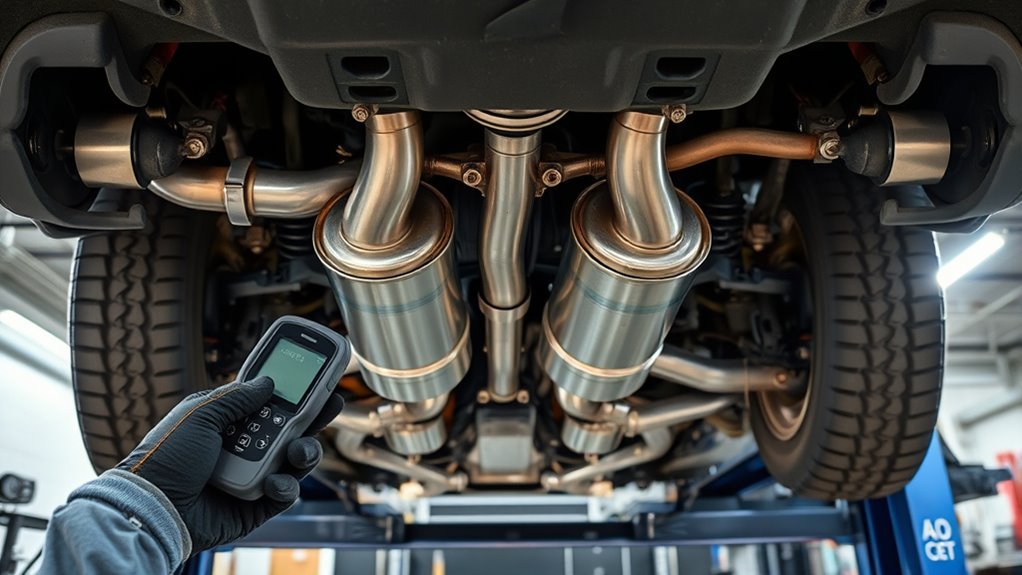
A functioning catalytic converter is part of the emissions system on road-going 4Runners. In the United States, the Clean Air Act prohibited-acts section bars knowingly removing or rendering inoperative emissions-control devices, and EPA regulations also prohibit tampering and defeat devices under 40 CFR 1068.101.
Warning: Test pipes, gutted converters, oxygen-sensor spacers used to hide catalyst problems, and “off-road only” parts on street vehicles can create legal, inspection, and insurance problems. Use compliant parts for the vehicle and the state where it is registered.
California rules are stricter than many states. The California Air Resources Board says aftermarket catalytic converters must have an Executive Order exemption to be legally sold and installed in California, and used converters cannot be legally advertised, sold, or installed there. Other states may also follow California emissions rules, so verify local requirements before ordering.
- Check the under-hood emissions label before buying parts.
- Confirm whether your vehicle is Federal or California emissions certified.
- Use a converter approved for the exact test group or engine family when required.
- Repair check engine lights before inspection.
- Complete the required drive cycle after repairs so readiness monitors can run.
- Keep receipts and part documentation in case the inspector asks for proof.
Frequently Asked Questions
Can thieves cut through a catalytic converter shield?
Yes, some shields can be cut, but a good shield still helps because it adds time, noise, and difficulty. Choose a shield or cage made for your 4Runner generation, use tamper-resistant hardware, and combine it with smart parking, cameras, and VIN marking.
What are four signs of a failing catalytic converter?
Four common signs are weak acceleration, poor fuel economy, rotten-egg smell, and a check engine light with a catalyst-efficiency code. Rattling, failed emissions readiness, and unusual heat under the vehicle can also point to converter trouble.
Does code P0420 always mean the 4Runner catalytic converter is bad?
No. P0420 means the computer sees catalyst-efficiency trouble, but the cause can be an exhaust leak, sensor issue, misfire, rich running, fuel-trim problem, or a damaged converter. Diagnose the system before replacing parts.
Can I use a used catalytic converter on my 4Runner?
It depends on where the vehicle is registered, but many areas have strict rules. In California, CARB says used catalytic converters cannot be legally advertised, sold, or installed. Check your state rules and use the correct approved part.
How do I know which catalytic converter fits my 4Runner?
Use the VIN, engine size, model year, drivetrain, bank location, under-hood emissions label, and test group or engine family. Do not rely on model year alone, especially when choosing between Federal and California-compliant parts.
Conclusion
A 4Runner catalytic converter problem is not something to guess at. Start with the symptoms, scan the codes, inspect for leaks or theft, check sensor data, and verify the emissions label before buying parts. If the converter is damaged, stolen, restricted, or confirmed inefficient after upstream problems are fixed, replace it with the correct legal part. That approach protects power, fuel economy, emissions compliance, and your repair budget.
Sources
- 42 U.S. Code § 7522, Prohibited Acts — supports Clean Air Act tampering and emissions-control device guidance.
- 40 CFR 1068.101 — supports EPA tampering and defeat-device warnings.
- California Air Resources Board, Aftermarket Catalytic Converters — supports California EO approval and used-converter restrictions.
- Toyota USA Newsroom, 2025 Toyota 4Runner — supports current-generation 4Runner powertrain context.
- Associated Press, State Farm catalytic converter theft claims — supports theft trend context.

[…] A flashing check engine light means the misfire is active and can overheat the catalytic converter. […]
[…] but a trouble code does not identify the failed part. Hidden leaks near the exhaust manifold, catalytic converter, flex pipe, or oxygen sensors are best confirmed with a controlled professional smoke […]
[…] the repair with live data and a completed monitor or drive cycle. Do not replace sensors or a catalytic converter until testing confirms the failed […]
[…] Do not coat exhaust pipes, catalytic converters, oxygen sensors, brake rotors, brake pads, tire tread, belts, pulleys, drain holes, or rubber parts […]
[…] system parts, including the catalytic converter and other catalyst-system components listed in the warranty […]