
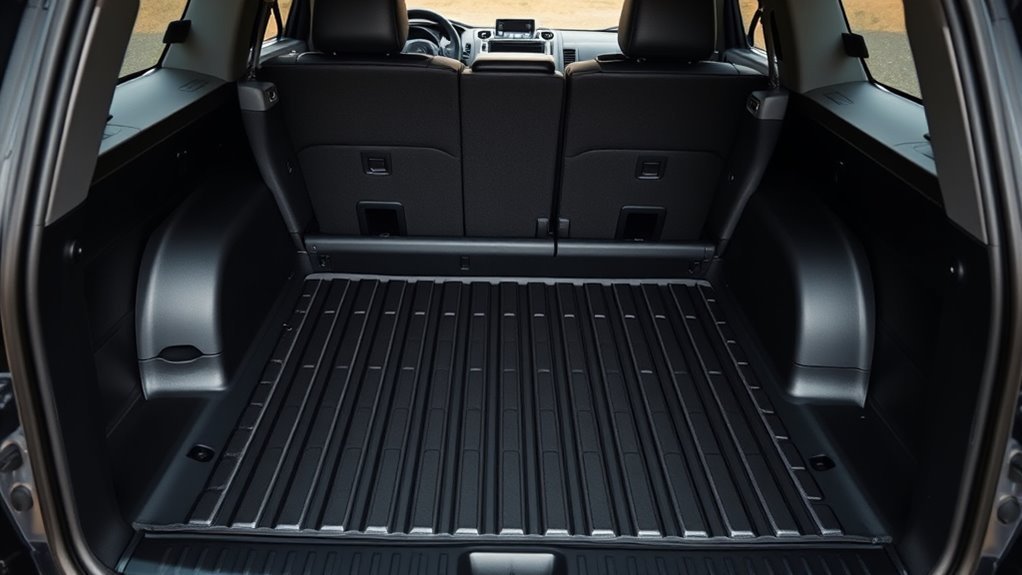
Cleaning 4Runner floor mats and a cargo liner is simple, but the safest method depends on the material. Remove every mat first, vacuum both sides, check for rubber, TPE, vinyl, or carpet construction, and use a mild cleaner instead of harsh solvents. The goal is to lift grit, mud, salt, pet hair, and spills without leaving slippery residue or trapping moisture under the mats.
Quick Answer
To clean 4Runner floor mats and the cargo liner, remove them, shake and vacuum loose dirt, rinse rubber or TPE liners, scrub with mild soap or a liner-safe cleaner, rinse clean, and dry fully. For carpet mats, vacuum, pre-treat stains, wash gently, extract water, and dry completely before reinstalling.
Key Takeaways
- Remove the mats and cargo liner before cleaning so water, cleaner, and grit stay out of the 4Runner’s carpet.
- Use mild soap, warm water, and a soft-to-medium brush for rubber, vinyl, and TPE liners; avoid greasy dressings that can make mats slippery.
- Carpet mats need deeper drying: vacuum, spot treat, scrub lightly, extract water, and dry completely to reduce odor and mildew risk.
- After reinstalling, confirm the driver’s mat is secured to the retaining hooks and cannot interfere with the pedals.
At a Glance
| Time Required | 20–45 minutes, plus drying time |
| Difficulty | Easy |
| Tools Needed | Vacuum, hose or bucket, microfiber towels, soft-to-medium brush, wet/dry vac for carpet mats |
| Cost | Usually $0–$20 if you already have basic car soap or mat cleaner |
Quick: Clean 4Runner Floor Mats & Cargo Liner in 5 Steps
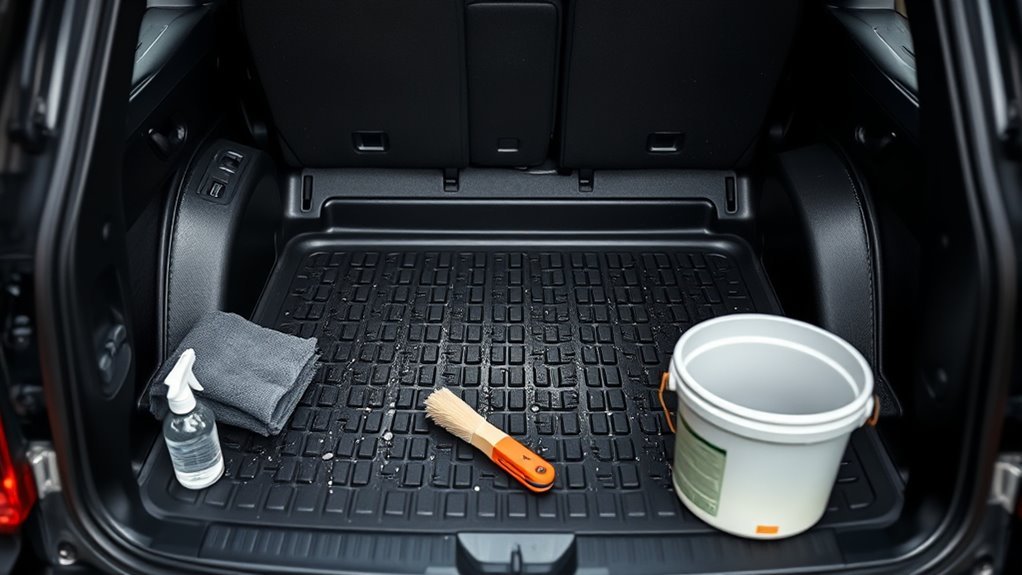
- Remove every mat and the cargo liner. Pull the driver’s mat, passenger mats, second-row mats, third-row mats if equipped, and cargo liner out of the vehicle. Do not clean them in place.
- Shake, dry-brush, and vacuum. Knock off loose grit first, then vacuum both sides of each mat and the exposed 4Runner carpet.
- Match the cleaner to the material. Use mild car wash soap, warm water, or a liner-safe cleaner for rubber, vinyl, and TPE. Use carpet cleaner only on carpet mats.
- Scrub, rinse, and repeat only where needed. Work the brush through grooves, raised edges, and heel-pad areas. Rinse until the water runs clear.
- Dry completely before reinstalling. Water trapped under mats can cause odor and damp carpet. Once dry, lock the driver’s mat back onto the retaining hooks.
Warning: Never reinstall a loose, upside-down, stacked, or wet driver’s mat. Toyota’s owner guidance says the floor mat should be secured with the retaining hooks and checked after cleaning so it does not interfere with pedal movement.
Prep & Tools: Remove Mats, Vacuum, and Check Material
Pull the mats and cargo liner out of your 4Runner and place them on a clean driveway, garage floor, or wash mat. This lets you inspect each piece without soaking the interior carpet or grinding debris deeper into the fibers.
Start with a quick material check:
- Rubber, vinyl, or TPE liners: Flexible or semi-rigid all-weather mats with channels, raised lips, or molded edges.
- Carpet mats: Fabric surface with backing material and stitched or bound edges.
- Cargo liner: Usually all-weather rubber, vinyl, or TPE, though some 4Runners may use carpeted cargo mats.
Vacuum both sides of each mat, then vacuum the 4Runner’s exposed carpet, seat-track edges, cargo hooks, and mat-retention areas. Removing loose sand and grit first reduces scratching on rubber/TPE liners and prevents abrasive dirt from spreading through carpet fibers.
[Products Worth Considering]

Protect your Toyota 4Runner interior with custom-fit floor mats and a rear cargo liner designed for all-weather coverage. The 3D-scanned TPE construction offers a precise fit for multiple model years, while raised edges help guard against spills, mud, snow, and everyday debris. Built for durability and easy maintenance, this set delivers reliable cabin protection without trimming.

Designed for 2013-2024 Toyota 4Runner models with 5-passenger seating, this custom-fit set delivers full interior coverage with floor mats, a cargo liner, rear seat back protectors, and door sill guards. The all-weather TPE construction helps block spills, dirt, and pet messes while raised edges and secure clips keep everything in place for daily driving. Installation is simple, and cleaning is quick with just water.

This custom full-set liner system is molded for Toyota 4Runner models to deliver a precise fit with complete interior coverage. It includes floor mats, cargo liner, and backrest mat to help protect against dirt, spills, mud, and daily wear while staying securely in place. Made from odorless TPE material, these mats are easy to install, simple to clean, and built for all-weather use.
Tools and Cleaners You Need
- Vacuum with hose and crevice attachment
- Soft-to-medium bristle brush
- Microfiber towels
- Garden hose, spray nozzle, or bucket of warm water
- Mild car wash soap, mild detergent, or a mat-safe cleaner
- Carpet stain remover for carpet mats only
- Wet/dry vacuum for extracting water from carpet mats
- Non-greasy protectant only when the product label allows use on the mat surface
Note: Test any new cleaner on a small hidden area first, especially on aftermarket liners or older mats that may already be dry, faded, or worn.
Clean Rubber/TPE Liners: Hose, Cleaner, Scrub, Rinse, Dry
Rubber, vinyl, and TPE all-weather liners can usually handle more water than carpet mats, but they still need a gentle process. Start by rinsing the liner with fresh water to float away grit. Pre-rinsing matters because dry scrubbing can drag sand across the surface and leave dull marks.
Apply a cleaner compatible with the liner material. WeatherTech recommends its FloorLiner and FloorMat Cleaner or mild detergent with warm water, followed by scrubbing with a medium bristle brush and rinsing with fresh water. Husky Liners also recommends mild cleaning and warns against slick products that can leave the surface slippery. When in doubt, use mild soap and water rather than strong degreasers, bleach, or solvent-based cleaners.
- Rinse first. Spray the top and bottom of the mat to remove sand, salt, mud, and loose dirt.
- Apply cleaner evenly. Use mild soap, warm water, or a dedicated floor-liner cleaner.
- Scrub the channels. Work in straight passes through seams, raised edges, grooves, heel pads, and cargo-liner corners.
- Rinse until clear. Leftover soap can attract dirt and make the mat look cloudy.
- Dry both sides. Shake off water, towel dry, then air-dry in shade or indirect sun until no moisture remains.
Pro Tip: For white road-salt haze, repeat a warm-water wash before reaching for stronger cleaners. Salt often needs dwell time, brush agitation, and a second rinse more than it needs harsh chemicals.
[Products Worth Considering]
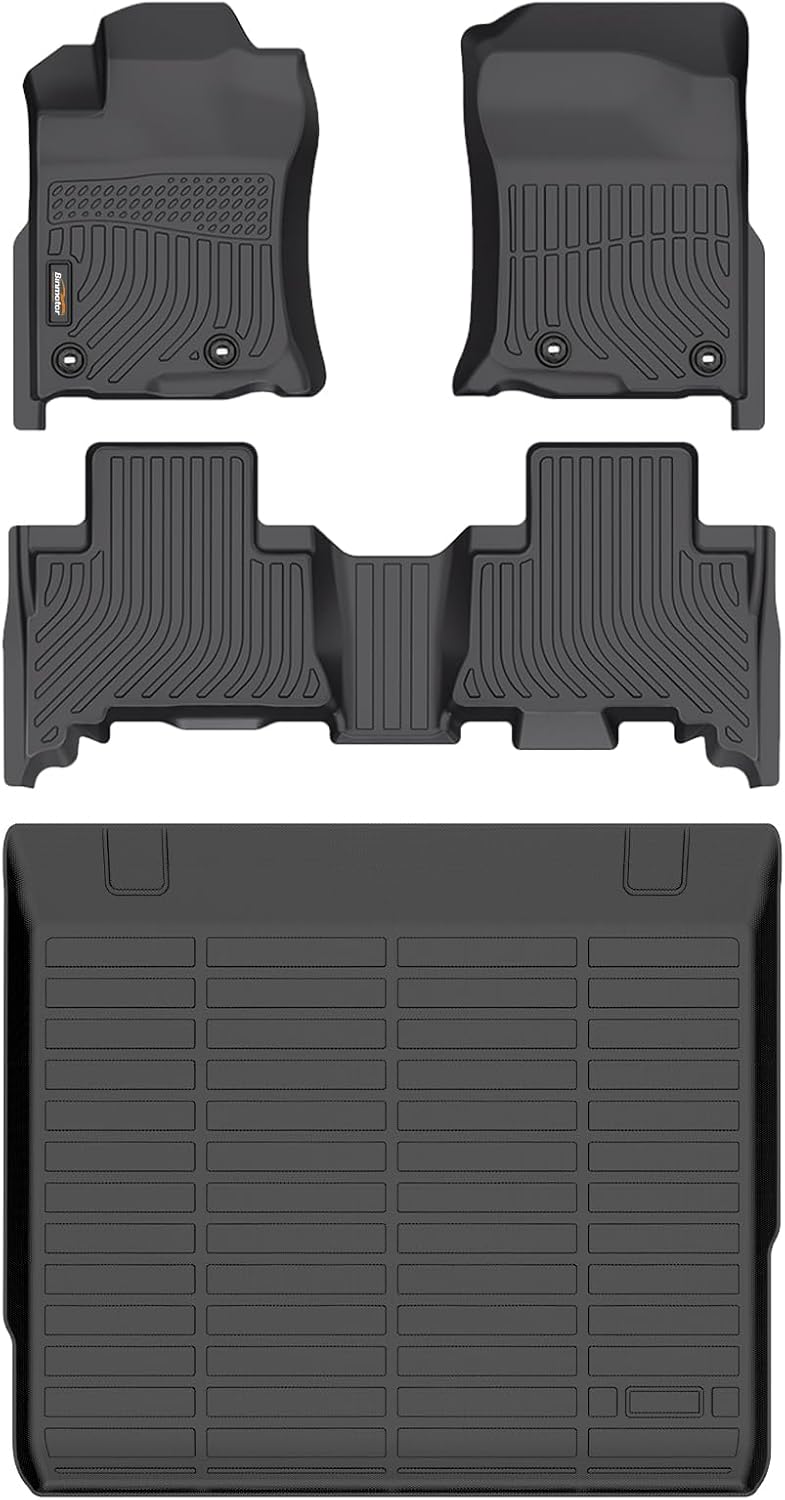
These custom-fit floor mats and cargo liner are designed for select Toyota 4Runner models and provide full-coverage protection for your interior. Made from durable TPE material with raised edges and non-slip buckles, they help contain dirt, spills, snow, and debris while staying securely in place. The waterproof design is easy to clean, making them a practical all-weather upgrade for everyday driving.
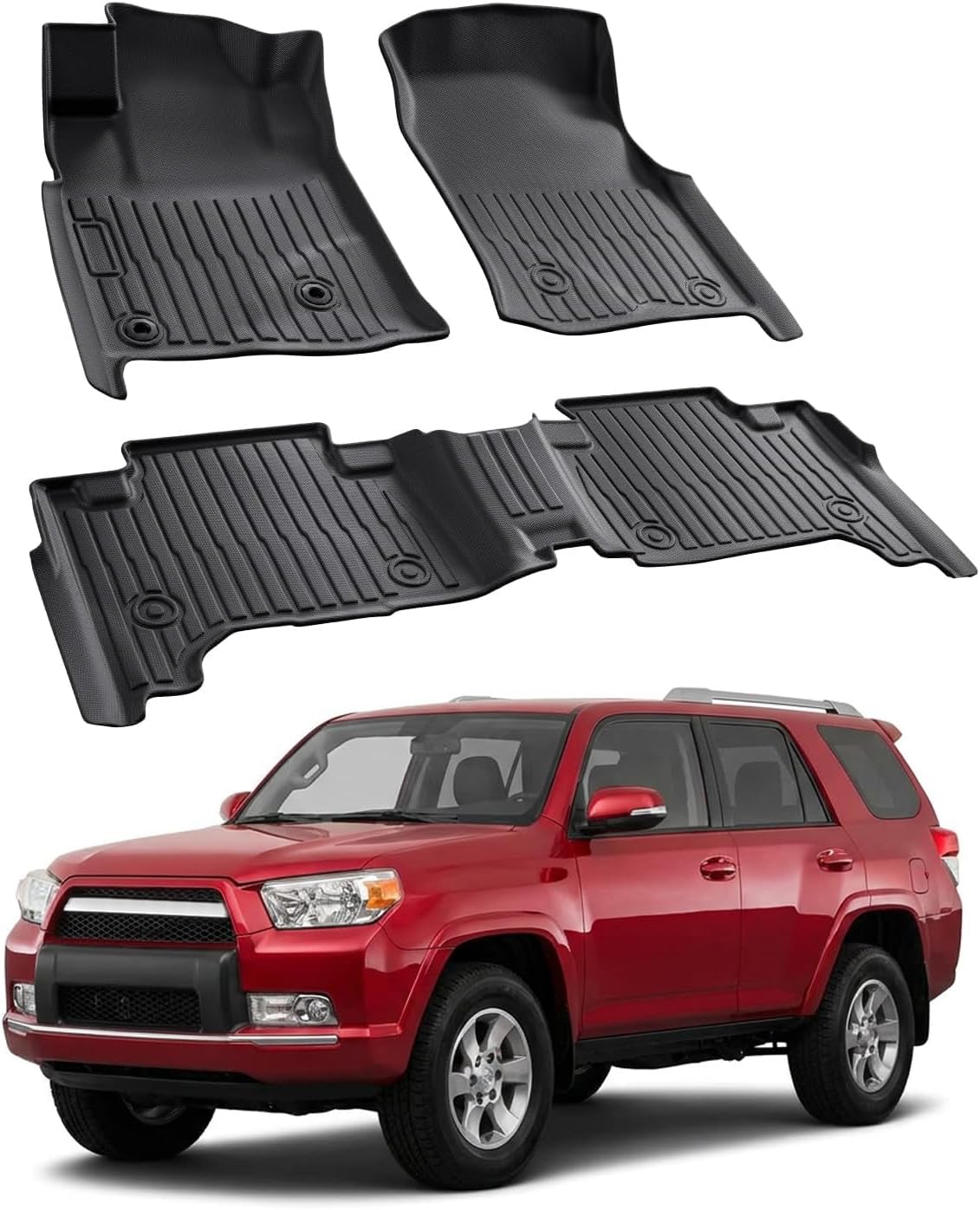
These custom-fit floor mats are designed for Toyota 4Runner models from 2003 to 2009, offering edge-to-edge coverage for a factory-like fit without trimming. Built for all-weather protection, they help shield your interior from mud, snow, sand, rainwater, and daily debris while staying securely in place. The durable TPE construction is flexible, easy to clean, and made to handle regular use with minimal maintenance.

Custom-fit floor liners, trunk mat, and backrest mat designed for Toyota RAV4 models from 2019 to 2025, including hybrid versions. The precision laser-measured design helps deliver full coverage and a secure fit, while the raised edges and grooves help contain dirt, mud, and spills. Made from durable, easy-to-clean TPE, these mats are built for all-weather protection and everyday convenience.
Clean Carpet Mats: Vacuum, Pre-Treat Stains, Wash, Extract, Sun-Dry
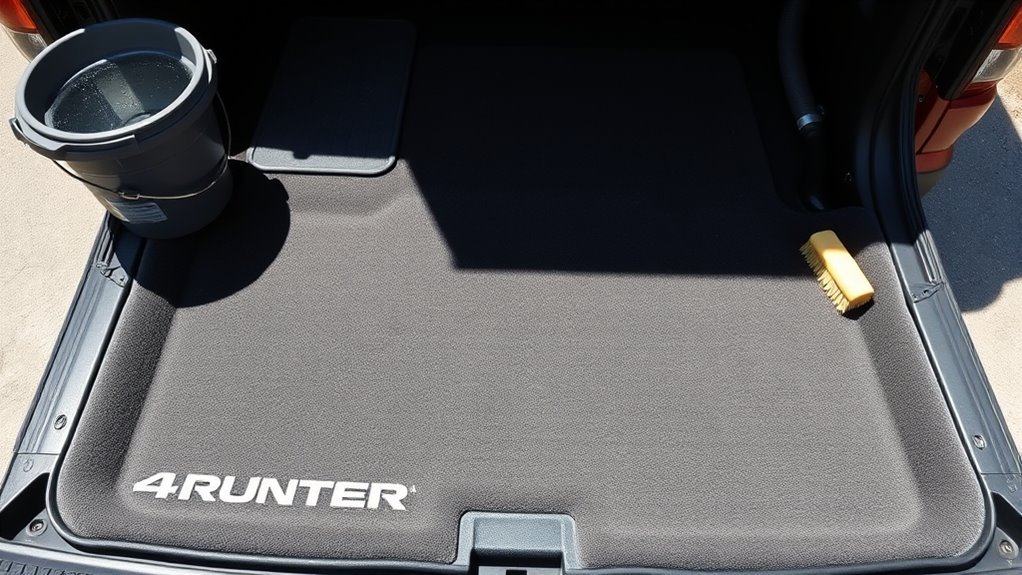
Carpet mats need more drying care than rubber liners because water can stay inside the fibers and backing. Vacuum slowly in multiple directions first. If pet hair is embedded, loosen it with a rubber glove, rubber pet-hair brush, or lint-removal tool before vacuuming again.
Pre-treat visible stains with an automotive carpet cleaner or a fabric-safe spot cleaner. Let the cleaner dwell according to the label, but do not let it dry on the mat. Scrub gently with a soft-to-medium brush, then rinse lightly or wipe with a damp microfiber towel. Use as little water as possible while still removing soap and soil.
| Step | Tool | Purpose |
|---|---|---|
| 1 | Vacuum | Remove dry debris before wet cleaning |
| 2 | Stain remover | Pre-treat food, mud, coffee, grease, and pet stains |
| 3 | Brush + mild soap | Lift soil without fraying fibers |
| 4 | Wet/dry vac | Extract water and cleaner residue |
| 5 | Sun and airflow | Dry the mat and backing before reinstalling |
Use a wet/dry vacuum to pull out as much water as possible. Then set the mats in a warm, ventilated area with airflow on both sides. The EPA notes that wet materials should be dried within 24–48 hours to help prevent mold growth, so do not reinstall damp carpet mats and hope the cabin heat will finish the job.
Clean the 4Runner Cargo Liner Without Missing the Edges
The cargo liner usually carries bigger messes than the front mats: groceries, tools, camping gear, sports equipment, dog crates, mulch, and muddy boots. Remove the liner before washing so the cargo carpet and storage-area seams stay dry.
Shake or vacuum the liner first, paying attention to the raised perimeter lip and molded cargo-hook cutouts. Rinse the liner, apply mild soap or a liner-safe cleaner, and scrub the corners where dirt collects. If the liner has deep channels, rotate it while rinsing so dirty water does not pool in the grooves.
Dry the cargo liner upright or at an angle so water drains out of the raised edges. Before reinstalling, wipe the cargo floor and check for damp spots, crumbs, pet hair, and grit around the tie-down points.
[Products Worth Considering]

Custom-fit floor mats and cargo liner set designed for Toyota 4Runner 5-seat models from 2003 to 2009. The all-weather TPE construction helps trap mud, snow, spills, and debris with raised edges and grooves for dependable interior protection. Easy to install and simple to clean, this set provides a secure, odorless upgrade for keeping your SUV's carpet and cargo area protected.

These custom-fit floor mats are designed for compatible Toyota 4Runner models and provide dependable all-weather protection for the first and second rows. Made from durable TPE material, they help guard against water, mud, dirt, and debris while offering a non-slip surface and raised edges to keep messes contained. They are easy to remove and clean, making them a practical upgrade for maintaining a clean interior.

Custom-fit floor mats and cargo liner designed for select Toyota 4Runner 5-passenger models from 2013 to 2024. Made with durable TPE and 3D laser-measured precision, they provide all-weather protection against spills, mud, and moisture while offering a non-slip, easy-to-clean surface that helps keep your interior looking fresh.
Reinstall the Mats Safely
Once every mat is fully dry, reinstall each piece in its correct position. The driver’s mat is the most important safety check. Toyota’s floor-mat guidance says to use floor mats designed for the vehicle, secure them with the retaining hooks or clips, avoid stacking mats, and make sure the mat does not interfere with the pedals.
- Confirm the mat is right-side up and aligned with the floor shape.
- Attach the driver’s mat to the retaining hooks or clips.
- Do not place an aftermarket mat over the OEM mat.
- With the vehicle stopped and safely parked, press each pedal fully to confirm the mat does not move into the pedal area.
- Check the cargo liner sits flat and does not block cargo hooks or seat-folding hardware.
Maintenance & Troubleshooting: Protectants, Stubborn Stains, Dingy Liners
Routine cleaning keeps 4Runner mats looking better and reduces odor, but protectants require care. A product such as 303 Automotive Protectant is designed for rubber, vinyl, and plastic surfaces and leaves a dry, non-greasy finish when applied and buffed correctly. However, 303’s own product guidance says it is not for flooring, so do not apply it to a driver’s foot-contact area unless the specific mat manufacturer allows it and the surface is buffed completely dry.
Warning: Avoid tire shine, oily dressings, silicone-heavy sprays, and greasy interior protectants on floor mats. A shiny finish can look clean but may become slippery under your shoes.
Stubborn Stain Fixes by Problem
- Mud: Let thick mud dry, brush it loose, vacuum, then wash. Wet mud smears deeper into carpet fibers.
- Road salt: Use warm water, mild soap, dwell time, and repeated rinsing. Salt haze often returns if residue remains in grooves.
- Pet hair: Use a rubber glove or pet-hair brush before vacuuming. Short back-and-forth strokes pull hair out of carpet loops.
- Grease or food spills: Blot first, then use a cleaner labeled for automotive carpet or interior surfaces. Do not oversaturate backing.
- Dingy rubber or TPE: Clean again with warm water and mild soap, rinse thoroughly, dry, then use only a non-greasy product approved for that mat type.
How Often to Clean 4Runner Mats
For normal use, vacuum or shake the mats every 1–2 weeks and deep-clean them every 1–3 months. Under heavy use, clean sooner: after mud, beach sand, road salt, spilled drinks, pet accidents, camping trips, or off-road trail days. A quick rinse after heavy soiling is easier than restoring stained, salt-caked, or odor-heavy mats later.
The best cleaning routine is not the strongest chemical. It is the safest repeatable process: remove, vacuum, wash gently, rinse completely, dry fully, and reinstall securely.
Common Mistakes to Avoid
- Cleaning mats inside the vehicle: Water and cleaner can soak the carpet underneath.
- Using bleach or harsh solvents: These can discolor mats, weaken backing, or damage rubber-like materials.
- Skipping the vacuum step: Scrubbing dry grit into the surface can dull liners and grind dirt into carpet.
- Using a stiff wire brush: It can roughen rubber, TPE, vinyl, and carpet fibers.
- Reinstalling damp carpet mats: Moisture trapped in the cabin can lead to odor and mildew problems.
- Leaving cleaner residue behind: Residue attracts dirt and can make mats look cloudy or feel sticky.
- Stacking floor mats: Stacked mats can shift and create pedal-interference risk.
Frequently Asked Questions
Can I machine-wash my 4Runner carpet mats?
Only machine-wash carpet mats if the mat label specifically says it is safe. Many automotive carpet mats have backing, edges, grommets, or retention hardware that can warp or separate in a washer. Hand washing, light scrubbing, and wet/dry vacuum extraction are safer for most 4Runner carpet mats.
Are aftermarket liners compatible with 4Runner cargo hooks?
Many aftermarket cargo liners are designed with cutouts or molded areas for 4Runner cargo hooks, but fit depends on model year, seating layout, cargo tray style, and liner brand. Check the product’s fitment notes before buying and confirm the liner sits flat after installation.
How do I remove pet hair embedded in carpet fibers?
Use a rubber glove, rubber pet-hair brush, or squeegee to pull hair out of the carpet loops before vacuuming. Work in short strokes, gather the hair into clumps, then vacuum with a high-suction hose or rotating brush attachment.
Will vinegar damage rubber or TPE liners?
Diluted vinegar is often used for mineral residue and odor, but it should not be your default cleaner. If you use it, dilute it with water, test a hidden area, keep contact time short, and rinse thoroughly. Mild soap or a manufacturer-approved liner cleaner is safer for routine cleaning.
How often should I deep-clean under heavy-duty use?
Under heavy-duty use, deep-clean every 4–6 weeks or immediately after mud, salt, pet accidents, spilled drinks, or off-road trips. Frequent light cleaning is better than waiting until grime hardens into the grooves or carpet backing.
Can I pressure-wash 4Runner floor mats?
You can use a gentle pressure-washer setting on many rubber, vinyl, or TPE liners, but avoid blasting close to edges, labels, grommets, and thin areas. Do not pressure-wash carpet mats aggressively because it can force water into the backing and increase drying time.
What cleaner should I avoid on 4Runner mats?
Avoid bleach, strong solvents, undiluted degreasers, abrasive powders, tire shine, and greasy silicone dressings. These can discolor mats, leave slick residue, or shorten the life of rubber-like materials and carpet backing.
Conclusion
You have a reliable process for cleaning 4Runner floor mats and the cargo liner: remove everything, vacuum loose debris, choose a cleaner that matches the material, scrub gently, rinse well, extract water from carpet mats, and dry every piece fully before reinstalling. The final safety step matters just as much as the cleaning: secure the driver’s mat to its retaining hooks and confirm it cannot slide into the pedal area. Done regularly, this keeps the 4Runner interior cleaner, fresher, and ready for daily driving, trail days, pets, and cargo-heavy weekends.
Sources
- Toyota 4Runner Owner’s Manual: Floor Mat Safety — retaining-hook, pedal-clearance, and no-stacked-mats guidance.
- WeatherTech: How to Clean Floor Mats and Floor Liners — mild detergent, brush, rinse, and dry guidance for molded liners.
- Husky Liners: How to Clean Floor Liners — care guidance for all-weather liners and non-greasy finish recommendations.
- Gold Eagle: 303 Automotive Protectant — UV protection, dry finish, application, and surface-use limitations.
- U.S. EPA: A Brief Guide to Mold, Moisture and Your Home — dry wet materials within 24–48 hours to help prevent mold growth.
- Simple Green: Automotive Detailing Cleaning Tips — cleaner selection for vehicle plastics, rubber, fabrics, and fibers.


[…] time to do this before winter salt and slush arrive. If your mats already look rough, our guide to cleaning floor mats and a cargo liner walks through a full deep clean step by […]