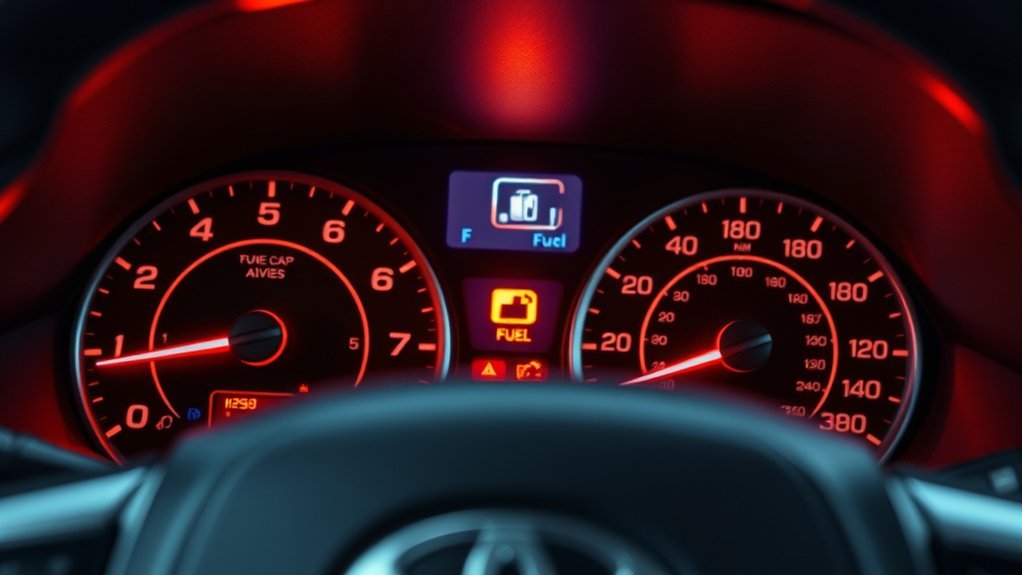
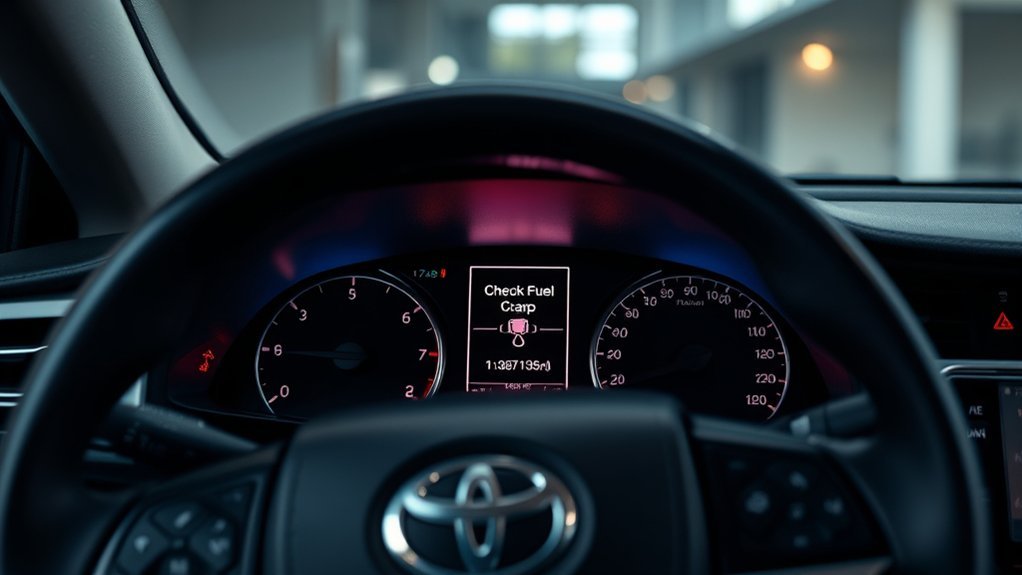
If your Toyota Camry shows a “Check Fuel Cap” message, start with the simple fix: the fuel tank cap may be loose, unfastened, dirty, damaged, or not sealing well. In many cases, tightening the cap correctly solves it. If the warning or check engine light returns, the problem may be deeper in the EVAP system.
Quick Answer
The Toyota Camry “Check Fuel Cap” message usually means the fuel tank cap may be loose or unfastened. Turn the engine off, inspect the cap and gasket, tighten it until it clicks, then restart the car. If the message or check engine light comes back, scan for EVAP codes and inspect for leaks.
Key Takeaways
- A loose, missing, dirty, or damaged fuel cap is the first thing to check.
- Toyota’s owner guidance says to turn the engine switch off, check the cap, and tighten it securely.
- Do not top off the fuel tank after the pump clicks off, because overfilling can affect the emissions system.
- If the warning returns after the cap is secure, the issue may be an EVAP leak, valve, hose, canister, or sensor problem.
At a Glance
| Time Required | 2–10 minutes for the fuel cap check |
| Difficulty | Easy DIY |
| Tools Needed | Clean dry cloth; optional OBD-II scanner if the check engine light stays on |
| Cost | Usually free; replacement fuel cap cost varies by model year and part source |
Understanding the Check Fuel Cap Warning Message
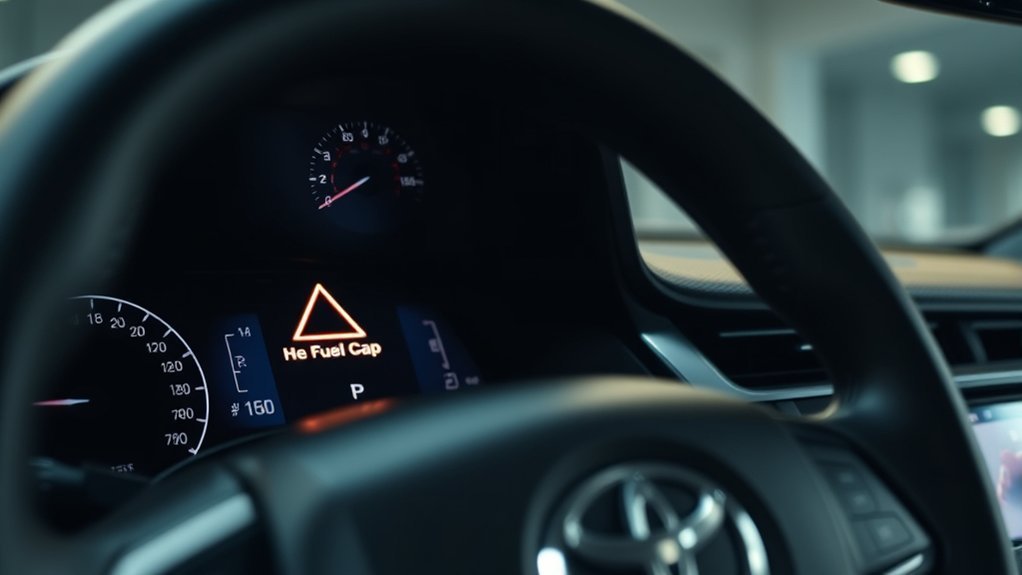
The “Check Fuel Cap” warning on a Toyota Camry is usually tied to the fuel tank cap not sealing as expected. Toyota owner-manual guidance for Camry models says that when this message appears, the fuel tank cap may be unfastened or loose, and you should turn the engine switch off, check the cap, and tighten it securely.
Your Camry’s fuel system is part of the vehicle’s evaporative emissions control system, often called the EVAP system. This system helps contain gasoline vapors instead of letting them escape into the air. The U.S. Environmental Protection Agency explains that volatile hydrocarbons can evaporate from the fuel system while a gasoline vehicle is refueling, parked, or driving.
A fuel cap is small, but its seal matters: a loose cap can let vapor escape and can trigger an EVAP warning or check engine light.
In plain English, the warning does not always mean the cap is broken. It means the car has detected a condition that may be caused by a loose, missing, dirty, or damaged cap. If the cap is fine and the message returns, the cause may be somewhere else in the EVAP system.
How to Check and Tighten Your Fuel Cap Properly
Follow this order before replacing parts. It fixes the most common cause first and avoids unnecessary repairs.
- Park safely and turn the engine switch off. Do not inspect the fuel cap while the vehicle is running.
- Open the fuel door. If you just refueled, think about whether the cap may have been left loose or cross-threaded.
- Remove the cap slowly. If you hear a whooshing sound, wait until it stops before fully removing the cap.
- Inspect the cap. Look for cracks, a hardened or split rubber seal, damaged threads, missing parts, or a loose tether that interferes with closing.
- Check the filler-neck sealing surface. Wipe away dust or fuel residue with a clean, dry cloth. Do not pack grease or spray products around the filler neck.
- Reinstall the cap straight. Turn it clockwise until you hear a click. That click means the cap has reached its locked position.
- Restart and monitor the message. If the message remains, wait a few seconds, turn the engine switch off again, then restart and recheck.
- Drive normally for a few trips. If the check engine light was triggered, the light may not clear until the vehicle completes its EVAP self-check under the right conditions.
Warning: Gasoline vapors are flammable. Do not smoke while refueling, avoid static electricity around the fuel filler, remove the cap slowly, and stop filling when the pump automatically clicks off. Do not top off the tank.
Pro Tip: If you need a replacement cap, use a genuine Toyota fuel tank cap designed for your Camry. Toyota warns against using the wrong fuel tank cap because it may not seal correctly and can create a safety risk.
[Products Worth Considering]

This replacement fuel gas cap is designed to fit a wide range of Toyota and Lexus vehicles, making it a practical solution for a lost, worn, or damaged original cap. It helps restore a secure fuel tank seal and supports proper vehicle operation while offering broad compatibility across many popular model years. The package includes one gas cap, and buyers should confirm fitment before ordering.

This cabin air filter replacement is designed to help keep your vehicle’s interior air fresher and cleaner by capturing dust, odors, and fine particles with a multi-layer filtration structure. The activated carbon layer helps reduce unwanted smells, while the extended service life makes it a practical maintenance part for many compatible Toyota, Lexus, Subaru, Scion, and Jaguar models.

This cabin air filter with activated carbon helps improve in-vehicle air quality by trapping dust, pollen, and other airborne contaminants before they enter the passenger compartment. Designed as a replacement for select Toyota and Lexus models, it supports cleaner airflow and a more comfortable driving experience. The activated carbon layer also helps reduce unwanted odors for fresher cabin air.
What Triggers the Check Fuel Cap Alert?
The most common trigger is simple: the cap is not fully tightened after refueling. But the warning can also appear when the system cannot hold the expected pressure or vacuum during an EVAP check.
Common causes include:
- Loose or unfastened fuel cap after refueling
- Cracked, worn, or missing fuel cap gasket
- Dirt or damage on the filler-neck sealing surface
- Wrong aftermarket fuel cap that does not seal like the original cap
- Repeatedly topping off the tank after the fuel nozzle clicks off
- Cracked EVAP hose or loose connection
- Faulty purge valve, vent valve, charcoal canister, leak-detection pump, or pressure sensor
If an OBD-II scanner is used, EVAP-related codes may appear. Depending on the model year and exact failure, codes may include P0440, P0441, P0442, P0455, P0456, or P0457. A code does not automatically prove the fuel cap is bad; it tells you which system needs diagnosis.
Note: A steady check engine light with no drivability symptoms is often less urgent than a flashing check engine light. If the check engine light flashes, the vehicle runs poorly, or you smell strong fuel vapor, stop driving when safe and get professional help.
[Products Worth Considering]

This plug-and-play OBD2 scanner helps drivers quickly read and clear engine error codes while providing live data, freeze frame information, I/M readiness, and MIL status for more confident troubleshooting. It adds a built-in voltage test and clear status indicators to support electrical checks and faster diagnostics, making it a practical choice for home users, car enthusiasts, and repair professionals. Compatible with most OBDII vehicles since 1996 and designed with an easy-to-use interface, it offers broad coverage and simple operation in one compact tool.


【COMPATIBLE WITH】Gas Cap, Fuel Cap Replaces 77300-06040, 7730006040, Gas Cap Is 100% Rigorously Tested Before Shipping. Check The Part Number To Confirm The Compatibility Before Purchase.
How Long Before the Message or Code Clears?
The fuel-cap message may clear quickly after you secure the cap and cycle the engine switch. A check engine light or stored EVAP code can take longer because the car may need to run its EVAP monitor during normal driving before it confirms the leak is gone.
That means the light may not disappear the moment you tighten the cap. Drive normally for a few trips, avoid topping off the tank, and monitor the dashboard. If the light stays on or returns, scan the codes instead of repeatedly replacing the cap.
When to Get Help From a Professional
Get professional diagnosis if the “Check Fuel Cap” message comes back after the cap is clean, tight, and in good condition. You should also schedule service if the check engine light stays on, the car fails an emissions test, or you smell fuel vapor near the rear of the vehicle.
A technician can scan the stored and pending diagnostic trouble codes, inspect the fuel cap and filler neck, and test the EVAP system for leaks. A common shop test is a smoke test, where low-pressure smoke helps reveal leaks in hoses, valves, the charcoal canister, or other sealed parts of the EVAP system.
Professional diagnosis is especially useful because EVAP leaks can be tiny. Guessing at parts can cost more than testing the system once and replacing the actual failed component.
[Products Worth Considering]

HyperSmoke Technology – Creates Thick Visible Smoke for Easy Leak Testing. Adjustable Pressure. Infinite Smoke. Instant Warmup. Built-In Air Compressor Motor. OEM Approved Smoke Fluid. Designed and Engineered by AutoLine Pro USA, an American Team of Individuals bringing the latest innovation to you.

【Material】:This EVAP system service port adapter set is made of aluminum alloy and rubber. Aluminum alloy is sturdy, resistant to pressure and high temperature; rubber has good flexibility and sealing, so that the adapter can work stably under high pressure.

Seal Large Intakes Instantly: Quickly seal irregular intake and exhaust ports with the inflatable intake adapter during EVAP and vacuum leak testing. Simply inflate to create a perfect airtight fit in seconds, eliminating smoke escape that plagues standard plugs. Perfect for cars and trucks before emissions inspections or when diagnosing rough idle.
Essential Fuel System Maintenance Tips
After addressing the Check Fuel Cap message, keep your fuel system trouble-free with a few simple habits. The best maintenance is not a fixed calendar replacement for the cap; it is regular inspection and correct refueling.
| Maintenance Task | Best Practice |
|---|---|
| Fuel cap check | Inspect the cap and gasket when refueling or whenever a warning appears. |
| Tightening the cap | Turn clockwise until it clicks and sits evenly. |
| Filler-neck cleaning | Wipe the sealing surface with a clean, dry cloth if dusty or dirty. |
| Fuel cap replacement | Replace only if the cap is cracked, missing, loose, cross-threaded, or unable to seal; use the correct Toyota cap. |
| Refueling habit | Stop when the nozzle clicks off. Do not top off the tank. |
Keep a note of when the warning appears. If it shows up right after refueling, the cap is the first suspect. If it appears randomly, returns after a new cap, or comes with EVAP codes, the issue likely needs deeper diagnosis.
Frequently Asked Questions
How long does it take for a gas cap code to reset?
The message may clear after the cap is tightened and the engine switch is cycled, but a check engine light can take several normal drive cycles to clear because the EVAP monitor must run and pass. If the light stays on after a few trips, scan the codes.
Can I drive my Camry with the Check Fuel Cap message on?
You can usually drive briefly if the car runs normally and there is no fuel smell, but you should check the cap as soon as it is safe. Do not ignore a fuel smell, rough running, or a flashing check engine light.
Will disconnecting the battery clear the fuel cap warning?
It may clear the light temporarily, but it does not fix the leak or sealing problem. It can also reset emissions readiness monitors, which may matter before an inspection. Fix the cap or EVAP issue first, then let the vehicle confirm the repair.
Should I replace the fuel cap right away?
Not always. First remove and reinstall it correctly, inspect the seal, and clean the filler-neck surface with a dry cloth. Replace the cap if it is cracked, missing, loose, or cannot click and seal correctly. Use the correct Toyota cap for your Camry.
What if the Check Fuel Cap message comes back after a new cap?
If the warning returns after installing the correct cap, the problem is probably not the cap. Have the EVAP system checked for leaks, damaged hoses, purge or vent valve problems, charcoal canister issues, or pressure-sensor/leak-detection faults.
Conclusion
The Toyota Camry “Check Fuel Cap” message is usually a simple warning, but it is worth handling the right way. Turn the engine off, inspect the cap and seal, tighten it until it clicks, and avoid topping off the tank. If the warning clears, you likely fixed it. If it returns, scan for EVAP codes and have the system tested instead of guessing at parts.
Sources
- Toyota Owners Manuals & Warranties — official Toyota owner-manual access for model-specific instructions.
- Toyota 2025 Camry Hybrid Digital Manual: Opening the Fuel Tank Cap — Toyota fuel-cap and replacement-cap guidance.
- U.S. EPA: Evaporative Emissions from Onroad Vehicles in MOVES3 — explains evaporative emissions from gasoline vehicle fuel systems.
- eCFR 40 CFR Part 1060 Subpart B — federal evaporative-emission standards and fuel-system component requirements.
- Toyota Support: View an Online Owner’s Manual — official instructions for finding Toyota owner’s manuals online.