
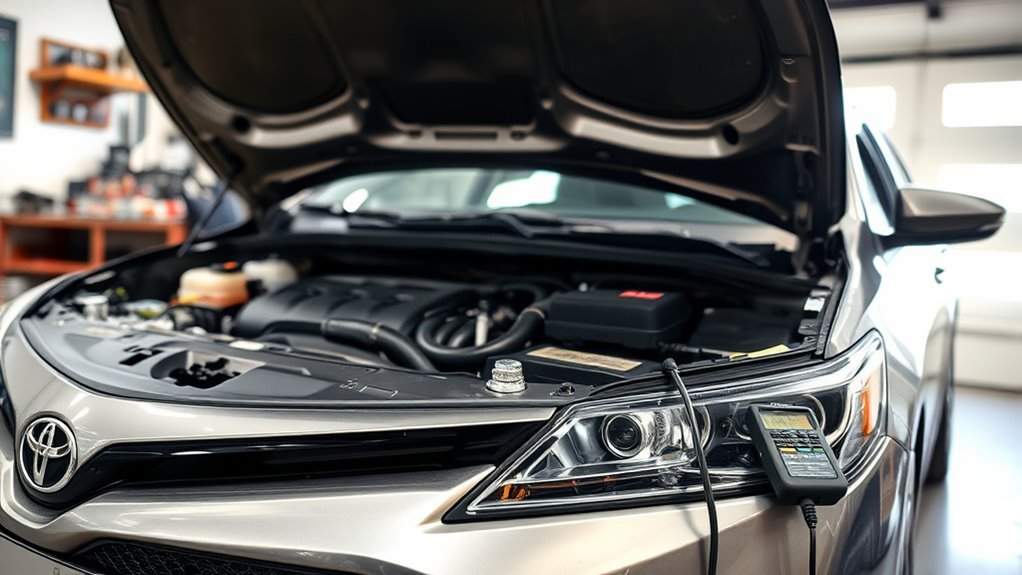
Toyota Camry trailer wiring commonly ends in a 4-way flat connector for trailer running, brake, and turn-signal lights, but the correct harness or powered converter depends on the Camry’s model year and lighting system. For the 2025 U.S.-market Camry specifically, Toyota says it does not recommend trailer towing, installation of a tow hitch, or use of tow-hitch-mounted carriers. A wiring kit that physically fits the car does not override that guidance, so check the owner’s manual for your exact year and market before installing or using towing equipment.
By: Daxon Steele · Last updated: September 1, 2026
Evidence note: This guide is based on Toyota owner information and current trailer-wiring manufacturer application data. It does not claim a hands-on installation test of every Camry generation or wiring kit.
Quick Answer
Choose the exact 4-way flat harness or powered converter listed for your Toyota Camry’s year, trim, market, and lighting system. A 4-way connection provides ground, running lights, left stop/turn, and right stop/turn. It does not provide trailer-brake control, reverse-light power, or a towing rating. For a 2025 U.S. Camry, Toyota specifically says it does not recommend trailer towing or installation of a tow hitch.
Key Takeaways
- A 4-way flat connector covers basic trailer lighting: ground, tail/running lights, left stop/turn, and right stop/turn.
- A wiring harness does not increase towing capacity or create manufacturer approval to tow.
- For the 2025 U.S. Camry, Toyota says it does not recommend trailer towing, installation of a tow hitch, or use of tow-hitch-mounted carriers.
- A powered converter can use the vehicle’s lighting circuits as signal inputs while supplying trailer-light power through a fused battery connection.
- Choose by verified model-year and lighting-system fitment, not by brand name alone.
- Test the vehicle-side connector before each use, then troubleshoot the trailer only after the Camry output passes.
At a Glance
| Time Required | Varies by kit and whether a protected battery power wire must be routed |
| Difficulty | Varies by kit; powered or splice-in installations require more electrical work than a direct plug-in T-connector |
| Tools Needed | Follow the kit instructions; common tools include a trim tool, socket set, electrical tester or multimeter, zip ties, and safety glasses |
| Typical Parts | Fit-confirmed harness or powered converter, specified fuse holder, 4-way flat connector, terminals, and wire protection |
What Does Trailer Wiring Do on a Toyota Camry?
Trailer wiring carries the lighting commands needed for the trailer to show running, braking, and turn signals. When you brake, signal, or switch on the parking lights, the matching trailer lamps should respond. A failed ground, damaged connector, incorrect converter, or wiring fault can leave drivers behind you without a clear warning that the trailer is stopping or turning.
Most small utility trailers in North America use a 4-way flat connector. It handles basic lighting functions only: ground, running lights, left stop/turn, and right stop/turn. It does not provide an electric trailer-brake circuit, reverse-light circuit, or auxiliary 12-volt charging circuit.
Trailer lighting equipment is covered by federal safety requirements for lamps, reflective devices, and associated equipment. You can review the official text in 49 CFR 571.108, FMVSS No. 108. State and local requirements may add other rules.
Warning: Electrical fitment does not mean a Camry is approved to tow. Toyota’s 2025 U.S. Camry owner information says Toyota does not recommend trailer towing, installation of a tow hitch, or use of tow-hitch-mounted carriers for that vehicle. Check the manual issued for your exact Camry year and market before installing or using towing equipment.
Can a Toyota Camry Tow a Trailer?
There is no single towing answer that applies to every Camry sold in every market. For the 2025 U.S.-market Camry, Toyota says it does not recommend trailer towing, installation of a tow hitch, or use of tow-hitch-mounted carriers. Aftermarket hitches and wiring products may physically fit the vehicle, but that does not change Toyota’s vehicle guidance.
If you are researching another model year or sales market, read the owner’s manual issued for that exact vehicle before buying towing equipment. For a deeper model-year and market comparison, see our Camry towing capacity by year and market.
Towing involves more than lights. Transmission load, brakes, cooling, suspension, tires, structure, passenger load, luggage, trailer weight, and tongue weight can all affect the vehicle.
Use this order before buying parts:
- Read the owner’s manual for your exact model year and sales market.
- Check the vehicle load limits and tire-and-loading placard.
- Confirm whether Toyota permits or rates towing for your specific Camry.
- Verify hitch and wiring fitment separately. Electrical fitment does not establish a towing rating.
- Follow the lowest applicable limit among the vehicle and every towing component if your exact Camry is approved for towing.
Note: A wiring-product listing describes electrical compatibility. It does not certify the vehicle for towing, increase payload, or override the owner’s manual.
Should You Choose CURT or Tekonsha Camry Wiring?
Choose by exact part-number fitment first, then compare plug-in versus splice-in design, converter requirements, battery-power routing, and connector storage. Neither CURT nor Tekonsha is automatically the better choice for every Camry year.
Tekonsha describes its T-One line as vehicle-specific plug-in connectors that connect at the existing vehicle wiring harness without cutting or splicing where a matching T-One application exists. CURT also offers model-specific custom harnesses, but applications and electrical designs change across Camry generations.
[Products Worth Considering]

This Rhino USA recovery tow strap is built for reliable vehicle pulling and towing in flat recovery situations. Made from durable polyester with reinforced loop ends, it is designed to help secure safe connection points while resisting wear, abrasion, and stress during recovery use. It is a practical choice for off-road recovery, roadside assistance, and general towing needs.

This proportional trailer brake controller provides smooth, responsive braking by automatically matching your tow vehicle’s stopping force for safer trailer control. The bright LED digital display makes it easy to monitor voltage output in real time, while adjustable braking and sync settings help tailor performance to different trailers and road conditions. Designed for quick installation and broad compatibility, it supports 1 to 4 axle trailers for dependable towing confidence.

This trailer tongue hitch coupler lock helps secure latch-type couplers and deter theft with a padlock-style design. Its high-strength construction, corrosion-resistant finish, and simple locking action make it a practical choice for trailer owners who want dependable protection and easy everyday use. Two keys are included for added convenience.
Camry Wiring Kit Decision Checklist
- Exact fit: Does the current application guide list your Camry’s year and lighting configuration?
- Plug-in or splice-in: Does the harness connect to factory plugs, or does it require individual signal-wire connections?
- Power source: Does the kit require a fused battery connection?
- Signal type: Does the converter match the vehicle and trailer stop/turn-light systems?
- Connector storage: Will the 4-way stay protected inside the trunk or mount outside near the hitch?
- Trailer functions: Does the trailer need only basic lights, or does it also require electric brakes, reverse lights, or auxiliary power?
Current Camry Wiring Fitment Examples
The examples below show why you should not buy a harness from the words “Toyota Camry” alone. They are examples from current manufacturer application data, not a substitute for checking your exact vehicle immediately before purchase.
| Camry Application | Example Current CURT Listing | Important Limitation |
|---|---|---|
| 2018–2024 Toyota Camry | CURT 56544 custom 4-way harness | Recheck the manufacturer application guide before ordering because applications can be revised. |
| 2025 Toyota Camry | CURT 56540 custom 4-way harness | CURT currently lists this application as excluding LED taillights. Confirm your lighting configuration and current fitment before purchase. |
| Feature | CURT | Tekonsha |
|---|---|---|
| Product family | Vehicle-specific custom wiring plus universal converter products | T-One vehicle connectors plus taillight-converter products |
| Installation style | Plug-in when a matching custom harness is listed; universal products may require splicing | T-One applications plug into existing vehicle connectors without cutting or splicing |
| Power and fuse | Check the exact product instructions for battery feed, fuse rating, and grounding | Converter requirements depend on the vehicle and trailer signal systems; follow the exact application instructions |
| Weather protection | Varies by part and mounting location | Tekonsha describes its T-One line as solid, weather-proof, one-piece construction |
| Choose it when | The current CURT application guide lists the exact product for your Camry and installation design | The current Tekonsha application guide lists a T-One or converter setup for your exact vehicle and trailer requirements |
For CURT, start with the brand’s custom wiring application information. For Tekonsha, review the T-One connector information and confirm the part number listed for your Camry.
What a 4-Way Flat Connector Does and Does Not Do
A North American 4-way flat connector normally carries four basic circuits. The colors below describe a common trailer-harness convention; they are not a Toyota Camry factory-wire color chart. Never identify Camry factory circuits by these colors alone. Follow the wiring-kit diagram and verify circuits electrically before making a connection.
| Common 4-Way Color | Function | What to Check |
|---|---|---|
| White | Ground | Clean, secure ground connection with no rust or loose fastener |
| Brown | Tail/running lights | Trailer tail lamps come on with the vehicle’s parking or headlight circuit |
| Yellow | Left stop/turn | Left trailer lamp flashes for the left turn signal and receives the combined brake output |
| Green | Right stop/turn | Right trailer lamp flashes for the right turn signal and receives the combined brake output |
A 4-way flat connector does not provide an electric-brake output, reverse-light circuit, or auxiliary 12-volt charging circuit. If the trailer requires those functions, the electrical system may need another connector type, such as a properly configured 7-way, plus any required brake controller or breakaway equipment.
How Do You Install Toyota Camry Trailer Wiring?
Installation differs by Camry generation and wiring kit. The manufacturer’s current instructions control. The sequence below is a general workflow for a trunk-mounted T-connector or powered converter, not a substitute for the instructions supplied with the exact part.
- Park safely and prepare the car. Park on a level surface, set the parking brake, remove cargo from the work area, and wear eye protection. Disconnect the battery only when the vehicle and kit instructions direct you to do so.
- Access the specified connection points. Pull back the trunk liner or trim panels only as required to reach the connectors or circuits identified by the kit instructions.
- Install the T-connectors or signal leads. For a plug-in kit, insert the harness between the specified factory connectors. For a splice-in converter, identify each required factory circuit with the kit instructions and an appropriate electrical tester. Do not assume the Camry factory wires use the common white, brown, yellow, and green 4-way trailer colors.
- Mount the converter box. Secure it in the dry, protected location specified by the manufacturer. Do not leave the module loose where cargo can strike it.
- Route the 4-way flat connector. Some installations store it inside the trunk and bring it out only when needed. If the exact kit permits exterior mounting, protect it from exhaust heat, sharp edges, moving parts, road debris, and pinch points.
- Run the power wire if the kit is powered. Follow the specified route to the battery or approved power point. Protect the wire anywhere it passes near metal edges, underbody hazards, heat, or moving components.
- Install the specified fuse holder. Connect it exactly as the kit instructions show. Keep the fuse out until the wiring is complete if the instructions specify that sequence.
- Protect every pass-through point. Use the specified grommet, loom, sealant, or edge protection wherever wiring passes through or near metal.
- Secure loose wiring. Prevent sagging, rubbing, heat exposure, or contact with suspension and exhaust components.
- Install the fuse and test every output. Verify running lights, brake output, left turn, right turn, and hazards before relying on the connector.
Pro Tip: Test the Camry-side 4-way connector before connecting the trailer. If the vehicle-side tester shows the correct outputs but the trailer lamps still fail, continue diagnosis on the trailer instead of replacing the Camry converter first.
[Products Worth Considering]

Weiman Leather Cleaner, Conditioner & Protector helps restore the look and feel of finished leather by removing dirt, soil, and residue while softening and moisturizing surfaces. Its multi-action formula cleans, conditions, and protects in one simple step, making it ideal for furniture, fashion accessories, and vehicle interiors. Built-in UV protection helps shield leather from fading, cracking, and sun damage.

This heavy-duty dual cylinder air compressor delivers fast, reliable inflation for off-road vehicles, trucks, RVs, and other outdoor gear. Built with a metal shell, aluminum cylinders, and thermal protection, it is designed to handle demanding inflating tasks while helping keep the motor cool and stable during use. The included hose, gauge, adapters, and carrying bag make it a practical portable solution for road trips, recovery kits, and recreational inflation needs.

Plugs into vehicle tail light assembly to provide a 4-way flat socket
Why Use a Powered Converter for Trailer Lights?
A powered converter can use the vehicle’s lighting circuits as low-load signal inputs while supplying the trailer-light load through a separate fused battery connection. This arrangement helps avoid placing the full trailer-light load directly on sensitive factory lighting circuits.
A converter may also be required when the tow vehicle uses separate brake and turn-signal circuits while the trailer combines the brake and turn functions. Tekonsha states that converter selection depends on both the tow vehicle and the trailer. That means a powered converter should not be treated as a universal Camry requirement: use the exact design specified by the current application guide.
When comparing kits, look for these features:
- Verified application for your exact Camry year and lighting configuration
- Plug-in or splice-in design that matches the installation you are prepared to perform
- Powered converter when the listed application requires one
- Correct fuse and circuit protection exactly as specified by the manufacturer
- Protected grounding and wire routing
- Weather protection for any connector or module exposed outside the cabin
- Current installation instructions for the exact part number
[Products Worth Considering]

✓ The perfect fix when your trailer uses a different plug than your truck: this NEW SUN 3-way to 2-way converter adapts wiring with 100% copper and a weatherproof seal for brake,.

Plugs into vehicle tail light assembly to provide a 4-way flat socket

This electrical converter adapts vehicles with separate turn and brake lights (3-wire system) to standard 2-wire trailer wiring
How to Test Your Camry Trailer Wiring
Test the vehicle-side connector after installation, after a repair, and before each use. Start with the Camry side before connecting the trailer. This separates vehicle problems from trailer problems and prevents unnecessary parts replacement.
- Inspect the ground and connector. Look for loose fasteners, damaged terminals, corrosion, or pulled wires.
- Connect a compatible 4-way tester. Verify that the tester itself and its connection are sound.
- Turn on the parking lights. The running-light output should activate.
- Press the brake pedal. Both stop/turn outputs should receive the brake signal.
- Use the left turn signal. The left stop/turn output should flash.
- Use the right turn signal. The right stop/turn output should flash.
- Turn on the hazard lights. Both stop/turn outputs should flash.
- Connect the trailer only after the vehicle side passes. If a fault appears only after connecting the trailer, inspect the trailer-side plug, lamps, grounds, and wiring.
Why Are the Trailer Lights Not Working?
Diagnose trailer-light problems by dividing the system into two halves: the Camry-side 4-way output and the trailer itself. Test the vehicle connector first. If it passes, move downstream to the trailer plug, ground, wiring, and lamps.
| Problem | Likely Area to Check | Next Step |
|---|---|---|
| No outputs at the vehicle 4-way | Fuse, converter power, ground, harness connection, signal input | Follow the kit’s diagnostic procedure and verify its fuse, power, ground, and connections |
| Vehicle tester passes, but trailer lights do not work | Trailer connector, trailer ground, trailer wiring, lamps | Continue testing on the trailer side |
| Lights are dim or flicker | Weak ground, corrosion, loose connector, damaged wiring | Clean and secure the affected connections and repair damaged wiring |
| One turn signal does not work | One vehicle output, trailer lamp, trailer wiring, or connector terminal | Test the corresponding vehicle-side output before opening the trailer wiring |
| Brake signal activates the wrong lamp | Incorrect converter connection or trailer-side wiring fault | Compare the system with the exact wiring diagram and test each output separately |
| Fuse blows repeatedly | Shorted, pinched, melted, or overloaded wiring | Stop using the circuit until the fault is found and repaired; never substitute a higher-rated fuse |
How Do You Keep Camry Trailer Wiring Reliable?
Trailer wiring is exposed to vibration, cargo movement, moisture, heat, and road debris. A connection that worked after installation can fail later if a ground loosens, a connector corrodes, or an underbody wire rubs through.
Proper Wiring Installation
Use the correct harness for the vehicle and install it exactly as the manufacturer specifies. Do not tap unidentified wires, bypass the required fuse, or route wiring beside the exhaust. If the kit uses a converter box, secure it where it cannot be crushed by cargo or exposed to moisture beyond its design rating.
When the 4-way connector is not in use, keep it protected with its dust cover. If the exact installation places the connector outside the trunk, secure it so it cannot drag, strike the road, or contact hot or moving components.
Regular Maintenance Checks
Use condition-based inspections instead of inventing a fixed service interval. Test the system before use and recheck it after road-salt exposure, heavy rain, wiring repairs, underbody service, a blown fuse, or anything that may have pulled or pinched the harness.
| Task | When to Check |
|---|---|
| Test every light function | Before each use |
| Inspect the connector and dust cap | Before each use and after wet or salty roads |
| Check the power wire, fuse holder, and ground | After a fault, repair, or blown fuse |
| Confirm the converter is dry and secure | When trunk trim is removed or cargo strikes the area |
| Inspect underbody routing | After road-debris impact or service near the wire route |
Use Quality Components
Choose a fit-confirmed harness, follow its current instructions, and use automotive-grade terminals and wire protection. Twisted joints, household tape, unsupported wiring, and oversized replacement fuses can create heat, corrosion, or short-circuit risks.
- Choose a fit-confirmed harness. Match the kit to your Camry year and lighting configuration.
- Protect the converter box. Keep it secure and within the environmental limits stated by the manufacturer.
- Use the specified fuse. Never install a higher-amp fuse to stop repeated fuse failures.
- Protect pass-through points. Use the grommet, sealing, and abrasion protection specified in the instructions.
- Protect exposed wiring. Use appropriate loom, clips, clamps, and ties where wires could rub or sag.
Additional Accessories to Enhance Your Setup
If the exact vehicle application permits the installation, a few basic electrical accessories can make a 4-way setup easier to inspect and protect.
- 4-way mounting bracket: Holds an exterior-mounted connector securely when the wiring-kit design permits exterior mounting.
- Dust cap: Helps keep contamination out of an unused connector.
- Dielectric grease: May help protect suitable electrical connections from moisture when used according to the connector or kit manufacturer’s instructions.
- Split wire loom: Adds abrasion protection to wiring where appropriate.
- Trailer-light tester: Quickly separates vehicle-side faults from trailer-side faults.
- Heat-shrink automotive connectors: Can provide a protected repair when they are appropriate for the wire type and installation instructions.
- Zip ties and cable clamps: Keep wiring away from heat, moving components, and sharp edges.
Common Trailer Wiring Installation Mistakes to Avoid
Most preventable trailer-light problems start with fitment, routing, grounding, or testing mistakes.
- Skipping the owner’s manual check: Confirm the vehicle manufacturer’s towing guidance before treating an aftermarket hitch or harness as permission to tow.
- Buying by model name alone: Camry harness applications can change by year and lighting configuration.
- Assuming trailer-wire colors are Toyota factory-wire colors: Identify factory circuits from the exact kit instructions and testing, not from the 4-way color convention.
- Leaving the converter box loose: Vibration and cargo movement can damage the module or wiring.
- Routing wire near exhaust or moving parts: Heat, abrasion, or movement can damage insulation.
- Skipping required circuit protection: A powered converter must use the fuse and power arrangement specified by its manufacturer.
- Ignoring the ground: A weak ground can cause dim lights, flickering, or cross-circuit behavior.
- Installing a larger fuse after a failure: A repeatedly blown fuse indicates a fault that must be diagnosed.
- Leaving pass-through points unprotected: Wiring can chafe against sheet metal or allow moisture into the vehicle.
- Testing only with the trailer connected: Test the Camry-side 4-way first so you know which half of the system contains the fault.
What Is the 60-Second Pre-Use Wiring Check?
Before relying on the trailer-light connection, run through this fast vehicle-side check:
- Inspect the 4-way plug. Look for corrosion, bent contacts, pulled wires, contamination, or physical damage.
- Check the visible harness route. Confirm that no wire is sagging toward exhaust heat, sharp metal, or moving parts.
- Check the converter and fuse area. Make sure the module and accessible wiring remain secure.
- Test every circuit. Verify running lights, brake output, left turn, right turn, and hazards at the vehicle-side connector.
- Connect and test the trailer. Confirm the trailer lamps perform the same functions correctly.
- Stop if a fault appears. Do not rely on a circuit that repeatedly blows a fuse, cross-feeds another lamp, overheats, or works intermittently.
A 4-way connector is only useful when every circuit works correctly. Test the vehicle output first, then verify the trailer lights before relying on the system.
Frequently Asked Questions
Can a Toyota Camry pull a small trailer?
Do not assume every Camry can. For the 2025 U.S.-market Camry, Toyota says it does not recommend trailer towing, installation of a tow hitch, or use of tow-hitch-mounted carriers. Check the owner’s manual issued for your exact model year and market.
Can you hook a trailer to a Camry if aftermarket hitches are available?
Aftermarket parts may physically fit without changing Toyota’s towing guidance. A hitch or wiring harness does not create a vehicle towing rating or override the owner’s manual.
How do I understand 4-way trailer wiring on a Camry?
A common 4-way trailer harness uses white for ground, brown for running lights, yellow for left stop/turn, and green for right stop/turn. Those are common trailer-harness colors, not a Toyota Camry factory-wire chart. Follow the exact kit diagram when connecting to the vehicle.
Is Tekonsha better than CURT for Camry trailer wiring?
Neither brand is automatically better for every Camry. Choose the current part that matches your exact model year and lighting configuration, then compare plug-in versus splice-in installation, converter requirements, power routing, and connector protection.
Do I need a powered converter for Toyota Camry trailer lights?
Use the converter specified by the current application guide for your exact Camry. Converter requirements depend on the vehicle and trailer signal systems. A powered converter typically uses vehicle lighting circuits as signal inputs while supplying trailer-light power through a fused battery connection.
Can a 4-way connector operate electric trailer brakes?
No. A standard 4-way flat connector carries basic lighting circuits only. Electric trailer brakes normally require additional wiring, an appropriate connector such as a configured 7-way, a compatible brake controller, and any required breakaway equipment.
What wiring harness fits my Toyota Camry?
Fitment depends on model year and lighting configuration. As current examples, CURT lists harness 56544 for 2018–2024 Camry and 56540 for the 2025 Camry excluding LED taillights. Application data can change, so confirm your exact vehicle in the manufacturer’s current fit guide before ordering.
Conclusion
Choose Toyota Camry trailer wiring by exact vehicle fitment, electrical design, and the functions the trailer needs. Confirm the owner’s manual first, especially because Toyota’s 2025 U.S. Camry guidance does not recommend trailer towing or installation of a tow hitch. If wiring is appropriate for your vehicle and intended use, follow the exact kit instructions, protect the converter and power wiring, test the Camry-side 4-way first, and then verify every trailer light before use.
Sources
- Toyota Owners: 2025 Camry Trailer Towing — Toyota’s 2025 U.S. guidance on trailer towing and tow-hitch-mounted carriers.
- Toyota Owners: 2025 Camry Vehicle Load Limits — vehicle load-limit guidance.
- eCFR: 49 CFR 571.108, FMVSS No. 108 — federal standard for lamps, reflective devices, and associated equipment.
- Tekonsha T-One Connector Information — current description of T-One plug-in harness construction and installation.
- Tekonsha Power Converters — explanation of converter selection and separate versus combined stop/turn systems.
- CURT Custom Wiring — CURT’s overview of vehicle-specific trailer wiring products.
- CURT 56544 Custom Wiring Harness — current manufacturer application listing for 2018–2024 Toyota Camry.
- CURT 56540 Custom Wiring Harness — current manufacturer application listing for 2025 Toyota Camry excluding LED taillights.

[…] can also review Camry trailer wiring requirements when towing is permitted. Wiring fitment provides trailer-light functions only. It does not approve […]