

Toyota Camry Trunk Won’t Open: Quick Diagnosis
Last updated: July 31, 2026 · Sources checked: Toyota owner materials, Toyota parts catalogs, and Dorman fitment
Disclosure: This page may contain affiliate links. If you buy through them, we may earn a commission at no extra cost to you.
If your Toyota Camry trunk won’t open, do not pry the lid or replace the latch first. Unlock the vehicle, check the trunk lockout or valet setting listed for your model, then compare the key fob, cabin opener, exterior request switch, and mechanical release methods your Camry actually has. A clear click with no opening usually points to lid pressure, latch binding, striker misalignment, or a weak actuator. No response from every electronic release points more toward a disabled release, fuse or power loss, switch fault, wiring damage, or a failed latch actuator.
Camry trunk systems vary by model year, trim, Smart Key equipment, and build location. Use the owner’s manual and vehicle identification number before ordering parts or removing trim. If the trunk is stuck shut, keys or medication are inside, or the lid will not latch securely, stop and call roadside assistance, an automotive locksmith, or a repair shop.
Quick Answer
Start with the security setting, not the latch. Some Camry generations use a glove-box trunk-opener switch, while others use a trunk lock-cylinder position, valet-key arrangement, or different Smart Key logic. Confirm the setup in the manual for your exact year. If one release method works and another fails, use that difference to isolate the fob, switch, cable, wiring, or actuator. If the trunk is already stuck shut, use model-specific service information or roadside help instead of prying the lid.
Key Takeaways
- Check the model-specific trunk lockout or valet setting and vehicle lock status before removing trim.
- If one release method works, use that result to narrow the fault instead of replacing the latch immediately.
- A click with no opening suggests binding or a weak actuator; silence suggests a command or power problem.
- Match replacement parts to the VIN, model year, build location, connector, and keyless-entry equipment.
- Do not force a shut trunk or jumper unknown wires. Call a professional when access or wiring diagnosis is unsafe.
At a Glance
| What Happens | Most Useful First Check |
|---|---|
| Neither the fob nor cabin release works | Check the lockout or valet setting, then the model-specific fuse and power supply |
| Cabin release works, but the fob does not | Test the spare fob, battery, button, and required press-and-hold procedure |
| The cabin lever feels loose or has no resistance | Inspect the model-specific release handle, cable, and latch linkage |
| The latch clicks, but the lid stays shut | Check lid pressure, striker alignment, debris, and actuator strength |
| A mechanical or cable release works, but electronic releases do not | Inspect the actuator connector, hinge-area wiring, switch circuit, and power supply |
| A shop scan-tool command opens the latch, but normal switches do not | Focus on the lockout setting, input switches, Smart Key logic, and command path |
| The trunk will not stay latched | Remove obstructions and inspect the latch position, striker, and trunk-lid alignment |
| Keys are locked inside or the 12-volt system is dead | Follow the exact owner’s-manual procedure or call roadside assistance; do not pry the lid |
Five-Minute Decision Path
- Check the trunk lockout, valet setting, and required vehicle lock status in the owner’s manual.
- Test every release method your Camry has and note whether each works, clicks, or stays silent.
- If the latch clicks, remove light pressure from the lid and inspect the striker, cargo load, and alignment.
- If every electronic method is silent, check the correct fuse, 12-volt power, switches, connector, and hinge-area wiring.
- Replace the latch only after the correct release command reaches the connector but the latch-actuator assembly still does not release.
What’s in This Article
- Common Symptoms of a Malfunctioning Trunk
- Check the Trunk Lockout and Emergency Release First
- How to Diagnose Trunk Opening Issues
- What the Trunk Latch Motor Does
- How to Troubleshoot Key Fob Failures Affecting Your Trunk
- Aftermarket vs. OEM Parts: Which Is Better for Your Trunk Latch?
- Step-by-Step Guide to Replacing the Trunk Latch
- Why Wiring and Connectors Can Stop the Trunk Release
- Post-Replacement Trunk Testing
- Cost of Replacement Parts
- Maintaining Your Trunk Latch for Longevity
- When to Call a Mechanic or Toyota Dealer
- Frequently Asked Questions
What Are the Common Signs of a Camry Trunk Release Problem?
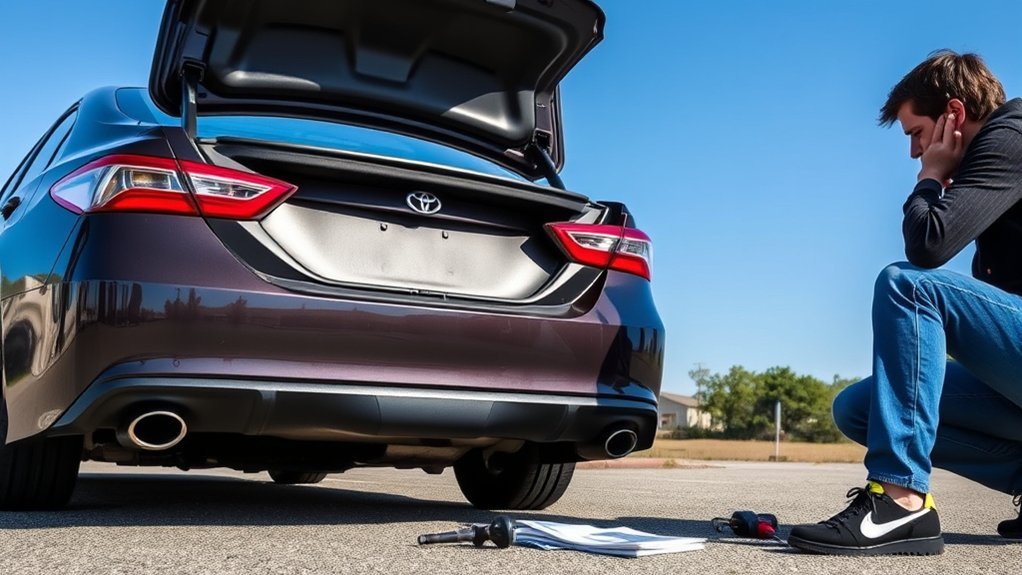
A failed trunk release does not always mean the entire latch is bad. The most useful clue is which opening methods still work. Test the key fob, cabin opener, exterior request switch if equipped, mechanical key or cable release if your model has one, and the internal emergency handle only when it is safely accessible.
If the doors respond to the key fob but the trunk does not, the fob is still communicating with the car. Check the trunk button, required button-hold time, lockout setting, and trunk-release circuit. If no remote function works, start with the fob battery and the vehicle’s 12-volt power.
Listen at the latch while another person operates the release. A strong click with no opening points toward mechanical load, debris, striker misalignment, or a latch that does not travel far enough. No click points toward a disabled release, failed switch, blown fuse, open circuit, loose connector, or failed actuator.
Also inspect how the lid sits. Uneven panel gaps, recent rear-body work, or a lid that needs downward pressure before it releases can indicate alignment rather than an electrical fault.
Is the Trunk Lockout or Valet Setting Turned On?
Before you buy a latch, check the security setting for your exact Camry. Some generations use a glove-box trunk-opener main switch. Others use a trunk lock-cylinder position, a valet-key arrangement, or different Smart Key logic. Use Toyota’s Manuals and Warranties lookup to select the exact model year and equipment.
Do not assume every Camry has the same release methods. If your model has a mechanical key cylinder, use it only as the manual directs. Newer trims may rely more heavily on electronic release methods and may not provide the same external mechanical access as older cars.
The glow-in-the-dark emergency handle is inside the trunk for an occupant who becomes trapped. It is not a normal outside-access method when the trunk is already shut. Never climb into a trunk or close the lid to test the handle.
Note: If your keys, medication, tools, or emergency gear are locked inside, call roadside assistance or an automotive locksmith before you force the lid or damage the rear seat.
How Do You Diagnose a Toyota Camry Trunk That Won’t Open?
Use a release-method comparison before removing panels. First unlock the vehicle and confirm the trunk lid is not being pressed down by oversized cargo. Then test the fob, cabin switch or lever, exterior request switch if equipped, and any mechanical release listed for your model.
- Check security settings: Confirm the model-specific trunk lockout or valet setting is not disabling the release.
- Compare release methods: Record which methods work, click, feel loose, or stay silent.
- Check a loose cabin lever: Little or no resistance can point to a detached, stretched, or broken release cable or linkage on models that use one.
- Remove mechanical load: Press down lightly on the lid while a helper operates the release, then stop if the lid binds.
- Inspect visible areas: Look for cargo against the lid, uneven gaps, water, corrosion, or damaged hinge-area wiring.
- Check the correct fuse: Use the fuse-box label and owner’s manual for your model year; there is no universal Camry trunk-release fuse number.
- Verify the circuit: If access is available, use the Toyota wiring diagram and a meter to check power, ground, and command at the latch connector.
- Escalate with a scan tool: A shop with Toyota-capable diagnostics can command the latch directly and separate an input or control problem from a latch-circuit fault.
| Symptom | Likely Area | First Check |
|---|---|---|
| Trunk won’t open with key fob | Fob battery or button, lockout setting, receiver command, or actuator circuit | Try the spare fob and confirm the manual’s button procedure |
| Cabin release works | Fob-side problem or Smart Key setting | Test all other fob functions and replace the correct battery |
| Cabin lever feels loose | Release handle, cable, retainer, or latch linkage | Stop pulling hard and inspect the model-specific cable path when safe access is available |
| Mechanical release works | Electronic command, power, connector, wiring, or actuator | Inspect the connector and test the circuit with the correct diagram |
| Latch clicks but trunk stays shut | Latch bind, striker misalignment, cargo pressure, or weak actuator | Relieve lid pressure and inspect alignment without forcing it |
| Trunk lid sits unevenly | Striker, hinge, or body alignment | Compare panel gaps and check for recent impact or body work |
| Latch is dirty, wet, or corroded | Contamination, water entry, or connector damage | Clean the mechanical latch and repair the water source before replacing parts |
Electrical safety: Do not jumper unknown connector pins or apply battery power directly to the actuator. Use the model-specific wiring diagram, because a wrong connection can damage a control module or wiring.
Useful shop-level split: A Toyota-capable scan tool can command the trunk latch through an active test on supported models. If the commanded latch opens, focus on the lockout setting, release switches, key authorization, and command path. If it does not open, test the latch circuit, connector, power, ground, and latch-actuator assembly.
What Does the Trunk Latch Actuator Do?
The trunk latch actuator is the electric motor built into or attached to the latch assembly on power-release models. When the vehicle receives a valid command from the fob, cabin switch, or exterior request switch, the actuator moves the latch far enough to release the striker.
A failed actuator can leave the mechanical part of the latch usable. That is why a trunk may open with a key or cable but not electronically. The opposite can also occur: the actuator may click, but dirt, misalignment, internal wear, or pressure from the lid prevents the latch from releasing.
Do not diagnose the actuator only by sound. Confirm the lockout setting, connector condition, power, ground, and command first. If the connector receives the correct signal but the latch does not release, the latch-actuator assembly becomes a stronger suspect.
Why Won’t the Key Fob Open the Camry Trunk?
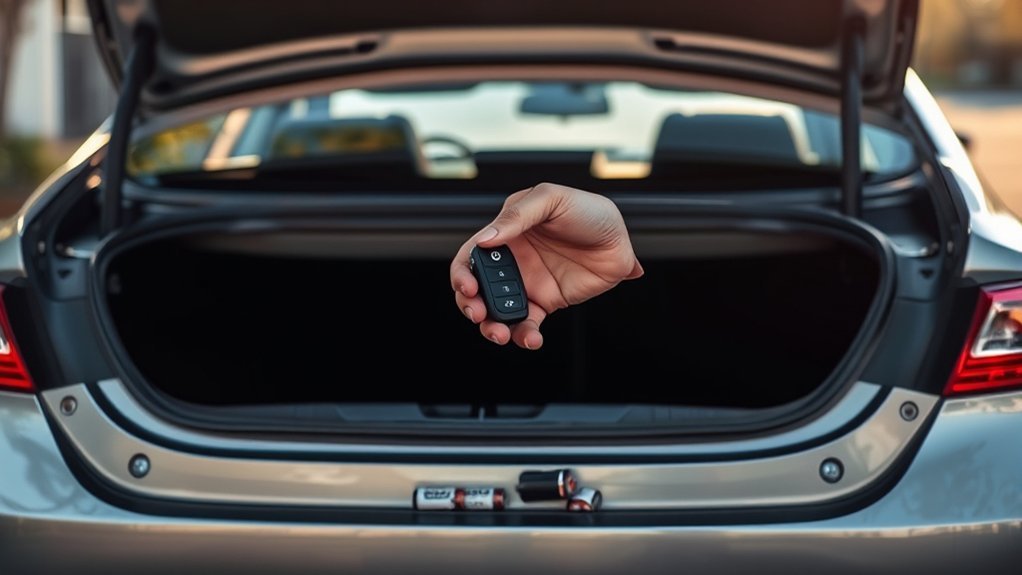
If the trunk fails only from the key fob, start on the fob side. Confirm that the vehicle is unlocked when required and use the press or press-and-hold method shown in your owner’s manual. Then test the lock, unlock, and panic buttons.
Check the Key Fob Battery
A weak battery can reduce range or make a fob intermittent. Replace it with the exact battery type printed inside the fob or listed in the owner’s manual. Install it in the correct direction, seat it fully, and handle it by the edges when practical.
| Action | What to Do | What It Tells You |
|---|---|---|
| Confirm the command | Use the trunk-button procedure shown for your model. | Rules out a missed long-press or lock-status requirement. |
| Replace the battery | Match the type and polarity to the old battery or manual. | Rules out weak range and intermittent operation. |
| Try the spare fob | Test a second registered remote. | A working spare points to the primary fob. |
| Inspect for damage | Look for cracks, liquid entry, or a stuck trunk button. | Physical damage can prevent the button from making contact. |
If both fobs operate the doors but neither opens the trunk, stop replacing fob batteries. Recheck the trunk lockout setting and move to the vehicle-side switch, wiring, and actuator tests.
Compare the Other Key Fob Functions
If no remote function works, focus on the fob battery, registration, receiver, interference, or the vehicle’s 12-volt power. If lock and unlock work reliably but the trunk button never does, the trunk button itself or the trunk-release command path deserves more attention.
A dealer or qualified automotive locksmith can test whether the fob transmits and whether it is registered correctly. Programming procedures vary by year and key system, so do not use a generic sequence unless it is confirmed for your exact Camry.
Test the Cabin and Exterior Release Switches
Test the cabin trunk opener and the exterior request switch if your model has one. If either switch opens the trunk, the latch and actuator can move, which shifts the diagnosis toward the failed input method or its settings.
If no electronic switch works but a mechanical release does, inspect the latch connector and hinge-area harness. If no method works, the latch may be jammed, the lid may be loaded against the striker, or the release system may be disabled.
For related Smart Key checks, see the site’s Camry Smart Key not detected guide.
Aftermarket vs. OEM: Which Camry Trunk Latch Should You Buy?
Buy by confirmed part number, not by a broad “fits Toyota Camry” title. Toyota used different latch assemblies across generations and equipment packages. Connector shape, Smart Key or keyless-entry support, build location, and model year can all matter.
| Example | Published Application | What It Shows |
|---|---|---|
| Toyota 64600-06070 | 2018–2024 Camry application in the cited OEM catalog | The 2018–2024 latch is not automatically correct for the redesigned 2025 Camry |
| Toyota 64600-AQ010 | 2025 Camry application in the cited OEM catalog | A model-year change can require a different latch assembly |
| Dorman 931-860 | 2007–2011 Camry, integrated with latch | Aftermarket fitment must still match the exact generation and original equipment |
Choose OEM when you want the lowest fitment uncertainty and the Toyota catalog confirms the VIN. A reputable aftermarket latch can be reasonable when the manufacturer lists your exact application and the connector, cable attachment, and release features match the original.
Before buying, compare the old part number, connector pin count, cable or rod attachment, mounting points, warranty, and return policy. Keep the old latch until the new one passes every manual and electronic test.
[Products Worth Considering]

This driver side front door lock actuator is designed to restore reliable locking performance across a wide range of Toyota, Lexus, and Scion vehicles. It serves as a direct replacement for multiple OE part numbers and helps solve issues with power door locks that are slow, unresponsive, or failing. Built for broad compatibility and backed by a one-year warranty, it is a practical solution for dependable door lock operation.

This front left door lock actuator assembly is a direct replacement for select Toyota and Lexus models, helping restore reliable power door locking and latch operation. Built as an OEM-quality aftermarket part, it includes the latch assembly and is factory tested for dependable performance. It is designed for driver-side front door fitment across a wide range of compatible vehicles and comes with replacement support for added peace of mind.

This rear trunk lid weatherstrip is designed to fit select Toyota Camry and RAV4 models, helping restore a secure seal around the trunk area. It supports protection against dust, moisture, and road noise while offering a reliable replacement for worn or damaged factory seals. Made for straightforward installation, it provides a practical fit-and-finish upgrade for everyday driving.
How Do You Replace a Toyota Camry Trunk Latch?
Replace the latch only after diagnosis points to the latch-actuator assembly and the trunk can be opened safely. The steps below are a general overview. Trim fasteners, electrical precautions, cable routing, and tightening specifications vary by year, so use Toyota service information for your VIN.
[Products Worth Considering]

This custom-fit cargo mat is designed for 2025-2026 Toyota Camry models to provide full trunk coverage and reliable protection. Its non-slip design helps keep items secure during daily driving, while the all-weather TPE construction resists spills, dirt, pet hair, and heavy use. Easy to install and simple to clean, it offers a practical upgrade for keeping your cargo area neat and protected.

The Autel MaxiCOM MK900BT is a professional bidirectional diagnostic scan tool built for modern vehicles with advanced system coverage and fast, accurate troubleshooting. It supports 3000+ active tests, 40+ service functions, all-system diagnostics, Auto VIN, pre/post scan reports, and newer vehicle protocols for broad compatibility. Designed for technicians and serious DIY users, it delivers efficient maintenance, smarter diagnostics, and expanded service capabilities across a wide range of makes and models.

This two-piece front door lock actuator motor set is designed to restore reliable power door lock operation for a wide range of Toyota, Lexus, and Scion vehicles. It includes left driver and right passenger side actuators and is made as a direct replacement for common factory part numbers. With broad vehicle compatibility and a one-year warranty, it offers a practical solution for fixing faulty door locking issues.
Tools Required for Replacement
Most accessible Camry latch jobs use basic hand tools, but the exact sizes vary. Gather the service instructions before you begin.
| Tool | Purpose | Notes |
|---|---|---|
| Socket and ratchet set | Remove latch fasteners | Use the size and tightening specification listed for your model |
| Plastic trim tool | Release trunk-liner clips | Reduces the chance of broken clips or marked trim |
| Screwdrivers | Remove covers or retainers when required | Match the driver to the fastener |
| Flashlight and phone camera | Document routing and connector position | Photograph the original setup before removal |
| Digital multimeter | Verify power, ground, or command when needed | Use only with the correct wiring diagram and test points |
Step-by-Step Installation Process
- Confirm the replacement part against the VIN and the number on the original latch.
- Park on level ground, switch the vehicle off, and keep the Smart Key away from the car.
- Keep the trunk fully open. If the Toyota procedure calls for 12-volt battery disconnection, follow it exactly and prevent the lid from closing while power is disconnected.
- Remove the inner trunk trim panel without pulling on wiring or breaking the clips.
- Photograph the connector, cable or rod routing, latch position, and fastener locations.
- Release the electrical connector and mechanical linkage without pulling on the wires.
- Support the latch, remove its fasteners, and compare the old and new parts side by side.
- Install the replacement in the original position, reconnect the linkage and connector, and tighten fasteners to the model-specific specification.
- Test every release method before reinstalling the trim or closing the lid firmly.
- Lower the lid gently for the first closing test. Stop if it binds, sits unevenly, or needs force.
Warning: Keep fingers, clothing, tools, and wiring clear of the latch and striker. Do not slam the trunk to “seat” a new latch, and do not let another person operate the release while your hands are near it.
Test the New Latch Before Reassembly
With the trim still removed, check the cabin opener, key fob, exterior switch if equipped, and mechanical release if your model provides one. The latch should release cleanly and reset without grinding, delay, or repeated button presses.
Inspect the connector for a full lock and confirm that the cable or rod follows the original route. If the latch clicks but does not release, do not keep cycling it. Recheck part compatibility, alignment, linkage installation, and lid pressure.
How Can Wiring and Connectors Stop the Trunk Release?
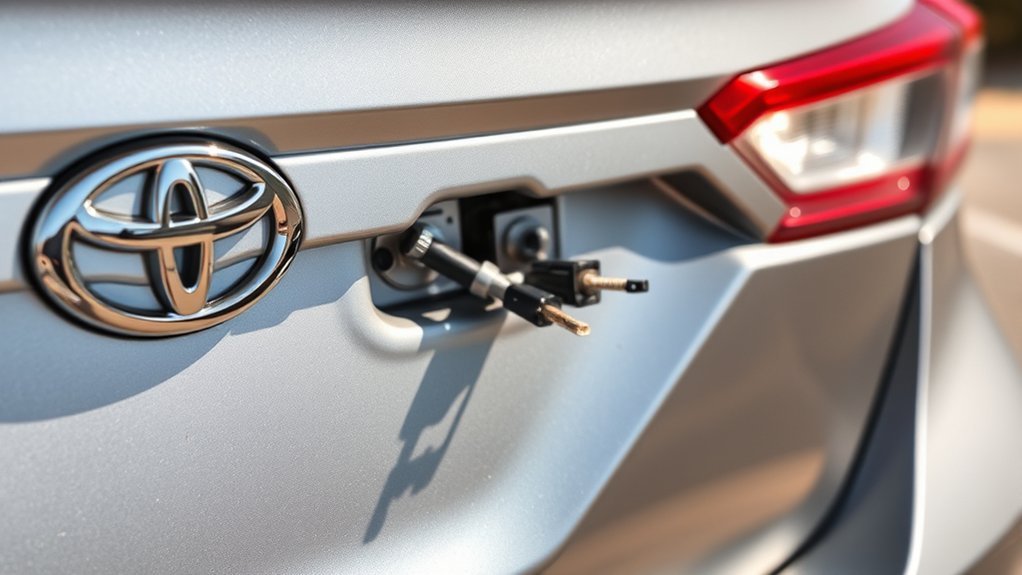
The latch actuator needs a complete electrical path and a valid release command. A loose connector, backed-out terminal, broken conductor, poor ground, corroded pin, or damaged switch circuit can make a good latch appear faulty.
Inspect the connector at the latch and the harness where it flexes near the trunk hinge. Repeated opening and closing can stress wires, while water entry can corrode terminals. Look for green deposits, darkened pins, swollen insulation, previous splices, or wiring pulled tight across a hinge or trim edge.
Do not spray general-purpose lubricant into an electrical connector. Use the cleaning and terminal-repair method specified for automotive connectors, fix the source of water entry, and replace damaged terminals or wiring correctly.
Fuse labels and circuit layouts vary across Camry generations. Check the owner’s manual and the fuse-box cover instead of copying a fuse number from another model year. If the circuit reaches a body control module or Smart Key receiver, professional diagnosis may be safer than trial-and-error testing.
What Should You Test After a Trunk Latch Repair?
Test the repair before reinstalling every clip. A complete check confirms that the latch, actuator, linkage, switches, wiring, and alignment work together.
Electronic Release Check
| Test | Pass Condition | If It Fails |
|---|---|---|
| Key fob trunk button | Releases using the manual’s required button action | Check fob, lockout setting, registration, and command circuit |
| Cabin trunk opener | Releases consistently with the vehicle unlocked as required | Check the main switch, cabin switch, fuse, and wiring |
| Exterior request switch, if equipped | Releases with the authorized key present | Check Smart Key settings, antenna or request-switch circuit, and key detection |
| Trunk-ajar indication | Changes correctly when the trunk opens and closes | Check latch compatibility, connector pins, and latch-position switch |
After the electrical tests pass, reinstall the trim and repeat them. A pinched harness or misplaced clip can create a new fault during reassembly.
Mechanical and Alignment Check
Open and close the trunk gently several times. The lid should align evenly, catch without slamming, and release without downward pressure. Check that the latch resets and that the cable or rod does not drag.
If the lid sits high, low, or off-center, stop and inspect the striker, hinges, rubber bumpers, and prior body work. Do not use latch adjustment to hide a bent lid or body opening.
How Much Does a Toyota Camry Trunk Latch Cost?
The cost depends on the actual fault. A fob battery, lockout correction, cleaning, or alignment may cost far less than a latch assembly or wiring repair. Part prices also change, so treat the figures below as dated examples and confirm fit with the VIN.
- 2018–2024 OEM example: Toyota part 64600-06070 was listed at $255.81 MSRP and $179.17 sale price on July 31, 2026.
- 2025 OEM example: Toyota part 64600-AQ010 was listed at $286.25 MSRP and $200.48 sale price on July 31, 2026.
- 2007–2011 aftermarket example: Dorman lists 931-860 as an integrated latch actuator for the 2007–2011 Camry; retail price varies by seller.
- Labor: The quote depends on whether the trunk is open, trim access, wiring diagnosis, corrosion, and alignment work. Ask for a written estimate that separates diagnosis, parts, and labor.
A cheaper part is not a savings if it lacks the correct connector, Smart Key support, latch-position switch, or cable attachment. Confirm the VIN and return policy before purchase.
[Products Worth Considering]

This comprehensive mechanics tool set is designed for home and garage projects, combining a low-profile 72-tooth ratchet with a versatile assortment of sockets, accessories, and mixed hand tools. The thinner ratchet head helps you reach tight spaces more easily, while the durable blow mold case keeps everything organized for convenient storage and transport. Backed by CRAFTSMAN warranty coverage, it offers dependable performance for everyday repairs and maintenance.

The allsun EM415Pro helps you trace hidden automotive wires and cables without damaging insulation, making troubleshooting faster and more efficient. It detects open circuits and shorts with clear audio guidance, while the flexible probe reaches tight, congested wiring areas. Adjustable sensitivity improves accuracy when diagnosing complex DC vehicle electrical systems.
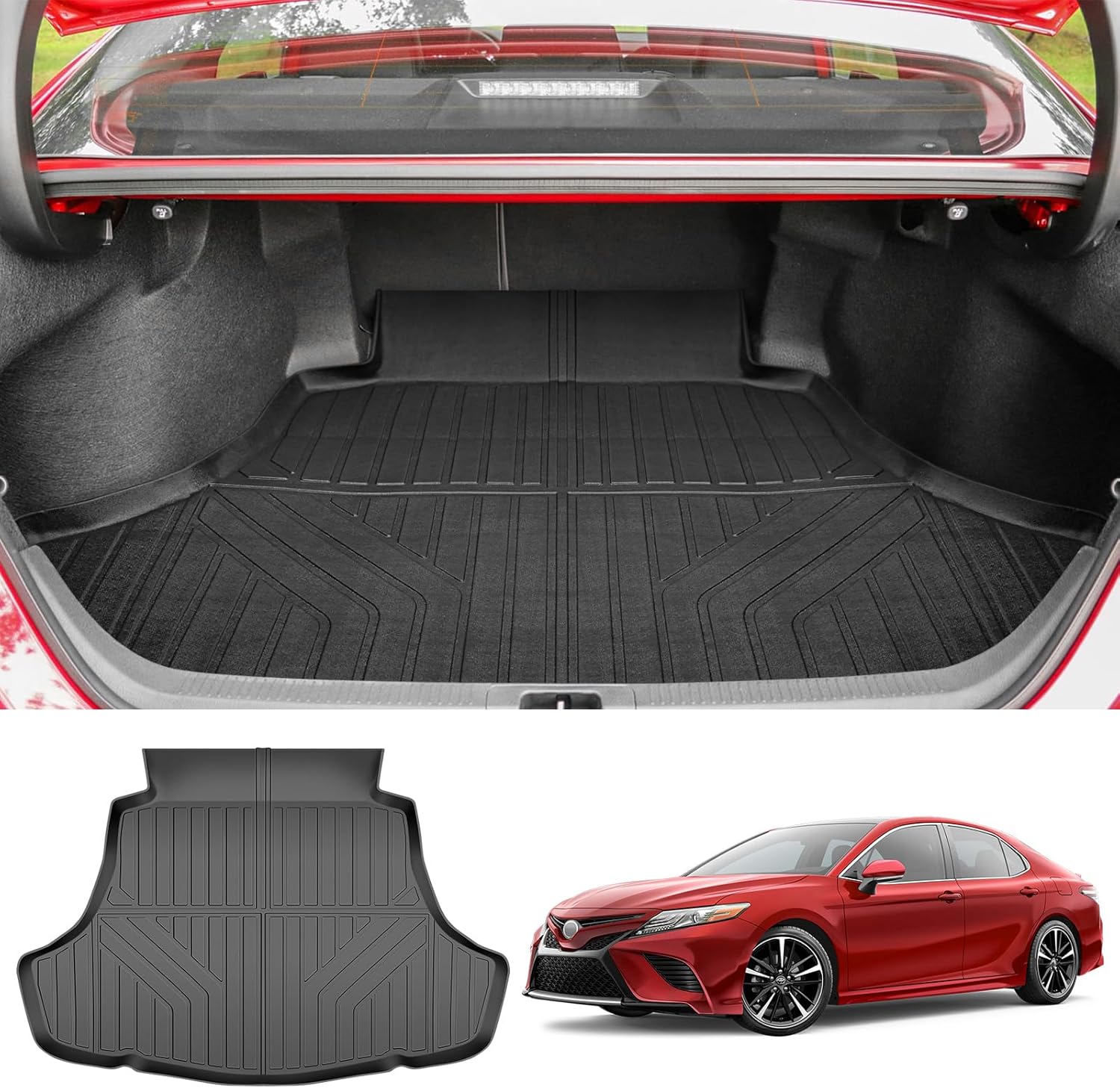
This custom-fit trunk mat is designed for select Toyota Camry and Avalon models to help protect your cargo area from dirt, spills, and everyday wear. Made from durable TPE, it offers all-weather coverage, easy cleaning, and simple tool-free installation for convenient interior protection.
How Do You Maintain a Camry Trunk Latch?
Keep the latch and striker free of grit, spilled liquids, and loose cargo fibers. Wipe the mechanical surfaces clean, then apply only a small amount of latch-safe lubricant recommended for automotive lock mechanisms. Remove excess so it does not collect dirt.
Inspect the trunk weather seal and water channels when you see moisture near the latch or connector. Lubricating a wet latch without repairing the leak can hide corrosion until the release fails again.
Check the hinge-area harness for rubbing, stretched tape, or sharp bends. Make sure cargo cannot pull on the trunk-lid wiring or press hard against the latch area when the lid closes.
When Should You Call a Mechanic, Locksmith, or Toyota Dealer?
Get professional help when the trunk is stuck shut and safe trim access is not available, the keys are locked inside, the lid will not latch securely, or the wiring shows heat damage, corrosion, or previous repairs. An automotive locksmith is often the best first call for lockout access; a repair shop or Toyota dealer is better for circuit, latch, Smart Key, or body-alignment diagnosis.
Also stop the DIY repair if the correct latch cannot be confirmed by VIN, the connector has no expected command, or the fault appears to involve the body control module or Smart Key receiver. Those systems need model-specific scan data and wiring information.
Do not drive with a trunk lid that can open unexpectedly. Secure the vehicle and arrange repair before returning to the road.
Frequently Asked Questions
How Much Is It to Fix a Trunk That Won’t Open?
The price depends on the cause. A fob battery, lockout setting, cleaning, or adjustment may be inexpensive. The dated OEM examples above list at $179.17 and $200.48 before labor, with MSRPs of $255.81 and $286.25. Aftermarket prices vary, and a stuck-shut trunk, wiring repair, or body alignment adds diagnostic and labor time.
What Causes a Trunk Latch to Fail?
Common causes include internal wear, dirt, corrosion, water entry, a weak actuator motor, damaged wiring, a loose connector, striker misalignment, and cargo pressing against the lid. A lockout setting or key fob fault can also imitate a failed latch.
Why Does My Camry Trunk Open Manually but Not With the Key Fob?
A working mechanical release shows that the latch can move, so focus on the fob button and battery, trunk lockout setting, Smart Key command, actuator connector, wiring, and power supply. If the cabin switch works too, the problem is more likely limited to the fob or its command path.
Why Does the Trunk Click but Not Open?
The actuator may be moving without releasing the striker. Check for cargo pressure, a lid that needs light downward pressure, dirt, corrosion, striker misalignment, or a weak internal actuator. Stop if the lid binds; repeated cycling can worsen the fault.
Does a Toyota Camry Have a Trunk Lockout or Valet Switch?
It depends on the model year and equipment. Some Camry generations use a glove-box trunk-opener main switch. Others use a trunk lock-cylinder position, valet-key setup, or different Smart Key logic. Check the owner’s manual for your exact Camry before diagnosing the latch.
Which Fuse Controls the Camry Trunk Release?
There is no single fuse number that applies to every Camry year and key system. Use the fuse-box cover and owner’s manual for your exact vehicle. If a replacement fuse opens again, stop and diagnose the short or overloaded circuit instead of installing a higher-amperage fuse.
Can a Dead 12-Volt Battery Keep the Camry Trunk From Opening?
Yes. Electronic trunk releases may not work when the vehicle’s 12-volt power is low or disconnected. Follow the model-specific emergency procedure in the owner’s manual. Do not pry the lid, jumper unknown trunk wiring, or apply power directly to the latch.
Should I Buy an OEM or Aftermarket Camry Trunk Latch?
Choose the part that is confirmed for your VIN and matches the original connector, mounting points, cable or rod attachment, and keyless-entry equipment. OEM usually lowers fitment uncertainty. A reputable aftermarket part can work when its manufacturer lists the exact Camry application and offers a usable warranty and return policy.
Conclusion
When a Toyota Camry trunk won’t open, start with the model-specific security setting and compare every available release method. A working cabin or mechanical release helps isolate a fob or command problem. A click with no opening points more toward lid pressure, alignment, binding, or actuator weakness. Record which methods work, confirm the exact latch by VIN, and test the circuit before replacing parts. Use a locksmith or repair professional when the trunk is stuck shut, access is unsafe, or the wiring is damaged.
References
- Toyota Manuals and Warranties | Toyota
- Toyota Technical Information System | Toyota
- Toyota 64600-06070 Luggage Compartment Door Lock Assembly | Toyota Parts Now, accessed July 31, 2026
- 2025 Camry Trunk Lid and Latch Components | Toyota Parts Now, accessed July 31, 2026
- Dorman 931-860 Integrated Trunk Lock Actuator | Dorman Products



[…] to Update Toyota Camry Infotainment […]