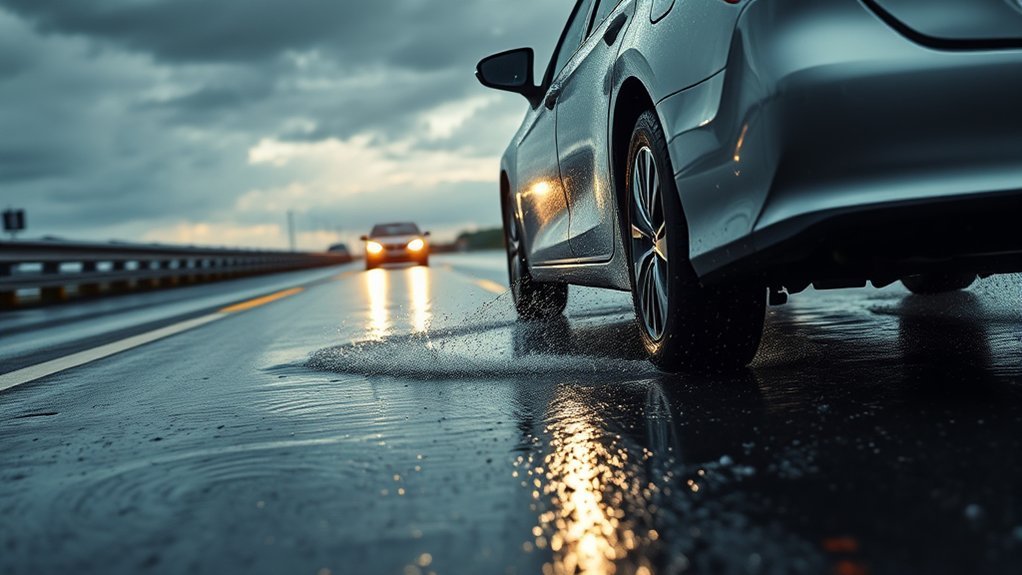
Hydroplaning can happen fast in a Toyota Camry when rainwater builds between the tires and the pavement. The best protection is simple: slow down before standing water, keep your tires in good condition, avoid cruise control in rain, and use smooth steering and braking inputs. If the car starts to float or slide, ease off the accelerator and steer gently where you want the Camry to go.
Quick Answer
To prevent hydroplaning in your Camry, keep tire tread at 4/32 inch or deeper for wet-weather safety, check cold tire pressure monthly, slow down before puddles, avoid cruise control, and leave extra following distance. If hydroplaning starts, ease off the gas, avoid hard braking, and steer smoothly where you want to go.
Key Takeaways
- Hydroplaning risk rises with speed, standing water, worn tread, low tire pressure, and sudden steering or braking.
- Use 4/32 inch as a smart wet-weather tire replacement point, even though legal wear limits may be lower.
- Avoid cruise control in rain so you can slow down instantly by lifting off the accelerator.
- Choose the lane with the least visible water; center lanes are often better on crowned roads, but not always.
- Never drive through floodwater. Turn around and choose another route.
At a Glance
| Time Required | 5–10 minutes for basic tire, wiper, and light checks |
| Difficulty | Easy |
| Tools Needed | Tire pressure gauge, tread-depth gauge or quarter, clean cloth, washer fluid |
| Cost | Usually $0–$15 for checks; more if tires, wipers, alignment, or brake service are needed |
What Hydroplaning Is and Why Camry Drivers Care
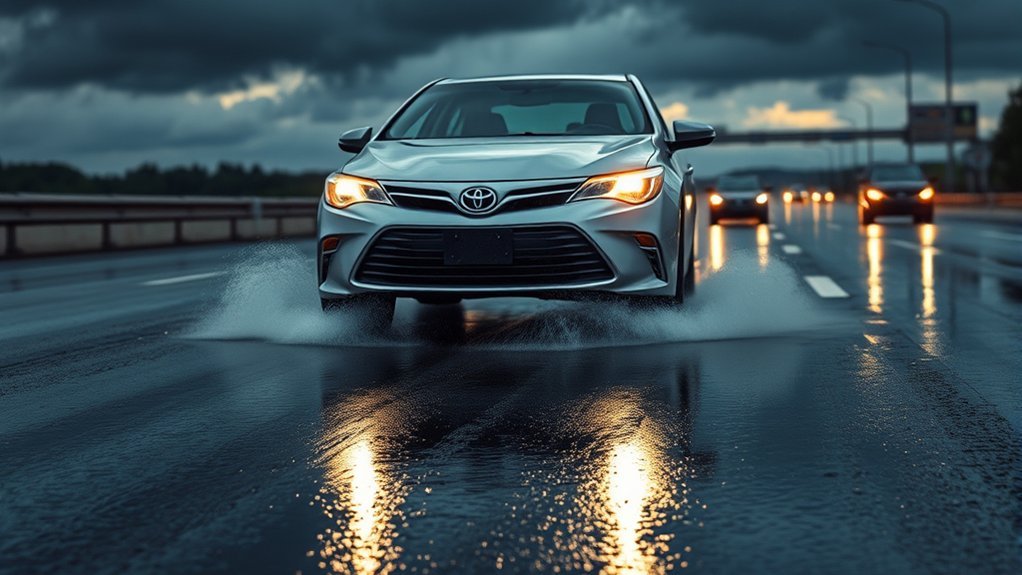
Hydroplaning happens when a layer of water lifts your Camry’s tires away from the road surface. When that contact patch disappears, steering, braking, and acceleration can feel delayed or nearly useless for a moment.
The biggest causes are too much speed for the water depth, worn tire tread, incorrect tire pressure, standing water, and abrupt driver inputs. Fresh rain after a dry spell can also be slick because water mixes with oil, rubber dust, and debris on the pavement.
The risk is not limited to storms. According to the Federal Highway Administration, rain is involved in hundreds of thousands of U.S. crashes in an average year. That makes wet-road preparation one of the most practical safety habits for Camry owners.
AAA testing found that tires worn to 4/32 inch needed an average of 87 extra feet to stop on wet pavement compared with new tires.
Modern tire tread patterns help channel water away, but they need enough depth to work. AAA recommends replacing tires at 4/32 inch for wet-weather safety because stopping and handling performance have already dropped by that point.
Quick Actions If Your Camry Hydroplanes
If your Camry starts to feel like it is floating, do not fight the car. Your goal is to let the tires reconnect with the road.
- Stay calm and look where you want to go. Your hands tend to follow your eyes.
- Ease off the accelerator. Do not stab the gas or make sudden throttle changes.
- Do not slam the brakes. Hard braking can make the slide worse.
- Hold the steering wheel steady. Make small, smooth corrections only.
- Steer gently toward your intended path. Avoid jerking the wheel or overcorrecting.
- Let the car slow naturally until grip returns. Once the tires reconnect, continue at a lower speed.
Warning: If your Camry has ABS, do not pump the brake pedal during normal emergency braking. Apply firm, steady pressure when braking is needed and let the system work. During hydroplaning, the first move is still to ease off the accelerator and avoid sudden inputs.
For older vehicles without ABS, use gentle braking only after the tires begin to regain traction. If you are unsure whether your Camry has ABS, treat the situation like a modern ABS-equipped car: avoid panic braking, keep inputs smooth, and focus on regaining tire contact.
[Products Worth Considering]

The JACO ElitePro Digital Tire Pressure Gauge delivers shop-grade accuracy with a clear digital readout, making it easy to maintain proper tire pressure for safer driving and better performance. Built with rugged brass and steel components, a protective guard, and a flexible air hose, it is designed for reliable use across cars, trucks, motorcycles, bikes, RVs, and trailers. The lock-on display, built-in bleeder valve, and bright backlit screen add convenience in any lighting condition.

This LUMITECO tire tread depth gauge set makes it easy to monitor tire wear and maintain safer driving performance. The color-coded scale provides quick, easy-to-read measurements, while the compact pocket-size design and included clip make it convenient to keep in your vehicle or toolbox. Suitable for cars, trucks, motorcycles, and more, it offers a simple reusable way to check tread depth whenever needed.
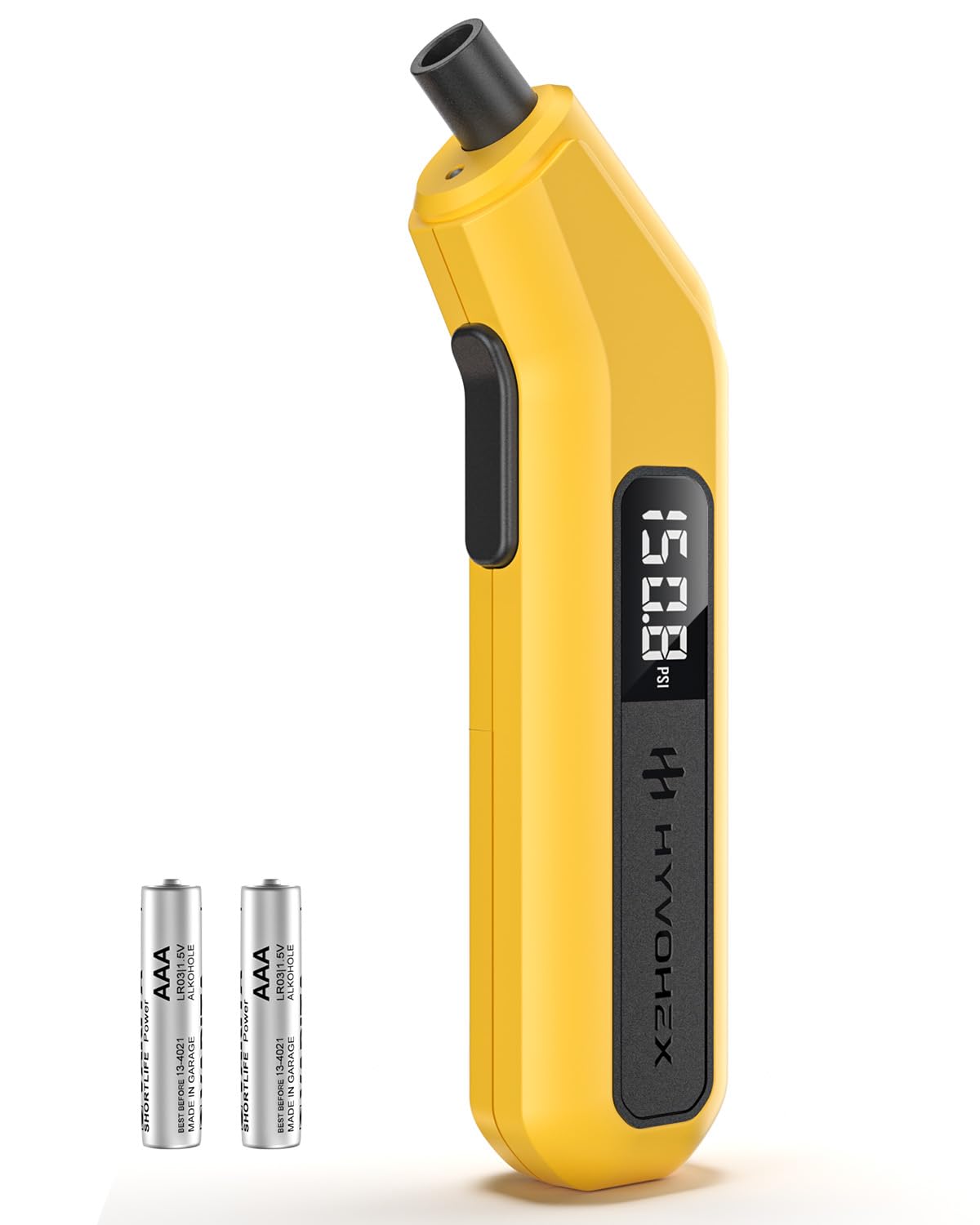
HYVOHEX digital tire pressure gauge delivers fast, accurate readings with an easy-to-read LED backlit display and a high-sensitivity sensor for reliable tire checks. Its valveless one-click operation, rotating valve head, and broad compatibility make it a practical tool for cars, bikes, and trucks. Built with a durable rubber shell and aluminum nozzle, it is compact enough to keep in your glove box or tool bag.
Spot Hydroplaning: Signs to Watch For
You may be hydroplaning if your Camry suddenly feels light, floats, or no longer responds normally to steering. The steering wheel may feel loose or numb, engine revs may rise without matching road speed, or the car may drift sideways even though you are not turning sharply.
Watch for these warning signs before the slide starts:
- Shiny sheets of water across the lane
- Puddles in wheel ruts or low spots
- Spray from vehicles ahead
- Sudden steering lightness
- Reduced tire noise followed by a floating sensation
- Water pulling the car to one side
Hydroplaning can happen at surprisingly moderate speeds when water is deep enough. AAA notes that even at speeds as low as 35 mph, new tires can lose some contact with the road in wet conditions. Worn tires make the problem worse.
Tire Checks: Tread, Pressure, and Wear
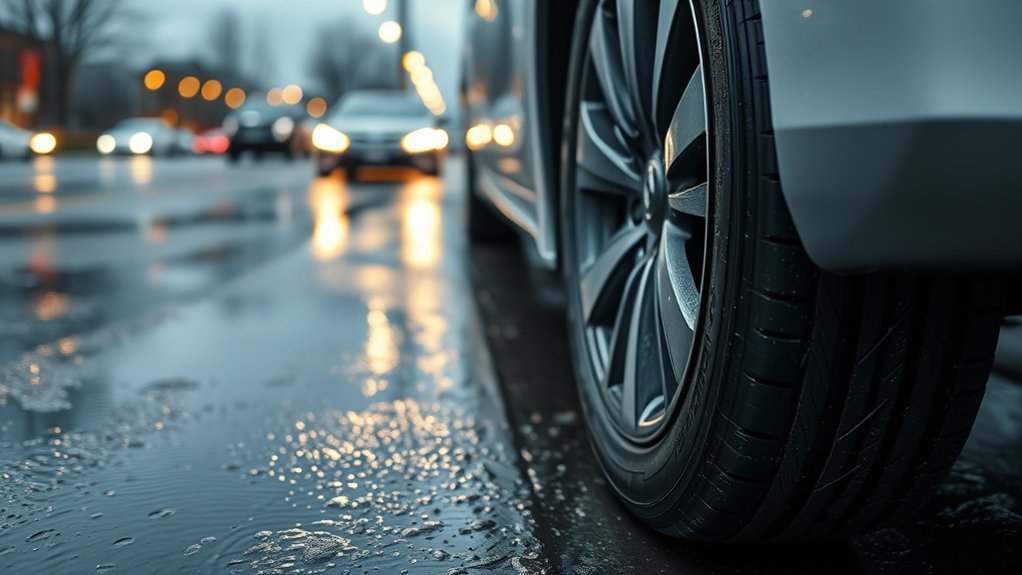
Your Camry’s tires are the only parts of the car touching the road, so tire condition is the first line of defense against hydroplaning. NHTSA TireWise emphasizes tire maintenance, tread checks, pressure, and rotation as core tire-safety habits.
[Products Worth Considering]
Keep your vehicle neat and organized with this collapsible trunk organizer designed to hold groceries, daily essentials, travel gear, and more. Built from durable fabric with a non-slip base, it stays in place while helping you maximize cargo space and keep items separated and easy to find. Its foldable design and exterior pockets make it a versatile storage solution for SUVs, road trips, picnics, and everyday driving.

This wired backup camera system makes reversing easier with a quick plug-and-play setup, stable real-time video, and a wide-angle HD view to help reduce blind spots. The adjustable parking lines, brightness, contrast, and image flip options let you customize the display for safer parking in cars, trucks, RVs, vans, SUVs, trailers, and campers.

1.Accurate and Efficient: Different colors on the bar represents different scopes, the red range on bar: 0 - 3/ 32; Yellow range on bar: 3/ 32 - 6/ 32; Green range on bar: 6/ 32 - 32/ 32, allowing you easy and fast to read and calibrated
Check Tread Depth
Use a tread-depth gauge for the most accurate reading. Measure the inner, center, and outer grooves on all four tires. For rain driving, start shopping for tires when tread reaches 4/32 inch. The built-in treadwear bars show when a tire is legally worn out in many places, but waiting that long can leave you with poor wet-road grip.
Pro Tip: Use the quarter test if you do not have a tread gauge. Insert a quarter upside down into the tread. If you can see the top of Washington’s head, the tire is around 4/32 inch or less and should be replaced for safer rain driving.
Check Tire Pressure Cold
Check tire pressure at least once a month and before long trips. Do it when the tires are cold, meaning the car has been parked for several hours or driven only a short distance. Use the pressure listed on your Camry’s driver-door placard or owner’s manual, not the maximum pressure printed on the tire sidewall.
Toyota’s owner resources for the Camry advise checking tire condition, treadwear indicators, uneven wear, spare tire condition where applicable, and tire pressure. You can confirm your model-year details through Toyota’s Camry tire information or your printed owner’s manual.
Look for Uneven Wear and Aging
Uneven wear can reduce water evacuation even if part of the tire still looks healthy. Inspect for:
- Feathering or cupping
- One edge wearing faster than the other
- Cracks in the sidewall
- Bulges or bubbles
- Nails, screws, or embedded debris
- Vibration or pulling after hitting potholes
If uneven wear keeps coming back, schedule an alignment and suspension inspection. Rotating tires on schedule helps even out wear, but it will not fix a mechanical problem.
Safer Driving Habits and Lane Choices
Good tires help, but driving habits matter just as much. In heavy rain, drive below the posted speed limit when conditions require it. The speed limit is for ideal conditions, not standing water, low visibility, or slick pavement.
Avoid Cruise Control
Do not use cruise control in rain. If the tires start to lose grip, you need the ability to slow the car immediately by lifting off the accelerator. Cruise control can delay that natural response and may keep applying power when you need less of it.
Choose the Lane With the Least Water
On multi-lane roads, the center lane often has less standing water because many roads are crowned to drain toward the edges. But this is not guaranteed. Watch the actual road surface and choose the lane with the shallowest water, the clearest tire paths, and the fewest puddles.
Avoid driving through deep wheel ruts, curbside puddles, and low spots where water collects. If you cannot tell how deep the water is, do not cross it.
Maintain Safe Following Distance
Leave more room than you would on dry pavement. A three-second gap is a minimum starting point in light rain. In heavy rain, poor visibility, or traffic spray, increase that space so you can slow down gradually instead of braking hard.
- Slow down before you reach standing water, not while you are already in it.
- Keep both hands on the wheel.
- Use low-beam headlights when rain reduces visibility.
- Avoid sharp turns, sudden braking, and quick lane changes.
- Follow the tire tracks of vehicles ahead when they lead through visibly shallower water.
- Pull over safely if visibility becomes too poor to judge the lane.
Note: Driver-assistance features can help in normal driving, but they cannot overcome worn tires, deep water, or excessive speed. Do not rely on traction control, stability control, lane tracing, or adaptive cruise control as hydroplaning prevention.
Wet-Weather Maintenance Checklist for Camry
Use this checklist before rainy seasons, long highway trips, or any week when storms are expected.
| Item | What to Check | Why It Matters |
|---|---|---|
| Tire tread | Measure tread depth in several grooves; replace around 4/32 inch for wet-weather safety. | Deeper tread channels water away from the contact patch. |
| Tire pressure | Check monthly when cold using the door-jamb placard or manual. | Incorrect pressure reduces traction and can worsen uneven wear. |
| Rotation and alignment | Follow your Camry maintenance schedule; inspect sooner if the car pulls or tires wear unevenly. | Even wear helps all four tires evacuate water consistently. |
| Wipers | Replace blades that streak, chatter, split, or miss areas of the windshield. | Clear visibility gives you more time to avoid puddles and hazards. |
| Lights | Check headlights, taillights, brake lights, and turn signals. | Other drivers need to see you in spray and low visibility. |
| Brakes | Listen for grinding, feel for pulling or pulsation, and inspect after deep water exposure. | Wet or damaged brakes can reduce stopping power. |
[Products Worth Considering]

Conventional Wiper Blade: Rain-X Weatherbeater windshield wiper blade set in 26 inch and 16 inch lengths, built to meet or exceed original equipment manufacturer standards for durability, quality and construction

Conventional Wiper Blade: Rain-X Weatherbeater windshield wiper blade set in 26 inch and 18 inch lengths, built to meet or exceed original equipment manufacturer standards for durability, quality and construction

[FITMENT] Compatible with Toyota Highlander 2008-2019, Compatible with Toyota Camry 2021-2022, Compatible with Acura MDX 2015-2020, Compatible with Toyota Avalon 2019-2020, Compatible with Dodge Grand Caravan 2008-2019. Fitment varies by model year. Check AmazonConfirmedFit before ordering.
Tire Tread Inspection
Inspect each tire, not just the front pair. A Camry can lose stability if the rear tires have poor tread, even when the front tires look acceptable. Check the inside shoulder too; that area can hide wear caused by alignment problems.
If you frequently drive in heavy rain, replace tires before they reach the minimum wear bars. Tread that is “legal” can still be weak in standing water.
Wiper and Light Check
Good visibility prevents panic. Clean the windshield inside and outside, fill the washer reservoir, and replace wiper blades that leave streaks. Test headlights, brake lights, taillights, and turn signals before storm season.
Use low-beam headlights in rain. High beams can reflect off rain and spray, making visibility worse.
After Flood Exposure: Inspection and Next Steps
Warning: Do not drive into floodwater or around road-closed barriers. The National Weather Service warns that many flood deaths happen when vehicles are driven into hazardous water. Turn around and find another route.
If your Camry has already gone through deep water, treat it as a safety issue, not just a cleanup problem. Water can affect brakes, wheel bearings, electrical connectors, hybrid components, engine oil, transmission fluid, and interior electronics.
After any deep-water exposure:
- Do not restart a stalled engine. Water may have entered the intake or cylinders.
- Check brake feel carefully. If the pedal feels soft, weak, or uneven, stop driving and call for help.
- Inspect fluids. Milky, foamy, or unusually high oil or transmission fluid may indicate contamination.
- Look for warning lights. ABS, traction control, battery, or hybrid-system warnings need prompt diagnosis.
- Dry what you can safely access. Do not unplug high-voltage hybrid components.
- Schedule a professional inspection. Hidden corrosion and electrical faults can show up later.
If water reached the floor, door sills, or engine bay, do not assume the car is safe because it still starts. Have a qualified technician inspect it before normal driving.
Frequently Asked Questions
What is the best technique to avoid hydroplaning in a Camry?
Slow down before standing water, keep your tires properly inflated, replace tires around 4/32 inch for wet-weather safety, avoid cruise control, and make smooth steering and braking inputs. The best technique is prevention: enter wet areas slower than you would on dry pavement.
What two things should you avoid when your car first hydroplanes?
Avoid slamming the brakes and jerking the steering wheel. Both can make the car harder to control. Ease off the accelerator, keep the wheel steady, and make small steering corrections toward your intended path.
What is the safest way to slow down once hydroplaning starts?
The safest first step is to ease off the accelerator and let the Camry slow naturally until the tires regain contact. Avoid hard braking during the slide. If braking is needed after traction returns and your Camry has ABS, use firm, steady pressure.
Does traction control prevent hydroplaning?
No. Traction control and stability control can help manage wheel slip, but they cannot create grip when a tire is riding on top of water. Good tires, correct speed, and smooth inputs are still the main defenses.
Should I use cruise control in the rain?
No. Turn cruise control off in wet weather. If the tires start to lose grip, you need to reduce speed immediately by lifting off the accelerator, and cruise control can delay that response.
Conclusion
You can lower hydroplaning risk in your Camry by combining smart maintenance with calmer wet-weather driving. Keep tires properly inflated, replace worn tread before rain performance drops, slow down before puddles, avoid cruise control, and leave extra space. If hydroplaning starts, ease off the accelerator, avoid hard braking, and steer smoothly where you want the car to go. After deep-water exposure, get the car inspected before trusting it in normal traffic again.
Sources
- AAA Exchange — Wet Weather Driving Tips — supports avoiding cruise control, checking cold tire pressure, maintaining visibility, and slowing down in rain.
- AAA Newsroom — Worn Tires Put Drivers at Risk — supports 4/32-inch wet-weather tire replacement guidance and worn-tire stopping-distance data.
- NHTSA TireWise — supports tire maintenance, tread, inflation, rotation, and tire-safety guidance.
- Toyota Owners — Camry Tire Information — supports Camry tire condition, treadwear indicator, uneven wear, and pressure checks.
- Federal Highway Administration — Road Weather Management — supports current rain and weather-related crash context.
- National Weather Service — Turn Around Don’t Drown — supports floodwater avoidance and post-flood driving caution.