A Supra downpipe is the exhaust section immediately after the turbocharger. A freer-flowing replacement can reduce post-turbine restriction, change exhaust sound, and create more tuning headroom, but it does not guarantee a fixed horsepower gain. A tune is also not automatically required just to install every catted pipe. Because the downpipe and catalyst area affect emissions control and oxygen-sensor monitoring on street cars, exact fitment, catalyst approval, check-engine-light risk, and local law matter as much as flow.
Last updated: August 31, 2026
Quick Answer
A downpipe carries exhaust gas away from the Supra’s turbocharger and into the rest of the exhaust system. Reducing restriction after the turbine can improve response and create more airflow headroom, especially when the rest of the setup is matched correctly. There is no universal wheel-horsepower gain. For a street car, the lowest-risk choice is the factory downpipe or a replacement whose emissions approval covers the exact vehicle and jurisdiction; a high-flow catted downpipe is not automatically street legal simply because it contains a catalyst.
Key Takeaways
- A freer-flowing downpipe can reduce post-turbine restriction and change how quickly the turbo responds, but the result depends on the exact Supra, turbo, catalyst, exhaust, fuel, and calibration.
- There is no reliable universal horsepower number for a Supra downpipe. Meaningful comparisons use before-and-after testing on the same car under closely matched conditions.
- A catted downpipe keeps a catalytic converter in the exhaust path, but it can still trigger faults or fail legal requirements if the exact part lacks the approval required for the vehicle and location.
- A catless downpipe removes a catalyst and creates substantial emissions, odor, sound, diagnostic, and legal risks. Do not assume “off-road use only” or track use automatically makes catalyst removal lawful.
- Any performance calibration must match the hardware and fuel without defeating required emissions controls or OBD monitoring. Diagnose catalyst or O2-sensor faults instead of hiding them.
Evidence note: This guide synthesizes current Toyota information, federal and California emissions guidance, and established turbo-exhaust principles. It does not claim an instrumented in-house dyno test or firsthand downpipe installation.
At a Glance
| Time Required | Varies by Supra generation, access, fastener condition, and shop equipment; get a model-specific labor estimate |
| Difficulty | Intermediate to advanced DIY; professional installation is the safer choice if you lack lift, exhaust, or O2-sensor experience |
| Tools Needed | Jack stands or lift, socket set, extensions, oxygen-sensor socket, torque wrench, penetrating oil, gloves, eye protection, and any replacement seals or hardware specified by the downpipe manufacturer |
| Cost | Varies widely by brand, catalyst design, installation labor, required hardware, and any lawful calibration work |
How Does a Downpipe Improve Supra Turbo Flow?
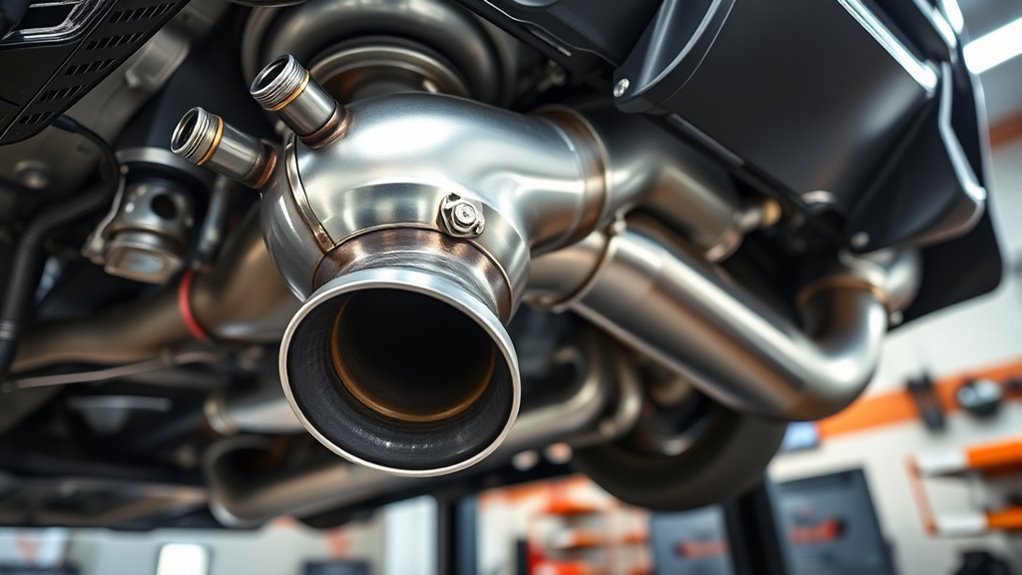
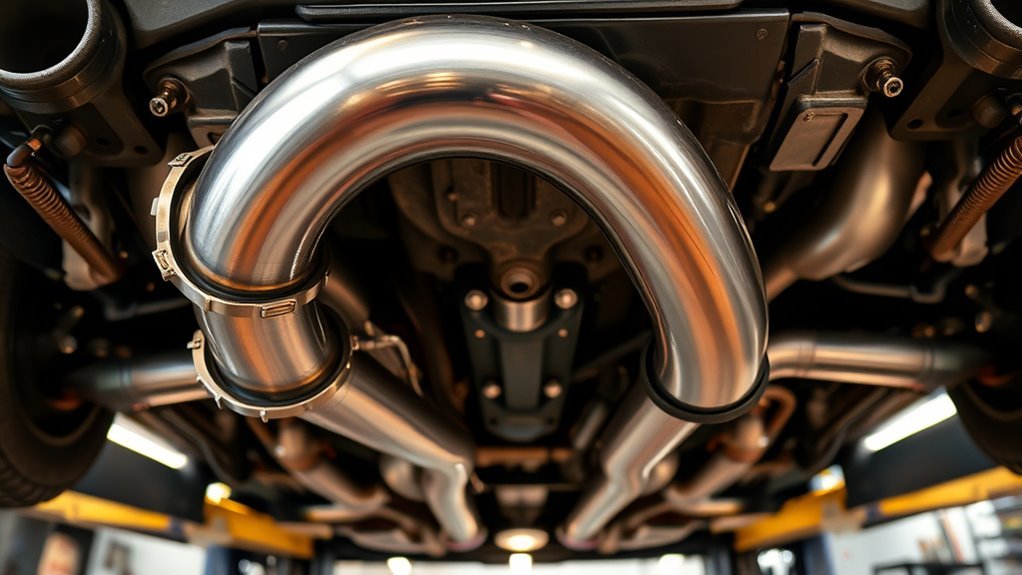
On a turbocharged Supra, the downpipe connects the turbo outlet to the next section of the exhaust. The factory part is designed as part of a complete system that balances emissions control, noise, heat management, durability, drivability, manufacturing cost, and service requirements. An aftermarket downpipe may use a different diameter or shape and, when catted, a different catalytic-converter design.
The useful engineering concept is the pressure difference across the turbine. Exhaust energy drives the turbine, and the gas then needs to leave the turbine housing. Reducing unnecessary restriction downstream can lower post-turbine pressure and give the turbo more favorable operating conditions. How much that changes boost response or power depends on the turbo, calibration, engine load, catalyst, and the rest of the exhaust system.
The current GR Supra 3.0 uses a turbocharged inline-six engine, and Toyota lists the 2026 GR Supra with a 3.0L turbocharged inline 6-cylinder. Older turbo Supras, including 2JZ-GTE applications, use different turbo and exhaust hardware, so the same airflow principle does not make modern Mk5 downpipes interchangeable with older parts.
A downpipe does not create a fixed amount of power by itself. It changes the exhaust restriction after the turbo; the measurable result depends on the complete engine, turbo, fuel, exhaust, and calibration package.
A downpipe can also change sound. Depending on catalyst design and the rest of the exhaust, you may hear more turbo whistle, a deeper exhaust note, or more volume under load. Treat sound descriptions as setup-specific rather than guaranteed because the rear exhaust, resonators, valves, catalyst, and cabin insulation all affect what you hear.
Catted vs. Catless Downpipes: Pros and Cons
After deciding whether to change the factory downpipe, the next question is catalyst design. A catted downpipe retains a catalytic converter in the downpipe section. A catless pipe removes that catalyst. The difference affects far more than flow: it can change emissions output, odor, sound, OBD-II behavior, inspection results, and legal status.
| Downpipe Type | Best Fit | Main Trade-Offs |
|---|---|---|
| Factory downpipe | Street use, inspection-sensitive cars, factory emissions configuration | Designed around factory emissions, noise, heat, and calibration targets rather than maximum aftermarket flow |
| High-flow catted downpipe | Performance builds only after exact fitment and emissions approval are verified | May improve flow and sound, but can still trigger a CEL, fail inspection, or be noncompliant if the application lacks required approval |
| Catless downpipe | Not a normal street-car choice; legal status must be established before use | Removes a catalyst and increases emissions-compliance, odor, noise, readiness-monitor, and diagnostic risk |
Warning: The EPA states that tampering with required vehicle emissions controls and selling or installing defeat devices can violate the Clean Air Act. CARB also requires applicable aftermarket catalytic converters and emissions-related modified parts to have the required exemption for legal California use. A part containing a catalyst, advertising “no CEL,” or carrying an “off-road use only” label is not automatically legal for your vehicle.
For a street-driven Supra, the lowest-risk starting point is the factory downpipe or a documented replacement whose emissions approval covers the exact model, year, engine, and jurisdiction. If you are considering a high-flow catted pipe, check its catalyst documentation, sensor-bung placement, manufacturer application list, and legal status before assuming it is street compliant.
A catless pipe can reduce catalyst-related restriction, but the trade-offs are substantial. It removes an emissions-control component, can create stronger exhaust odor, can increase sound or rasp, and can trigger catalyst-efficiency or readiness problems. Do not assume that using the car at a track or buying a product marked “off-road use only” automatically resolves federal, state, or local emissions requirements.
[Products Worth Considering]

This portable carplay screen brings wireless CarPlay and Android Auto to compatible vehicles, giving you easy access to navigation, calls, music, and messages without needing to plug in your phone every time. Its 7-inch HD touchscreen, mirror link support, and voice control make driving more convenient, while multiple audio output options and simple plug-and-play setup add everyday flexibility.

This portable 9-inch CarPlay screen brings wireless Apple CarPlay and Android Auto to almost any vehicle, making navigation, calls, music, and messaging easier on the road. It features a crisp HD touchscreen, voice control, multiple audio output options, and a backup camera to improve convenience and safety. With plug-and-play installation and OTA firmware updates, it is designed for simple setup and long-term compatibility.

This LivTee license plate screw kit provides a secure, rust-resistant mounting solution for front and rear plates on most U.S. vehicles. Made from premium stainless steel with included washers, foam pads, screw caps, and optional nylon inserts, it helps prevent rattling, loosening, and corrosion for a cleaner, longer-lasting installation.
How Much Power Can a Supra Downpipe Add?
There is no universal wheel-horsepower gain for a Supra downpipe. Published numbers vary because different tests combine different model years, turbos, catalysts, fuels, tunes, dynos, correction methods, ambient conditions, and supporting modifications. A useful comparison holds the car, fuel, dyno type, correction method, and calibration as constant as practical and measures before and after the hardware change.
The change you notice may also be response rather than a large peak number. Lower post-turbine restriction can alter how quickly the turbo reaches its target and how it behaves at higher airflow. Whether that produces a meaningful seat-of-the-pants difference depends on how restrictive the original setup was and how the ECU controls boost and torque.
Fuel matters whenever the calibration changes. Use the fuel grade required by the vehicle and by any lawful performance calibration installed on the car. Do not run a map intended for a higher-octane fuel or ethanol blend on lower-quality fuel. Turbocharged engines operate under high cylinder pressure, so knock control, fuel delivery, boost, ignition timing, and temperature management all need to remain within safe limits.
Note: Treat advertised horsepower as setup-specific evidence, not a promise for your car. The cleanest way to judge a downpipe’s contribution is a controlled before-and-after test on the same Supra.
A performance calibration is not automatically required simply to physically install every catted downpipe, but any tune used for more power must match the exact hardware, fuel, and operating conditions. It should not disable required emissions controls or OBD monitoring. After hardware or calibration changes, review boost, ignition correction, fuel trims, air-fuel behavior, wastegate control, temperatures, and diagnostic codes before repeated hard driving.
Before You Buy: Fitment, Emissions, and Quality Checks
Do not buy a Supra downpipe based on a horsepower claim or the words “A90/A91” alone. First confirm the exact generation, engine, model year, transmission, market, turbo connection, and emissions application. A Mk5 GR Supra 3.0 downpipe is not automatically correct for the 2.0, and older turbo Supras use different hardware and exhaust layouts.
- Fitment: Match the downpipe to the exact Supra engine, chassis, model year, turbo connection, transmission, and market listed by the manufacturer.
- Catalyst quality: A higher-quality catalyst may reduce some odor and sound trade-offs, but catalyst construction alone does not prove emissions compliance.
- Material: Check the manufacturer’s material specification, weld quality, flange or clamp design, and warranty rather than assuming all stainless downpipes are equivalent.
- O2 sensor placement: Sensor bungs must place the oxygen sensors correctly while keeping wiring clear of heat and moving parts.
- Heat management: Check clearance near wiring, hoses, steering components, heat shields, underbody panels, and the transmission tunnel.
- Emissions documentation: Verify the exact approval required for your state, province, country, model year, and engine before installation.
- “No CEL” claims: A manufacturer’s claim that a downpipe avoids a check-engine light is not the same thing as emissions certification or legal approval.
- Tune compatibility: If you plan to use a performance calibration, confirm that the tuner supports the exact hardware and fuel without defeating required emissions diagnostics.
California owners need to be especially careful. CARB states that applicable aftermarket catalytic converters must be exempted from California anti-tampering laws to be legally sold and installed in the state. The approval is tied to specific applications, so a catalyst that is legal on one vehicle is not automatically legal on another. Outside California, federal, state, provincial, or inspection-station rules may still apply.
Pro Tip: Before ordering, get the exact part number, vehicle application, catalyst specification, emissions documentation, included hardware, warranty terms, and calibration requirements in writing. Verify the approval against your exact model instead of relying on a general “catted” or “no CEL” description.
[Products Worth Considering]

These rustproof license plate screws are designed to securely mount plates on vehicles that use plastic or nylon screw retainers, making them a reliable upgrade for many domestic makes and select compatible imports. Made from premium stainless steel with a black-plated finish, they resist corrosion, seizing, and unsightly rust streaks while delivering a clean, professional look. The self-tapping design helps keep plates and frames firmly in place for long-term reliability, and installation support is available through the package QR code.

These rustproof stainless steel license plate screws are designed for vehicles that use plastic or nylon screw inserts, offering a secure fit for many domestic models and select imports. The black-plated finish helps resist corrosion and discoloration while giving your plate mount a clean, professional look. Ideal for replacing worn dealership hardware, these screws are built for long-term reliability and easier installation on compatible mounts.
How Do You Install and Verify a Supra Downpipe?
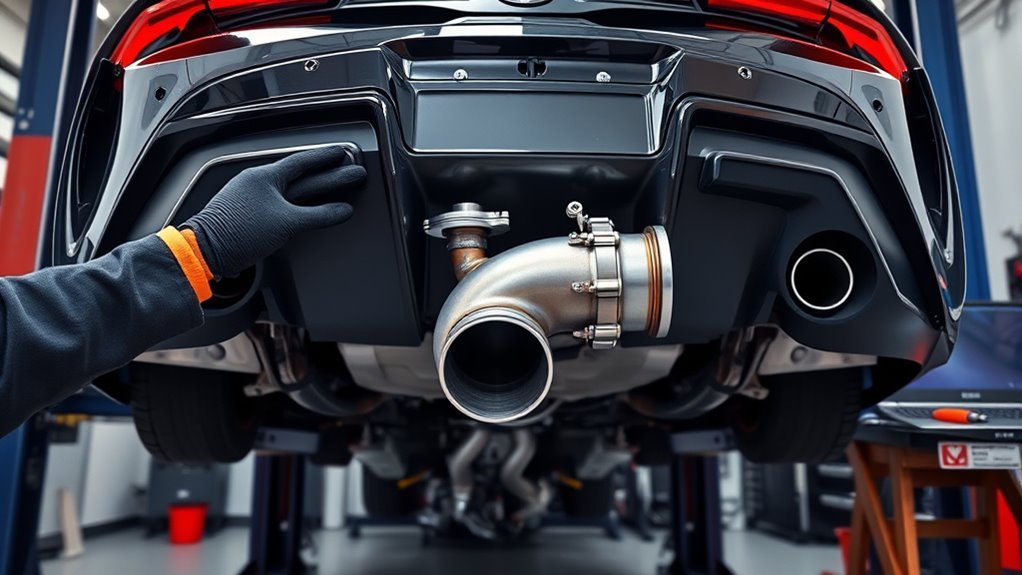
If you install an aftermarket downpipe, work only after the exhaust and turbo area have cooled fully and support the vehicle safely. Turbo exhaust hardware reaches temperatures that can cause severe burns. Use a lift when appropriate. If you use jack stands, place them on solid ground and use the vehicle’s correct lifting and support points.
- Review the downpipe and vehicle instructions first. Confirm the part number, required seals, hardware, torque specifications, sensor procedure, and whether the manufacturer specifies battery disconnection.
- Remove shields and braces as required. Keep fasteners organized so heat shields and underbody hardware return to their correct locations.
- Disconnect O2-sensor wiring carefully. Follow the service procedure and avoid twisting, stretching, contaminating, or overheating the sensor wiring.
- Loosen the factory downpipe connections. Use suitable penetrating oil when necessary and avoid excessive force on studs, clamps, or the turbo outlet.
- Support the adjacent exhaust section. Do not allow the exhaust to hang from the turbo connection or stress nearby components while the downpipe is removed.
- Replace seals or hardware when specified. Follow the downpipe or vehicle manufacturer’s instructions instead of automatically reusing compressed or damaged sealing parts.
- Test-fit before final tightening. Check clearance around heat shields, wiring, hoses, the firewall, transmission, braces, and underbody panels.
- Torque fasteners to the correct specification. Do not guess at clamp, flange, sensor, or mounting torque.
- Handle calibration correctly. If a lawful performance calibration is part of the build, use one matched to the exact hardware and fuel. Do not disable required emissions controls or OBD monitoring to hide catalyst faults.
- Inspect and verify. After startup and the first heat cycles, check for leaks, rattles, unusual odors, loose hardware, warning lights, abnormal fuel trims, or unexpected boost behavior before hard driving.
Do not treat O2 spacers, repeated code clearing, or software monitor suppression as a substitute for diagnosing a catalyst-efficiency or oxygen-sensor fault. A check-engine light after a downpipe installation can point to catalyst performance, a sensor problem, wiring damage, an exhaust leak, or a hardware/calibration mismatch. Diagnose the cause and keep any street-driven vehicle compliant with the rules that apply to it.
What Problems Can Happen After a Downpipe Install?
Most post-install problems involve leakage, sensor behavior, fitment, catalyst monitoring, or calibration. Scan the car before replacing parts blindly, and stop repeated hard driving if you see abnormal boost, severe fuel-trim changes, misfires, overheating, or limp mode.
| Problem | Likely Cause | What to Check |
|---|---|---|
| Check engine light | Catalyst-efficiency code, O2-sensor fault, exhaust leak, wiring issue, or hardware/calibration mismatch | Stored and pending codes, sensor wiring, exhaust sealing, catalyst documentation, readiness monitors, and calibration |
| Ticking or hissing sound | Exhaust leak at a connection or seal | Gaskets or sealing rings, V-band alignment, flange torque, clamps, and soot marks |
| Rattle under load | Pipe contacting a heat shield, brace, or underbody component | Clearance around shields, tunnel, brackets, wiring, and underbody panels |
| Strong exhaust or fuel-like smell | Missing/ineffective catalyst or an exhaust leak | Catalyst configuration, flange sealing, cabin intrusion, and hatch/trunk sealing |
| Unexpected boost or limp mode | Calibration, boost-control, sensor, or hardware problem | Boost target, wastegate control, diagnostic codes, tuner logs, and pressure/vacuum connections |
Inspect the installation again after the first few drives. Heat cycles can reveal clearance problems, leaks, or hardware that was not seated correctly. Retorque a connection only when the manufacturer specifies that procedure and torque value.
[Products Worth Considering]
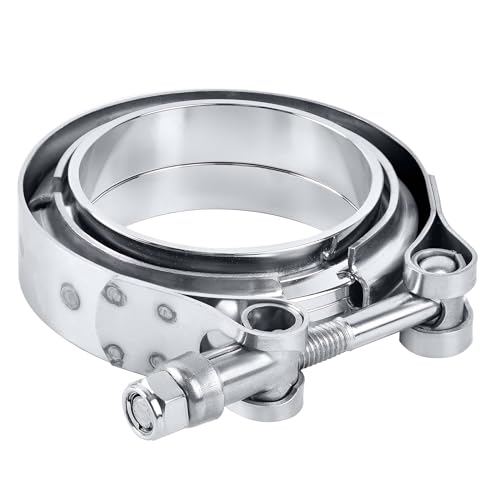
[Size] Joins male/female flange 2.0" ID to 2.0" OD pipe. T-Bolt thread size: M8*1.25.
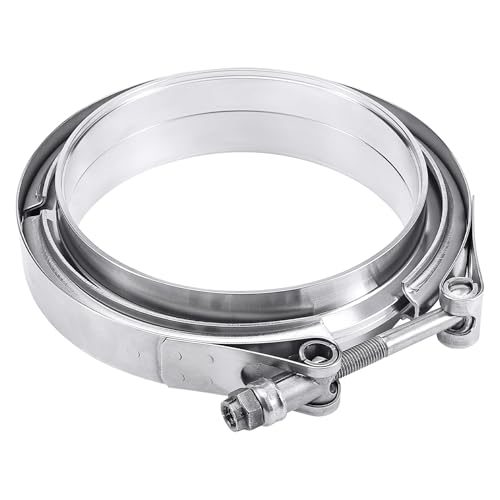
[Size] Joins 5.0" ID male/female flange to 5.0" OD pipe. T-Bolt thread size: M8*1.25.
Which Downpipe Setup Makes Sense for Your Supra?
The right answer depends on how the car is registered, where it is driven, what inspection rules apply, and what problem you are trying to solve. A street-driven Supra does not need the most aggressive pipe simply because it flows more. Fitment, catalyst legality, diagnostics, odor, sound, heat, and calibration support are part of the decision.
For an inspection-sensitive or daily-driven street car, the factory downpipe is the lowest-risk baseline. If you want an aftermarket catted pipe, verify that the exact part is approved for your vehicle and location before buying it. A catalyst and a “no CEL” claim can improve livability, but neither one automatically establishes legal compliance.
If your goal is more performance, judge the downpipe as one part of the complete airflow and calibration package. Establish a baseline, identify the restriction you are trying to remove, and compare before-and-after data under matched conditions. Chasing an advertised wheel-horsepower number without controlling the test conditions tells you little about what your Supra will gain.
Do not choose a catless pipe on the assumption that “track use” alone resolves emissions law. Catalyst removal from a certified vehicle can create federal and local compliance issues even when the product is marketed for competition or off-road use. Confirm the applicable law and vehicle status before making an emissions-related modification.
Simple Decision Framework
- Street + inspection sensitive: Keep the factory downpipe or use only a documented compliant replacement for the exact vehicle.
- Sound is the main goal: Consider whether a rear exhaust change can achieve the sound you want without altering the primary emissions hardware.
- Power is the main goal: Use same-car baseline data, choose hardware for the actual airflow requirement, and match any lawful calibration to the fuel and setup.
- Older turbo Supra: Verify generation-specific turbo, flange, sensor, and exhaust fitment rather than applying Mk5 B58 advice directly.
Warranty wording also needs to be precise. For the federal emissions-performance warranty, 40 CFR § 85.2105 states that a valid claim cannot be denied solely because a properly installed certified aftermarket part was used. The same regulation also explains circumstances in which an uncertified aftermarket part can affect an emissions-performance warranty claim when a causal connection is demonstrated. This is not a blanket statement about every type of new-vehicle warranty claim.
Frequently Asked Questions
What is the purpose of a downpipe on a Supra?
The downpipe carries exhaust gas from the turbocharger into the rest of the exhaust system. Changing its restriction, catalyst design, or geometry can affect post-turbine pressure, sound, turbo response, emissions monitoring, and the amount of airflow headroom available to a modified setup.
How much horsepower will a downpipe add to a Supra?
There is no universal horsepower number. Results depend on the Supra generation, turbo, catalyst, exhaust, fuel, calibration, dyno, correction method, weather, and supporting modifications. The most useful measurement is a controlled before-and-after test on the same car under closely matched conditions.
Is a catted or catless downpipe better for a street Supra?
For a street car, the lowest-risk option is the factory downpipe or an aftermarket replacement whose emissions approval covers the exact vehicle and jurisdiction. A catted pipe can be easier to live with than a catless one, but a high-flow catalyst is not automatically legal merely because a catalyst is present.
Do I need a tune after installing a Supra downpipe?
Not every catted downpipe requires a tune simply for the engine to run, but the answer depends on the exact hardware and vehicle. If you use a performance calibration, it must match the downpipe, fuel, and other modifications. Do not use tuning to disable required emissions controls or hide OBD catalyst faults.
Will a downpipe make my Supra fail emissions?
It can. Removing a catalyst creates obvious compliance risk, but a catted aftermarket pipe can also fail an inspection if the application lacks required approval, triggers catalyst-efficiency faults, leaves readiness monitors incomplete, or fails a visual check. Verify the exact rules and part approval before installation.
Can a Supra downpipe cause a check-engine light?
Yes. A CEL after installation can come from catalyst-efficiency monitoring, an O2-sensor problem, damaged wiring, an exhaust leak, or a mismatch between the hardware and calibration. Scan and diagnose the code instead of repeatedly clearing it or disabling the monitor.
Does a downpipe make a Supra louder?
It can. A different downpipe may add turbo whistle, deepen the exhaust tone, or increase volume, especially when catalyst restriction is reduced. The final sound depends heavily on the catalyst, resonators, valves, mid-pipe, rear exhaust, and cabin insulation.
Will an aftermarket downpipe void my Supra warranty?
Do not treat warranty coverage as all-or-nothing. The federal rule cited in this guide specifically addresses emissions-performance warranty claims and certified or uncertified aftermarket parts. Other warranty questions depend on the failed component, the modification, causation, the written warranty, and applicable law.
Conclusion
A Supra downpipe changes the exhaust path immediately after the turbocharger. Reducing unnecessary post-turbine restriction can change turbo response, sound, and the airflow available to a modified setup, but there is no single horsepower gain that applies to every Supra. The result depends on the exact turbo, catalyst, fuel, calibration, exhaust, and test conditions.
For a street car, start with fitment and emissions status before chasing flow. The factory downpipe is the lowest-risk baseline, while an aftermarket catted pipe still needs application-specific legal verification. If performance is the goal, use controlled before-and-after data and a calibration that matches the hardware and fuel without defeating required emissions monitoring. Treat the downpipe as one part of a complete turbo, exhaust, emissions, and tuning system.
Sources
- Toyota GR Supra official specs — confirms current GR Supra engine and performance details.
- Toyota 2026 GR Supra brochure — supports factory powertrain and turbocharged inline-six information.
- U.S. EPA: Tampering and Aftermarket Defeat Devices — explains federal emissions-tampering concerns and Clean Air Act enforcement.
- California Air Resources Board: Aftermarket Catalytic Converters — explains California approval requirements for aftermarket catalytic converters.
- eCFR 40 CFR § 85.2105: Aftermarket Parts — provides federal emissions-performance-warranty language related to certified and uncertified aftermarket parts.