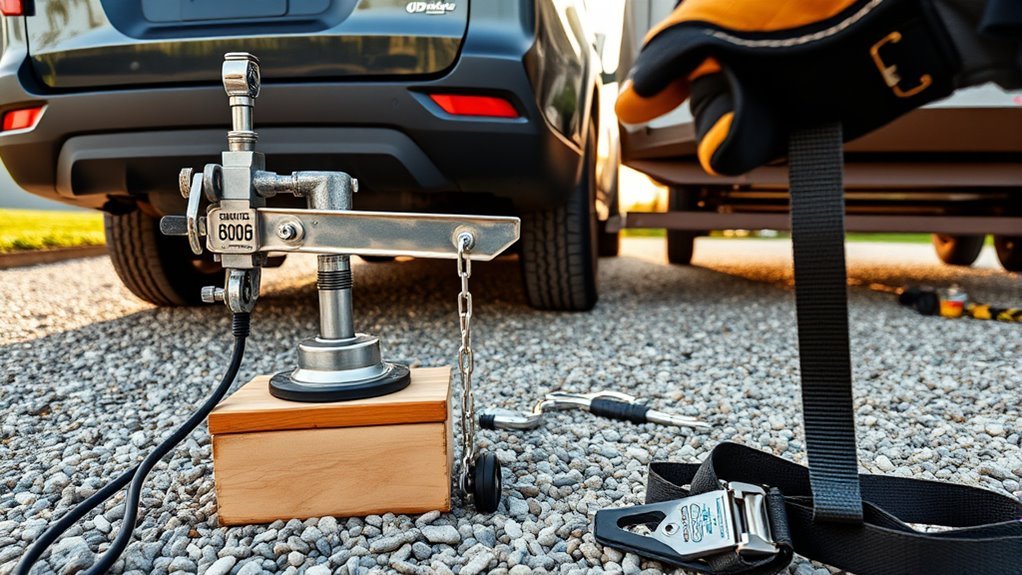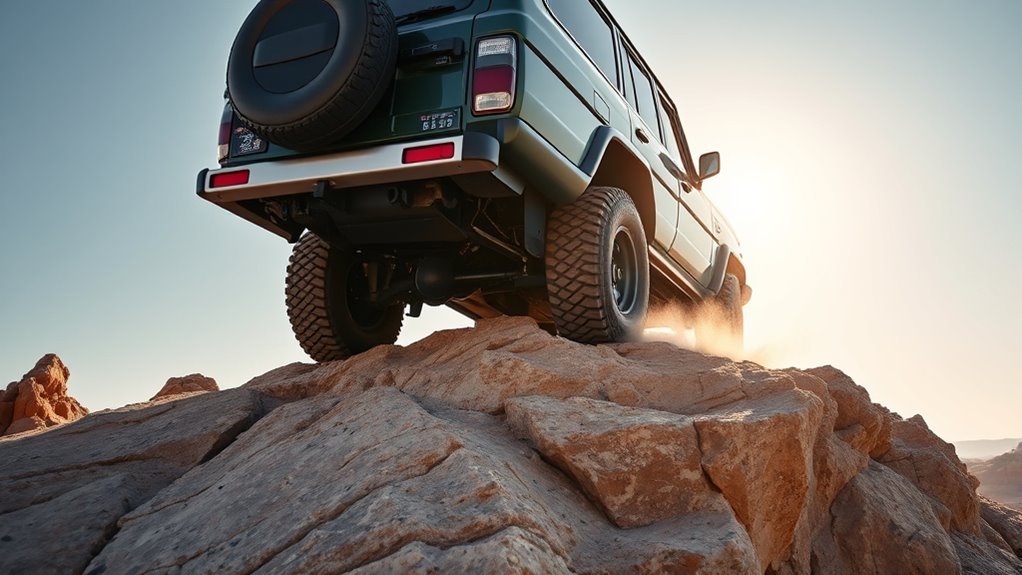
The 2024 Toyota Land Cruiser’s departure angle tells you how steep an obstacle or slope the SUV can drive away from before the rear bumper, hitch, or underbody touches the ground. For the North American 2024 Land Cruiser, the official maximum departure angle is 22 degrees, not 17 degrees. That number matters most on ledges, washouts, steep driveway exits, and rocky descents where the rear overhang can become the first thing to hit.
Quick Answer
The 2024 Toyota Land Cruiser has a maximum 22-degree departure angle, with up to a 31-degree approach angle, 25-degree breakover angle, and 8.7 inches of ground clearance, according to Toyota. The departure angle helps you judge whether the rear bumper will clear steep exits, trail ledges, and abrupt drop-offs.
Key Takeaways
- Toyota lists the 2024 Land Cruiser at up to 31 degrees approach, 25 degrees breakover, and 22 degrees departure.
- Departure angle is the rear-clearance number: it tells you when the rear bumper, hitch, spare, or exhaust may scrape while leaving an obstacle.
- Payload, towing gear, rear accessories, and suspension compression can reduce real-world clearance below the published figure.
- Good trail technique—angling off ledges, keeping loads light, and removing low rear accessories—can protect the rear end without major modifications.
What the Land Cruiser’s Departure Angle Means for You
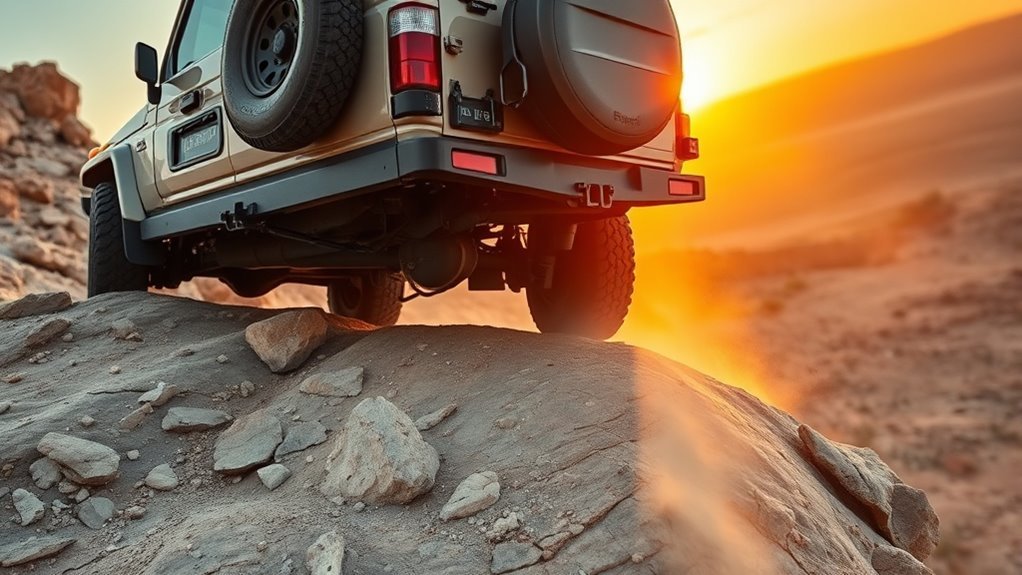
When you tackle steep descents, back out of rutted trails, or drop off a ledge, the Land Cruiser’s departure angle tells you how close the rear of the vehicle can get to the ground before it risks contact. A higher number means the SUV can leave a sharper obstacle without dragging the tail.
For the North American 2024 Land Cruiser, Toyota gives the SUV a maximum 22-degree departure angle. That figure works with the approach and breakover angles to describe three different kinds of clearance:
- Approach angle: how steep an obstacle the front bumper can meet without scraping.
- Breakover angle: how much crest or ridge the center of the vehicle can clear without high-centering.
- Departure angle: how steep an exit the rear bumper can leave without striking the ground.
You will use the departure angle most often when the rear wheels roll off an obstacle and the rear bumper swings down toward the surface. The number is useful, but it is not a magic shield. Real-world clearance changes with load, tire size, suspension movement, bumper shape, hitch hardware, and how you choose your line.
Note: Published off-road angles are measured under controlled conditions. A loaded cargo area, passengers, camping gear, trailer tongue weight, or rear-mounted accessories can make the vehicle sit lower and scrape sooner than the brochure number suggests.
2024 Land Cruiser: Departure, Approach, Breakover, and Clearance
The most important factory geometry numbers for the 2024 Toyota Land Cruiser are straightforward: up to 31 degrees approach, 25 degrees breakover, 22 degrees departure, and 8.7 inches of ground clearance. Toyota also notes that Land Cruiser grades include full-time four-wheel drive, an electronic locking rear differential, a two-speed transfer case, and off-road aids such as CRAWL Control and Multi-Terrain Select on equipped models.
| Spec | 2024 Toyota Land Cruiser | What It Means |
|---|---|---|
| Approach angle | Up to 31° | Front bumper clearance when climbing into an obstacle. |
| Breakover angle | 25° | Midbody clearance over crests, ridges, and humps. |
| Departure angle | 22° | Rear bumper clearance when leaving a slope or ledge. |
| Ground clearance | Up to 8.7 in. | Lowest-body clearance over rocks, ruts, and trail debris. |
Departure Angle Details
The 2024 Land Cruiser’s 22-degree departure angle is the key number for rear-end clearance. It helps you estimate whether the rear bumper will clear the terrain as the vehicle exits a dip, ledge, washout, or steep ramp. If the angle of the terrain behind the rear tires is steeper than the vehicle can clear, the rear bumper, tow hitch, exhaust, mud flaps, or lower trim can become the contact point.
This matters because rear strikes are not just cosmetic. A hard hit can bend a bracket, damage a bumper cover, catch a hitch receiver, crack plastic trim, or make the vehicle drag rather than roll cleanly off an obstacle.
Approach Angle Specs
The Land Cruiser’s approach angle is listed at up to 31 degrees. This is the front-end version of the same idea: it tells you how steep an obstacle the SUV can meet before the front bumper or lower front hardware touches. It matters when climbing rock shelves, entering deep washouts, or nosing into a steep trail climb.
The approach angle is stronger than the departure angle on the 2024 Land Cruiser, so the rear end is usually the side you need to watch more carefully when leaving an obstacle.
Breakover Angle Numbers
The 25-degree breakover angle describes how well the Land Cruiser can pass over a crest without the middle of the vehicle contacting the ground. This is where wheelbase and belly clearance matter. A vehicle can have a strong approach angle and a decent departure angle but still high-center if the ridge is sharp enough and the center of the underbody does not clear.
On trail, breakover angle matters when you cross ridgetops, mounds, erosion humps, and uneven rock shelves. If the midpoint drags, the tires can lose useful weight and the vehicle can become stuck even if the front and rear bumpers are clear.
Toyota’s official geometry for the 2024 Land Cruiser is up to 31° approach, 25° breakover, 22° departure, and 8.7 inches of ground clearance.
Why TNGA-F and the 2024 Design Set That Angle
The 2024 Land Cruiser rides on Toyota’s TNGA-F body-on-frame truck platform, the same broad architecture family used by several Toyota and Lexus trucks and SUVs. That gives the Land Cruiser a strong frame, serious four-wheel-drive hardware, and truck-like durability, but it also creates packaging choices that affect clearance.
TNGA-F Packaging Constraints
Departure angle is shaped by a simple triangle: the rear tire contact patch, the lowest point at the back of the vehicle, and the ground. Shorter rear overhangs and higher rear bumper placement improve the number. Longer overhangs, low trim, hitch hardware, and rear accessories reduce it.
The 2024 Land Cruiser is designed as an all-around SUV, not a short-wheelbase rock buggy. It has to balance off-road clearance with cargo room, crash structure, lighting, bumper design, towing needs, and everyday usability. That is why its 22-degree departure angle is respectable for an overland-style SUV, even though it trails more specialized off-road vehicles.
Hybrid Powertrain Placement
Every North American 2024 Land Cruiser uses Toyota’s i-FORCE MAX hybrid powertrain, which pairs a turbocharged 2.4-liter engine with an electric motor and an eight-speed automatic transmission. Toyota lists output at 326 horsepower and 465 lb-ft of torque, giving the SUV strong low-speed torque for trail work and confident road driving.
The hybrid hardware is packaged within a body-on-frame SUV that still keeps the important off-road numbers in useful territory. The bigger takeaway for drivers is practical: smooth torque, low-range gearing, rear locking differential, and careful throttle control usually matter more on moderate trails than chasing one single geometry number.
How Payload, Running Boards, Hitch, and Spare Affect Departure Angle
Factory departure angle is measured before you load the SUV for a trip. Once you add people, cargo, a full cooler, recovery boards, camping gear, a trailer, or rear-mounted accessories, the real-world angle can shrink.
- Payload compresses the rear suspension. Added weight lowers the back of the SUV, bringing the bumper and hitch closer to the ground.
- A hitch receiver can become the lowest rear contact point. Even a small drawbar or recovery insert can scrape before the bumper does.
- Rear-mounted accessories extend the overhang. Spare carriers, cargo baskets, bike racks, and storage boxes move the contact point farther behind the axle.
- Running boards and rock rails change side clearance. They may not directly define departure angle, but they can become contact points when the vehicle exits an obstacle at an angle.
- Tire size and pressure affect effective clearance. Larger tires can improve clearance, while underinflated or heavily loaded tires can reduce it slightly.
Warning: Do not remove safety-critical bumper structure, crash components, sensors, lights, or emissions hardware just to gain clearance. Poorly chosen modifications can reduce safety, affect legality, interfere with driver-assistance systems, or void warranty coverage.
[Products Worth Considering]

Designed for Toyota RAV4 models from 2013 through 2018, this three-piece windshield wiper set delivers clear, quiet performance for dependable visibility in changing weather. The precision-fit blades provide streak-free wiping, simple installation, and durable all-season use with reduced wind noise and consistent pressure across the windshield.

This Toyota hitch cover helps protect your trailer hitch receiver from dirt and debris while adding a clean factory-style look to your vehicle's rear end. Designed for easy use, it offers a simple way to finish off your towing setup when the hitch is not in use. Its lightweight design makes it convenient to handle and install.

This aftermarket front bumper tow hook eye cover cap set is designed to fit Toyota RAV4 AX40 models from 2016 to 2018, providing a direct replacement for the original left and right covers. Made from durable ABS plastic, these caps offer a precise fit, weather resistance, and reliable protection while restoring the clean factory look of the bumper.
When a 22° Departure Angle Matters on Trail: Real Scenarios
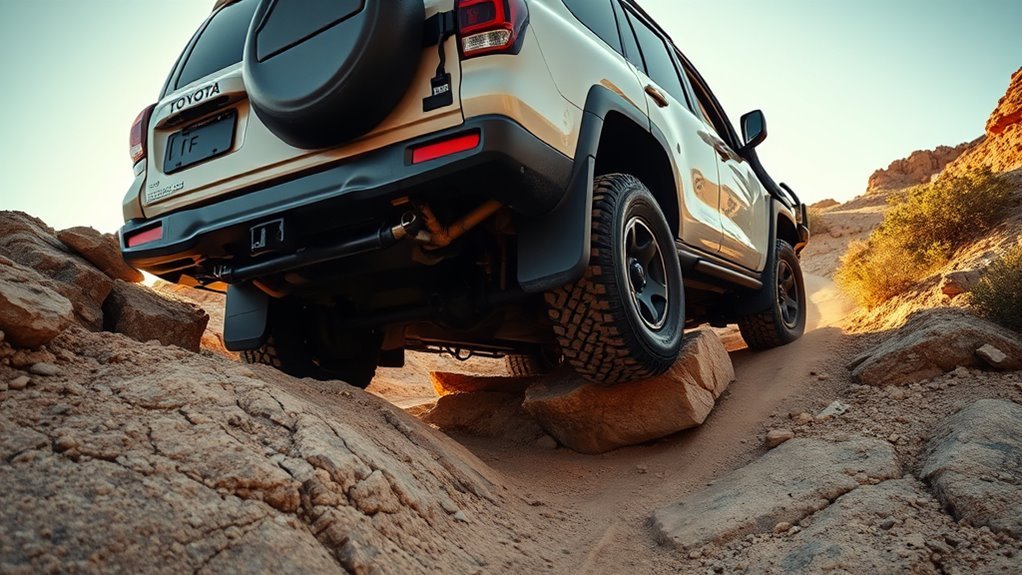
A 22-degree departure angle matters whenever the rear of the Land Cruiser swings close to the ground. You may notice it in everyday driving, but it becomes far more important off-road.
Steep Driveway and Ramp Exits
Sharp driveway aprons, parking garage ramps, ferry ramps, and trailer loading ramps can all test departure angle. If you hear a scrape when leaving a steep driveway, the problem is usually not lack of power or traction—it is rear geometry.
Rock Ledges and Step-Downs
When the rear tires roll off a rock ledge, the tail drops toward the ledge behind you. This is one of the most common moments for bumper scrapes. A slow, angled exit can reduce the chance of contact because one rear tire drops before the other, softening the break in angle.
Washouts, Ditches, and Erosion Cuts
Crossing a ditch too straight can make the front climb out while the rear bumper drags behind. This is where approach, breakover, and departure angles all work together. The safest line is often diagonal, controlled, and slow enough to stop before the rear digs in.
Loaded Overlanding Trips
The Land Cruiser is well suited to travel, but heavy overland setups can reduce departure clearance quickly. Rear cargo drawers, fridge slides, water tanks, roof loads, and hitch cargo carriers all add weight. The farther weight sits behind the rear axle, the more it can affect rear ride height and trail clearance.
Simple Mods and Driving Techniques to Gain Rear Clearance
You can improve rear clearance in two ways: change the vehicle or change the way you drive. For most owners, driving technique should come first because it is free, reversible, and does not affect reliability.
At a Glance
| Time Required | 5 minutes for driving technique; 1–4 hours for basic accessory changes |
| Difficulty | Easy to moderate |
| Tools Needed | Spotter, tire gauge, basic hand tools for removable hitch or accessory changes |
| Cost | Free for technique; varies widely for tires, suspension, sliders, or bumpers |
[Products Worth Considering]

This frameless convex blind spot mirror helps expand your field of view for safer lane changes, passing, and merging. The HD glass design offers a clear, wide-angle rear view, while the swivel mount supports flexible positioning for cars, SUVs, trucks, vans, and RVs. Easy to install and built for all-weather use, it is a practical upgrade for everyday driving confidence.

These custom-fit mud flaps are designed for Toyota RAV4 and RAV4 Hybrid models across multiple years to help protect your vehicle from snow, salt, sand, rocks, and road debris. Made from durable black ABS plastic, they offer strong resistance to wear, cold, and aging while helping keep your lower body panels cleaner. The set includes front and rear splash guards for a complete exterior protection upgrade.

This replacement gas cap is designed for a wide range of Toyota and Lexus models, offering a direct-fit solution for restoring a proper seal at the fuel tank. It helps address check engine light issues related to the fuel cap while providing easy installation and dependable performance. Built from durable materials and rigorously tested before shipping, it is a practical replacement for worn or damaged fuel caps.
Driving Techniques That Help
- Exit obstacles at an angle. A diagonal line lets one rear tire drop at a time and can reduce bumper contact.
- Use a spotter. A person outside the vehicle can watch the rear bumper, hitch, exhaust, and lower trim better than the driver can.
- Go slowly over ledges. Momentum can turn a light scrape into a hard impact.
- Avoid dragging the hitch. Remove the drawbar, ball mount, or low accessory when it is not needed.
- Manage cargo weight. Keep heavy items low and forward instead of hanging them behind the rear axle.
Pro Tip: Before dropping off a ledge, stop with the rear tires near the edge and have a spotter check the bumper-to-ground line. That quick pause can prevent the most common departure-angle scrape.
Modifications That Can Help
- Remove low hitch accessories when you are not towing.
- Choose trail-friendly rear recovery gear that does not hang lower than necessary.
- Install quality rock rails if you regularly drive angled terrain where the sides may contact.
- Consider slightly larger tires only if they fit properly and do not create rubbing, gearing, speedometer, or warranty issues.
- Use suspension upgrades carefully. A lift can improve clearance, but poor suspension choices can hurt ride quality, alignment, handling, and reliability.
- Consider a high-clearance rear bumper only if you need it for frequent technical trails and the design preserves sensors, lighting, and safety requirements.
How the Land Cruiser’s Angle Stacks Up vs. Rivals
The 2024 Land Cruiser’s 22-degree departure angle is solid for a comfortable, body-on-frame overland SUV, but it is not class-leading among dedicated off-road vehicles. Shorter, more trail-focused SUVs often have better rear clearance because they use shorter overhangs, higher bumpers, and more aggressive tire packages.
| Vehicle | Departure Angle | Context |
|---|---|---|
| 2024 Toyota Land Cruiser | 22° | Balanced overland SUV with hybrid powertrain and strong daily usability. |
| 2024 Lexus GX 550 Overtrail | Varies by trim and equipment | Related luxury SUV with available 33-inch all-terrain tires on Overtrail models. |
| 2024 Jeep Wrangler with Xtreme 35 Package | 40.4° | More specialized short-overhang off-roader with factory 35-inch tires. |
| 2024 Ford Bronco with available 35-inch tires | Up to about 37.2° | Trail-focused SUV with aggressive tire and bumper packages. |
The comparison does not make the Land Cruiser weak. It simply defines its mission. A Wrangler or Bronco is better shaped for tight technical rock work. The Land Cruiser is built for long-distance durability, mixed terrain, comfort, cargo use, and confident trail travel. If you want maximum departure clearance, choose your accessories carefully and avoid turning the rear of the SUV into a low-hanging storage rack.
[Products Worth Considering]
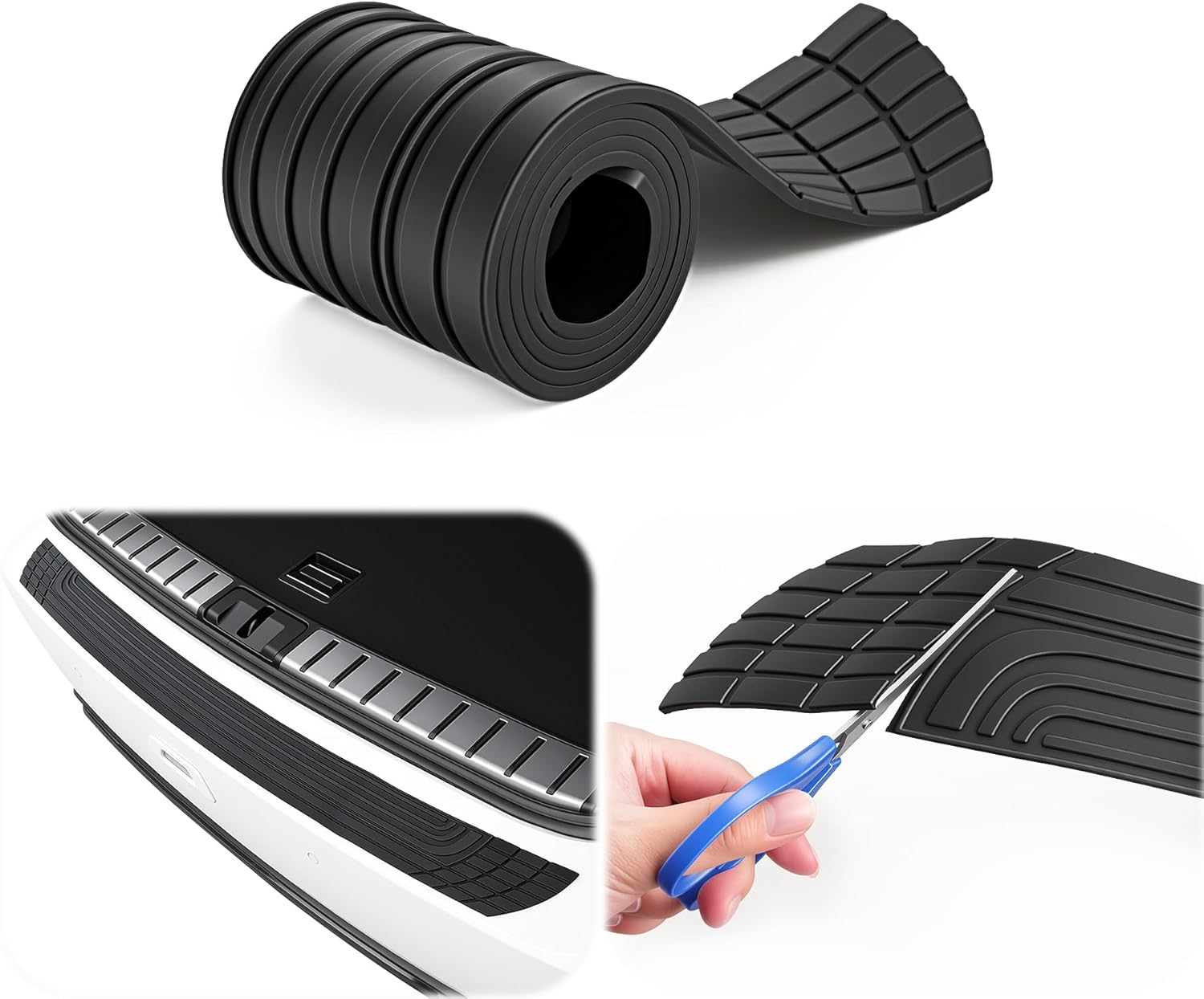
Protect your vehicle’s rear bumper from scratches, scuffs, and everyday loading damage with this universal bumper protector. Its flexible rubber design helps absorb impact and features an anti-slip groove pattern for added security when placing cargo in the trunk. Easy to install without drilling or welding, it is a practical exterior accessory for most cars and SUVs.

This front license plate bracket is a direct replacement for compatible Toyota RAV4 models, offering an easy way to restore a damaged or missing front plate holder. Built from durable ABS material with the same dimensions as the original, it installs without modification and helps maintain a clean factory look.

This AUTOBOO windshield wiper blade set is designed to fit Toyota RAV4 models from 2013 to 2018 with an OE-style replacement fit. It includes front and rear blades for clear visibility, quiet operation, and dependable all-weather performance, while the easy J/H arm installation helps make replacement quick and simple.
Frequently Asked Questions
What is the departure angle of a 2024 Toyota Land Cruiser?
The North American 2024 Toyota Land Cruiser has a maximum departure angle of 22 degrees. Toyota also lists up to a 31-degree approach angle, a 25-degree breakover angle, and 8.7 inches of ground clearance.
What is a good departure angle for off-roading?
For light trails and overlanding, a departure angle in the low 20-degree range can be workable with careful driving. For more technical rock crawling, many drivers prefer 30 degrees or more because the rear bumper is less likely to drag on ledges and steep exits.
What is a departure angle?
A departure angle is the steepest angle a vehicle can drive away from without the rear end touching the ground. It is measured from the rear tire contact patch to the lowest rear point of the vehicle.
Does a tow hitch reduce departure angle?
A hitch receiver itself may not always change the published factory angle, but a low ball mount, recovery insert, cargo carrier, or bike rack can become the first part to scrape. Remove low hitch accessories before trail driving when they are not needed.
Can larger tires improve departure angle?
Larger tires can raise the vehicle slightly and improve effective clearance, but only when they fit correctly. Tires that rub, overload the drivetrain, affect speedometer accuracy, or interfere with suspension travel can create more problems than they solve.
Conclusion
The 2024 Toyota Land Cruiser’s departure angle is 22 degrees, not 17 degrees for the North American model. That gives it useful rear clearance for overlanding, forest roads, ruts, ledges, and steep everyday exits, but it still requires smart line choice on technical terrain. Treat the number as a planning tool, not a guarantee. Keep rear accessories high and minimal, watch payload, remove low hitch hardware, use a spotter, and angle off ledges when needed. Respect the geometry and the Land Cruiser will stay much freer from bumper scrapes.
Sources
- Toyota Pressroom: 2024 Toyota Land Cruiser Returns to its Origin — official approach, breakover, departure, ground-clearance, platform, and powertrain information.
- Toyota Pressroom: The Evolution of a Legend — Land Cruiser off-road features, TNGA-F background, and trail capability details.
- Toyota Owners: 2024 Land Cruiser Manuals and Warranties — owner manual access for safe operation, warnings, and vehicle systems.
- Jeep Wrangler Capability — official Wrangler Xtreme 35 off-road clearance figures used for comparison.
- Lexus 2024 GX Brochure — GX Overtrail tire and off-road equipment context for platform-related comparison.