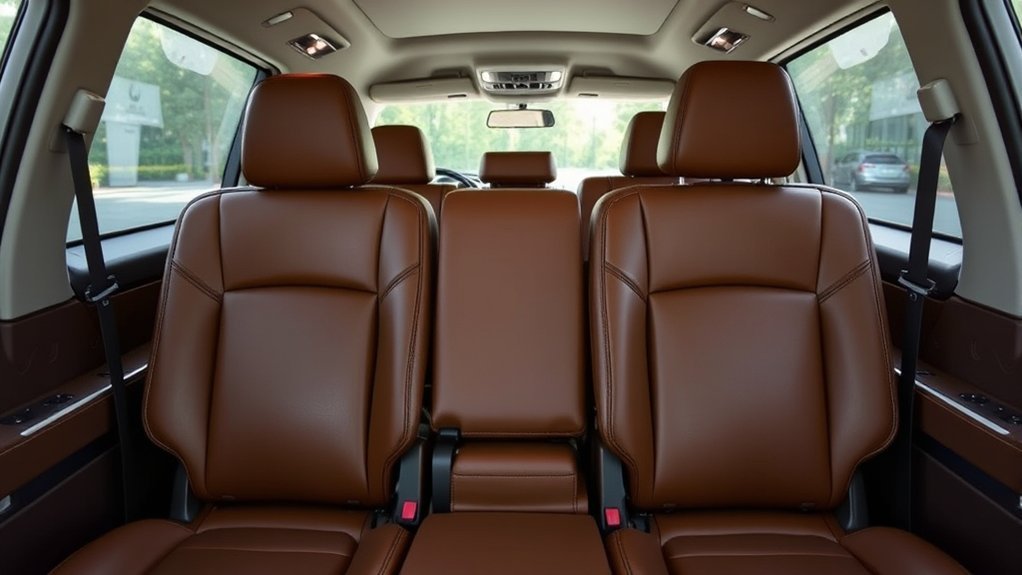
Hill-Start Assist Control (HAC) on an equipped Toyota Land Cruiser helps reduce rollback during an uphill start by briefly maintaining brake pressure as you move from the brake to the accelerator. The exact operation is model-specific: early U.S.-market J200/200-series manuals explicitly describe up to about five seconds of assist, but that timing should not be treated as a rule for every Land Cruiser. Toyota confirms HAC is standard on the 2026 U.S. 250-series Land Cruiser, so follow the procedure for your exact model year.
This guide covers older U.S.-market J200/200-series Land Cruisers and the current U.S. 250-series at a practical level. For the current model, use Toyota’s 2026 Land Cruiser owner’s manual for the exact operating conditions. For other years and markets, confirm the feature and procedure in Toyota’s official owner’s manual lookup.
Last updated: August 31, 2026 — added current 250-series scope, generation-specific HAC guidance, and Toyota source references.
What’s in This Article
- Land Cruiser Hill-Start Assist Control: Quick Answer
- 200 Series vs. Current 250 Series
- How Land Cruiser HAC Works
- When Land Cruiser HAC Activates
- What You May Feel and Hear
- How to Use HAC Safely
- HAC Limits and Failure Signs
- HAC vs. Crawl Control and Downhill Assist
- Troubleshooting and Service
- Sources and Model-Year References
- Frequently Asked Questions
- Conclusion
Land Cruiser Hill-Start Assist Control: Quick Answer

Quick Answer
On an equipped Land Cruiser, HAC briefly maintains brake pressure to help reduce rollback during a hill start. Do not assume one hold time applies to every generation. Early U.S.-market J200 manuals explicitly state a maximum of about five seconds, while current 250-series owners should follow the procedure in their model-year manual. Toyota confirms HAC is standard on the 2026 U.S. Land Cruiser.
Key Takeaways
- HAC is an automatic brake-assist function when the model-specific operating conditions are met; it is not a hill-climbing or parking system.
- Early U.S.-market J200 manuals explicitly describe operation in Drive or S with the brake pedal released and a maximum assist period of about five seconds.
- Do not apply the older J200 timing to every Land Cruiser. Toyota lists HAC as standard on the 2026 U.S. 250-series, whose exact procedure should be checked in its owner’s manual.
- On the cited J200 implementation, the slip indicator may flash and the stop lamps can illuminate while HAC is operating.
- HAC cannot create tire grip and may be less effective on steep or icy roads. Brake-system conditions can also make the assist temporarily unavailable.
| Item | What to Expect |
|---|---|
| Activation | Automatic on equipped models when the model-specific hill-start conditions are met. |
| Early U.S. J200 conditions | Transmission in Drive or S; brake pedal released. |
| Early U.S. J200 assist time | Early manuals explicitly describe up to about five seconds of operation when HAC is engaged. |
| 2026 U.S. Land Cruiser | HAC is standard on the 250-series; use the 2026 owner’s manual for the exact current procedure rather than the older J200 timing. |
| J200 operating signs | A flashing slip indicator, illuminated stop lamps, light vibration, or brake-system motor noise may occur. |
| Main limits | Steep grades, ice, poor traction, delayed throttle input, or an unavailable brake-control system can reduce or end the assist. |
HAC is a short brake assist, not a hill-climbing mode. It gives you time to transition from the brake to the accelerator, but it cannot create traction or decide whether a slope is safe.
The key detail is model scope. Toyota has used different HAC procedures and hold times across generations and markets. Use the generation-specific guidance below, then confirm it against the manual for your exact Land Cruiser.
[Products Worth Considering]

These custom floor mats are designed to fit the Toyota Land Cruiser GX550 with a 5-seat layout for a precise, secure install. Made from durable TPE, they help shield your interior from spills, mud, snow, dirt, sand, pet hair, and everyday debris while making cleanup quick and easy.

Custom-fit floor mats and cargo liner designed to provide edge-to-edge protection for the Toyota Land Cruiser Prado. Made from durable TPE material, they offer all-weather defense against rain, slush, snow, mud, and everyday dirt while remaining easy to install, clean, and maintain. The odorless, non-slip design helps keep your interior safer, cleaner, and more comfortable in every season.

This Yuirote universal car motor diagnostic tool helps drivers quickly detect engine fault codes and identify system issues for routine inspections and maintenance. It also supports electronic parking brake reset and emergency release functions, making it useful for handling EPB-related problems without a repair shop visit. Its compact, ergonomic design and broad vehicle compatibility make it a practical choice for car owners and DIY repair enthusiasts.
Does Land Cruiser HAC Work the Same on the 200 Series and Current 250 Series?
No. You should not treat one HAC timing or activation procedure as universal across every Land Cruiser. Early U.S.-market J200 manuals explicitly describe a maximum assist period of about five seconds, while Toyota’s current U.S. Land Cruiser is the 250-series and has its own model-year operating instructions.
If you own an older model, the Land Cruiser 200 Series guide can help with generation context. If you own a 2026 model, use Toyota’s current owner’s manual rather than timing your hill start around the older five-second figure.
| Land Cruiser Scope | Verified HAC Guidance | What You Should Do |
|---|---|---|
| Early U.S.-market J200 manuals | Drive or S, brake pedal released, with early manuals explicitly describing about five seconds maximum when engaged. | Use that procedure only when it matches your exact manual. |
| Later U.S.-market J200 | Toyota manuals continue to describe model-specific HAC operating conditions and limitations. | Check your model-year manual rather than assuming every earlier timing statement was carried forward unchanged. |
| 2026 U.S. 250-series | Toyota lists Hill Start Assist Control as standard equipment. | Follow the 2026 owner’s manual for the exact current operating conditions. |
How Land Cruiser HAC Works
HAC works through the Land Cruiser’s brake and stability-control hardware. When the system recognizes a valid hill-start condition, it can maintain braking force briefly after you release the pedal. The braking force then releases according to the operating logic for that model.
Toyota does not publish one universal list of HAC sensor inputs or operating rules for every Land Cruiser. Avoid assuming that every generation uses the same slope threshold, warning behavior, activation conditions, or release timing. The owner’s manual and repair information for your model year are the correct references.
J200-specific note: The Drive/S requirement, flashing slip indicator, illuminated stop lamps, and early-manual five-second timing discussed in this guide come from U.S.-market J200 references. Do not automatically apply all of those details to the current 250-series.
[Products Worth Considering]

ANCEL BS200 is a permanently connected super capacitor jump starter that delivers fast starting assistance for vehicles with heavy cranking demands, including trucks, classics, and start/stop systems. Once installed, it stays ready without charging or maintenance and automatically helps every engine start while supporting battery health. A smart app adds real-time monitoring, alerts, and jump history so you can stay ahead of battery issues in any climate.

This GM TPMS relearn tool helps reset tire sensors, clear warning lights, and match tire positions after rotation quickly at home. Designed for Chevrolet, GMC, Cadillac, and Buick vehicles, it offers one-button operation, fast activation, and broad compatibility with many GM models. It is best suited for OE/OEM sensors and includes paper instructions plus video guidance for easier DIY use.

This TPMS sensor training tool is designed for Ford, Lincoln, and Mercury vehicles with compatible tire pressure sensors, helping activate sensors after tire rotations or sensor replacement. It supports relearning and warning light reset workflows with a simple one-button operation, making tire pressure maintenance easier and faster. Built for reliable use and broad vehicle compatibility, it is a practical accessory for TPMS service and sensor activation.
When Does Land Cruiser HAC Activate?
On the cited U.S.-market J200 models, HAC operates automatically when the transmission is in Drive or S, the brake pedal has been released, and the system recognizes the required hill-start conditions. Those J200 instructions do not require a separate HAC switch.
While HAC is operating on the cited J200 implementation, the slip indicator may flash and the stop lamps can turn on. These signs indicate brake-control activity; they do not mean the vehicle has unlimited rollback protection.
Conditions That Support Activation
- The Land Cruiser is stopped where its HAC operating conditions can be met.
- The transmission is in a driving range listed by the exact owner’s manual.
- The driver follows the brake-release procedure specified for that model.
- No brake, ABS, stability-control, or related warning condition is preventing normal operation.
A mild slope may not produce an obvious hold. If you are unsure whether your Land Cruiser has HAC or how its version activates, check the driving-assist section of the exact owner’s manual instead of testing the system on a steep road.
How the Brake Hold Ends
The brake hold is temporary. Early U.S.-market J200 manuals explicitly describe operation for no more than about five seconds when HAC is engaged. Treat that number as J200-specific guidance, not as a universal Land Cruiser countdown.
Apply smooth throttle promptly. If the Land Cruiser does not begin moving forward as expected, press the brake again instead of waiting for the assist to release.
What Will You Feel or Hear When HAC Works?
You may feel the Land Cruiser remain nearly still for a brief moment after you release the brake. The transition can give you time to apply throttle, but some movement can still occur if the grade is severe, traction is poor, or the assist ends.
On the cited J200 brake-control system, light vibration, a motor sound, or slight brake-pedal movement can occur during operation. A flashing slip indicator and illuminated stop lamps may also accompany HAC operation.
Harsh grinding, repeated warning lights, a sharp rollback, or braking that feels abnormal is not something to ignore. Reapply the brake, move to a safe location, and follow the warning instructions in your owner’s manual.
How to Use HAC Safely on an Automatic Land Cruiser

The following workflow is appropriate only when it matches the HAC instructions for your automatic-transmission Land Cruiser. Model-specific transmission ranges and activation conditions can differ, so do not substitute older J200 instructions for the current 250-series manual.
Step-by-Step Hill Start
- Stop completely on the incline and keep firm pressure on the brake pedal.
- Select the forward driving range specified by your owner’s manual; on the cited J200 models, Toyota lists Drive or S.
- Check the path ahead and leave enough space behind the vehicle.
- Release the brake according to the procedure for your model.
- Apply steady throttle before the brief assist period ends.
- If the vehicle does not move forward as expected, press the brake again and reset the start.
Do not shift into Park as a hill-start technique. Park is for securing a stopped vehicle, not for controlling a launch on a grade.
Pro tip: Learn how your Land Cruiser responds on a mild, open slope with no traffic or obstacles. Do not use a steep hill as a test area.
HAC Limits, Edge Cases, and Failure Signs

HAC reduces rollback; it does not guarantee that the Land Cruiser will remain motionless. Toyota’s J200 guidance warns that the system may not operate effectively on steep inclines or ice-covered roads.
The system also depends on the related brake-control hardware being available. On the cited J200 implementation, HAC can become temporarily unavailable if the brake system overheats, with a buzzer or related indicator alerting the driver. Stop in a safe place and follow the owner’s manual if that occurs.
Watch for these warning signs:
- The vehicle rolls back sharply as soon as you release the brake.
- Brake, ABS, slip, or stability-control warning lights stay on.
- The brake pedal feels abnormal during ordinary stops, not only during a hill start.
- A warning buzzer or message persists after the vehicle has been stopped safely.
- HAC behavior changes suddenly on the same grade and surface.
Warning: Do not rely on HAC as your only rollback control when towing, carrying a heavy load, or starting on ice, loose rock, or a very steep grade.
A trailer or heavy cargo changes the load the vehicle must control during a hill start. Follow the towing and load instructions for your exact Land Cruiser, leave adequate space, and do not use HAC as a substitute for normal brake control.
How HAC Compares With Crawl Control and Downhill Assist
HAC solves one narrow problem: reducing rollback during a hill start. Crawl Control and downhill assist serve different low-speed driving tasks and are available only on certain Land Cruiser configurations.
- Hill-Start Assist Control: briefly maintains braking force during a hill start when its model-specific conditions are met.
- Crawl Control: manages low-speed throttle and braking over difficult terrain on equipped models.
- Downhill assist: helps control vehicle speed during a descent on equipped models.
These systems do not replace one another. Use the feature named in your owner’s manual for the specific task, surface, drive range, and speed.
[Products Worth Considering]

This proportional trailer brake controller provides smooth, responsive braking by automatically matching your tow vehicle’s stopping force for safer trailer control. The bright LED digital display makes it easy to monitor voltage output in real time, while adjustable braking and sync settings help tailor performance to different trailers and road conditions. Designed for quick installation and broad compatibility, it supports 1 to 4 axle trailers for dependable towing confidence.
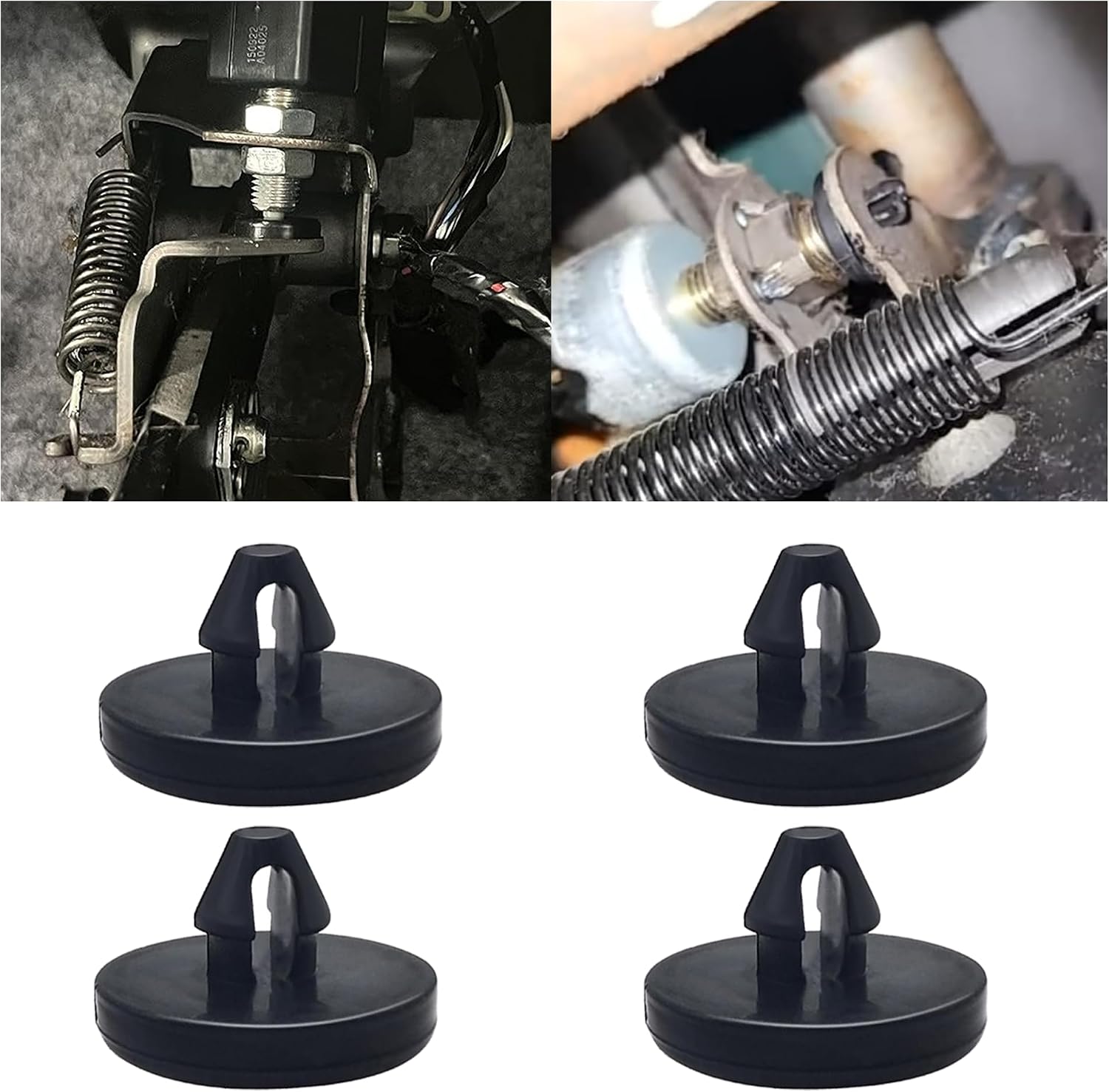
This brake pedal stop pad set is designed as an OEM replacement for compatible Toyota, Lexus, and Scion models, helping restore proper brake light switch function when the brake light stays on. Made from durable nylon, these compact stoppers are built for reliable long-term use and quick, tool-free installation. The set includes multiple pieces for convenient replacement and sharing.

This plug-and-play OBD2 scanner helps drivers quickly read and clear engine error codes while providing live data, freeze frame information, I/M readiness, and MIL status for more confident troubleshooting. It adds a built-in voltage test and clear status indicators to support electrical checks and faster diagnostics, making it a practical choice for home users, car enthusiasts, and repair professionals. Compatible with most OBDII vehicles since 1996 and designed with an easy-to-use interface, it offers broad coverage and simple operation in one compact tool.
Troubleshooting HAC and When to Seek Service
Check the operating conditions before assuming HAC has failed. Confirm that your exact Land Cruiser has the feature, that you are following the model-year transmission and brake conditions, and that no brake or stability-control warning is active.
| Symptom | Likely Explanation | Safe Next Step |
|---|---|---|
| No obvious hold | The operating conditions may not trigger HAC, or the model may use different logic than you expect. | Check the exact owner’s manual and retry only on a mild, open slope. |
| Vehicle begins to roll after a pause | The temporary assist may have ended. | Reapply the brake and restart with prompt, smooth throttle. |
| Buzzer after hard brake or off-road use | On applicable J200 systems, the brake-control hardware may be hot and HAC can become temporarily unavailable. | Stop safely and follow the manual’s warning and brake-overheat instructions. |
| Brake, ABS, or stability warning remains on | A related control system may have a fault. | Avoid relying on HAC and arrange qualified diagnosis. |
A Toyota-capable technician can read stored fault codes and inspect the related brake and stability-control systems. Seek service promptly if the vehicle rolls back sharply, normal braking feels different, or a warning light remains on.
Sources and Model-Year References
- Toyota Owners — 2026 Land Cruiser owner’s manual for the current model-year procedure.
- Toyota USA Newsroom — 2026 Land Cruiser for current U.S. model and HAC equipment information.
- Toyota Global Newsroom — redesigned Land Cruiser introduction for Toyota’s description of HAC reducing rollback through brake-pressure control.
- Toyota Owners — warranty and owner’s manual lookup for year-specific Land Cruiser manuals.
Frequently Asked Questions
Does Land Cruiser HAC work automatically?
Yes. HAC is an automatic brake-assist function when the operating conditions for the specific Land Cruiser are met. The cited J200 instructions do not require a separate HAC button. Toyota also lists HAC as standard on the 2026 U.S. 250-series, but current owners should follow the current model-year procedure.
How long does Land Cruiser HAC hold the brakes?
There is no single hold time that should be applied to every Land Cruiser. Early U.S.-market J200 manuals explicitly describe a maximum of about five seconds when HAC is engaged. Other generations and markets can use different operating logic, so check the manual for your exact model.
Does the 2026 Land Cruiser use the same HAC timing as the 200 Series?
Do not assume it does. Toyota confirms HAC is standard on the 2026 U.S. 250-series, but the older five-second figure comes from early U.S.-market J200 manuals. Use the 2026 owner’s manual for the current model’s exact operating procedure.
Why does my Land Cruiser still roll back with HAC?
The temporary assist may have ended, the grade may be too steep, the surface may be icy or loose, or the model-specific operating conditions may not have been met. Reapply the brake and check the owner’s manual if rollback is more than expected.
Does HAC work on ice?
It may assist, but Toyota’s J200 guidance warns that hill-start assist may not operate effectively on ice-covered roads. HAC cannot create tire grip, so use extra space and avoid the slope when traction is not adequate.
Does HAC work when the Land Cruiser is towing?
HAC may assist if the operating conditions for your model are met, but towing changes the load and stopping demands during a hill start. Follow the towing instructions for your exact Land Cruiser and do not use HAC as a parking or long-term holding system.
Can HAC replace the parking brake on a steep hill?
No. HAC is a temporary starting aid, not a parking or vehicle-holding system. Use the parking brake whenever you park and follow the manual’s hill-start guidance when you need more control.
Are noises and vibrations normal when HAC operates?
On the cited J200 brake-control system, light motor noise, vibration, or slight brake-pedal movement can occur during operation. Stop and seek service if the sound is harsh, braking feels abnormal, or warning lights remain on.
When should HAC be inspected?
Arrange qualified inspection when brake, ABS, slip, or stability-control warnings stay on; the vehicle rolls back sharply; normal braking changes; or HAC behavior suddenly becomes inconsistent.
Conclusion
Land Cruiser Hill-Start Assist Control gives an equipped vehicle a brief brake assist during a hill start, but there is no single timing rule for every generation. Early U.S.-market J200 manuals explicitly describe up to about five seconds when HAC is engaged, while 2026 250-series owners should use Toyota’s current model-year instructions.
Confirm the procedure in the owner’s manual for your exact Land Cruiser, learn the system only on a mild and open slope, and reapply the brake whenever the vehicle does not move forward as expected. Never rely on HAC as a parking system or as a substitute for adequate traction and normal brake control.