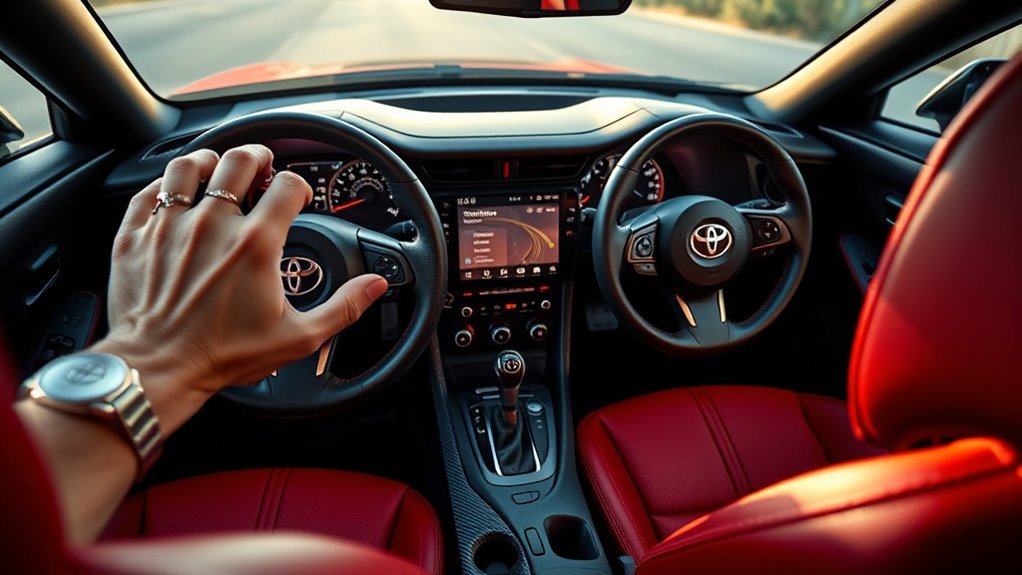
Toyota Supra Active Sound Design (ASD) is the GR Supra’s interior sound-enhancement feature. Toyota describes Normal as providing a more refined sound, while Sport adds higher tones and racing-inspired pops during downshifts. ASD changes what you hear inside the cabin; it does not add horsepower or torque. Sport mode can separately change the car’s real exhaust character, so ASD and the active exhaust should not be treated as the same system.
Last updated: September 16, 2026 · Author:
Quick Answer
Toyota Supra Active Sound Design enhances the sound presented inside the cabin. Toyota’s GR Supra material describes Normal as the more refined setting and Sport as adding higher tones and racing-inspired downshift pops. ASD does not increase engine output. Sport mode can also alter the Supra’s physical exhaust character, so disabling ASD does not necessarily remove every real exhaust pop or burble.
Key Takeaways
- Supra ASD is a cabin sound-enhancement system, not a performance upgrade.
- Toyota describes Normal as refined and Sport as providing higher tones and racing-inspired downshift pops.
- Do not confuse ASD with the Supra’s active exhaust. Sport mode can separately change actual exhaust character.
- BimmerCode currently lists Toyota Supra J29/A90 support for Active Sound Design deactivation through the ASD_01 control unit.
- Exact equipment, software behavior, and available settings can vary by model year and market.
- Toyota announced in April 2025 that fifth-generation GR Supra production would end in Spring 2026; the 2026 MkV Final Edition closed out the generation.
Evidence note: This guide separates Toyota-documented behavior from third-party coding support and owner-reported observations. Toyota’s public consumer material does not document every internal signal or algorithm used by the Supra’s ASD system, so unverified microphone, sensor, and processing claims are not presented as fact.
What Supra Active Sound Design Is
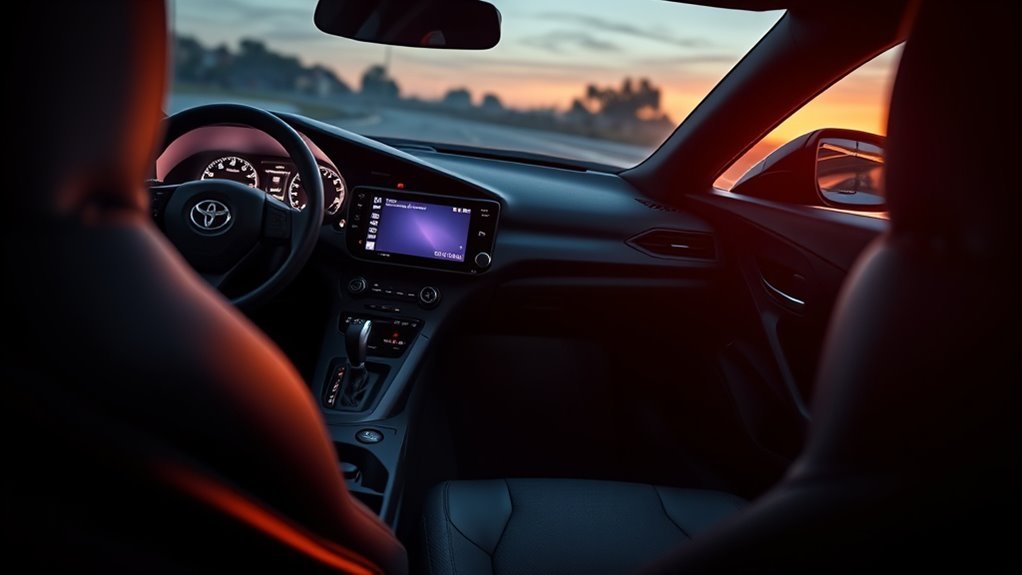
Active Sound Design, usually shortened to ASD, changes the sound experience inside the GR Supra. Official Toyota UK GR Supra material describes the car as having two selectable driving sounds: Normal for a more refined character and Sport for higher tones with racing-inspired pops during downshifts.
ASD should not be confused with every sound change that happens when Sport mode is selected. Toyota’s U.S. launch material separately states that Sport mode amplifies exhaust sound while also changing throttle, steering, transmission, and differential behavior. That means the cabin enhancement and the physical exhaust behavior are related to the driving experience but are not the same thing.
| System or Setting | What It Changes | Important Distinction |
|---|---|---|
| Active Sound Design | Interior sound character presented to the driver | It is a sound-enhancement feature, not an engine-power modification |
| Sport mode | Multiple vehicle responses, depending on model and equipment | Sport involves more than ASD |
| Active exhaust behavior | Physical exhaust character | Real exhaust pops or louder exhaust can remain even when ASD is disabled |
Note: Supra equipment and menus can vary by model year, region, trim, audio package, and software version. Your vehicle’s owner documentation and installed control modules are the final reference for your specific car.
What Changes Between Normal And Sport?
In everyday driving, Normal mode gives the Supra a more restrained sound character. Toyota describes it as the refined choice for everyday driving.
Sport mode makes the experience more dramatic. Toyota’s GR Supra brochure describes higher tones and racing-inspired pops during downshifts, while Toyota’s U.S. launch material also says Sport amplifies exhaust sound. As a result, some of what you hear in Sport can come from the ASD cabin enhancement and some can come from actual exhaust behavior.
| Mode | Sound Character | Practical Use |
|---|---|---|
| Normal | More refined and restrained | Daily driving, commuting, long trips |
| Sport | Higher tones and more downshift drama | Drivers who want a more pronounced performance sound |
| SPORT INDIVIDUAL, where equipped | Customizes supported Sport-mode vehicle settings | Not a guaranteed dedicated ASD-volume control; available choices depend on the vehicle |
If you want more detail on the non-audio changes made by the driving modes, see the site’s guide to Toyota Supra Sport mode. Keeping the broader Sport-mode explanation there helps this page stay focused on Active Sound Design.
How Does Supra Active Sound Design Work?
Toyota confirms that the GR Supra uses Active Sound Design, and BimmerCode’s current Supra J29/A90 support page identifies a dedicated Active Sound Design ASD_01 control unit. What Toyota’s consumer-facing material does not publish is the complete Supra-specific list of input signals, processing maps, or algorithms used to generate the final cabin effect.
That distinction matters. Active sound design systems in the automotive industry commonly use a vehicle’s audio hardware to shape interior powertrain sound. SAE engineering literature describes ASD as a technique that can use the vehicle audio system and speakers to control or enhance interior powertrain sound. That supports the general concept, but it should not be treated as proof of every internal implementation detail on the Supra.
| Confirmed or Supported | Not Publicly Documented in Toyota Consumer Material |
|---|---|
| The GR Supra uses Active Sound Design | Exact Supra ASD signal-input list |
| Normal and Sport have different described sound characters | Exact algorithm or sound-map logic |
| BimmerCode identifies an ASD_01 control unit | A universal microphone location or microphone-based signal path |
| ASD can be deactivated through supported third-party coding | One identical hardware/software implementation across every MkV year and market |
ASD changes the Supra’s sound experience; it does not create additional horsepower. Sport mode’s real exhaust behavior is a separate part of the driving experience.
What Is Confirmed About Supra ASD Hardware And Software?
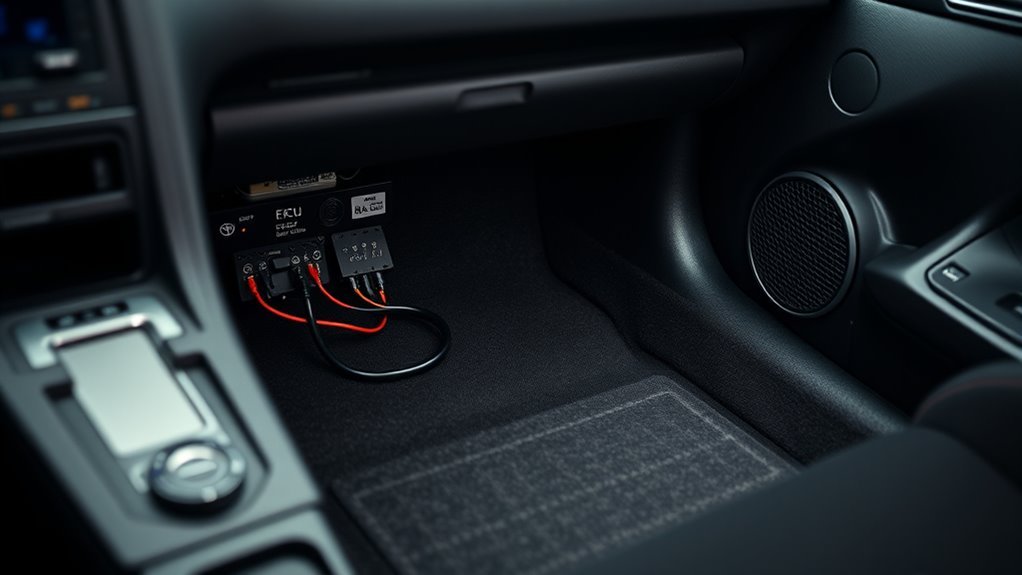
The most useful confirmed hardware clue for owners comes from BimmerCode. Its Toyota Supra J29/A90 support page lists an Active Sound Design category, an Active Sound Design deactivation coding option, and the ASD_01 control unit as the requirement.
- Confirmed by Toyota: the GR Supra uses Active Sound Design and has different Normal and Sport sound character.
- Confirmed by BimmerCode: supported Supra coding includes ASD deactivation through ASD_01.
- Supported by general engineering literature: active sound design can use vehicle audio hardware to shape interior powertrain sound.
- Not safe to claim as Supra fact without technical documentation: exact microphone placement, exact sensor inputs, exact processing maps, or an identical implementation on every model year.
The software distinction also matters because selecting Sport changes more than sound. Depending on model year and equipment, Sport can alter other vehicle responses. Those broader changes belong to the drive-mode system, not to ASD alone.
What Does ASD Change — And What Does It Not Change?
ASD can change how energetic the Supra sounds from the driver’s seat, but it should not be credited with changes produced by the engine, transmission, differential, or active exhaust.
| ASD Can Change | ASD Does Not By Itself Change |
|---|---|
| Perceived cabin engine-sound character | Horsepower or torque |
| How prominent the enhanced sound feels inside the car | Turbocharger hardware or boost calibration |
| How much sound enhancement is mixed into the cabin experience | The physical exhaust hardware |
| The driver’s perception of how dramatic the car sounds | Other Sport-mode calibrations outside the ASD system |
Owner discussion is useful here, but it should be treated as anecdotal. Some SupraMKV owners report that disabling ASD makes music or bass sound cleaner, while others prefer leaving the enhancement on because they enjoy the stronger cabin sound. One SupraMKV Active Sound Design discussion includes an owner reporting clearer audio after coding ASD off. That is an individual observation, not a controlled audio test and not proof that every Supra will respond identically.
How To Adjust, Reduce Or Disable Supra ASD
There are three practical approaches: use the factory driving modes, use supported third-party coding, or pursue an aftermarket hardware route. Start with the factory option because it is the easiest to reverse and does not require changing vehicle coding.
At a Glance
| Simplest Option | Use Normal instead of Sport |
| Full Coding Option | BimmerCode currently lists ASD deactivation for Toyota Supra J29/A90 through ASD_01 |
| Tools Needed For Coding | A BimmerCode-compatible setup and supported adapter; verify current compatibility before coding |
| Reversibility | BimmerCode specifically advises keeping a backup so the coding can be reverted if needed |
| Cost | Normal/Sport changes are free; third-party app, adapter, or professional-service costs vary |
Warning: BimmerCode is a third-party coding route, not a Toyota factory user procedure. Verify compatibility for your exact vehicle, save the recommended backup, follow the tool’s current safety instructions, and do not force a coding change if the expected ASD control unit is not available.
[Products Worth Considering]

This 2-in-1 wireless adapter converts factory-wired CarPlay into a cable-free experience for compatible vehicles, helping you enjoy seamless phone integration with less clutter. It supports automatic reconnection, stable Bluetooth and Wi-Fi pairing, and broad compatibility with many factory-installed CarPlay systems. Built with a durable metal and acrylic design, it also includes firmware updates and lifetime technical support for continued convenience.

The HEYINCAR+ H-Air adapter upgrades compatible factory wired CarPlay and Android Auto systems to wireless convenience with a compact plug-and-play design. It connects automatically after setup, delivering fast startup, stable performance, and support for your car’s original touchscreen, steering wheel controls, and voice commands. Built for broad vehicle compatibility and ongoing firmware updates, it offers a simple way to enjoy cable-free driving with minimal clutter.

This wireless CarPlay adapter upgrades compatible factory wired CarPlay or Android Auto systems with wireless connectivity and built-in entertainment apps. Enjoy navigation, calls, music, and hands-free control through Apple CarPlay, plus streaming from popular video platforms when connected to a hotspot. It also supports USB media playback and an HD media port for rear-seat entertainment on road trips and daily drives.
Option 1: Use Normal Or SPORT INDIVIDUAL
If the sound feels too aggressive, switch from Sport to Normal first. That gives you the factory-described refined sound character without changing any coding.
Cars equipped with SPORT INDIVIDUAL can customize supported Sport-mode settings. Do not assume that every Supra exposes a dedicated ASD-volume slider inside that menu; the exact available settings depend on the vehicle’s equipment and software.
Option 2: Code ASD Off With BimmerCode
For owners who want full ASD deactivation, BimmerCode currently lists Toyota Supra J29/A90 support for Active Sound Design deactivation. Its supported-vehicle page identifies the required control unit as Active Sound Design ASD_01.
- Check the current BimmerCode Supra support page and compatible-adapter requirements before connecting anything.
- Create or retain the backup recommended by BimmerCode so the change can be reversed.
- Use the supported Active Sound Design deactivation option only if the expected ASD_01 control unit is available on your car.
- Follow BimmerCode’s current in-app coding and safety instructions while the vehicle is parked.
- Afterward, confirm that normal audio, warning sounds, phone audio, navigation prompts, and drive-mode operation behave as expected.
- If you want to restore the original behavior, use the saved backup as directed by BimmerCode.
Option 3: Use An Aftermarket Hardware Or Professional Solution
Supra owner communities also document hardware-disconnection and bypass approaches. These are owner-reported modifications rather than Toyota’s normal user procedure. A SupraMKV hardware-disconnection discussion shows how some owners have approached the system without coding.
Because hardware changes can vary by vehicle and installation, this guide does not assume that a forum wiring method applies to every Supra. If you want a hardware solution, use a technician who can identify the correct system on your specific vehicle and reverse the modification cleanly.
Pro Tip: For your own comparison, make before-and-after recordings from the same seat position, on the same route, with the same drive mode and recording device. That will not create a laboratory-grade measurement, but it can help you judge whether you prefer the change.
Troubleshooting Common Supra ASD Questions
| Problem | Likely Explanation | Best Next Step |
|---|---|---|
| Cabin sound feels too artificial | You may prefer the more restrained sound character of Normal | Try Normal before making any coding change |
| Car sounds noticeably quieter after ASD is disabled | The enhanced cabin sound is no longer being presented in the same way | Compare the result with the original setting and restore your backup if you preferred ASD |
| Pops or burbles remain after ASD is disabled | Sport mode can separately change the real exhaust character | Do not assume remaining exhaust sounds mean ASD is still active |
| ASD_01 or the expected coding option is missing | Vehicle software, equipment, adapter, or supported control-unit availability may differ | Stop and verify current vehicle and adapter support instead of forcing a different coding path |
| Audio behaves differently after coding | A setting may have changed or the coding may not have produced the result you expected | Check your audio settings and use the saved backup if necessary |
[Products Worth Considering]

This compact adapter converts factory-wired CarPlay and Android Auto systems to wireless for a cleaner, more convenient driving experience. It offers fast auto-connect, stable performance, and plug-and-play setup so you can enjoy navigation, music, calls, and voice control without extra cables. The included USB-to-USB-C converter helps it fit a wide range of vehicle ports.

The IIWEY iK11 adds a large wireless Apple CarPlay and Android Auto display to almost any vehicle, making it easy to upgrade older cars with modern smart connectivity. It combines voice control, Bluetooth, wireless mirroring, and built-in navigation support with a front dash cam and rear camera for added driving confidence. Designed for quick installation and everyday convenience, it delivers a portable all-in-one infotainment and safety solution.

3/4" deep adapters assure no clearance problems
Is Supra ASD Worth Keeping?
Keep ASD if you enjoy a more dramatic cabin soundtrack. Toyota designed the Supra’s sound experience so Normal feels more refined and Sport feels more energetic, and some owners prefer that extra feedback.
Disable or reduce it if you would rather hear less sound enhancement and more of the car’s mechanical and physical exhaust character. Owner reports also suggest that some drivers prefer their music playback with ASD disabled, but that result is subjective and depends on the car, audio settings, road noise, and listener.
There is no universal “better” setting. Because coding can be reversed with a proper backup, owners who are curious can compare both configurations rather than assuming one is automatically superior.
Frequently Asked Questions
How does Toyota Supra Active Sound Design work?
Toyota confirms that the GR Supra uses Active Sound Design to provide different interior sound character in Normal and Sport, and BimmerCode identifies a dedicated ASD_01 control unit. Toyota’s public consumer material does not publish the complete Supra-specific signal list or processing algorithm, so exact sensor and microphone claims should not be assumed without technical documentation.
Is Supra Active Sound Design fake engine noise?
It is more accurate to call ASD enhanced or designed cabin sound. The Supra still produces real engine and exhaust sound, while ASD changes the sound experience presented inside the cabin. Sport mode can also change real exhaust character, so not every sporty sound you hear is necessarily created by ASD.
Can I turn off Supra Active Sound Design?
You can first reduce the perceived effect by using Normal instead of Sport. For full deactivation, BimmerCode currently lists an Active Sound Design deactivation option for Toyota Supra J29/A90 through the ASD_01 control unit. BimmerCode also recommends using a backup so the coding can be reverted if needed.
Does disabling ASD remove Supra exhaust pops and burbles?
Not necessarily. Toyota has separately described Sport mode as amplifying exhaust sound, so real exhaust pops or a stronger exhaust note can remain after the cabin ASD enhancement is disabled. ASD and the active exhaust should not be treated as one system.
Will disabling ASD make the Supra sound better?
That is subjective. Disabling ASD reduces the designed cabin enhancement, which some owners prefer because they want a more mechanical sound or less overlap with music. Other drivers prefer the extra drama ASD provides. A reversible before-and-after comparison is more useful than assuming either setting is automatically better.
Does Active Sound Design affect Supra performance?
ASD is a sound-design feature, not a horsepower modification. It does not itself add engine output. Do not confuse ASD with the other powertrain, chassis, transmission, differential, or exhaust changes that may occur when Sport mode is selected.
Does every MkV Supra have Active Sound Design?
Toyota UK documentation states that the GR Supra is equipped with Active Sound Design, and BimmerCode supports ASD deactivation for the Supra J29/A90 platform. However, Toyota does not publish one simple trim-by-trim, market-by-market ASD matrix covering every MkV model year. Confirm your specific vehicle through its documentation and installed control modules.
Conclusion
Toyota Supra Active Sound Design is best understood as part of the car’s interior sound experience. Toyota describes Normal as refined and Sport as more dramatic, with higher tones and racing-inspired downshift pops. ASD itself is not an engine-performance upgrade.
The most important distinction is that ASD is not the same as the Supra’s physical exhaust behavior. Sport mode can separately amplify real exhaust character, which is why pops or burbles may remain even after ASD is deactivated.
If you dislike the enhanced sound, start with Normal. If you want ASD fully deactivated, BimmerCode currently supports the Toyota Supra J29/A90 through the ASD_01 control unit and recommends keeping a backup for restoration. Toyota announced that fifth-generation GR Supra production would end in Spring 2026, with the 2026 MkV Final Edition closing out the generation.
Sources
- Toyota UK GR Supra brochure — official description of Active Sound Design, including Normal and Sport driving sounds.
- Toyota USA Newsroom: It’s Back — 2020 GR Supra Ready for the Road — Toyota description of Sport mode, including amplified exhaust sound and other vehicle-response changes.
- Toyota USA Newsroom: Take One Last Lap in the Toyota GR Supra MkV Final Edition — 2026 Final Edition details and Toyota’s statement that fifth-generation production would end in Spring 2026.
- BimmerCode Toyota Supra J29/A90 supported vehicles — Active Sound Design deactivation support, ASD_01 requirement, and backup/reversion guidance.
- Toyota 2026 Supra Manuals and Warranties — current Toyota owner-documentation index for the 2026 Supra.
- SAE: A Systematic Approach to Engine Sound Design — engineering background on using vehicle audio systems to shape interior powertrain sound.
- SupraMKV: Active Sound Design owner discussion — anecdotal owner observations about ASD deactivation and audio perception.