Checking brake pad wear on your Hyundai Sonata is a simple safety habit you can do between service visits. You can often inspect the outer brake pad through the wheel spokes with a flashlight, but a full brake check may require removing the wheel so both the inner and outer pads, rotors, calipers, and brake fluid leaks can be inspected.
Quick Answer
To check Hyundai Sonata brake pad wear, park safely, let the brakes cool, shine a flashlight through the wheel spokes, and look at the pad material between the caliper and rotor. Plan service around 4–5 mm, replace soon at about 3 mm, and get immediate help for grinding, fluid leaks, or a brake warning light that stays on.
Key Takeaways
- A spoke-through visual check is useful, but it may show only the outer pad. Inner pads can wear faster if a caliper is sticking.
- About 6 mm or more is usually usable, 4–5 mm means monitor or plan service, and around 3 mm means replacement should be scheduled soon.
- Grinding, a soft pedal, pulling, vibration, fluid leaks, or a brake warning light that stays on need prompt professional inspection.
- Hyundai maintenance guidance includes checking brake pads, discs, rotors, and calipers for wear or leakage, not just looking at pad thickness.
At a Glance
| Time Required | 5–15 minutes for a visual check; longer if the wheel must be removed |
| Difficulty | Beginner for a no-wheel visual check; intermediate for wheel removal |
| Tools Needed | Flashlight, gloves, brake pad gauge or small ruler, phone camera, wheel chocks |
| Cost | Usually $0–$15 for DIY inspection tools; professional inspection cost varies by shop |
Warning: Do not inspect hot brakes right after driving, and never crawl under a vehicle supported only by a jack. If the brake pedal feels soft, the car pulls hard while braking, you hear grinding, you see brake fluid leakage, or the brake warning light stays on after the parking brake is released, stop driving and have the Sonata inspected.
Signs Your Brake Pads Need Immediate Attention
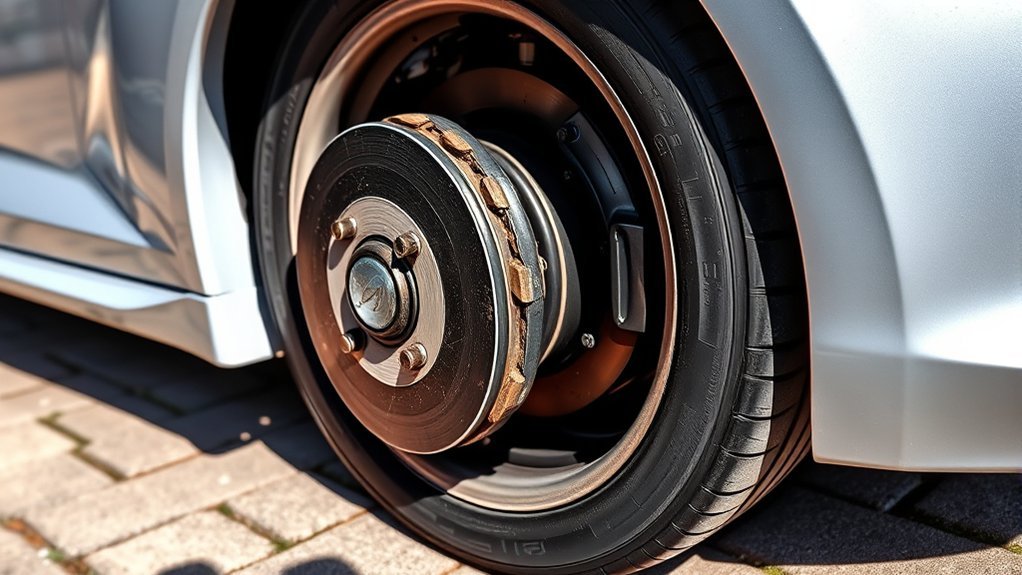
Brake pad wear can affect stopping distance, pedal feel, rotor condition, and overall safety. Hyundai’s owner information notes that worn disc brake pads may create a high-pitched warning sound from the front or rear brakes when new pads are required.
Watch and listen for these warning signs:
- Squealing or screeching: Often caused by a wear indicator contacting the rotor, though dust, moisture, glazing, or hardware issues can also make brakes squeal.
- Metallic grinding: Treat this as urgent. It may mean the friction material is gone and metal is contacting the rotor.
- Longer stopping distance: If the Sonata takes more room to stop than usual, the pads, rotors, tires, or brake hydraulic system may need inspection.
- Vibration or pulsing: A vibrating brake pedal or steering wheel can point to rotor thickness variation, warped rotors, uneven pad transfer, or worn suspension parts.
- Pulling to one side: Pulling during braking may come from uneven pad wear, a sticking caliper, tire issues, or brake fluid pressure differences.
- Brake warning light: If the parking brake is released and the warning light remains on, Hyundai says the brake fluid may be low and the vehicle should be checked.
Note: A single squeak does not always mean the pads are worn out. A repeated squeal, grinding sound, warning light, fluid leak, or change in pedal feel should not be ignored.
Before You Check Your Brake Pads
Before inspecting the brakes, park your Hyundai Sonata on a flat surface, shift to Park, apply the parking brake, turn the engine off, and let the brakes cool. Place wheel chocks behind the tires if you have them. Good lighting matters because brake pads sit behind the wheel inside the caliper, and shadows can make the remaining pad material look thicker than it is.
Tools That Help
- Bright flashlight: Essential for seeing through the wheel spokes.
- Brake pad gauge or small ruler: Helps estimate pad thickness in millimeters.
- Phone camera: Useful for taking a zoomed photo through the spokes or behind the wheel.
- Gloves: Brake dust is messy, and wheels can have sharp edges.
- Jack and jack stands: Only needed if you remove the wheel for a closer inspection.
What You Can and Cannot See Without Removing the Wheel
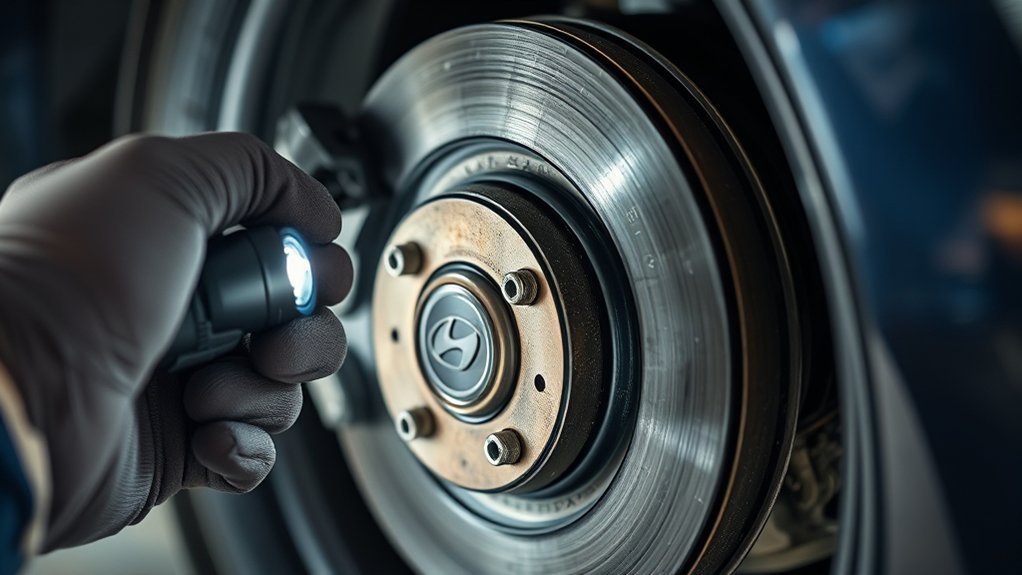
On Sonata wheels with open spokes, you can often see the outer brake pad and rotor face. That is enough for a quick check, but it is not a complete brake inspection. The inner pad may be harder to see and can wear faster if the caliper slide pins stick or the caliper does not release evenly.
If your Sonata has steel wheels, tight-spoke wheels, wheel covers, heavy brake dust, or poor visibility, remove the wheel safely or ask a technician to inspect the brakes. Hyundai maintenance guidance says brake service checks should include the pads, discs, rotors, and calipers, including excessive wear and caliper leakage.
How to Check Brake Pads Without Removing the Wheel
To check your Hyundai Sonata brake pads without removing the wheel, use the wheel openings as an inspection window. You are looking for the friction material, not the metal backing plate. The friction material is the darker pad surface that presses against the shiny brake rotor.
[Products Worth Considering]
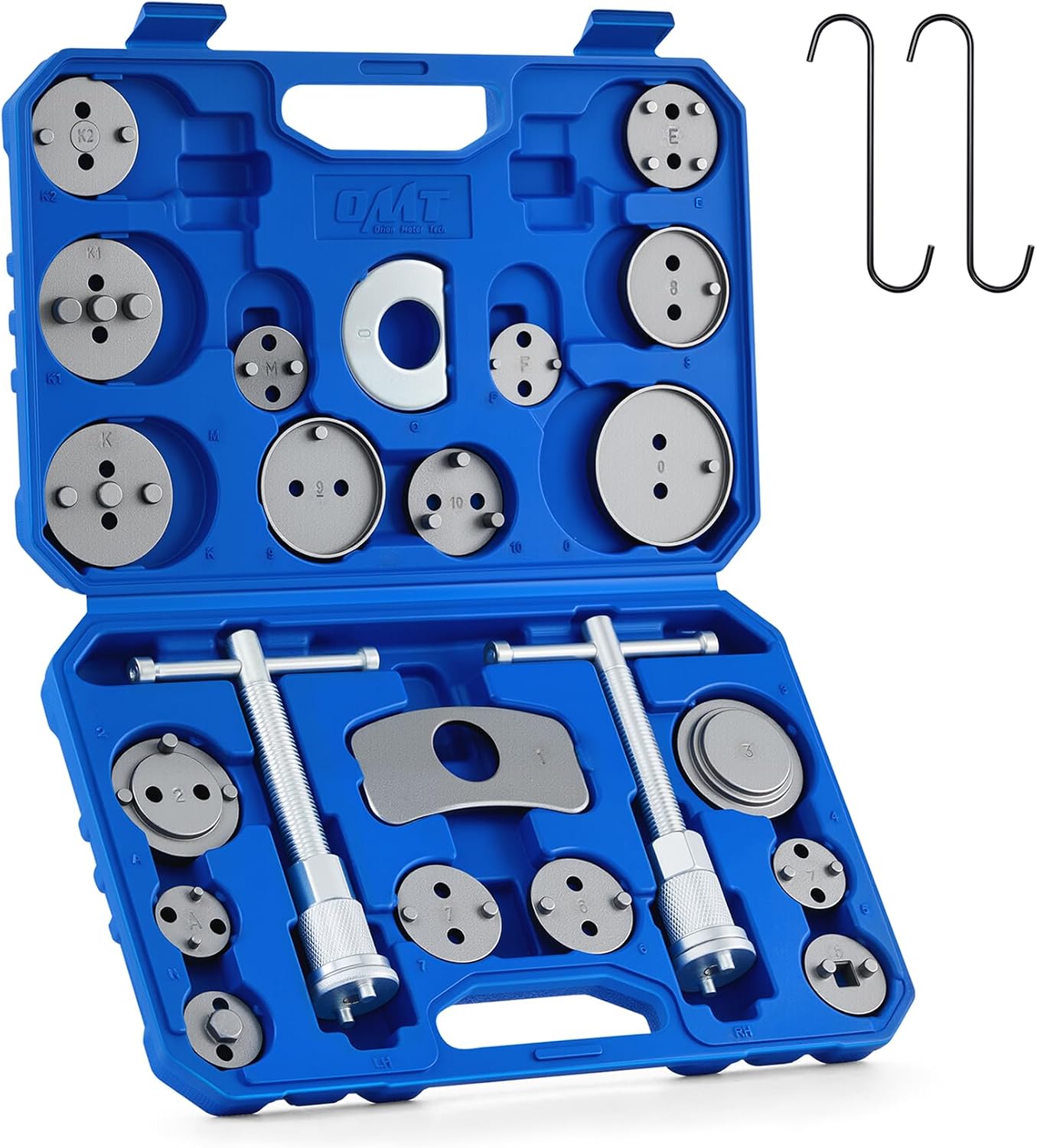
This 24-piece brake caliper compression tool set helps you quickly and safely rotate pistons back into the caliper during brake pad service. It includes multiple adapters, retaining plates, thrust bolt assemblies, and hangers for broad vehicle compatibility, while the heavy-duty steel construction and organized storage case make it ideal for reliable shop or home repairs.

This brake caliper compression tool helps make disc brake pad replacement and caliper servicing faster, safer, and more controlled. Its universal ratcheting design supports multi-angle operation in tight wheel spaces, while the sturdy steel build and widened contact plate help reduce slipping and uneven force during maintenance. Two caliper hooks are included to simplify solo brake work and keep components organized.
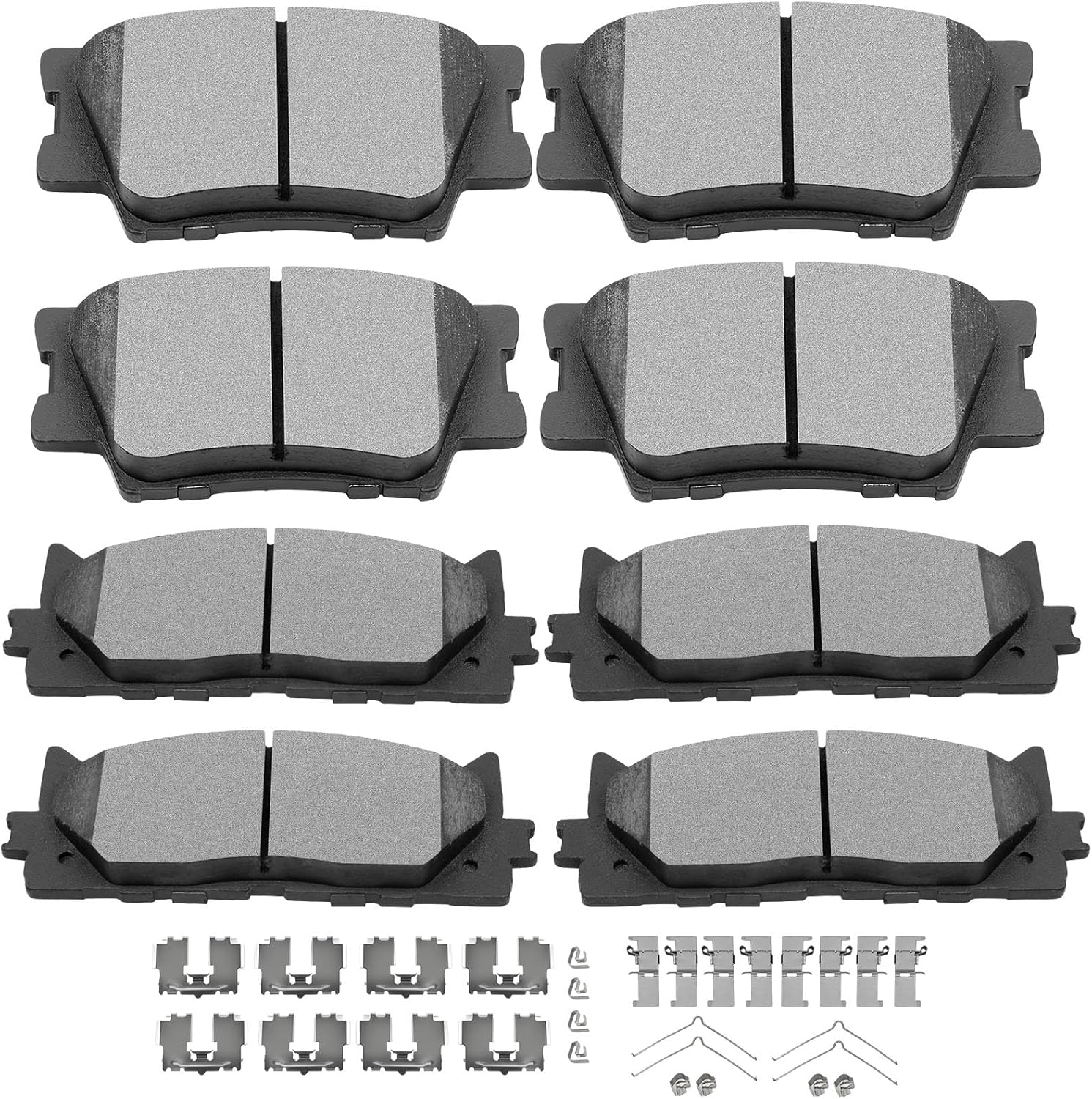
This ceramic front and rear brake pad set is designed as a direct replacement for select Lexus and Toyota models, helping restore reliable stopping performance. The pads feature a scorch-treated friction surface for quicker break-in and consistent wear, while the included gasket design helps reduce vibration and noise for quieter braking. Built for easy installation, this kit comes ready to fit compatible vehicles without modification.
Step 1: Position the Wheel for Visibility
Turn the steering wheel left or right to improve your view of the front calipers. The front brakes are usually easier to inspect because the steering angle opens up the wheel well. The rear brakes may require a lower viewing angle or a phone camera.
Step 2: Shine a Flashlight Through the Spokes
Shine the flashlight through the wheel spokes toward the caliper. Find the rotor first, then look for the pad sitting close to it. The rotor is the smooth metal disc; the pad is the friction material pressed near each side of that disc.
Step 3: Estimate Pad Thickness
Estimate the thickness of the remaining friction material. Do not include the metal backing plate in your measurement. If you have a brake pad gauge, compare the visible pad material with the gauge. If you only have a ruler, use millimeters and treat the reading as an estimate.
Step 4: Check the Wear Indicator
Many brake pads use a small metal wear indicator. When the pad wears thin, the indicator contacts the rotor and creates a high-pitched squeal. If the wear tab is close to the rotor or you hear repeated squealing during braking, schedule an inspection.
Step 5: Look for Uneven Wear or Damage
Compare the left and right sides if possible. One side looking much thinner than the other can point to a sticking caliper, seized slide pin, rotor problem, or brake hose issue. Also look for cracks, missing chunks, deep rotor grooves, heavy rust, wet fluid residue, or a burning smell after driving.
Pro Tip: Take a close-up phone photo through the wheel spokes and zoom in. It is often easier to compare pad thickness from a still image than while crouching beside the car.
Checking Brake Pad Thickness
Brake pad thickness is the clearest wear clue, but it should be read with context. Hyundai USA notes that many new brake pads start around 12 mm of friction material, while many mechanics recommend replacement before pads wear below about 3 mm. Brake manufacturer Brembo also describes pad replacement around 1/8 inch, or about 3 mm.
| Pad Thickness | What It Usually Means | Recommended Action |
|---|---|---|
| 6 mm or more | Generally usable pad life remains | Recheck at the next service interval or sooner if symptoms appear |
| 4–5 mm | Pads are getting low | Plan service, monitor more often, and check inner pads |
| About 3 mm | Common replacement range | Schedule brake pad replacement soon |
| 2 mm or less, grinding, or metal contact | Very low or severe wear | Avoid driving and get immediate inspection |
Use this chart as practical guidance, not a substitute for your exact model-year service information. Sonata brake systems, pad compounds, driving conditions, and hybrid regenerative braking patterns can all affect wear.
[Products Worth Considering]

Bosch QuietCast premium ceramic rear brake pads are engineered for quiet, reliable stopping power with low dust performance. Featuring pre-attached multilayer shims, corrosion-resistant backing plates, and OE-style slots and chamfers, this set is designed for smooth fitment and long-lasting durability. It includes pads for one axle, plus hardware and lubricant where available, making installation easier for compatible Lexus, Pontiac, and Toyota vehicles.

This brake caliper compression tool makes brake pad replacement faster by retracting single, dual, or quad pistons with minimal effort. Built for compatibility across many cars, trucks, ATVs, UTVs, and SUVs, it delivers strong pressing power for efficient maintenance. The durable aluminum alloy and steel construction, along with organized EPE foam storage, help keep it protected and ready for repeated use.

Bendix Premium Ceramic Front Brake Pads are engineered to match original equipment fit, form, and function for a straightforward replacement. Built with durable materials to help resist wear and corrosion, they support consistent braking performance and reduced brake fade for everyday driving. These pads are a dependable choice for compatible Pontiac, Scion, Toyota, and related vehicles.
Visual Inspection Methods
A visual inspection can quickly show whether the pads are obviously thin, cracked, uneven, or contaminated. Look through the wheel spokes first. If visibility is poor, inspect from behind the wheel with a flashlight, or have the wheel removed.
- Look for the friction material between the caliper and rotor.
- Compare left and right sides for obvious differences.
- Check for deep rotor grooves, rust buildup, or uneven rotor surfaces.
- Look for wetness near the caliper, brake hose, or wheel area, which may indicate a fluid leak.
Measuring Pad Thickness
For the most accurate measurement, the wheel should be removed and both the inner and outer brake pads should be measured. If you remove a wheel, use the correct jack point, support the Sonata with jack stands, and follow the owner’s manual. If you are not comfortable lifting the vehicle, let a qualified technician measure the pads.
A no-wheel inspection is a screening check. A full brake inspection confirms both pad faces, rotor condition, caliper movement, brake hardware, and possible fluid leaks.
Knowing When to Replace Your Brake Pads
Replace your Hyundai Sonata brake pads based on thickness, symptoms, and inspection findings. Waiting until pads are completely worn can damage the rotors and increase repair cost.
- Plan service at 4–5 mm: This is a good time to budget for replacement and watch wear more closely.
- Replace soon around 3 mm: This is a common replacement point recommended by many technicians and brake manufacturers.
- Act immediately if you hear grinding: Grinding can mean the pad material is gone and rotor damage is happening.
- Do not ignore a soft or sinking brake pedal: This may point to hydraulic problems, air in the brake system, or fluid leakage.
- Check both axles: Front and rear pads can wear at different rates depending on driving style, load, terrain, and brake balance.
[Products Worth Considering]

TOVASTY rear brake pads are designed for a wide range of Toyota and Lexus models, delivering dependable braking performance with a carbon ceramic formula. They help reduce brake dust, promote quieter operation, and support consistent stopping power with improved heat resistance for everyday driving confidence.

This brake bleeder bottle is designed to make fluid bleeding easier for one-person use with a built-in check valve and magnetic mount. The flexible hose fits most bleeder valves and helps reduce the chance of air entering the system during service. With a practical fluid capacity and universal fit, it is a handy tool for brake maintenance and repair.

This brake caliper hanger set helps hold calipers securely during brake pad changes and other suspension or axle work, making brake service safer and more convenient. Built from durable steel with rust-resistant coating, it features rubber tips to help prevent scratches and protect brake hoses and surrounding components. Brightly colored and easy to spot, it is a practical mechanic tool for keeping calipers supported while you work.
Brake Warning Light and Fluid Leaks
A brake warning light does not always mean the brake pads are worn. First, confirm the parking brake is fully released. If the light stays on, Hyundai says low brake fluid may be the cause and recommends stopping safely and having the vehicle inspected. Hyundai also warns not to drive if a brake fluid leak is found, the warning light remains on, or the brakes do not operate properly.
Low brake fluid can be related to worn pads because caliper pistons extend farther as pads wear, but it can also indicate a leak. Do not simply top off brake fluid and keep driving without checking why the level dropped.
What Uneven Brake Pad Wear Means
Uneven brake pad wear is a diagnostic clue. If one pad is much thinner than the other, the problem may not be the pad itself. Common causes include:
- Sticking caliper slide pins: The caliper may not move freely, causing one pad to drag.
- Seized or slow caliper piston: A piston that does not retract can overheat and wear one pad quickly.
- Rotor problems: Deep grooves, rust, or thickness variation can create uneven contact.
- Brake hose restriction: A damaged hose can hold pressure in the caliper.
- Driving conditions: Stop-and-go traffic, hills, heavy loads, and winter road salt can accelerate wear.
If the inner pad is thinner than the outer pad, or one wheel wears pads much faster than the others, schedule a brake inspection before installing new pads. New pads on a sticking caliper can wear out quickly.
What You Should Know About How Brake Pads Work
Brake pads help slow your Sonata by pressing friction material against the brake rotors. When you press the brake pedal, hydraulic pressure moves the caliper piston, the caliper clamps the pads onto the rotor, and friction converts motion into heat.
Brake pads can be made from organic, semi-metallic, ceramic, or other friction materials. Each material has trade-offs in noise, dust, rotor wear, heat handling, and pedal feel. Regardless of material, all pads wear down over time and need inspection.
Wear indicators are designed to warn you before the pads are completely gone, but they are not perfect. Rust, dirt, missing hardware, or uneven inner-pad wear can reduce how useful the indicator is. That is why a visual inspection and professional brake check still matter.
Common Issues With Brake Pads in Hyundai Sonata
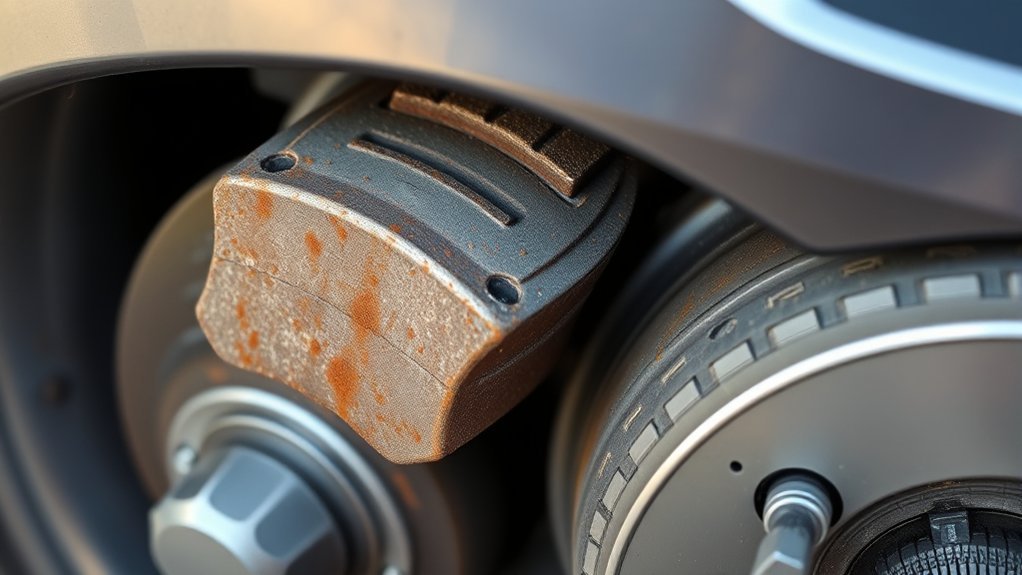
Understanding how brake pads function makes it easier to catch problems before they become expensive. Common brake pad and brake system issues on a Hyundai Sonata include:
- Uneven wear: A stuck caliper, dry slide pins, rotor grooves, or brake hose restriction can make one pad wear faster than another.
- Rust buildup: Winter salt, moisture, and infrequent driving can cause rust on rotors, pad hardware, and caliper components.
- Glazed pads: Overheated pads can become shiny and noisy, reducing smooth brake feel.
- Rotor scoring: Thin pads or debris can cut grooves into the rotor surface.
- Brake dust and grime: Dust can hide cracks, wear indicators, and rotor damage during a quick visual check.
- Hybrid brake patterns: Sonata Hybrid models may use regenerative braking, so friction brakes can sometimes wear differently or develop surface rust from lighter use.
Regular inspections help you catch these issues early. Even if the visible outer pad looks acceptable, ask for a full brake inspection if you hear noise, feel vibration, see fluid, smell burning, or notice reduced stopping confidence.
How Often to Check Hyundai Sonata Brake Pads
A practical schedule is to visually check your brake pads every few months, before long trips, and whenever you rotate tires. At minimum, have the brakes inspected during routine service. If you drive mostly in city traffic, mountains, salted winter roads, or with heavy loads, check them more often.
Also inspect the brakes after any new symptom appears. Brake pads rarely fail without warning, but the warning can be subtle: a faint squeal, a slight pull, a vibration, or a pedal that feels different than usual.
Frequently Asked Questions
How do I check if brakes are worn on a Hyundai Sonata?
Park on level ground, let the brakes cool, shine a flashlight through the wheel spokes, and look for the brake pad material beside the rotor. If the friction material is around 3 mm, the wear indicator is close to the rotor, or you hear grinding or repeated squealing, schedule brake service.
Can I check Sonata brake pads without removing the wheel?
Yes, if the wheel spokes are open enough to see the caliper and rotor. This gives you a useful quick check, but it may show only the outer pad. A complete inspection requires checking the inner pad, rotor, caliper movement, hardware, and brake fluid leaks.
At what brake pad thickness should I replace Hyundai Sonata pads?
Plan service when pads are around 4–5 mm, and schedule replacement soon when they are about 3 mm. If the pads are near 2 mm, the wear indicator is contacting the rotor, or you hear grinding, treat it as urgent and avoid unnecessary driving.
Does a brake warning light mean my brake pads are bad?
Not always. The brake warning light may mean the parking brake is applied, brake fluid is low, or there is another brake system issue. If the parking brake is released and the light stays on, stop safely and have the brake system inspected.
Is it safe to drive with squealing brakes?
A brief squeak can come from moisture or dust, but repeated squealing may be the wear indicator warning you that the pads are low. Schedule an inspection. If the sound turns into grinding, avoid driving and get the brakes checked immediately.
Why is one brake pad thinner than the other?
Uneven pad thickness can come from sticking caliper slide pins, a seized caliper piston, rotor issues, or a brake hose restriction. Do not just replace the pads without finding the cause, because the new pads may wear unevenly again.
Conclusion
Keeping an eye on your Hyundai Sonata’s brake pads helps protect stopping performance and prevents avoidable rotor damage. Use a flashlight for quick visual checks, treat 4–5 mm as the planning stage, schedule replacement around 3 mm, and act immediately for grinding, fluid leaks, warning lights, or poor pedal feel. A quick look through the spokes is helpful, but a full inspection of both pads, rotors, calipers, and fluid condition is the safest way to confirm your brakes are road-ready.
Sources
- Hyundai Owner’s Manual — Disc brakes wear indicator — backs up high-pitched brake wear warning sounds.
- Hyundai Owner’s Manual — Brake discs, pads, calipers and rotors — backs up inspection of pads, rotors, discs, and calipers for wear or leakage.
- Hyundai USA — Brakes Safety and Maintenance — backs up new pad thickness context and common replacement guidance near 3 mm.
- Hyundai USA — Warning Lights — backs up brake warning light and low brake fluid safety guidance.
- Brembo — Ceramic Pads — backs up common replacement guidance around 1/8 inch or 3 mm.