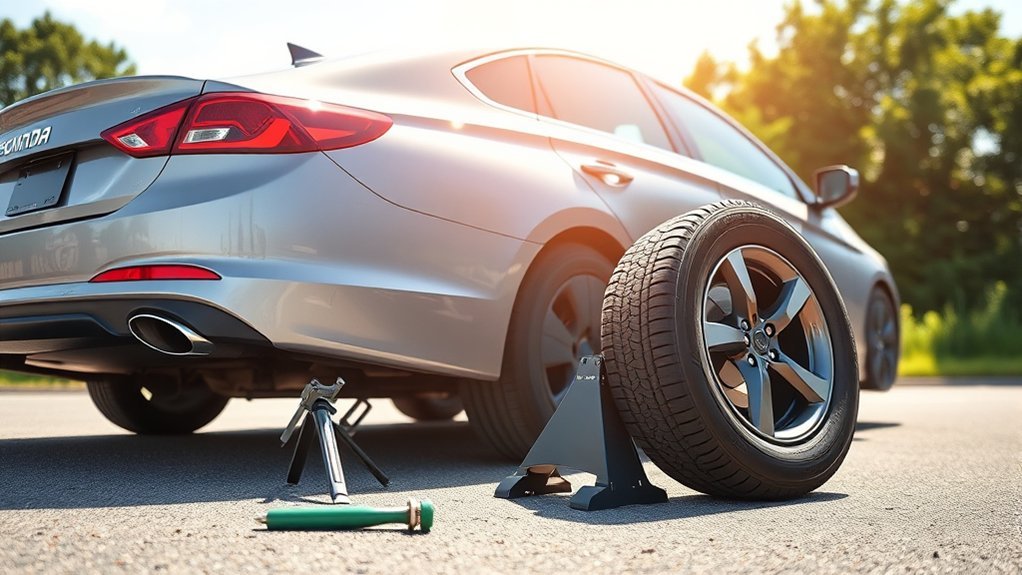
To change a flat tire on a Hyundai Sonata safely, get completely off the roadway onto firm, level ground, shift to Park, set the parking brake, turn on the hazard lights, block the wheel diagonally opposite the flat, loosen the wheel nuts before lifting, use the designated notched jack point, install the spare, lower the car, and tighten the wheel nuts evenly. Before starting, check whether your Sonata actually has a compact spare or a Tire Mobility Kit (TMK), because current Sonata equipment varies by trim. If traffic is too close, the ground is unstable, or you do not have the correct equipment, call roadside assistance instead of attempting the change.
Last updated: September 1, 2026 — current Sonata spare/TMK availability, wheel-nut torque guidance, compact-spare limits, source links, internal links, FAQs, and schema were reviewed.
Quick Answer
To safely change a flat tire on a Hyundai Sonata, park on firm level ground, shift to Park, set the parking brake, turn on hazards, block the opposite wheel, loosen the lug nuts about one turn, jack only at the designated jack point, install the compact spare, lower the vehicle, and tighten the nuts evenly in a star pattern. Use the wheel-nut torque specified for your exact Sonata model year rather than assuming one torque value fits every generation. If your Sonata has a Tire Mobility Kit instead of a spare, follow the TMK procedure in your owner’s manual rather than these wheel-change steps.
Key Takeaways
- Only change the tire if the vehicle is on firm, level ground and safely away from traffic.
- Check whether your Sonata has a compact spare or a Tire Mobility Kit before starting; current U.S. Sonata equipment varies by trim.
- Loosen the lug nuts before lifting the car, but do not remove them until the tire is off the ground.
- Use the designated Sonata jack point, never the bumper, trim, or an unmarked body panel.
- For a Sonata equipped with Hyundai’s compact temporary spare, Hyundai guidance lists 60 psi (420 kPa); confirm the specification for your exact vehicle and spare.
- Wheel-nut torque can vary by Sonata model year, so check the exact owner’s manual rather than relying on one universal number.
- Drive slowly on a compact spare and have the original tire repaired or replaced as soon as possible.
At a Glance
| Time Required | 20–40 minutes for most drivers with a usable spare and tools |
| Difficulty | Moderate; only attempt it in a safe location |
| Tools Needed | If spare-equipped: spare tire, jack, jack handle, lug wrench, tire gauge, wheel chock or sturdy block, gloves, flashlight, torque wrench if available, and wheel lock key if equipped |
| Cost | Usually $0 if your spare and tools are usable; tire repair, replacement, towing, or missing equipment costs extra |
Does Your Hyundai Sonata Have a Spare Tire or Tire Mobility Kit?
Check your trunk equipment before following a wheel-changing procedure. Hyundai’s current U.S. Sonata specifications show that some configurations use a compact temporary spare while others use a Tire Mobility Kit. Hyundai’s 2025 Sonata owner’s manual also separates its emergency instructions into “with spare tire” and “with Tire Mobility Kit” procedures. The exact equipment therefore depends on the model year and configuration.
| What You Find | What It Means | What to Do |
|---|---|---|
| Compact spare, jack, handle, and lug wrench | Your Sonata is equipped for an emergency wheel change. | Use the step-by-step procedure below and confirm your exact model-year specifications. |
| Compressor and sealant/Tire Mobility Kit | Your car may not have the spare and jack needed for this wheel-change procedure. | Follow the Tire Mobility Kit instructions in your exact Sonata owner’s manual. A TMK is a temporary puncture solution, not a permanent tire repair. |
Hyundai’s digital 2025 Sonata owner’s manual includes both emergency paths. Hyundai also lists current trim equipment on the Sonata specifications and vehicle page.
Warning: A Tire Mobility Kit is not suitable for every type of tire damage. If the tire has major sidewall damage, the wheel is damaged, the tire was severely damaged while driven flat, or the kit cannot restore usable pressure, use roadside assistance or towing instead of continuing to drive.
[Products Worth Considering]

This heavy-duty tire repair kit provides a convenient way to fix tubeless punctures on the road or in the garage. It includes durable T-handle tools, two plug sizes, and a compact storage bag for easy carrying and quick access. Designed for a wide range of vehicles, it helps make emergency tire repairs simpler and more reliable.

The XINDELL Interior Windshield Cleaner Tool makes it easy to clean car glass inside and out with an extendable handle and 180° pivoting head for better reach and streak-free results. Designed for auto detailing and home windows, it includes reusable microfiber pads and a wash sponge for dry or wet cleaning, helping remove dust, fog, grime, and smudges with less effort.

This EL-50448 TPMS relearn tool helps quickly activate and reset tire pressure sensors so your vehicle’s monitoring system stays accurate after tire rotations, sensor replacement, or seasonal tire changes. Designed for many GM-related vehicles and compatible with common 315 and 433 MHz TPMS systems, it offers simple one-button operation and reliable performance for clearing warning lights and relearning sensor positions.
Essential Tools and Steps for Changing a Flat Tire on Your Sonata
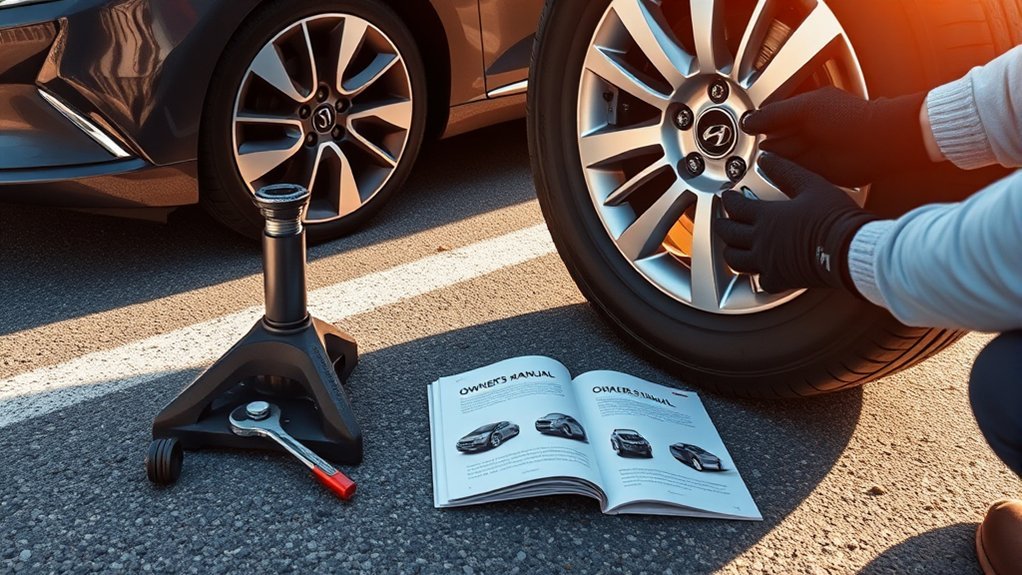
On a Sonata equipped with the factory spare-tire setup, the spare tire and emergency wheel-changing tools are normally stored in the luggage area beneath the trunk floor or luggage-box cover. Storage details can differ by model year, so use the Hyundai Digital Owner’s Manual for your exact vehicle. If your Sonata has a Tire Mobility Kit instead, stop here and follow the TMK procedure rather than attempting to jack up the car without the correct spare-tire equipment.
Gather these items before you begin:
- Compact spare tire: Make sure it is usable and properly inflated before driving on it.
- Jack and jack handle: Use the vehicle’s specified emergency jack and place it only at the designated jacking point.
- Lug wrench: Use it to loosen and tighten the wheel nuts.
- Wheel lock key: If your Sonata has locking lug nuts, you need the matching key before the wheel can come off.
- Tire pressure gauge: Check the compact spare with a gauge instead of relying on appearance.
- Wheel chock or sturdy block: Block the tire diagonally opposite the flat tire to reduce rolling risk.
- Torque wrench, if available: Use the torque specification in the owner’s manual for your exact Sonata model year.
- Gloves, flashlight, and reflective warning devices: These make the job safer and easier, especially at night.
Warning: Do not change a tire on soft ground, a steep shoulder, a blind curve, in a traffic lane, or close to moving vehicles. Never put any part of your body beneath a vehicle supported only by its emergency jack. If the vehicle is unstable, the equipment is damaged, or you cannot work safely, stay clear of the roadway and call roadside assistance.
[Products Worth Considering]

This 3-port car charger delivers high-speed power for USB-C and USB-A devices, making it a versatile charging solution for everyday driving and travel. It supports fast charging for smartphones, tablets, and even select laptops, while built-in protections help keep your devices safe during use. A USB-C to USB-C cable is included for added convenience.

This portable roadside emergency car kit helps drivers stay prepared with essential tools for common breakdowns and unexpected roadside situations. It includes jumper cables, a tow strap, a flashlight, a rain poncho, gloves, and a first aid kit, all stored in a durable zippered case for easy access and organization. With included roadside assistance coverage, it adds extra peace of mind for commuters, new drivers, and road trips.

Custom Fitment: Designed specifically for 2021-2026 Hyundai Sonata, including N Line and Hybrid models. Strictly matches OEM wheel well space and 5x114.3mm bolt pattern for direct installation
Step-by-Step Guide to Changing Your Flat Tire
- Pull over safely. Move completely off the roadway if possible and stop on a firm, level surface away from moving traffic. Turn on your hazard lights.
- Secure the Sonata. Shift to Park, apply the parking brake, turn the vehicle off, and have passengers move to a safe place away from traffic and the vehicle.
- Block the opposite tire. Place a wheel chock or sturdy block in front of and behind the tire diagonally opposite the flat tire.
- Get the spare and tools. Remove the compact spare, jack, jack handle, and lug wrench from their storage locations. If those items are not present and your Sonata has a Tire Mobility Kit instead, use the model-specific TMK instructions.
- Loosen the lug nuts. With the flat tire still on the ground, turn each lug nut counterclockwise about one turn. Do not remove the nuts yet.
- Place the jack correctly. Put the jack under the designated jacking point closest to the flat tire. Hyundai describes these jacking positions as reinforced plates with two notches on applicable Sonata designs. Never jack from the bumper, rocker trim, suspension component, or an unmarked body panel.
- Raise the vehicle. Operate the jack until the flat tire clears the ground. Pause and make sure the vehicle is stable before continuing.
- Remove the flat tire. Remove the loosened lug nuts by hand, keep them where they cannot roll away, then pull the flat tire straight off the studs. Lay the wheel flat on the ground.
- Clean the mounting surface. Remove visible dirt, gravel, mud, or debris from the hub, studs, wheel mounting surface, and mating surface of the spare so the wheel can sit flush.
- Install the spare tire. Line up the spare with the wheel studs and push it fully onto the hub. Thread the lug nuts by hand first, with the smaller or tapered end facing the wheel when that is the design specified by Hyundai. If a nut does not thread smoothly, stop rather than forcing it.
- Snug the lug nuts evenly. Use the lug wrench to tighten the nuts lightly in a star or cross pattern. Do not apply final torque while the wheel is hanging in the air.
- Lower the vehicle and finish tightening. Lower the Sonata to the ground, remove the jack, and tighten the lug nuts again in a star pattern. Use the wheel-nut torque specified in the owner’s manual for your exact Sonata model year. For reference, Hyundai’s 2025 DN8 Sonata manual lists 79–94 lbf-ft (11–13 kgf·m), but older Sonata manuals can specify a different range. Have the torque checked with a torque wrench or by a qualified tire shop as soon as practical.
- Check the compact-spare pressure. For the Hyundai compact spare covered by current Sonata guidance, the specified pressure is 60 psi (420 kPa). Confirm the value in your exact owner’s manual or spare-tire information before driving. If the pressure is incorrect, drive only as permitted by the manual and correct it as soon as safely possible.
- Secure everything. Put the flat tire, jack, handle, lug wrench, and other tools back in their proper storage locations before driving.
Pro Tip: Start every lug nut by hand. If a nut will not turn smoothly for several threads, stop and realign it. Forcing a cross-threaded lug nut can damage the wheel stud and prevent the wheel from being secured correctly.
Model-Year Torque Note: Do not copy a Sonata torque value from another generation. Hyundai’s 2025 DN8 guidance lists 79–94 lbf-ft, while published manuals for some older Sonatas specify different ranges. The exact manual for your vehicle is the final reference.
[Products Worth Considering]

Fitment: Compatible with 2017-2026 Kia Niro, 2014-2024 Kia Soul, 2021-2026 Hyundai Sonata, 2015-2020 Kia Optima - a spare tire kit specially designed for the model. An additional upgraded carrying case, designed to hold the spare tire.

Complete Kit To Quickly & Efficiently Replace A Blown Or Flat tire.

[Set Includes] 1x 2T scissor jack; 1x ratchet wrench; 1x Lug Wrench (17/19mm, 21/23mm); 1x gloves; 1x pencil type tire pressure gauge; 1 storage bag.
What Mistakes to Avoid When Changing a Tire?
The biggest mistake is continuing when the location or equipment is unsafe. A tire change is manageable only when the Sonata is stable, completely away from traffic, and equipped with the correct spare and tools. Avoid these common errors:
- Changing the tire in an unsafe spot: If traffic is too close, the ground is soft, or the car is on a slope, call for help.
- Assuming every Sonata has a spare: Some current configurations use a Tire Mobility Kit instead.
- Skipping the parking brake or wheel chock: The vehicle can roll while you are loosening nuts or using the jack.
- Removing lug nuts before lifting: Loosen them on the ground, then remove them only after the tire is raised.
- Using the wrong jack point: Jacking from an unapproved location can damage the car or allow it to slip.
- Going under the vehicle: Never put any part of your body under a vehicle supported only by an emergency jack.
- Ignoring hub debris: Dirt or gravel between the wheel and hub can keep the spare from seating properly.
- Cross-threading a lug nut: Start the nuts by hand before using the wrench.
- Using one torque specification for every Sonata: Confirm the value for your exact model year.
- Tightening in a circle instead of a star pattern: A star or cross sequence helps the wheel seat evenly.
- Driving normally on a compact spare: A compact spare is for temporary emergency use, not normal driving.
What Safety Tips Should You Follow When Changing a Tire?

Safety comes before saving time. Hyundai and roadside-assistance guidance both emphasize getting completely away from traffic, working on firm level ground, keeping people clear of the raised vehicle, and using only the correct jacking location.
- Choose firm, level ground. A jack can shift or sink on dirt, loose gravel, grass, sloped pavement, or another unstable surface. Use roadside assistance if the ground is not suitable.
- Make yourself visible. Turn on hazard lights and use reflective warning devices if you have them and can place them without exposing yourself to traffic.
- Keep people away from the vehicle. Passengers should stand away from traffic and away from the lifted Sonata.
- Do not run the engine. Keep the vehicle off while it is supported by the jack.
- Use the correct emergency jack. The vehicle jack is intended for an emergency wheel change, not for crawling underneath the car or performing other repairs.
- Inspect the equipment. Do not continue if the jack, wheel nuts, studs, wheel lock key, spare, or other required equipment is damaged or unusable.
- Stop if the car shifts. If the jack leans, the vehicle moves, or the ground changes, lower the vehicle carefully if possible and call for help.
Note: TPMS is not a replacement for a pressure gauge. The U.S. Tire Manufacturers Association recommends checking tire pressure at least once a month while the tires are cold and specifically reminds drivers not to forget the spare.
After Installing the Spare Tire: Driving Limits and Next Steps
A compact spare tire is an emergency tire, not a normal replacement wheel. Hyundai guidance for compact spares says not to operate the vehicle above 50 mph (80 km/h). The exact instructions for your spare and model year remain the controlling guidance, so also check the spare sidewall and your Sonata owner’s manual before driving.
Treat the compact spare as a temporary rescue tire: keep your speed down, leave more room for braking and steering, avoid rough-road impacts, and get the original tire repaired or replaced promptly.
When driving with a compact spare installed:
- Do not exceed the speed limit specified by Hyundai or the spare tire.
- Do not exceed the load rating shown on the spare tire sidewall.
- Do not use the compact spare continuously.
- Avoid potholes, debris, abrupt steering, and hard acceleration or braking.
- Do not use tire chains on the compact spare.
- Do not tow a trailer while the compact spare is installed when Hyundai prohibits it.
- Do not use more than one compact spare at the same time.
- Do not take the vehicle through an automatic car wash when your Hyundai manual prohibits it with the compact spare fitted.
- Have the damaged tire inspected, repaired, or replaced as soon as possible.
- Have the wheel nuts checked to the proper torque for your exact model year.
How to Care for Your Spare Tire
Caring for your spare before a flat happens is one of the easiest ways to prevent a roadside problem from becoming a tow. The U.S. Tire Manufacturers Association recommends checking tire pressure at least monthly when the tires are cold and reminds drivers to check the spare too. For a compact Sonata spare, use the pressure stated in your exact owner’s manual and on the applicable spare-tire information. Current Hyundai Sonata guidance lists 60 psi (420 kPa) for the compact temporary spare.
Inspect the spare for:
- Low pressure: A spare can lose air even while sitting unused in the trunk.
- Cracks, cuts, or bulges: Do not depend on a visibly damaged emergency tire.
- Worn tread: Compact spares have shorter tread life than normal road tires.
- Age: Check the DOT date code and follow the tire manufacturer’s and vehicle manufacturer’s replacement guidance.
- Missing tools: Make sure the jack, lug wrench, jack handle, wheel chock, and wheel-lock key are present when applicable.
- TMK sealant expiration: If your Sonata uses a Tire Mobility Kit instead of a spare, periodically check the sealant expiration date and kit condition.
If your Sonata is equipped with a compact spare, do not rotate that temporary tire into ordinary service. If your vehicle has a different type of spare, follow the rotation and use instructions in the owner’s manual for that exact setup.
Frequently Asked Questions
Does every Hyundai Sonata have a spare tire?
No. Current U.S. Sonata specifications show that emergency equipment varies by configuration: some versions use a compact temporary spare while others use a Tire Mobility Kit. Check beneath the trunk floor and confirm the equipment listed for your exact model year and trim before relying on a spare-tire procedure.
How do I know if my spare tire is safe to use?
Check the spare’s pressure with a gauge and inspect the tread and sidewall for cracks, bulges, cuts, or other damage. Confirm the tire is within the replacement guidance from the tire and vehicle manufacturers. For a Hyundai compact spare covered by current Sonata guidance, the listed pressure is 60 psi (420 kPa), but confirm the specification for your exact vehicle.
Can I drive on a flat tire for a short distance?
Avoid driving on a flat tire. Even a short distance can damage the tire and wheel and can make the vehicle harder to control. If staying where you are creates an immediate traffic danger, move only as necessary to reach a safer stopping point, then stop and arrange assistance.
What should I do if I can’t remove a lug nut?
Check first for a locking lug nut that requires a wheel-lock key. Make sure the wrench or key is fully seated and apply controlled pressure while the tire is still on the ground. If the nut is rounded, seized, the key slips, or the vehicle moves while force is applied, stop and call roadside assistance rather than using unsafe leverage.
What is the correct Hyundai Sonata lug-nut torque?
Use the torque specification in the owner’s manual for your exact Sonata model year. Do not assume one number applies to every generation. For example, Hyundai’s 2025 DN8 Sonata guidance lists 79–94 lbf-ft (11–13 kgf·m), while some older Sonata manuals specify different ranges.
How often should I check my spare tire’s pressure?
Check tire pressure at least once a month and before long trips. Measure pressure when the tire is cold, generally after the vehicle has been parked for at least three hours. A compact spare normally uses a different pressure from the road tires, so follow the spare-tire specification rather than the pressure for the four normal tires.
How fast can I drive on a Hyundai compact spare tire?
Hyundai compact-spare guidance says not to operate the vehicle above 50 mph (80 km/h). Drive slower when road, traffic, or weather conditions require it and have the original tire repaired or replaced as soon as possible.
Will the TPMS monitor my Sonata’s spare tire?
Do not rely on the spare being monitored like the four normal wheels. Hyundai’s DN8 guidance states that the spare tire on the covered configuration does not have a tire-pressure sensor, so a low-pressure or TPMS warning can remain after the spare is installed. Behavior can vary by model year and market. Use a pressure gauge for the spare and see the Hyundai Sonata TPMS guide for more system-specific information.
Conclusion
Changing a flat tire on a Hyundai Sonata is manageable when the vehicle is completely away from traffic, the ground is firm and level, and your car actually has a usable spare and the correct tools. First confirm whether your Sonata has a compact spare or Tire Mobility Kit. If it is spare-equipped, secure the vehicle, loosen the lug nuts on the ground, lift only from the designated jack point, install the spare, lower the vehicle, and tighten the wheel nuts evenly using the torque specified for your exact model year. Check the compact spare pressure before continuing, keep your speed within Hyundai’s temporary-spare limit, and arrange permanent tire repair or replacement as soon as possible. If the location, vehicle, tools, or tire equipment makes the job unsafe, use roadside assistance instead.
Sources
- Hyundai Owner’s Manual — 2025 Sonata (DN8) — provides Sonata-specific emergency sections for both spare-tire and Tire Mobility Kit configurations, TPMS guidance, tire information, and vehicle-specific procedures.
- Hyundai USA — Sonata Features and Specifications — verifies that current U.S. Sonata emergency tire equipment varies by configuration, with compact temporary spares on some versions and Tire Mobility Kits on others.
- U.S. Tire Manufacturers Association — Tire Care Essentials — supports monthly cold tire-pressure checks, checking the spare, tread inspection, and the limitation of TPMS as a substitute for manual pressure checks.
- NHTSA TireWise — provides federal consumer guidance on tire safety, inflation, tire condition, labeling, and maintenance.
- AAA Club Alliance — How to Change a Tire — supports roadside safety, loosening lug nuts before lifting, correct jack placement, hand-starting lug nuts, star-pattern tightening, and calling roadside assistance when conditions or equipment are unsafe.