By Ryker Calloway · Published April 19, 2026 · Last updated: July 31, 2026
Method: This guide was checked against current U.S.-market Toyota specifications, Toyota’s 2026 competitor data, and attributed independent driver-fit observations. It does not claim an in-house occupant measurement or test.
The 2026 Toyota GR Supra provides 38.3 inches of front headroom, 42.2 inches of front legroom, 54.4 inches of shoulder room, and 54.2 inches of hip room. Those measurements favor leg space, but they do not establish a reliable maximum driver height. Your torso length, inseam, posture, footwear, seat setting, and helmet use can matter more than total height.
Quick Answer
The 2026 Toyota GR Supra has generous legroom for a compact two-seat sports car but a low roof and enclosed cockpit. Long-legged drivers may fit comfortably, while long-torso drivers can run out of head clearance sooner. Set the seat to its lowest available position, adjust the wheel after the seat, and repeat the test with your helmet if you plan to drive on a track.
Key Takeaways
- The Supra has 42.2 inches of front legroom and 38.3 inches of front headroom.
- There is no dependable “maximum driver height” based on the specification sheet alone. Torso-to-leg proportions are more useful than total height.
- Power-adjustable heated sport seats are standard on the 3.0 and 3.0 Premium. Toyota specifically highlights 14-way adjustment for the 3.0 Premium, so test the exact trim you plan to buy.
- The BMW Z4 lists more headroom, while the Nissan Z and Corvette list slightly more legroom than the Supra.
Who Fits Comfortably in the 2026 Toyota Supra?
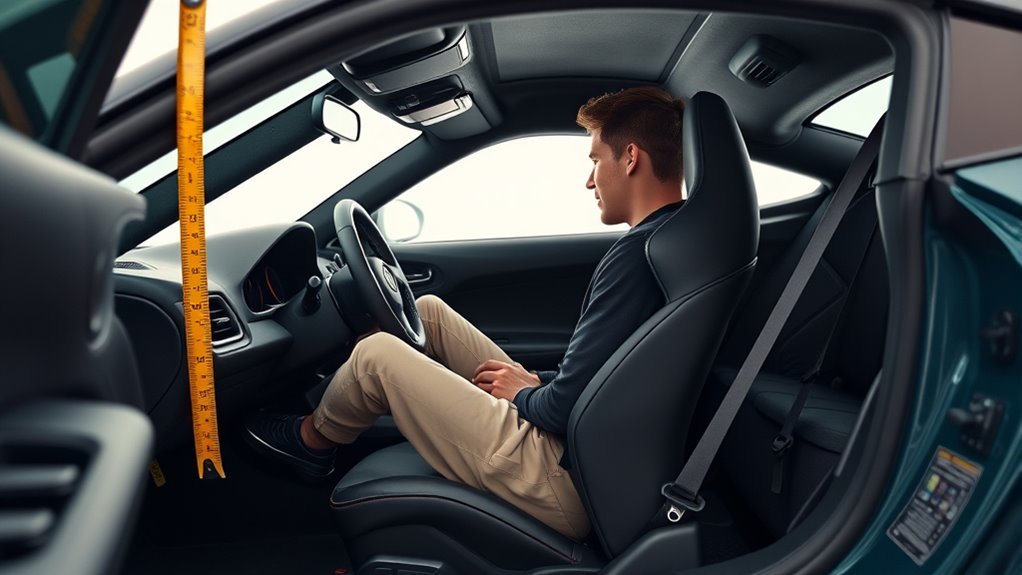
You will fit the 2026 GR Supra best if you prefer a low, snug, performance-focused driving position instead of a roomy grand-touring cabin. Toyota’s current comparison specifications list 38.3 inches of headroom, 42.2 inches of legroom, 54.4 inches of shoulder room, and 54.2 inches of hip room.
The legroom gives many drivers enough space to set a comfortable knee angle. The more likely restrictions are the low roof contour, windshield header, door opening, seat bolsters, and the position of your torso after the pedals and steering wheel are set.
Fit principle: A driver with long legs and a shorter torso may have more usable head clearance than a shorter driver with a long torso. Compare body proportions, not height alone.
What Are the 2026 Toyota Supra Headroom and Legroom Measurements?
The following U.S.-market measurements describe the two-seat 2026 Toyota GR Supra. They are useful for comparing cars, but they do not guarantee how much space will remain above a particular driver’s head after the seat, backrest, and steering wheel are adjusted.
| Measurement | 2026 GR Supra | What it means for fit |
|---|---|---|
| Front headroom | 38.3 in | The main constraint for long-torso drivers and helmet use. |
| Front legroom | 42.2 in | Competitive reach for a compact two-seat sports car. |
| Front shoulder room | 54.4 in | Check elbow and shoulder clearance with a passenger aboard. |
| Front hip room | 54.2 in | Usable comfort depends on body shape and the seat bolsters. |
| Passenger volume | 50.9 cu ft | Compact two-seat packaging rather than an open, spacious cabin. |
| Cargo volume | 10.2 cu ft | Useful for light travel bags but unrelated to occupant legroom. |
The Supra provides strong published legroom, but its low roof and cockpit shape make torso length the more important fit variable.
Measurement limit: Headroom specifications are comparison figures. They do not account for hairstyle, helmet thickness, seatback angle, posture, or where your head sits beneath the roof contour.
Toyota identifies 2026 as the final model year of the fifth-generation GR Supra. The lineup includes the 3.0, 3.0 Premium, and MkV Final Edition, and Toyota stated that MkV production would end in spring 2026.
How Do You Maximize Headroom in a Toyota Supra?
For U.S. 2026 cars, Toyota confirms power-adjustable heated sport seats on the 3.0 and 3.0 Premium. Toyota’s current trim page specifically highlights 14-way heated power-adjustable seats for the 3.0 Premium. Test the exact vehicle rather than assuming every trim, region, or used example has identical seat controls.
Start by lowering the seat cushion before moving the seat rearward. Then adjust the distance so you can operate the brake, accelerator, and clutch, when fitted, without locking your knee or lifting your hips from the seat. Set the steering wheel after the seat so your legs have room without forcing your arms to stretch.
Use the backrest to keep your shoulders supported while maintaining roof clearance. Excessive recline may create more space above your head, but it can also increase steering reach and reduce control. The goal is a repeatable driving position, not the lowest possible posture at any cost.
Pro Tip: Do not judge the Supra with the seat left in the previous driver’s position. Reset the seat low, set pedal distance, adjust the wheel, and then recheck your head, knees, shoulders, and mirrors.
[Products Worth Considering]

This portable carplay screen brings wireless CarPlay and Android Auto to compatible vehicles, giving you easy access to navigation, calls, music, and messages without needing to plug in your phone every time. Its 7-inch HD touchscreen, mirror link support, and voice control make driving more convenient, while multiple audio output options and simple plug-and-play setup add everyday flexibility.

This portable car stereo adds wireless Apple CarPlay and Android Auto to nearly any vehicle without replacing the factory head unit. The 7-inch HD touchscreen supports voice control, GPS navigation, mirror link, Bluetooth calling, and multiple audio output options for a safer, more connected drive. It also includes backup camera support and flexible mounting for easy installation and removal.

Portable Folding Heated Seat Cushion: (Mobile Power Pack Not Included) take your comfort while watching your favorite sports games at the stadium to a next level, with our heated stadium bleacher seat; This heated seat cushion made of cationic fabric, to keep your butt dry and warm; With a heat mode of up to 122/138/149F that will keep you warm during cold months, the heating pad you need to turn heating mode
What Do Independent Tall-Driver and Helmet Tests Show?
Independent observations show why a height-only rule is unreliable. In a Cars.com first drive, the reviewer reported that taller drivers could get comfortable because of the seat’s travel, but helmet use required the seat to be set lower.
During a separate preproduction helmet check, a 5-foot-11 reviewer had less than an inch of clearance above the helmet. A 6-foot-4 Toyota engineer also fit, but with even less space. These observations show that some very tall drivers can fit, not that every 6-foot-4 driver will fit safely or comfortably.
Evidence limit: Driver proportions, helmet shape, seat adjustment, and production-seat configuration vary. Use independent tests as context, not as a guaranteed height limit.
Is the Supra Roomier Than the Nissan Z, BMW Z4, or Corvette?
The Supra is competitive with other two-seat sports cars, but each rival distributes space differently. Toyota’s current comparison data show that the Z4 has more listed headroom, while the Nissan Z and Corvette have slightly more listed legroom.
| Car | Headroom | Legroom | Fit takeaway |
|---|---|---|---|
| 2026 Toyota GR Supra | 38.3 in | 42.2 in | Strong legroom with a low, enclosed coupe roof. |
| 2026 BMW Z4 | 38.9 in | 42.2 in | Same listed legroom and 0.6 inch more listed headroom. |
| 2026 Chevrolet Corvette Stingray | 37.9 in | 42.8 in | More listed legroom but less listed headroom. |
| 2026 Nissan Z | 38.2 in | 42.9 in | Nearly identical headroom and 0.7 inch more listed legroom. |
The better fit depends on which dimension restricts you. A driver who needs more knee reach may prefer the Nissan Z or Corvette. A driver who needs more roof clearance may prefer the Z4. These differences are small enough that a direct back-to-back seating test is more useful than choosing from the numbers alone.
Can Tall Drivers Fit in the 2026 Toyota Supra?
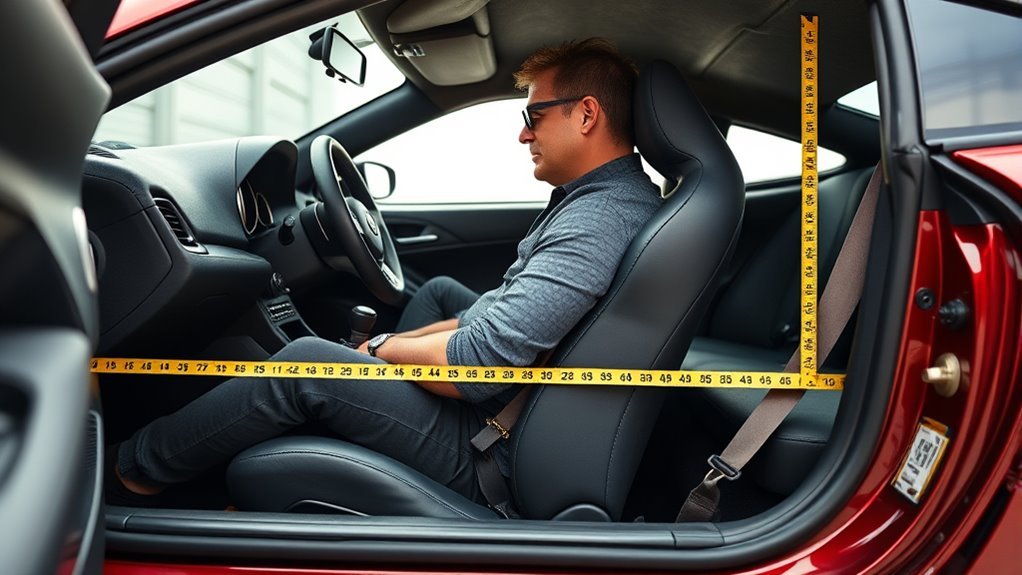
Some tall drivers can fit in the 2026 Supra, including drivers above 6 feet, but there is no dependable height cutoff. A long-legged driver may use the 42.2 inches of legroom effectively, while a long-torso driver may approach the roof despite being shorter overall.
Use this setup order during your test drive:
- Lower the seat first. Start with the lowest available cushion position.
- Set pedal distance. Move the seat until you can fully operate each pedal without locking your knee or lifting your hips.
- Set the steering wheel after the seat. Bring the wheel toward you if your legs need distance but your arms feel stretched.
- Adjust the backrest and lumbar support. Keep your shoulders supported without forcing your head toward the roof.
- Check the cabin with a passenger. Shoulder and elbow space can feel different when both seats are occupied.
- Drive beyond the dealership lot. Include uneven pavement, turns, lane changes, and at least one normal entry and exit after the drive.
Body-Proportion Fit Checks
| Concern | How to test it | Warning sign |
|---|---|---|
| Long torso | Sit in your normal posture with the cushion at its lowest position. | Your hair, head, or helmet contacts the roof during normal movement. |
| Long legs | Fully press the brake and clutch, when fitted, while keeping your hips against the seat. | Your knee locks, strikes the trim, or forces your hips forward. |
| Broad shoulders | Sit with your usual passenger and turn the wheel through normal hand positions. | Your elbows or shoulders repeatedly contact the passenger or door. |
| Visibility | Check traffic-light, mirror, and rear-quarter sightlines from the final seat position. | You must duck, lean, or repeatedly move your head to see routine traffic. |
| Entry and exit | Get in and out several times with the door opened as it would be in your normal parking space. | The roof, sill, or door opening causes repeated discomfort or difficult twisting. |
Warning: If you plan to use the Supra for track days, repeat the complete seating and pedal test while wearing your actual helmet. Street clearance does not guarantee adequate helmet clearance.
How Should You Test Supra Cabin Fit Before Buying?
Set the seat low enough to protect headroom, then raise it only as much as needed for visibility. The final position should let you use every pedal, keep your shoulders supported, turn the wheel without stretching, and see routine traffic without ducking or leaning.
- Head clearance: Check the roof with your normal hairstyle, posture, and helmet when relevant.
- Forward view: Make sure the windshield header and rearview mirror do not obstruct traffic lights or corner sightlines.
- Side mirrors: Angle them outward enough to reduce blind areas, then confirm the setting on the road.
- Pedal reach: Confirm that you can press the brake fully without lifting your hips or locking your knee.
- Manual-transmission fit: Check full clutch travel, shifter reach, left-knee clearance, and your preferred brake-and-throttle footwork.
- Entry and exit: Practice several times. The low roof, seating position, sill, and door opening affect every trip.
- Passenger test: Bring the person who will ride with you most often and check shoulder, knee, and elbow comfort together.
- Drive duration: Spend at least 15 minutes in the final position and include rough pavement and normal lane changes.
[Products Worth Considering]

Comfortable Car Seat Cushion: The breathable fabric, polymer memory foam and non-slip silicone gel of this car seat cushion with right thickness help you to reduce the pressure on the coccyx

DESIGNED FOR COMFORT - kingphenix car seat cushion combines ergonomic design and memory foam technology to provide exceptional comfort and support. The wedge shape helps improve posture and alleviate pressure on the waist, legs, and buttocks. It is the ideal choice for long drives and daily work, offering the perfect solution for extended periods of sitting

Best Memory Foam Car Seat Cushion On The Market— Lofty Aim’s car cushion use premium quality durable memory foam,non-slip rubber bottom, unique storage pouch design. Adopt skin-friendly breathable fabric on top for superior comfort. Lofty Aim Premium Truck Seat Cushion can provide you with the most comfortable user experience in all seasons
Who May Find the Supra Too Small?
The Supra may not suit you if you need easy entry, a high hip point, generous elbow space, or an open view through the rear quarters. Long-torso drivers, broad-shouldered occupants, and helmeted track drivers have the greatest reason to perform a careful fit test.
Do not treat discomfort in the showroom as something that will automatically disappear after purchase. If you need excessive seat recline, cannot operate the pedals without changing hip position, or repeatedly contact the roof, compare the Supra directly with the Z4, Nissan Z, and Corvette before deciding.
Frequently Asked Questions
How much headroom and legroom does the 2026 Toyota Supra have?
The 2026 Toyota GR Supra has 38.3 inches of front headroom and 42.2 inches of front legroom. It also lists 54.4 inches of shoulder room and 54.2 inches of hip room.
Can a 6-foot-tall driver fit in the 2026 Supra?
Many 6-foot drivers can fit, but total height alone cannot predict comfort. A long-legged driver may have adequate space, while a long-torso driver may sit closer to the roof. Test the lowest seat position and your normal backrest angle before buying.
Can a 6-foot-4 driver fit in a Toyota Supra?
Some can. Cars.com documented a 6-foot-4 Toyota engineer fitting in a Supra while wearing a helmet, although the remaining clearance was very small. That observation is not a universal guarantee because torso length, posture, helmet shape, and seat setting vary.
Does the manual Supra have different headroom or legroom?
The published cabin dimensions are the same, but the manual can require a different seating position because you must fully depress the clutch. Test clutch travel, left-knee clearance, shifter reach, and steering-wheel distance before choosing the transmission.
Is the Supra roomier than the Nissan Z?
The Supra has 38.3 inches of listed headroom and 42.2 inches of legroom. The 2026 Nissan Z lists 38.2 inches of headroom and 42.9 inches of legroom. The Supra has a 0.1-inch headroom advantage, while the Z has 0.7 inch more listed legroom.
Conclusion
The 2026 Toyota GR Supra provides strong legroom but combines it with a low roof and an enclosed two-seat cockpit. Its 38.3 inches of headroom and 42.2 inches of legroom are useful comparison points, not a universal driver-height limit.
Before buying, set the exact car’s seat to its lowest position, establish pedal reach, adjust the steering wheel, and recheck your roof clearance, sightlines, passenger space, and entry. Track drivers should repeat the process with their actual helmet. For related maintenance and ownership information, browse the Toyota Supra Guide.
Sources
- Toyota GR Supra Competitor Comparison — official U.S. headroom, legroom, shoulder room, hip room, cargo capacity, and rival measurements.
- Toyota 2026 GR Supra vs. BMW Z4 — official Supra and Z4 headroom, legroom, shoulder room, and cargo comparison.
- Toyota 2026 GR Supra Overview — current lineup and 3.0 Premium 14-way heated power-seat description.
- Toyota USA Newsroom: 2026 GR Supra MkV Final Edition — U.S. lineup, seat descriptions, model-year changes, and production timing.
- Car and Driver Toyota GR Supra Specifications — independent confirmation of passenger volume and cabin dimensions.
- Cars.com Toyota Supra First Drive and Cars.com Helmet-Fit Check — attributed tall-driver, seat-position, and helmet-clearance observations.