Your Toyota GR Supra uses a 5×112 bolt pattern, a 66.5 mm hub bore that is often listed as 66.6 mm, and M14 x 1.25 wheel bolts. That means wheel fitment is not just about diameter or style: the bolt pattern, center bore, bolt seat, bolt length, offset, brake clearance, tire size, and final torque all have to work together before the car is safe to drive.
Quick Answer
The A90/A91 Toyota GR Supra uses a 5×112 bolt pattern, a 66.5 mm hub bore commonly rounded to 66.6 mm, M14 x 1.25 wheel bolts, and a 140 Nm / 103 ft-lb wheel-bolt torque spec. Factory wheel sizes are staggered: 18×9/18×10 on 2.0L models and 19×9/19×10 on 3.0L models.
Key Takeaways
- Choose direct-fit 5×112 wheels whenever possible; avoid bolt-pattern adapters unless a qualified fitment shop approves the setup.
- Match the Supra’s 66.5/66.6 mm hub bore with the wheel bore or use quality hub-centric rings to prevent vibration.
- Use M14 x 1.25 wheel bolts with the correct seat type and shank length for the wheel or spacer.
- Torque wheel bolts to 140 Nm / 103 ft-lb in a star pattern, then re-check after the first 50–100 miles when wheels or spacers have been removed.
- Brake caliper clearance, offset, tire width, ride height, and camber matter as much as bolt pattern when buying aftermarket wheels.
At a Glance
| Time Required | 15–30 minutes to check specs before ordering; longer if test-fitting wheels |
| Difficulty | Easy for spec checking; moderate for spacer or test-fit work |
| Tools Needed | Digital caliper, torque wrench, socket, jack and stands, flashlight, straightedge, wheel template if available |
| Cost | Free if you already have tools; $30–$150 for basic measuring and torque tools, not including wheels, tires, bolts, or spacers |
GR Supra Bolt Pattern & Hub Bore
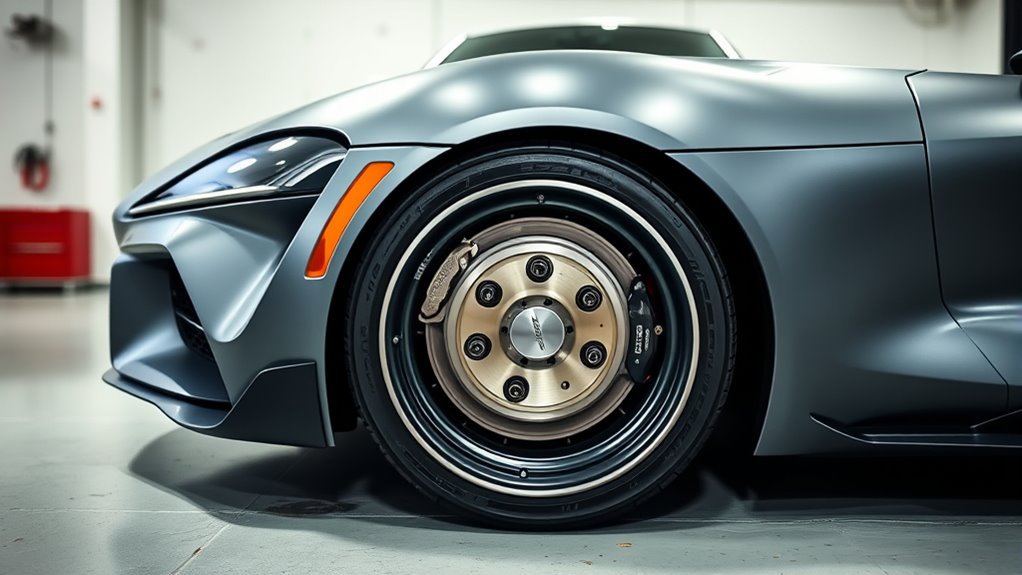
The fifth-generation Toyota GR Supra, also known as the A90/A91 or MK5 Supra, uses a 5×112 bolt pattern. This differs from many older Supra generations, including the MK4, which used 5×114.3. Do not assume wheels from an older Supra will bolt onto a GR Supra.
The GR Supra’s hub bore is commonly listed as 66.5 mm or 66.6 mm, depending on how the source rounds the measurement. In practical fitment terms, you should buy wheels, hub-centric rings, or spacers made for the GR Supra’s Toyota/BMW-style 66.5/66.6 mm hub. The car also uses M14 x 1.25 wheel bolts, not traditional pressed-in wheel studs with lug nuts.
For factory wheel-bolt torque, use 140 Nm / 103 ft-lb unless your wheel, spacer, or service documentation gives a different approved procedure. Toyota owner publications are available through the Toyota Owners manual portal, and factory wheel and tire data is listed in Toyota’s GR Supra brochure.
| Specification | GR Supra A90/A91 | Why It Matters |
|---|---|---|
| Bolt pattern | 5×112 | Wheel must match the hub’s five-bolt pitch circle |
| Center bore / hub bore | 66.5 mm, often listed as 66.6 mm | Centers the wheel on the hub and helps prevent vibration |
| Wheel-bolt thread | M14 x 1.25 | Wrong thread pitch can damage the hub or fail to clamp safely |
| Wheel-bolt torque | 140 Nm / 103 ft-lb | Correct clamp load helps prevent loose wheels and rotor distortion |
| Factory fitment style | Staggered | Rear wheels and tires are wider than the front from the factory |
Warning: Never force a wheel bolt, use mismatched threads, or drive the car if a wheel does not sit flush against the hub. If the bolt bottoms out, binds, or feels loose before final torque, stop and verify the hardware.
How to Measure Bolt Pattern and Center Bore on Your Supra
You usually do not need to measure the GR Supra’s bolt pattern from scratch because the factory spec is 5×112, but measuring is useful when confirming used wheels, spacers, or unmarked aftermarket wheels.
Start by counting the lug holes. The GR Supra has five. On a five-lug wheel, there is no perfectly opposite lug hole, so do not measure center-to-center straight across as you would on a four- or six-lug wheel. Use a PCD gauge, a printable 5×112 template from a trusted wheel manufacturer, or measure from the center of one hole to the outside edge of the hole two positions away. If the measurement is close to 112 mm, confirm with a proper PCD gauge before buying.
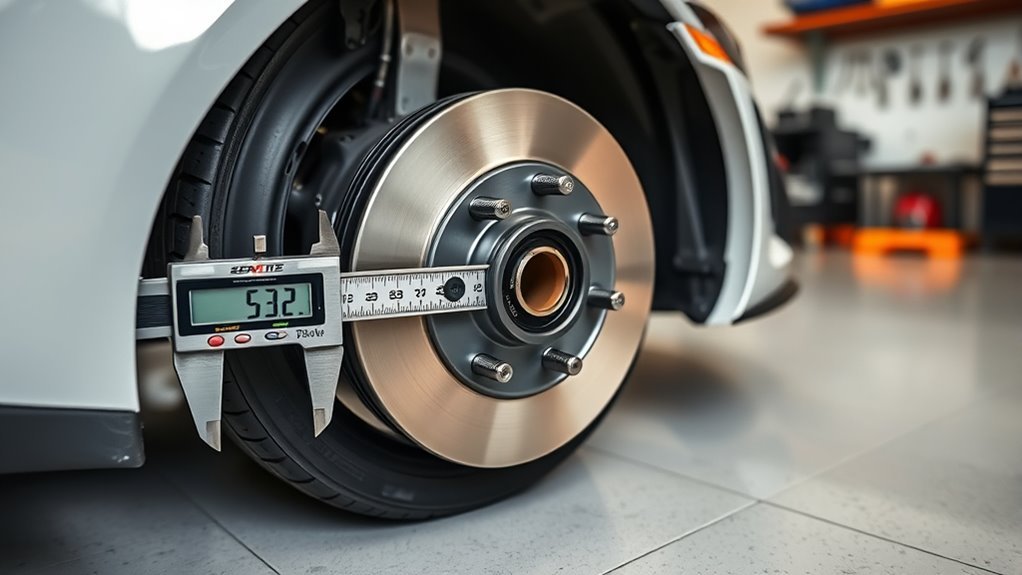
For the center bore, use a digital caliper to measure the inside diameter of the wheel’s center hole and the outside diameter of the car’s hub pilot. Take at least three measurements around the circle. If the wheel bore is slightly larger than the Supra hub, you can use hub-centric rings. If the wheel bore is smaller than the hub, the wheel will not fit without machining, and machining should only be done by a qualified wheel specialist.
- Confirm the PCD: the wheel must be 5×112, not 5×114.3, 5×120, or “close enough.”
- Measure the wheel bore: it must be 66.5/66.6 mm or larger with the correct hub-centric ring.
- Check the bolt seat: aftermarket wheels may use a conical, ball, or specific tuner seat that differs from factory hardware.
- Check bolt length: bolts must provide secure thread engagement without bottoming out inside the hub.
- Test-fit before driving: spin the wheel by hand and check for caliper, suspension, liner, and fender contact.
Pro Tip: Before ordering wheels, ask the wheel seller for a brake-clearance template for your exact wheel size and offset. This is especially important on 3.0L models with larger front Brembo calipers.
OEM Wheel, Tire & Hub Specs: 2.0L vs. 3.0L
The GR Supra’s factory wheel and tire package depends on engine, model year, and market. For North American cars, the 2.0L model used 18-inch staggered wheels, while the 3.0L model used 19-inch staggered wheels. Toyota simplified the U.S. lineup for 2025, with the 2025 GR Supra offered in 3.0 and 3.0 Premium grades, both powered by the 3.0L inline-six, according to Toyota’s 2025 GR Supra press release.
| Model / Trim | Front Wheel | Rear Wheel | Front Tire | Rear Tire |
|---|---|---|---|---|
| GR Supra 2.0L | 18×9 +32 | 18×10 +40 | 255/40ZR18 | 275/40ZR18 |
| GR Supra 3.0L | 19×9 +32 | 19×10 +40 | 255/35ZR19 | 275/35ZR19 |
Both factory setups share the same 5×112 bolt pattern, 66.5/66.6 mm hub bore, and M14 x 1.25 wheel-bolt thread. The important differences are diameter, tire sidewall height, caliper clearance, and how much room remains near the fender and suspension.
2.0L vs. 3.0L Wheels
The 2.0L Supra’s 18-inch wheels provide more tire sidewall, which can improve impact comfort and give the tire a little more compliance on rough roads. The 3.0L Supra’s 19-inch wheels reduce sidewall height and sharpen steering feel, while also clearing the larger front brake package used on 3.0L models.
You can often run 19-inch wheels on a 2.0L Supra if the wheels have the correct bolt pattern, hub bore, offset, tire size, and brake clearance. Going the other direction requires more care: not every 18-inch wheel clears the 3.0L front Brembo calipers, even if the diameter sounds large enough.
Tire Size Differences
The factory tire sizes keep overall diameter very close between the 18-inch and 19-inch setups. The main difference is sidewall height, not a dramatic change in gearing. A 255/40ZR18 front tire and a 255/35ZR19 front tire are nearly the same overall diameter, but the 18-inch tire has a taller sidewall. The same is true for the rear 275/40ZR18 and 275/35ZR19 pair.
When replacing tires, match the factory load rating and speed rating or choose a tire approved by a tire professional for your use. The factory Michelin Pilot Super Sport sizes listed in Toyota’s brochure are staggered, so do not rotate front-to-rear unless you are running a square aftermarket setup designed for that purpose.
Hub and Bolt Specs
The GR Supra uses wheel bolts, not factory wheel studs. That detail matters because spacer installation and aftermarket wheel hardware are different from many Japanese performance cars that use studs and lug nuts.
- Thread: M14 x 1.25
- Torque: 140 Nm / 103 ft-lb
- Hub bore: 66.5 mm, commonly rounded to 66.6 mm
- PCD: 5×112
- Hardware check: verify bolt seat style and shank length before installation
Correct GR Supra wheel fitment is more than “5×112.” A safe setup also needs the right center bore, wheel-bolt thread, bolt seat, bolt length, offset, tire size, brake clearance, and torque.
Aftermarket Wheel Sizes and Ideal Offsets for GR Supra
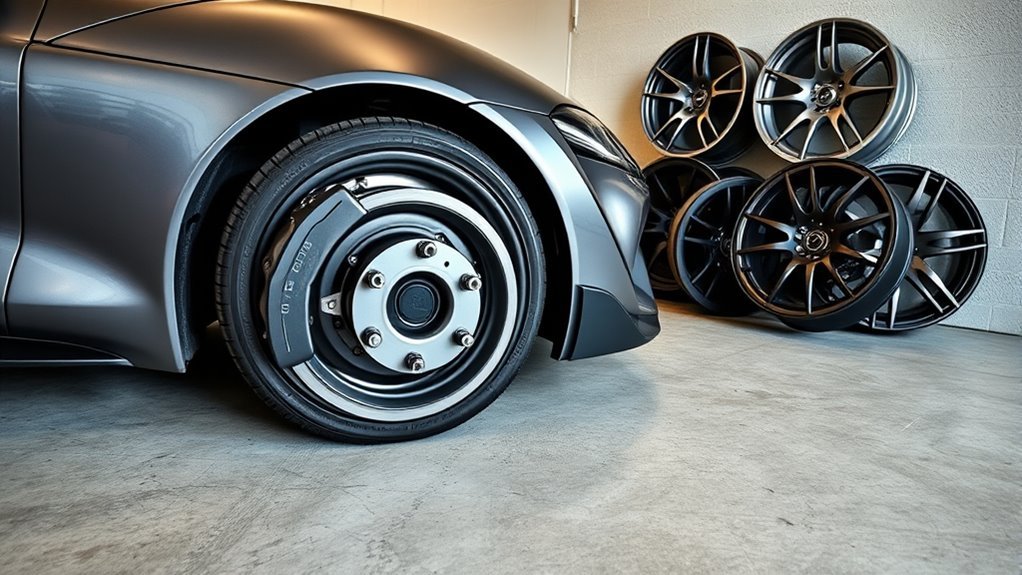
Aftermarket GR Supra wheel fitment should start with the non-negotiables: 5×112 PCD, 66.5/66.6 mm hub-centric fit, M14 x 1.25 hardware compatibility, and enough caliper clearance. After that, choose width and offset based on your tire size, ride height, alignment, and whether the car is for street, track, or show use.
Common aftermarket diameters are 18, 19, and 20 inches. For most street-driven Supras, 19 inches is the easiest balance because it matches the 3.0L factory diameter, supports many performance tire sizes, and leaves practical brake clearance. Eighteen-inch track wheels can work, but they require careful spoke and barrel clearance checks on 3.0L cars. Twenty-inch wheels can look aggressive, but they reduce sidewall height and increase rubbing risk on lowered cars.
| Setup | Common Wheel Size | Common Tire Size | Typical Offset Range | Notes |
|---|---|---|---|---|
| OEM-style 2.0L | 18×9 front / 18×10 rear | 255/40R18 front / 275/40R18 rear | +32 front / +40 rear | Comfortable factory-style staggered setup |
| OEM-style 3.0L | 19×9 front / 19×10 rear | 255/35R19 front / 275/35R19 rear | +32 front / +40 rear | Factory baseline for most 3.0L cars |
| Street staggered | 19×9.5 front / 19×10.5 rear | 255/35R19 front / 275/35R19 or 285/35R19 rear | About +25 to +35 front / +35 to +45 rear | Popular fitment; verify fender and brake clearance |
| Square performance | 18×10 or 19×10 all around | Usually 275-width tires | About +30 to +40 | May require camber, spacers, or suspension clearance work |
| 20-inch street/show | 20×9.5 front / 20×10.5 rear | 255/30R20 front / 285/30R20 rear | About +32 to +45 | Lower sidewall; highest rubbing and ride-quality risk |
Lower offset pushes the wheel outward. Higher offset pulls the wheel inward. A small outward change can improve stance, but too much poke can rub the fender lip, and too much inward movement can hit the strut, spring perch, control arm, or inner liner. That is why offset should be chosen with wheel width and tire width, not by offset number alone.
Note: Fitment databases such as Wheel-Size are useful for checking PCD, bore, thread size, and baseline wheel specs, but final clearance still depends on the exact wheel design, tire brand, ride height, alignment, and brake package.
[Products Worth Considering]

This wheel lock key set is designed to help remove and replace compatible Toyota and Lexus wheel locks with confidence. It includes four wheel lock nuts and one key, offering a practical replacement solution for many popular models while supporting secure wheel protection and reliable fitment. Built for durability and corrosion resistance, it is a useful choice when matching OE reference numbers and vehicle compatibility is important.

This wheel lock lug nut set adds an extra layer of theft protection for compatible Toyota and Lexus vehicles by securing wheels with a unique key pattern that resists common removal tools. Built to OEM-standard fitment with corrosion-resistant, triple-chrome finished construction, it is designed for direct replacement and long-lasting performance. The set includes locking nuts and a matching key for easy installation on compatible vehicles with the correct thread and cone seat specifications.
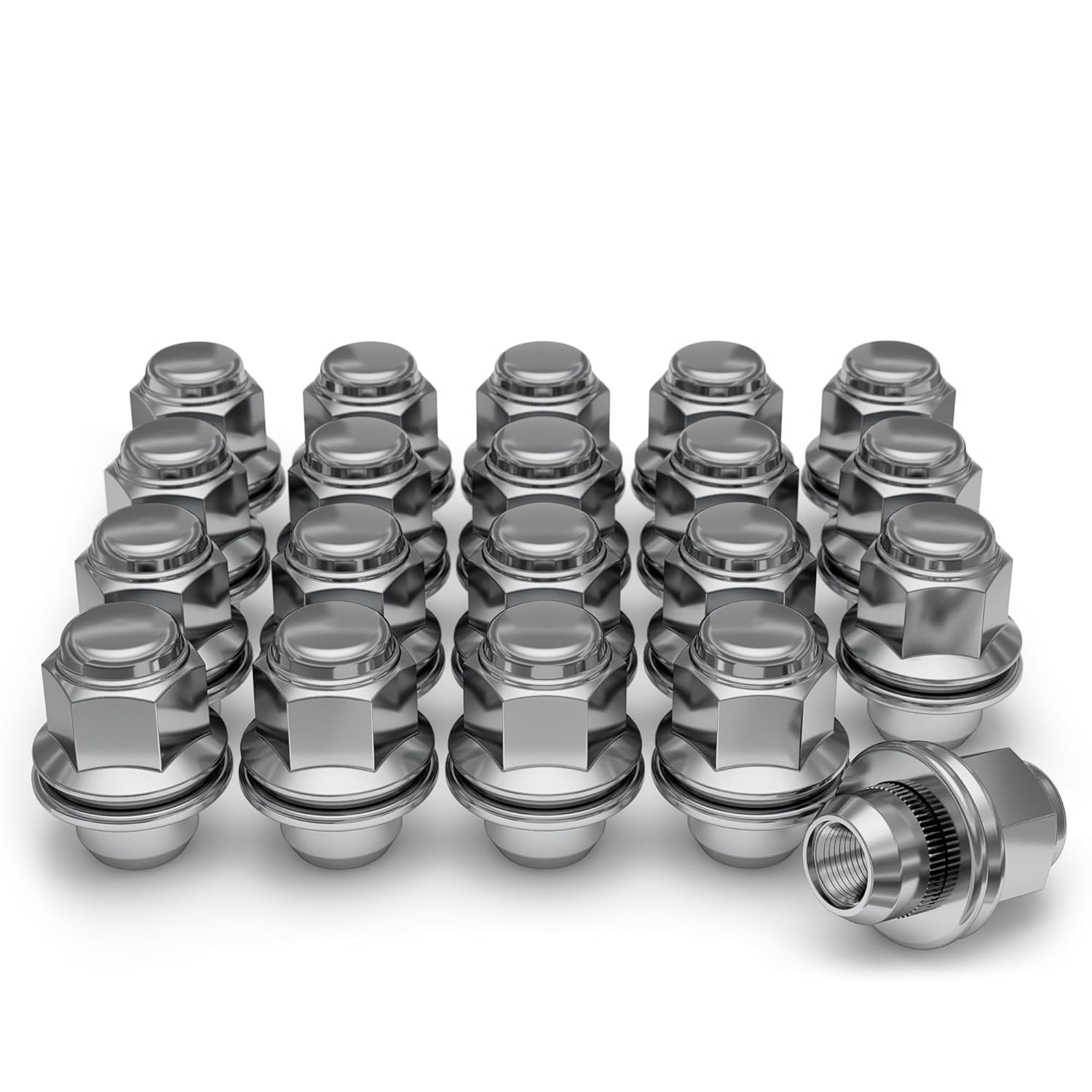
These White Knight mag-style lug nuts are designed for select Toyota, Lexus, Kia, and Genesis vehicles, delivering a secure fit and a clean factory-inspired look. Made from heat-treated cold forged carbon steel with a chrome finish, they offer durable strength, reliable corrosion resistance, and easy installation with a traditional hex-body, flat-seat design. Use them to replace worn or damaged lug nuts while maintaining proper wheel fitment and dependable performance.
Wheel Spacers & Adapters: When to Use Them and Safety Tips
Wheel spacers move the wheel outward from the hub. On a GR Supra, they are usually used for stance, fender flushness, or brake/suspension clearance. A spacer does not change the wheel’s actual offset, but it changes the effective offset. For example, a 10 mm spacer makes a +40 wheel behave like a +30 wheel.
Use hub-centric spacers made for the GR Supra’s 5×112 bolt pattern and 66.5/66.6 mm hub. H&R’s spacer guidance explains that some spacer systems require longer wheel bolts, while other bolt-on systems use separate fastening hardware. That distinction matters on the Supra because it uses wheel bolts from the factory, not studs.
- Use the right spacer type: hub-centric, 5×112, correct hub bore, and correct wheel-bolt thread.
- Use the right bolts: if using slip-on spacers, bolt shank length must usually increase by the spacer thickness.
- Clean the mounting faces: rust, debris, paint buildup, or anti-seize on the wrong surface can affect clamp load.
- Do not stack spacers: use one correctly sized spacer per corner.
- Torque correctly: use 140 Nm / 103 ft-lb unless the spacer manufacturer provides a different approved spec.
- Re-check after driving: re-torque after 50–100 miles and inspect for vibration, clicking, rubbing, or bolt movement.
Warning: Bolt-pattern adapters are not the same as simple spacers. Adapters that change 5×112 to another pattern add thickness, hardware, and failure points. For a street car, direct-fit 5×112 wheels are the safer and cleaner choice.
[Products Worth Considering]

[Quality and Safety Assurance] The KSP wheel spacers are REAL FORGED from Lightweight Anodized Black 6061-T6 Aluminum,is stronger and more durable. And they are specifically designed by in-house engineers and cnc machined to exact standards,ensuring the best fitment possible. By carefully measuring the OEM wheel hubs and bore dimensions, these 66.56mm hubcentirc spacers mount with minimal clearance to prevent any vibration, retaining the stock driving.
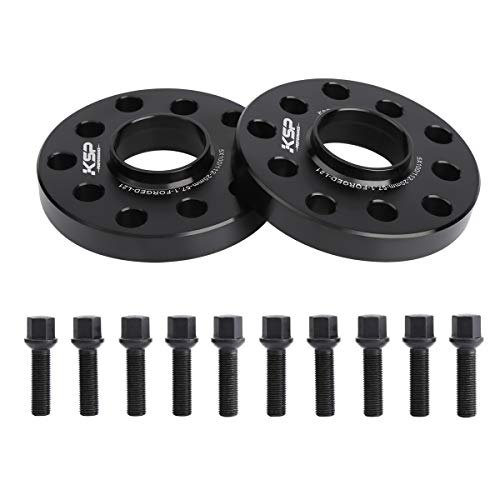
【Hub-Centric Wheel Spacers for Precise Fit & Safety】 KSP 20mm wheel spacers feature hub-centric design with 57.1mm bore for exact wheel alignment, reducing vibration. CNC machined from 6061-T6 aircraft-grade aluminum for strength and lightness. Includes 10 extended M14x1.5 lug bolts with 45mm shank length (NOT short bolts). Perfect for 5x112 & 5x100 bolt patterns without changing your vehicle's original setup.

5 lug WHEEL SPACERS Specifications: Thickness--20mm;Vehicle Bolt Pattern--5x112mm;Wheel Bolt Pattern--5x112mm;Thread Pinch--12x1.5;Inner Diameter--66.6mm
Brake Clearance, Suspension Mods, Rubbing Risks, and Fixes
Brake clearance is one of the biggest GR Supra fitment traps. A wheel can have the correct bolt pattern, bore, diameter, and offset but still hit the front caliper because of spoke shape or inner barrel design. The 3.0L model’s larger front Brembo brake package needs more careful checking than the 2.0L’s smaller factory front brakes.
Suspension changes add another variable. Lowering springs, coilovers, camber plates, wider tires, and lower offsets can all move the tire closer to the fender, liner, strut, or control arm. A setup that clears at stock height may rub after lowering.
Brake Clearance Checks
Before mounting new wheels, compare the wheel’s inner barrel and spoke clearance against the brake caliper. The safest method is to use a brake template from the wheel manufacturer or a fitment shop. If you already have the wheel, test-fit it without the tire first when possible.
- Check barrel clearance: spin the wheel by hand and watch the inner barrel near the caliper.
- Check spoke clearance: look from the front and side to confirm the caliper does not touch the back of the spokes.
- Check full lock: turn the steering fully left and right to inspect tire-to-liner and tire-to-suspension clearance.
- Check loaded clearance: rubbing can appear only when the suspension compresses during braking, turning, or bumps.
- Re-check after a short drive: look for fresh marks on the caliper, barrel, tire shoulder, liner, and fender lip.
Suspension Geometry Changes
Lowering the GR Supra changes more than ride height. It can change camber, toe, bump travel, and the tire’s path through the wheel well. More negative camber can help tuck the top of the tire under the fender, but too much camber can reduce tire life and straight-line grip. Toe that is not corrected after lowering can cause rapid inner-edge wear.
If you install lowering springs or coilovers, get a proper alignment afterward. For aggressive wheels or square track setups, you may need adjustable arms, camber plates, or a revised ride height to keep the tire clear through the full suspension travel.
Rubbing Diagnosis & Fixes
Rubbing usually leaves evidence. Look for shiny scuffs on the inner fender liner, polished marks on suspension arms, chewed tire shoulders, scraped fender lips, or a clicking/grinding sound during turns. Diagnose before you keep driving because a small rub can quickly become tire damage.
| Symptom | Likely Cause | Fix |
|---|---|---|
| Rub at full steering lock | Tire too wide, offset too low or too high, liner contact | Adjust tire size, offset, spacer thickness, or liner clearance |
| Rub over bumps | Car too low, tire shoulder too close to fender | Raise ride height, add camber, roll fenders, or reduce tire width |
| Inner tire scuffing | Wheel too far inward or suspension clearance issue | Use a lower effective offset, thinner tire, or different wheel design |
| Caliper contact | Poor spoke or barrel clearance | Use a wheel with more brake clearance or an approved spacer |
| Highway vibration | Wheel not centered, missing rings, debris on hub, imbalance | Clean hub, use hub-centric rings, road-force balance, verify torque |
Quick Checklist for Buying Wheels or Spacers That Fit Your GR Supra
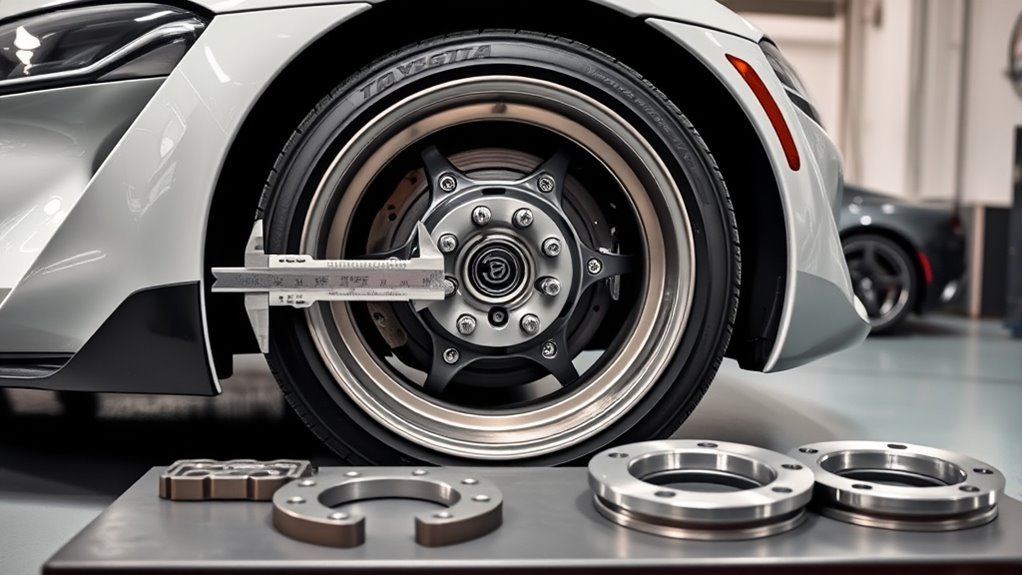
Use this checklist before you buy wheels, tires, spacers, or replacement wheel bolts for your GR Supra.
- Bolt pattern: must be 5×112.
- Center bore: must match 66.5/66.6 mm or use correct hub-centric rings.
- Wheel bolts: must be M14 x 1.25 with the right seat and length.
- Torque: plan to torque to 140 Nm / 103 ft-lb unless approved documentation says otherwise.
- Wheel size: confirm diameter and width for your brake package and tire size.
- Offset: compare effective offset after spacers, not just the wheel’s stamped offset.
- Brake clearance: verify spoke and barrel clearance, especially on 3.0L Brembo-equipped cars.
- Tire size: match rolling diameter, load rating, and intended use.
- Suspension setup: account for lowering, camber, coilovers, and alignment changes.
- Test fit: check full lock, compression, and caliper clearance before normal driving.
- Re-check: inspect and re-torque after the first 50–100 miles.
Pro Tip: Keep a note on your phone with your wheel size, offset, tire size, spacer thickness, bolt length, torque spec, and alignment settings. It makes future tire, brake, and suspension changes much easier.
[Products Worth Considering]

HUBCENTRIC DESIGN: Precision-machined 66.56mm hub bore, with lip into the wheel center bore, eliminates vibration and ensures a perfectly centered, wobble-free wheel installation.

【12mm HubCentric Wheel Spacers】Give your vehicle that aggressive stance, eliminate rubbing, mount a larger wheel or tire, clear breaks or struts. They also increase your vehicles handling performance due to adding trek and width to your stance.

HUBCENTRIC DESIGN: Precision-machined 66.56mm hub bore, with lip into the wheel center bore, eliminates vibration and ensures a perfectly centered, wobble-free wheel installation.
Frequently Asked Questions
What is the bolt pattern on a Toyota GR Supra?
The A90/A91 Toyota GR Supra uses a 5×112 bolt pattern. Do not confuse it with older Supra generations that used different patterns, such as 5×114.3 on the MK4.
What is the GR Supra center bore size?
The GR Supra hub bore is commonly listed as 66.5 mm or 66.6 mm due to rounding. For aftermarket wheels, rings, or spacers, buy parts specified for the GR Supra’s 66.5/66.6 mm hub.
What wheel-bolt thread does the GR Supra use?
The GR Supra uses M14 x 1.25 wheel bolts. Check bolt seat type and shank length when using aftermarket wheels or spacers because factory bolts may not be correct for every wheel.
What is the wheel-bolt torque spec for a GR Supra?
Use 140 Nm / 103 ft-lb for the factory wheel-bolt torque spec unless your wheel, spacer, or service documentation provides a different approved instruction. Torque in a star pattern and re-check after 50–100 miles when wheels or spacers have been removed.
What is the factory wheel fitment for the GR Supra?
Common North American factory fitment is 18×9 +32 front and 18×10 +40 rear with 255/40ZR18 and 275/40ZR18 tires on 2.0L models, and 19×9 +32 front and 19×10 +40 rear with 255/35ZR19 and 275/35ZR19 tires on 3.0L models.
Do BMW wheels fit a Toyota GR Supra?
Some BMW 5×112 wheels may physically fit because the GR Supra shares BMW-related hub and hardware standards, but you still must verify center bore, offset, bolt seat, bolt length, brake clearance, tire size, and load rating before using them.
Do I need hub-centric rings on a GR Supra?
You need hub-centric rings only if the aftermarket wheel’s center bore is larger than the Supra’s 66.5/66.6 mm hub. If the wheel bore already matches the hub, rings are not needed.
Are 10 mm or 15 mm spacers safe on a GR Supra?
Quality 10–15 mm hub-centric spacers can be used safely when they are the correct 5×112 pattern, correct hub bore, and paired with the right M14 x 1.25 bolts. Safety depends on part quality, bolt length, torque, installation, clearance, and regular inspection.
Conclusion
The GR Supra’s wheel fitment starts with a simple spec: 5×112. But a safe, vibration-free setup also depends on the 66.5/66.6 mm center bore, M14 x 1.25 wheel bolts, 140 Nm / 103 ft-lb torque, offset, tire size, and brake clearance. Use the factory 18-inch or 19-inch staggered setups as your baseline, then measure carefully before changing width, offset, spacers, tires, or suspension height. If anything rubs, vibrates, or fails to torque cleanly, fix it before driving the car hard.
Sources
- Toyota 2024 GR Supra eBrochure — factory tire sizes, wheel diameters and widths, brake equipment, and model specifications
- Toyota Pressroom: 2025 GR Supra — 2025 model lineup and 3.0/3.0 Premium grade information
- Toyota Owners Manuals and Warranties — official source for owner manual and service-reference documents
- Wheel-Size Toyota Supra Fitment Data — PCD, center bore, thread size, offset, and fitment cross-checking
- Tire Rack: What Is a Wheel Centerbore? — explanation of hub-centric wheel centering and vibration prevention
- H&R TRAK+ Wheel Spacers — spacer system guidance, hub-centric spacer design, and hardware considerations