
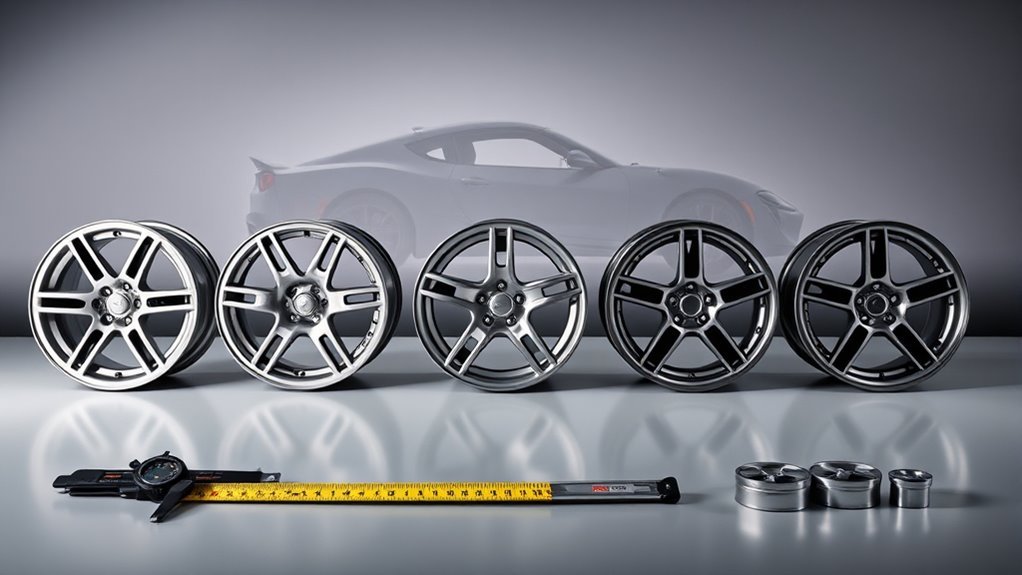
This Toyota Supra wheel fitment guide starts with the generation, because the basic hardware changes across the lineup. U.S.-market MK1 and MK2 Celica Supras commonly use 4×114.3 wheels, A70 and A80 Supras use 5×114.3, and A90/A91 GR Supras use 5×112. For replacement tires, begin with the driver-side placard and the factory wheel size for the exact model year and trim. For aftermarket wheels, also verify center bore, width, offset, brake clearance, fastener type, tire load and speed ratings, suspension height, and the tire maker’s measured diameter before ordering.
Last updated: July 31, 2026. Rechecked against Toyota’s 2024 and 2025 U.S. brochures, Toyota’s 2026 specifications and Final Edition release, the 1996 U.S. owner’s manual, NHTSA tire guidance, and Michelin seasonal-tire guidance.
How this guide was prepared: Factory tire sizes and wheel widths are taken from Toyota materials where available. Bolt patterns, center bores, thread sizes, offsets, and older-generation restoration data are cross-checked against secondary fitment references and must still be confirmed on the vehicle, wheel stamp, or manufacturer drawing. The aftermarket combinations below are planning ranges, not a claim that the editorial team test-fitted every setup.
Quick Answer
For U.S.-market cars, MK1 and MK2 Celica Supras commonly use 4×114.3, A70 and A80 Supras use 5×114.3, and A90/A91 GR Supras use 5×112. A80 Turbo cars use 235/45ZR17 front and 255/40ZR17 rear tires in the 1996 U.S. owner’s manual. U.S. GR Supra 2.0 models from 2021–2024 use 255/40ZR18 front and 275/40ZR18 rear, while 2020–2026 3.0 models use 255/35ZR19 front and 275/35ZR19 rear. The public Toyota brochures confirm the GR Supra wheel widths; common fitment references list ET32 front and ET40 rear offsets, which should be checked against the wheel stamp before purchase.
Key Takeaways
- Do not buy Supra wheels from tire size alone. Confirm bolt pattern, center bore, offset, brake clearance, and hardware first.
- A70 and A80 Supras use 5×114.3, while A90/A91 GR Supras use 5×112, so MK4 wheels do not bolt directly onto a MK5.
- The U.S. GR Supra 2.0 used 18-inch staggered tires through 2024. The 2025 and 2026 U.S. lineups are 3.0-based and use 255/35ZR19 front and 275/35ZR19 rear tires.
- Lower offset pushes the wheel outward; higher offset pulls it inward. Always compare width and offset together.
- After any wheel or tire change, set cold tire pressure from the door placard, confirm TPMS operation where equipped, road-test slowly, and follow the wheel maker’s or installer’s fastener-torque recheck instructions.
At a Glance
| Time Required | 20–45 minutes to verify specs before ordering; longer if you need a brake template or test fit |
| Difficulty | Moderate if you change width, offset, tire diameter, brakes, alignment, or suspension height |
| Tools Needed | Owner’s manual, door placard, flashlight, tire pressure gauge, calipers or measuring tape, wheel offset calculator, brake template when available |
| Cost | Free for spec checks; wheel, tire, TPMS, mounting, balancing, alignment, and test-fit costs vary by setup |
Warning: Wheel fitment is safety-critical. Do not install wheels with the wrong bolt pattern, loose hub fit, incorrect lug nuts or bolts, poor brake clearance, damaged spacers, or tire load and speed ratings below the vehicle’s requirements. When in doubt, have a qualified tire shop test-fit the setup before driving.
Toyota Supra Wheel Fitment Guide by Generation

Use the factory-fit sizes below as the baseline, not as proof that every wheel in that diameter will fit. Toyota changed the Supra’s platform, bolt pattern, wheel hardware, tire package, and brakes across generations. A period-correct MK2 setup and a modern A90 setup are unrelated fitment systems even though both cars carry the Supra name.
| Supra generation | Common U.S. years | Factory tire baseline | Wheel fitment notes |
|---|---|---|---|
| MK1 A40/A50 Celica Supra | 1979–1981 | Common 14-inch restoration sizes include 195/70R14 on many references | U.S.-market A40/A50 cars commonly use 4×114.3. Verify the chassis, wheel stamp, and existing hub before buying restoration wheels. |
| MK2 A60 Celica Supra | 1982–1986 | L-Type commonly 195/70R14; P-Type commonly 225/60R14 | A60 cars commonly use 4×114.3. These 14-inch sizes do not apply to the later A70 platform, so confirm whether a 1986 car is A60 or A70 before ordering. |
| MK3 A70 | 1986.5–1992 in the U.S.; some markets continued into 1993 | Many U.S. A70 references use 225/50R16 on 16-inch wheels; market-specific 16-inch packages can differ | Generally 5×114.3 with a Toyota-style 60.1 mm hub and lug nuts. Confirm trim, market, and wheel stamp. |
| MK4 A80 | 1993–1998 in the U.S.; up to 2002 in Japan | Non-turbo: commonly 225/50R16 front and 245/50R16 rear. Turbo: commonly 235/45ZR17 front and 255/40ZR17 rear. | 5×114.3 with Toyota-style lug nuts. Popular aftermarket builds often move to 18-inch wheels for modern tire availability. |
| MK5 A90/A91 GR Supra 2.0 | 2021–2024 U.S. 2.0 models | 255/40ZR18 front, 275/40ZR18 rear | 5×112 with 18-inch staggered wheels. Toyota’s 2024 U.S. brochure lists 18×9 front and 18×10 rear wheel widths; the U.S. 2.0 ended after model year 2024. |
| MK5 A90/A91 GR Supra 3.0 | 2020–2026 U.S. 3.0 and final-year cars, depending on trim and package | 255/35ZR19 front, 275/35ZR19 rear as the standard U.S. 3.0 baseline | 5×112 with 19-inch staggered wheels. Toyota’s 2025 and 2026 materials list Michelin Pilot Super Sport summer tires in this size; the 2026 MkV Final Edition uses a distinct 19-inch matte-black wheel design. |
For the most accurate replacement tire size, check the driver-side door placard, the owner’s manual, and the current wheel itself. NHTSA TireWise also tells drivers to use the owner’s manual or Tire and Loading Information Label when choosing the correct tire size and cold inflation pressure.
Note: Tire sizes can differ by country, trim, optional wheel package, and previous owner modifications. A clean online fitment chart is useful, but the door placard, owner’s manual, and wheel stamp matter more for your exact car.
Scope: This page covers the full wheel-and-tire fitment decision. For a year-by-year OEM tire lookup, use the Toyota Supra tire size chart. For bolt pattern, center bore, wheel-bolt, and hub-ring details, use the Supra bolt pattern and center bore guide.
Fifth-Gen Model-Year Notes: 2021–2026 GR Supra
The modern GR Supra needs extra care because Toyota changed the U.S. trim mix during the fifth generation. The 2024 Toyota GR Supra brochure lists the 2.0 with 255/40ZR18 front and 275/40ZR18 rear Michelin Pilot Super Sport summer tires. It lists the 3.0, 3.0 Premium, and 45th Anniversary Edition with 255/35ZR19 front and 275/35ZR19 rear tires.
The 2025 Toyota GR Supra brochure drops the U.S. 2.0 and lists only 3.0 and 3.0 Premium grades. Both use 255/35ZR19 front and 275/35ZR19 rear Michelin Pilot Super Sport summer tires on 19-inch forged-aluminum wheels.
For 2026, Toyota lists 3.0, 3.0 Premium, and MkV Final Edition grades. Toyota’s 2026 GR Supra specifications keep 19×9 front and 19×10 rear wheels with 255/35ZR19 front and 275/35ZR19 rear summer tires. Toyota’s Final Edition release confirms new 19-inch matte-black wheels and larger Brembo brake discs, so an aftermarket 18-inch wheel must be checked with the wheel maker’s brake template before purchase.
Warning: Toyota specifies Michelin Pilot Super Sport summer tires on the cited U.S. GR Supra packages. Michelin’s seasonal-tire guidance says summer tires should not be used when temperatures consistently approach freezing or in heavy snow or ice. Choose a tire category that matches your climate, then confirm size, approved rim width, load index, and speed rating.
Detailed Wheel & Tire Specs for A70, A80, A90: Sizes, Bolt Pattern, Offsets
Across the three generations most owners modify today, the major differences are the bolt pattern, hub bore, fastener system, wheel width, offset, and brake package. Toyota’s brochures and owner materials are the primary source for factory tire sizes and wheel widths. The offset, center-bore, and thread data below are common fitment-reference values, so confirm them on the wheel stamp, hub, or wheel manufacturer drawing before ordering.
| Chassis | Factory-style tire sizes | Factory-style wheel sizes | Bolt pattern / hub notes |
|---|---|---|---|
| A70 MK3 | 225/50R16 on many U.S. 16-inch cars; market-dependent 16-inch alternatives exist | Commonly 16×7 Toyota alloy packages; many OEM-style references sit in the high-positive-offset range | Generally 5×114.3 with Toyota 60.1 mm hub bore and M12x1.5-style studs/lug nuts. Confirm on your market and trim. |
| A80 MK4 non-turbo | 225/50R16 front, 245/50R16 rear on common staggered 16-inch references | 16×8 front, 16×9 rear on common staggered references | 5×114.3 with 60.1 mm hub bore. Many OEM A80 wheels are high-offset, so low-offset wheels need careful fender checks. |
| A80 MK4 turbo | 235/45ZR17 front, 255/40ZR17 rear | 17×8 front, 17×9.5 rear | 5×114.3 with 60.1 mm hub bore. Check brake clearance if moving down in wheel diameter. |
| A90/A91 GR Supra 2.0 | 255/40ZR18 front, 275/40ZR18 rear | 18×9 front, 18×10 rear; common OEM offset references are around +32 front and +40 rear | 5×112 with a center bore commonly listed as 66.5 mm and M14x1.25 wheel bolts rather than Toyota-style lug nuts. Verify center bore, bolt seat, shank length, and thread engagement for the exact wheel. |
| A90/A91 GR Supra 3.0 | 255/35ZR19 front, 275/35ZR19 rear | 19×9 front, 19×10 rear; common OEM offset references are around +32 front and +40 rear | 5×112 with a center bore commonly listed as 66.5 mm and M14x1.25 wheel bolts. Factory rear tire width is 275, but wider tires require matching rim width, offset, alignment, brake clearance, and suspension clearance. |
Note: “A90” and “A91” are enthusiast terms for the fifth-generation GR Supra. Toyota’s U.S. brochures list the car as GR Supra and separate it by 2.0, 3.0, 3.0 Premium, special edition, or Final Edition. Always order by model year, trim, brake package, and measured wheel specification.
Source hierarchy: Trust the vehicle placard and Toyota owner material for the original tire specification. Trust the wheel stamp or wheel manufacturer drawing for width, offset, center bore, bolt seat, and brake-template clearance. Use online fitment databases to cross-check, not to overrule the physical car or manufacturer documentation.
[Products Worth Considering]

This center console armrest cover is designed to fit the 2026 Toyota RAV4 for added comfort and a cleaner interior look. Made with breathable vegan leather and a thick cushioned feel, it helps reduce arm fatigue on long drives while protecting the console from pet paws, dirt, and sticky fingerprints. The band-secured design installs easily with no tools required and blends with the OEM-style interior.

This 2-piece suspension tool set combines a compact strut spreader with a high-leverage lower control arm prying tool to help speed up safe suspension service. Designed for many FWD, import, and domestic vehicles, it supports strut, hub, ball joint, and control arm work while helping reduce the risk of damage to surrounding components. Heavy-duty steel construction makes it a dependable choice for mechanics and serious DIY suspension repair.

This AstroAI digital tire pressure gauge delivers factory-calibrated readings with dependable ±1 PSI accuracy, helping you keep cars, trucks, motorcycles, and spare tires at the right pressure. Its bright backlit LCD and illuminated nozzle make nighttime checks easy, while the one-button unit switch and auto-off design add convenience and battery efficiency for routine maintenance.
Fitment Checks That Matter Before You Buy
- Bolt pattern: A wheel must match the hub pattern unless you use a properly engineered adapter. Adapters add thickness and change effective offset, so they are not a casual fix.
- Hub bore: Match the vehicle hub and wheel bore. If the wheel has a larger bore, use only the wheel maker’s approved hub-centric ring size and installation method. The ring helps center the wheel during installation; correct fasteners and clamping are still essential.
- Offset: Lower offset moves the wheel outward; higher offset moves it inward. Compare inner suspension clearance and outer fender poke together.
- Brake clearance: Big calipers can hit wheel barrels or spokes even when diameter and offset look correct on paper.
- Tire diameter: Keep overall diameter close to OEM, especially on ABS and traction-control-equipped cars. Compare the tire maker’s listed overall diameter and revolutions per mile, because two tires with the same nominal size can measure differently.
- Front-to-rear diameter relationship: On a staggered setup, preserve the factory relationship between front and rear rolling circumference. A mismatched pair can confuse ABS, traction-control, and stability-control calculations.
- Load and speed rating: Match or exceed the factory requirement. A tire that physically fits can still be wrong for the car.
- Hardware style: Older Toyota Supra generations use studs and lug nuts. The GR Supra uses wheel bolts, commonly listed as M14x1.25. Confirm the seat shape, shank length, thread engagement, and torque specification for the exact wheel. Spacers change effective offset and hardware requirements.
How to Read Supra Tire & Wheel Specs: 255/35R19, 19×9.5 +22
Read the numbers correctly and you’ll avoid most fitment mistakes. A tire marked 255/35R19 is 255 mm wide, has a sidewall height equal to 35% of that width, uses radial construction, and fits a 19-inch wheel. A wheel marked 19×9.5 +22 is 19 inches in diameter, 9.5 inches wide, and has a +22 mm offset.
| Marking | Meaning | Why it matters on a Supra |
|---|---|---|
| 255 | Section width in millimeters | A wider tire can add grip but may rub the fender liner, strut, or quarter panel. |
| 35 | Aspect ratio; sidewall height is 35% of width | Lower sidewalls sharpen response but reduce ride comfort and wheel protection. |
| R19 | Radial tire for a 19-inch wheel | Wheel diameter must match the tire exactly. |
| 19×9.5 | 19-inch diameter by 9.5-inch wheel width | Wheel width must suit the tire manufacturer’s approved rim-width range. |
| +22 | Positive 22 mm offset | Compared with the same wheel width at +40, +22 sits farther outward and is more likely to poke or rub the fender. |
| Load/speed rating | Numbers and letters after the tire size, such as 96Y or 100Y | Performance Supras need tires rated for the car’s load and speed capability, not just the correct dimensions. |
Worked offset example: Compared with a 19×9 ET32 wheel, a 19×9.5 ET22 wheel moves the outer wheel edge about 16.4 mm farther outward and leaves about 3.7 mm more inner wheel clearance. That calculation covers wheel geometry only; tire width, spoke shape, brakes, alignment, and suspension travel can still cause contact.
Worked tire-diameter example: A nominal 255/35R19 is about 661.1 mm tall, while a nominal 265/35R19 is about 668.1 mm tall, roughly 1.1% larger. Use the tire manufacturer’s measured diameter before treating that math as exact.
Useful formulas: Tire diameter in millimeters = wheel diameter × 25.4 + 2 × tire width × aspect ratio ÷ 100. For wheel-position comparisons, calculate half the width change, then combine it with the offset change to estimate inner clearance and outer poke.
For tire-sidewall markings, tire age, load index, and speed rating basics, use a manufacturer guide such as Michelin’s tire markings guide. Michelin explains that tire markings identify size, construction, load rating, speed rating, and other technical details.
Offset is not a style number. It changes where the tire sits between the suspension and the fender, so a “flush” wheel can become a rubbing wheel with only a small offset or width change.
Staggered vs Square Supra Setups: What Changes
Most factory Supra performance packages use a staggered layout, which means the rear tires are wider than the front tires. This supports rear-drive traction and keeps the car close to Toyota’s intended balance. A square setup uses the same tire size on all four corners, which can help track drivers rotate tires and tune balance, but it needs careful clearance checks. Before changing the stagger, compare actual front and rear tire diameters so the ABS and stability systems continue to see a sensible rolling-speed relationship.
| Setup type | Best for | Main tradeoff |
|---|---|---|
| Factory staggered | Daily driving, OEM replacement, balanced street handling | Limited tire rotation options because front and rear sizes differ. |
| Mild staggered upgrade | Street performance and canyon driving | More grip, but less clearance margin if offset and ride height are aggressive. |
| Square or near-square | Track days, tire rotation, balance tuning | May need camber, spacers, brake-template checks, and different front clearance planning. |
Common MK4 A80 & MK5 A90 Aftermarket Planning Ranges

Aftermarket Supra setups work best when you choose the tire first, then match wheel width and offset around it. The examples below synthesize common enthusiast and vendor fitment ranges; they are not Toyota-approved, not a substitute for a brake template, and not proof that every tire model will clear. Tire shoulder shape, measured diameter, alignment, ride height, brake kit, and fender work can change the result.
| Chassis | Use case | Common wheel range | Common tire range | Fitment notes |
|---|---|---|---|---|
| MK4 A80 | OEM+ turbo look | 17×8 front, 17×9.5 rear | 235/45ZR17 front, 255/40ZR17 rear | Best for factory-style handling and clean replacement. |
| MK4 A80 | Street performance | 18×9 to 18×9.5 front, 18×10 to 18×10.5 rear | 255/35R18 front, 275/35R18 or 285/35R18 rear | Usually a practical upgrade with the right offset and alignment. Check fender lip and rear quarter clearance. |
| MK4 A80 | Wider street/drag build | 18×10.5 to 18×11 rear | 295 to 305 rear, depending on tire model | Often needs rolled fenders, exact offset, alignment work, and careful suspension clearance checks. |
| MK5 A90/A91 | Factory 3.0 baseline | 19×9 front, 19×10 rear | 255/35ZR19 front, 275/35ZR19 rear | Closest to factory geometry and the easiest baseline to verify against Toyota documentation. |
| MK5 A90/A91 | Aggressive street stance | 19×9.5 front, 19×10.5 rear | 265/35R19 front, 285/35R19 or 295/35R19 rear | May need added negative camber, correct ride height, and fender-liner checks. Lowering can make rubbing worse. |
| MK5 A90/A91 | Track-focused 18-inch setup | 18×10 square or near-square, offset chosen for brake and strut clearance | 275/35R18 or similar track tire sizes | Use the wheel maker’s brake template before ordering. Some 18-inch wheels do not clear GR Supra brakes, and the 2026 Final Edition has larger front brakes. |
Pro Tip: Before ordering an aggressive setup, ask the wheel maker for an inner and outer clearance comparison against your current wheel. A good vendor can tell you how many millimeters closer the new wheel sits to the strut and how many millimeters farther it pokes toward the fender.
[Products Worth Considering]

This wheel lock lug nut set adds an extra layer of theft protection for compatible Toyota and Lexus vehicles by securing wheels with a unique key pattern that resists common removal tools. Built to OEM-standard fitment with corrosion-resistant, triple-chrome finished construction, it is designed for direct replacement and long-lasting performance. The set includes locking nuts and a matching key for easy installation on compatible vehicles with the correct thread and cone seat specifications.
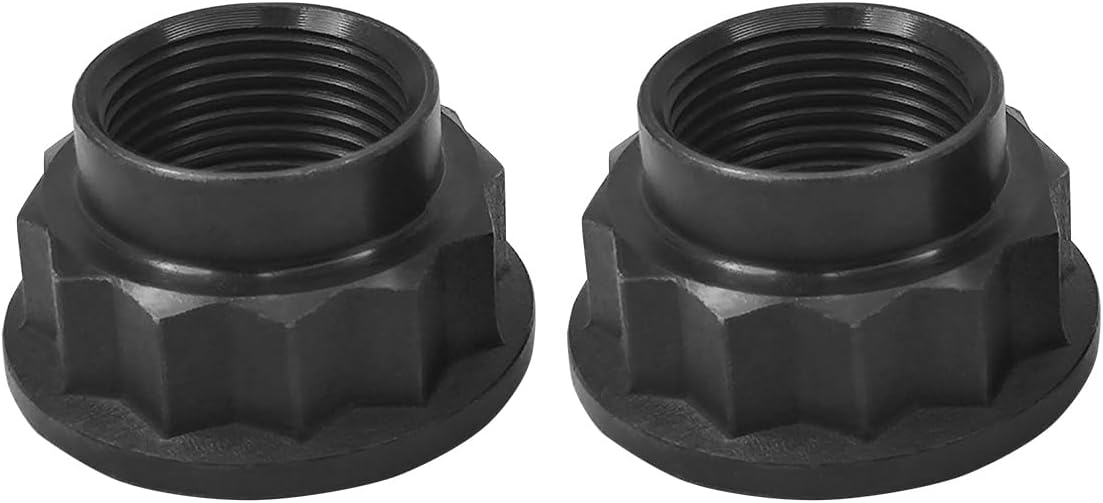
This pair of front axle shaft nuts is designed to secure CV joints and wheel bearings on compatible Toyota and Lexus front drive axles. Built from heat-treated carbon steel for durability and corrosion resistance, it helps maintain proper torque and reliable power transfer. It is a direct replacement for several factory part numbers and is recommended for paired replacement.

This wheel lock key set is designed to help remove and replace compatible Toyota and Lexus wheel locks with confidence. It includes four wheel lock nuts and one key, offering a practical replacement solution for many popular models while supporting secure wheel protection and reliable fitment. Built for durability and corrosion resistance, it is a useful choice when matching OE reference numbers and vehicle compatibility is important.
Choosing Supra Wheels: Street, Track, Show, or Restoration
Choosing wheels for a Supra comes down to the way you use the car. Street setups need predictable ride quality and no rubbing. Track setups need heat-resistant tires, useful sidewall, brake clearance, and repeatable alignment. Show setups can prioritize stance, but they still need safe load ratings and correct hardware.
| Goal | Best direction | Why it works |
|---|---|---|
| Daily street | Stay close to OEM diameter, mild width increase, conservative offset | Protects ride quality, steering feel, TPMS behavior, and fender clearance. |
| Fast road / canyon | Quality summer, all-season, or performance tire matched to your climate; correct alignment; slightly wider staggered setup | Adds grip without making the car unpredictable or overly harsh. |
| Track | 18-inch wheels where brake clearance allows; square or near-square tire strategy | More tire choices, more sidewall, easier rotation, and more predictable heat management. |
| Show / stance | Larger diameter, lower offset, lowered suspension, careful camber setup | Gives visual impact, but requires more test-fitting and has less margin for potholes and rubbing. |
| Restoration | Factory wheel diameter and period-correct tire size | Preserves the original steering feel, ride height, speedometer accuracy, and collector value. |
Do not choose offset only because you increased wheel diameter. Diameter, width, offset, tire sidewall, suspension height, and alignment all interact. A 20-inch wheel with the wrong offset can rub more than an 18-inch wheel, even if the tire diameter is similar.
[Products Worth Considering]
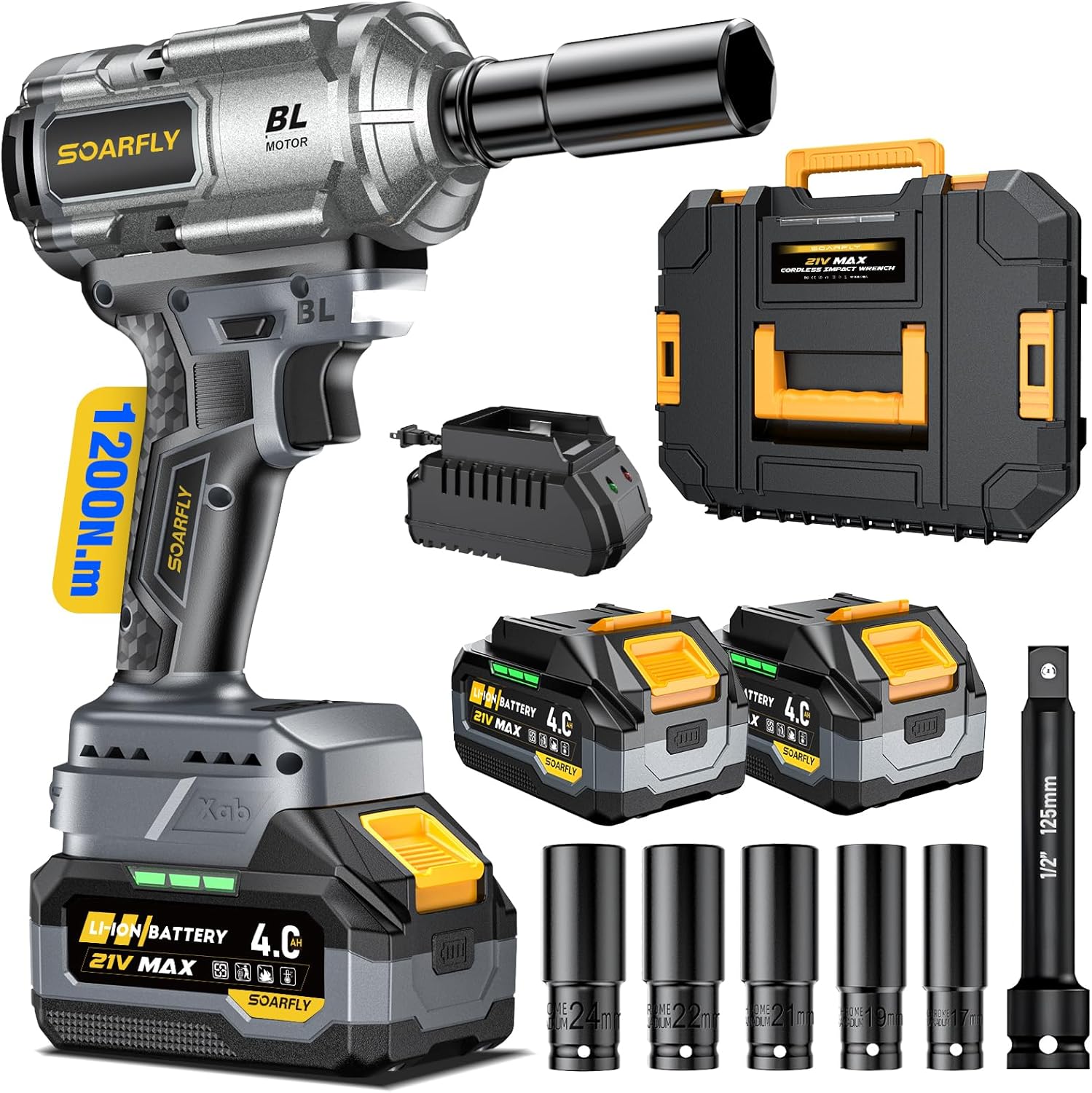
This cordless impact wrench delivers powerful high-torque performance for tire changes, stubborn lug nuts, and heavy-duty repairs around the garage or job site. Its brushless motor, three-speed control, LED work light, and included dual batteries provide reliable runtime, precision, and convenience for automotive and maintenance tasks. The complete kit comes with sockets, an extension bar, charger, and carry case for easy transport and storage.

This cordless impact wrench delivers high torque for fast lug nut removal, stubborn bolt loosening, and heavy-duty repair work on cars, trucks, and machinery. A brushless motor, dual 21V batteries, variable speed control, and built-in safety protections help you work efficiently with less effort. The included sockets, charger, and storage case make it a ready-to-use kit for home garages and professional jobsites.
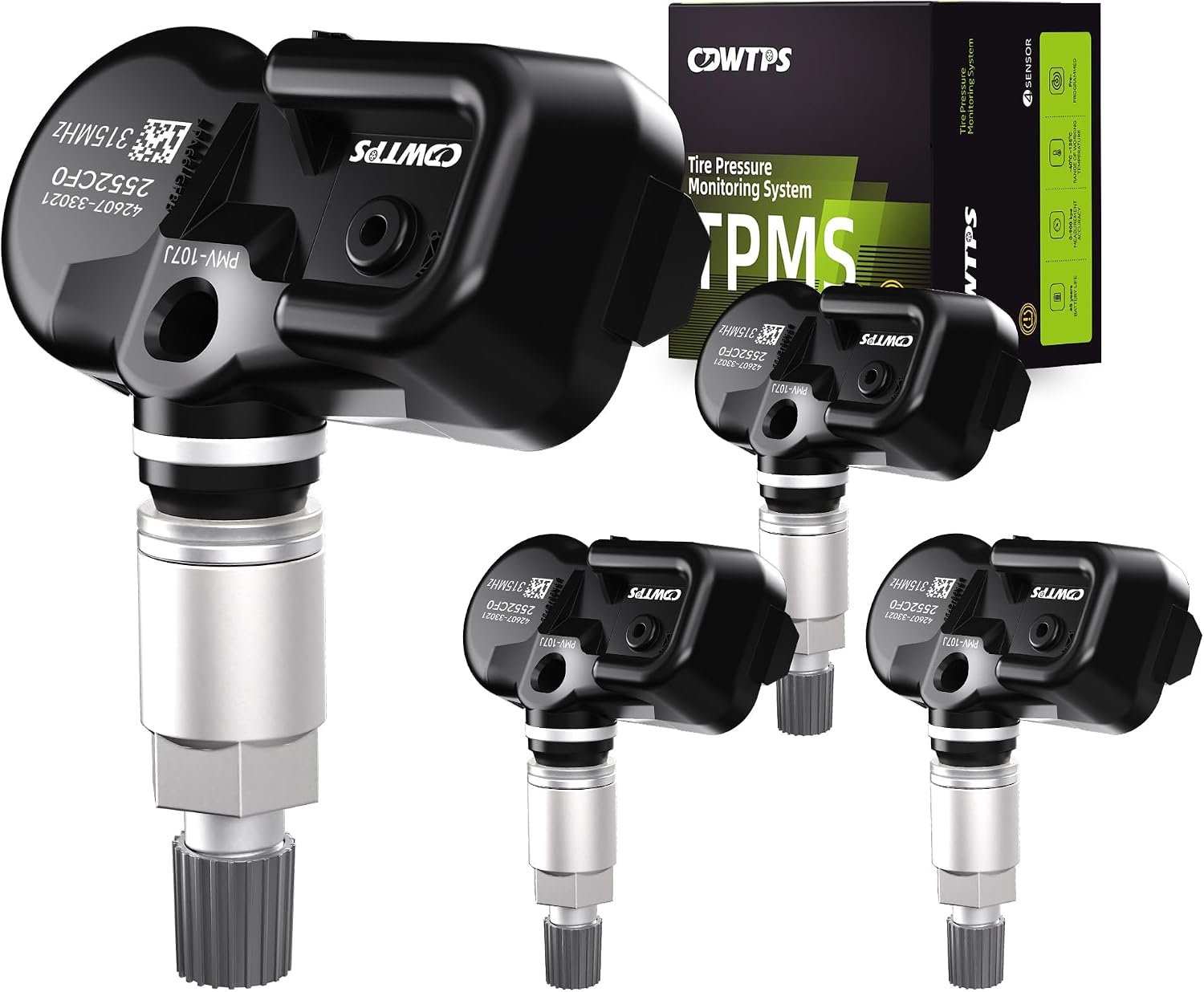
This set of four pre-programmed TPMS sensors is designed as a direct-fit replacement for compatible Toyota, Lexus, and Scion vehicles. It helps restore accurate tire pressure monitoring without sensor programming, and each unit is factory-tested for dependable performance. Built for long service life, these sensors offer a convenient solution for replacing worn or failed tire pressure monitors.
What to Measure Before Ordering Supra Wheels
Measure your current setup before you compare new wheels. The goal is to know how much room you have on both sides of the tire, not just how the car looks at ride height.
- Current wheel stamp: Look behind the spokes or barrel for diameter, width, offset, and manufacturing marks.
- Inner clearance: Check the distance from the tire and wheel to the strut, spring perch, control arm, and brake lines.
- Outer clearance: Check the fender lip, liner, bumper tab, and quarter-panel clearance at normal ride height.
- Steering sweep: On the front axle, turn lock-to-lock and inspect the liner, sway bar area, and front bumper liner.
- Compression clearance: A wheel that clears while parked can rub when the suspension compresses over dips or track curbing.
- Brake template: Ask the wheel manufacturer for a printable template if you have turbo A80 brakes, aftermarket brakes, or an A90/A91 GR Supra.
- Hub and hardware: Confirm center bore, hub-centric rings if needed, lug nut or bolt seat type, thread pitch, and safe thread engagement.
Supra Wheel Fitment Go/No-Go Checklist
| Check | Proceed only when | Stop when |
|---|---|---|
| Bolt pattern and hardware | Pattern, seat type, thread, length, and engagement match the wheel and hub. | The setup needs wobble hardware, forced fitment, unknown bolts, or damaged adapters. |
| Wheel and brake clearance | The wheel maker’s template or a bare-wheel test confirms barrel and spoke clearance. | Caliper clearance is assumed from diameter or offset alone. |
| Tire compatibility | The tire maker approves the rim width and the load and speed ratings meet the vehicle requirement. | The tire is stretched, pinched, under-rated, or outside the approved rim range. |
| Dynamic clearance | The setup clears steering lock, suspension compression, liners, struts, and fenders. | It clears only while parked or requires contact with structural or brake components. |
How to Confirm Supra Wheel Fitment Before Ordering
- Identify the exact car. Confirm model year, chassis, trim, engine, market, and whether the car has factory or aftermarket brakes.
- Read the factory tire placard. The door placard gives the original tire specification and the vehicle manufacturer’s recommended cold pressure for that configuration.
- Check the current wheel stamp. Look for markings such as 18x10J, ET40, or 5×112. Do not rely only on the seller’s listing.
- Match bolt pattern and hub bore. A90/A91 GR Supra wheels are not the same bolt pattern as A70/A80 wheels.
- Compare measured tire diameter. Use the tire maker’s overall-diameter and revolutions-per-mile data, not only the size code. Keep both axles close to the factory rolling relationship so ABS, traction control, gearing feel, and speedometer reading stay reasonable.
- Check the tire manufacturer’s rim-width range. A stretched or pinched tire can hurt handling and bead security.
- Use a brake template. This is especially important on turbo A80 cars, big-brake-kit cars, and A90/A91 GR Supras.
- Test-fit before mounting all four tires. Check spoke-to-caliper clearance, front lock-to-lock steering, rear compression clearance, inner strut clearance, and fender-liner contact. A bare wheel test fit is easier to return than a mounted tire package.
- Mount, balance, align, and recheck. After installation, balance the wheels, set placard-based cold pressures, align the car when geometry or ride height changed, and follow the installer’s fastener-torque recheck procedure.
Note: TPMS is not a replacement for pressure checks. NHTSA says the warning normally appears only after a tire is significantly underinflated and recommends monthly checks with an accurate gauge. On TPMS-equipped Supras, confirm that the TPMS warning light operates normally and that no malfunction warning remains after the wheel change.
Common Supra Fitment Mistakes and Rubbing Fixes
- Mixing MK4 and MK5 bolt patterns: A80 uses 5×114.3; A90/A91 uses 5×112. Do not force-fit wheels or use wobble hardware.
- Confusing 1986 cars: The 1986 model year can create confusion because late A60 and early A70 references overlap. Check whether your car is MK2 or MK3 before ordering.
- Ignoring center bore: A wheel with a larger bore may require the wheel maker’s approved hub-centric ring. Do not assume the bolts alone will center an unfamiliar aftermarket wheel during installation.
- Going too low on offset: Low offset can look flush at ride height but rub under compression or steering load.
- Lowering before test-fitting: Lowering springs or coilovers can improve stance, but they reduce clearance and may create rubbing that did not exist at factory height.
- Buying tires with the wrong load or speed rating: A performance car needs more than the correct size. Check service description, load index, and speed rating.
- Using summer tires in the wrong climate: Summer performance tires can lose safety margin in freezing weather, snow, and ice. Choose a tire type that matches your climate.
- Assuming every tire in one nominal size measures the same: Section width, shoulder shape, and overall diameter vary by model. Compare the manufacturer’s measured specifications before ordering an aggressive fitment.
- Adding spacers without matching hardware: A spacer changes effective offset and can reduce thread engagement. Use hub-centric parts and the correct wheel-bolt or stud length for the complete stack.
- Skipping alignment: Wider tires expose bad toe and camber settings quickly. A fresh alignment protects handling and tread life.
Frequently Asked Questions
What size tires are on a 1996 Toyota Supra?
A 1996 Toyota Supra Turbo commonly uses 235/45ZR17 front and 255/40ZR17 rear tires on staggered 17-inch wheels. A non-turbo A80 commonly uses 16-inch staggered tire references such as 225/50R16 front and 245/50R16 rear. Always confirm against the door placard, owner’s manual, and wheel stamp because many A80 Supras have been modified.
What is the difference between Supra 2.0 and 3.0 wheels?
On U.S. fifth-generation GR Supras, the 2.0 model uses 18-inch staggered wheels with 255/40ZR18 front and 275/40ZR18 rear tires in Toyota’s 2024 brochure. The 3.0 model uses 19-inch staggered wheels with 255/35ZR19 front and 275/35ZR19 rear tires. Both use the A90/A91 5×112 platform, but the 3.0 package has a shorter sidewall and a sharper factory performance focus.
What changed for 2025 and 2026 GR Supra wheel and tire specs?
The 2025 U.S. lineup dropped the 2.0 and kept 3.0 and 3.0 Premium trims with 255/35ZR19 front and 275/35ZR19 rear tires. The 2026 lineup adds the MkV Final Edition while keeping the same front and rear tire sizes. The Final Edition uses a distinct 19-inch matte-black wheel design and larger front brakes, so verify brake clearance before fitting aftermarket wheels.
What size tires are on a 1986 Toyota Supra?
It depends on whether the 1986 car is the earlier A60 MK2 or the later A70 MK3. A60 L-Type and P-Type references commonly show 195/70R14 or 225/60R14. Late-1986 A70 references commonly move to 16-inch tires. Confirm the chassis code, door placard, and existing wheel size before buying.
What bolt pattern does a Toyota Supra use?
U.S.-market MK1 and MK2 Celica Supra models commonly use 4×114.3, A70 and A80 Supras use 5×114.3, and the 2020–2026 GR Supra uses 5×112. Confirm the chassis and market because a wheel can have the correct diameter and tire size but remain unusable when the bolt pattern or hardware differs.
Can MK4 Supra wheels fit a MK5 GR Supra?
Not directly. The MK4 A80 uses 5×114.3, while the MK5 A90/A91 GR Supra uses 5×112. Adapters can change bolt pattern, but they also add thickness, change effective offset, and introduce extra hardware. For most owners, a wheel made in the correct 5×112 spec is the safer and cleaner choice.
Do I need hub-centric rings on a Supra?
You may need hub-centric rings when an aftermarket wheel’s center bore is larger than the Supra’s hub and the wheel manufacturer approves a ring. Match the vehicle hub and wheel bore exactly, use the correct fastener seat and length, and have the setup inspected if it will not center or develops vibration.
Can I run a square tire setup on a Supra?
Yes, many track-focused Supra owners run square or near-square setups to improve tire rotation and balance, but it must be planned carefully. Match wheel width, offset, brake clearance, and tire diameter, then align the car for the tire. A square setup that works on track may not be the best daily setup for ride comfort or steering feel.
Can I replace Supra summer tires with all-season tires?
Yes, as long as the replacement tires match the correct size or approved alternate size, fit the wheel width, and meet or exceed the required load and speed ratings. All-season tires can make sense for cooler climates or daily driving, but they may not match the dry grip and steering response of the factory summer performance tires.
What is the stock A90/A91 Supra wheel offset?
Common fitment references list ET32 front and ET40 rear for both the 18-inch 2.0 wheels and 19-inch 3.0 wheels. Toyota’s public U.S. brochures confirm the 18×9 and 18×10 or 19×9 and 19×10 wheel widths but do not show offset in the specification table. Confirm the wheel stamp or Toyota part data before ordering a replacement.
Will 18-inch wheels clear GR Supra brakes?
Some 18-inch wheels clear GR Supra brakes and others do not because barrel shape and spoke profile matter as much as diameter and offset. Use the wheel manufacturer’s brake template and test-fit a bare wheel. This check is especially important for the 2026 MkV Final Edition because Toyota added larger Brembo brake discs.
How wide can Supra rear tires go?
Factory rear tire width ranges from 245 on some A80 non-turbo references to 275 on the modern GR Supra 3.0. Modified A80 and A90 builds can run wider rear tires, including 295 or 305 sizes in some cases, but the answer depends on wheel width, offset, tire model, camber, ride height, fender clearance, and brake or suspension setup.
Conclusion
Start with the generation chart, then record the current wheel stamp, tire size, bolt pattern, center bore, fastener type, brake package, and measured inner and outer clearance. Compare the proposed wheel position, confirm the tire maker’s measured diameter and approved rim-width range, and test-fit one bare wheel before mounting the full set. Stop the purchase if bolt hardware, brake clearance, load rating, or dynamic clearance cannot be confirmed. After installation, balance the assembly, set the placard-based cold pressure, verify TPMS where equipped, check steering and compression clearance, and align the car when width, offset, tire size, or ride height changes.
Sources
- Toyota 2026 GR Supra Specifications – current U.S. front and rear tire sizes and wheel dimensions.
- Toyota USA Newsroom: 2026 GR Supra MkV Final Edition – Final Edition wheels, larger Brembo brake discs, chassis updates, and 2026 lineup context.
- Toyota 2025 GR Supra eBrochure – 3.0 and 3.0 Premium tire sizes, wheel widths, and summer-tire specification.
- Toyota 2024 GR Supra eBrochure – 2.0 and 3.0 tire sizes, 18-inch and 19-inch wheel packages, and trim context.
- Toyota Owners: 1996 Supra Manuals and Warranties – official owner-manual access for A80 factory tire and wheel verification.
- NHTSA TireWise – vehicle placard, cold inflation pressure, tire maintenance, and TPMS guidance.
- Michelin Seasonal Tire Guide – summer, all-season, and winter-tire temperature and weather guidance.
- Michelin Tire Markings Explained – tire size, construction, load index, speed rating, and sidewall-code interpretation.
- Wheel-Size.com Toyota Supra Fitment Database – secondary cross-check for bolt pattern, center bore, thread size, and offset. Confirm against the physical vehicle and wheel data.


[…] and centered over the friction ring, while the wheel must clear the larger caliper body. See the Supra wheel and brake-clearance guide when checking wheel […]
[…] explains how to choose between square and staggered layouts. For year-by-year OEM sizes, use the Supra tire size and wheel fitment chart. For hub, bolt-pattern, and hardware differences, use the Supra bolt pattern and center bore […]