
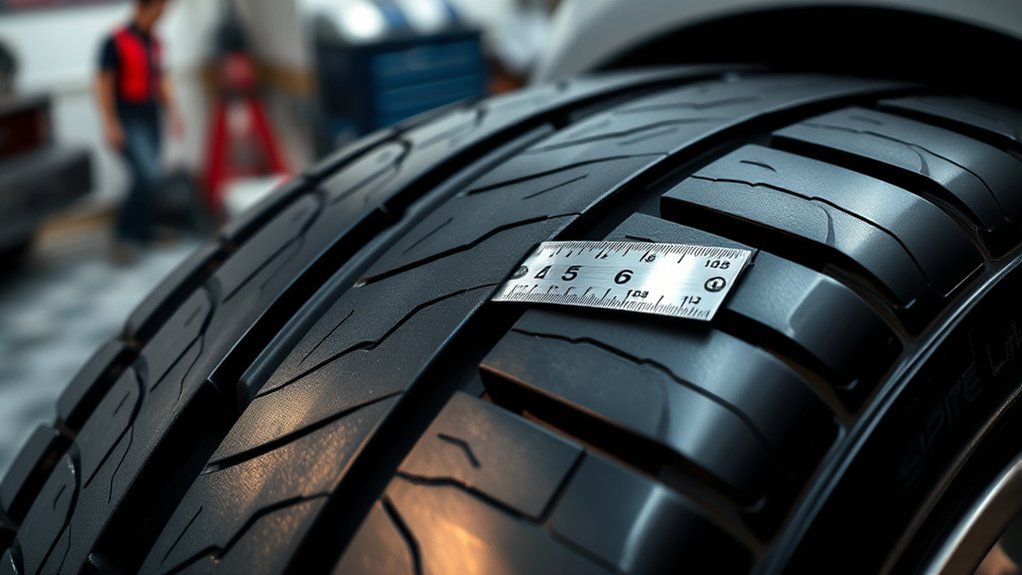
For Toyota Supra tire tread depth, use a tread depth gauge and follow the guidance for your exact model year, tire type, and local law. NHTSA says tires are unsafe at 2/32 inch (1.6 mm), but Toyota’s current 2026 GR Supra manual does not set one universal tread number for every tire category; it says legal minimums can differ and that replacing earlier may help wet- or snow-road handling. Measure the inner, center, and outer grooves and use the lowest reading.
Last updated: September 16, 2026
Quick Answer
Do not use 2/32 inch as the only Toyota Supra replacement rule. Treat 2/32 inch as NHTSA’s general unsafe minimum, then check the owner’s manual for your exact Supra and tire type. If you drive often in rain, 4/32 inch is a useful replacement-planning point: AAA testing on a Toyota Camry and Ford F-150 found much longer wet stopping distances at 4/32 inch than with new tires. A penny test can flag the 2/32-inch danger zone, but a tread depth gauge gives a better decision point.
Key Takeaways
- Use a tread depth gauge for the most accurate reading, and check the inner, center, and outer grooves on each tire.
- The penny test identifies roughly the 2/32-inch point; it should not be treated as proof that a Supra tire still has strong wet-weather margin.
- Use your exact model-year Supra owner’s manual and local law as the final replacement reference because Toyota’s wording and tire guidance can vary by model year and tire category.
- At about 4/32 inch, start planning replacement if you drive frequently in rain or at highway speeds.
- If your Supra has staggered tire sizes, do not assume you can rotate tires front-to-rear. Check the tire placard and owner’s manual first.
At a Glance
| Time Required | 5 to 10 minutes |
| Difficulty | Easy |
| Tools Needed | Tread depth gauge, penny, tire pressure gauge, flashlight |
| Replacement Reference | Exact Supra owner’s manual + local law; 2/32 inch is NHTSA’s general unsafe minimum |
What Is the Minimum Toyota Supra Tire Tread Depth?
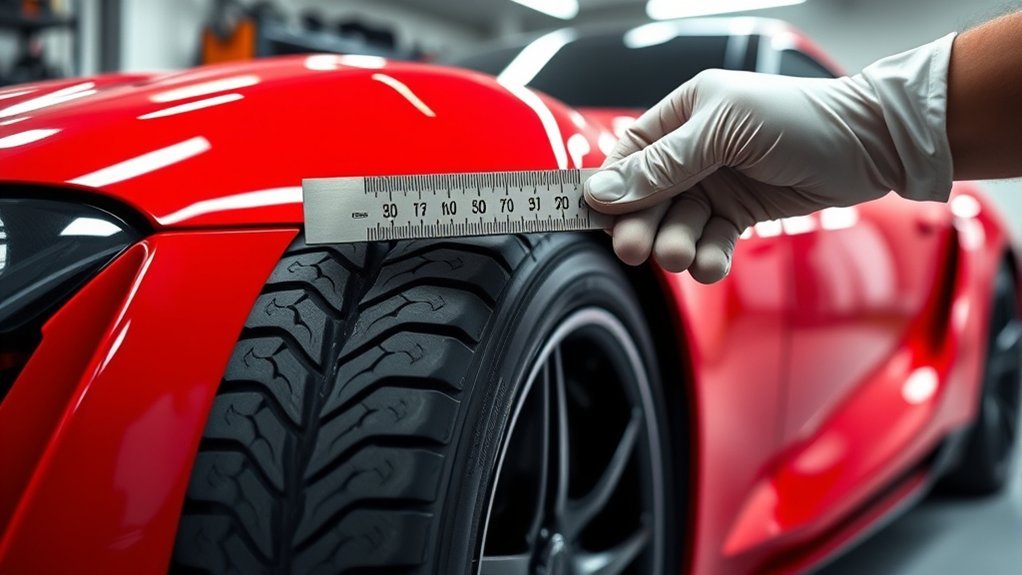
There is no single Supra-specific number that should replace your exact model-year manual. NHTSA says tires are not safe when tread is worn to 2/32 inch (1.6 mm). Toyota’s 2026 GR Supra manual says legal minimum tread depths may differ by tire category and notes that changing a tire before the legal minimum can help preserve handling in wet or snowy conditions.
That distinction matters. A tire can still be above 2/32 inch yet have less wet-weather margin than a newer tire. For a Supra used in rain or frequent highway driving, measuring tread before it reaches the wear bars gives you more time to plan replacement.
AAA testing found that tires worn to 4/32 inch had 42% to 44% longer wet stopping distances than new tires in its Toyota Camry and Ford F-150 tests.
The AAA result is useful wet-road evidence, but it was not a GR Supra test. Use it as a reason to plan earlier in rain, not as a claim that every Supra tire will stop exactly 42% to 44% farther.
[Products Worth Considering]

This dial type tire tread depth gauge helps you quickly check tread wear on motorcycles, cars, trucks, and buses with easy-to-read 1/32-inch increments. Its colorful zone markings make it simple to assess tire condition for safer driving in different weather, while the durable zinc cast body and legible dial provide dependable everyday use.

This 50-pack of tire tread depth gauges offers a simple way to check tire wear quickly and accurately. Color-coded reading zones make it easy to see tread condition at a glance, while the compact design and pocket clip support convenient everyday carry. Built for repeated use, these gauges help drivers monitor tire safety with confidence.

This LUMITECO tire tread depth gauge set makes it easy to monitor tire wear and maintain safer driving performance. The color-coded scale provides quick, easy-to-read measurements, while the compact pocket-size design and included clip make it convenient to keep in your vehicle or toolbox. Suitable for cars, trucks, motorcycles, and more, it offers a simple reusable way to check tread depth whenever needed.
Is the Penny Test Enough for a Toyota Supra?
The penny test is a quick visual warning for tread near 2/32 inch, not a precision measurement and not a complete pass/fail test for a performance tire.
How to Do the Penny Test
Place a penny into a main tread groove with Lincoln’s head upside down and facing you. If you can see the top of Lincoln’s head, the tread is about 2/32 inch and NHTSA says the tire should be replaced.
Check more than one spot. Measure the inner shoulder, center groove, and outer shoulder on each tire. A Supra tire can look acceptable from the outside while the inner edge is more worn from alignment, camber, pressure, suspension condition, or driving style.
How Should You Interpret the Reading?
Use the lowest tread-depth reading on the tire and compare it with your exact owner’s manual, local law, tire condition, and weather needs.
- 6/32 inch or more: Usually leaves substantial tread for normal road use, assuming the tire has no age or damage issue.
- 5/32 inch: Monitor more closely before long trips and wet or cold seasons.
- 4/32 inch: A practical replacement-planning point for frequent rain or highway use; wet performance may already be meaningfully reduced.
- 3/32 inch: Very close to NHTSA’s general unsafe minimum; replacement should not be delayed.
- 2/32 inch or less: Replace immediately. NHTSA considers this unsafe.
Warning: Do not keep driving on a tire with exposed cords, a sidewall bubble, a deep cut, repeated pressure loss, or strong vibration. Those are inspection-now problems even if tread depth still measures above a minimum.
What Do the Treadwear Bars Mean?
Most tires have built-in treadwear indicator bars inside the main grooves. NHTSA explains that when the surrounding tread is level with the indicator, the tire has reached the replacement point. The indicators are a last warning, not a performance target.
For a Supra, use the wear bars together with a gauge, not instead of one. Rain, cold pavement, old rubber, mismatched tires, or uneven wear can reduce grip before the tire reaches the indicator bars.
How to Measure Toyota Supra Tire Tread Depth With a Gauge
A tread depth gauge is more useful than a penny because it gives you a number you can track over time and compare across the full width of each tire.
- Park on a flat surface and set the parking brake.
- Turn the front wheels slightly so you can see the inner and outer edges better.
- Place the gauge probe into a main tread groove, not on top of a wear bar.
- Press the gauge base flat against the tread blocks.
- Record the reading in 32nds of an inch or millimeters.
- Repeat on the inner, center, and outer grooves of each tire.
- Use the lowest reading on each tire when deciding whether to replace or inspect it.
Pro Tip: Save the lowest tread depth for each tire with the date. A faster drop on one shoulder or one tire can point you toward a pressure, alignment, balance, or suspension check before the wear becomes severe.
Toyota Supra Tread Depth Measurements Explained
Tread depth is commonly measured in 32nds of an inch in the U.S., while Toyota manuals also use millimeters. New-tire starting depth varies by tire model, so do not use 12/32 inch as a universal definition of a new or safe Supra tire.
| Tread Depth | How to Read It | Action |
|---|---|---|
| 6/32 or more | Substantial usable tread on many road tires | Inspect monthly and watch for uneven wear |
| 4/32 to 5/32 | Reduced wet-weather margin | Plan replacement based on rain, trips, tire type, and manual guidance |
| 3/32 | Very close to the general U.S. minimum | Replace very soon; do not wait for wet performance to worsen |
| 2/32 or less | NHTSA’s unsafe minimum | Replace immediately |
Model-year note: Toyota’s 2026 GR Supra manual says applicable legal minimums may differ by tire category and that earlier replacement can help maintain optimum handling in wet or snowy conditions. Always confirm the manual for your exact Supra rather than copying a threshold from another model year.
When Should You Replace Toyota Supra Tires?
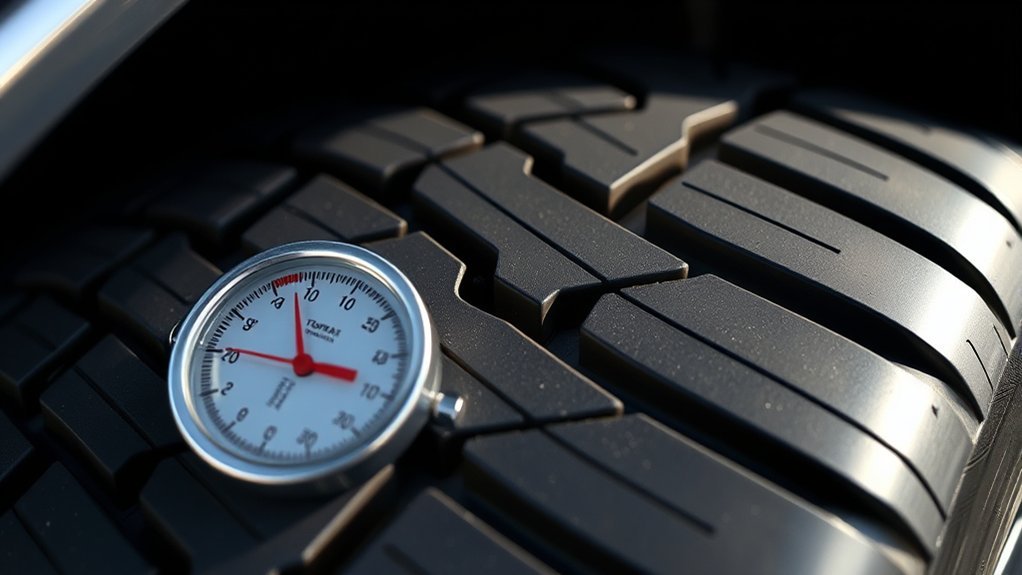
Replace or professionally inspect a Supra tire when tread is too low, damage is present, the tire repeatedly loses pressure, or age and condition make continued use questionable. Tread depth is only one part of the decision.
[Products Worth Considering]

This smart tire tread depth gauge provides quick, accurate readings from 0 to 1 inch in 1/32-inch increments, helping drivers assess tire wear with confidence. Its color-coded display makes it easy to see tread condition at a glance, while the pocket clip adds convenient portability for garages, glove boxes, and on-the-go inspections. Designed for use on trucks, motorcycles, automobiles, and other passenger vehicles, it is a simple tool for safer tire maintenance.

This color coded tire tread depth gauge helps you quickly check tire wear and monitor when replacement is needed. Calibrated in easy-to-read 32nds with clear red, yellow, and green ranges, it offers fast visual results for cars, trucks, motorcycles, and other passenger vehicles. The pocket clip makes it simple to keep on hand for routine maintenance and safety checks.

This digital tire tread depth gauge helps you check tire wear quickly and accurately with fractional inch, decimal inch, and millimeter readouts. Its large LCD screen, zero reset function, and automatic shutoff make it easy to use for cars, motorcycles, SUVs, trucks, and pickups. Designed for clear readings and dependable measurement, it is a practical tool for routine tire safety checks.
Visual Signs That Need Attention
Inspect the tread and sidewalls for:
- Sidewall cracks, deep cuts, or exposed cords
- Bubbles, bulges, or raised areas on the sidewall
- Punctures near the shoulder or sidewall
- Flat spots after hard braking or long storage
- Uneven wear across the tread
- Vibration, humming, pulling, or repeated pressure loss
What Does Uneven Tread Wear Mean?
Uneven wear often tells you more than a single center-groove reading. Compare the inner, center, and outer portions of each tire and investigate the pattern instead of replacing a tire without checking the cause.
| What You See | Possible Cause | What to Do |
|---|---|---|
| Center tread wears faster | Pressure or driving-style issue | Check cold pressure against the placard and inspect the tire |
| Both shoulders wear faster | Possible underinflation or repeated hard cornering | Check pressure and inspect alignment and tire condition |
| One inner or outer edge wears faster | Alignment, camber, toe, or suspension issue | Get an alignment and suspension inspection |
| Cupping or scalloped dips | Possible imbalance, worn damping component, or suspension issue | Have the tire, wheel balance, and suspension inspected |
How Do You Check Tire Age and the DOT Date Code?
Tires age even when tread still looks good. Heat, sunlight, storage, and low mileage can change rubber over time. NHTSA says some vehicle and tire manufacturers recommend replacing tires that are six to 10 years old, regardless of treadwear. For the 2026 GR Supra, Toyota specifically recommends replacing tires at least every six years regardless of remaining tread.
To check age, find the DOT Tire Identification Number on the sidewall. The last four digits show the week and year the tire was made. For example, 2324 means the tire was manufactured in the 23rd week of 2024.
Note: The full DOT code may appear on only one side of the tire. If you cannot find it on the outer sidewall, check the inner sidewall or ask a tire shop to inspect it.
How Does Tire Pressure Affect Tread Wear?
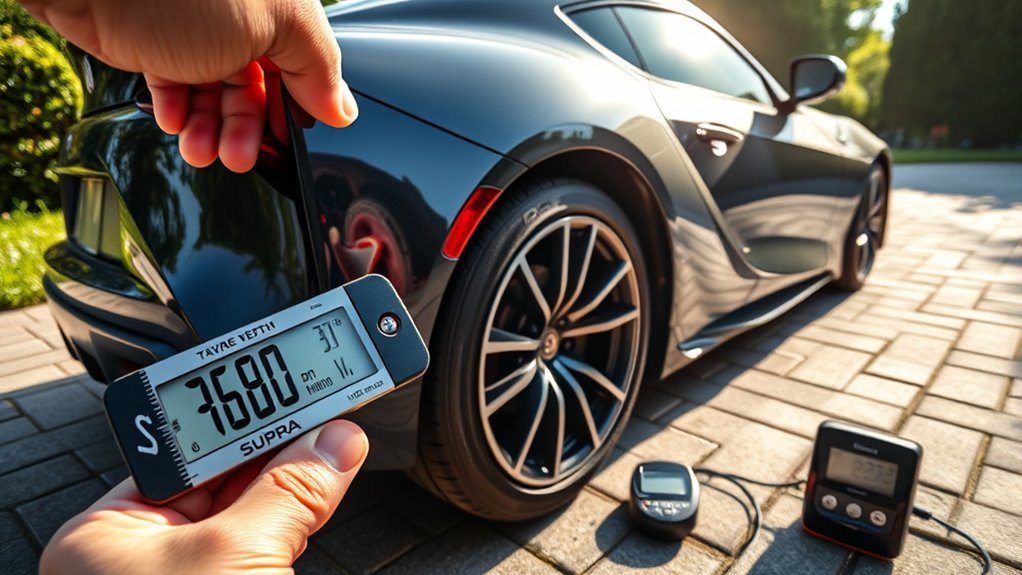
Incorrect pressure can create uneven wear and reduce handling consistency. Check pressure when the tires are cold and use the pressure on the driver’s-side Tire and Loading Information Label or the owner’s manual, not the maximum pressure molded into the tire sidewall.
For the complete pressure procedure, see the site’s Toyota Supra cold tire pressure guide. NHTSA recommends checking tire pressure at least monthly when the tires are cold.
What Tire Problems Should You Look for During a Visual Inspection?
Inspect your Supra tires at least monthly and before a long drive. Use a flashlight and check the full tread width, including the inner shoulder.
- Bulges or bubbles: Possible internal tire damage that needs prompt inspection.
- Cracks: Aging or weathering can weaken the sidewall.
- Cuts or punctures: Some tread punctures may be repairable, while shoulder or sidewall damage needs professional evaluation.
- Uneven tread: Often points to alignment, balance, pressure, or suspension problems.
- Vibration or pulling: May indicate imbalance, tire damage, alignment trouble, or a bent wheel.
Toyota Supra-Specific Tire Notes
Many modern GR Supra configurations use performance tires and staggered sizing, which means the rear tires are wider than the fronts. That affects rotation, wear patterns, replacement choices, and how you compare tread depth axle-to-axle.
- Do not assume front-to-rear rotation is allowed. If front and rear tire sizes differ, rotation may be limited or unavailable.
- Match the tire size on the placard. Use the Tire and Loading Information Label and owner’s manual before buying replacements. For model-year sizing, see the Toyota Supra tire size chart.
- Use the correct load index and speed rating. Replacement tires should meet the requirements for your exact Supra setup.
- Avoid mixing tire categories. Do not mix summer and all-season tires on the same car.
- Match replacement tires carefully. Large differences in tread depth, construction, or grip across an axle can change handling balance.
If your Supra uses summer tires, temperature matters as much as tread. See the Supra summer tire temperature guide before using summer performance tires in cold conditions.
What Should You Check Before Buying Replacement Supra Tires?
Start with the tire placard and exact model-year manual, then compare tire category, size, load index, speed rating, wet traction, expected tread life, and your climate.
| Tire Type | Best For | Main Trade-Off |
|---|---|---|
| Max performance summer | Warm-weather grip and steering response | Not intended for snow or freezing-road use |
| Ultra-high-performance all-season | Daily driving across a wider temperature range | Less warm-weather grip than a top summer tire |
| Track-focused tire | Autocross or track-day use | Faster wear and narrower cold/wet operating range |
| Winter tire | Cold weather, snow, and ice | Not intended for warm-weather performance driving |
Before you buy, confirm these details:
- Exact front and rear tire size
- Load index and speed rating
- Summer, all-season, all-weather, or winter use
- Whether the front and rear sizes are staggered
- Wet traction and expected tread life
- Whether you need a matched pair or full set based on wear and tire condition
[Products Worth Considering]

This smart color coded tire tread depth gauge makes it easy to check tread wear at a glance with clear red, yellow, and green ranges. Calibrated from 0 to 1 inch in 1/32 inch increments, it helps you quickly assess tire condition for safer driving and timely replacements. The pocket clip design makes it convenient to carry and use on trucks, motorcycles, cars, and other passenger vehicles.

This custom-fit car cover is designed for Toyota Supra and GR Supra models, offering dependable all-weather protection for both indoor and outdoor use. Built with durable Oxford fabric and a soft cotton lining, it helps shield your vehicle from rain, sun, snow, dust, and UV exposure while protecting the paint finish. Windproof straps, dual air vents, reflective details, and included security accessories add convenience and peace of mind.

KUST Custom Fit Trunk Mat is designed for 2020-2026 Toyota GR Supra models to help protect the cargo area from dirt, spills, and daily wear. Its TPE construction offers a fresh, odor-free feel, while the raised-edge design adds extra coverage for all-weather protection. Lightweight and easy to remove, it makes cleaning simple and helps keep the trunk neat and protected.
When Should a Tire Shop Inspect Your Supra?
Use a Toyota dealer or qualified tire shop when damage, vibration, repeated pressure loss, unusual noise, pulling, or uneven wear makes a home tread check inconclusive. Ask for the actual tread depth at multiple points on each tire, not only a pass-or-fail judgment.
- Professional tread depth and sidewall inspection
- Cold tire pressure check and TPMS review
- Wheel balance if you feel vibration
- Alignment check if one edge is wearing faster
- Rotation guidance based on your Supra’s tire sizes and tire design
- Replacement recommendations that match the tire placard and model-year manual
A useful inspection should explain why a tire needs replacement, whether the wear is even, and whether pressure, alignment, balance, wheel damage, or suspension condition contributed to the problem.
Frequently Asked Questions
What is the minimum tread depth for a Toyota Supra?
Use the owner’s manual for your exact Supra model year and tire type plus applicable local law. NHTSA says tires are unsafe at 2/32 inch, while Toyota’s 2026 GR Supra manual notes that legal minimum tread depths can differ by tire category and that earlier replacement may help handling in wet or snowy conditions.
Should I replace Supra tires at 4/32 inch?
At 4/32 inch, start planning replacement if you drive frequently in rain or at highway speeds. AAA testing on a Toyota Camry and Ford F-150 found substantially longer wet stopping distances at 4/32 inch than with new tires, but your exact replacement point should still follow your Supra manual, tire condition, and local law.
Is the penny test enough for a Toyota Supra?
No. The penny test mainly tells you whether tread is near the 2/32-inch point. A tread depth gauge is better for a Supra because it lets you track the inner, center, and outer grooves and act before the tire reaches the general minimum.
Can I rotate Toyota Supra tires front-to-rear?
Only if the tire sizes and tire design allow it. Many modern Supra setups use different front and rear tire sizes, which can prevent front-to-rear rotation. Check the tire placard and exact owner’s manual before rotating.
How often should I check Supra tire tread depth?
Check tread depth at least once a month when you check tire pressure, before long trips, and after a hard impact with a pothole or curb. Check sooner if you notice vibration, pulling, pressure loss, or uneven wear.
Conclusion
For Toyota Supra tire tread depth, use the lowest gauge reading across each tire and follow the manual for your exact model year and tire type. Treat 2/32 inch as NHTSA’s general unsafe minimum, not as the only Supra decision point. If you drive frequently in rain, 4/32 inch is a sensible planning point because wet performance can decline well before the wear bars. Pair tread checks with monthly cold-pressure checks, tire-age checks, and visual inspections for damage or uneven wear.
Sources
- NHTSA TireWise — tread depth, penny test, treadwear indicators, tire pressure, rotation, tire age, and tire-safety guidance
- Toyota 2026 GR Supra Owner’s Manual — model-year tire tread, wear-indicator, tire-age, tire-damage, and tire-information guidance
- AAA All-Season Tire Testing — wet-road testing comparing new tires with tires worn to 4/32 inch




[…] service brakes, ABS, stability control, electronic brake-force distribution, tire grip, pad compound, rotor condition, and wheel fitment work as one system. A part can bolt on yet still […]
[…] Skipping alignment: Wider tires expose bad toe and camber settings quickly. A fresh alignment protects handling and tread life. […]