Toyota does not publish one replacement mileage for every Supra water pump. For the U.S.-market 2023 GR Supra, Toyota’s factory maintenance guide schedules coolant-level and coolant-composition inspections at 40,000, 80,000 and 120,000 miles, but it does not list routine water-pump replacement at 60,000 or 100,000 miles. Replace the pump when diagnosis confirms leakage, bearing wear, inadequate circulation or another pump fault. Generation matters too: a Mk4 2JZ Supra and a fifth-generation GR Supra use different timing and cooling-system layouts.
Last updated: September 16, 2026 — rechecked against Toyota’s current GR Supra information, Toyota maintenance documentation, factory repair information and current repair-cost data.
[VERIFY: confirm the CMS displays a real author byline and relevant automotive credentials above this article body. Add first-hand technician or owner observations only if they are genuine and documented.]
Quick Answer
There is no Supra-wide factory mileage at which the water pump automatically becomes due. Toyota’s 2023 U.S. GR Supra maintenance guide calls for coolant inspections at 40,000, 80,000 and 120,000 miles but does not schedule routine pump replacement at those milestones. Replace the pump when testing confirms a leak, bearing problem, circulation fault or another pump-specific failure.
Key Takeaways
- There is no reliable Supra-wide rule requiring water-pump replacement at 60,000 or 100,000 miles.
- Coolant leaks, repeated coolant loss, overheating, abnormal noises, dried coolant residue, and pump or pulley play justify prompt diagnosis.
- A fifth-generation GR Supra uses a timing-chain architecture, while a Mk4 2JZ Supra uses a timing belt and a different water-pump service procedure.
- Use the coolant type and maintenance schedule specified for your exact model year rather than applying a generic coolant-flush interval.
- Never open a hot pressurized cooling system, and do not keep driving a Supra that is actively overheating.
Should You Replace Your Supra Water Pump Now?
| Situation | Replace It Now? | Best Next Step |
|---|---|---|
| No coolant loss, noise or overheating | Not based on mileage alone | Follow the factory maintenance schedule and inspect the complete cooling system |
| Coolant level repeatedly falls or dried coolant appears | Diagnosis first | Identify the leak source with visual inspection and, when appropriate, a cooling-system pressure test |
| Grinding, rough bearing noise or pump/pulley play | Potentially | Stop treating it as routine maintenance and have the pump and related drive components inspected |
| Temperature warning, overheating or steam | Do not keep driving | Stop safely, allow the vehicle to cool and diagnose the cooling-system fault before further driving |
| Mk4 2JZ already undergoing timing-belt work | Consider condition and history | Because access overlaps, inspect the pump and decide whether coordinated replacement avoids duplicated labor |
What Does the Water Pump Do in a Toyota Supra?
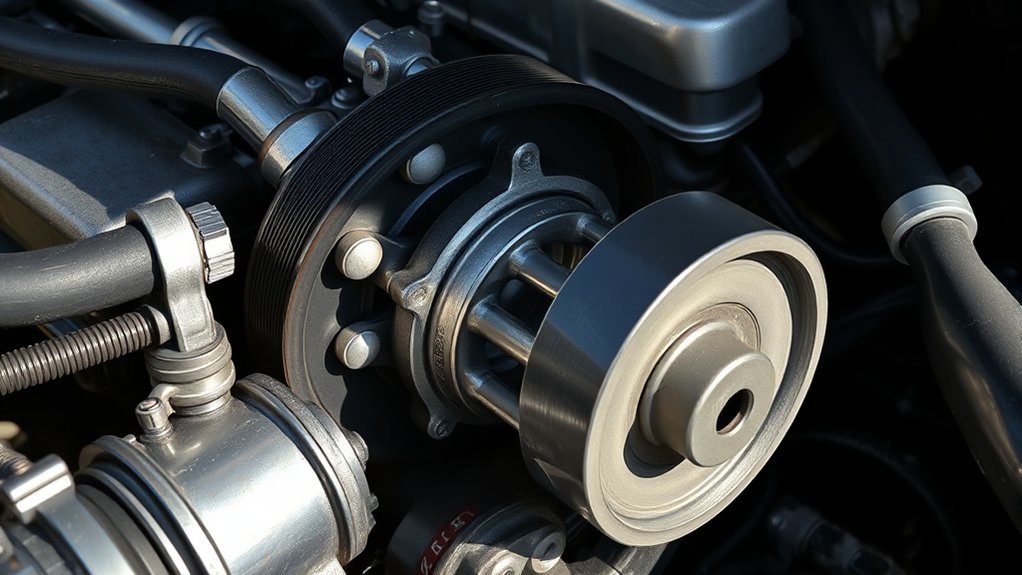
The water pump circulates coolant so heat can move away from the engine and into the cooling system’s heat exchangers. If coolant flow falls far enough, engine temperature can rise rapidly and severe overheating can follow.
A water pump does not need to stop completely before it causes trouble. A seal may leak, a bearing may wear, or circulation may become inadequate. Coolant level, leakage, noise, temperature warnings, hoses, connections, belts where applicable, and the rest of the cooling system therefore need to be considered together.
On the GR Supra, Toyota’s maintenance information instructs technicians to inspect both coolant reservoirs. That is an important diagnostic clue: a low coolant level does not automatically prove that the main water pump is the source. Identify which part of the system is losing coolant before replacing components. For a step-by-step owner check, see the site’s Toyota Supra coolant-level guide.
Mileage alone cannot tell you whether a Supra water pump is healthy. Diagnosis should be based on leakage, bearing condition, cooling performance, service history and the exact Supra generation.
Does Supra Generation Change Water-Pump Advice?
Yes. Before applying any water-pump recommendation, identify the model year and engine. “Toyota Supra” covers vehicles built with substantially different engines, timing systems and cooling layouts.
The current U.S. 2026 GR Supra uses a 3.0-liter turbocharged inline-six. Earlier fifth-generation U.S. model years also offered a 2.0-liter four-cylinder. Service advice for either MkV engine should not automatically be transferred from a 1990s 2JZ-powered Supra.
Older Mk4 Supras with 2JZ engines use a timing belt. Toyota’s factory water-pump procedure for that generation requires substantial disassembly, including timing-belt removal before the pump itself is removed. That overlap can make coordinated service practical when the timing belt and an aging or questionable pump both need attention. It does not mean every Supra water pump is part of a timing-belt replacement schedule.
Note: Always look up maintenance and repair information by model year, engine and VIN when possible. Advice that is correct for a Mk4 2JZ Supra can be wrong for a fifth-generation GR Supra.
How Can You Reduce the Risk of Supra Water-Pump Problems?
You cannot guarantee that a water pump will never fail, but correct cooling-system maintenance can reduce avoidable stress. Check coolant level as directed by the owner’s manual, investigate unexplained coolant loss, use the specified coolant, and repair hose, connection, reservoir, radiator or other cooling-system leaks instead of repeatedly topping off the system.
Do not apply a generic 30,000–50,000-mile coolant-flush interval to every Supra. For the 2023 U.S. GR Supra, Toyota’s maintenance guide calls for inspection of coolant level and composition at 40,000, 80,000 and 120,000 miles. Use the Toyota manuals and maintenance information for your exact model year. For broader mileage-based service planning, see the site’s Toyota Supra maintenance schedule guide.
Coolant specification also varies by model and market. If you need fluid-selection details rather than pump diagnosis, use the site’s dedicated Supra coolant type and service-interval guide.
- Use the specified coolant: Do not choose or mix coolant only by color.
- Investigate coolant loss: Repeatedly adding coolant without finding the cause can allow a small leak to become a serious overheating problem.
- Keep the system properly filled and bled: Air trapped after cooling-system work can interfere with circulation and temperature control.
- Inspect related components: Hoses, connections, reservoirs, radiators, belts and tensioners—where applicable—can cause symptoms that resemble pump failure.
- Respond to overheating immediately: Continued driving while overheated can turn a cooling-system fault into major engine damage.
7 Warning Signs Your Supra Water Pump May Be Failing
A failing water pump usually gives symptoms rather than a precise mileage countdown. None of these signs proves the pump is bad by itself because thermostats, hoses, radiators, reservoirs, belts, sensors and other cooling-system components can cause similar symptoms. Several signs together justify prompt diagnosis.
- Visible coolant leakage: Coolant dripping or collecting near the pump area can indicate a failed seal, gasket or nearby connection.
- Repeated coolant loss: If the coolant level keeps dropping after it is correctly filled, assume the system has a leak until testing shows otherwise.
- Engine overheating: A high-temperature warning, abnormal gauge reading or overheating message can occur when coolant circulation is inadequate.
- Abnormal temperature behavior: Unusual temperature changes, especially with coolant loss or poor-circulation symptoms, need investigation.
- Grinding, whining or rough bearing noise: Mechanical bearing wear in a pump or related rotating component can produce noise that changes with engine speed.
- Pulley wobble or bearing play on applicable designs: Movement at a pump pulley or shaft can indicate wear. Check this only with the engine safely off and according to the correct service procedure.
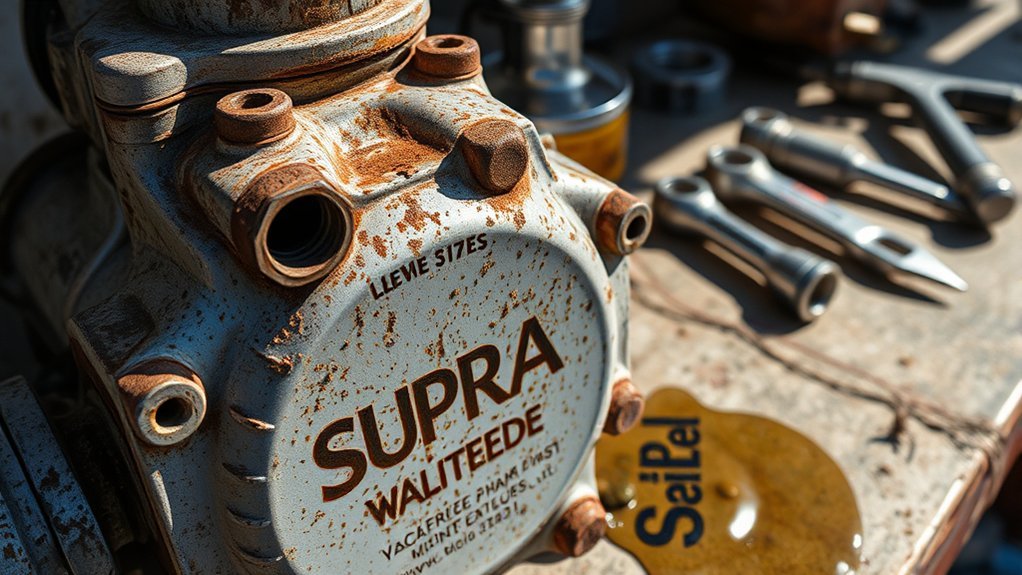
- Dried coolant residue, staining or coolant odor: A slow leak can leave colored or crusty deposits before enough liquid accumulates to form a puddle.
Warning: Never remove a radiator or coolant-system cap while the system is hot and pressurized. Hot coolant and steam can cause severe burns. If your Supra is overheating or releasing steam, stop in a safe place and follow the overheating instructions in the owner’s manual.
Does Low Coolant Mean the Water Pump Is Bad?
No. Coolant leaks and repeated low coolant levels deserve attention, but the pump is only one possible source. Coolant can escape from a hose, radiator, expansion tank, fitting, gasket, pump or another cooling-system component. Clear water beneath a vehicle after using the air conditioning may simply be normal A/C condensation, so identify the fluid before assuming the cooling system is leaking.
If the engine begins overheating, do not treat adding coolant as a permanent repair. A cooling-system pressure test and careful inspection can help locate an external leak. If no external leak is visible, further diagnosis may be needed before any part is replaced.
What Should You Check Before Blaming the Water Pump?
Use a simple fault-isolation process rather than replacing the pump because of mileage or one vague symptom.
| Inspection | When | Why It Matters |
|---|---|---|
| Check coolant level and identify the affected reservoir/circuit | When cold, as directed by the owner’s manual, and whenever a warning appears | Repeated loss confirms that diagnosis is needed but does not by itself identify the pump |
| Look for wet areas, dried coolant or staining | During routine checks and scheduled service | Helps trace leakage back to a pump, hose, fitting, reservoir or radiator |
| Pressure-test the cooling system when appropriate | When coolant is disappearing and the source is not obvious | Can reveal an external leak without replacing parts by guesswork |
| Inspect pump/pulley and related drive components | When noise, wobble or bearing symptoms are present | Separates a pump problem from belt, tensioner or pulley faults |
| Confirm correct refill and bleeding after repair | Whenever a cooling circuit has been opened or drained | Trapped air can cause abnormal temperature behavior and misleading symptoms |
Can Driving Conditions Shorten a Supra Water Pump’s Life?
Driving conditions change the amount of heat the cooling system must manage, but there is no reliable formula that subtracts a fixed number of miles from water-pump life. High ambient temperatures, long periods of heavy load, repeated track use, sustained high engine speeds and unresolved coolant problems can all increase cooling-system demand.
Stop-and-go traffic can also reduce natural airflow through the radiator compared with steady-speed driving. What matters most is whether the complete cooling system remains healthy: correct coolant level and condition, unobstructed heat exchangers, sound hoses and connections, working fans, proper drive-component condition where applicable, and no unresolved leaks.
If the car regularly sees track use, use a separate track-focused inspection plan rather than inventing an early pump-replacement mileage. The site’s Supra track-temperature management guide covers that use case in more depth.
Pro Tip: If your Supra sees frequent track use or unusually severe heat, inspect the cooling system more often rather than automatically replacing the water pump at an arbitrary mileage.
Should You Replace the Water Pump With the Timing Belt?
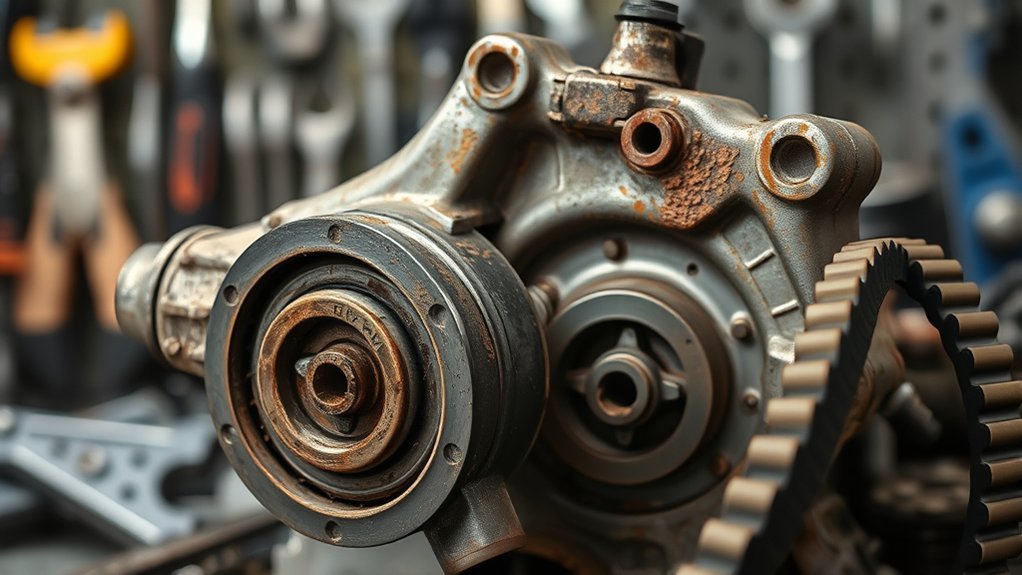
It depends on the Supra generation. Advice that says “always replace the water pump with the timing belt” is too broad for a Supra-specific guide.
[Products Worth Considering]
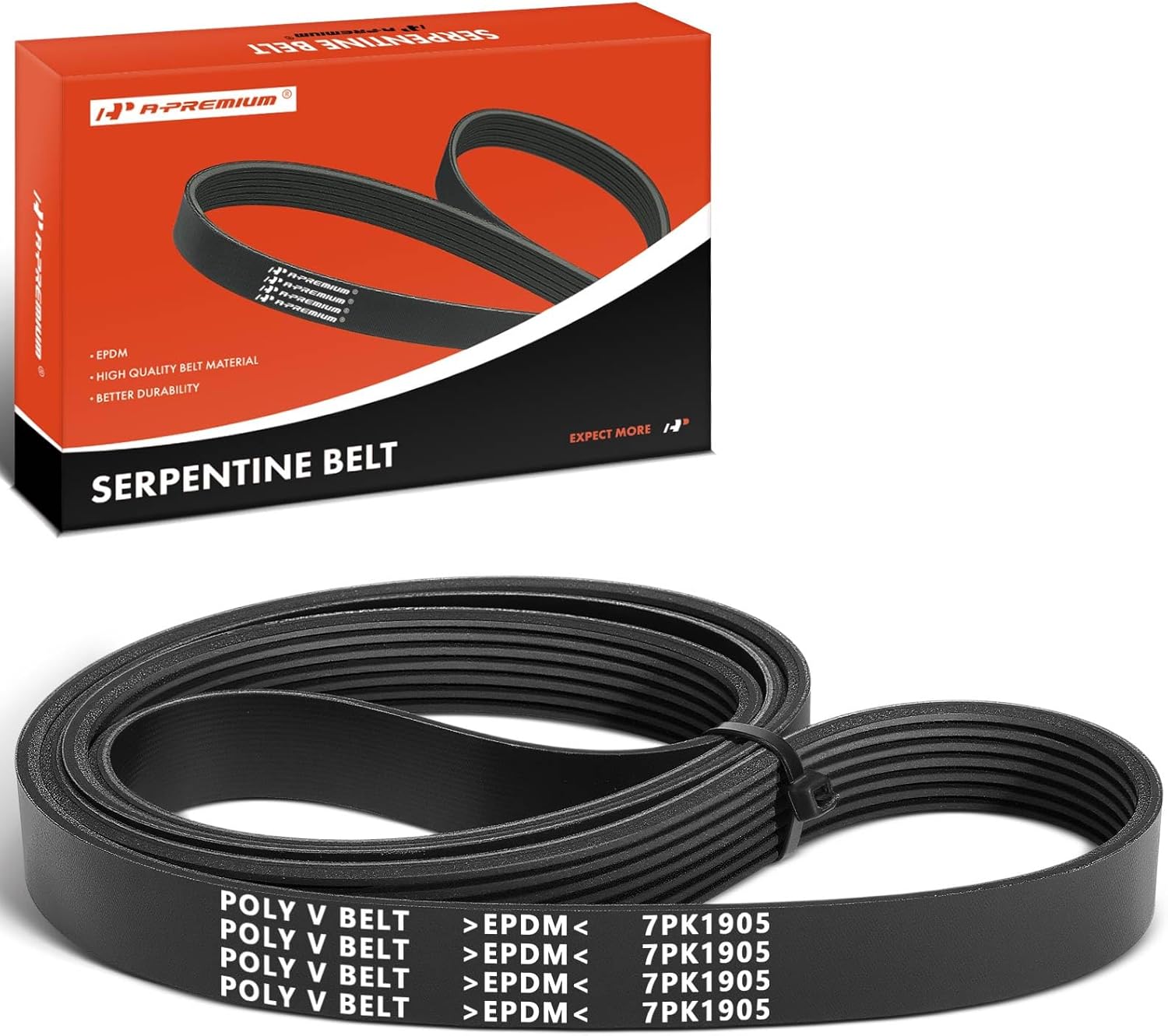
This A-Premium serpentine belt is engineered for select Toyota, Scion, and Pontiac vehicles with the L4 2.4L gas engine, delivering dependable air conditioning drive performance. Made with durable EPDM and precision dimensions, it helps resist cracking, reduce noise, and maintain stable tension for smooth operation. It's designed for straightforward installation and backed by a one-year unlimited-mileage guarantee for added confidence.

This coolant electric water pump is designed as a replacement for select Toyota vehicles, helping maintain proper engine cooling performance and reliable temperature control. Built to OE specifications, it offers fitment support for compatible Avalon, Camry, and RAV4 models with 2.5L L4 engines. It also includes cross-reference part numbers for easier matching and comes with after-sales support for covered defects.
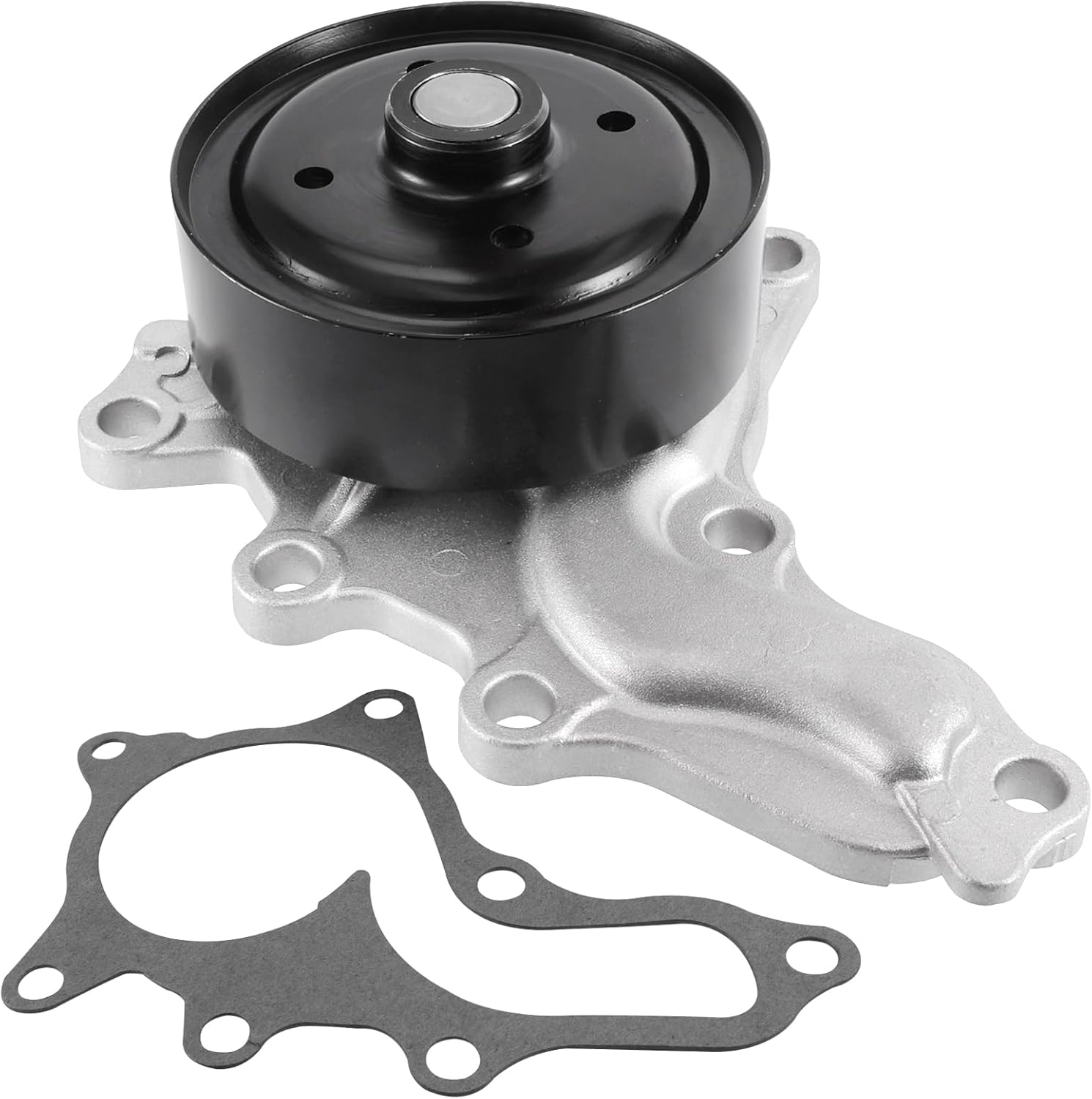
This AW6252 water pump is designed for a wide range of Toyota, Scion, and Lexus applications, helping maintain reliable engine cooling across compatible models. It features case hardened bearings for durability, a graphite-impregnated gasket for a secure seal, and 100% function and leakage testing for dependable performance. Built in TS16949 certified facilities, it offers a strong replacement option backed by service support.
Does the GR Supra Use a Timing Belt?
No. The fifth-generation GR Supra’s B58-family inline-six uses a timing-chain architecture. That means the generic rule about automatically pairing water-pump replacement with a scheduled timing-belt service does not apply. Use GR Supra- and VIN-specific factory repair information for the actual pump-removal procedure.
Older Mk4 2JZ Supras are different. They use a timing belt, and Toyota’s factory water-pump removal procedure includes removing the drive belt and water-pump pulley and then removing the timing belt before the pump is removed. Timing-belt and water-pump labor therefore overlaps substantially on that generation, but that does not mean the timing belt directly establishes a universal pump-replacement interval.
When Can Simultaneous Replacement Make Sense?
On an older Supra where timing-belt removal is required to access the pump, replacing an aging, leaking, noisy or otherwise questionable pump while the area is already disassembled can reduce duplicated labor later. The decision should consider pump condition, vehicle age, service history, parts quality and how much work would have to be repeated.
Do not transfer that logic automatically to a fifth-generation GR Supra with a timing chain. On those cars, replacement should be based on the correct engine-specific diagnosis and repair procedure.
What Does Toyota’s Maintenance Schedule Say?
Use the factory maintenance information for your exact Supra instead of relying on a universal 60,000–100,000-mile pump schedule. Toyota publishes model-year-specific owner’s manuals and warranty/maintenance guides.
For reference, Toyota’s 2023 GR Supra Warranty & Maintenance Guide calls for coolant-level and coolant-composition inspection at 40,000, 80,000 and 120,000 miles. It does not establish a mandatory 60,000- or 100,000-mile water-pump replacement interval.
How Is a Supra Water-Pump Problem Diagnosed Before Replacement?
Before replacing a water pump, confirm that the pump is actually the source of the problem. Coolant can migrate from a hose, connection, reservoir, radiator or another component and make the pump area appear wet.
- Identify the symptom and affected part of the cooling system. Confirm whether the problem is coolant loss, overheating, noise, residue or another change. On a GR Supra, note which coolant reservoir is losing level.
- Trace external leakage. Inspect the system when safe and use a cooling-system pressure test when appropriate to locate leaks that are difficult to see.
- Inspect the pump and related rotating components. Bearing roughness, pulley play or noise can support a pump diagnosis, but belt, tensioner and pulley faults can create similar symptoms.
- Follow the correct refill and bleeding procedure after repair. Air left in the system can reduce circulation and cause abnormal temperature behavior after an otherwise successful repair.
A proper pump repair may involve more than installing the pump itself. Depending on the Supra generation and engine, the job can include draining the cooling system, removing surrounding components, installing new seals or O-rings, checking related pulleys or belts, refilling with the specified coolant and following the correct bleeding procedure.
Because access and procedures vary sharply between a Mk4 2JZ Supra and a fifth-generation GR Supra, a VIN-specific estimate is more useful than one generic labor figure.
[Products Worth Considering]

This engine water pump kit is designed to help maintain reliable cooling performance across a wide range of compatible Toyota, Lexus, Scion, and Pontiac vehicles. Built with aluminum and tested for leak-free operation, it offers a direct replacement solution that supports engine efficiency and long-term service life. The kit includes a professional water pump and gasket for a convenient installation-ready repair.

This professional water pump kit is designed as a direct OE replacement for select Toyota and Lexus 3.5L V6 vehicles, helping restore reliable engine cooling performance. Built to strict quality standards and tested for leak-free operation, it includes the necessary gasket for easier installation and a secure fit. It offers a practical upgrade for drivers seeking dependable cooling system maintenance and long-lasting performance.

This coolant thermostat is a direct replacement designed for a wide range of Toyota, Lexus, and Scion vehicles. It helps maintain proper engine temperature, supports reliable cooling system performance, and installs easily without special tools or programming. Built to meet OEM standards, it offers durable, stable operation and dependable fitment for compatible models.
How Much Does GR Supra Water-Pump Replacement Cost?
As of September 2026, RepairPal lists an estimated average of $633–$719 for water-pump replacement on 2020–2025 Toyota GR Supra models. This is a third-party estimate, not a Toyota-set price, and it should not be applied automatically to an older Supra or a different repair.
Your actual total can change with labor rates, model year, engine, production date, parts choice and whether diagnosis finds related hoses, seals, belts, pulleys or other cooling-system faults. Ask for a VIN-specific estimate after the leak or failure source has been confirmed.
[Products Worth Considering]

This all-in-one radiator pressure tester and vacuum refill kit helps diagnose cooling system leaks, measure temperature, and refill coolant efficiently. It includes a wide range of adapters for broad vehicle compatibility, plus a pressure tester, vacuum refiller, thermometer, and storage case for organized use. Designed for DIY mechanics and professionals, it simplifies coolant service while reducing guesswork and unnecessary repairs.

The OEMTOOLS coolant vacuum refill kit helps quickly refill a vehicle’s cooling system while removing trapped air that can lead to overheating and engine damage. It also performs vacuum leak tests to help confirm system integrity and reduce the chance of repeat repairs. With multiple bushings, adapters, and a tapered cone seal, it is designed for flexible use on many radiator and coolant bottle necks.

KUST Custom Fit Trunk Mat is designed for 2020-2026 Toyota GR Supra models to help protect the cargo area from dirt, spills, and daily wear. Its TPE construction offers a fresh, odor-free feel, while the raised-edge design adds extra coverage for all-weather protection. Lightweight and easy to remove, it makes cleaning simple and helps keep the trunk neat and protected.
What Maintenance Can Help Protect the Water Pump?
No maintenance routine can guarantee a particular water-pump lifespan, but these practices can protect the complete cooling system and reduce avoidable problems:
- Use the specified coolant. Follow the owner’s manual rather than choosing coolant only by color.
- Keep the system at the correct level. Check it using the procedure specified for your vehicle, normally with the system cold.
- Do not ignore small leaks. Coolant loss can eventually cause overheating and can affect nearby components.
- Maintain related drive components where applicable. A worn belt, tensioner or pulley should be repaired according to vehicle-specific service information.
- Avoid running the engine while overheated. Continued overheating can cause far more expensive damage than the original cooling-system fault.
- Use the proper refill and bleeding procedure. Trapped air after coolant work can create symptoms that resemble a circulation problem.
- Inspect more often under severe use. Track use, extreme heat and repeated high-load driving justify closer cooling-system monitoring.
Common Supra Water-Pump Myths
| Myth | Reality |
|---|---|
| Every Supra water pump is due at 60,000–100,000 miles. | Toyota’s cited GR Supra maintenance guide does not establish a scheduled pump-replacement interval at those mileages. Diagnose condition instead. |
| Every Supra water pump should be replaced with the timing belt. | Mk4 2JZ cars use a timing belt and have overlapping service access. Fifth-generation GR Supras use a timing-chain architecture. |
| Low coolant proves the water pump is failing. | Coolant can leak from the pump, hoses, radiator, reservoir, fittings or other parts of the cooling system. Find the actual source first. |
| Every Supra needs a coolant flush every 30,000–50,000 miles. | Use the maintenance guide and coolant specification for your exact model year and market instead of a generic interval. |
Frequently Asked Questions
How Long Do Toyota Supra Water Pumps Last?
Toyota does not publish one service-life mileage for every Supra water pump. For example, the 2023 U.S. GR Supra maintenance guide schedules coolant inspections at 40,000, 80,000 and 120,000 miles but does not list routine water-pump replacement at those milestones. Replace the pump based on its condition and a confirmed diagnosis.
Can a Supra Water Pump Last 10 Years?
Toyota does not publish 10 years as a Supra water-pump service-life target. On an older pump, age and service history justify closer inspection, but leakage, bearing condition and cooling-system performance matter more than age alone.
Should I Replace My Supra Water Pump at 100,000 Miles?
Not automatically. Toyota’s cited 2023 U.S. GR Supra maintenance guide does not schedule routine water-pump replacement at 100,000 miles. Check the maintenance information for your exact model and replace the pump when its condition, symptoms, diagnosis or overlapping repair work justifies replacement.
Should the Water Pump Be Replaced With the Timing Belt?
It depends on the Supra. On a Mk4 2JZ car, water-pump service overlaps substantially with timing-belt access, so coordinated replacement can make sense when pump condition and service history justify it. A fifth-generation GR Supra uses a timing-chain architecture, so the same timing-belt rule does not apply.
Can I Drive a Supra With a Leaking Water Pump?
Driving with an active cooling-system leak is risky because the coolant level can fall and the engine can overheat. If the temperature rises, a warning appears or steam is present, stop safely and follow the owner’s-manual overheating procedure rather than continuing to drive.
Does Low Coolant Always Mean the Water Pump Is Bad?
No. Low coolant can come from the water pump, hoses, radiator, reservoir, fittings, seals or another part of the cooling system. On a GR Supra, identify which cooling circuit is losing level and find the leak before assuming the main pump is responsible.
Conclusion
Your Supra’s water pump does not have one universal expiration mileage. Follow the factory maintenance information for your exact model and respond quickly to coolant loss, leaks, abnormal noise, temperature warnings or other cooling-system symptoms. Generation matters: a fifth-generation GR Supra and a 2JZ-powered Mk4 use different timing and cooling-system layouts. Diagnose the actual fault before replacing parts, use the specified coolant and never continue driving an overheating engine.
If the pump is only being considered because the odometer has reached 60,000 or 100,000 miles, check the factory schedule first. If coolant is disappearing, the pump is noisy, or the engine is overheating, move from scheduled maintenance to proper cooling-system diagnosis.
Sources
- Toyota Owner’s Manuals & Warranty Information — current model-year manuals, maintenance guides and factory owner information.
- Toyota 2023 GR Supra Warranty & Maintenance Guide — scheduled maintenance, coolant-reservoir inspection and coolant-level/composition requirements.
- Toyota 2026 GR Supra — current U.S. model and engine information.
- Toyota Supra Owner’s Manual — coolant checks, leak inspection and overheating safety guidance for the earlier Supra.
- Toyota Technical Information System — factory repair and service information for model-specific procedures.
- BMW Technical Information — technical documentation relevant to the B-series engine architecture used by fifth-generation GR Supra models.
- RepairPal GR Supra Water Pump Replacement Estimate — current third-party replacement-cost estimate for 2020–2025 models.