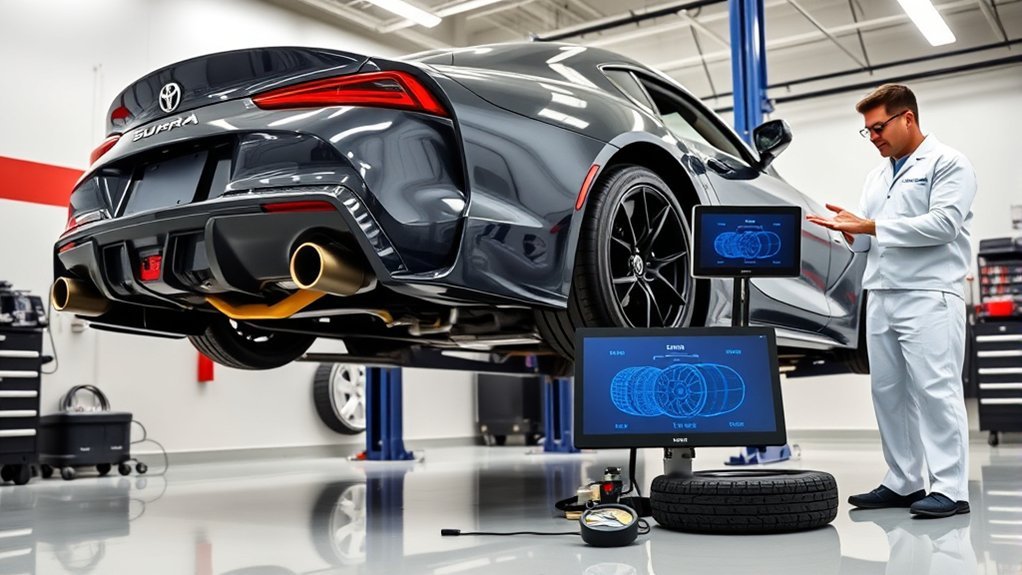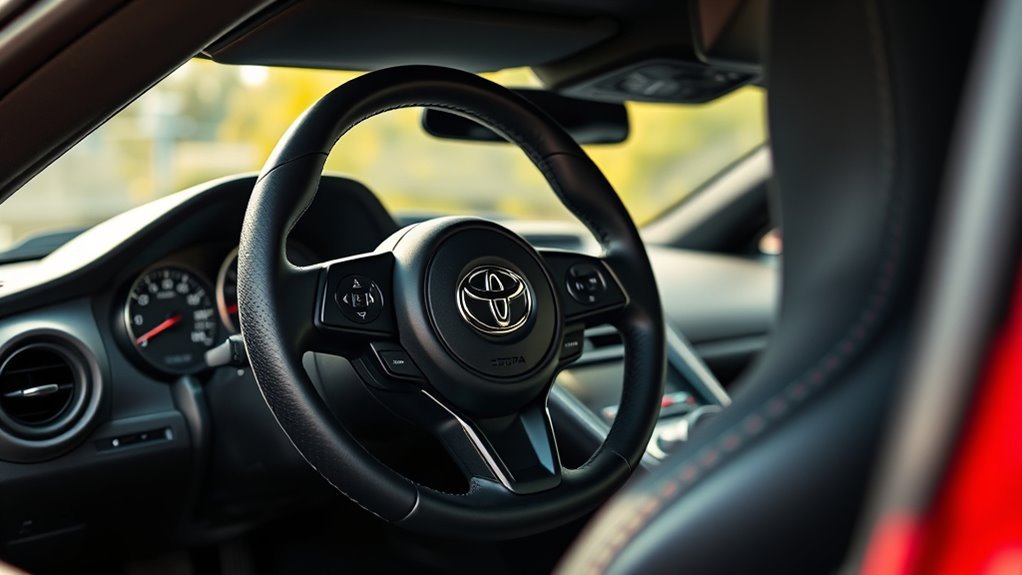
A 2023 Toyota GR Supra steering wheel can be adjusted manually for height and angle, but Toyota’s owner information does not publish a universal degree or inch range for that adjustment. More important: the cabin adjustment does not change toe, camber, caster, or tire wear. If the wheel is crooked while the car drives straight, treat it as an alignment, tire, or suspension issue—not a tilt/telescoping issue.
Quick Answer
The 2023 Supra’s steering wheel adjusts by releasing the column lever, moving the wheel to a comfortable height and angle, then locking the lever back up. That adjustment improves reach, visibility, and control, but it does not affect wheel alignment. A crooked wheel while driving straight usually means toe, thrust angle, tire pressure, or suspension needs inspection.
Key Takeaways
- Adjust the Supra’s steering wheel only while parked, using the factory lever under the column.
- Tilt/telescoping position affects comfort, hand position, sightlines, and airbag spacing—not toe, camber, caster, or tire wear.
- A steering wheel that sits off-center while driving straight usually points to alignment, tire, or suspension problems.
- Check tire pressure, tire wear, and recent impacts before paying for an alignment.
- Do not loosen steering-column bolts, remove the steering wheel, or adjust tie rods unless you are trained and have proper alignment equipment.
At a Glance
| Time Required | 5–10 minutes for cabin adjustment; 15–30 minutes for a basic at-home centering check |
| Difficulty | Easy for inspection and driver-position setup; professional for alignment correction |
| Tools Needed | Tire-pressure gauge, tread-depth gauge, flashlight, notepad, and a safe straight road for testing |
| Cost | $0 for basic checks; professional alignment cost varies by shop, market, and equipment |
Factory Steering-Wheel Adjustment Limits on the 2023 Supra

The 2023 Toyota GR Supra uses a manual steering-column adjustment. Toyota’s owner instructions say to fold the lever down, move the steering wheel to the preferred height and angle for your seating position, then fold the lever back up. You can review the factory process in the 2023 Toyota GR Supra Owner’s Manual.
Warning: Adjust the steering wheel only when the vehicle is stationary. Toyota warns that moving the wheel while driving can cause unintended steering movement and loss of control.
Because the manual does not give one public, trim-wide measurement such as “30 degrees” or “2 inches,” the safest way to describe the factory limit is practical: adjust only within the lever’s natural travel, never force the column, and confirm the lever is fully locked before driving.
| Adjustment | What It Does | What It Does Not Do |
|---|---|---|
| Tilt / height | Raises or lowers the wheel angle for hand position and gauge visibility. | It does not change front toe, camber, or tire contact patch. |
| Telescoping / reach | Moves the wheel closer or farther from the driver. | It does not correct a crooked wheel while driving straight. |
| Column lock lever | Locks the steering column after the wheel is positioned. | It is not an alignment or steering-rack adjustment. |
Why the Supra’s Steering-Wheel Position Matters for Control
Your Supra’s steering-wheel position matters because it affects how naturally your arms, shoulders, and hands work while driving. A good position gives you a relaxed bend in your elbows, a clear view of the gauges, and enough distance from the airbag while still letting you steer without stretching.
Steering Position and Grip
Set the seat first, then the wheel. Your back should stay against the seat when you turn the wheel, and your hands should reach the rim without locking your elbows. That position helps you make smooth steering inputs and reduces the tendency to pull on the wheel during quick corners.
For street driving, avoid setting the wheel so high that it blocks the instrument cluster or so low that it contacts your thighs. Also avoid sitting too close to the wheel. The owner’s manual warns drivers to sit with proper posture and keep an appropriate distance from the steering wheel because of the SRS front airbag.
Pro Tip: A simple setup check is to place your shoulders against the seatback and rest your wrists over the top of the steering wheel. If your shoulders lift off the seat, move the wheel or seat closer.
Impact on Tire Wear
The steering-wheel tilt or telescope setting by itself does not cause tire wear. Tire wear comes from the way the tires meet the road: tire pressure, toe, camber, caster, thrust angle, wheel balance, suspension condition, and driving style all matter.
What can confuse the issue is an off-center steering wheel while driving straight. That symptom often appears when front toe is not centered, rear thrust angle is off, a tire is low, or a suspension part is bent or worn. Tire makers list uneven wear, pulling, vibration, and an off-center steering wheel as common signs that alignment should be checked; Bridgestone’s tire alignment guide explains how camber, toe, and caster affect tire contact.
How Steering-Wheel Offset Affects Alignment, Tires, and Steering Feel
In alignment talk, “steering-wheel offset” usually means the wheel is not level when the car is traveling straight. That is different from the adjustable steering-column position inside the cabin. A crooked wheel can be a clue that the alignment was set with the rack off-center, the rear thrust angle is pushing the car slightly sideways, or a tire or suspension part is changing the car’s path.
Steering Offset and Toe
Toe is the angle of the tires pointing slightly inward or outward when viewed from above. It has a major effect on steering response and tire scrub. Too much toe-in or toe-out can make the car feel nervous, dull, or unstable, and it can feather the tread quickly.
If the Supra drives straight but the steering wheel sits a few degrees left or right, a shop should center the steering wheel, set the steering rack correctly, and adjust toe evenly to Toyota’s specifications. Simply removing and re-indexing the steering wheel can hide the symptom without fixing the alignment.
Tire Wear and Scrub
Misalignment makes the tire slide slightly as it rolls. That sliding is called scrub, and it creates heat and uneven tread wear. The NHTSA TireWise tire-safety resource also stresses the basics: check tire pressure, rotate tires as recommended, and inspect tread regularly.
| Symptom | Likely Area to Check | Best Next Step |
|---|---|---|
| Steering wheel crooked, car drives straight | Front toe centering or rear thrust angle | Request a four-wheel alignment with the steering wheel locked centered. |
| Car pulls left or right | Tire pressure, road crown, tire conicity, camber/caster split | Check pressures first, then inspect tires and alignment. |
| Feathered tread edges | Toe | Have toe measured and corrected before the tread gets worse. |
| Inner or outer shoulder wear | Camber, toe, worn bushings, driving style | Inspect suspension and align to factory specs. |
| Steering vibration | Wheel balance, bent wheel, tire damage, suspension play | Balance and inspect wheels before assuming alignment is the only cause. |
Steering Feel and Response
A properly centered wheel helps the Supra feel predictable. You know where straight-ahead is, the car tracks cleanly, and small steering corrections feel natural. When the wheel is off-center, you may still be able to drive, but your brain and hands are constantly correcting for a problem the car should not have.
A tilted steering column changes driver comfort. A crooked steering wheel while driving straight points to alignment, tires, or suspension.
How to Check and Measure Steering-Wheel Centering at Home
You can do a useful first check at home before visiting an alignment shop. The goal is not to perform a full alignment in your driveway; it is to record clear symptoms so you know whether the car needs tire service, suspension inspection, or a professional four-wheel alignment.
- Check cold tire pressure first. Use the pressure listed on the driver’s door placard or the owner’s manual tire-pressure table for your tire size and driving conditions.
- Inspect tread wear. Look for feathering, one-edge wear, cupping, or a tire that looks different from the others.
- Verify wheel and tire condition. A bent wheel, damaged tire, or loose suspension part can mimic alignment problems.
- Drive on a safe, flat, straight road. Hold the wheel lightly and note whether the car tracks straight, pulls, or needs constant correction.
- Record the steering-wheel angle. Imagine the wheel as a clock face. Note whether the top of the wheel sits at 12 o’clock, 11:55, or 12:05 while the car is traveling straight.
- Repeat after turning around. Road crown can fool you, so check in both directions on the same road if it is safe and legal.
- Write down the pattern. “Wheel left, car straight” is different from “wheel straight, car pulls right.” That distinction helps the shop diagnose faster.
Note: Do not stare at the steering wheel while driving. Make a brief observation only when it is safe, or have a passenger write down what you describe.
Quick DIY Fixes to Re-Center the Steering Wheel
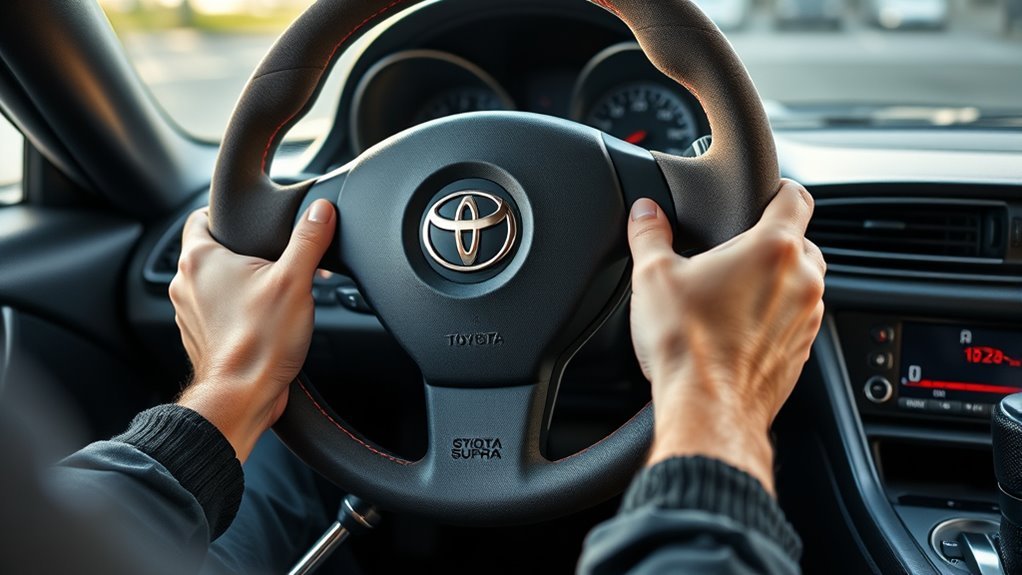
There are two very different “centering” jobs. Centering the wheel for your body is a safe driver-position adjustment. Centering a wheel that is crooked on the road is an alignment job.
[Products Worth Considering]
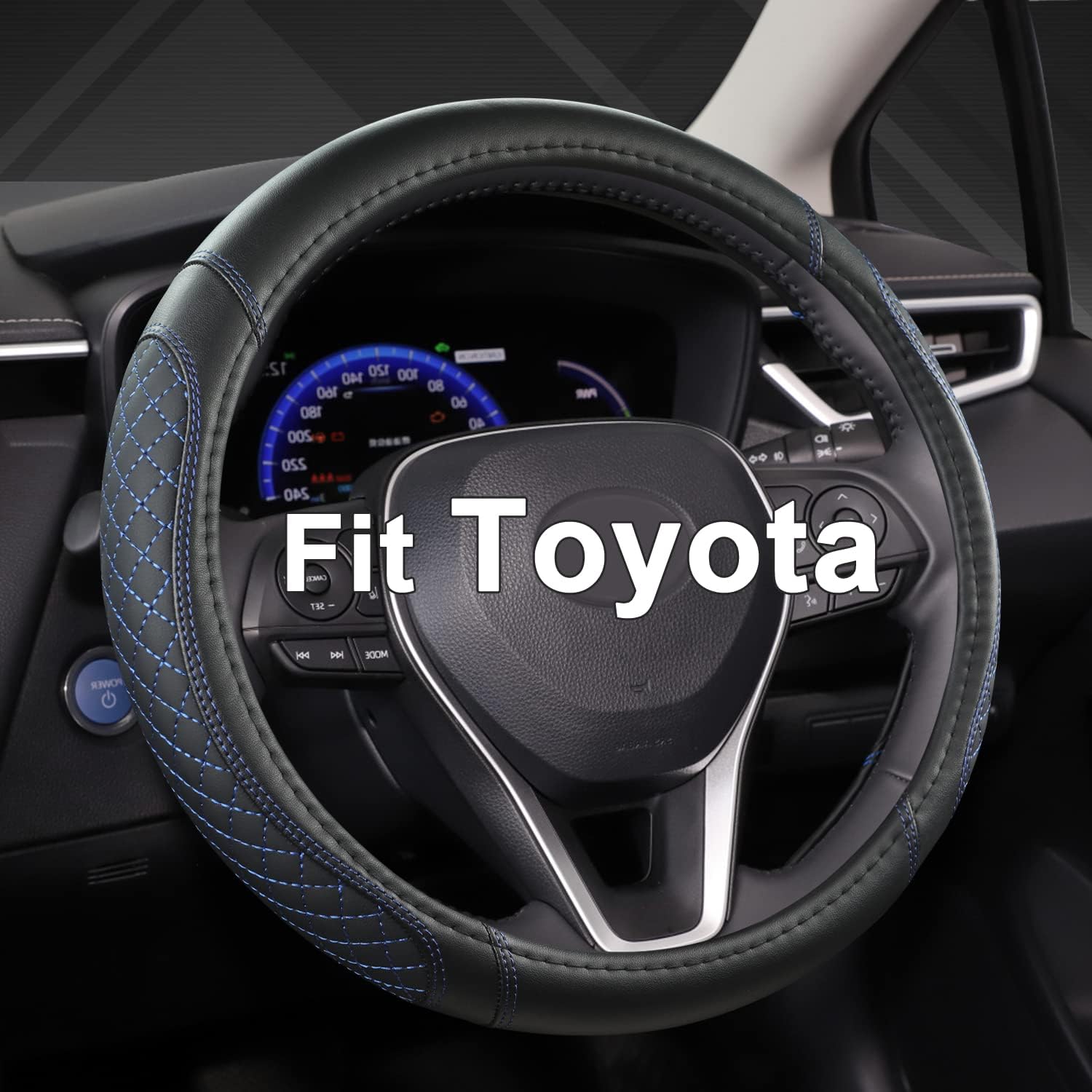
This custom-fit steering wheel cover is designed for select Toyota models and sized for standard steering wheels to help improve grip and comfort while driving. Made with soft microfiber leather and a non-slip rubber inner ring, it adds control, protects your wheel, and brings a stylish diamond-quilted look to your car interior. Installation is simple and tool-free, making it an easy upgrade for everyday driving.

This wheel alignment tool makes it easy to check and adjust toe-in and toe-out at home for better handling, stability, and more even tire wear. Designed for one-person use, it includes tape-measure slots for simple setup and accurate measurements without extra help. Its stainless steel construction and broad vehicle compatibility make it a practical addition to any DIY garage.

This 2-piece suspension tool set combines a compact strut spreader with a high-leverage lower control arm prying tool to help speed up safe suspension service. Designed for many FWD, import, and domestic vehicles, it supports strut, hub, ball joint, and control arm work while helping reduce the risk of damage to surrounding components. Heavy-duty steel construction makes it a dependable choice for mechanics and serious DIY suspension repair.
Safe Driver-Position Adjustment
- Park on a level surface and keep the vehicle stationary.
- Set the seat first so your pedals, backrest, and mirror position feel correct.
- Fold the steering-column lever down completely.
- Grip the wheel with both hands and move it to a comfortable height and angle.
- Fold the lever back up completely.
- Gently check that the column is locked before driving.
Safe Basic Checks Before an Alignment
- Correct tire pressures with the tires cold.
- Remove extra cargo that may be changing ride height.
- Look for obvious tire damage, wheel damage, or uneven tread.
- Check whether the symptom started after a pothole, curb hit, new tires, lowering springs, coilovers, or suspension work.
Warning: Do not loosen steering-column bolts, remove the airbag, pull the steering wheel, or adjust tie rods as a “quick fix.” Those parts affect steering safety. If the wheel is crooked while driving straight, get the alignment measured.
When to Get a Professional Four-Wheel Alignment for Your Supra
Get a professional four-wheel alignment promptly if your Supra has any of these symptoms:
- Steering wheel is off-center while driving straight.
- The car pulls left or right after tire pressures are corrected.
- Front or rear tires show feathering, one-edge wear, or unusual shoulder wear.
- You hit a pothole, curb, road debris, or track curbing hard enough to feel it.
- You installed new tires, wheels, lowering springs, coilovers, camber plates, control arms, or tie rods.
- The car vibrates, wanders, or feels different after suspension or steering work.
A four-wheel alignment matters on the Supra because the rear wheels establish the thrust line the car follows. If the rear thrust angle is not right, the steering wheel can be centered visually while the car still tracks slightly sideways. Ask for a before-and-after printout and confirm the technician locks the steering wheel straight while setting toe.
[Products Worth Considering]

This steering clock spring is designed to restore reliable steering wheel controls across a wide range of Toyota models. It supports audio, cruise control, and other multifunction commands while matching OEM part numbers for confident replacement fitment. Built for dependable signal transfer and straightforward installation, it is an effective solution for repairing steering column control issues.

This DIY toe alignment tool kit helps home mechanics quickly check and adjust front-end toe after suspension, steering, or tire service. Stainless steel toe plates and dual tape measures provide a simple, reliable reference for reducing uneven tire wear and improving straight-line tracking without needing a full alignment machine.

This dash clock spring replacement is designed for a wide range of Toyota vehicles and helps restore reliable steering wheel control functions. It supports audio controls, cruise control, and other multi-function commands while using vehicle-specific connectors for easier installation. Built with durable materials and OEM-referenced part compatibility, it is a practical solution for repairing steering wheel signal issues.
Which Alignment Changes Shift the Steering Wheel? Performance Tuning Notes
Performance alignment changes can improve grip and steering response, but they can also increase tire wear or make the car less stable on the highway. For street use, start with Toyota factory specifications. For track use, work with a shop that understands the A90/A91 Supra chassis and your tire choice.
| Alignment Change | How It Can Affect Steering Feel | Tire-Wear Risk |
|---|---|---|
| Front toe | Toe-out can sharpen turn-in; toe-in can improve straight-line calmness. | High. Incorrect toe can feather tread quickly. |
| Front camber | More negative camber can add cornering grip with performance tires. | Medium to high if excessive for street use. |
| Caster balance | Caster affects return-to-center and straight-line stability. | Usually lower than toe, but side-to-side imbalance can cause pull. |
| Rear thrust angle | Can make the steering wheel sit off-center even if the front toe looks close. | Medium; it can make the car crab or require constant correction. |
| Ride height changes | Lowering can change toe and camber, altering steering feel. | High if the car is lowered and not realigned. |
The Tire Rack alignment settings guide explains how camber, caster, toe, and thrust angle affect tire operation, handling, and wear. Use that as background knowledge, but always align the Supra to a specification that matches your tires, ride height, and driving use.
Diagnosing and Fixing Common Off-Center Steering-Wheel Problems

If your Supra’s steering wheel sits off-center, start with the simplest causes and move toward the expensive ones. Tire pressure, tire condition, and recent impacts are easy to check. Toe, thrust angle, bent arms, worn bushings, and tie-rod play need proper tools and inspection.
| Problem | Most Likely Cause | Fix |
|---|---|---|
| Wheel was straight before an alignment, now it is crooked | Steering wheel was not locked centered or toe was adjusted unevenly | Return to the shop and ask for the steering wheel to be centered during alignment. |
| Wheel crooked after hitting a curb | Bent wheel, tie rod, control arm, or shifted alignment | Inspect for damage before aligning; do not just “set toe” over bent parts. |
| Wheel crooked after lowering the car | Ride-height change altered toe and camber | Let the suspension settle, then perform a full alignment. |
| Car pulls even when the wheel is straight | Tire pressure, tire pull, camber/caster split, road crown | Check pressures and tires first, then inspect alignment angles. |
| Steering wheel vibrates | Wheel balance, bent wheel, damaged tire, worn joint | Balance and inspect wheels, tires, and suspension before alignment. |
For tire wear, the Continental wheel alignment guide lists uneven tire wear, pulling, an off-center steering wheel, and vibration as common signs that alignment needs attention. That matches the practical diagnosis: the steering wheel is a symptom, not the root cause.
[Products Worth Considering]

This universal wheel alignment tool helps you perform precise toe alignment at home with professional-grade accuracy and easy DIY operation. Its no-caliper-removal design simplifies setup, while the heavy-duty stainless steel construction and compact detachable form make it durable, stable, and easy to store. It is suitable for a wide range of vehicles, including cars, trucks, SUVs, ATVs, and UTVs.

This all-in-one front end service kit is designed to help remove stubborn ball joints, tie rod ends, and pitman arms on a wide range of vehicles. Built from hardened alloy and organized in a portable ABS case, it offers reliable performance for both professional mechanics and DIY repairs.

This master ball joint removal kit gives you the tools needed to remove and install ball joints, tie rod ends, Pitman arms, and other front-end components. It is designed for broad compatibility with many GM, Chevrolet, Ford, and Dodge vehicles, including a range of light trucks, vans, and SUVs. Built from forged steel and stored in a molded ABS case, it offers durable performance and organized portability for garage or shop use.
Frequently Asked Questions
What are the 2023 Supra steering wheel adjustment limits?
Toyota’s 2023 GR Supra owner information describes a manual steering-wheel adjustment for height and angle, operated by a lever under the column. It does not publish a universal public degree or inch range. Use the factory lever only within its natural travel, and make sure it is locked before driving.
Can adjusting the steering wheel cause tire wear?
No. Moving the steering wheel up, down, in, or out for driver comfort does not change tire alignment. Tire wear is affected by tire pressure, toe, camber, caster, thrust angle, wheel balance, worn suspension parts, and driving conditions.
What are the 5 basic alignment angles?
The five common alignment angles are camber, caster, toe, steering axis inclination, and thrust angle. For most driver complaints, toe, camber, caster, and thrust angle are the main measurements discussed on an alignment printout.
What is the wheel fitment of the 2023 Supra?
Factory tire and wheel sizing depends on trim and market. In the U.S., the 2023 GR Supra 2.0 is commonly listed with 18-inch staggered wheels and 255/40ZR18 front, 275/40ZR18 rear tires, while 3.0 models commonly use 19-inch staggered wheels with 255/35ZR19 front and 275/35ZR19 rear tires. Always confirm with the driver-door placard, owner’s manual, and Toyota parts catalog for your VIN.
What is the best alignment setting for a 2023 Supra?
For street use, the best setting is Toyota’s factory specification for your exact model, tire size, ride height, and market. For track use, a performance shop may add negative camber or adjust toe, but those changes should be measured carefully because they can increase tire wear and change high-speed stability.
Can I center the steering wheel by removing it and reinstalling it straight?
Do not use that as a shortcut on a stock Supra. The steering wheel contains airbag and electrical components, and moving it can hide an alignment problem. If the wheel is crooked while driving straight, the correct fix is to inspect tires and suspension, then align the car with the steering wheel centered.
When should I get an alignment after adjusting the steering wheel?
You do not need an alignment just because you adjusted the cabin steering-wheel position. You do need an alignment check if the steering wheel is off-center while driving straight, the car pulls, tires wear unevenly, or the car recently hit a pothole, curb, or had suspension work.
Conclusion
The 2023 Supra’s steering-wheel adjustment is for driver fit: height, reach, comfort, visibility, and safe control. It is not an alignment setting. If the wheel is crooked on the road, do the simple checks first—tire pressure, tread wear, recent impacts, and wheel condition—then get a proper four-wheel alignment if the symptom remains. Keep those two issues separate, and you will protect both steering feel and tire life.
Sources
- 2023 Toyota GR Supra Owner’s Manual — steering-wheel adjustment procedure, safety warning, tire-size and tire-pressure information.
- Toyota 2023 GR Supra eBrochure — official model and equipment context for the 2023 GR Supra.
- NHTSA TireWise — tire pressure, tread inspection, tire rotation, and tire-safety guidance.
- Bridgestone Tire Alignment Guide — signs of alignment problems and explanations of camber, toe, and caster.
- Continental Tire Wheel Alignment Guide — uneven tire wear, pulling, vibration, and off-center steering wheel symptoms.
- Tire Rack Alignment Settings Guide — camber, caster, toe, thrust angle, handling, and tire-wear background.