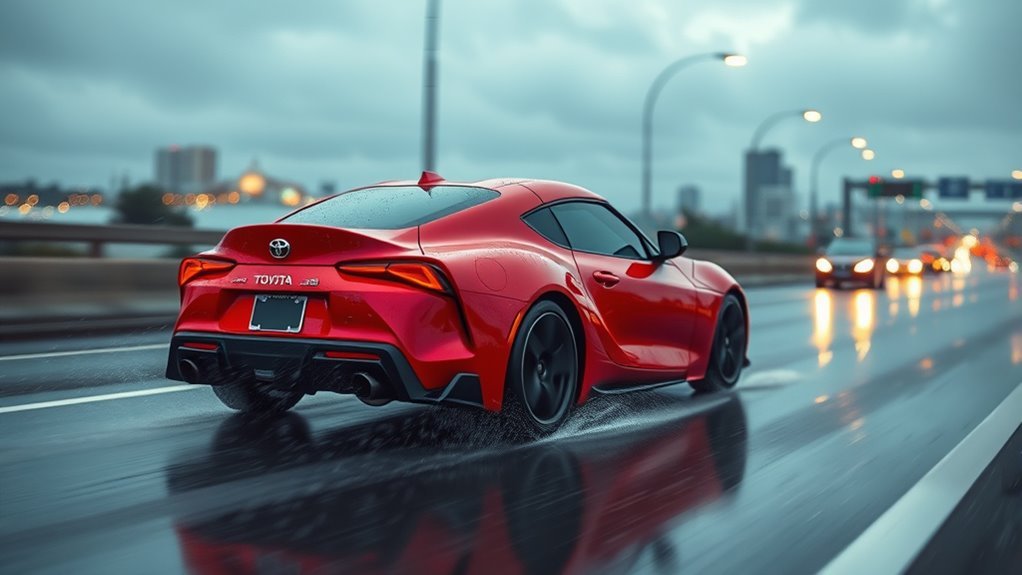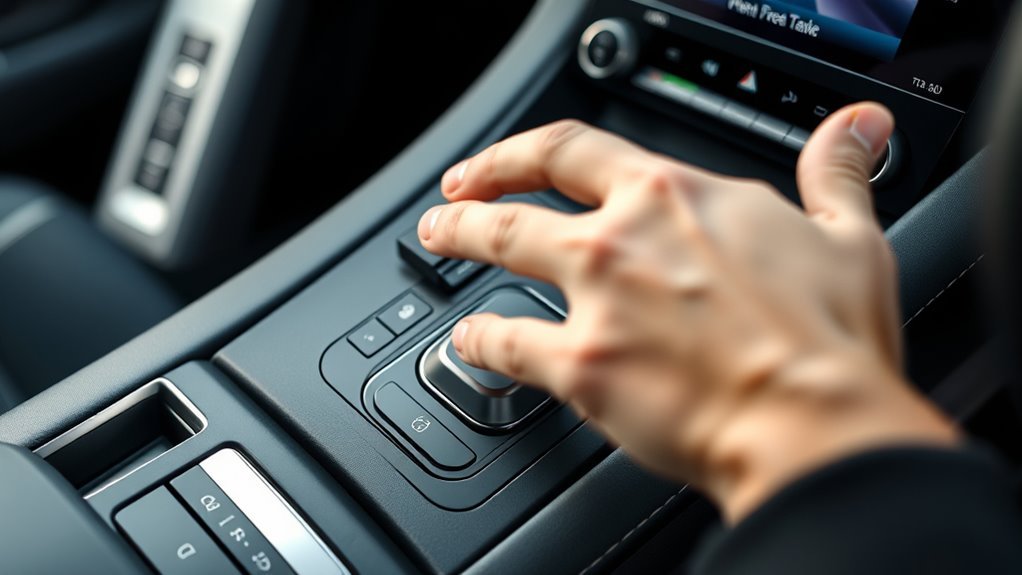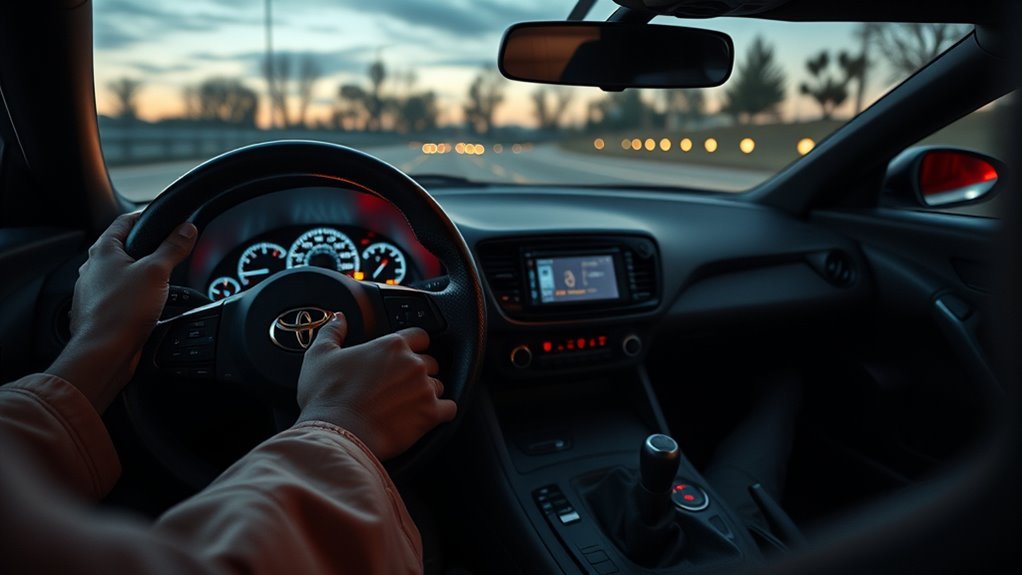
Toyota GR Supra launch control is a factory acceleration feature for automatic-transmission Mk5/A90/A91 models. On a dry, legal closed course, select Sport mode, press the VSC/Traction button once so the cluster shows TRACTION, select D, hold the brake firmly, and press the accelerator fully through the kickdown point. When the launch indicator appears, release the brake within three seconds. The car sets launch RPM automatically.
Last updated: August 31, 2026.
Quick Answer
To use factory Launch Control on an automatic Mk5 Toyota GR Supra, warm the engine, move to a dry closed course, select Sport mode, and press the VSC/Traction button once so TRACTION appears. Select D, hold the brake firmly with your left foot, and fully depress the accelerator through kickdown. When the launch indicator appears, release the brake within three seconds. Do not hold the VSC button to select full VSC OFF, set a manual launch RPM, or force an early shift into third gear.
Key Takeaways
- The factory procedure applies to Mk5 GR Supras with the eight-speed automatic transmission.
- Use Traction mode for factory Launch Control; full VSC OFF is not required.
- The vehicle selects launch RPM automatically when the activation conditions are met.
- Toyota requires a warm engine, dry conditions, good traction and a straight steering wheel.
- Do not use Launch Control during break-in or on public roads.
- Allow approximately five minutes for transmission cooling before another launch.
At a Glance
| Requirement | Factory Guidance |
|---|---|
| Applicable transmission | Eight-speed automatic |
| Driving mode | Sport |
| Stability setting | Traction mode from one button press |
| Selector position | D |
| Surface | Dry with good traction |
| Launch RPM | Set automatically by the vehicle |
| Brake-release window | Within 3 seconds |
| Cooldown between launches | Approximately 5 minutes |
How to Use Toyota GR Supra Launch Control
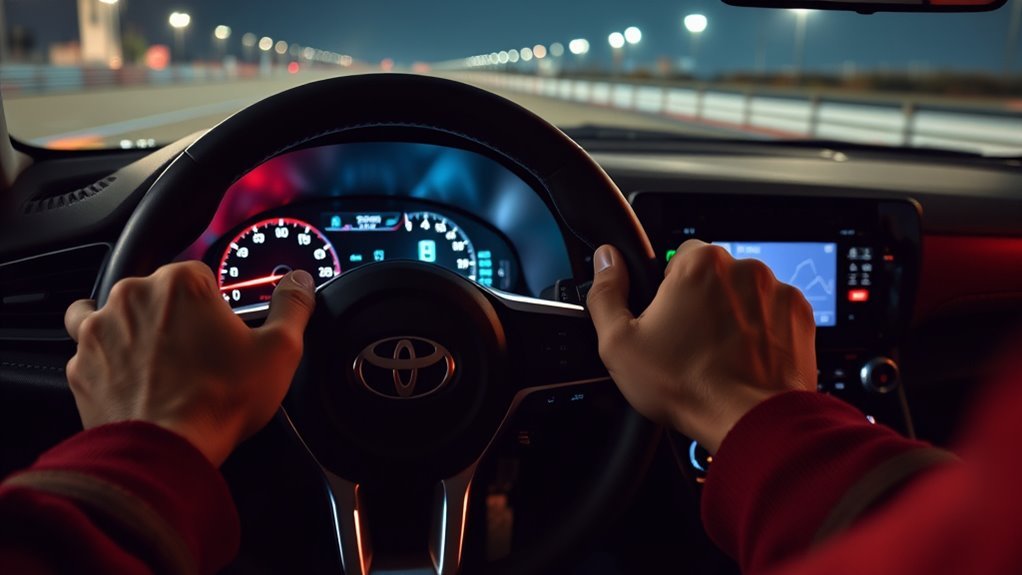
This procedure covers the factory Launch Control system on U.S.-market 2020–2026 Mk5 GR Supras equipped with the eight-speed automatic transmission. Check the owner’s manual for your exact model year and market before proceeding.
Verification note: Toyota’s 2026 U.S./Canada owner documentation still uses the same core automatic-transmission sequence: Sport mode, TRACTION, D, firm left-foot braking, full accelerator kickdown, automatic launch-speed adjustment and brake release within three seconds. Toyota lists more than one 2026 owner’s manual by production date, so use the manual that matches your vehicle. This guide is manual-based and does not claim independent track testing.
Use Launch Control only on a dry, sanctioned closed course with adequate runoff space. Toyota warns that the feature places a very heavy load on the vehicle and causes premature component wear. Do not use it during the break-in period or on public roads.
- Drive the car until the engine reaches operating temperature. Toyota describes this as an uninterrupted drive of at least 6 miles or 10 kilometers.
- Stop on a straight, dry section of the closed course. Point the steering wheel straight ahead.
- Press the Sport mode button. Confirm that SPORT appears in the instrument cluster.
- Press and release the VSC/Traction button once. Confirm that TRACTION appears in the cluster. Do not hold the button for full VSC OFF.
- Select the D transmission position.
- Press the brake pedal firmly with your left foot.
- Fully depress and hold the accelerator through the kickdown resistance point. A launch or flag indicator should appear, and the car will select launch RPM.
- Release the brake within three seconds while keeping the steering wheel straight.
- After the run, restore normal VSC operation as soon as practical and allow the transmission to cool before another attempt.
Toyota’s exact sequence appears in its 2024 GR Supra Quick Reference Guide and the 2026 GR Supra Owner’s Manual (OM9AE47U). Toyota also lists later-production 2026 manuals, so confirm the production-date manual for your car.
Should You Use Traction Mode or VSC OFF?
Use Traction mode for Toyota’s factory Launch Control procedure. One press of the VSC/Traction button selects this mode and should display TRACTION in the instrument cluster. Traction mode permits the factory launch strategy while retaining more electronic support than full VSC OFF.
A long button press selects full VSC OFF. Toyota warns that driving stability is reduced during acceleration and cornering when VSC is off. Full VSC OFF is therefore not the default factory Launch Control setting and should not be treated as a required step.
For a deeper explanation of the electronic aids, see how Supra stability control and Traction mode work.
| Setting | How It Is Selected | Best Use | Main Risk |
|---|---|---|---|
| Normal VSC | Default setting | Public roads and normal driving | May intervene during aggressive acceleration |
| Traction mode | Press and release the button once | Factory Launch Control on a closed course | Reduced stability support compared with normal VSC |
| VSC OFF | Press and hold the button | Experienced closed-course use only | Greater risk of wheelspin, oversteer and loss of control |
[Products Worth Considering]

This POWOXI solar battery maintainer helps keep 12V batteries charged and protected with intelligent charging and built-in safety features. Its durable tempered glass construction, scratch-resistant frame, and easy installation make it a practical solution for cars, motorcycles, boats, tractors, ATVs, and other battery-powered equipment. An LED indicator helps show charging status at a glance, while the waterproof design supports low-maintenance use.

Battery Tender Plus is a smart 12V charger and maintainer designed to keep automotive, motorcycle, and powersports batteries in optimal condition. Its adaptive 4-step charging program helps extend battery life while the quick disconnect harness and included cables make setup simple and convenient. The two-color LED status indicator provides clear charging feedback for easy, worry-free maintenance.
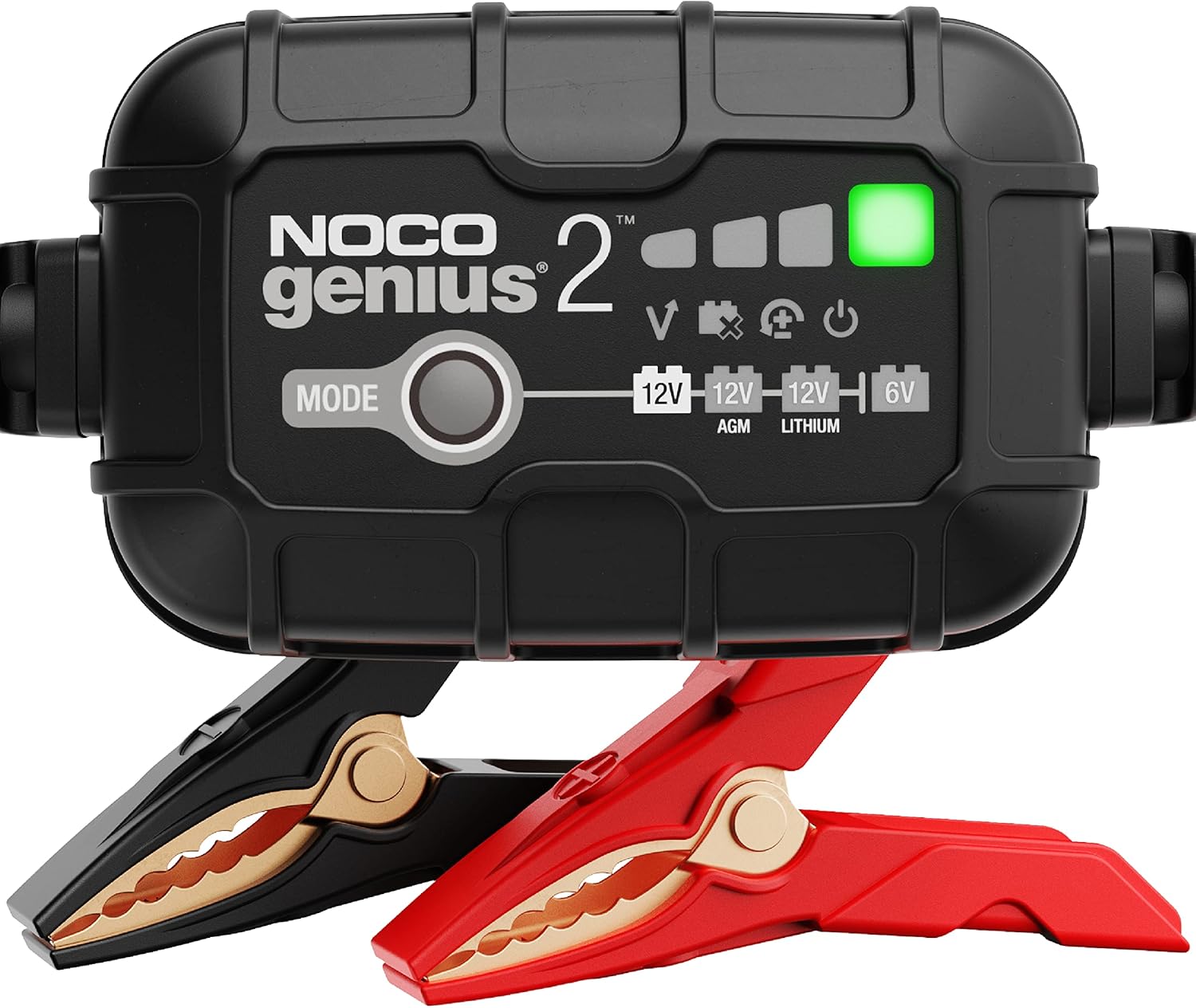
The NOCO GENIUS2 is a compact, all-in-one smart charger that automatically charges, maintains, and restores 6V and 12V lead-acid and lithium batteries. It features temperature compensation, overcharge protection, pulse desulfation, and Force Mode for reviving deeply discharged batteries, making it ideal for long-term battery care across many vehicle types. Designed for safe indefinite connection, it helps extend battery life and keep batteries ready to go.
Does the GR Supra Choose Its Own Launch RPM?
Yes. During the factory automatic-transmission procedure, the Supra sets launch engine speed after you meet the required conditions and fully depress the accelerator through kickdown. Toyota does not instruct the driver to hold a fixed 1,500-, 2,000- or 2,200-rpm target.
For context, MotorTrend’s 2020 GR Supra test observed the engine settling at about 2,000 rpm during Launch Control. That is a test observation, not a universal Toyota-set target. Toyota’s 2026 manual says the engine speed is adjusted for launching, so do not copy a fixed RPM across different model years, tires, temperatures or calibrations.
Brake pressure should be firm enough to hold the car stationary while the accelerator is fully depressed. Once the launch indicator appears, release the brake within three seconds. If you wait longer, release both pedals, let the car settle and restart the sequence instead of trying to force the launch.
Leave the transmission in D for the factory procedure. Do not force an early shift into third gear. The transmission manages gear changes as part of the acceleration run. See the Supra ZF eight-speed transmission guide for a broader explanation of its automatic and manual-shift behavior.
Hardware and Drivetrain Limits to Respect
Launch Control applies a high load to the engine, torque converter, transmission, driveshaft, differential, axles, tires and mounts. Toyota explicitly warns that repeated use causes premature component wear. No single driver-selected RPM can guarantee that the driveline will remain undamaged.
Do not use Launch Control during break-in. The engine must also be at operating temperature before activation. Toyota states that operating temperature is reached after an uninterrupted drive of at least 6 miles or 10 kilometers.
After a launch, allow approximately five minutes for the transmission to cool before another attempt. Stop the session if a drivetrain warning appears, the car develops wheel hop, the brake cannot hold it stationary, or you hear a new clunk, vibration or grinding noise.
Drivetrain Load and Modified Cars
A modified engine, transmission tune, drag radial or prepared track surface can increase the shock transmitted through the driveline. More tire grip does not always reduce mechanical stress; it can transfer more torque into the differential, axles and mounts instead of allowing the tires to spin.
Use a vehicle-specific calibration and inspection plan for modified cars. A qualified performance shop should evaluate driveline condition, wheel and tire fitment, fluid temperatures and any ECU or transmission changes before repeated launches.
Tire Grip and Surface Conditions
Launch Control is intended for dry surfaces with good traction. Check tread condition with the Supra tire tread depth guide, confirm that the tires are free of damage, and use pressures suited to the tire manufacturer’s instructions and track rules.
| Parameter | Recommendation |
|---|---|
| Transmission | Eight-speed automatic for factory Launch Control |
| Surface | Dry, straight and high-grip |
| Engine condition | At operating temperature |
| Launch RPM | System-controlled |
| Brake input | Firm left-foot pressure |
| Accelerator input | Fully depressed through kickdown |
| Brake release | Within 3 seconds |
| Repeat attempt | After approximately 5 minutes of transmission cooling |
What Tires and Warm-Up Routine Should You Use?
Choose tires by approved wheel fitment, load rating, speed rating, compound, temperature range and event type. Do not assume that one drag radial is correct for every Supra or every use.
The Nitto NT555RII, for example, is classified by its manufacturer as a DOT-compliant competition drag radial. It is a specialist tire rather than a universal street or road-course recommendation. Verify available sizes, front-to-rear compatibility and event requirements on the official Nitto NT555RII page.
Set cold pressure according to the tire manufacturer, vehicle fitment and track guidance. Recheck hot pressure after a run because tire pressure rises as the carcass warms. The existing Supra tire-pressure guide explains the basic checks.
[Products Worth Considering]

The NOCO GENIUS5 is an all-in-one battery charging and maintenance solution for 6V and 12V lead-acid and lithium batteries. It features temperature compensation, dead-battery recovery, desulfation, and safe long-term maintenance to help extend battery life and performance. Compact and versatile, it works with a wide range of vehicles and comes with mounting accessories and a warranty.

The NOCO GENIUS10 is an all-in-one smart charger, maintainer, trickle charger, and desulfator designed to keep 6V and 12V batteries performing at their best. It supports lead-acid and lithium batteries, charges deeply discharged batteries, and uses temperature compensation for safer, more accurate charging in changing conditions. Compact and versatile, it is ideal for a wide range of vehicles and long-term battery maintenance.
Tire Selection Essentials
- Confirm the tire is approved for the wheel width, vehicle load and intended speed.
- Use ordinary street tires for street driving and dedicated competition tires only for their intended event.
- Inspect the tread, sidewalls and bead area before every track session.
- Record cold and hot pressures rather than copying another car’s settings.
- Change one setup variable at a time so you can identify what improved or harmed consistency.
Is a Burnout Required Before Launching?
No blanket burnout is required for factory Launch Control. Ordinary street tires generally need normal driving to reach a stable operating condition, not a stationary burnout.
Perform a burnout only when you are using a tire designed for that procedure and the drag strip permits it. Follow the tire manufacturer’s instructions and the event official’s directions for the water box, burnout length and staging process. An unnecessary burnout can overheat or damage street tires and may leave debris on the course.
How to Practice Launches Safely at an Event
Practice only at a sanctioned drag strip, closed-course event or controlled driver-training facility. A legal venue provides a prepared direction of travel, runoff space, event rules and access to emergency personnel.
- Review the venue’s helmet, clothing, tire and vehicle-inspection requirements.
- Remove loose objects from the cabin and cargo area.
- Check tire condition, wheel torque, brake operation and fluid levels.
- Confirm that no warning lights or drivetrain messages are active.
- Keep the steering wheel straight during the launch.
- Abort if the car yaws, hops, makes a new mechanical noise or displays a warning.
- Allow the required transmission cooldown between attempts.
[Products Worth Considering]
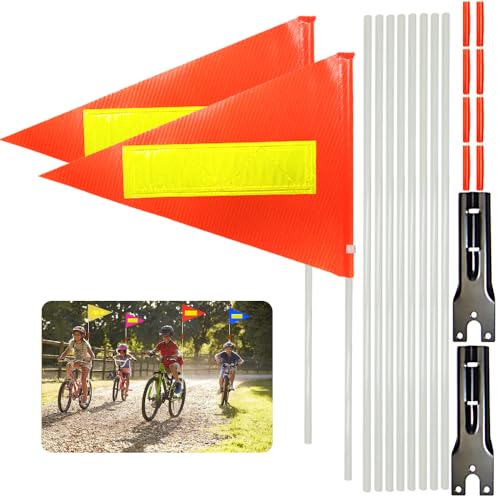
👍HEIGHT ADJUSTABLE: 5 fiberglass poles per set, 1.5ft to 6ft height flexibility, very low profile for children's bikes and wheelchairs, one is enough, different flagpoles can be used to match different sizes as needed.

Heavy-Duty Deer Drag: Comes with one heavy-duty drag rope and one adjustable haul strap. Made of lightweight nylon webbing and reinforced with X-stitch sewing, it delivers superior durability. The orange reflective model holds up to 400 lbs, perfect for transporting large game

Package Includes: 1 orange deer drag harness and 1 storage bag, strong and reliable for everyday hunting and outdoor use. The 63-74.8 inch adjustable rope is enough to secure and effortlessly drag your game
Why Is GR Supra Launch Control Not Working?
Launch Control usually fails to activate because one or more factory conditions have not been met. Do not solve an activation problem by holding a guessed RPM, pumping the brake or immediately selecting full VSC OFF.
| Symptom | Likely Cause | What to Check |
|---|---|---|
| No launch or flag indicator | Activation sequence is incomplete | Confirm Sport mode, TRACTION display, D, firm brake and full accelerator through kickdown |
| Engine does not settle at launch speed | Engine is cold or a pedal condition is not met | Warm the engine and repeat the exact brake and accelerator sequence |
| System worked once but will not reactivate | Transmission cooldown is active | Wait approximately 5 minutes before trying again |
| VSC OFF appears but TRACTION does not | The button may have been held too long | Restore normal VSC, then press and release the button once |
| Excessive wheelspin or sideways movement | Poor surface grip, unsuitable tires or abrupt weight transfer | Abort, inspect the surface and tires, and reduce risk before another attempt |
| Warning light or drivetrain message | System fault, overheating or protection strategy | Stop launching and diagnose the warning before continuing |
What About Aftermarket Launch-Control Tuning?
Aftermarket launch features are separate from Toyota’s factory procedure. EcuTek’s general RaceROM fact sheet describes adjustable launch-control functions and states that feature availability depends on the exact vehicle and ROM file. That document does not, by itself, prove that every Mk5 GR Supra or every Supra ROM supports those functions. Confirm current vehicle-and-ROM support with the software provider and a qualified Supra tuner before buying or applying a calibration.
Do not copy launch RPM, boost-building, torque-reduction or shift settings from an unrelated car. Engine output, fuel, transmission calibration, tires, track grip and driveline hardware all affect a safe setup.
- Use a qualified tuner familiar with the exact GR Supra ECU and transmission.
- Confirm that the vehicle and ROM support the requested feature.
- Save the original calibration before making changes.
- Change one parameter at a time and review data logs after each controlled test.
- Stop if knock, excessive temperature, wheel hop, clutch slip or a drivetrain warning appears.
- Confirm warranty, emissions and event-rule implications before modifying the ECU or transmission calibration.
See EcuTek’s RaceROM and Custom Maps overview for its general feature-availability warning.
Does the Manual GR Supra Have Factory Launch Control?
The six-speed manual GR Supra does not use the same factory automatic Launch Control sequence described above. That procedure requires selector position D, left-foot braking and accelerator kickdown, which are automatic-transmission controls.
Toyota does not publish one universal clutch-release RPM that is safe or quickest for every manual Supra. The result changes with tire grip, track preparation, temperature, vehicle modifications and clutch condition. Avoid dumping the clutch or treating an arbitrary RPM as a drivetrain-protection limit.
Learn manual-launch technique with a qualified instructor at a controlled event. Use progressive clutch engagement and throttle input, stop if wheel hop develops, and allow the clutch to cool between hard attempts.
Frequently Asked Questions
Does Every Toyota GR Supra Have Launch Control?
No. The factory procedure in this guide applies to Mk5 GR Supras equipped with the eight-speed automatic transmission. Older Supra generations and manual-transmission cars use different hardware and procedures. Confirm availability in the owner’s manual for your exact model year and market.
How Do You Activate Launch Control on an Automatic GR Supra?
Warm the engine, select Sport mode, press the VSC/Traction button once so TRACTION appears, select D, hold the brake firmly, and fully press the accelerator through kickdown. Release the brake within three seconds after the launch indicator appears.
Should VSC Be Fully Off for Launch Control?
No. Toyota’s factory sequence uses Traction mode, selected with one press of the VSC/Traction button. Holding the button selects full VSC OFF and reduces driving stability further.
Why Does the Launch Control Flag Not Appear?
Check that the engine is at operating temperature, Sport mode is active, TRACTION is displayed, the transmission is in D, the brake is firmly depressed and the accelerator is held through the kickdown point. A warning or active cooldown can also block activation.
How Long Should You Wait Between Supra Launches?
Toyota states that the transmission must cool for approximately five minutes after Launch Control is used before the system can be used again.
Can You Use Launch Control During Break-In?
No. Toyota warns not to use Launch Control during the vehicle’s break-in period because the feature places a heavy load on drivetrain components.
Does the 2.0 GR Supra Have Launch Control?
For U.S.-market cars, yes for the model years in which the 2.0 was offered. Toyota’s 2024 U.S. model-year release states that the 2.0 uses the same eight-speed automatic as the 3.0 and that the 3.0’s Launch Control feature carries over. The U.S. 2.0 was no longer listed for 2025, so check the exact owner’s manual if you have a different market or model year.
Does a Manual Supra Use the Same Launch Procedure?
No. The manual car has no D position or accelerator kickdown and does not follow the automatic factory sequence. Toyota does not provide one universal manual-launch RPM for all tires, surfaces and vehicle setups.
Do You Need to Do a Burnout Before Using Launch Control?
Not for ordinary street tires. Perform a burnout only when using a tire designed for that process and when the track’s rules call for it. Follow the tire manufacturer and event official rather than using a blanket warm-up routine.
Sources
- Toyota 2026 GR Supra Owner’s Manual (OM9AE47U)
- Toyota 2024 GR Supra Quick Reference Guide
- Toyota USA: 2024 GR Supra Model-Year Release
- Toyota USA: 2025 GR Supra Model-Year Release
- Toyota GR Supra Specifications
- MotorTrend 2020 GR Supra First Test
- Nitto NT555RII Official Product Information
- EcuTek RaceROM and Custom Maps Overview
Conclusion
For a factory Launch Control run, confirm that your Mk5 GR Supra has the eight-speed automatic transmission, the engine is warm and the car is on a dry legal closed course. Select Sport mode, enter Traction mode with one button press, select D, hold the brake firmly and press the accelerator through kickdown. Release the brake within three seconds when the launch indicator appears.
Do not substitute guessed RPM targets, full VSC OFF or forced early shifts for Toyota’s procedure. Restore normal stability control after the run, inspect the car if anything feels abnormal and allow approximately five minutes of transmission cooling before another attempt.