Hyundai Sonata oil capacity is not the same for every 2020–2023 engine, so do not rely on a single “5.4 quart” number. The correct fill depends on model year, engine, and whether you have the N Line 2.5T. Use the table below as a fast reference, then confirm with your owner’s manual, oil cap, and dipstick before driving.
Quick Answer
A 2020 Hyundai Sonata takes 4.76 qt for the 1.6T and 5.49 qt for the 2.5L. Most 2021–2023 Sonatas take 5.07 qt for the 1.6T and 6.13 qt for the 2.5L or 2.5T. Use 0W-20 for most engines and 0W-30 for the 2.5T N Line.
Key Takeaways
- The original “5.4 quarts for both engines” rule is not accurate across 2020–2023 Sonata models.
- For 2021–2023 models, the 1.6T uses 5.07 US qt. (4.8 L), while the 2.5L GDI and 2.5T use 6.13 US qt. (5.8 L).
- Most 2021–2023 Sonata engines call for SAE 0W-20; the 2.5T N Line calls for SAE 0W-30.
- Use oil that meets API SN PLUS/SP or ILSAC GF-6, and choose full synthetic where the manual requires it.
- After refilling, run the engine, wait a few minutes, and verify the level on the dipstick instead of blindly pouring in the full listed capacity.
At a Glance
| Time Required | 10–20 minutes to check/top off; 30–60 minutes for a careful DIY oil change |
| Difficulty | Easy for checking oil; moderate for a full oil and filter change |
| Tools Needed | Clean rag, funnel, correct oil, new filter, drain pan, socket set, gloves, jack stands or ramps for DIY service |
| Cost | About $8–$20 for top-off oil; about $45–$90 for DIY oil and filter supplies |
Sonata Oil Capacity: 2020–2023 by Engine
The correct Hyundai Sonata oil capacity depends on the engine. Hyundai’s owner’s manual data lists separate capacities for the Smartstream G1.6 T-GDi, Smartstream G2.5 GDi, and Smartstream G2.5 T-GDi engines. Use this chart for a drain-and-refill reference, then final-check the level with the dipstick.
| Model Year | Engine | Oil Capacity | Recommended Oil |
|---|---|---|---|
| 2020 | Smartstream G1.6 T-GDi | 4.76 US qt. (4.5 L) | API SN PLUS; 0W-20 preferred for fuel economy, with viscosity chart guidance for climate |
| 2020 | Smartstream G2.5 GDi | 5.49 US qt. (5.2 L) | API SN PLUS; 0W-20 preferred for fuel economy, with viscosity chart guidance for climate |
| 2021–2023 | Smartstream G1.6 T-GDi | 5.07 US qt. (4.8 L) | SAE 0W-20, API SN PLUS/SP or ILSAC GF-6 |
| 2021–2023 | Smartstream G2.5 GDi | 6.13 US qt. (5.8 L) | SAE 0W-20, API SN PLUS/SP or ILSAC GF-6 |
| 2021–2023 N Line | Smartstream G2.5 T-GDi | 6.13 US qt. (5.8 L) | SAE 0W-30, API SN PLUS/SP or ILSAC GF-6 |
Note: Hyundai owner’s manuals may describe oil volume as “drain and refill.” In real service, the final level can vary slightly based on drain time, oil temperature, filter change, and vehicle angle. Add most of the listed amount, check the dipstick, and top off slowly.
[Products Worth Considering]

This NewYall pack of two oil filters is designed for a wide range of Toyota, Lexus, and Scion vehicles from the 2005 to 2014 model years. Each filter includes a gasket seal O-ring element for a proper fit and reliable oil filtration, helping support clean engine oil flow and routine maintenance. It is a practical replacement choice for many popular sedans, SUVs, and hybrids.

This 12-pack oil filter and drain plug washer set is designed for a wide range of Toyota and Scion vehicles, helping support clean oil flow and dependable engine performance. It replaces several common OE part numbers and offers an easy-fit solution for routine maintenance. Built with corrosion-resistant materials and efficient filtration, it helps keep engine contaminants out and supports longer service life.

This flexible oil funnel is designed to make fluid changes cleaner and easier by guiding oil around obstacles like skid plates and crossmembers. Its shape-retaining core and silicone body can be molded for custom positioning, while the heat-resistant, leak-proof design helps prevent spills during draining and filter removal. Reusable and easy to clean, it works well for cars, trucks, motorcycles, and other hard-to-reach fluid fill or drain applications.
Exact Oil Types and Viscosities for Each Sonata Engine
For most 2021–2023 Hyundai Sonata engines, SAE 0W-20 is the factory viscosity. The exception is the 2.5L turbocharged N Line engine, which calls for SAE 0W-30. Hyundai also specifies oil quality standards such as API SN PLUS/SP or ILSAC GF-6, which are designed for modern gasoline engines and low-speed pre-ignition protection.
- 2020 Sonata 1.6T: 4.76 qt, API SN PLUS, 0W-20 preferred for fuel economy; follow the manual’s viscosity chart for climate.
- 2020 Sonata 2.5L: 5.49 qt, API SN PLUS, 0W-20 preferred for fuel economy; follow the manual’s viscosity chart for climate.
- 2021–2023 Sonata 1.6T: 5.07 qt, SAE 0W-20, API SN PLUS/SP or ILSAC GF-6.
- 2021–2023 Sonata 2.5L: 6.13 qt, SAE 0W-20, API SN PLUS/SP or ILSAC GF-6.
- 2021–2023 Sonata N Line 2.5T: 6.13 qt, SAE 0W-30, API SN PLUS/SP or ILSAC GF-6.
If your oil cap, owner’s manual, or dealer service records disagree with a general online chart, follow the manual for your VIN. Hyundai publishes owner resources through Hyundai Manuals & Warranties and the Hyundai digital owner’s manual portal.
Warning: Do not assume 5W-20 or 5W-30 is safe just because it appears in older Sonata articles. Some 2021–2023 U.S.-spec engines list 0W-20 only, while the 2.5T lists 0W-30. Using the wrong viscosity can affect cold-start protection, fuel economy, and warranty discussions.
[Products Worth Considering]

These genuine Toyota oil drain plug gaskets are designed to help maintain a reliable seal during oil changes, reducing the chance of leaks and supporting proper engine maintenance. With an OEM fit and trusted Toyota quality, they are a practical choice for routine service on compatible vehicles. The convenient quantity pack is ideal for keeping multiple maintenance intervals covered.

This upgraded engine oil funnel kit makes oil changes cleaner and easier with a spill-proof design, flow control valve, and transparent body for precise filling. Built from durable polycarbonate and equipped with 12 adapters, two 45-degree elbows, and a debris filter, it fits a wide range of vehicles and works well in tight engine spaces. The secure, hands-free setup helps reduce mess while improving control during oil filling and fluid transfers.
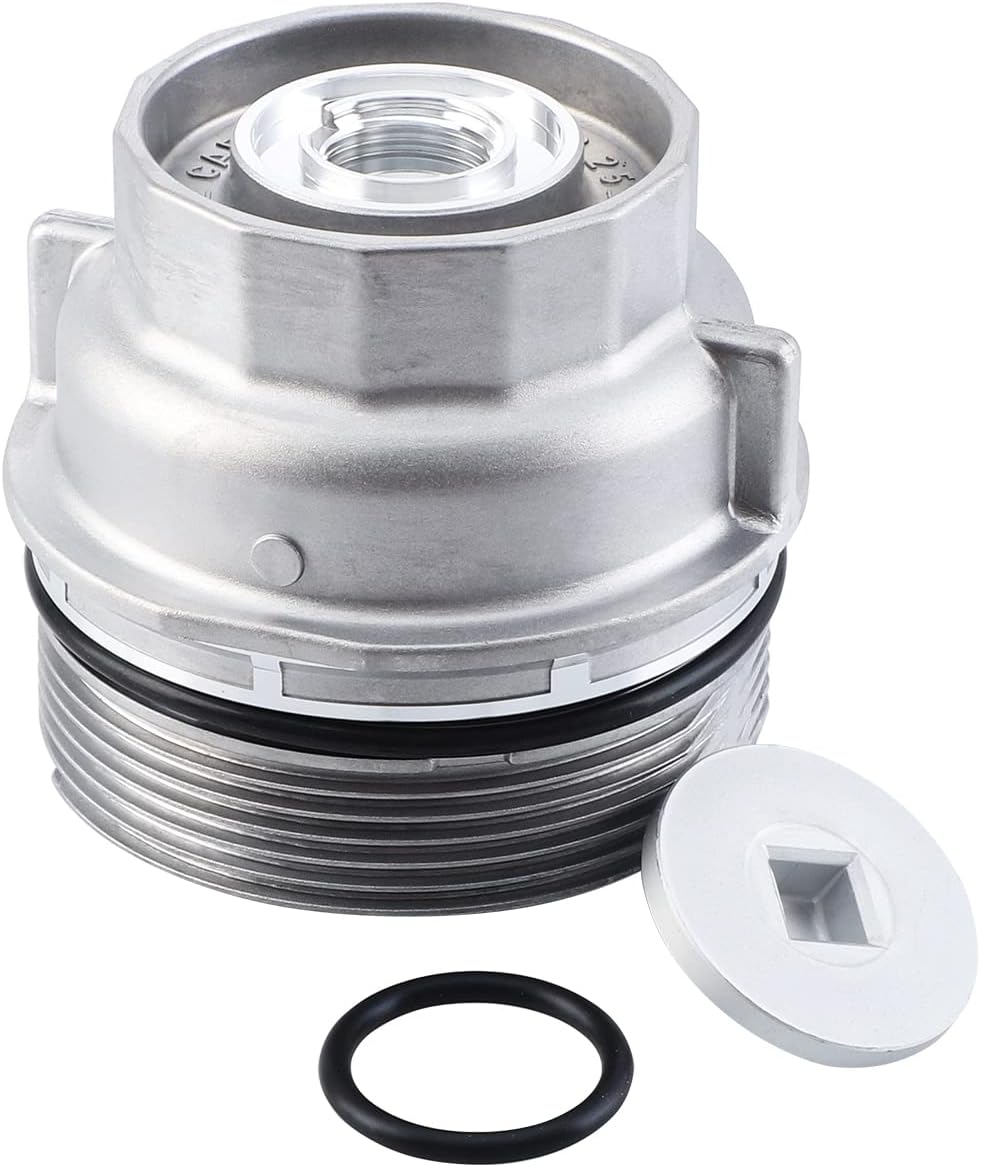
This oil filter housing cap assembly is designed as a replacement for select Toyota and Lexus vehicles, helping restore proper sealing and reliable oil filter function during routine maintenance. Built to meet OEM standards, it supports leak-free performance and long-lasting durability while fitting a wide range of popular models across multiple years.
How Much Oil Each Sonata Engine Needs: Quarts and Liters
Here is the simpler way to remember it: the 2020 Sonata uses lower fill amounts than many 2021–2023 models, and the 2021–2023 2.5L engines use more oil than the 1.6T. This is why the common 5.4-quart answer is too broad.
[Products Worth Considering]

This A-Premium cartridge engine oil filter is designed for a wide range of Toyota and Lexus vehicles, helping support cleaner oil flow and dependable engine protection. With high filtration efficiency and included O-rings, it offers a practical replacement solution for routine maintenance. Built for extended service intervals, it is suitable for conventional or synthetic oil applications.

This dual filter kit helps keep your vehicle running and riding cleaner by replacing both the engine air filter and cabin air filter at the same time. It is designed for a range of Toyota and Lexus hybrid models, helping support engine performance while reducing odors and airborne particles inside the cabin. Built with high-quality filtration materials, it offers a convenient maintenance solution for routine filter replacement.

This A-Premium engine air filter is designed to help maintain clean airflow for compatible Lexus and Toyota vehicles, supporting better engine performance and efficiency. It uses fine filtration media to capture debris while minimizing airflow restriction, making it a practical replacement for routine maintenance. With fitment for multiple popular models and a convenient boxed single-pack design, it offers a straightforward solution for keeping your engine protected.
2020 1.6L Turbo Capacity
The 2020 Hyundai Sonata with the Smartstream G1.6 T-GDi engine takes 4.76 US quarts (4.5 liters). Start with about 4.3–4.5 quarts after draining and replacing the filter, then run the engine briefly, shut it off, wait a few minutes, and bring the dipstick level near the full mark without overfilling.
2020 2.5L I4 Capacity
The 2020 Hyundai Sonata with the Smartstream G2.5 GDi engine takes 5.49 US quarts (5.2 liters). This is close to, but not exactly, 5.5 quarts. Buy six quarts if you are doing the job yourself so you have enough for the refill and a small amount left for later top-offs.
2021–2023 1.6L Turbo Capacity
The 2021–2023 Sonata 1.6L turbo uses 5.07 US quarts (4.8 liters) of SAE 0W-20 oil meeting the listed API or ILSAC specification. This engine is turbocharged and direct-injected, so clean, correct-spec oil matters for turbo bearing protection and combustion deposit control.
2021–2023 2.5L and N Line Capacity
The 2021–2023 Sonata 2.5L GDI and 2.5T N Line both list 6.13 US quarts (5.8 liters). The naturally aspirated 2.5L uses SAE 0W-20, while the N Line 2.5T uses SAE 0W-30. These engines have the same listed capacity but not the same oil viscosity.
Capacity Conversion Chart
| Listed Capacity | Approx. Liters | Used On |
|---|---|---|
| 4.76 US qt. | 4.5 L | 2020 Smartstream G1.6 T-GDi |
| 5.07 US qt. | 4.8 L | 2021–2023 Smartstream G1.6 T-GDi |
| 5.49 US qt. | 5.2 L | 2020 Smartstream G2.5 GDi |
| 6.13 US qt. | 5.8 L | 2021–2023 Smartstream G2.5 GDi and G2.5 T-GDi |
Oil Change Intervals for Sonata: Miles and Months
Oil change intervals vary by model year, engine, and driving conditions. The 2020 Sonata schedule is different from later schedules: Hyundai lists the 2020 1.6T at 6,000 miles or 12 months under normal service, and the 2020 2.5L at 7,500 miles or 12 months. For many 2021–2023 Sonata models, Hyundai’s normal schedule lists 8,000 miles or 12 months for engine oil and filter replacement when using the correct full-synthetic oil.
| Model / Engine | Normal Service | Severe Service |
|---|---|---|
| 2020 1.6T | Every 6,000 miles or 12 months | Every 3,000 miles or 6 months |
| 2020 2.5L | Every 7,500 miles or 12 months | Every 3,750 miles or 6 months |
| Many 2021–2023 models | Every 8,000 miles or 12 months | Follow the severe-use chart in your manual; shorter intervals apply for harsh use |
Severe driving includes repeated short trips, long idling, stop-and-go traffic, dusty or salted roads, mountain driving, towing, commercial use, and frequent high-speed driving. If your driving looks like that, use the severe schedule even if the car feels normal.
Why Full Synthetic Oil Matters
Hyundai’s later Sonata manuals specify API SN PLUS or above full synthetic oil for the relevant engines. That matters because modern direct-injected and turbocharged engines run hotter, load the oil harder, and need protection against low-speed pre-ignition. The American Petroleum Institute oil categories explain how current gasoline-engine oil categories are built around modern engine protection needs.
The safest oil choice is not the thickest oil or the cheapest oil. It is the viscosity and API/ILSAC specification printed for your exact Sonata engine.
Full synthetic oil is especially important for the 1.6T and 2.5T engines because the turbocharger depends on steady oil flow and heat resistance. It also helps with cold-start flow, deposit control, and oxidation resistance between services.
Checking and Topping Sonata Oil: Step by Step
Checking the oil correctly prevents both underfilling and overfilling. A small underfill can trigger low oil pressure problems under load, while overfilling can cause foaming, leaks, smoke, and catalytic converter damage.
- Park on level ground and set the parking brake.
- Warm the engine to normal operating temperature, then shut it off.
- Wait about five minutes so oil can drain back into the pan.
- Pull the dipstick, wipe it clean, reinsert it fully, and pull it again.
- Confirm the level is between the low and full marks.
- If the level is low, add the correct oil in small amounts through a funnel.
- Wait a minute, recheck the dipstick, and stop before the level rises above full.
Pro Tip: During a full oil change, add about half a quart less than the listed capacity first. Start the engine, check for leaks, shut it off, wait a few minutes, then top off to the dipstick mark.
Common Sonata Oil Problems and Quick Fixes
Most Sonata oil problems are easier to control when you catch them early. Check the dipstick monthly, inspect under the car after parking overnight, and act quickly if you see warning lights, leaks, burning smells, or faster-than-normal oil loss.
| Symptom | Likely Cause | What to Do |
|---|---|---|
| Oil pressure warning light | Low oil level, low oil pressure, or engine issue | Stop safely, shut off the engine, check oil level, and do not keep driving if the light remains on. |
| Oil puddle under car | Drain plug, filter, valve cover, oil pan, or gasket leak | Inspect leak location and repair before the level drops too low. |
| Burning oil smell | Oil spilled on hot parts or active leak | Clean fresh spills, inspect for leaks, and avoid driving if smoke is visible. |
| Level drops between services | Oil consumption, leak, PCV issue, worn seals, or driving conditions | Log mileage and top-off amounts; schedule diagnosis if consumption increases. |
| Oil level above full mark | Overfilled during service | Drain or extract the excess oil before normal driving. |
Warning: If the oil pressure light stays on after you add oil, turn the engine off and have the car inspected. Continued driving with low oil pressure can cause severe engine damage.
DIY Oil Change vs. Factory Service: What to Expect
A DIY oil change can save money if you use the correct oil, a quality filter, safe lifting points, and proper disposal. Factory or professional service costs more but adds inspection value, service documentation, and access to Hyundai-specific parts and service information.
Choose DIY If
- You can safely lift and support the car.
- You know the exact engine and oil spec.
- You will replace the oil filter and drain plug washer when needed.
- You can check for leaks and dispose of used oil properly.
Choose Factory Service If
- The car is still under warranty and you want clean service records.
- You are not sure which engine or oil spec applies.
- You see oil leaks, warning lights, burning smells, or abnormal consumption.
- You want a multipoint inspection with the oil change.
Used oil should not be poured into drains, soil, trash, or storm sewers. The U.S. Environmental Protection Agency recommends proper collection and recycling of used motor oil.
Maintenance Tasks to Pair With Oil Changes for Long-Lasting Sonatas
An oil change is the perfect time to inspect wear items that are easier to catch while the hood is open and the car is already in service mode. Pair these tasks with routine oil service:
- Replace the oil filter every service. A fresh filter helps maintain oil flow and contamination control.
- Rotate tires. Follow the schedule for your model year; many modern Sonata schedules pair tire rotation with regular maintenance visits.
- Inspect brake pads, rotors, and fluid. Uneven wear or low fluid needs attention before it becomes a safety problem.
- Check engine air filter and cabin filter. Replace them on schedule or sooner in dusty areas.
- Inspect belts, hoses, coolant, and battery condition. These small checks can prevent larger breakdowns.
- Scan for open recalls or service campaigns. Use your VIN through Hyundai or an authorized dealer.
Frequently Asked Questions
How many quarts of oil should I put in my Hyundai Sonata?
It depends on year and engine. A 2020 1.6T takes 4.76 qt, a 2020 2.5L takes 5.49 qt, a 2021–2023 1.6T takes 5.07 qt, and a 2021–2023 2.5L or 2.5T takes 6.13 qt. Add slightly less at first, then top off by dipstick.
What oil does a 2020 Hyundai Sonata 1.6L Turbo take?
The 2020 Sonata 1.6T takes 4.76 US qt. of API SN PLUS oil. Hyundai’s manual recommends 0W-20 for better fuel economy and provides a viscosity chart for climate-based selection. Use the oil cap and owner’s manual for the final decision.
Can I use 5W-30 instead of 0W-20 in a Hyundai Sonata?
Only use 5W-30 if your exact owner’s manual and climate chart allow it. Many 2021–2023 U.S.-spec Sonata engines list 0W-20, while the 2.5T N Line lists 0W-30. Do not substitute viscosity based only on older Sonata advice.
How often should I change Sonata engine oil?
For 2020 models, normal intervals are 6,000 miles or 12 months for the 1.6T and 7,500 miles or 12 months for the 2.5L. Many 2021–2023 schedules list 8,000 miles or 12 months with correct full-synthetic oil. Use the severe schedule for short trips, stop-and-go driving, towing, dusty roads, or heavy idling.
How do I find my exact Sonata engine oil capacity?
Check the engine label, oil cap, owner’s manual, and VIN-based Hyundai resources. If you are unsure whether you have the 1.6T, 2.5L GDI, or 2.5T N Line engine, ask a Hyundai dealer to verify by VIN before buying oil.
Conclusion
The safest Hyundai Sonata oil answer is engine-specific. For 2020 models, use 4.76 qt for the 1.6T or 5.49 qt for the 2.5L. For most 2021–2023 models, use 5.07 qt for the 1.6T or 6.13 qt for the 2.5L and 2.5T. Match the correct viscosity, use the required API/ILSAC specification, replace the filter every service, and finish every refill with a dipstick check. That small discipline protects the engine, turbocharger, warranty record, and long-term ownership cost.
Sources
- Hyundai Manuals & Warranties — official Hyundai owner manual access and warranty resources.
- Hyundai Digital Owner’s Manual — official Hyundai owner manual portal for model-specific maintenance information.
- 2020 Hyundai Sonata Owner’s Manual — 2020 oil capacity, viscosity guidance, and maintenance intervals.
- 2023 Hyundai Sonata Owner’s Manual — 2023 oil capacity, viscosity specifications, and engine information.
- Hyundai Normal Maintenance Schedule — 8,000-mile/12-month oil and filter schedule for applicable later Sonata models.
- EPA: Managing, Reusing, and Recycling Used Oil — safe handling and recycling guidance for used motor oil.