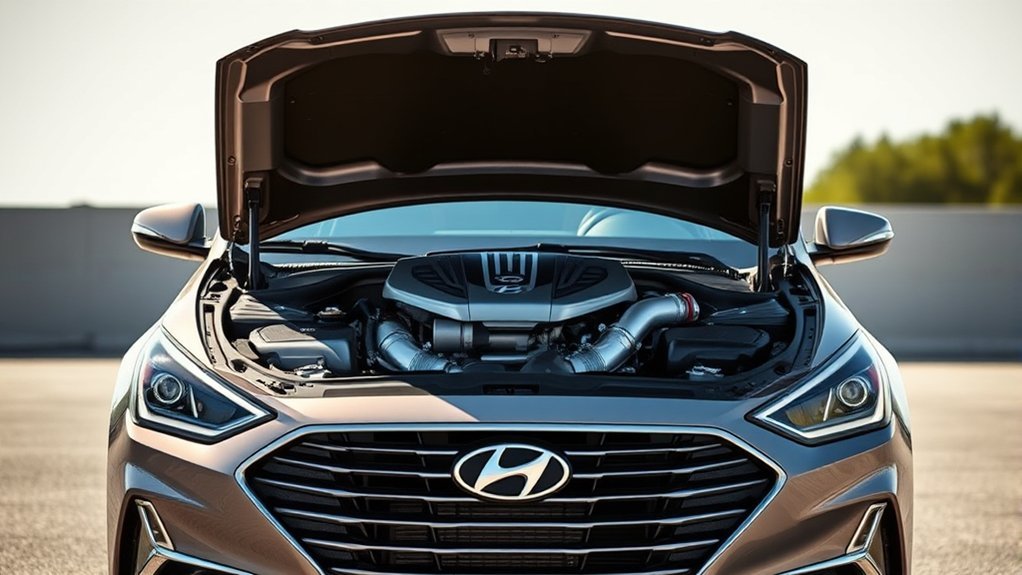
CVVD engine technology in the Hyundai Sonata is Hyundai Motor Group’s system for changing how long the intake valves stay open while the engine runs. That lets a CVVD-equipped engine use one valve-duration strategy for efficient light-load driving and another when stronger acceleration is needed. In the Sonata, CVVD is most closely associated with the Smartstream G1.6 T-GDi turbo engine used in earlier DN8-generation models. For the current 2026 U.S. Sonata, Hyundai no longer lists that 1.6T CVVD powertrain; the U.S. lineup now uses other gasoline and hybrid engines with CVVT or D-CVVT.
Last updated: September 16, 2026 — current U.S. Sonata engine availability and CVVD applicability rechecked against Hyundai specifications.
Quick Answer
CVVD, or Continuously Variable Valve Duration, changes how long the intake valves remain open according to engine operating conditions. Hyundai introduced the technology with the Smartstream G1.6 T-GDi, rated at 180 horsepower and 265 Nm of torque. Hyundai’s original technology announcement estimated a 4% performance gain, 5% fuel-efficiency gain, and 12% emissions reduction. Those are technology-level claims, not guaranteed real-world gains for every Sonata. The current 2026 U.S. Sonata does not list the former 1.6T CVVD engine.
Key Takeaways
- CVVD stands for Continuously Variable Valve Duration, a system that controls how long the intake valves remain open.
- Hyundai introduced CVVD with the Smartstream G1.6 T-GDi, a turbocharged inline-four engine rated at 180 horsepower and 265 Nm of torque.
- The system can use a longer-duration strategy during light-load operation and a shorter-duration strategy when greater engine output is needed.
- CVVD is different from CVVT and CVVL because it controls valve duration, not just valve timing or valve lift.
- Earlier U.S. Sonata 1.6T models used CVVD, but Hyundai’s 2026 U.S. Sonata specifications no longer list a 1.6T CVVD engine.
Current U.S. model note: Hyundai’s 2026 Sonata specifications list 2.5-liter gasoline, 2.5-liter turbo N Line, and 2.0-liter hybrid powertrains. Their published valvetrain specifications use CVVT or D-CVVT rather than the earlier Sonata 1.6T CVVD setup.
Understanding the Basics of CVVD Engine Technology
CVVD stands for Continuously Variable Valve Duration. In simple terms, it changes the length of time the intake valves stay open while the engine is running. That matters because the amount of air retained in the combustion chamber affects torque, fuel use, combustion efficiency, and exhaust emissions.
Hyundai Motor Group introduced CVVD in 2019 and described it as the world’s first mass-production engine technology of its kind. The first engine announced with it was the Smartstream G1.6 T-GDi, a turbocharged gasoline engine later used in the Sonata and other Hyundai-Kia applications.
The key idea is flexibility. Under light-load driving, such as steady cruising, CVVD can keep the intake valve open later into the compression stroke, allowing part of the incoming charge to move back toward the intake and reducing compression losses. Under higher-load driving, the intake valve closes earlier so the cylinder retains more air for combustion and torque production.
What Physically Changes Inside a CVVD Engine?
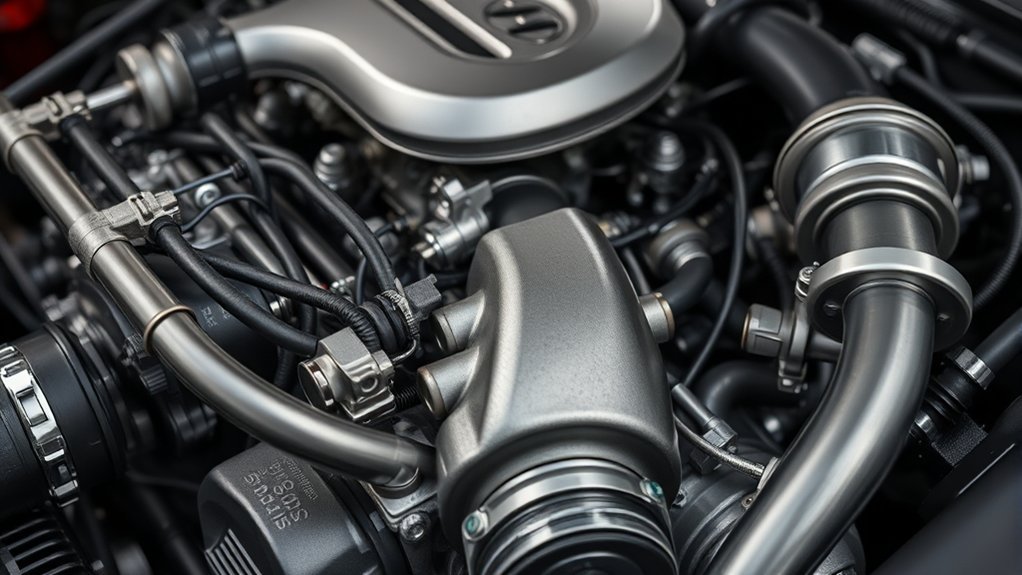
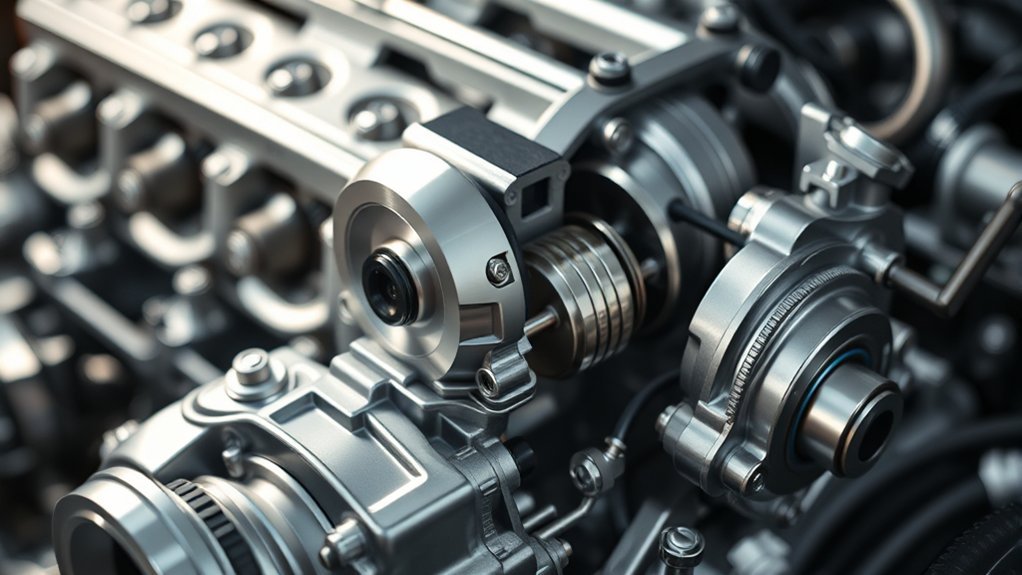
CVVD does more than rotate the entire camshaft earlier or later. Hyundai’s Smartstream explanation describes the system as changing how quickly the cam passes through the valve-opening event. A slower-moving cam lobe keeps the valve open for a longer duration, while a faster-moving lobe shortens that duration. CVVT can still adjust when the valve event occurs, so the two controls can work together.
A detailed MotorTrend technical explanation describes movable carriers and eccentric components that alter the cam lobe’s instantaneous rotational behavior. The production Sonata application operates this duration control on the intake side. The practical result is that valve duration is no longer fixed by one cam-lobe profile for every operating condition.
Hyundai’s original CVVD announcement estimated a 4% improvement in performance, a 5% improvement in fuel efficiency, and a 12% reduction in emissions for the technology.
How Is CVVD Different From CVVT and CVVL?
Many modern engines already use variable valve systems, so CVVD can sound like another name for the same technology. It is not. CVVT, CVVL, and CVVD control different parts of the valve event.
| System | What It Controls | Why It Matters |
|---|---|---|
| CVVT | When the valve event occurs | Advances or retards valve timing to suit different engine speeds and loads. |
| CVVL | How far the valve opens | Changes valve lift to control airflow more directly. |
| CVVD | How long the valve stays open | Lets the engine vary valve-open duration for different operating conditions. |
Traditional variable valve timing shifts the valve event earlier or later, but the cam-lobe profile still limits its duration. CVVD adds another control variable by allowing the duration itself to change. Hyundai combines this duration control with other valve and engine-management strategies rather than treating CVVD as a replacement for every form of variable valve timing.
How Does CVVD Boost Performance and Efficiency?
CVVD matches intake-valve duration to the load being placed on the engine. During steady, low-load driving, the engine does not need its maximum trapped air charge. Hyundai says CVVD can delay intake-valve closing into the compression stroke, reducing the resistance associated with compressing more air than the engine needs.
When the driver asks for more output, the system can close the intake valve earlier. This retains a greater air charge for combustion and supports stronger torque. The change happens automatically through the engine-management system; the driver does not select a separate CVVD mode.
In the original Smartstream G1.6 T-GDi application, Hyundai rated the engine at 180 horsepower and 265 Nm of torque, or about 195 lb-ft. The engine package also incorporated direct injection, turbocharging, low-pressure exhaust gas recirculation, thermal-management improvements, and reduced-friction components, so CVVD was only one part of its overall efficiency strategy.
Note: The 4% performance, 5% fuel-efficiency, and 12% emissions figures are Hyundai Motor Group technology claims. They should not be read as a guaranteed MPG, acceleration, or emissions improvement for every CVVD-equipped Sonata. Vehicle configuration, tires, maintenance, traffic, climate, fuel, and driving style affect real-world results.
What Are the Benefits of CVVD in the Hyundai Sonata?
In the Sonata’s earlier Smartstream 1.6T application, CVVD helped Hyundai tune a relatively small turbocharged engine for both everyday torque and light-load efficiency. The benefits come from changing the engine’s breathing strategy rather than forcing one fixed valve duration to cover every situation.
- Flexible torque delivery: CVVD can change intake-valve duration as engine load changes, supporting the airflow needed for passing, merging, and climbing grades.
- Efficiency-focused light-load operation: During steady driving, later intake-valve closing can reduce unnecessary compression work.
- Lower claimed emissions: Hyundai’s original technology announcement cited a 12% emissions reduction, while the Smartstream G1.6 T-GDi also used low-pressure EGR and other combustion-efficiency measures.
- More control over the valve event: CVVD adds duration as a separate tuning variable instead of relying only on valve timing or lift.
For the driver, CVVD has no separate switch. The engine control system manages it in the background according to operating conditions. Its effect is therefore part of the overall response and efficiency of the powertrain rather than a feature the driver manually activates.
How Does CVVD Affect Fuel Use and Emissions?
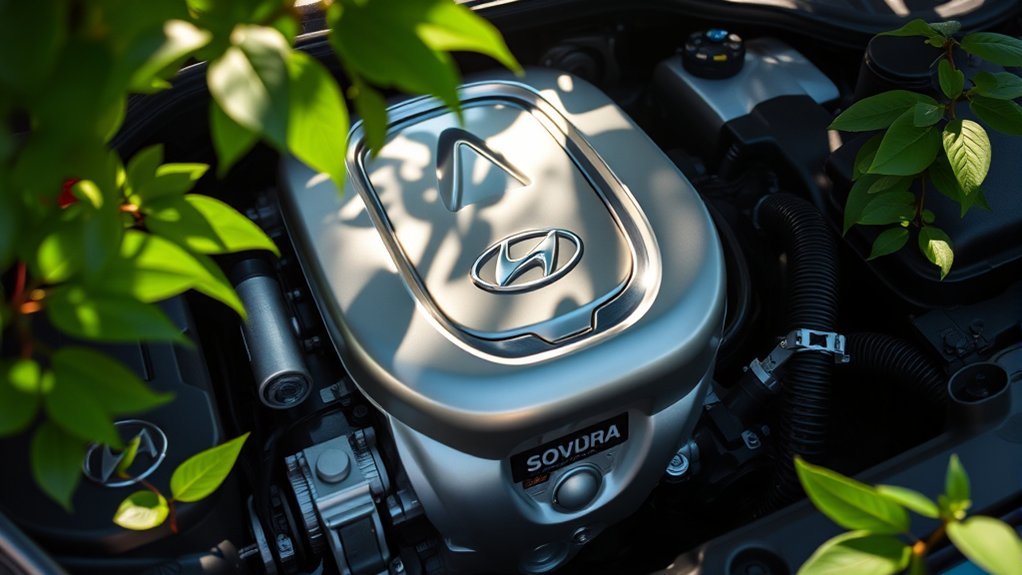
CVVD’s environmental value comes from reducing combustion and pumping losses under conditions where the engine does not need maximum output. Using less gasoline for the same driving task generally also reduces carbon-dioxide output. The U.S. Environmental Protection Agency notes that carbon dioxide accounts for about 99% of greenhouse gases emitted from a typical vehicle tailpipe.
Hyundai’s Smartstream G1.6 T-GDi also used Low-Pressure Exhaust Gas Recirculation, or LP EGR. That system recirculates some exhaust gas and can help control combustion temperature and nitrogen-oxide formation. Hyundai’s launch material also highlighted 350-bar direct injection, integrated thermal management, and lower-friction moving parts as parts of the same engine package.
CVVD does not make a gasoline Sonata emission-free, and its claimed 12% reduction should not be interpreted as a universal reduction in every pollutant under every test or driving condition. The vehicle still burns gasoline. Drivers primarily focused on fuel consumption should compare the official fuel-economy ratings of the exact gasoline and hybrid Sonata configurations available in their market.
Which Hyundai Sonata Engines Use CVVD?
CVVD is most closely associated with the Smartstream G1.6 T-GDi. Hyundai introduced that 1.6-liter turbocharged inline-four at 180 horsepower and 265 Nm of torque as the first engine to use its production CVVD technology.
| Sonata Context | Engine / Valve System | What to Know |
|---|---|---|
| Original CVVD launch | Smartstream G1.6 T-GDi with CVVD | Hyundai announced 180 hp and 265 Nm and identified this engine as the first production application of CVVD. |
| Earlier U.S. DN8 Sonata | 1.6L turbo with CVVD | Hyundai’s U.S. 2021 Sonata information explicitly lists the 180-hp, 195-lb-ft 1.6T with CVVD. |
| 2026 U.S. Sonata | 2.5L CVVT, 2.5T CVVT, or 2.0L hybrid D-CVVT | Hyundai’s current U.S. specifications do not list the earlier 1.6T CVVD powertrain. |
Availability still varies by market and model year. A trim name or the word “turbo” alone is not enough to prove that a particular Sonata has CVVD. Check the official specification sheet for that exact year and market before assuming the system is fitted.
Pro Tip: If you are shopping used, first confirm the model year and engine on Hyundai’s official specifications. Then compare the engine information on the vehicle or its documentation. If anything is unclear, use the VIN with official Hyundai documentation or a Hyundai dealer’s parts/service system before assuming the car has CVVD.
Does CVVD Require Special Maintenance?
CVVD is integrated into the engine’s valve train and electronic controls, so the owner does not perform a separate scheduled “CVVD service.” Maintenance should follow the schedule Hyundai specifies for the exact engine, model year, market, and operating conditions.
Oil condition and the correct oil specification are important to a turbocharged engine with precision valve-control hardware, but there is no single universal CVVD oil grade or interval that should be applied to every Hyundai engine. Use the viscosity, specification, and service interval listed in the owner’s manual for your exact vehicle.
Warning: Rough running, loss of power, a check-engine light, an oil-pressure warning, or unusual valve-train noise does not by itself prove that CVVD has failed. Those symptoms can have many causes. Diagnose the stored fault codes and follow the correct Hyundai service information before replacing valve-control components.
[Products Worth Considering]
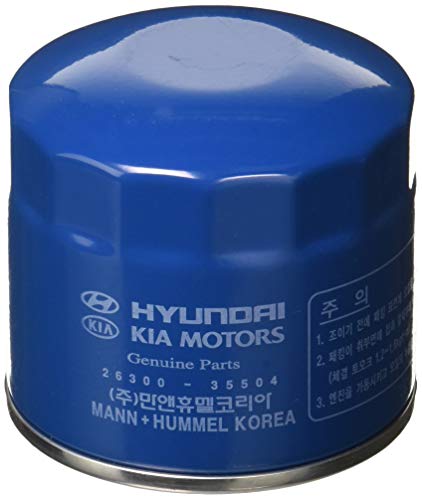
Genuine OEM
Is CVVD Still Used in the Hyundai Sonata?
CVVD remains part of Hyundai Motor Group’s Smartstream technology history and has been used in multiple Hyundai and Kia engine applications, but that does not mean every current model uses it. Engine lineups change by market and model year.
For the 2026 U.S. Sonata, Hyundai currently lists naturally aspirated 2.5-liter gasoline engines, a 2.5-liter turbo N Line engine, and 2.0-liter hybrid powertrains. Hyundai’s published U.S. specifications identify their valve systems as CVVT or D-CVVT rather than the former Sonata 1.6T CVVD configuration.
That makes CVVD most relevant to buyers researching earlier 1.6T Sonata models rather than shoppers assuming it is standard technology on every new Sonata. For any other country, check Hyundai’s official local specification sheet because powertrain availability can differ substantially from the U.S. lineup.
Frequently Asked Questions
What is CVVD technology in Hyundai?
CVVD means Continuously Variable Valve Duration. It is Hyundai Motor Group’s valve-control technology that changes how long the intake valves stay open. The engine can use different valve durations for light-load efficiency and higher-load performance instead of relying on one fixed duration.
How much does CVVD improve fuel economy?
Hyundai Motor Group’s original CVVD announcement estimated a 5% improvement in fuel efficiency. That is a technology-level claim, not a guaranteed 5% MPG increase for every Sonata. Actual fuel economy depends on the complete vehicle, traffic, speed, maintenance, tires, temperature, fuel, and driving style.
Is CVVD the same as CVVT?
No. CVVT primarily changes when a valve event occurs by advancing or retarding cam timing. CVVD changes how long the valve stays open. The technologies can work together because valve timing and valve duration are separate control variables.
Which Sonata engine first used CVVD?
The Sonata engine most closely associated with the introduction of CVVD is the Smartstream G1.6 T-GDi, a 1.6-liter turbocharged inline-four rated at 180 horsepower and 265 Nm of torque. Hyundai announced it as the first production engine to use the technology.
Does CVVD make the Sonata faster?
CVVD can support stronger engine response by changing intake-valve duration when higher output is requested. Hyundai’s original technology announcement estimated a 4% performance improvement, but a Sonata’s actual acceleration also depends on its engine, transmission, vehicle weight, tires, road surface, and conditions.
Does CVVD need special service?
CVVD does not have a separate routine maintenance interval for the driver. Follow Hyundai’s oil, filter, inspection, and other maintenance requirements for your exact model year and engine, and diagnose warning lights with the appropriate service information rather than assuming the CVVD mechanism is the cause.
Does the 2026 Hyundai Sonata use CVVD?
Not in the current U.S. lineup. Hyundai’s 2026 U.S. Sonata specifications list 2.5-liter gasoline engines with CVVT and 2.0-liter hybrid engines with D-CVVT. The earlier 1.6-liter turbo CVVD engine is not listed. Other markets can have different powertrains, so check local Hyundai specifications.
How can I tell if my Sonata has CVVD?
Confirm the model year, market, and exact engine first. Then check Hyundai’s official specification sheet or owner documentation for that vehicle. Earlier Sonata 1.6T applications are the main U.S. examples associated with CVVD, but trim names can change, so use the VIN or official Hyundai documentation if the engine specification is uncertain.
Conclusion
CVVD gives a gasoline engine another way to control airflow by changing intake-valve duration rather than relying only on valve timing or lift. Hyundai introduced it with the Smartstream G1.6 T-GDi and claimed improvements in performance, efficiency, and emissions from the technology.
For Sonata owners and used-car buyers, the key is to identify the exact engine instead of assuming every Sonata has CVVD. Earlier 1.6T applications used it, while the current 2026 U.S. Sonata lineup does not list that powertrain. Confirm the model-year specification and follow the maintenance schedule for the exact engine in the vehicle.
Sources
- Hyundai Motor Group CVVD press release — supports the original CVVD introduction, Smartstream G1.6 T-GDi specifications, and Hyundai’s 4% performance, 5% fuel-efficiency, and 12% emissions claims.
- Hyundai Smartstream technology overview — explains how CVVD changes cam behavior and valve duration and how it works alongside CVVT.
- Hyundai Motor America 2021 Sonata information — documents the earlier U.S. Sonata Smartstream 1.6 T-GDI at 180 horsepower and 195 lb-ft with CVVD.
- Hyundai USA 2026 Sonata specifications — supports the current U.S. engine lineup and the absence of the earlier 1.6T CVVD powertrain.
- MotorTrend CVVD technical explanation — provides additional detail on the mechanical cam-duration system used in the Sonata application.
- U.S. EPA Greenhouse Gas Rating — supports the relationship between vehicle fuel use, tailpipe carbon dioxide, and greenhouse-gas emissions.