The Hyundai Sonata Hybrid has several warranties that overlap, but they do not all follow the same transfer rules. Current U.S. models receive separate coverage for the high-voltage battery, hybrid-system components, conventional powertrain, new-vehicle defects, emissions equipment, corrosion, and roadside assistance. Your exact protection depends on the model year, original in-service date, owner status, registration state, and warranty handbook.
Quick Answer
A current Sonata Hybrid generally has 10-year/100,000-mile coverage for its high-voltage battery and listed hybrid-system components. The separate 10-year/100,000-mile powertrain warranty normally applies only to the original owner. Most later owners receive powertrain protection through the remaining 5-year/60,000-mile New Vehicle Limited Warranty.
Key Takeaways
- The high-voltage battery and listed hybrid-system components have their own warranty, separate from the conventional powertrain warranty.
- Current published hybrid-system coverage is 10 years/100,000 miles for original and subsequent owners, measured from the vehicle’s first in-service date.
- The full 10-year/100,000-mile conventional powertrain warranty is generally limited to the original owner.
- Older lifetime battery coverage was model-year specific and applied to the qualifying original owner, not every later owner.
- Independent maintenance or an aftermarket part does not automatically void the warranty, although related damage caused by that work or part may be excluded.
Note: Warranty language can change by model year. The warranty handbook issued for your vehicle, together with applicable state law, controls if it differs from a general website summary.
Quick Warranty Snapshot for Sonata Hybrid Owners
The table below summarizes Hyundai’s published 2026 U.S. warranty periods. Each time limit begins on the original retail-delivery date or the date the vehicle was first placed in service, whichever occurred first. Mileage and time limits use the “whichever comes first” rule.
| Coverage | Published 2026 period | Owner rule |
|---|---|---|
| Hybrid/electric battery | 10 years/100,000 miles | Hyundai currently lists the same period for original and subsequent owners |
| Hybrid-system components | 10 years/100,000 miles | Hyundai currently lists the same period for original and subsequent owners |
| Powertrain Limited Warranty | 10 years/100,000 miles | Generally original owner only; most later owners receive up to 5 years/60,000 miles through the New Vehicle Limited Warranty |
| New Vehicle Limited Warranty | 5 years/60,000 miles | Transfers with the vehicle for the remaining period |
| Original 12-volt battery | 3 years/36,000 miles | Part of the new-vehicle coverage terms |
| Major federal emissions components | 8 years/80,000 miles | Transfers with the vehicle |
| Anti-perforation | 7 years/unlimited miles | Covers qualifying rust-through, not ordinary surface corrosion |
| Roadside Assistance | 5 years/unlimited miles | Roadside service is separate from approval of a warranty repair |
You can confirm current coverage through Hyundai’s official warranty overview. For a binding answer, use the handbook for your model year and ask a Hyundai dealer to verify the VIN and original in-service date.
The 10-year/100,000-mile hybrid-system warranty may transfer, but the separate 10-year/100,000-mile conventional powertrain warranty generally does not.
Sonata Hybrid Powertrain Warranty: What Is Covered?
The term “powertrain warranty” can cause confusion because a Sonata Hybrid also has a separate hybrid-system warranty. The two cover different groups of parts and have different transfer rules.
Hybrid-System Component Coverage
Hyundai’s current hybrid warranty covers defects in listed high-voltage and hybrid-drive components for 10 years or 100,000 miles. Covered items can include the high-voltage battery, battery-management system, battery wiring, cooling or blower equipment, hybrid starter-generator, traction motor, hybrid power-control unit, power-relay assembly, and other listed parts that are integral to the hybrid system.
The exact list can change by model year. Review Section 6 of the 2026 Hyundai Owner’s Handbook and Warranty Information or the corresponding handbook for your vehicle.
Conventional Powertrain Coverage
The conventional Powertrain Limited Warranty covers listed engine and transmission or transaxle parts that fail because of defective material or factory workmanship. Examples include internal engine parts, the cylinder block and head, timing components, oil and water pumps, engine mounts, transmission internal parts, axle shafts, bearings, seals, and gaskets when specifically listed in the handbook.
For an original owner, this coverage continues to 10 years or 100,000 miles. During the first 5 years or 60,000 miles, many of the same defects are also within the New Vehicle Limited Warranty.
Ownership and Transferability
The full conventional powertrain term is generally limited to the original retail owner. Hyundai’s 2026 handbook allows the coverage to remain in effect after a qualifying transfer to a spouse, but it does not generally transfer to another later owner. A subsequent owner normally receives powertrain coverage only through the remaining 5-year/60,000-mile New Vehicle Limited Warranty.
The high-voltage battery and listed hybrid-system components follow separate terms. Hyundai’s current warranty page lists 10-year/100,000-mile coverage for both original and subsequent owners. The clock does not restart when the car is sold. A four-year-old used Sonata Hybrid has approximately six years left on a transferable 10-year warranty, subject to its mileage and other conditions.
Pro Tip: Before buying a used Sonata Hybrid, ask for the VIN, original in-service date, current mileage, maintenance records, and written confirmation of any Certified Used or extended coverage. Do not rely only on the phrase “10-year warranty” in an advertisement.
Powertrain Exclusions and Limitations
A warranty covers qualifying defects, not every breakdown. Damage caused by a collision, flood, misuse, racing, improper maintenance, contaminated fluids, incorrect repairs, unauthorized alterations, or a non-covered part may be excluded. Routine maintenance and normal wear are also outside the powertrain warranty.
Commercial-use rules can differ. Taxi, delivery, rental, fleet, lease, or other commercial classifications may have reduced or excluded coverage under particular warranty sections. Check the handbook and purchase paperwork for the vehicle’s original use.
Older Sonata Hybrid Lifetime Battery Coverage: Scope and Limits
Hyundai offered a Lifetime Hybrid Battery Replacement Guarantee on certain older U.S. Sonata Hybrids. Hyundai’s 2012 announcement stated that if the qualifying battery failed, Hyundai would replace it and cover recycling costs for the original owner. The coverage was not transferable and excluded lease, commercial, and non-US vehicles under the announced terms.
Lifetime battery language continued in later warranty materials. For example, Hyundai’s 2019 warranty handbook listed lifetime battery coverage for the original owner while providing 10-year/100,000-mile battery coverage to subsequent owners.
Do not assume that “lifetime” applies because a Sonata Hybrid falls within a broad year range. Confirm all of the following:
- The exact model year and powertrain
- Whether it is a regular hybrid or plug-in hybrid
- Whether the current owner qualifies as the original owner
- The vehicle’s first-use status, including lease or commercial history
- The warranty handbook issued for that model year
- Any state-specific emissions certification
The older lifetime benefit generally applied to the qualifying high-voltage battery itself. Related hybrid components, such as the starter-generator, power-control unit, traction motor, and transmission, remained subject to separate time and mileage limits.
[Products Worth Considering]

[Replace Part Number] Safety Plug Male for 37586-4R002 37586-4R001 375864R002 375864R001

Authentic Original Equipment Manufacturer (OEM) part

ML18-12 SLA is a 12V 18AH Sealed Lead Acid (SLA) rechargeable maintenance free battery - UL Certified
How Sonata Hybrid Battery Capacity Coverage Works
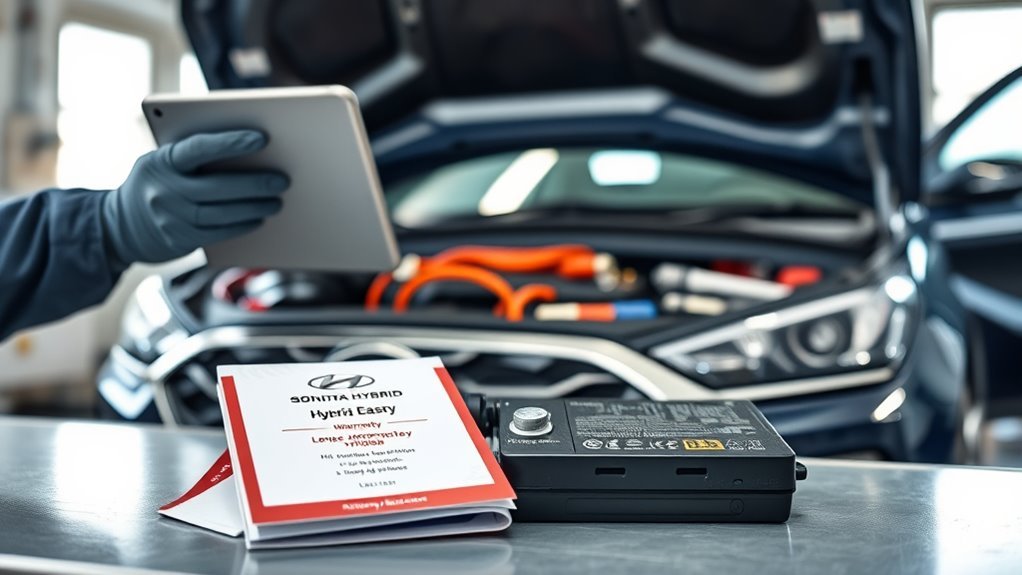
Lithium-ion batteries gradually lose energy and power with age and use. A small change in fuel economy, the dashboard charge display, or the amount of electric assistance does not by itself prove that the battery has crossed a warranty threshold.
[Products Worth Considering]

OBD2 SCANNER & BATTERY TESTER IN ONE – The INNOVA 5210 OBD2 scanner not only reads and clears check engine light and ABS codes (coverage may vary) but also functions as a car battery tester to check alternator health and prevent unexpected breakdowns.

【2-IN-1 Engine Diagnostic & Battery Tester】: Upgraded from ANCEL’s best-selling AD310/AD410 series, the AD410 PRO obd2 scanner not only offers deeper, more accurate engine fault diagnosis but also covers battery health assessment, starter motor testing, and charging system evaluation. Skip buying separate tools—save money and space while eliminating the hassle of switching between different diagnostic scan tool

One Tool Solve Two Common Issues for Car — Same with NT301. Extra full battery test. Upgraded from the NT301, the NT301 Plus code reader reads and clears engine codes just as fast as the classic you trust. But now, it also checks your 12V battery health. Think of the extra cost as cheap insurance against the high tow truck bill. As one user put it: "It paid for itself the first time I plugged it in." With a 36% larger 2.8” color display (vs. 2.4”), it delivers clearer results every time. Ideal for DIYers, car owners, home mechanics, used car inspection and anyone who wants to know whats wrong with your car before making a costly shop visit
The 70% Capacity Standard
Hyundai’s 2026 handbook describes battery-capacity coverage during the 10-year/100,000-mile warranty period. It states that a battery repaired or replaced under the applicable capacity coverage will have no less than 70% of the original battery capacity.
This language should not be read as a promise that any owner-estimated loss above 30% automatically earns a brand-new battery. Hyundai must determine whether the concern qualifies under the Battery Limited Warranty, whether the capacity is below the applicable standard, and whether an exclusion caused the condition.
How Degradation Is Diagnosed
A Hyundai dealership can review warning lights, diagnostic trouble codes, battery-management data, state-of-health information, individual battery-module behavior, cooling-system operation, and other test results required by Hyundai. The exact testing method and approval process are controlled by Hyundai’s service procedures rather than a customer-performed discharge test.
Useful symptoms to document include:
- A hybrid-system warning message
- Diagnostic trouble codes
- Sudden loss of electric assistance
- Rapid or unusual charge-gauge movement
- A major unexplained drop in fuel economy after other causes are ruled out
- A dealer-confirmed battery-capacity or module fault
Repair, New Battery, or Refurbished Battery
If Hyundai approves a battery claim, the remedy may involve repairing battery components, replacing modules where permitted, or replacing the pack. The 2026 handbook allows a replacement battery to be new or refurbished. A warranty does not necessarily entitle the owner to a new retail battery pack.
Warning: Do not open, modify, bypass, program, or attempt a do-it-yourself repair on the high-voltage battery. Hyundai’s handbook excludes damage connected to unauthorized battery opening, physical damage, fire, flooding, and certain intentional actions. High-voltage systems can also cause severe injury or death.
What “Lifetime” Meant on Older Models
On a qualifying older model, “lifetime” referred to the original owner’s ownership period, not an unlimited transferable warranty for every future owner. Hyundai could repair or replace the covered battery according to the applicable handbook, and the benefit did not make every hybrid component a lifetime-covered part.
Federal Emissions Warranty: 8-Year/80,000-Mile Components
Federal law provides two types of emissions warranties. The broad design-and-defect and performance protections generally apply for 2 years or 24,000 miles, although Hyundai provides longer coverage for many emissions parts through its new-vehicle warranty. Three categories of major federal emissions components receive at least 8 years or 80,000 miles:
| Major component | Function | Federal period |
|---|---|---|
| Catalytic converter | Converts regulated exhaust pollutants into less harmful gases | 8 years/80,000 miles |
| Electronic emissions control unit or engine control module | Controls engine and emissions operation | 8 years/80,000 miles |
| Onboard emissions diagnostic device | Detects and records emissions-related faults | 8 years/80,000 miles |
The U.S. Environmental Protection Agency explains that the federal 8-year/80,000-mile requirement is limited to specified major components. It is not an 8-year warranty for every sensor, hose, valve, or emissions-related part.
California and CARB-State Coverage
California-specification vehicles can receive additional coverage for designated emissions and propulsion-related parts. The applicable period depends on the model year, emissions certification, component, state where the vehicle was sold and registered, and whether it is a hybrid or plug-in hybrid.
A blanket “10 years/150,000 miles in California” statement is not accurate for every Sonata Hybrid. Hyundai’s 2026 handbook lists 10-year/100,000-mile high-voltage battery coverage. Some older Sonata Plug-in Hybrid vehicles certified to specific transitional zero-emission standards received different 10-year/150,000-mile battery terms in qualifying states.
Check the Vehicle Emission Control Information label under the hood and the California warranty section in your model-year handbook before assuming that extended emissions coverage applies.
How the 5-Year/60,000-Mile New Vehicle Warranty Affects Hybrid Parts
The New Vehicle Limited Warranty covers repair or replacement of most Hyundai-installed components that are defective in material or factory workmanship for 5 years or 60,000 miles. It transfers with the vehicle for the remaining term.
This warranty can cover many non-hybrid systems, including electrical equipment, body hardware, climate-control parts, suspension components, steering parts, infotainment equipment, and other factory-installed items, subject to the handbook’s shorter limits and exclusions.
12-Volt Battery Coverage
The Sonata Hybrid has a high-voltage traction battery and a separate low-voltage electrical system. Hyundai’s 2026 handbook lists 3-year/36,000-mile coverage for a defective original 12-volt battery. This is separate from the 10-year/100,000-mile high-voltage battery coverage.
Hyundai Replacement Parts and Labor
A Hyundai Genuine replacement part purchased from and installed by an authorized Hyundai dealership is generally covered for 1 year or 12,000 miles, whichever comes first. When the dealer sold and installed the part, qualifying warranty work includes the part and labor.
A genuine part purchased over the counter but not installed by a Hyundai dealer generally receives 12 months of parts coverage, but Hyundai does not cover the outside installation labor under that replacement-parts warranty. A part installed during another Hyundai warranty repair remains covered for the rest of the warranty under which it was replaced.
Common Exclusions and Actions That Can Affect Coverage
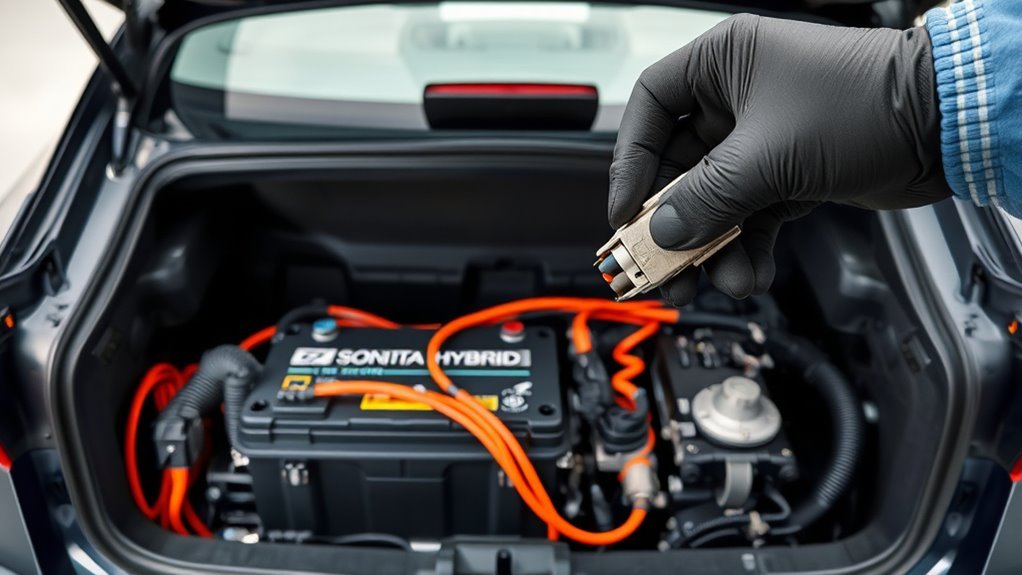
Hyundai can deny a claim when the failure is not a covered defect or when evidence shows that an excluded condition caused or contributed to the damage. Common examples include:
| Condition | Likely warranty effect |
|---|---|
| Oil changes, filters, brake pads, tires, and other normal maintenance or wear | Normally owner-paid unless a separate defect or plan applies |
| Failure caused by neglected required maintenance | The related claim may be denied |
| Collision, flooding, fire, misuse, racing, or external damage | Resulting damage is generally excluded |
| Unauthorized opening or modification of the high-voltage battery | Related battery damage may be excluded |
| Aftermarket part or independent repair that causes damage | Coverage may be denied for the damage caused, not automatically for the entire vehicle |
| Cosmetic damage or ordinary surface corrosion | Generally excluded or subject to a shorter coverage period |
Independent Maintenance and Aftermarket Parts
You do not have to pay a Hyundai dealership to perform every routine oil change, tire rotation, filter replacement, or inspection to preserve the factory warranty. The Federal Trade Commission’s auto-warranty guidance states that a manufacturer cannot automatically cancel warranty coverage because an independent shop performed routine work or because the owner used an aftermarket or recycled part.
Hyundai may deny a related repair when it can show that an improper service, unsuitable part, incorrect fluid, or installation error caused the failure. For example, an incorrectly installed aftermarket electrical device that damages a control module may leave that module outside warranty coverage, while unrelated factory defects remain covered.
Keep dated receipts showing:
- The vehicle mileage
- The date and type of service
- The fluid specifications and quantities
- The brand and part number of replacement parts
- The shop or person who performed the work
Warranty repairs themselves normally must be diagnosed, authorized, and completed by an authorized Hyundai dealership unless an applicable emergency-repair provision allows another procedure.
How to Claim, Transfer Coverage, and Use Hyundai Protection Plan Resources
[Products Worth Considering]

If your car is parked at the scene of an accident waiting to be rescued, you may need this car emergency kit

Pink car emergency kit: This tool set comes with all the most useful and necessary roadside assistance tools. It includes a pink jumper cable, auto tool set, tow rope, safety hammer, reflective triangle and vest, deer whistles, snow shovel, tire pressure gauge, anti-skid gloves, 3 in 1 whistle, raincoat, fully equipped first aid kit, and portable pink storage bag
High-Quality Material: Made from durable rubber with high hardness, heat resistance, and wear resistance. These tire repair nails firmly secure punctures without damaging tires, ensuring long-lasting performance for reliable repairs in various conditions.
How to Start a Warranty Claim
- Check the warranty period. Find the original in-service date and compare both the vehicle age and mileage with the applicable limit.
- Gather records. Bring the VIN, current mileage, maintenance receipts, prior repair orders, warning-light photos, and a written description of the symptoms.
- Schedule an authorized Hyundai dealership. Ask the service department to diagnose the issue as a possible warranty concern.
- Request written documentation. The repair order should list the complaint, diagnostic results, covered or non-covered parts, and the reason for any denial.
- Escalate unresolved concerns. Contact Hyundai Customer Care at 800-633-5151 and provide copies of the repair orders and supporting records.
- Review dispute options. The warranty handbook explains Hyundai’s consumer-assistance and dispute-resolution process. State lemon-law or consumer-protection rights may also apply.
Call Hyundai Roadside Assistance at 800-243-7766 when the vehicle is disabled and you need qualifying roadside service or towing. That number is not a substitute for dealership diagnosis and warranty approval.
Transferring Coverage to a Buyer
Transferable warranty coverage follows the vehicle automatically for its remaining time and mileage, but the buyer should still update Hyundai’s ownership records. Give the buyer copies of maintenance receipts, warranty repairs, campaign documents, and the original in-service date.
Do not advertise the full 10-year conventional powertrain warranty as transferable unless Hyundai confirms that a specific exception or Certified Used program applies. A Hyundai Certified Used vehicle can have separate program benefits, start dates, deductibles, and eligibility requirements that should be documented in writing.
Hyundai Protection Plan
A Hyundai Protection Plan Vehicle Service Contract is an optional paid product, not the factory warranty. Available plans may cover selected mechanical repairs, labor, roadside assistance, maintenance, or appearance-related risks, depending on the contract.
Before buying one, compare:
- The factory coverage that is still active
- The list of covered and excluded parts
- Whether the high-voltage battery or capacity loss is covered
- The deductible for each repair visit
- The maximum term and mileage
- Required repair facilities and preauthorization rules
- Transfer and cancellation fees
- Whether new, used, or remanufactured parts may be installed
A service contract can duplicate factory coverage during its early years. Read the complete agreement rather than relying only on the plan name or sales summary.
Frequently Asked Questions
What is the current Hyundai Sonata Hybrid battery warranty?
Hyundai currently publishes a 10-year/100,000-mile warranty for the Sonata Hybrid’s high-voltage battery. Coverage begins on the original retail-delivery or first-use date and ends when either the time or mileage limit is reached.
Does the Sonata Hybrid battery warranty transfer to a second owner?
Current Hyundai materials list 10-year/100,000-mile battery and hybrid-system coverage for subsequent owners, measured from the original first-use date. Older lifetime coverage did not transfer as lifetime coverage; later owners received the model-year-specific remaining term.
Does the 10-year/100,000-mile powertrain warranty transfer?
Generally, no. Hyundai’s full conventional powertrain warranty normally applies to the original owner, with a limited spouse-transfer exception in the 2026 handbook. Most subsequent owners receive powertrain protection only through the remaining 5-year/60,000-mile New Vehicle Limited Warranty.
Does every California Sonata Hybrid receive a 150,000-mile battery warranty?
No. California-related coverage depends on the model year, emissions certification, component, registration state, and hybrid type. The 2026 handbook lists 10-year/100,000-mile high-voltage battery coverage. Certain older plug-in hybrid vehicles had different state-specific terms.
Will an independent oil change or aftermarket part void the warranty?
Not automatically. You may use an independent repair shop and suitable aftermarket parts for routine maintenance. Hyundai may deny a related claim if the outside work, wrong fluid, defective part, or installation error caused the damage.
What is the warranty on Hyundai replacement parts and labor?
For 2026 vehicles, a Hyundai Genuine replacement part purchased from and installed by an authorized Hyundai dealership is generally covered for 1 year or 12,000 miles, whichever comes first, including qualifying labor. An over-the-counter part generally has 12 months of parts coverage but does not include outside installation labor.
Who should I contact about a denied warranty claim?
First ask the dealership for a written diagnosis and denial reason. If the issue remains unresolved, contact Hyundai Customer Care at 800-633-5151 with your VIN, mileage, repair orders, maintenance records, and other supporting documents.
Conclusion
A Sonata Hybrid does not have one single warranty. Its high-voltage battery and listed hybrid-system components have separate coverage from the conventional engine and transmission. Current published coverage gives the battery and hybrid system 10 years or 100,000 miles, while the full 10-year conventional powertrain term is generally limited to the original owner.
Older lifetime battery protection, California emissions terms, commercial-use exclusions, and used-owner benefits vary by model year. Keep maintenance and repair records, confirm the original in-service date, never open the high-voltage battery, and start a possible warranty claim with an authorized Hyundai dealership. When a dealer denies coverage, request the reason in writing and escalate the case to Hyundai Customer Care when necessary.
Sources
- Hyundai 2026 Owner’s Handbook and Warranty Information — current warranty periods, covered components, transfer rules, exclusions, and replacement-parts terms.
- Hyundai Warranty Vehicle Coverage — current battery, hybrid-system, emissions, roadside, and corrosion coverage summaries.
- Hyundai 2019 Owner’s Handbook and Warranty Information — older lifetime battery and subsequent-owner terms.
- Hyundai’s 2012 Lifetime Hybrid Battery Guarantee Announcement — original-owner eligibility, non-transferability, and exclusions.
- U.S. EPA Emissions Warranty FAQ — federal 2-year/24,000-mile and major-component 8-year/80,000-mile requirements.
- Federal Trade Commission Auto Warranty Guidance — independent maintenance, aftermarket parts, records, and service-contract guidance.