If you’re experiencing brake vibration in your Supra, it’s likely due to warped rotors caused by uneven disc thickness variation (DTV). This leads to inconsistent pressure from the calipers, resulting in pulsating sensations felt through the pedal and steering wheel, especially during hard braking. Your driving habits, like aggressive braking and downhill stress, also play a role. Proper installation and quality components are essential for performance. Discover how you can address these issues effectively.
What Causes Brake Vibration in a Supra?
When you experience brake vibration in your Supra, it’s often linked to warped rotors. This issue arises primarily from disc thickness variation (DTV), which causes inconsistent pressure from the brake calipers on the pads. You’ll feel a shudder, especially from the front brakes, disrupting smooth braking performance. To prevent this, regular brake maintenance is crucial. Employ rotor inspection techniques to check for uneven wear or runout. Additionally, avoid aggressive braking or frequent high-speed pulls, as these driving habits can worsen rotor warping. By adopting moderate braking techniques and staying vigilant with inspections, you can maintain peak brake function and guarantee a safer driving experience. Your Supra deserves precise care for top performance.
Identifying Symptoms of Warped Rotors
When you experience vibrations or a pulsating sensation in the brake pedal or steering wheel during hard braking, it could indicate warped rotors. This issue often stems from disc thickness variation, leading to uneven braking performance. Timely inspection is essential, as addressing these symptoms early can prevent further complications and maintain peak braking efficiency.
Common Symptoms Noted
If you notice a vibration or shudder through the brake pedal or steering wheel while braking, it’s likely a sign of warped rotors. This sensation often resembles driving over a rough surface and typically intensifies with increased brake pressure. You might also experience pulsating feelings during braking, indicating uneven brake rotors—a condition known as disc thickness variation (DTV). This often occurs after aggressive driving or on hilly terrain, where rotors are particularly vulnerable. To mitigate these issues, regular inspections of brake components are crucial; this includes checking rotor condition and caliper function. Consider implementing brake maintenance tips and exploring rotor upgrade options to enhance performance and guarantee safety on the road.
Causes of Vibration
Understanding the causes of brake vibration is essential for maintaining peak vehicle performance. Warped rotors are a primary culprit, often revealed through specific symptoms during braking. You might notice:
- A pulsating sensation in the brake pedal or steering wheel
- Increased vibration at higher speeds or during hard braking
- Shuddering caused by disc thickness variation (DTV)
- Unusual wear patterns on brake pad materials
These vibrations indicate uneven brake surfaces, often stemming from inadequate rotor maintenance or improper installation of new brake pads. To prevent future issues, verify that you regularly inspect your brake components and follow proper bedding procedures for new pads. Addressing these factors can greatly enhance your braking efficiency and overall driving experience.
Importance of Timely Inspection
Timely inspection of brake components is essential for early detection of warped rotors, which can greatly impact vehicle safety and performance. You should regularly monitor symptoms like vibrations through the steering wheel or brake pedal, indicating potential issues. Uneven rotors, known as disc thickness variation (DTV), can cause a pulsating sensation while braking, signaling an immediate need for assessment. Additionally, shuddering during braking might point to problems with brake calipers or improper installation. Following brake maintenance tips, such as increasing inspection frequency, can prevent serious safety hazards and guarantee peak performance. Addressing brake vibration symptoms promptly not only enhances safety but also prolongs the lifespan of your brake components, keeping your vehicle in top condition.
Understanding Disc Thickness Variation (DTV)
Disc Thickness Variation (DTV) considerably impacts braking performance, especially when uneven thickness in brake rotors leads to pulsating sensations through the brake pedal. This unevenness is often caused by brake calipers exerting unequal pressure on the pads, resulting in shuddering and difficulty achieving smooth braking.
To effectively address DTV, consider the following:
- Utilize precise DTV measurement techniques for accurate assessment.
- Regularly inspect and maintain brake components to prevent issues.
- Confirm proper installation techniques to guarantee rotor alignment.
- Replace or machine affected rotors to eliminate thickness variation.
Symptoms of DTV You Should Know

Uneven brake rotor thickness directly contributes to noticeable symptoms that drivers should be aware of. You might experience a pulsating sensation through the brake pedal and steering wheel, especially during braking. This shuddering indicates the presence of Disc Thickness Variation (DTV), often resulting from brake calipers improperly forcing pads against uneven rotors. Such conditions lead to uneven brake pad wear and compromised performance. Additionally, rotor runout, caused by off-center rotors or faulty wheel bearings, exacerbates these symptoms. To mitigate DTV, regular rotor maintenance is essential. Ensuring proper installation and torque of wheel lugs can help maintain even rotor thickness, ultimately promoting a safer, smoother braking experience and reducing wear on your braking components.
Driving Habits That Impact Your Brake Performance
While driving habits may seem innocuous, they greatly affect your brake performance and can lead to issues like brake rotor vibration. Your braking techniques and driving styles can markedly impact rotor integrity and lifespan. Here are some key considerations:
- Hard braking after high-speed pulls can warp rotors prematurely.
- Frequent ABS engagement during aggressive driving causes uneven wear.
- Overheating from excessive or aggressive braking increases the risk of warping.
- Maneuvering hilly terrain with aggressive downhill braking adds stress to rotors.
Diagnosing Brake Vibration Issues?
When you experience brake vibration, it’s essential to identify the root cause to guarantee safe driving. Common culprits include warped rotors and uneven disc thickness variation (DTV). Symptoms often manifest as shuddering during hard stops. To diagnose, conduct a thorough rotor inspection using a caliper gauge to measure runout, and check wheel bearings for side-to-side play. Regular brake maintenance, including proper bedding of new brake pads and ensuring clean wheel hub surfaces, is crucial to preventing DTV.
Here’s a quick reference table:
| Symptoms | Possible Causes |
|---|---|
| Shuddering when braking | Warped rotors |
| Pulsating brake pedal | Uneven disc thickness (DTV) |
| Vibration in steering wheel | Improper installation |
If issues persist, consider machining or replacing the rotors.
Skimming vs. Replacing Rotors: What You Need to Know
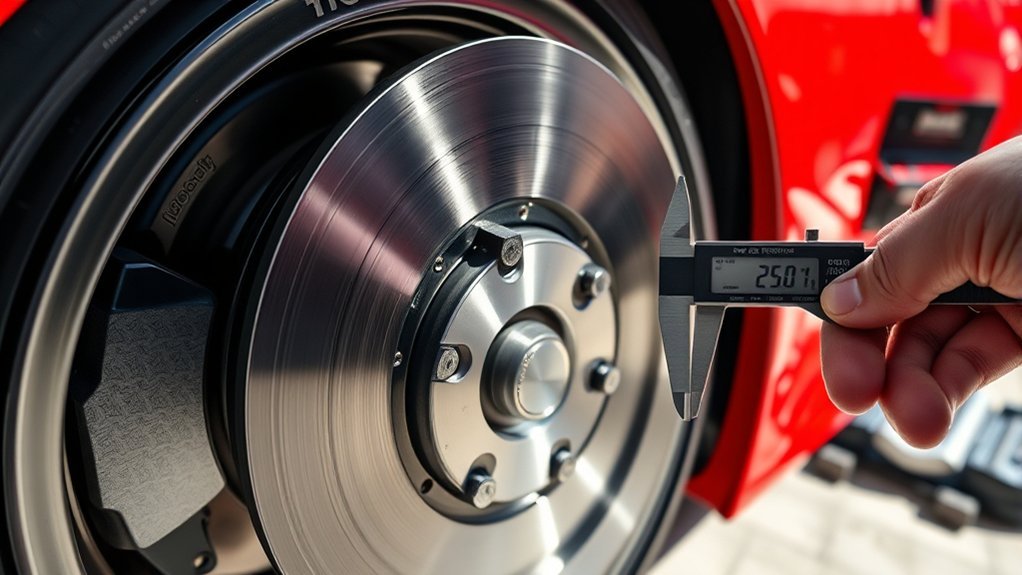
If brake vibration persists after diagnosing potential issues, you’ll need to evaluate your options: skimming or replacing your rotors.
Consider these points before making your decision:
- Skimming benefits include correcting minor warping for around £135, extending rotor longevity.
- Skimming isn’t suitable for severely warped or damaged rotors.
- Replacement is often necessary if uneven wear or significant warping causes ongoing vibration.
- Genuine stock rotors are ideal for everyday use, while aftermarket options can enhance performance but may warp under heavy stress.
Ultimately, verify proper installation and bedding of new pads to avoid thermal shock and maintain peak braking performance. Regular inspections of brake components are vital for your safety and vehicle efficiency.
The Role of Quality Components in Brake Systems
The quality of components in your brake system directly influences performance and safety, as inferior parts can lead to issues like warping and vibration. Using high-quality brake materials can mitigate these risks, particularly when opting for OEM parts over some aftermarket options.
| Component Type | Performance Differences | Recommended Brands |
|---|---|---|
| Rotors | Solid rotors resist warping better | Brembo, OEM |
| Brake Pads | High-friction materials enhance grip | EBC, Hawk |
| Installation Tools | Proper torque prevents runout | Snap-On, Craftsman |
Regular maintenance and inspections can spotlight wear, preventing premature failure. Investing in quality components guarantees peak braking performance and longevity, essential for your safety on the road.
Importance of Proper Brake Installation and Bedding
Guaranteeing proper brake installation and bedding is essential for ideal performance and safety. Neglecting these steps can lead to serious issues, including vibrations and reduced braking efficiency. Follow these key practices:
Proper brake installation and bedding are critical for performance and safety; neglect can cause vibrations and decreased braking efficiency.
- Use a torque wrench to tighten wheel lugs according to manufacturer specifications.
- Clean contamination from wheel hub surfaces before rotor installation.
- Adhere to the bedding process to guarantee a proper transfer of friction material to the rotors.
- Regularly inspect brake components to enhance lifespan and reliability.
Community Experiences: How Others Resolved Brake Vibration Issues
Many drivers have successfully tackled brake vibration issues by sharing their experiences and solutions within the community. One key insight is that tightening loose bolts can resolve vibrations at no cost, underscoring the necessity of regular brake maintenance tips. After installing new pads, properly bedding them in helps prevent uneven wear and potential warping. Community success stories also highlight that replacing warped front discs considerably reduces vibrations. Furthermore, discussions show that aggressive braking or traversing hilly terrain often exacerbates these issues, linking driving habits to brake performance. Finally, opting for stock brake components instead of aftermarket options typically leads to better longevity and less vibration during braking, enhancing your overall driving experience.
Frequently Asked Questions
Why Does My Toyota Shake When I Brake?
Your Toyota shakes when braking due to issues like worn brake pads, uneven rotor condition, poor wheel alignment, suspension problems, or imbalanced tires. Assess your driving habits and maintain components for smoother braking performance.
Conclusion
To sum up, addressing brake vibration in your Supra isn’t just about comfort; it’s about safety. Imagine cruising down the highway, the hum of the engine harmonizing with the road, only to feel that unsettling shudder beneath your foot. By understanding the causes—like warped rotors or DTV—and ensuring quality installation, you can restore that smooth, confident drive. Don’t let vibrations disrupt your journey; take action and enjoy the thrill of precision handling once again.